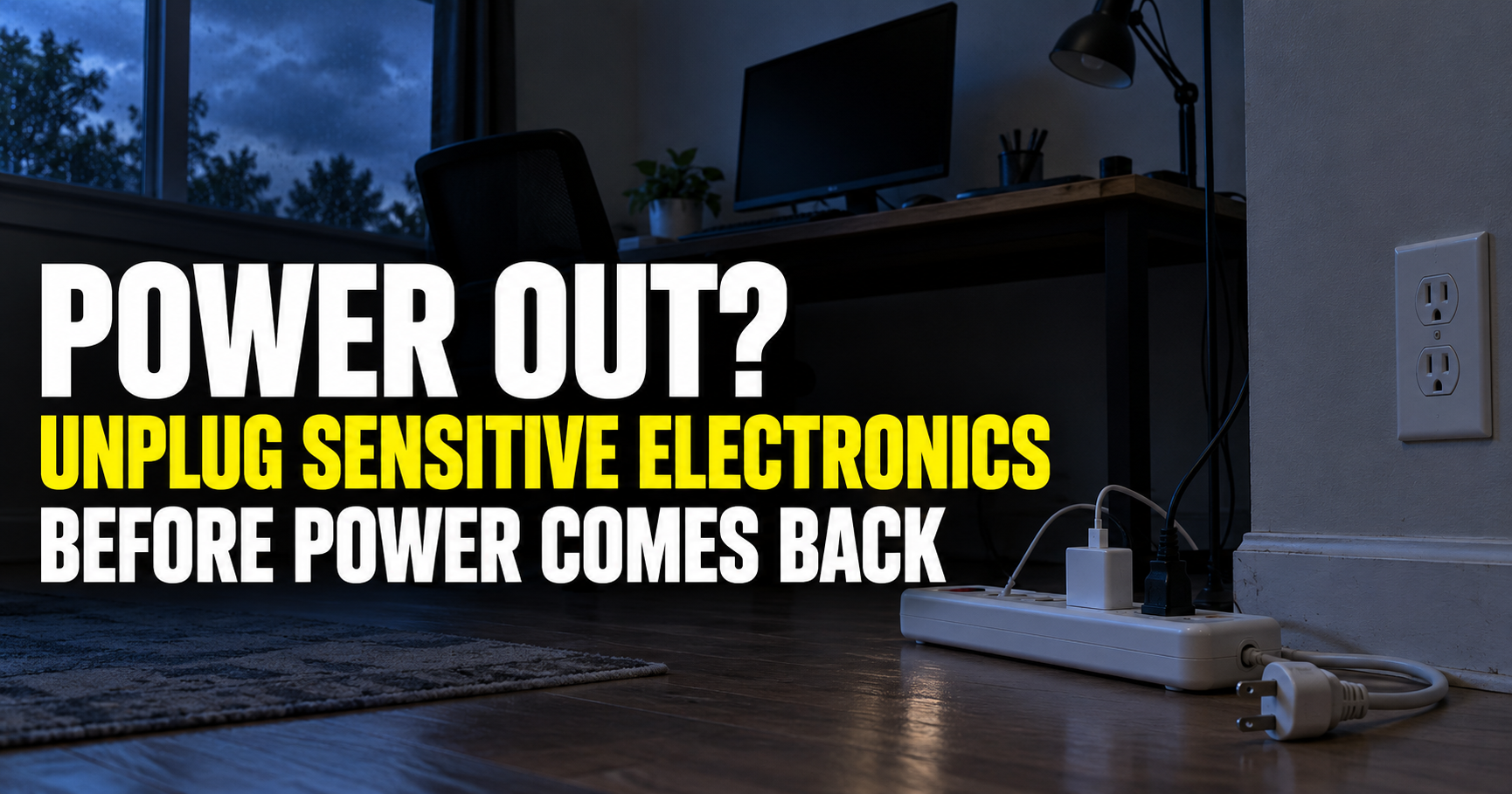
When my power goes out, I don’t run around yanking every cord out of every outlet.
But I also don’t leave the entire house exactly as it was.
There are certain things I want disconnected or switched off before electricity comes back. My biggest concerns are sensitive electronics, appliances that produce heat, equipment that could restart unexpectedly, and having a bunch of large electrical loads all trying to come back at once.
I also leave one simple light switched on.
That little light tells me when utility power is actually back without me repeatedly checking everything else.
Here’s how I handle it.
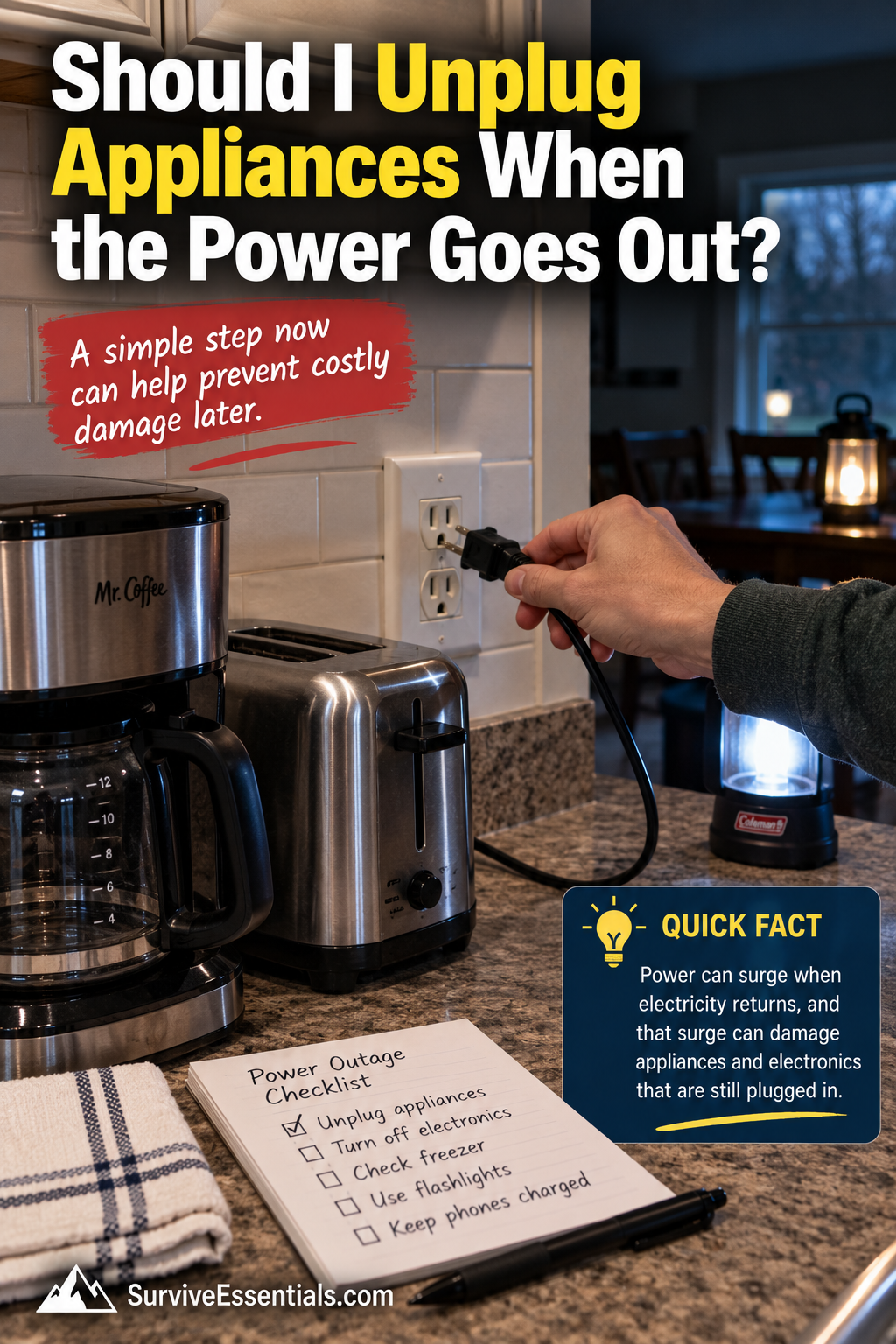
Yes, I Unplug Some Things During an Outage
My basic rule is this:
If I don’t need something during the outage and there’s no good reason for it to remain connected, I would rather have it off or unplugged.
That doesn’t mean I’m crawling behind every piece of furniture.
I focus on the equipment that matters.
That includes things like:
- Computers
- Televisions
- Gaming systems
- Small kitchen appliances
- Space heaters
- Window air conditioners
- Washers and dryers
- Power tools
- Chargers I don’t need
- Other sensitive or heat-producing equipment
This gives me fewer things to worry about when electricity returns.


Why I Care About the Moment the Power Comes Back
People tend to think the outage itself is the only problem.
I’m also thinking about restoration.
Power can return unexpectedly.
It may flicker.
Equipment that was switched on before the outage may try to start again.
And I don’t want every major electrical load in my house demanding power simultaneously the second service is restored.
So I use the outage as an opportunity to put the house into a controlled state.
Then I bring things back deliberately.



I Start With Anything That Produces Heat
These are high on my list.
If an electric space heater was running when the power failed, I don’t want it sitting there waiting to restart.
Same idea with:
- Electric stovetops
- Ovens
- Toasters
- Hot plates
- Hair styling tools
- Portable heaters
- Other heating appliances
Even if I think I remember exactly what was running, I check.
A dark stove burner doesn’t look particularly threatening during an outage.
It becomes a very different problem if electricity returns while something flammable is sitting on top of it.
I Protect Computers, TVs and Sensitive Electronics
Computers and entertainment electronics aren’t essential during most outages anyway.
I would rather disconnect them and leave them alone until power has returned and appears stable.
This includes equipment like:
- Desktop computers
- Monitors
- Televisions
- Game consoles
- Audio equipment
- Nonessential chargers
I’m not trying to make my house electrically perfect.
I’m simply removing unnecessary exposure.

A Power Strip Isn’t Always a Surge Protector
This is worth knowing before the lights go out.
A basic power strip may simply provide more outlets.
That doesn’t automatically mean it provides meaningful surge protection.
If protecting expensive electronics matters to me, I want equipment actually designed and rated for surge protection.
Long term, whole-home surge protection is another option worth discussing with a qualified electrician.
But during an outage, unplugging equipment I don’t currently need is about as simple as protection gets.
What About the Refrigerator?
This is where I use some judgment.
My refrigerator is different from my television.
I want refrigeration restored when reliable utility power comes back because there’s food inside I’m trying to protect.
I’m much more concerned about keeping the refrigerator door closed and monitoring food temperature than repeatedly messing with the appliance itself.
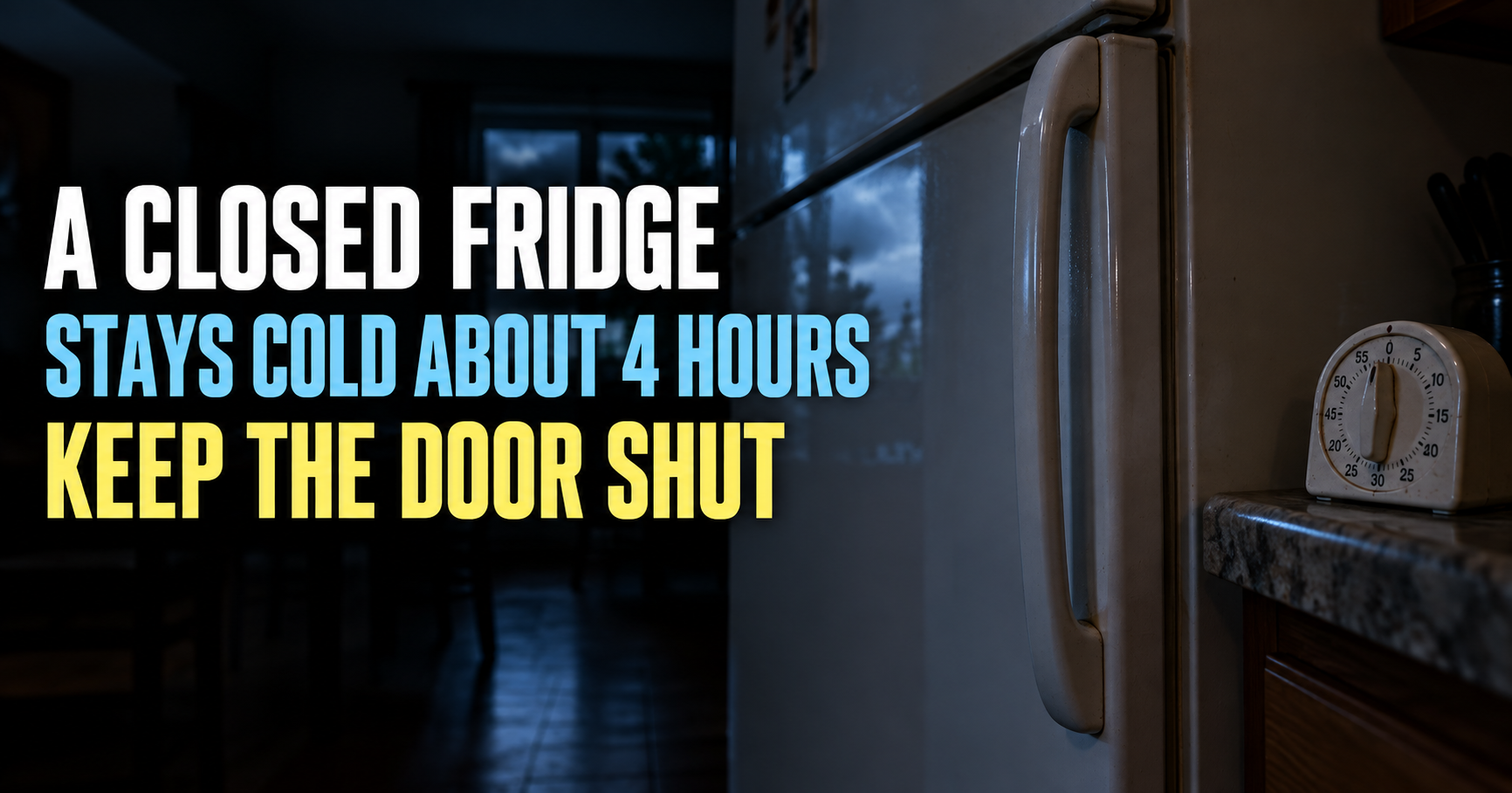
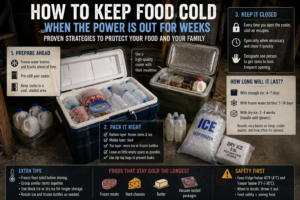
I’ve already covered exactly how long I expect my refrigerator and freezer to stay cold without power.
That’s the guide I’d use if you’re staring at the refrigerator right now wondering whether the food is still okay.

I Don’t Keep Opening the Fridge While I’m Dealing With Everything Else
This sounds unrelated to unplugging appliances, but it’s one of the easiest mistakes to make.
People start walking around the house checking things.
Then somebody opens the refrigerator.
Then somebody else opens the freezer.
Every opening costs me some of the cold I’ve been trying to preserve.
So while I’m dealing with electrical equipment, the refrigerator and freezer stay closed.
What About the Furnace or Central Air?
I don’t treat HVAC equipment like a phone charger.
These are major systems, and the correct way to handle them can depend on the equipment and installation.
What I don’t want is unnecessary heating or cooling equipment trying to restart alongside every other large load in the house.
If I have specific manufacturer instructions for my system, I follow those.
If electrical equipment has been flooded, damaged, or exposed to water, that’s no longer a normal outage situation. I want qualified help before energizing questionable equipment.

I Leave One Light Switched On
This is one of my favorite simple blackout tricks.
I pick one ordinary light and leave it switched on.
Everything else can stay off.
Then I don’t need to keep checking the utility website or flipping switches.
When that lamp comes on, I know utility power has returned.
More importantly, the rest of my house isn’t immediately trying to wake up at the same time.
I Don’t Immediately Turn Everything Back On
When electricity returns, I’m patient.
I give it a little time.
If the lights flicker immediately, I’m especially glad I didn’t start turning everything on.
Once power appears stable, I restore what I actually need.
Refrigerator.
Freezer.
Essential systems.
Then other appliances.
One at a time makes far more sense to me than turning the entire house back on simultaneously.


If the Power Is Flickering, I Treat That Differently
A clean outage is one thing.
Power that repeatedly turns off and on gets my attention.
If lights are dimming, flickering badly, or electrical equipment is behaving strangely, I don’t keep testing appliances to see whether they’ll work.
That’s a situation where I’m much more conservative.
Sensitive electronics stay disconnected.
If I smell burning, see sparks, hear unusual electrical noises, or suspect damage, I stop treating it like an ordinary blackout.
I Don’t Touch Electrical Equipment Around Water
Storm-related outages sometimes come with flooding.
That combination changes everything.
If an outlet, appliance, electrical panel, or other electrical equipment is wet or surrounded by standing water, I don’t walk into the water to reach it.
I don’t start flipping breakers while standing in water.

And I don’t assume equipment is safe simply because utility power happens to be off at that moment.
Electricity can return.
Wet electrical equipment needs to be treated seriously.
What I Do With Chargers
Phone chargers are a little different because communication matters during an outage.
If I’m actively using a charger with a generator, power station, or another appropriate backup source, that’s one thing.
Unused chargers don’t need to remain connected everywhere around the house.
Instead, I gather the charging equipment I actually plan to use.
That also keeps me from losing track of cords in the dark.
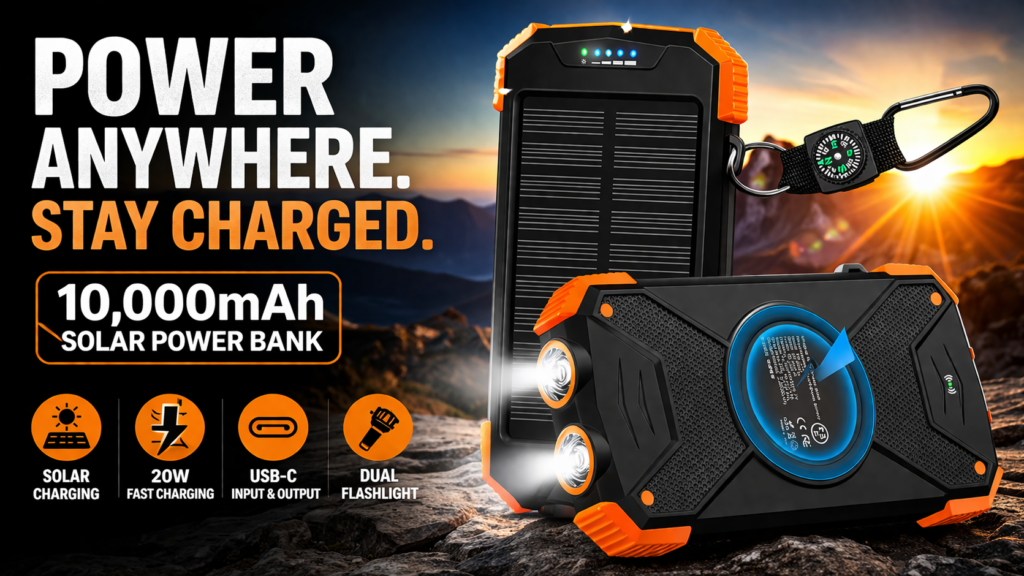
If keeping phones alive is a concern, I’ve covered the solar power bank I like as another layer of emergency charging.
I don’t expect a small solar power bank to run my house.
I expect it to help keep an important communication device alive.
That’s a realistic job for it.
I Don’t Plug My Generator Into a Wall Outlet
This needs to be crystal clear.
I never try to power my house by connecting a portable generator directly to a household outlet.
That’s commonly called backfeeding, and it can create deadly electrical hazards, including danger to utility workers.
If I want a generator connected to household circuits, I want the proper equipment and installation for that job.
Otherwise, I power appropriate equipment according to the generator manufacturer’s instructions using a safe setup.
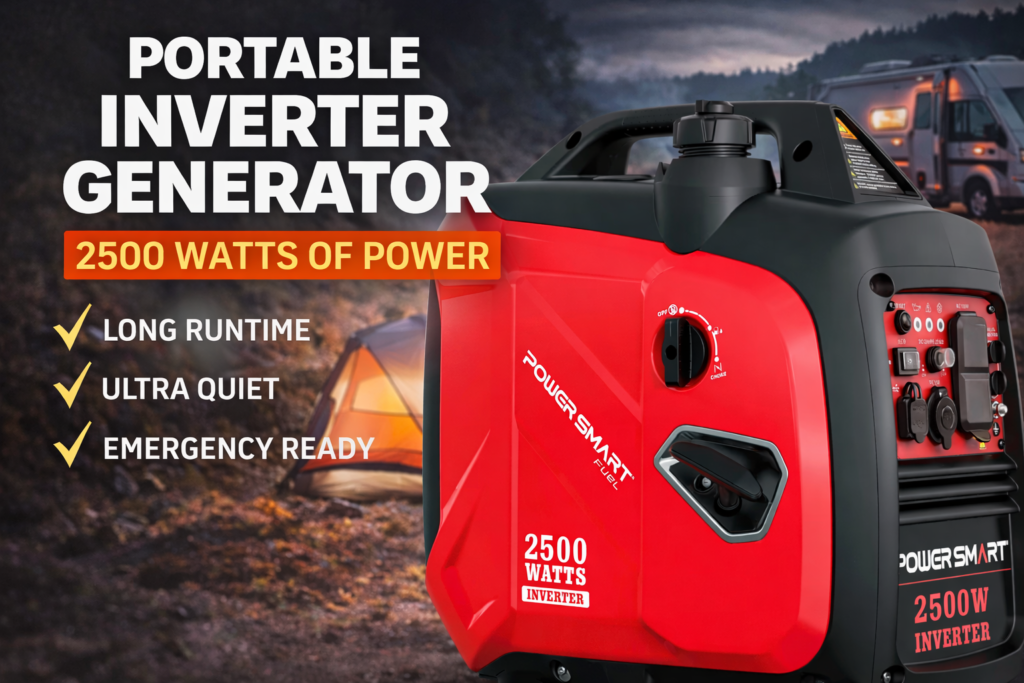
I’ve covered the portable generator I consider for outage backup if you’re still figuring out what kind of backup power makes sense.
My Generator Doesn’t Come Inside Either
Electrical safety isn’t the only generator danger.
Carbon monoxide is a major concern.
A portable generator belongs outside and well away from doors, windows, vents, and other openings where exhaust could enter the house.
Not in my basement.
Not in my living room.
Not in an attached garage.
Not sitting right beside an open window.
A generator can save the contents of a freezer and make a long outage far easier, but only if I use it without creating a bigger emergency.
I Decide What Actually Needs Electricity
One reason I like unplugging unnecessary equipment is that it forces me to think about priorities.
During a long outage, I don’t care whether every appliance works.
I care about:
- Refrigeration
- Water systems
- Medical needs
- Communication
- Necessary lighting
- Safe heating or cooling
- Other genuinely important loads
That’s especially important if I’m using limited generator fuel.
My long-blackout preparedness plan goes deeper into how I prioritize the house when electricity may be gone for much longer than expected.
I Check My Well Situation Too
This is something city-water households may never think about.
If my house uses an electric well pump, losing electricity can affect my water supply.
Now backup power isn’t only about refrigerators and lights.
It may also affect whether I can easily get water from the faucet.
That’s why I like treating water preparedness as its own system rather than assuming the faucet will always work.
Our complete emergency water preparedness guide covers that side in detail.
We’ll also get much more specific about wells as we build this power-outage cluster.
What I Unplug First
If I had to move quickly, my priority would look something like this:
- Heat-producing appliances that were being used
- Sensitive computers and electronics
- TVs and entertainment equipment
- Unnecessary small appliances
- Window air conditioners and other nonessential high-draw equipment
- Power tools and workshop equipment
- Anything I wouldn’t want unexpectedly restarting
Then I leave one light switched on so I know when electricity returns.
It’s simple.
That’s exactly why I like it.
What I Do When the Electricity Returns
I don’t immediately declare the outage over.
First, I make sure the power appears stable.
Then I start restoring important equipment.
I check the refrigerator and freezer.
I check clocks and appliances.
I make sure nothing smells hot or electrical.
I look for anything behaving strangely.
Then I gradually bring the house back to normal.
If an appliance sparks, smells burned, trips a breaker, or behaves abnormally, I stop.
I’m not repeatedly resetting a breaker just to see whether the problem magically disappears.
Don’t Forget Everything That Needs Reset
After a longer outage, there are always little things.
Clocks.
Thermostats.
Timers.
Internet equipment.
Security systems.
Garage door equipment.
Smart devices.
Some equipment resumes normally.
Some doesn’t.
I make a quick walk through the house after power has been stable for a while rather than assuming everything automatically returned to its previous state.
My Simple Rule for Appliances During a Blackout
I don’t make this complicated.
If an appliance isn’t needed and could be damaged, create heat, restart unexpectedly, or contribute to a large restoration load, I turn it off or disconnect it.
I leave one light on.
Then, when power returns, I bring the house back online deliberately instead of letting everything come alive at once.
That’s the entire strategy.
The Part Most People Forget Is Power Coming Back
Everyone prepares for the moment the lights go out.
I also prepare for the moment they come back.
That’s why I think about unplugging appliances at all.
It takes a few minutes.
It costs nothing.
And it gives me much more control over what happens inside the house when utility power is restored.
During a blackout, control is valuable.
I can’t control when the utility fixes the problem.
I can control what is connected inside my house when they do.
About the Author
Caleb Mercer writes about real-world blackout preparedness, backup power, emergency communications, and keeping households functioning when utilities fail. His work for the Survive Essentials Power Outages and Backup Power sectionfocuses on practical decisions families can make before and during outages without turning preparedness into a collection of gear they don’t know how to use.