Every prepper starts with the 72-hour bag. Three days of supplies, FEMA’s baseline, the entry point for anyone serious about emergency preparedness. It’s a good start. But if a 72-hour bag is all you have, you’ve planned for the easy version of a crisis — the kind that resolves itself in three days and sends everyone home.
Real emergencies don’t always cooperate with that timeline.
A regional grid collapse, a major natural disaster, a supply chain breakdown, or a true SHTF scenario can stretch days into weeks without warning. The people who planned for 72 hours run out of supplies right when the situation starts getting genuinely dangerous. The people who planned for two weeks are just getting started.
This isn’t an argument to abandon your 72-hour bag. It’s an argument to understand exactly what it covers, what it doesn’t, and how to build the next layer of your preparedness plan around it.
What a 72-Hour Bag Is Actually Designed For
The 72-hour bug out bag was designed for one specific scenario: get out fast, get somewhere safe, wait for normal systems to restore. House fire. Flood. Chemical spill. Local infrastructure failure. Events where you need to leave immediately but reasonable help is coming within a few days.
For those scenarios, a well-built 72-hour bag is exactly right. It’s mobile, manageable, and purpose-built for fast evacuation with everything you need to sustain life until the crisis resolves.
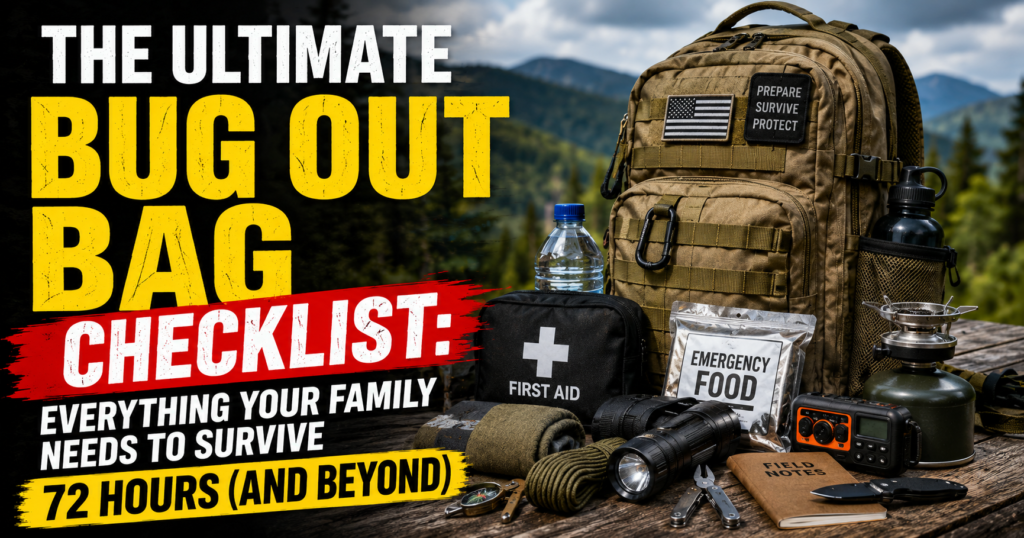
The full breakdown of what goes into a proper 72-hour setup lives in the ultimate bug out bag checklist — if you haven’t built that foundation yet, start there before thinking about extending your timeline.
But here’s what a 72-hour bag is not designed for: sustained independent survival. It carries enough food for three days, enough fuel to start enough fires to purify enough water for three days, enough first aid for three days of manageable injuries. Push past that window and the gaps start opening up fast.
When 72 Hours Isn’t Enough
Think through the scenarios where three days comes and goes without resolution:
A major earthquake hits a densely populated region and takes out water treatment, power distribution, and road infrastructure simultaneously. FEMA’s own modeling suggests full restoration in scenarios like this can take two to four weeks in affected areas. Your 72-hour bag runs dry on day four.
A prolonged winter storm combined with grid failure leaves rural areas inaccessible for ten to fourteen days. Roads are impassable. Supply trucks aren’t moving. Your 72-hour bag ran out a week ago.
A true grid-down event — whether from a cyberattack, an EMP, or cascading infrastructure failure — has no guaranteed restoration timeline at all. In that scenario, your 72-hour bag is the first three days of a much longer survival problem.
None of these scenarios are fantasy. All of them have happened in various forms in recent history. Planning only for the short version is planning to fail in the long one.



The Two-Week Bag Mindset
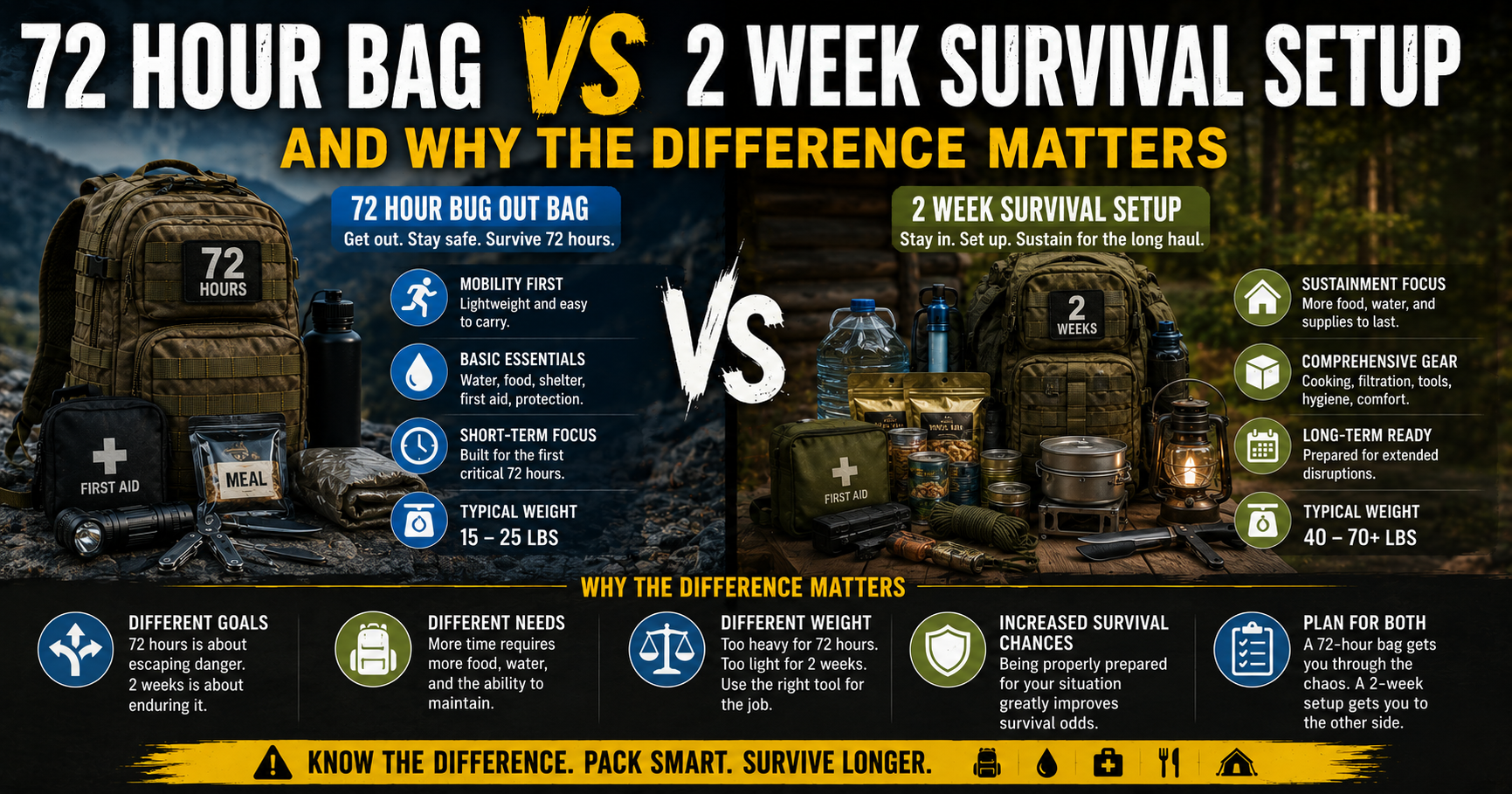
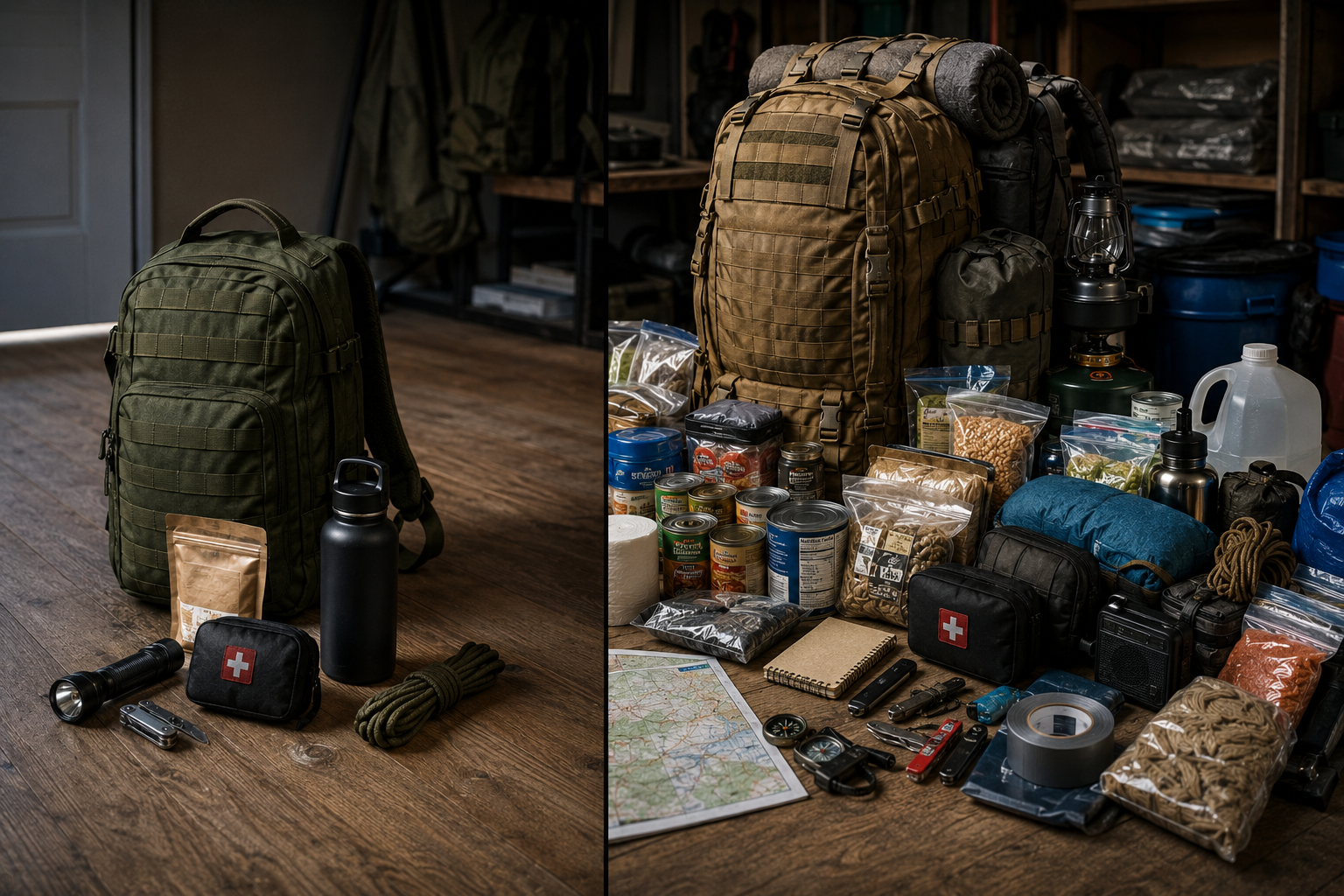
Here’s where most preppers get confused: a two-week bag is not just a bigger 72-hour bag. You cannot simply scale up your current pack, double the food, triple the water, and call it a two-week setup. That approach produces a bag that weighs sixty pounds and destroys your back before you reach the end of your driveway.
The two-week mindset is a system, not a bag.
It layers three components together: your mobile bug out bag for immediate evacuation, a vehicle kit for extended transport capacity, and a destination cache or home base supply that handles sustained survival. Each layer covers what the previous one can’t.
Layer 1 — The 72-hour bag: On your back. Mobile. Gets you out and to your next position.
Layer 2 — The vehicle kit: In your car or truck. Extended food, water, fuel, tools, and gear that’s too heavy or bulky for your pack. Gets you from immediate evacuation to your destination.
Layer 3 — The destination supply: At your bug out location — a family property, a rural retreat, a trusted contact’s home. Two weeks or more of food, water storage, medical supplies, and long-term survival equipment waiting when you arrive.
Your 72-hour bag bridges the gap between leaving home and reaching layer three. It doesn’t have to carry two weeks of supplies. It has to carry enough to get you to where the two weeks of supplies are waiting.
What Changes at the Two-Week Mark
When you extend your planning horizon from 72 hours to two weeks, several survival priorities shift in ways that matter for how you pack and plan.
Food Strategy Changes Completely
For 72 hours, calorie-dense ready-to-eat food and freeze-dried pouches handle everything. At two weeks, you need a broader food strategy that includes bulk storage, cooking capability, and calorie sustainability without burning through expensive freeze-dried meals three times a day.
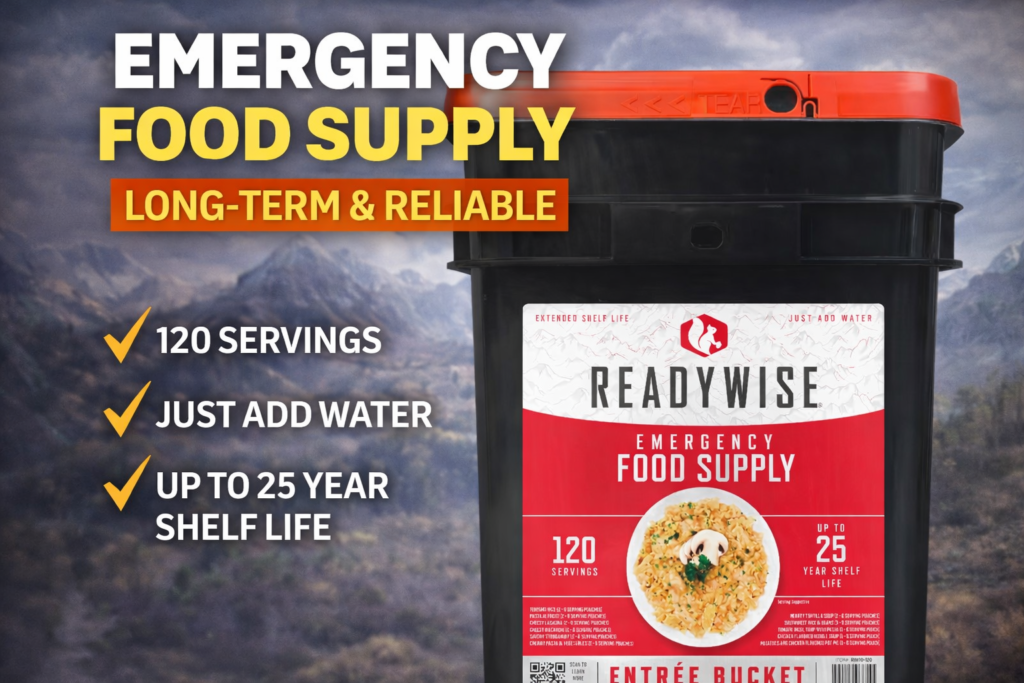
The ReadyWise 120-serving emergency food supply becomes a destination layer staple rather than a bag item — it’s the bulk foundation of your two-week food supply at your bug out location, not something you carry on your back.
Water Production Matters More Than Water Carrying

Two weeks of carried water is physically impossible. At the two-week mark, you need to produce water reliably from your environment rather than carry it. That means understanding your destination’s water sources, having filtration capacity to process large volumes daily, and potentially having water storage containers pre-positioned at your location.
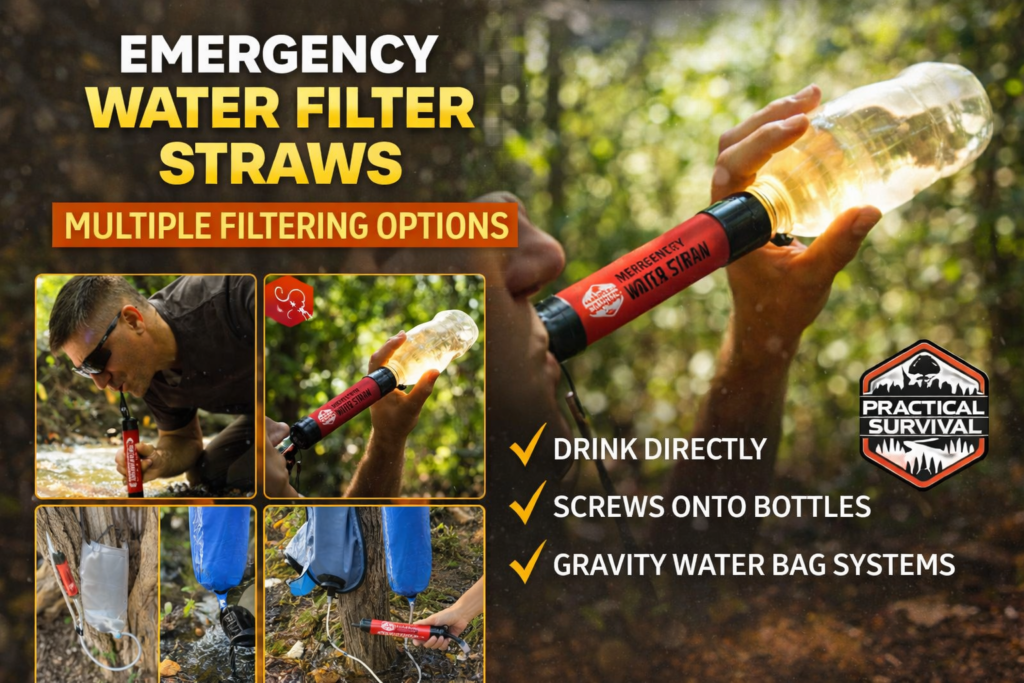
The Emergency Water Straws that handle your 72-hour needs transition into your daily water production tool at the two-week destination. Each straw filters 1,800 gallons — more than enough for months of sustained use at a fixed location.
Medical Needs Compound
A 72-hour medical kit covers acute injuries and immediate care. Two weeks introduces a different medical reality: prescription medications run low, chronic conditions need management, minor injuries have time to become infected, and dental or other non-emergency issues can become serious problems without access to care.
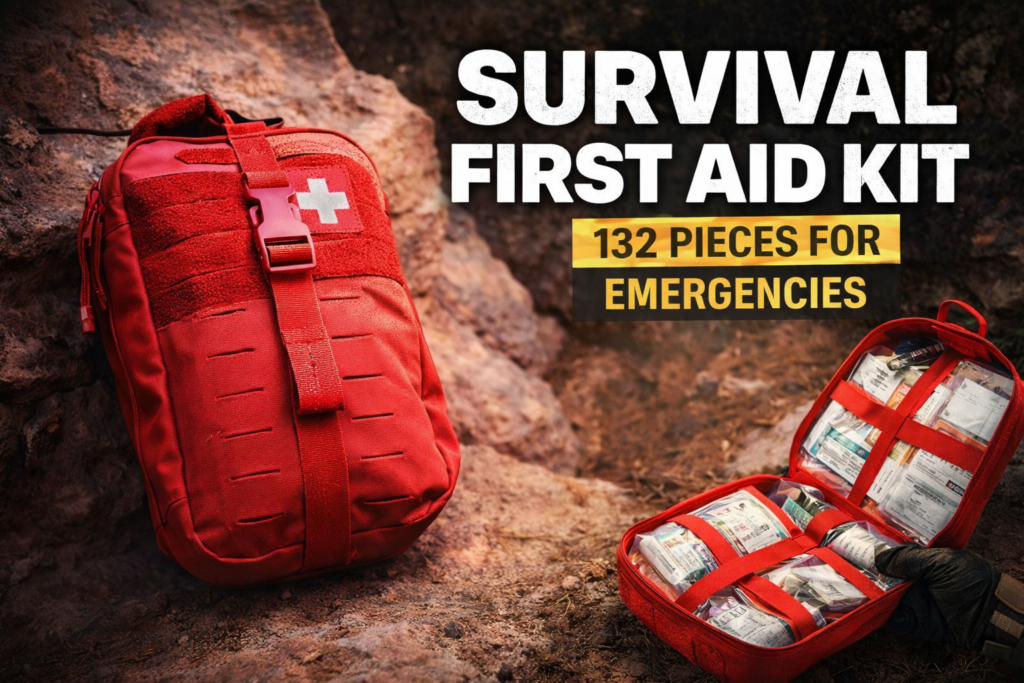
Your two-week medical layer needs prescription supplies for every family member covering at least 30 days, broader antibiotic and infection management capability, and dental emergency supplies. The MyFAK trauma kit handles your acute care foundation — build your extended medical layer around it.
Power and Communication Become Critical
For 72 hours, a single charged power bank and a hand-crank radio covers your energy and communication needs. At two weeks, you need a sustainable power solution — solar charging, battery banks with high capacity, and the ability to keep critical devices running indefinitely.

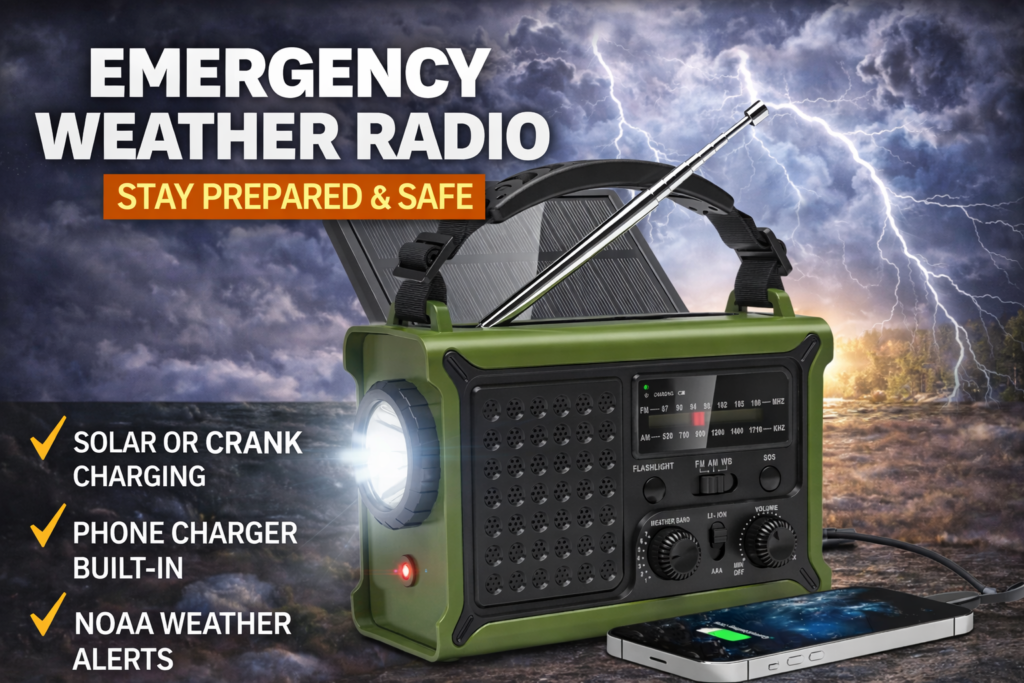
The BLAVOR solar power bank bridges both timelines — it works in your 72-hour bag and becomes your primary charging solution at a two-week destination. Pair it with the NOAA emergency radio and you have communication capability that runs indefinitely on sunlight.
Warmth and Shelter Require More Infrastructure
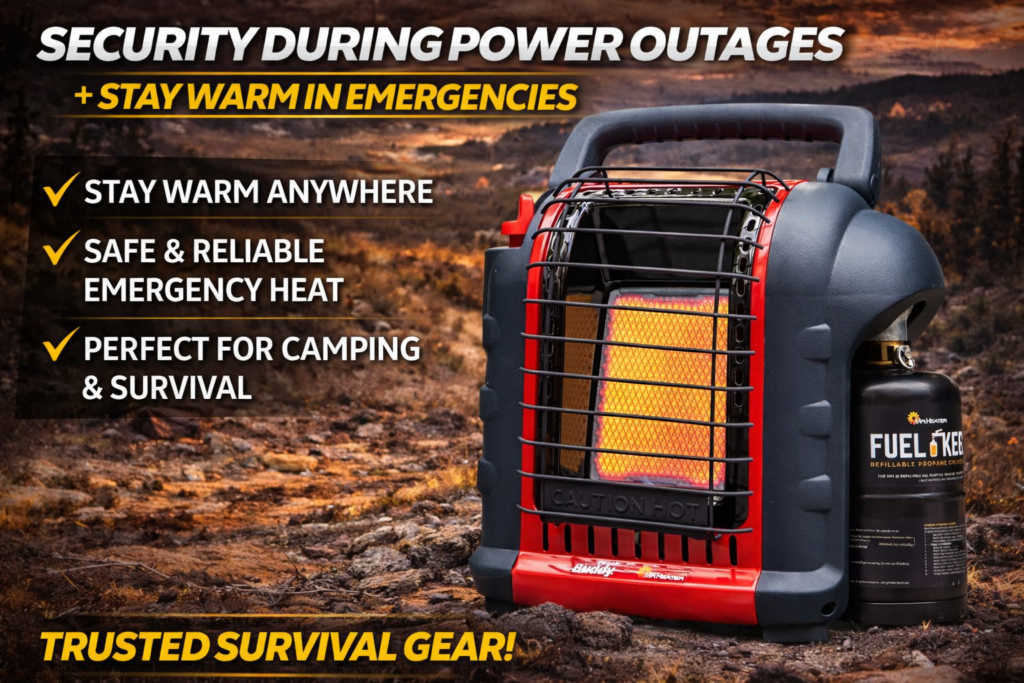
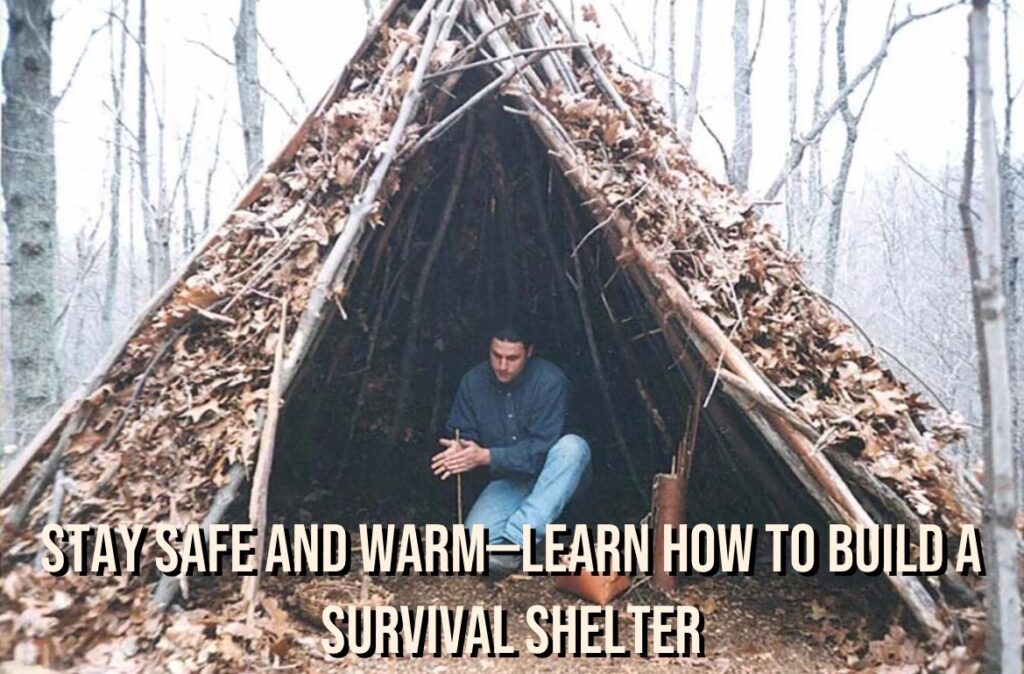
A mylar sleeping bag gets you through three cold nights. Two weeks of cold nights requires real sleeping equipment, reliable heat source, and potentially structural shelter beyond a tarp setup. The portable propane heater that belongs in your vehicle kit becomes your primary heat source at a two-week location — it’s too heavy for your pack but critical for extended cold weather survival.

Building the Two-Week System Step by Step
You don’t build this overnight. You build it in stages, and each stage makes you more prepared than you were the day before.
Step 1: Build and test your 72-hour bag first. Don’t skip this step to jump to the larger system. The skills and habits you develop building and testing your 72-hour setup are the foundation everything else sits on.
Step 2: Identify your bug out destination. This is the most important decision in two-week planning. Where are you going? Who owns it? Do they know you might be coming? Is there water on the property? Shelter already in place? The answers to these questions determine everything about how you build layers two and three.
Step 3: Build your vehicle kit. A large plastic storage container in your trunk or truck bed, pre-stocked with extended food, water containers, additional fuel, tools, and the heavier gear that doesn’t belong in your pack. This layer costs less than you think and dramatically extends your capability.
Step 4: Pre-position supplies at your destination. Even a small cache — two weeks of freeze-dried food, water filtration equipment, medical supplies, and basic tools — changes your two-week survival picture completely. If you own the property, this is straightforward. If you’re relying on a family member’s location, have the conversation and contribute to the supply cache there.
Step 5: Run a drill. Load the family in the vehicle with your 72-hour bags, drive your bug out route, and arrive at your destination. Walk through what the first 48 hours would actually look like. The gaps in your planning will become obvious immediately.
The Question That Determines Your Timeline
Whether you need a 72-hour plan, a two-week plan, or something longer comes down to one honest question: what’s the realistic worst-case scenario for where you live?
If you’re in a coastal flood zone, your scenario is probably measured in days. If you’re in a region with aging power grid infrastructure, it might be measured in weeks. If you’re seriously planning for grid-down or societal disruption scenarios, your timeline extends much further — and the planning complexity scales accordingly.
For deeper thinking on holding your position versus evacuating, the Navy SEAL bug-in guide covers the decision framework that determines when leaving is the right call and when staying and fortifying is the better option. Sometimes the two-week plan isn’t a bug out at all — it’s a bug-in with two weeks of supplies already in your home.
Build the 72-hour bag. Test it. Then start building outward. Every layer you add is another week your family can survive what most people can’t.
About the Author: Jake Mercer spent 11 years in emergency management before turning his focus to practical preparedness education. He lives with his wife and three kids in rural Tennessee, where multi-layered emergency planning is part of everyday life. He writes for Survive Essentials covering gear, strategy, and the real-world thinking behind serious preparedness.