The power goes out and most people’s first move is to check their phone. The second move is to look out the window to see if the neighbors have power. The third move is to wait — assuming it’ll be back in a few hours like it always is.
That assumption has killed people.
A true grid-down event doesn’t resolve in a few hours. It doesn’t resolve in a few days. Depending on the cause — a cyberattack on grid infrastructure, a severe geomagnetic storm, a coordinated physical attack on transmission substations, or a cascading failure triggered by extreme weather — a long-term grid-down scenario can stretch from weeks to months. FEMA’s own planning documents acknowledge that a prolonged grid failure affecting a large portion of the United States would be the most catastrophic disaster in American history.
Most families are not prepared for three days without power. Almost none are prepared for three weeks. This guide changes that.
Understanding What Grid-Down Actually Means
When preppers and emergency planners talk about a grid-down scenario, they mean more than just the lights being off. The electrical grid powers nearly every critical system modern life depends on.
Water treatment plants run on electricity. When the grid goes down, municipal water pressure drops within hours as backup systems exhaust their fuel. Gas stations can’t pump fuel without power. Grocery store supply chains collapse within days as refrigeration fails and delivery logistics break down. Hospitals run on generators with limited fuel supplies. ATMs stop working. Cell towers have battery backup measured in hours, not days.
Within 72 hours of a true long-term grid failure, most urban and suburban areas face simultaneous water, food, fuel, communication, and financial system failures. This is why grid-down preparation is the central scenario serious preppers plan around — it’s the one event that triggers every other survival challenge at once.


The First 24 Hours
The first day of a grid-down event is the window where preparation pays off most immediately. Families who have done the work move through this period calmly and purposefully. Families who haven’t spend it in confusion and reactive scrambling that depletes their energy and resources before the real challenge begins.
Your first 24-hour checklist:
- Confirm it’s a wide-area outage. Check your NOAA emergency radio immediately. Determine the known scope and cause if information is available. Local outage versus regional grid failure require different responses.
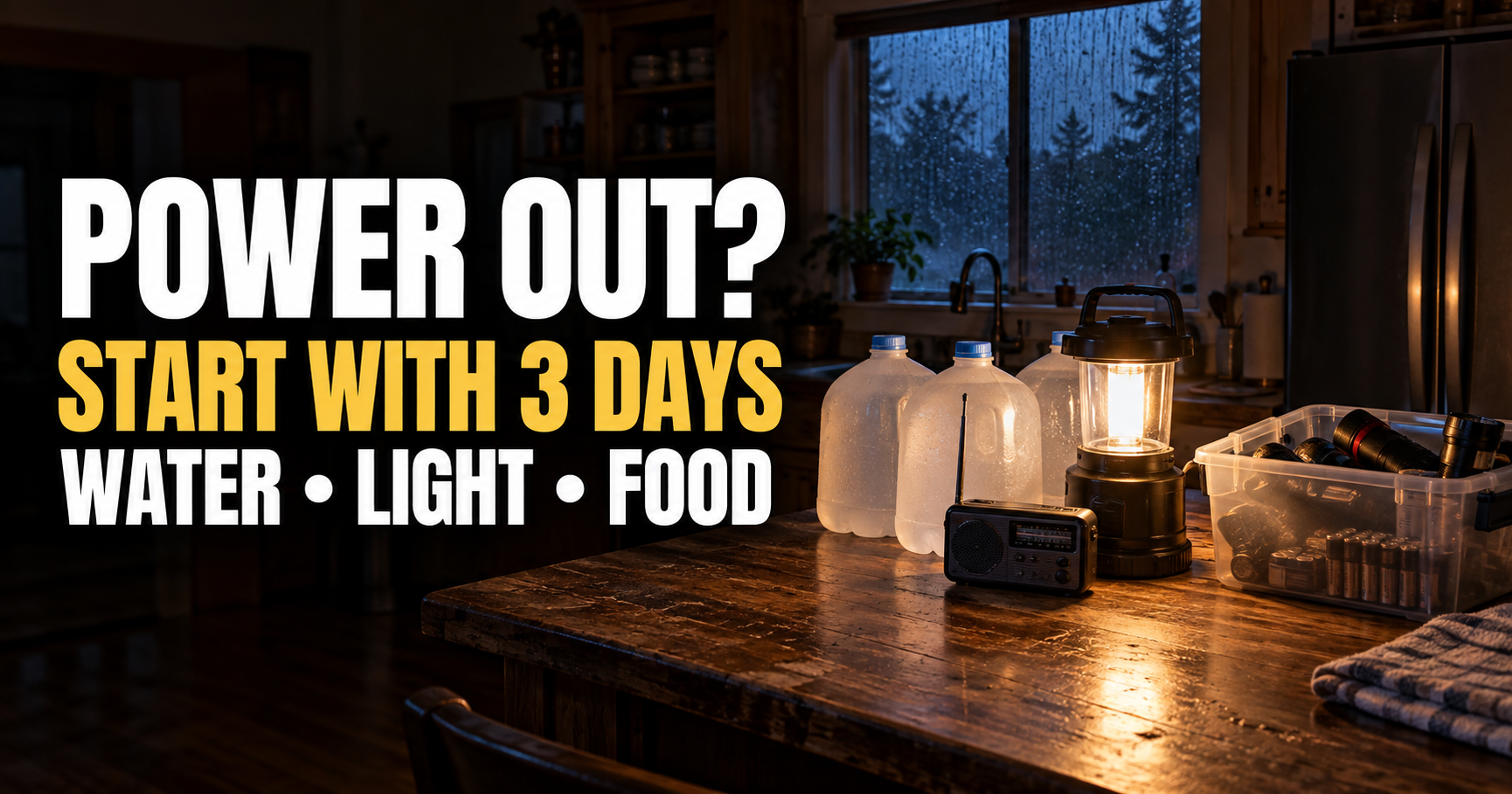
- Fill every water container you have. Municipal water pressure will drop. Fill bathtubs, pots, jugs — anything that holds water — while pressure still exists. Do this within the first hour.
- Assess your fuel situation. How much gasoline is in your vehicles? How much propane? How much generator fuel? Calculate your runway before you need it.
- Secure your food. Move refrigerated items to coolers with ice. Identify what needs to be consumed first. Freeze-dried and shelf-stable food stays untouched for now.
- Establish communication with your family network. Confirm everyone’s location and status while cell towers still have backup power. Agree on a check-in protocol if communication becomes unreliable.
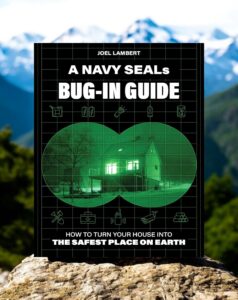
- Make the bug-in versus bug-out decision. In most grid-down scenarios, staying home is the right initial call. Your home has shelter, stored supplies, and security. The roads will be chaotic. Make a deliberate decision rather than a panic-driven one. The Navy SEAL bug-in guide covers this decision framework in detail.


Water in a Grid-Down Scenario
Water is your most urgent concern after the first few hours. The average person needs a minimum of one gallon per day for drinking and basic sanitation — more in heat, more if anyone is sick, more if you’re doing physical work.
For a family of four, that’s a minimum of four gallons per day. For two weeks, that’s 56 gallons of drinking and cooking water alone — before sanitation needs.
Your water strategy needs three layers:
Stored water: FEMA recommends one gallon per person per day as a minimum. Serious preppers store two to four weeks of water in dedicated food-grade containers. For most families this means 50–100 gallons of stored water in a dedicated space — a basement, garage, or storage room.
Collection: Rain collection from roof runoff into clean containers can produce significant daily volume depending on your climate. A standard roof in moderate rainfall can collect hundreds of gallons from a single storm. Have clean collection containers ready.
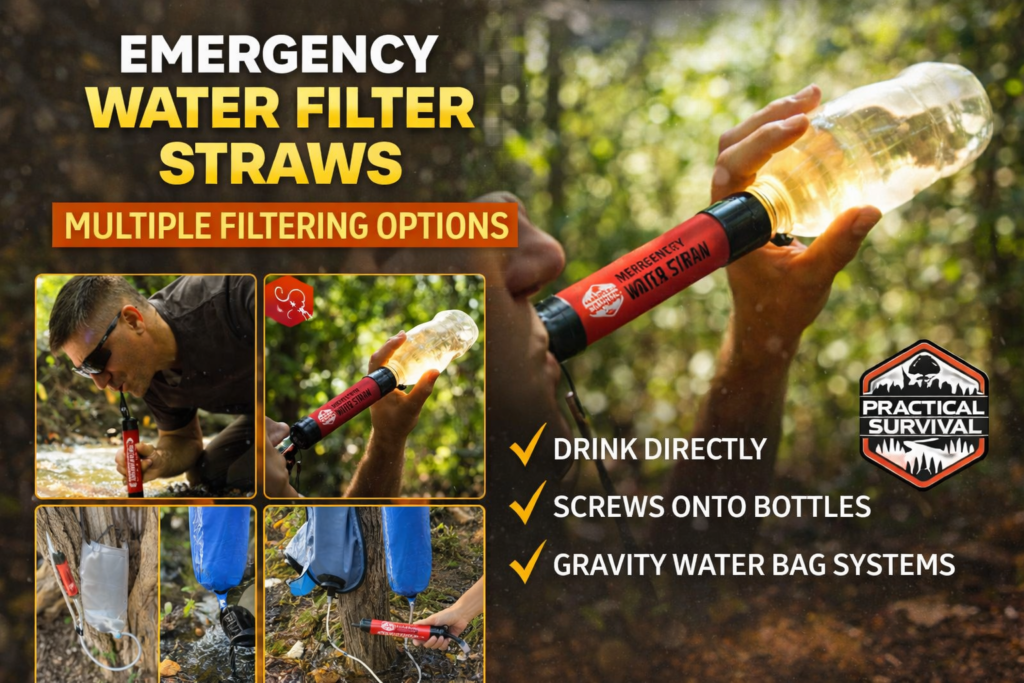
Filtration: Any natural water source — streams, ponds, lakes, even standing water — becomes drinkable through proper filtration and purification. The Emergency Water Straws filter up to 1,800 gallons each with no expiration date. Pair them with purification tablets as a backup and you have water production capability from any source within reach of your location.
Never assume your tap will keep running in a prolonged grid-down event. Plan for it failing within 24–48 hours and build your water strategy around sources you control.
Food in a Grid-Down Scenario
A two-week grid-down food supply is not a pantry stocked for a long winter — it’s a deliberate system built around shelf stability, calorie density, and cooking capability without reliable power.
The consumption order:
Eat your refrigerated food first — it starts spoiling within four hours of power loss without ice. Move to your freezer next, which holds temperature for 24–48 hours unopened and longer with dry ice. Then transition to shelf-stable and freeze-dried supplies, which become your primary food source for the duration.
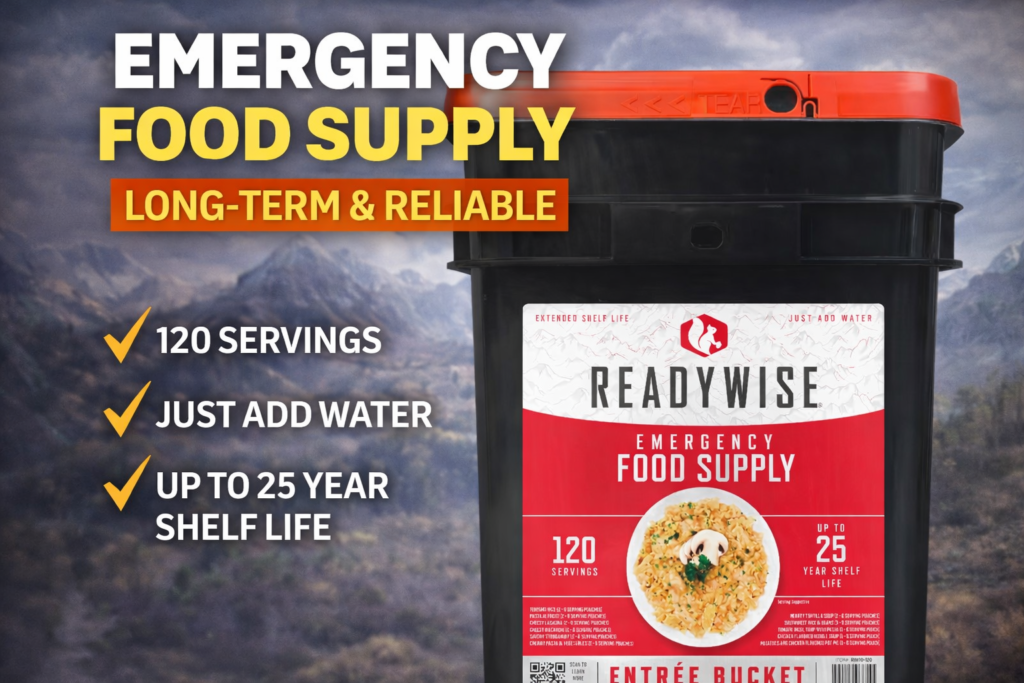
The ReadyWise 120-serving emergency food supply is the foundation of a serious grid-down pantry. Freeze-dried meals with 25-year shelf life, just-add-water preparation, and genuine calorie content make this the category anchor for extended home survival. Store enough for your full family for two weeks minimum — ideally a month.
Supplement with bulk staples that store long-term without refrigeration: white rice, dried beans, rolled oats, honey, salt, cooking oil, canned goods, and hard grains if you have milling capability. These extend your food runway dramatically at low cost and take up manageable storage space.
Calorie planning matters. An adult maintaining basic function at home needs 1,800–2,000 calories per day. Under stress, doing physical work, or dealing with cold temperatures, that need increases. For a family of four over two weeks, plan for a minimum of 200,000 calories of shelf-stable food — and err toward more.
Power and Heat Without the Grid
Backup power in a grid-down scenario serves two purposes: running critical devices and providing heat. They require different solutions.
Generators

A generator keeps your refrigerator running, charges devices, and powers critical medical equipment. The PowerSmart 2500W portable inverter generator handles most household critical loads efficiently on a modest fuel budget.
The critical limitation of any gasoline or propane generator is fuel. In a true grid-down scenario, fuel resupply is uncertain. Your generator strategy needs a calculated fuel reserve — know exactly how many hours your generator runs per gallon, decide which loads are essential, and store enough fuel to cover your planned runtime. Rotate your stored fuel every six to twelve months and treat it with a fuel stabilizer.
Never run a generator indoors or in an attached garage. Carbon monoxide poisoning is one of the leading causes of death in power outage scenarios — every year without exception.
Solar
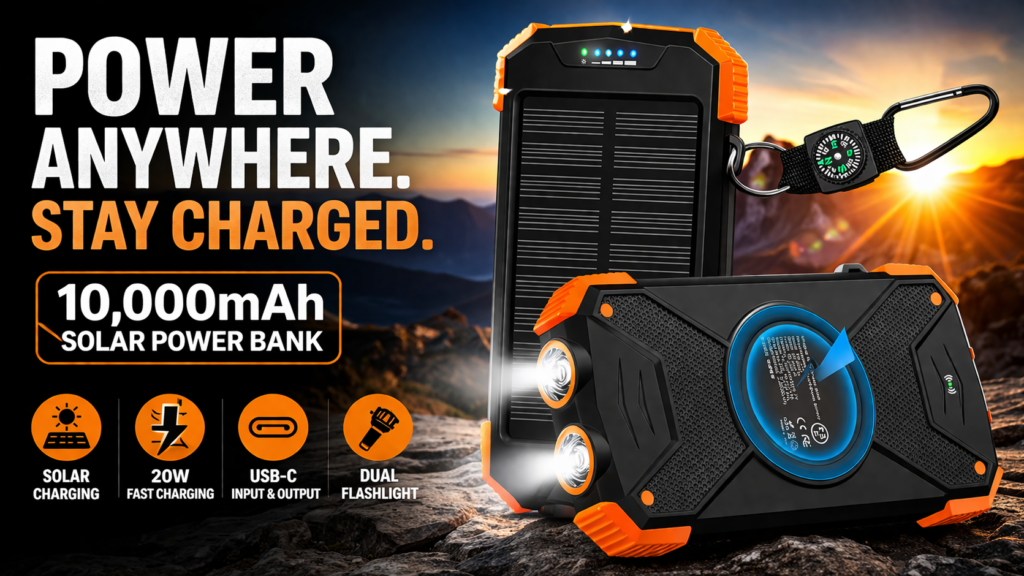
Solar charging is the only power source with no fuel dependency. The BLAVOR solar power bank keeps phones, radios, and small devices charged indefinitely from sunlight. For larger loads, portable solar panel arrays paired with battery banks can run LED lighting, fans, and small appliances.
Solar’s limitation is output variability — cloudy days, winter sun angles, and shading reduce production significantly. Plan for solar as a supplement to other power sources rather than your sole backup.
Heat
In cold climates, heat is a life-safety issue, not a comfort issue. Hypothermia indoors in an unheated home during a winter grid-down event is a genuine risk — especially for elderly family members and young children.
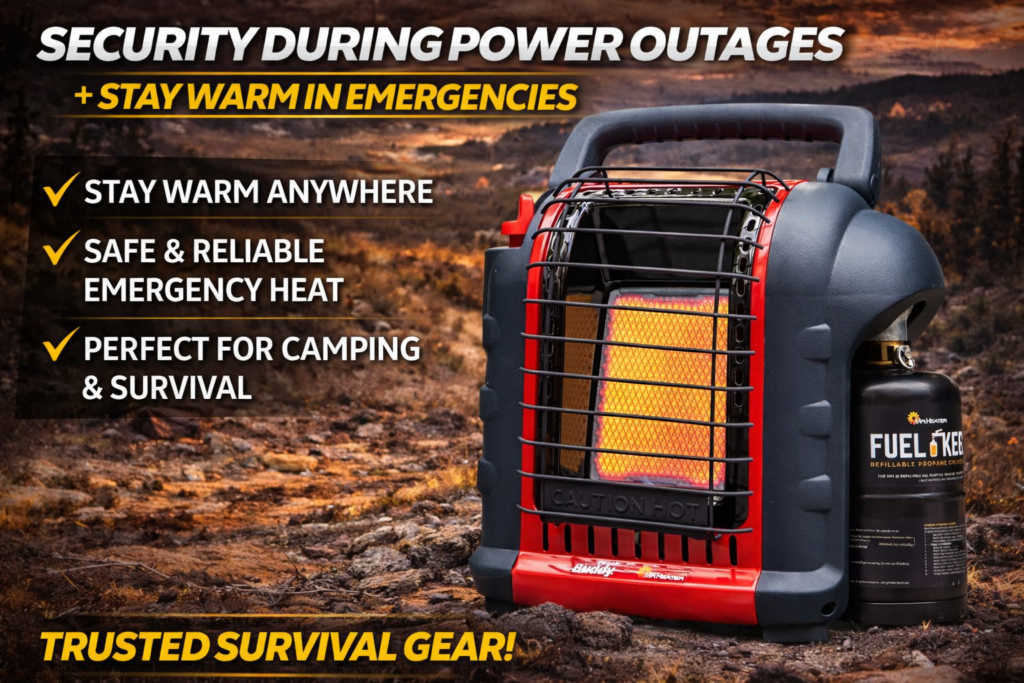
The 9,000 BTU Portable Buddy propane heater is the standard recommendation for indoor emergency heat. It’s approved for indoor use, runs on standard propane cylinders, and produces enough heat to warm a small room efficiently. Store enough propane for your anticipated heating needs with a meaningful buffer.
Wood heat — a fireplace or wood stove — is the most sustainable long-term heat source in an extended grid-down scenario. If your home has this capability, ensure your wood supply is adequate and your chimney is clean before you need it. If it doesn’t, the propane heater is your primary option.
Sanitation When the Water Stops
This is the category most grid-down guides skip over and one of the most important for preventing the secondary health crises that kill people in prolonged emergencies.
When municipal water stops, toilet flushing stops. Handwashing becomes rationed. Waste management becomes a serious problem within days in a household without a plan.
Sanitation essentials to have ready:
- Large supply of hand sanitizer and wet wipes
- 5-gallon bucket with tight-fitting lid (emergency toilet)
- Heavy-duty garbage bags
- Kitty litter or sawdust for waste management
- Bleach for surface disinfection and water treatment
- Nitrile gloves in bulk
Maintaining sanitation discipline in a grid-down scenario isn’t optional. The diseases that follow poor sanitation — dysentery, cholera, typhoid — are far more dangerous in a scenario where medical care is unavailable. Keep your living area clean, manage waste properly from day one, and treat it as a survival priority equal to food and water.

Security in a Grid-Down Scenario
In a short-term outage, security is rarely a concern. In a prolonged grid-down event — especially one affecting a wide area — the social dynamics change as resource scarcity increases. This isn’t fear-mongering. It’s documented human behavior in every major prolonged disaster on record.
The goal is not to become a fortress. It’s to avoid being a target and to have a plan if your household security is challenged.
- Don’t advertise. Running a generator loudly while neighbors go dark, cooking food with strong smells, or openly discussing your supplies makes you a target. Operational security matters.
- Know your neighbors. The households around you are your most likely allies and your most likely threat depending on how you’ve built those relationships before the emergency. Community preparedness and mutual aid dramatically improve everyone’s outcomes.
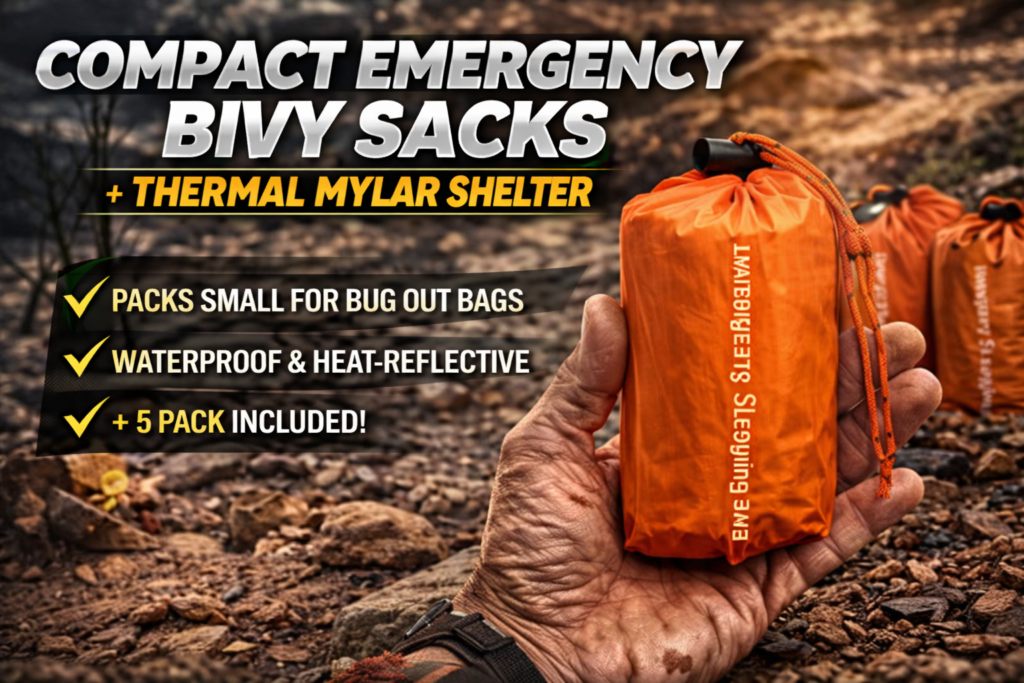
- Have a plan. Know where your family goes if your home becomes unsafe. Know your bug out route. Have your bug out bags ready to go even if your primary plan is to stay.
Communication When Cell Towers Go Down
Cell tower backup batteries last 4–8 hours under normal load. In a widespread grid-down event with everyone trying to make calls simultaneously, that window shrinks significantly. Plan for cell communication being unavailable within the first day.
Your communication stack:
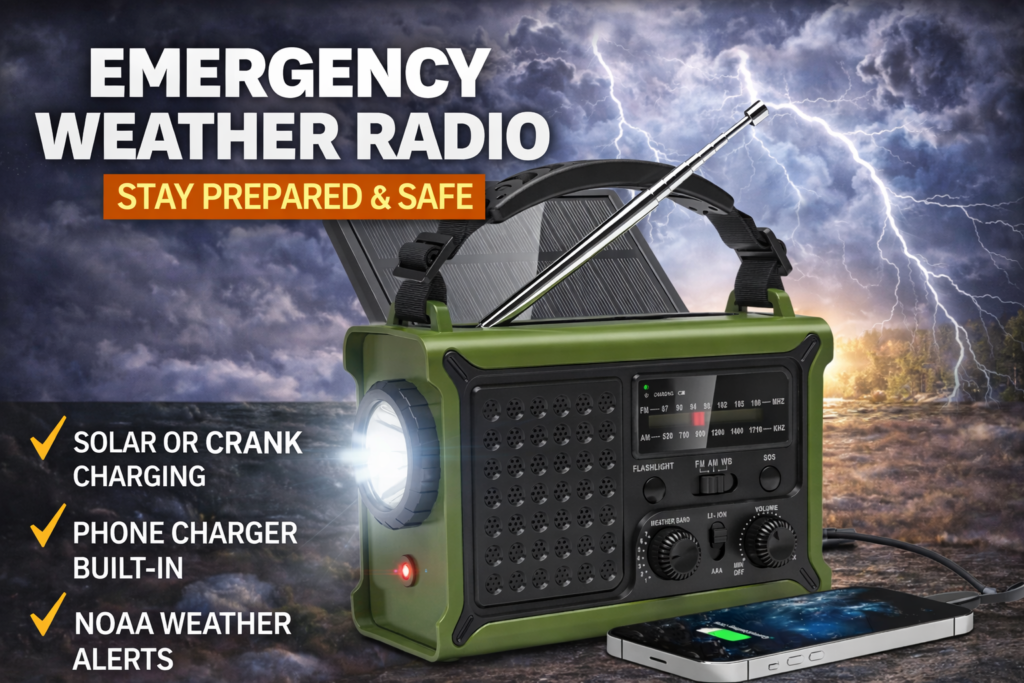
- NOAA weather radio: Your primary source of official emergency information when the internet and cell networks are gone. The hand-crank NOAA radio runs indefinitely without grid power.
- Two-way radios (GMRS/FRS): For communication within your household and immediate neighborhood. No infrastructure required.
- Pre-arranged meeting points: Agree in advance on where family members go if they can’t reach each other by phone. A specific address, a specific time, a specific fallback if the primary isn’t accessible.
- Written plans: Every family member should have a printed copy of the communication plan. When phones are dead, a piece of paper in a wallet works.

Medical Preparedness for Extended Grid-Down
Hospitals and urgent care facilities will be overwhelmed or inaccessible in a major grid-down event. Prescription medications become unavailable when pharmacies can’t operate. Minor injuries that would normally receive professional treatment have to be managed at home.
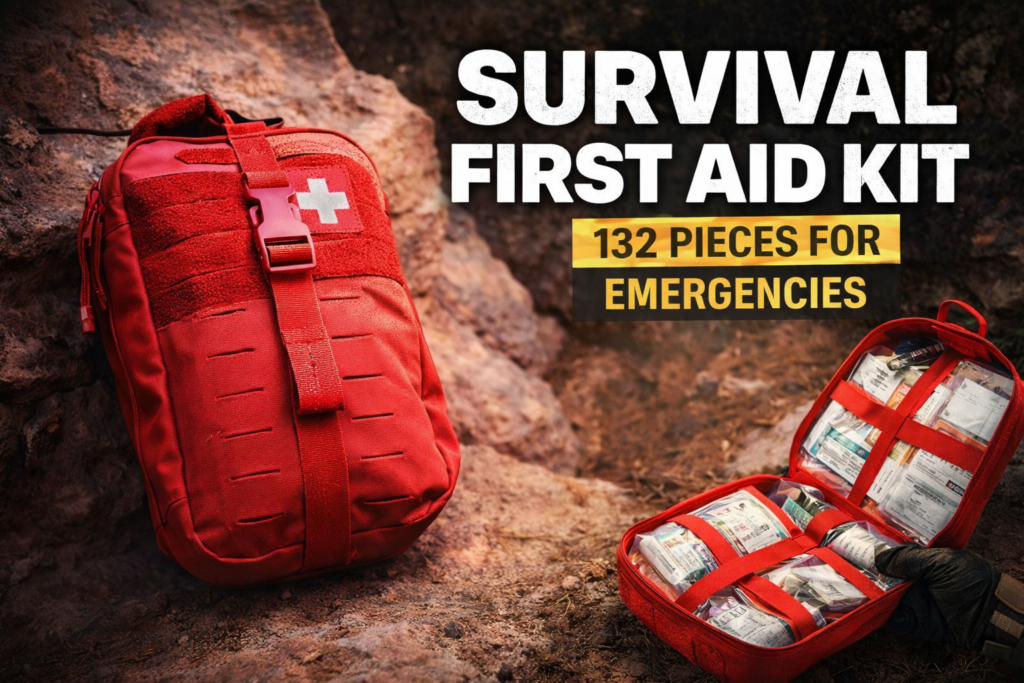
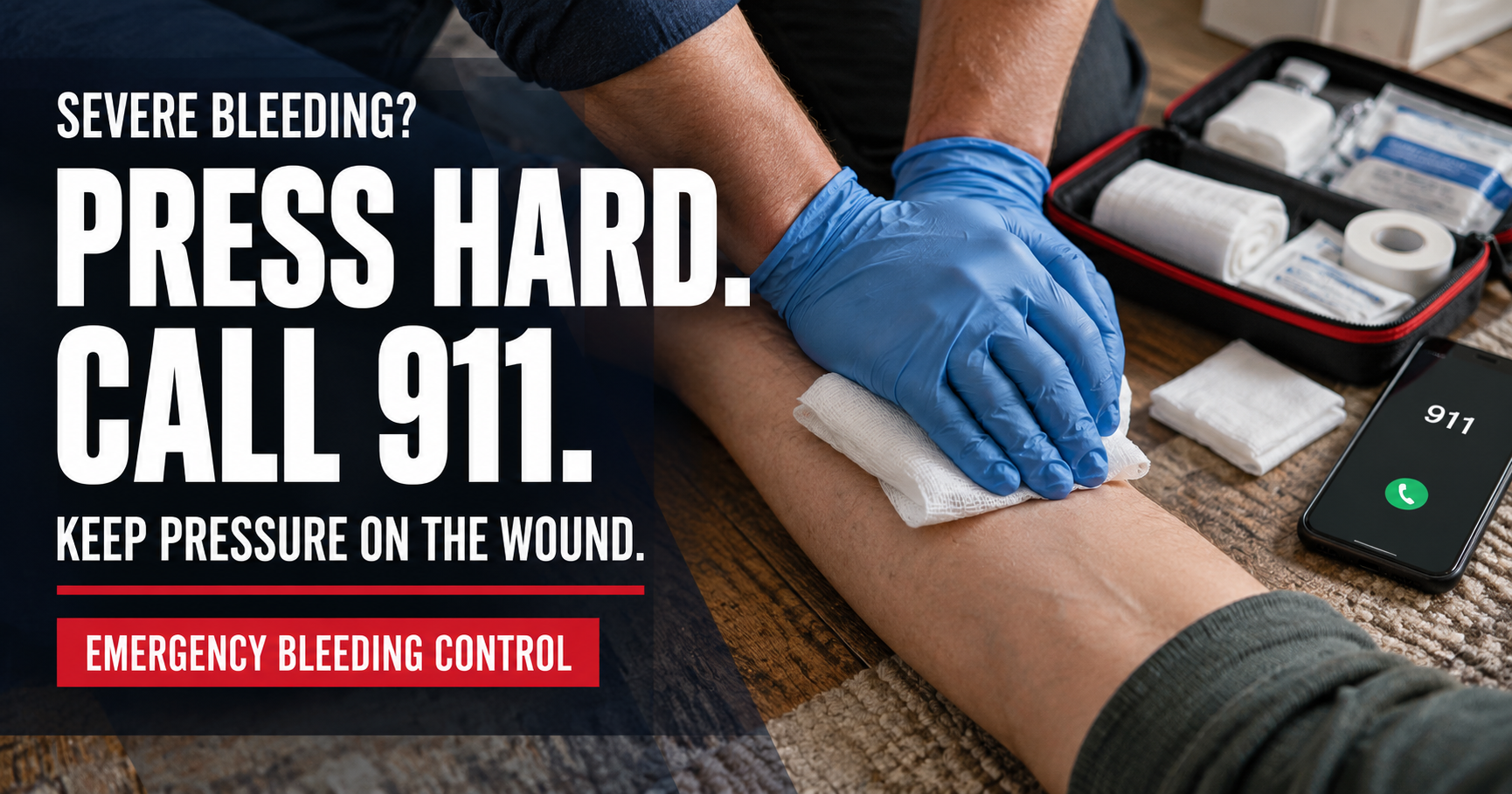
Your medical preparation needs to extend beyond the MyFAK trauma kit in your bug out bag — though that’s your acute care foundation. For extended home survival, add:
- 30-day supply of all prescription medications for every family member
- Broad-spectrum antibiotics (consult your physician about obtaining these for emergency use)
- Dental emergency kit
- Blood pressure and glucose monitoring equipment if relevant to your household
- A comprehensive first aid manual — physical copy, not digital
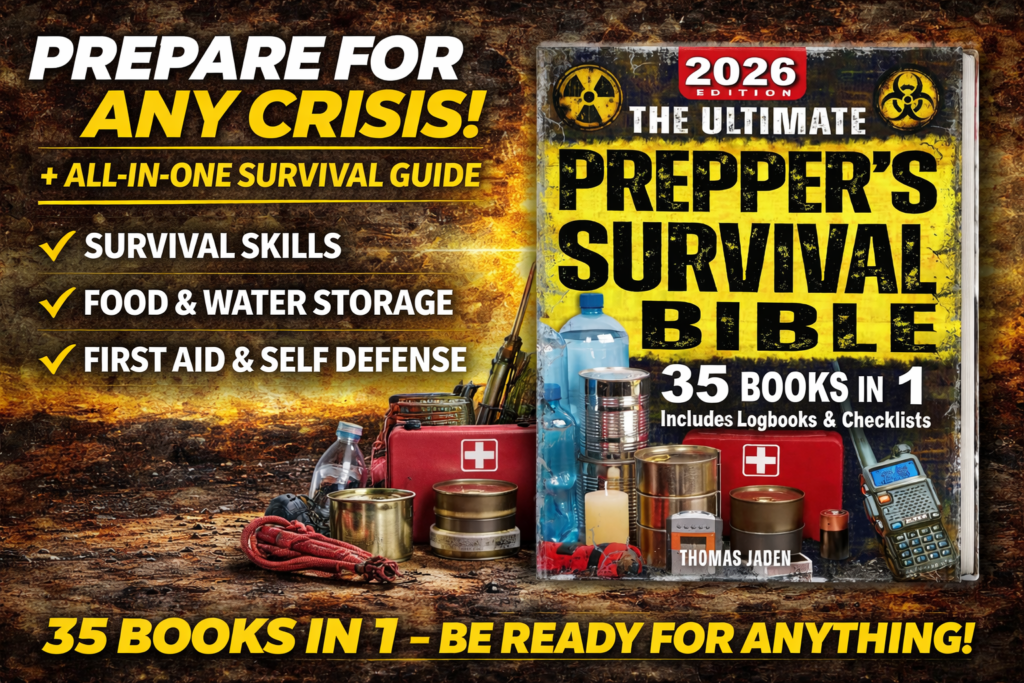
The Ultimate Prepper’s Survival Bible covers medical self-sufficiency in detail alongside dozens of other critical survival competencies. In a scenario where professional medical care is unavailable, knowledge is your most valuable medical resource.
The Two-Week Test
Here’s the most honest assessment of your grid-down readiness: imagine the power going out right now and not coming back for two weeks. Walk through your home and answer these questions.
Where does your drinking water come from on day three? What does your family eat on day eight? How warm is your home on a cold night in week two? How are you communicating with family members across town? What happens if someone needs medical attention?
Every question you can’t answer clearly is a gap in your preparedness. Every gap costs you nothing to close now and potentially everything to discover during the actual event.
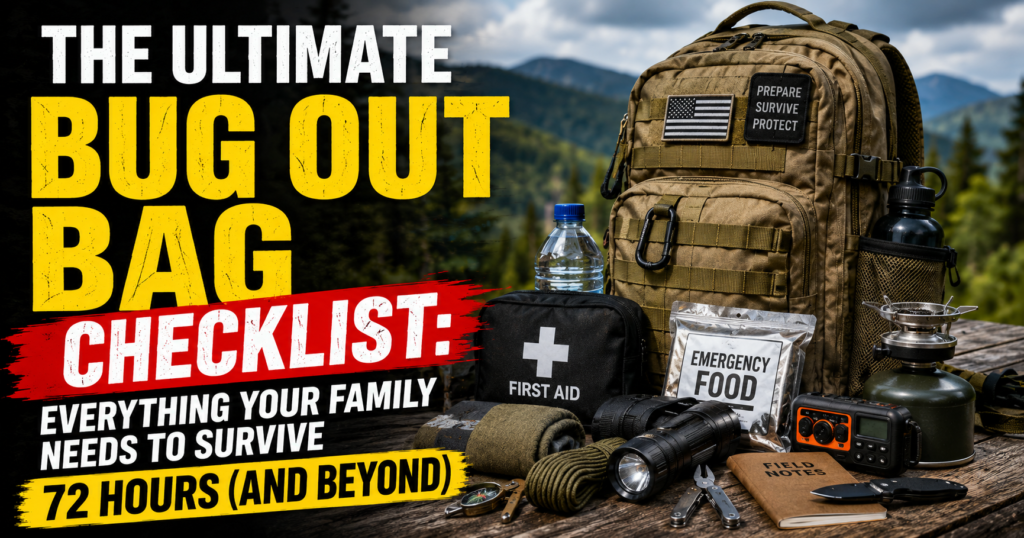
Start with water storage. Add food supply. Build your power backup. Layer in medical and sanitation. And keep your bug out bags ready even as you build your home survival capability — because sometimes the right answer to a grid-down event isn’t staying home. It’s knowing when to leave and being ready to do it.
About the Author: Jake Mercer spent 11 years in emergency management before turning his focus to practical preparedness education. He lives with his wife and three kids in rural Tennessee, where grid-down planning is part of everyday life rather than emergency thinking. He writes for Survive Essentials covering gear, strategy, and the real-world skills that make the difference when systems fail.