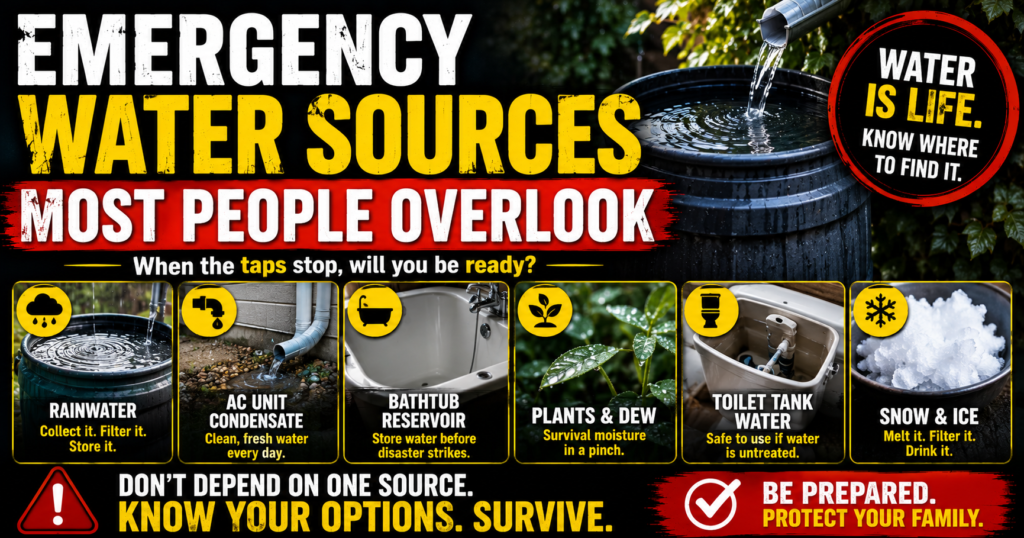
Ask someone where they would get water during an emergency and you’ll usually hear the same answers.
Bottled water.
The grocery store.
Maybe a nearby creek or pond.
The problem is that many of the best emergency water sources are sitting much closer than people realize.
Some are already inside your home.
Others are available before an emergency even begins.
The families who handle water shortages best are often the ones who understand all of their options before disaster strikes.
Whether you’re dealing with a major storm, water main break, prolonged power outage, hurricane, flood, winter weather emergency, or another disruption, knowing where to find water can make a stressful situation far more manageable.
Your Stored Water Supply Should Always Be First
Before discussing alternative water sources, it’s important to start with the obvious.
Nothing beats water you’ve already stored.
No collection.
No filtration.
No guesswork.
No risk.
Preparedness experts consistently recommend storing water before an emergency occurs because it remains the safest and most reliable option available.
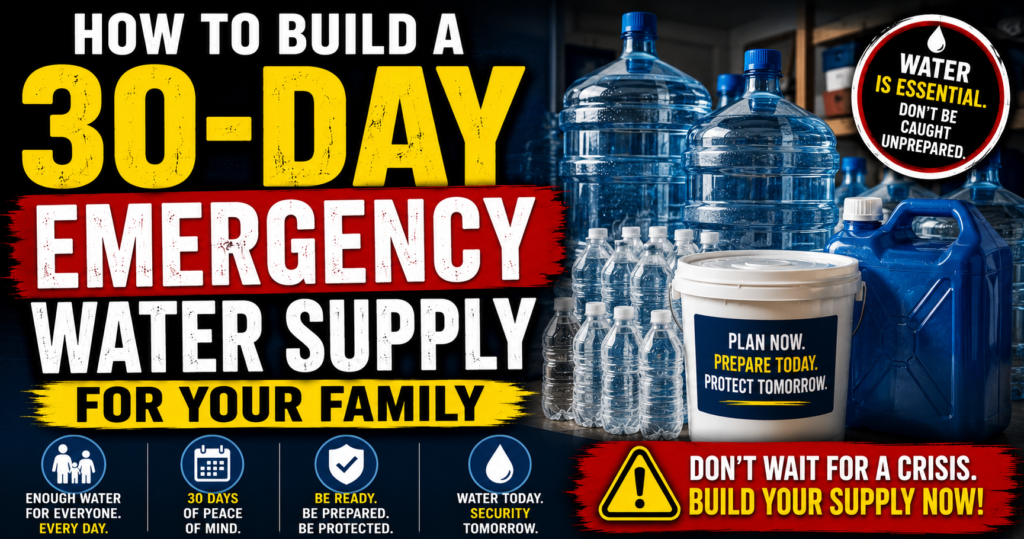
If you’re still building your supply, start with how to build a 30-day emergency water supply for your family.
Your Hot Water Heater May Hold Dozens of Gallons
Most homeowners walk past a large emergency water reserve every day without realizing it.
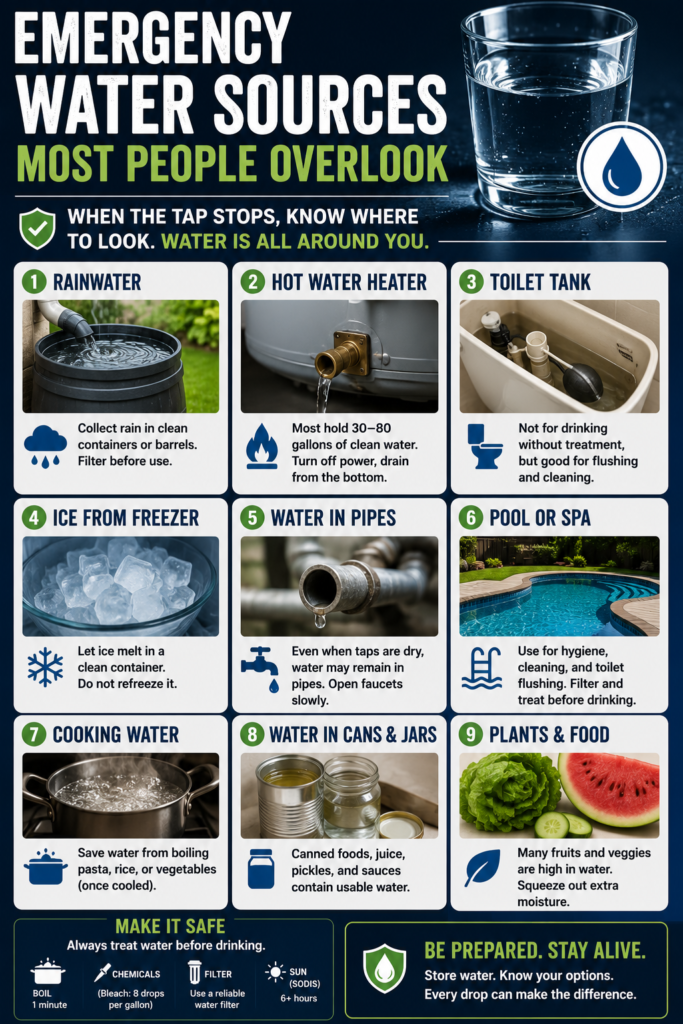
A typical water heater may contain 30 to 80 gallons of water depending on the size of the tank. Water stored in a properly maintained water heater can serve as an emergency source when municipal service is interrupted.
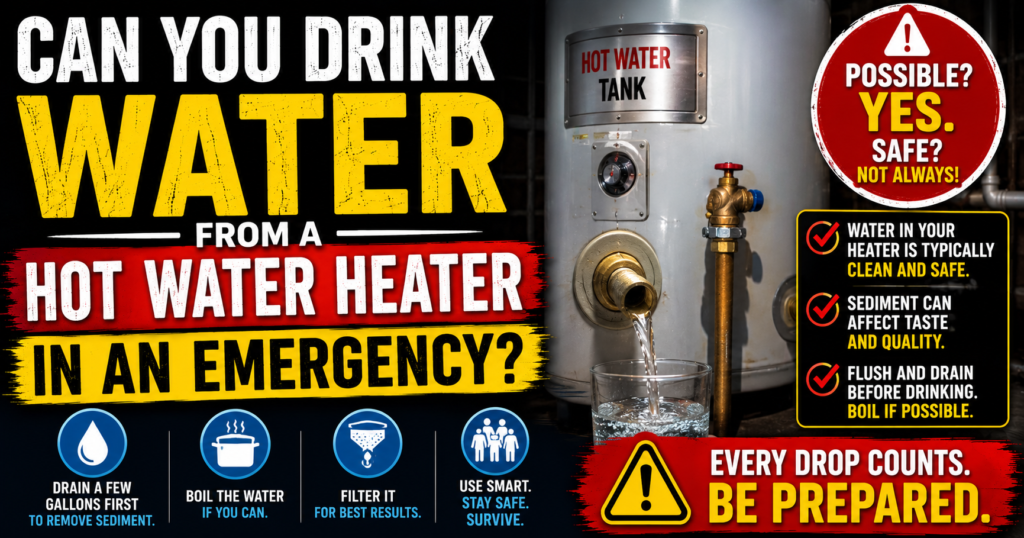
If you’ve never considered this option before, read can you drink water from a hot water heater in an emergency.
For many families, this may be the largest emergency water source already inside the home.


Your Swimming Pool Contains More Water Than You Think
Pool owners often focus on food and bottled water while overlooking the thousands of gallons sitting in their backyard.
Pool water is generally not your first choice for drinking.
However, it can be extremely valuable for:
- Flushing toilets
- Cleaning
- Sanitation
- Washing clothing
- Conserving stored drinking water
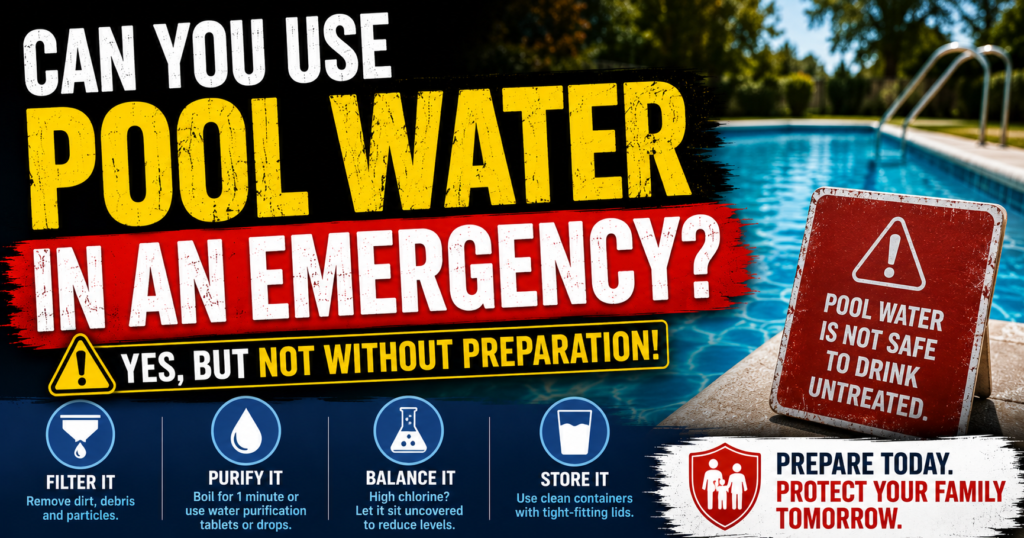
Our guide on using pool water during an emergency explains where pool water fits into a realistic preparedness plan.
Rainwater Can Become a Valuable Backup
Rainwater is one of the oldest emergency water sources in human history.
Yet many people never consider it until they desperately need water.
Rainwater collection can provide a valuable backup source during extended emergencies, especially when municipal supplies become unavailable.
However, collection methods matter.
Storage matters.
Treatment matters.
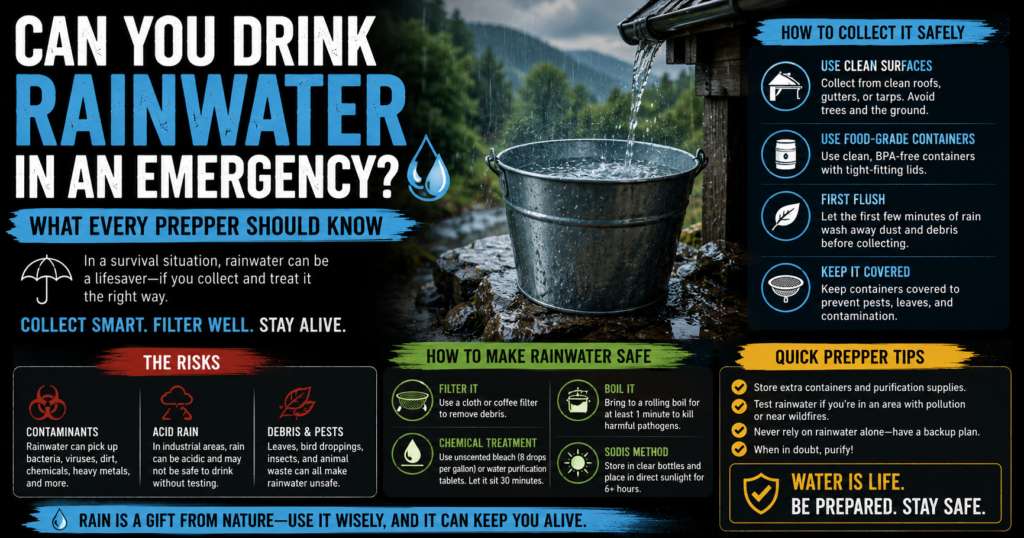
Before relying on rainwater, read Can You Drink Rainwater in an Emergency?.
Your Bathtub Can Become a Massive Water Reserve
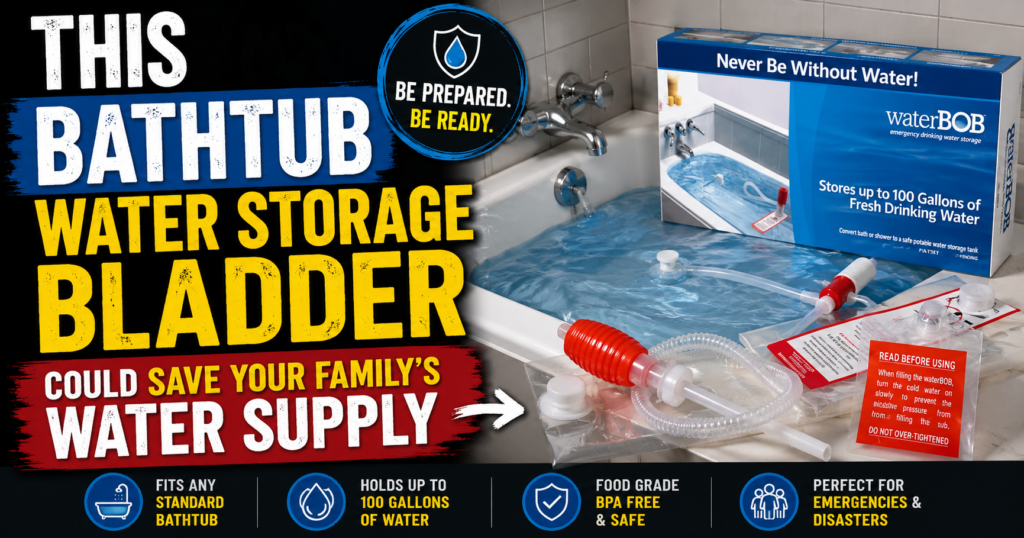
One of the smartest preparedness tools we’ve reviewed is this bathtub water storage bladder that could save your family’s water supply.
Most people don’t have room for dozens of large water containers.
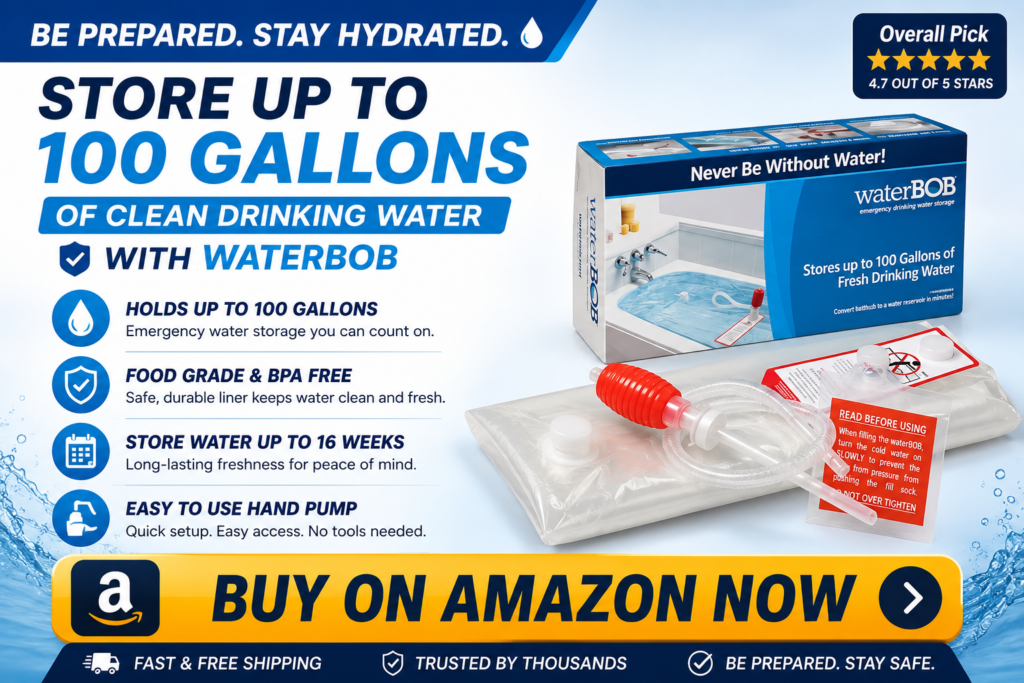
A bathtub bladder solves that problem.
When severe weather is approaching, it allows you to store a large amount of clean tap water before service interruptions occur.
Some models hold up to 100 gallons.
For many households, that’s one of the fastest ways to expand emergency water storage capacity.
You can also see the current bathtub bladder here:
Ice Can Become Water
This sounds obvious, but many people forget about it.
During power outages, freezers often contain a significant amount of ice.
That ice can be melted and used when appropriate.
The same applies to ice stored in coolers and portable freezers.
Every gallon matters during a prolonged emergency.
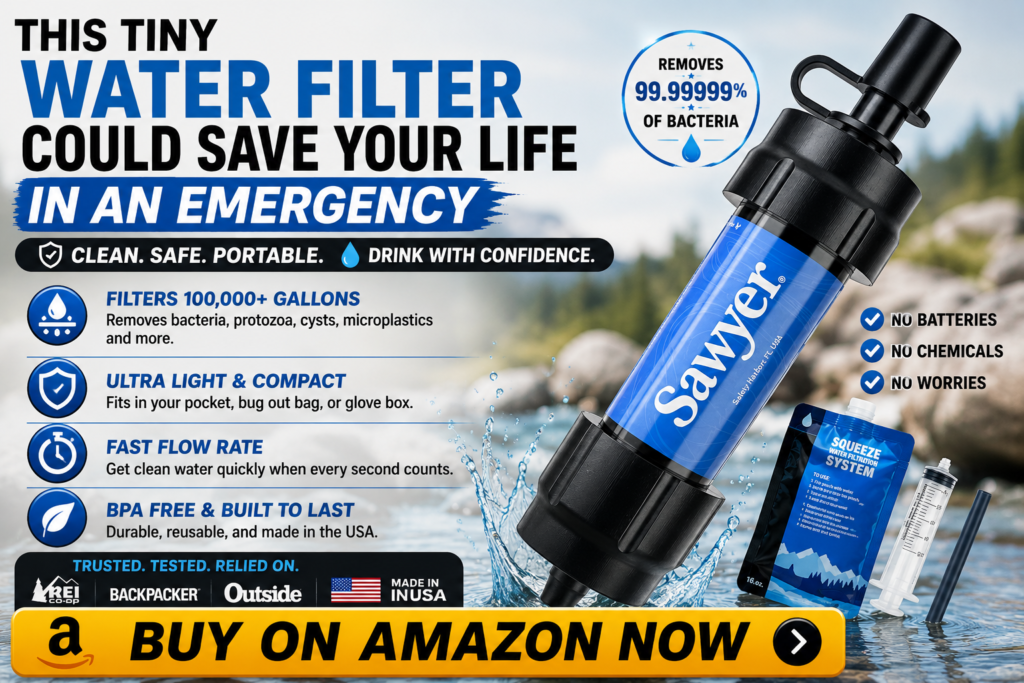
👉 This portable water filter is awesome!: https://amzn.to/3Ss7eAA


Bottled Water Is Still One of the Best Options
Sometimes the simplest answer remains the best answer.
Commercially bottled water continues to be one of the safest and most reliable emergency water sources available.
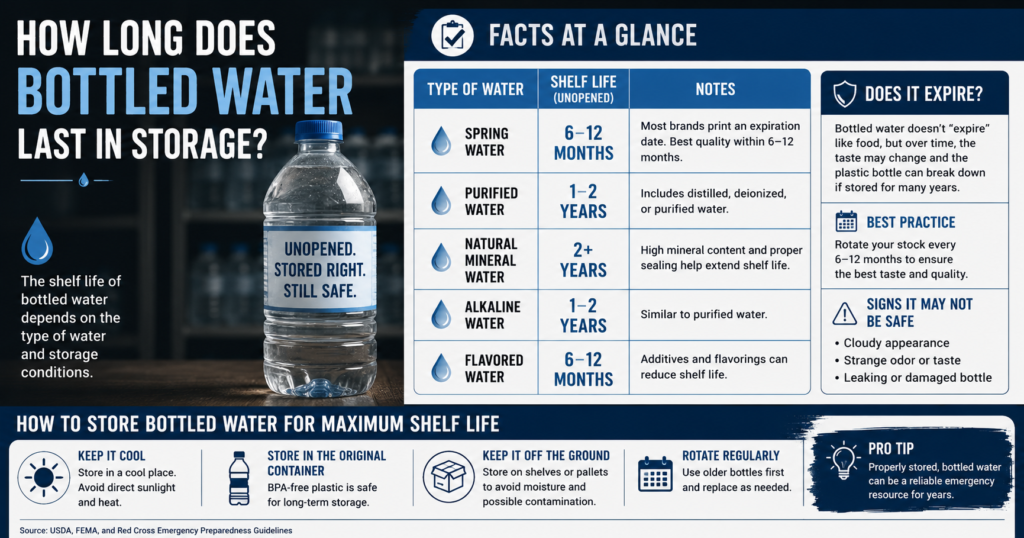
If you’ve been storing bottled water for a while, check out how long bottled water lasts in storage.
Don’t Forget About Water Filtration
Eventually every stored water source runs low.
That’s why filtration becomes such an important layer of preparedness.
A filter gives you the ability to safely use additional water sources when necessary.
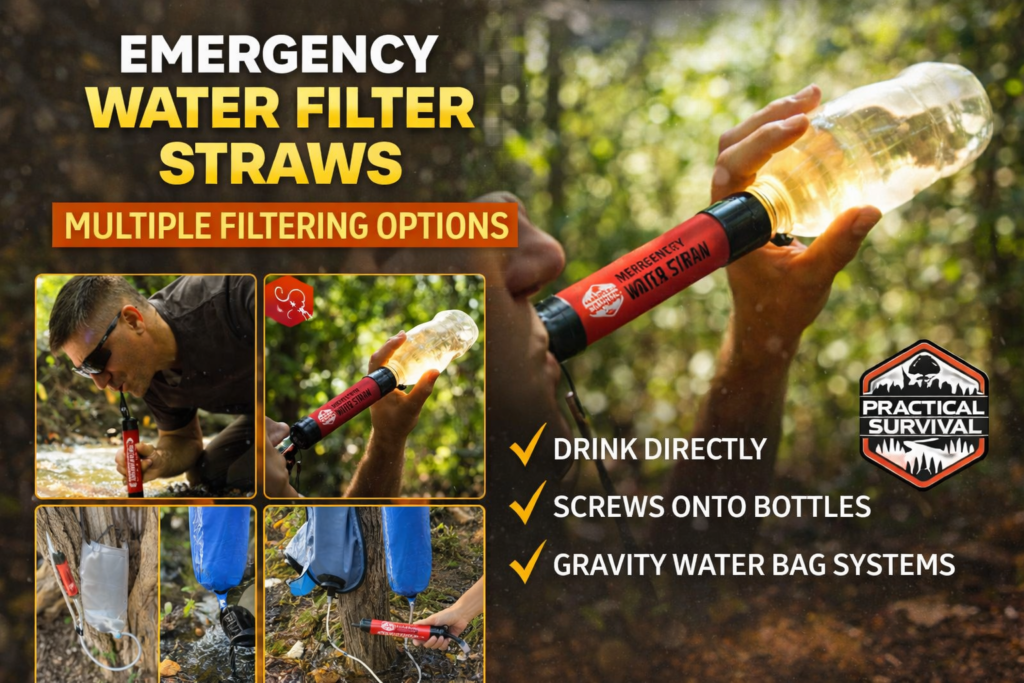
One of the simplest options we’ve reviewed is these emergency water straws that could save your life.
They’re lightweight, affordable, and capable of filtering thousands of gallons.

Families wanting additional options should also read our guide to survival water purification systems.
Clear Water Can Still Be Dangerous
One mistake many people make is trusting water because it looks clean.
Unfortunately, bacteria, parasites, and other contaminants are usually invisible.
Crystal-clear water can still make you sick.
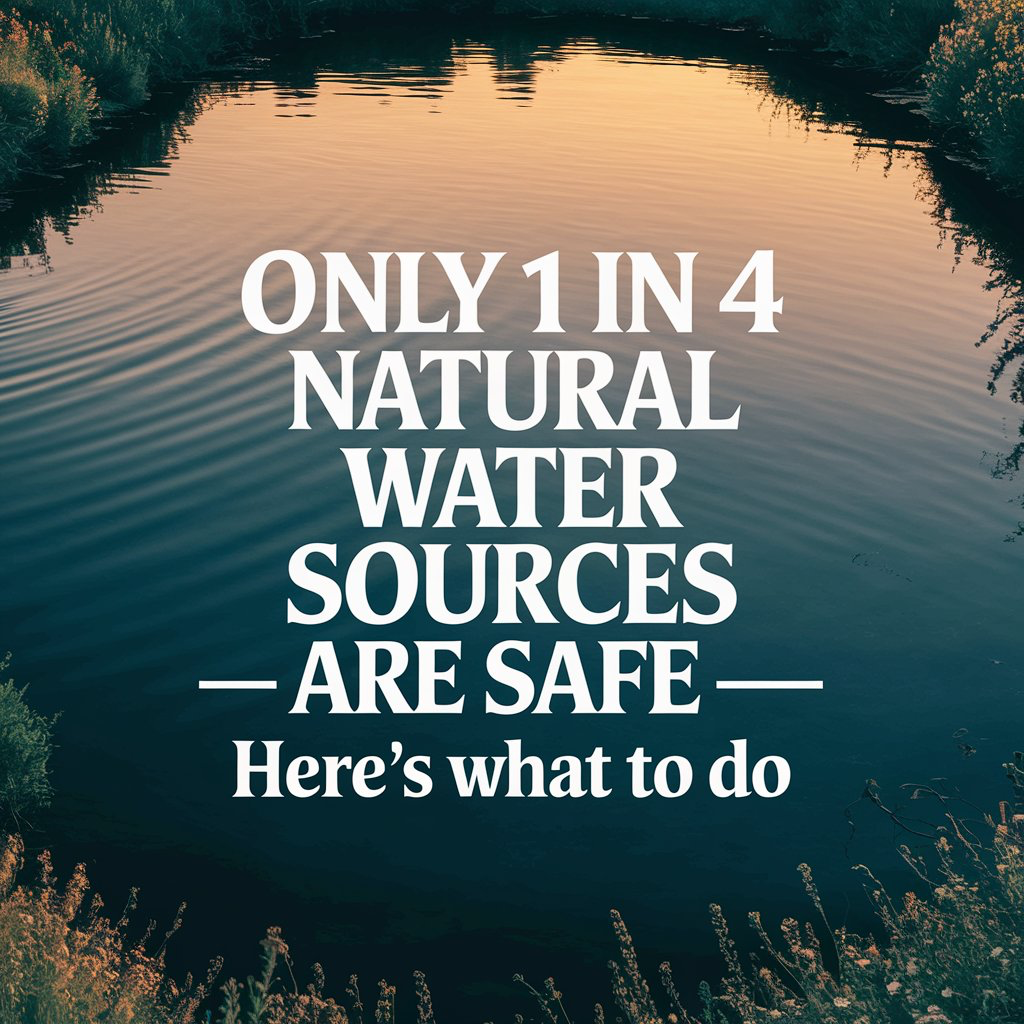
That’s why we strongly recommend reading why clear-looking water can still be dangerous before relying on any unfamiliar water source.
The Best Emergency Water Plan Uses Multiple Sources
Prepared families rarely depend on a single solution.
Instead, they create layers.
Those layers may include:
- Stored bottled water
- Water heaters
- Bathtub storage
- Rainwater collection
- Pool water
- Water filtration
- Water purification
Each layer provides additional flexibility.
If one source becomes unavailable, another remains.

Building Options Before You Need Them
The biggest advantage of preparedness isn’t gear.
It’s options.
The more water sources you understand before an emergency, the easier it becomes to adapt when conditions change.
Most people wait until a crisis starts before thinking about water.
The families who prepare beforehand are usually the ones who sleep better when everyone else is standing in line hoping the store still has bottled water left.
Related Water Preparedness Articles
Building a reliable emergency water plan takes more than simply storing a few bottles of water. Explore these helpful guides to strengthen your family’s preparedness:
- Emergency Water Preparedness Guide: Everything You Should Know
- How to Build a 30-Day Emergency Water Supply for Your Family
- Emergency Water Checklist: What Every Family Should Have
- How to Purify Water Without Electricity During an Emergency
- What Is the Safest Water Source During an Emergency?