Most bug out bag food lists are wrong. They tell you to grab protein bars and call it a day — no calorie math, no cooking reality, no thought for kids or elderly family members who can’t survive on jerky and trail mix for three days straight.
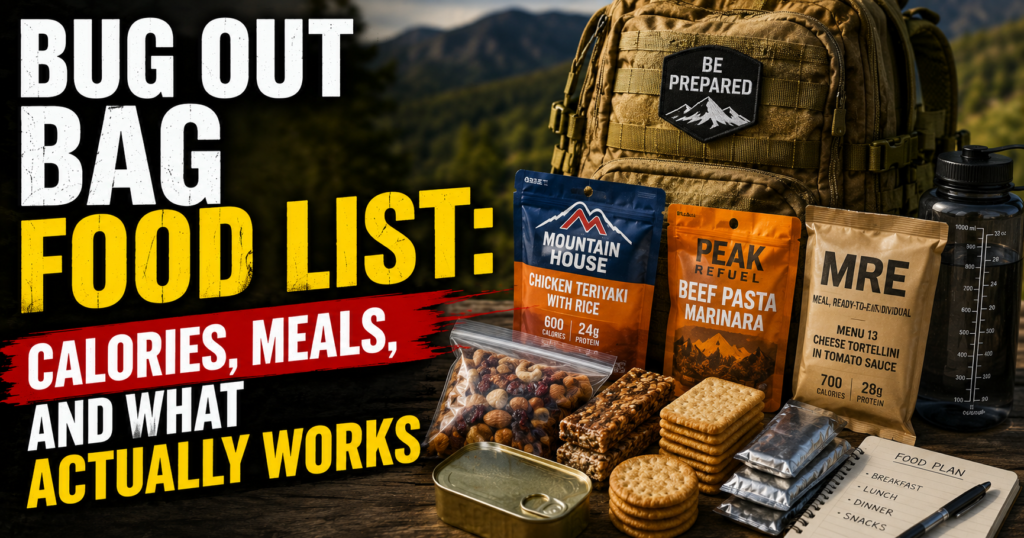
Food in a bug out scenario is not about enjoying meals. It’s about keeping your body and your mind functional when everything around you is falling apart. The right food gives you energy to move, warmth to survive cold nights, and the morale boost that keeps panic from setting in. The wrong food weighs you down, runs out fast, or requires cooking equipment you don’t have.
This is the food list that actually works — built around real calorie targets, practical cooking limitations, and the realities of moving fast with a family.
The Calorie Math Nobody Talks About
Start with numbers. A sedentary adult needs roughly 1,800–2,000 calories per day to maintain basic function. A person moving on foot with a loaded pack in moderate conditions needs 2,500–3,500 calories. Children need 1,200–1,800 depending on age and size.
For a family of four bugging out for 72 hours, you’re looking at a minimum of 24,000 calories total — and that’s on the conservative end. Most people pack maybe 8,000. They run out of food on day two and start making bad decisions on an empty stomach.
Calculate your family’s actual calorie needs before you buy a single item. Then build your food supply to hit that number with a 20% buffer.
The Four Food Categories You Need
1. Ready-to-Eat — No Cooking Required
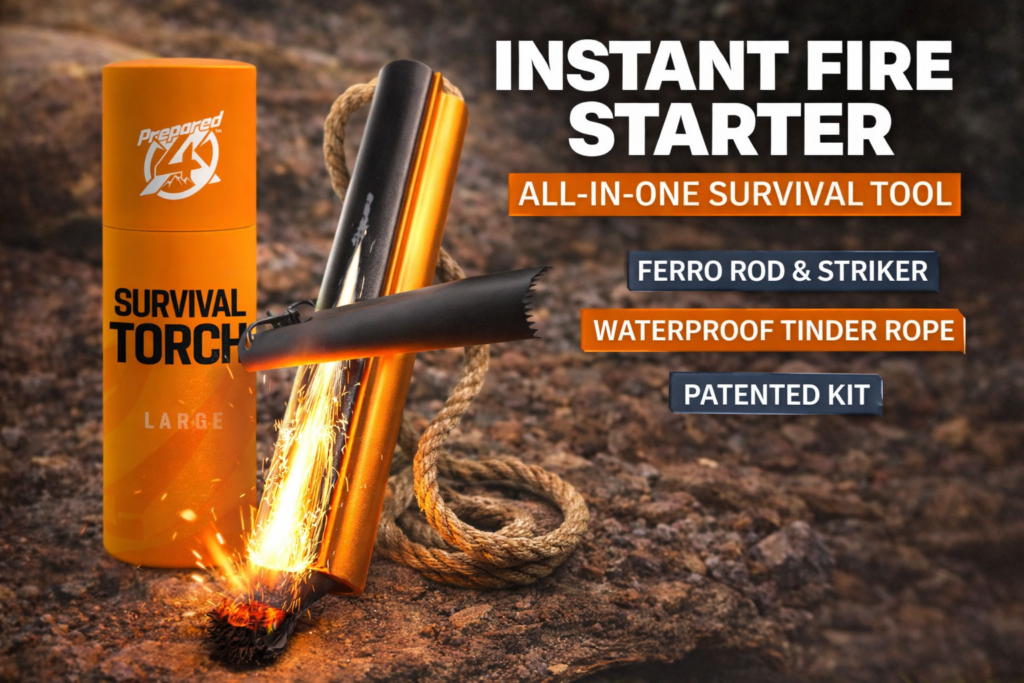
This is your highest priority category. When you’re moving fast, setting up camp in the dark, or dealing with wet conditions where fire isn’t happening, you need food that goes straight from the bag to your mouth. When cooking is still necessary, a fire starter for wet conditions can help you create a reliable fire despite difficult weather.
What to pack:
- Protein bars (400–500 calories each, look for 20g+ protein)
- Beef jerky and meat sticks
- Mixed nuts and trail mix
- Peanut butter packets (single-serve, 200 calories each)
- Hard cheese (lasts 4–6 hours unrefrigerated, longer in cool conditions)
- Crackers in hard-sided packaging
- Dried fruit
- Hard candy and chocolate (fast glucose, morale)
Prioritize calorie density here. Nuts deliver roughly 170 calories per ounce. Dried fruit runs about 85 calories per ounce. Crackers around 120. You’re carrying every ounce on your back — make each one count.
2. Just-Add-Water Meals
Freeze-dried and dehydrated meals are the backbone of serious bug out food planning. They’re lightweight, calorie-dense, have shelf lives measured in decades, and require nothing but hot or cold water to prepare.
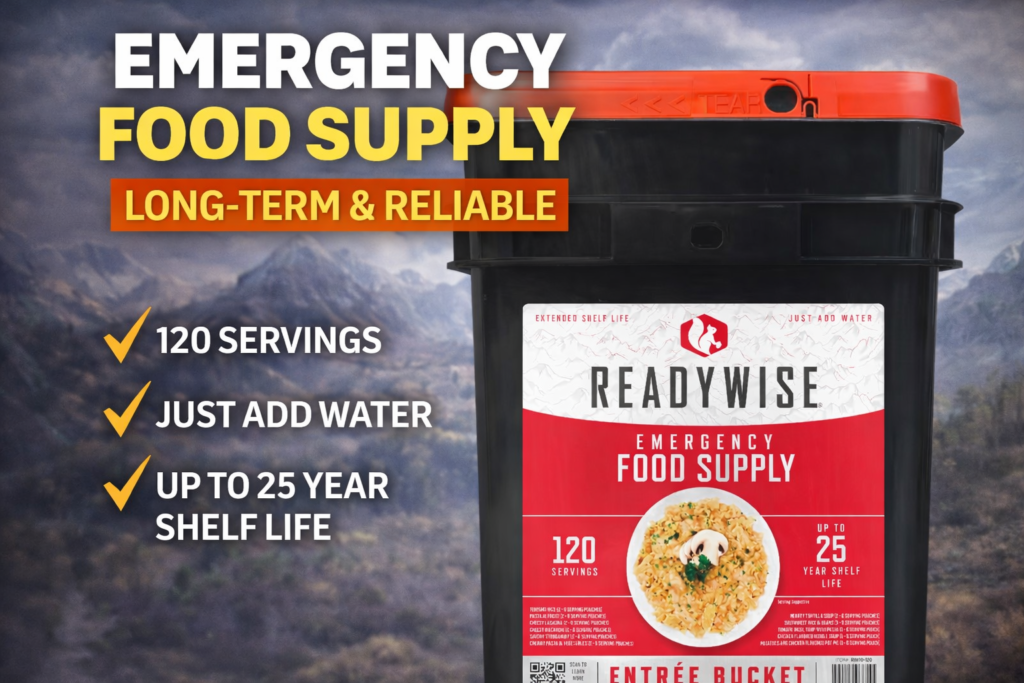
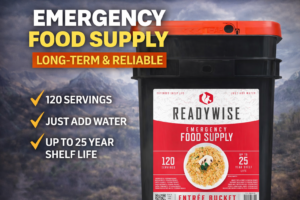
The ReadyWise Emergency Food Supply is the standard we recommend. Pull individual meal pouches from the larger storage bucket and rotate them into your bug out bag. Each pouch runs 250–400 calories, takes five minutes to prepare with hot water, and takes up almost no space.

Pack enough freeze-dried meals to cover at least one full meal per person per day. Fill the rest of your calorie target with ready-to-eat items. If you can make hot water — through fire, a camp stove, or your campfire cooking kit — you eat a real meal. If you can’t, you eat from category one. Either way, you eat.
3. High-Calorie Compact Survival Bars
Survival ration bars — the dense, compressed blocks designed specifically for emergency use — are the insurance policy in your food kit. They’re not pleasant. They’re not meant to be. They exist to keep you alive when everything else runs out or gets ruined.
A single 3,600-calorie survival bar costs a few dollars, weighs under a pound, has a five-year shelf life, and takes up roughly the space of a paperback book. Pack one per person as your last-resort layer. Hope you never crack it open. Be glad it’s there.
4. Comfort and Morale Food
This category gets skipped by preppers who are thinking about survival calories and forgetting about the humans eating them. Children especially — and plenty of adults — will shut down mentally before they shut down physically if they’re eating nothing but tasteless emergency rations in a terrifying situation.
Pack a small comfort layer:
- Instant coffee or tea packets
- Hot cocoa mix
- A few pieces of their favorite candy per child
- Instant oatmeal packets
- Bouillon cubes for a warm salty drink that feels like a meal
Morale is a survival resource. Don’t treat it like a luxury.



The Full 72-Hour Bug Out Food List
Here’s a practical per-person packing list for a 72-hour bug out scenario, targeting 2,500 calories per day for an active adult:
Day 1
- Morning: Instant oatmeal packet + peanut butter packet (600 cal)
- Midday: Protein bar + beef jerky + dried fruit (700 cal)
- Evening: Freeze-dried meal pouch (350 cal) + hard candy (100 cal)
- Snacks: Mixed nuts throughout the day (800 cal)
Day 2
- Morning: Freeze-dried breakfast pouch + instant coffee (400 cal)
- Midday: Crackers + hard cheese + meat sticks (600 cal)
- Evening: Freeze-dried dinner pouch (400 cal)
- Snacks: Trail mix + protein bar + peanut butter (1,000 cal)
Day 3
- Morning: Protein bar + nuts + hot cocoa (700 cal)
- Midday: Jerky + dried fruit + crackers (500 cal)
- Evening: Freeze-dried meal or survival bar (400 cal)
- Snacks: Remaining ready-to-eat items (800 cal)
Scale this by person and adjust for children (reduce by 30–40%) and high-exertion scenarios (increase by 20–30%).
Water for Cooking: The Overlooked Calculation
Freeze-dried meals require water — typically one to two cups per pouch. Add that to your drinking water needs and your daily water requirement per person jumps from roughly one liter to nearly two liters on days when you’re cooking.
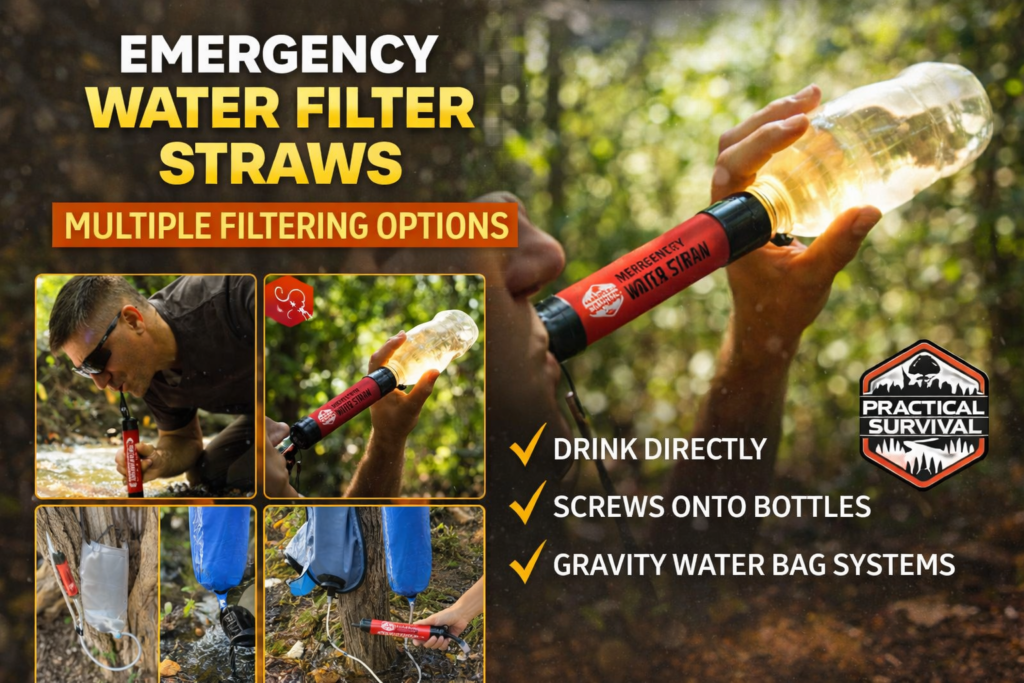
This is why your water filtration system is inseparable from your food plan. The Emergency Water Straws in your bug out bag turn any water source into drinking and cooking water. Without a reliable filter, you’re rationing water so tightly that cooking becomes impossible — and you’re back to cold ready-to-eat food only.
Always locate your water source before you set up camp. Never eat a freeze-dried meal without confirming you have enough water left for hydration afterward.
Food Storage and Packing Inside Your Bag
How you pack your food matters almost as much as what you pack.
- Waterproof everything. A gallon zip-lock bag around your food supply takes ten seconds and saves your entire food cache if your pack goes into a river or gets soaked in rain.
- Top-load your day’s food. What you’re eating today goes at the top or in a side pocket. You shouldn’t have to unpack your entire bag to get lunch.
- Keep a snack on your body. Protein bar in a jacket pocket, jerky in a cargo pocket. When you’re moving fast, you eat on the move — not during a 20-minute pack-unpacking session.
- Separate kids’ comfort food. Put it where they can access it without digging through your gear. Autonomy over their own snacks reduces meltdowns in stressful situations.
What to Avoid Packing
Just as important as knowing what to bring is knowing what to leave behind.
- Canned food. Heavy, bulky, requires a can opener, and the weight-to-calorie ratio is terrible. Leave it for your home storage.
- Fresh produce. Spoils in hours without refrigeration. Not worth the space or weight.
- Foods requiring long cooking times. Dried beans and rice are great for home storage. In a bug out, you don’t have the fuel, time, or water to cook them properly.
- Highly salty snacks without water backup. Sodium drives up your water requirements. If your water supply is limited, avoid packing pure salt snacks.
- Anything in glass. Heavy and dangerous when it breaks.
Foraging as a Supplement — Not a Strategy
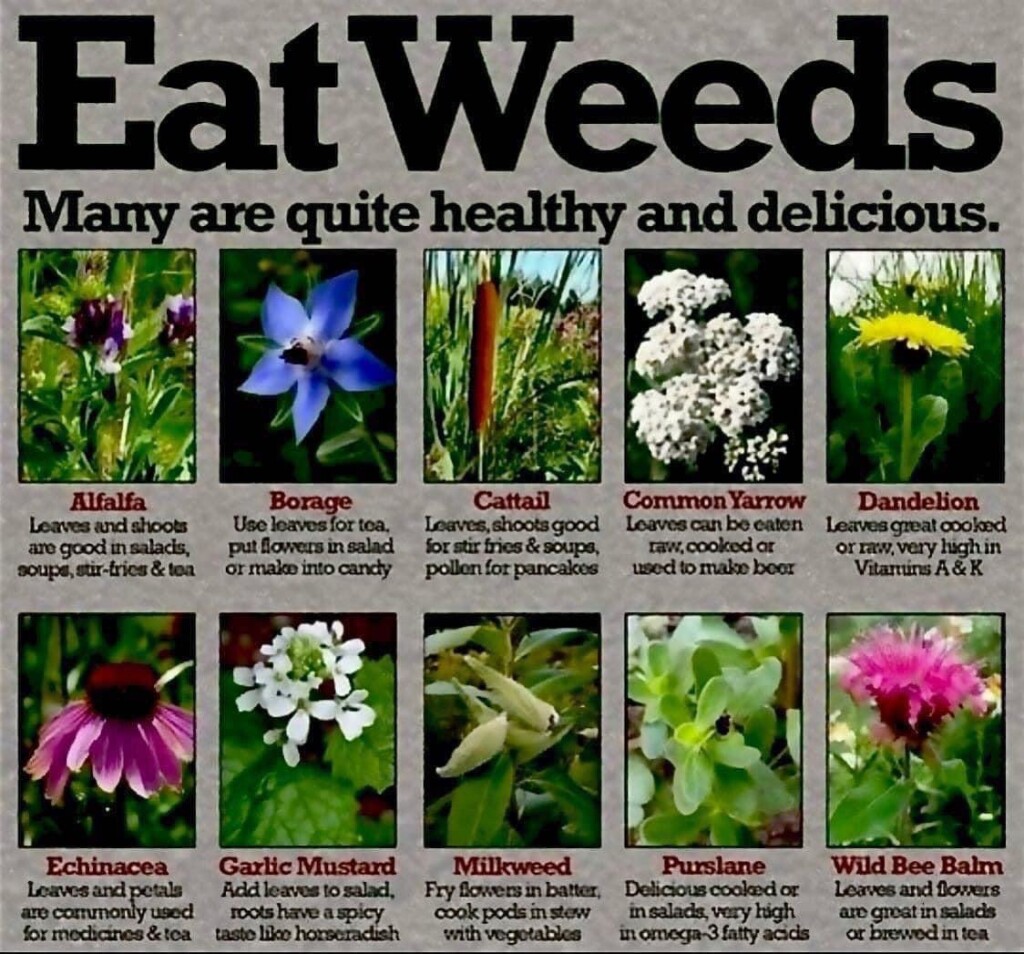
You’ll find plenty of survival content that leans hard on foraging wild edibles as a food source. It’s a valuable skill — edible weeds and wild foods can absolutely supplement your calorie intake in a prolonged survival situation. But foraging is slow, requires knowledge you need to build before the emergency, and produces wildly unpredictable calorie yields depending on season and location.
Don’t plan your family’s survival around foraging. Plan it around packed food. Let foraging be the bonus, not the backup.
Extending Beyond 72 Hours
The 72-hour bug out bag is the starting point, not the finish line. If you’re planning for a true long-term grid-down or SHTF scenario, your food strategy needs to extend to two weeks minimum — and ideally much longer.
That planning lives in your home food storage, not your bag. A layered approach works best: 72-hour bag covers immediate evacuation, two-week home pantry covers short-term shelter-in-place, and a deep larder covers extended scenarios. Each layer feeds into the next.
We’re covering the full long-term food storage strategy — calorie targets, rotation systems, and the best freeze-dried brands for the money — in the next article in this series.
About the Author: Jake Mercer spent 11 years in emergency management before turning his focus to practical preparedness education. He lives with his wife and three kids in rural Tennessee, where food storage and self-sufficiency are part of everyday life — not just emergency planning. He writes for Survive Essentials covering gear, food strategy, and real-world prepper skills.