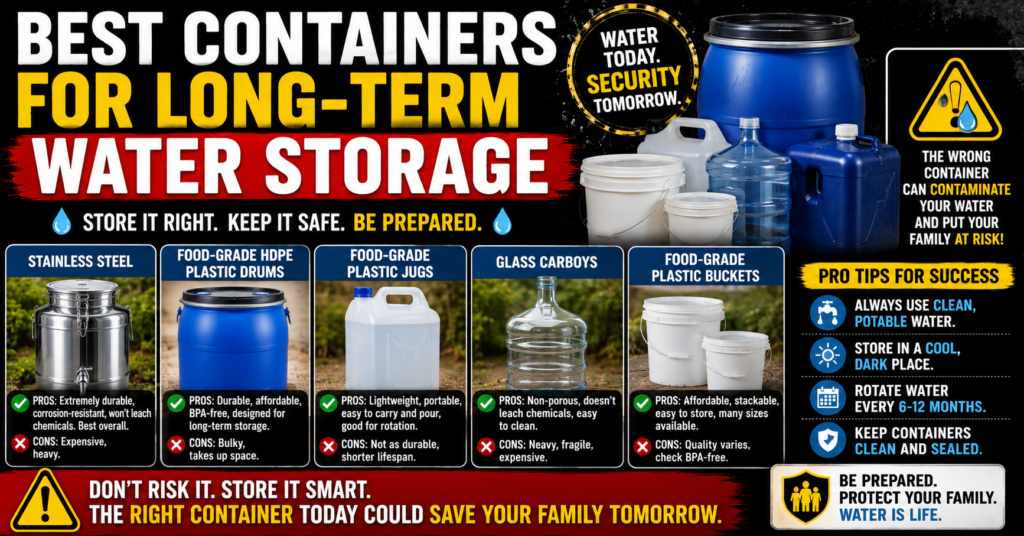
Building an emergency water supply is one of the smartest preparedness steps a family can take.
But once people decide to store water, they quickly run into another question.
What should I store it in?
The answer matters more than many people realize.
The wrong container can lead to leaks, contamination, bad tastes, wasted money, and a false sense of security. The right container can help keep water safe and ready for years.
Whether you’re preparing for storms, power outages, natural disasters, water main breaks, or long-term emergencies, choosing the right storage container is an important part of your preparedness plan.
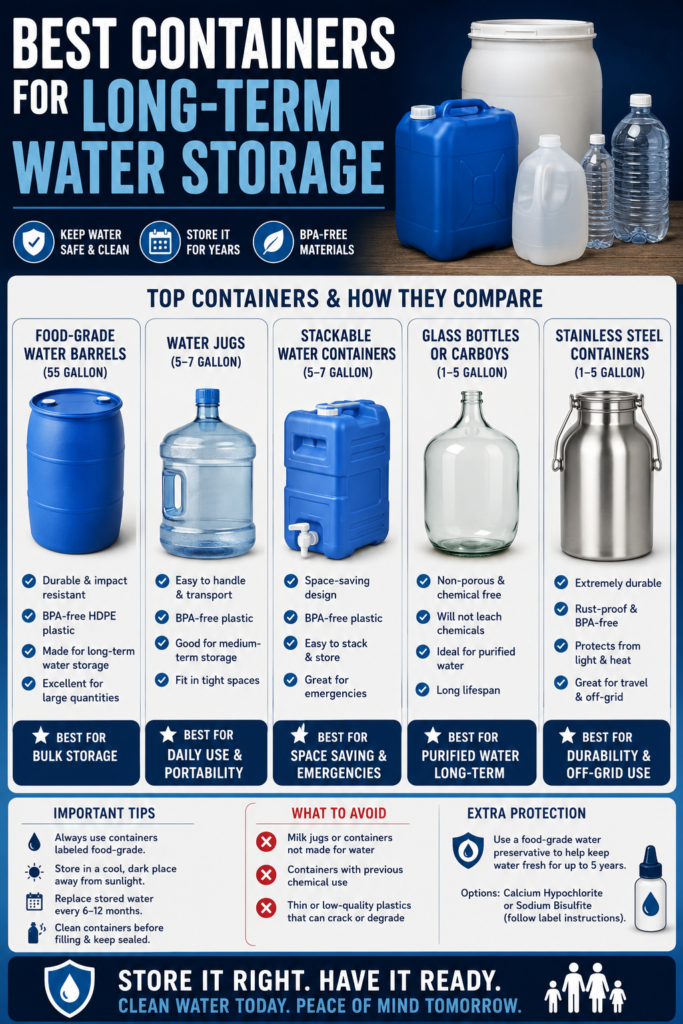
Why Water Storage Containers Matter
Water is unique compared to many other emergency supplies.
Food can often be repackaged.
Tools can be stored almost anywhere.
Water requires a container that protects it from contamination while remaining practical for storage and use.
The larger your emergency water supply becomes, the more important your storage strategy becomes.
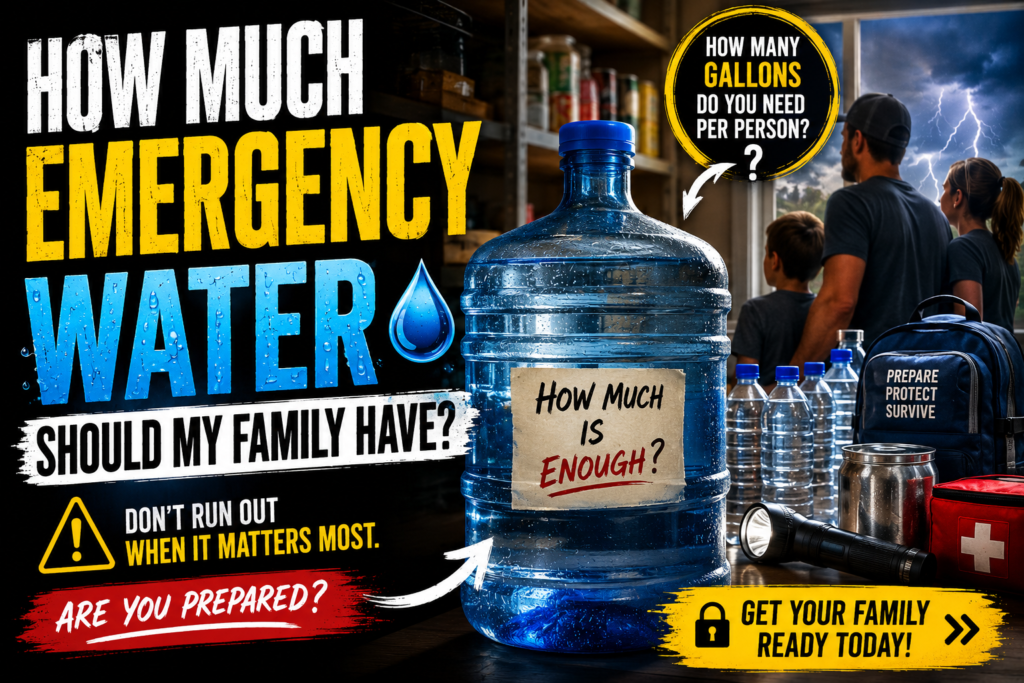
If you’re still determining how much water your household should store, start with How Much Emergency Water Should a Family Store? before purchasing containers.
The amount of water you’re storing often influences which container types make the most sense.
Bottled Water Is Still the Easiest Starting Point
For most families, bottled water is where preparedness begins.
There are several reasons for this.
It’s:
- Affordable
- Easy to find
- Ready to use
- Easy to rotate
- Available in many sizes
You don’t need special equipment.
You don’t need treatment chemicals.
You don’t need storage experience.
Just buy it and store it properly.
Many preparedness-minded families build the first part of their emergency water supply entirely from bottled water.
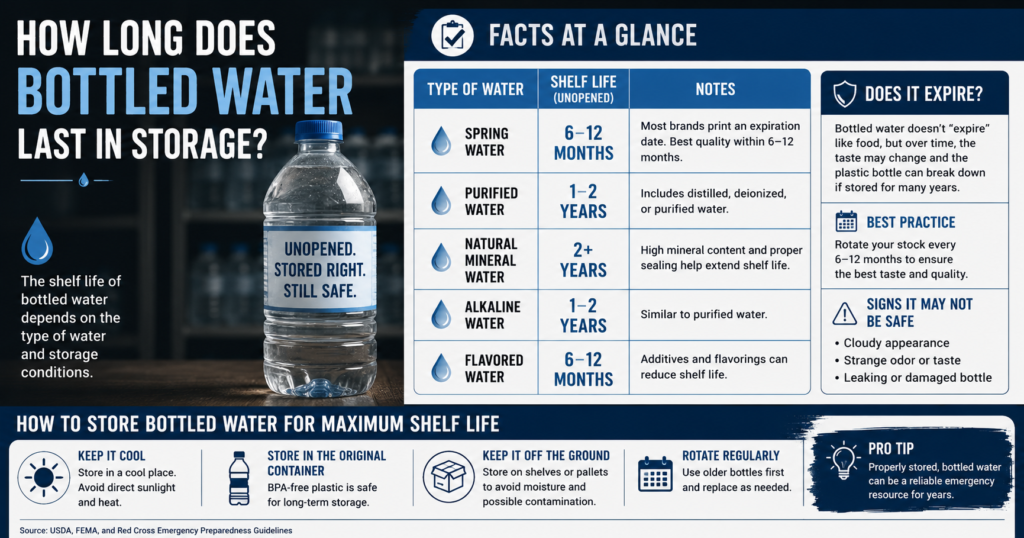
If you’ve ever wondered how long those cases will remain usable, check out How Long Does Bottled Water Last in Storage?.
Food-Grade Water Containers Are the Gold Standard
Once families move beyond bottled water, food-grade containers become one of the best options.
These containers are specifically designed for storing drinking water.
Advantages include:
- Larger capacity
- Durable construction
- Designed for potable water
- Better long-term storage potential
Food-grade containers are often available in sizes ranging from a few gallons to large emergency storage tanks.
For many homeowners, they become the backbone of a long-term water storage plan.
Water Storage Barrels Work Well for Larger Supplies
Families working toward a month or more of emergency water storage often turn to larger barrels.
A few properly maintained barrels can hold a significant amount of water while using relatively little floor space.
This approach works especially well for:
- Basements
- Utility rooms
- Storage areas
- Dedicated preparedness spaces
However, barrels aren’t practical for every household.
Apartment residents and those with limited space often need more creative solutions.
Apartment Residents Need Different Solutions
Not everyone has room for large barrels.
In fact, one of the biggest challenges apartment residents face is simply finding enough space.
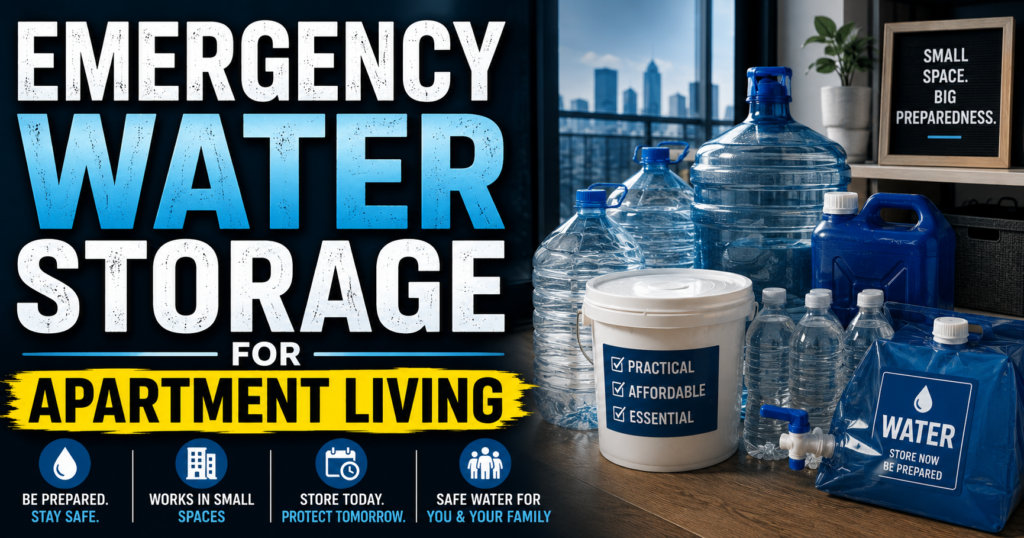
That’s why we created Emergency Water Storage for Apartment Living.
Many renters successfully build emergency water supplies by using:
- Under-bed storage
- Closets
- Furniture gaps
- Smaller stackable containers
Preparedness isn’t about having the biggest house.
It’s about using the space you have wisely.
Temporary Storage Containers Are Often Overlooked
One of the smartest emergency water storage solutions isn’t actually designed for long-term storage.
It’s designed for emergencies that haven’t happened yet.
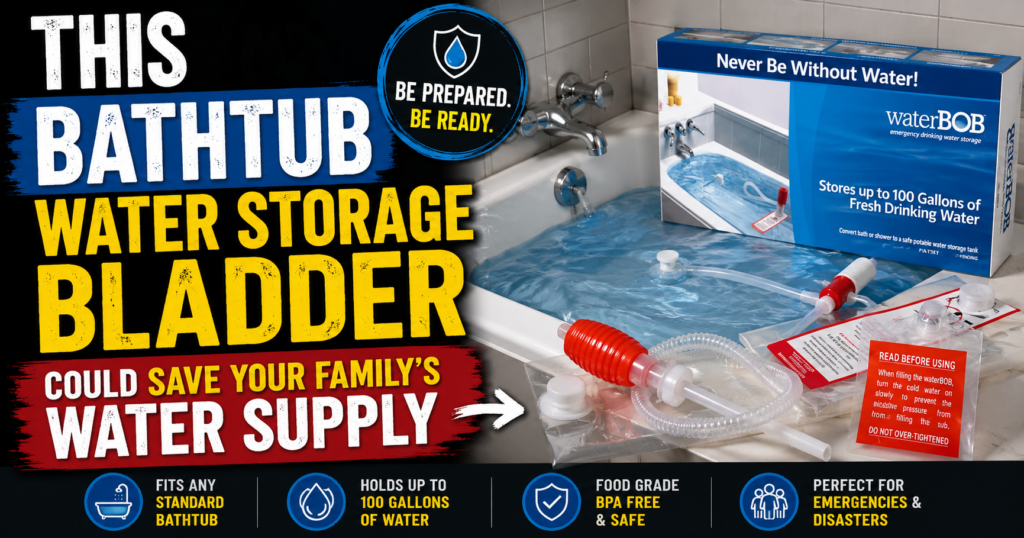
We recently reviewed This Bathtub Water Storage Bladder Could Save Your Family’s Water Supply because it solves a problem many families face.
How do you quickly store a large amount of clean water before a storm arrives?
Instead of filling random containers throughout the house, a bathtub bladder allows you to use your existing bathtub as a temporary water reservoir.
Some models can hold up to 100 gallons of water.
That’s more water than many households currently have available during an emergency.
If you’d like to see the model we reviewed, you can find it here:
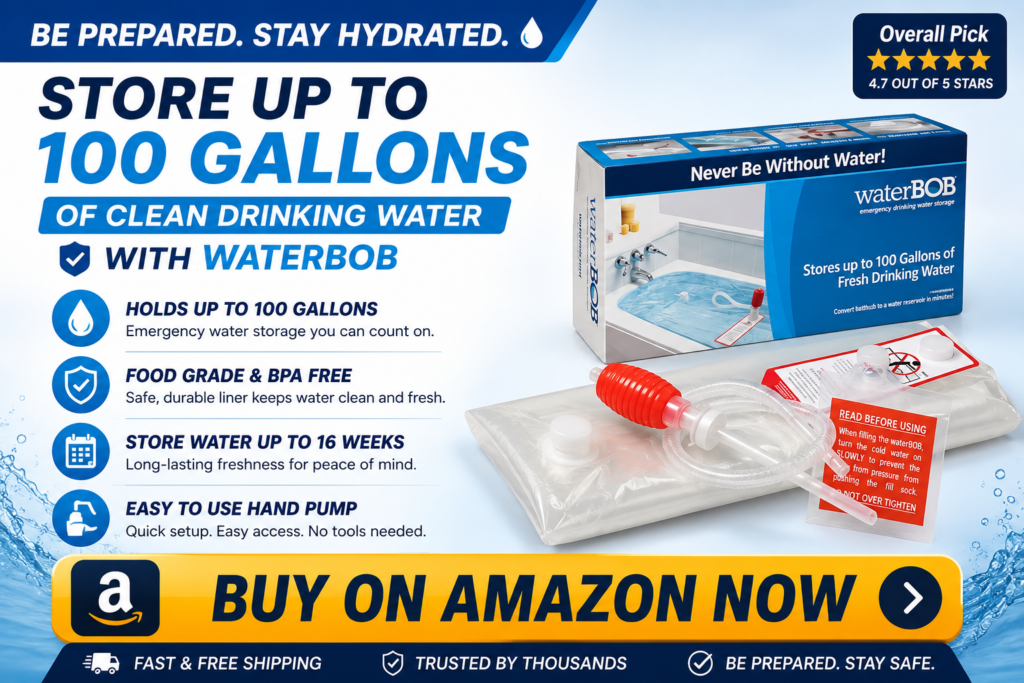
For families facing hurricanes, winter storms, tornado outbreaks, or expected water outages, it can be one of the fastest ways to increase water storage capacity.
Avoid Using Containers That Previously Held Chemicals
This mistake is more common than people realize.
Never assume a container is safe simply because it looks clean.
Containers that previously held:
- Gasoline
- Pesticides
- Herbicides
- Cleaning chemicals
- Automotive fluids
should not be used for drinking water storage.
Even small amounts of residue can contaminate your water supply.
Milk Jugs Are Usually a Poor Long-Term Choice
Many preparedness beginners save milk jugs because they’re free.
Unfortunately, milk containers are generally not ideal for long-term water storage.
They’re prone to:
- Cracking
- Leaking
- Plastic degradation
They may work temporarily, but there are much better options available.


Don’t Forget About Water Filtration
Even the best storage container eventually runs empty.
That’s why water storage and water filtration should work together.
A stored supply buys you time.
Filtration expands your options.
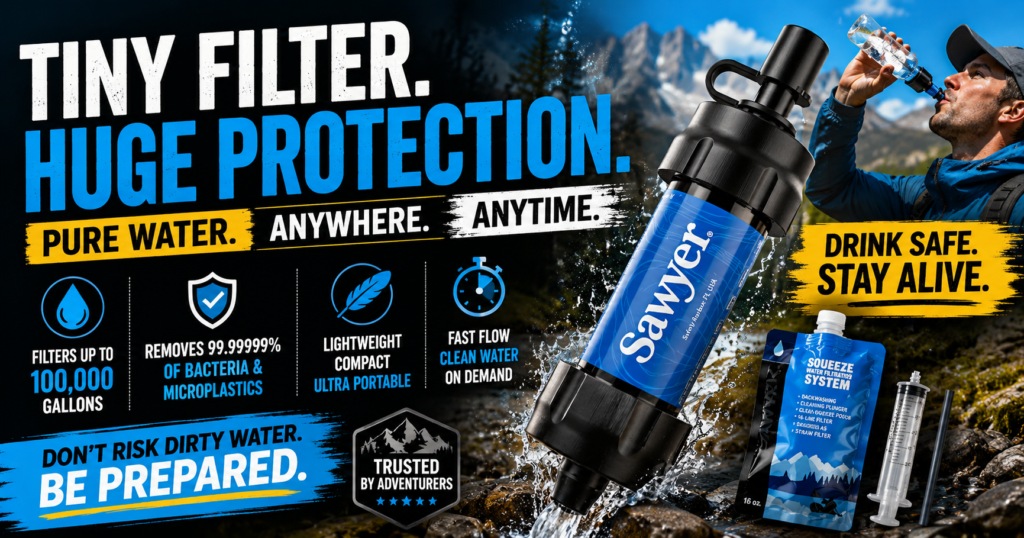
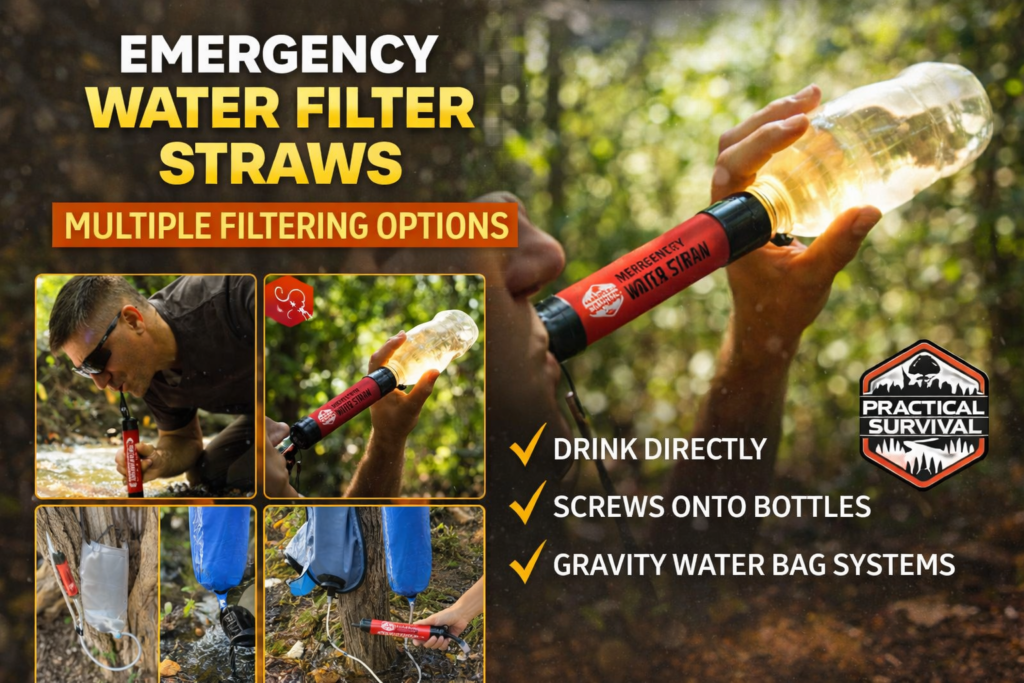
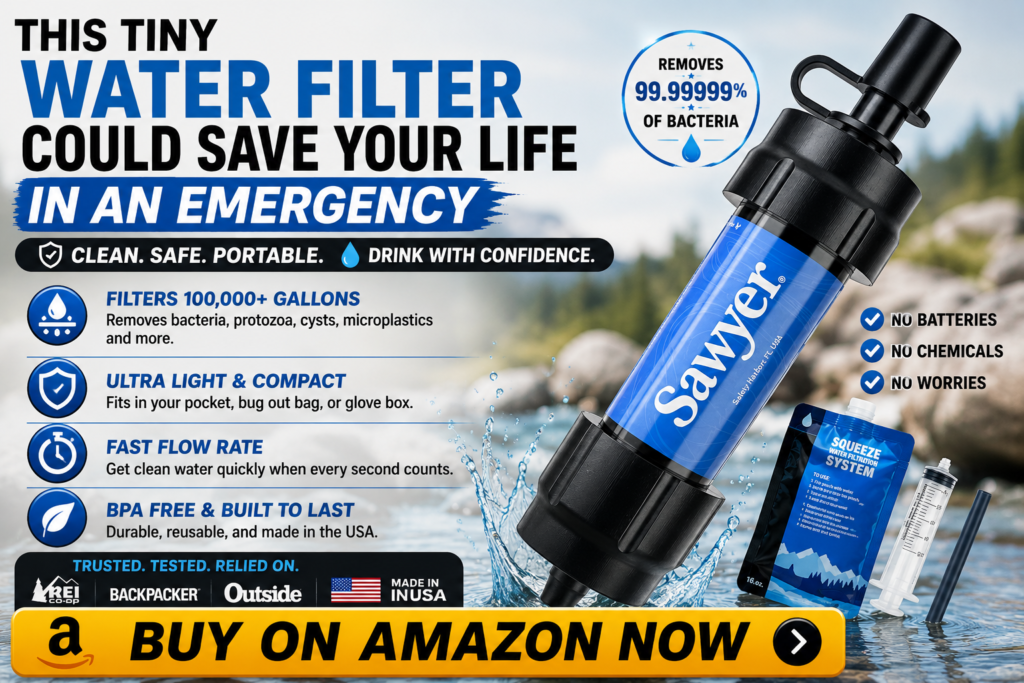
One of our favorite portable solutions is This Tiny Water Filter Could Save Your Life in an Emergency.
The Sawyer Mini has become one of the most trusted emergency water filters available because it takes up very little space while providing access to thousands of gallons of filtered water.
You can also see current pricing here:
Preparedness works best when storage and filtration support each other.
Common Water Container Mistakes
Many families accidentally reduce the effectiveness of their water storage by making simple mistakes.
Examples include:
- Storing water in direct sunlight
- Using non-food-grade containers
- Ignoring leaks
- Storing water near chemicals
- Forgetting to rotate supplies
- Assuming any container will work
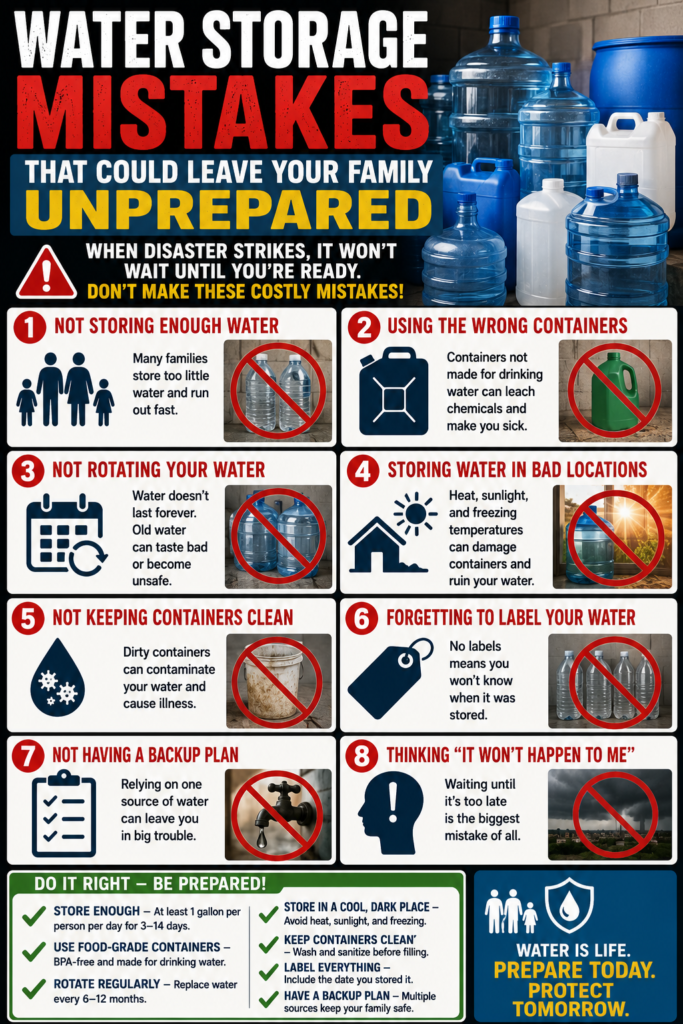
Many of these issues are covered in Water Storage Mistakes That Could Leave Your Family Unprepared.
Avoiding mistakes is often easier than fixing them later.
The Best Container Depends on Your Situation
There is no single perfect container for every household.
The best solution depends on:
- Available space
- Family size
- Budget
- Storage goals
- Living situation
A homeowner with a basement may choose barrels.
An apartment resident may rely on bottled water and compact containers.
Someone in a hurricane-prone area may keep a bathtub bladder ready before storm season.
Preparedness isn’t about finding one perfect solution.
It’s about building a system that works for your family.
Smart Water Storage Starts With Smart Containers
The container you choose becomes the foundation of your emergency water plan.
Good containers protect your investment.
Bad containers create unnecessary risk.
Whether you’re storing a few cases of bottled water or building a month-long emergency supply, choosing the right container helps ensure your water is ready when you need it most.
And when combined with backup filtration, alternative water sources, and a realistic preparedness plan, you’ll be far better prepared than most households when the unexpected happens.
Related Water Preparedness Articles
Building a reliable emergency water plan takes more than simply storing a few bottles of water. Explore these helpful guides to strengthen your family’s preparedness:
- Emergency Water Preparedness Guide: Everything You Should Know
- How to Build a 30-Day Emergency Water Supply for Your Family
- Emergency Water Checklist: What Every Family Should Have
- How to Purify Water Without Electricity During an Emergency
- What Is the Safest Water Source During an Emergency?