One of the most common questions people ask when building an emergency water supply is whether bottled water actually expires.
It’s easy to understand why.
You buy several cases of water, stack them in a closet, basement, or spare room, and a year later you notice an expiration date printed on the bottle.
Suddenly you’re wondering if all that water is still safe to drink.
The good news is that water itself does not expire.
The bad news is that storage conditions still matter.
If you’re building an emergency preparedness plan, understanding how bottled water ages can help you avoid wasting money while ensuring your family has safe drinking water when it’s needed most.
Why Does Bottled Water Have an Expiration Date?
This surprises many people.
Water doesn’t spoil the way food does.
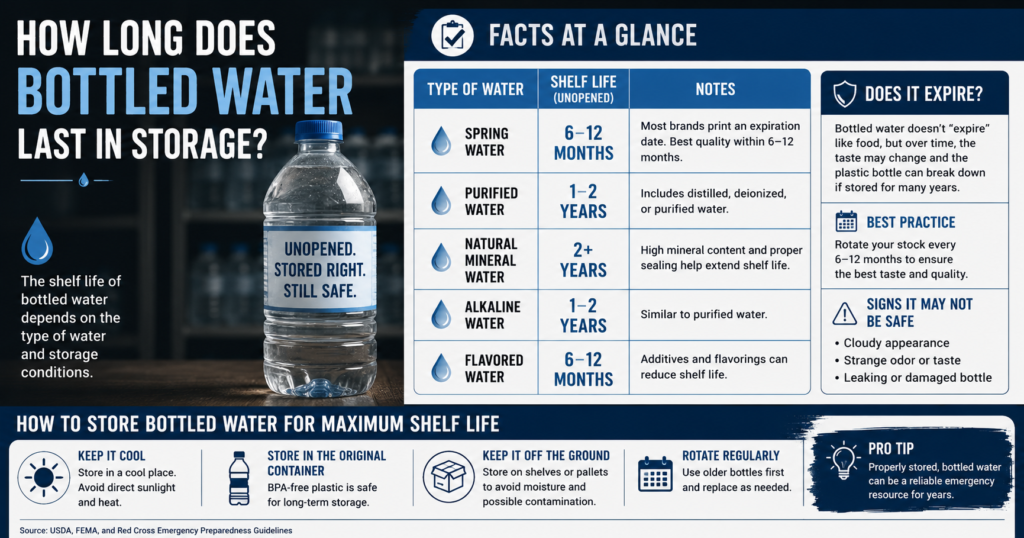
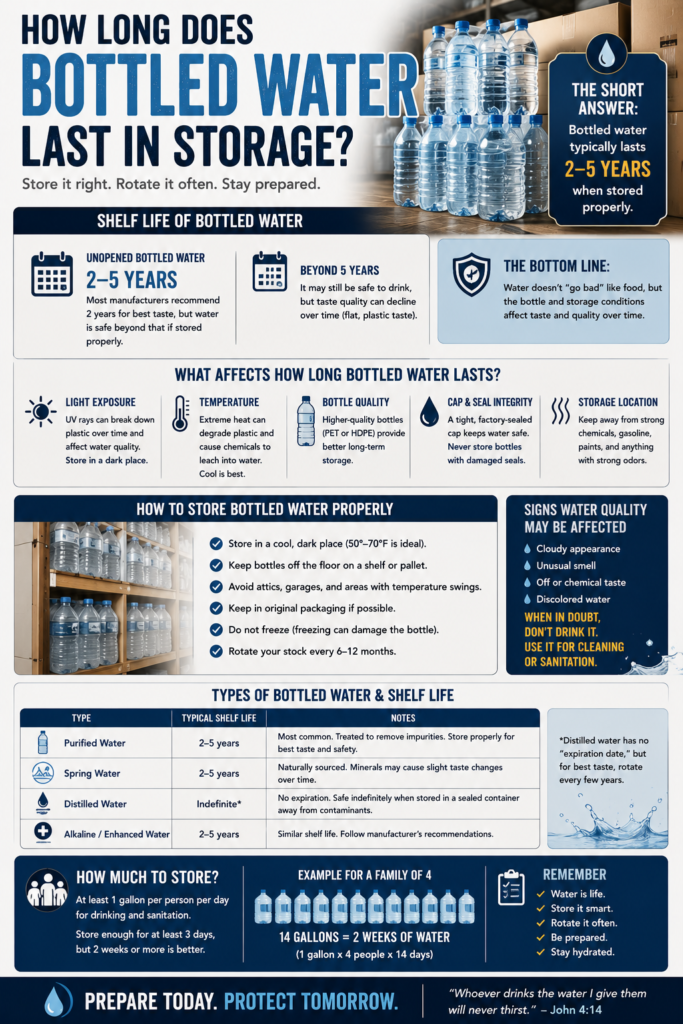
Manufacturers place dates on bottled water primarily because the bottle itself can change over time.
Plastic containers can slowly break down when exposed to:
- Heat
- Direct sunlight
- Temperature swings
- Long-term storage in poor conditions
In many cases, the water remains safe long after the printed date.
What changes is often the taste and quality rather than the water itself.

How Long Does Bottled Water Really Last?
When stored properly, bottled water can remain usable for many years.
Many preparedness-minded families rotate their supply every year or two simply for peace of mind, but water stored in cool, stable conditions often lasts far beyond the printed date.
The biggest threats are not age.
They’re heat and contamination.
A case of water stored in a climate-controlled closet may remain in excellent condition for years.
The same case stored in a hot shed could deteriorate much faster.
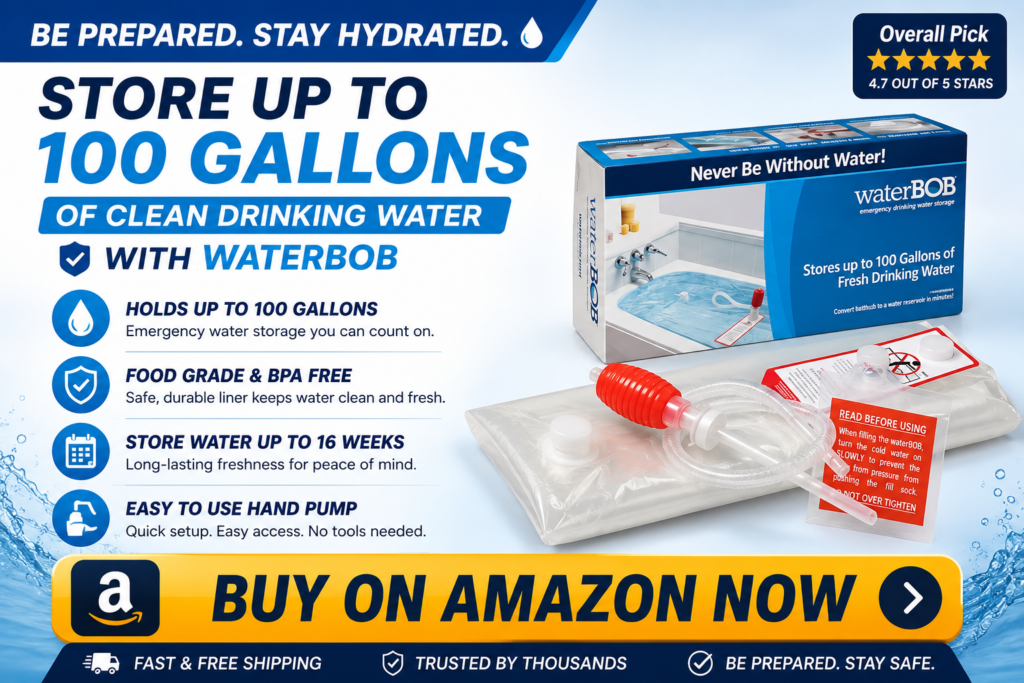
Check this awesome 100 gallon emergency water storage: https://amzn.to/3RUxFPh

The Best Places to Store Bottled Water
Location matters more than most people realize.
The best storage locations are:
- Cool
- Dry
- Dark
- Climate controlled
Good options include:
- Interior closets
- Basements
- Spare rooms
- Under-bed storage areas
- Utility rooms
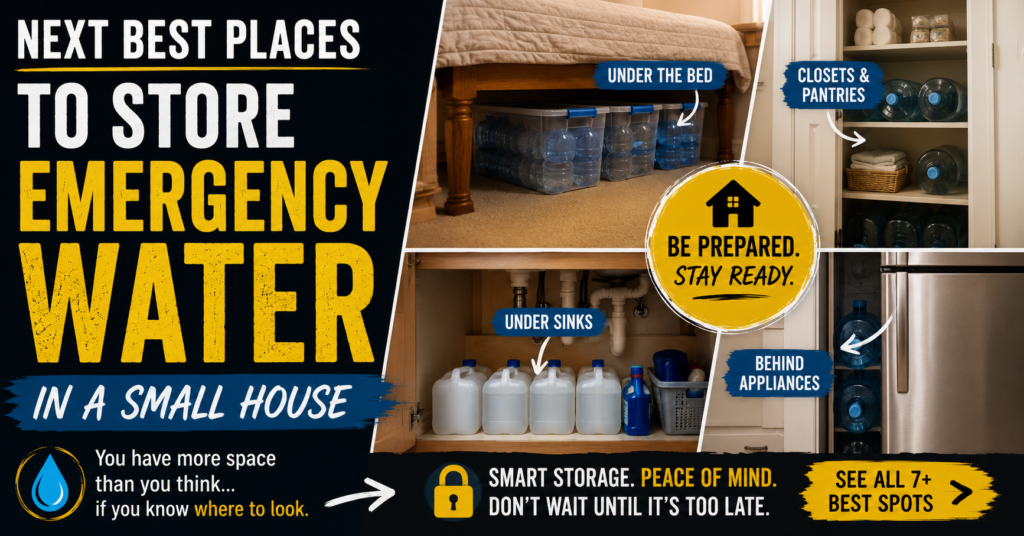
If you’re struggling to find room for your supply, check out the best places to store emergency water in a small housefor practical storage ideas.
Should You Store Water in the Garage?
Sometimes.
But it depends on your climate.
Garages often experience extreme temperatures.
Summer heat can accelerate plastic breakdown.
Freezing temperatures can damage containers and create leaks.
If the garage is your only option, monitor temperatures carefully and inspect supplies periodically.


Warning Signs Bottled Water Should Be Replaced
Most bottled water remains usable far longer than people expect.
However, there are situations where replacement makes sense.
Watch for:
- Cracked bottles
- Leaks
- Bulging containers
- Unusual odors
- Strange tastes
- Visible contamination
Any bottle showing physical damage should be discarded.
Why Heat Is the Real Enemy
Heat causes more problems than age.
A bottle stored at 70 degrees for several years will usually fare much better than one stored in a vehicle during a single summer.
High temperatures can affect:
- Taste
- Bottle integrity
- Plastic degradation
- Overall water quality
This is why preparedness experts consistently recommend indoor storage whenever possible.
How Much Bottled Water Should a Family Keep?
The answer depends on your goals.
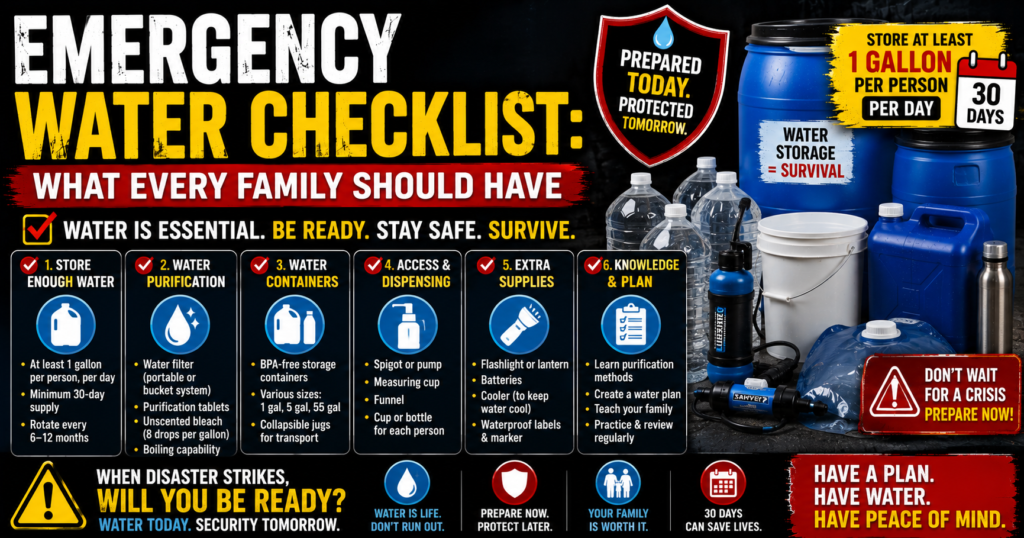
Most emergency preparedness recommendations suggest at least one gallon per person per day.
That means:
- A family of two needs at least 14 gallons for one week
- A family of four needs at least 28 gallons for one week
- Larger households require even more
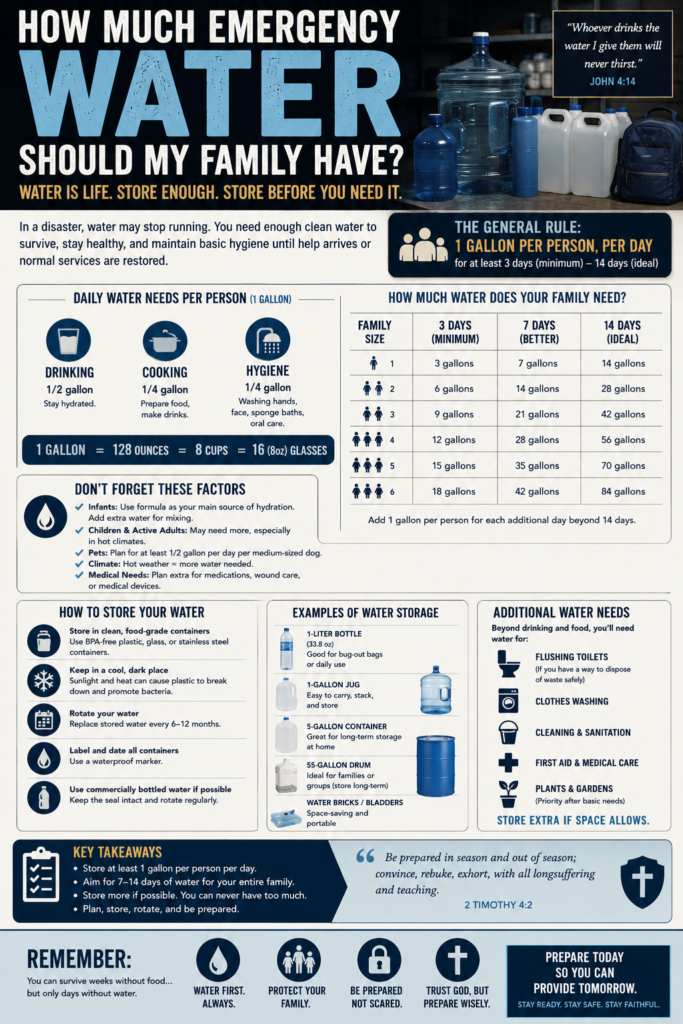
Our guide on how much emergency water a family should store walks through realistic planning scenarios for different household sizes.
Bottled Water Is Only the First Layer
One mistake many families make is relying entirely on stored water.
Stored water is important.
But every supply eventually runs out.
A stronger preparedness plan includes backup methods for obtaining and treating additional water.
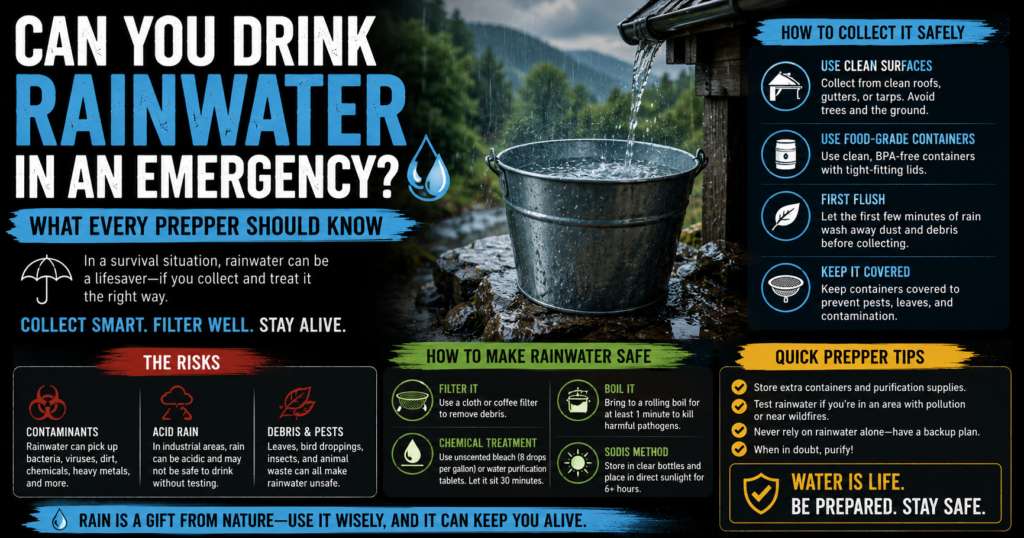
For example, many homeowners overlook the possibility of collecting rainwater during extended emergencies. If you’ve ever wondered whether that water is safe to drink, read Can You Drink Rainwater in an Emergency?.
Never Assume Alternative Water Sources Are Safe
During a prolonged emergency, people often turn to creeks, ponds, rivers, and other natural water sources.
The problem is that clear water can still contain dangerous contaminants.
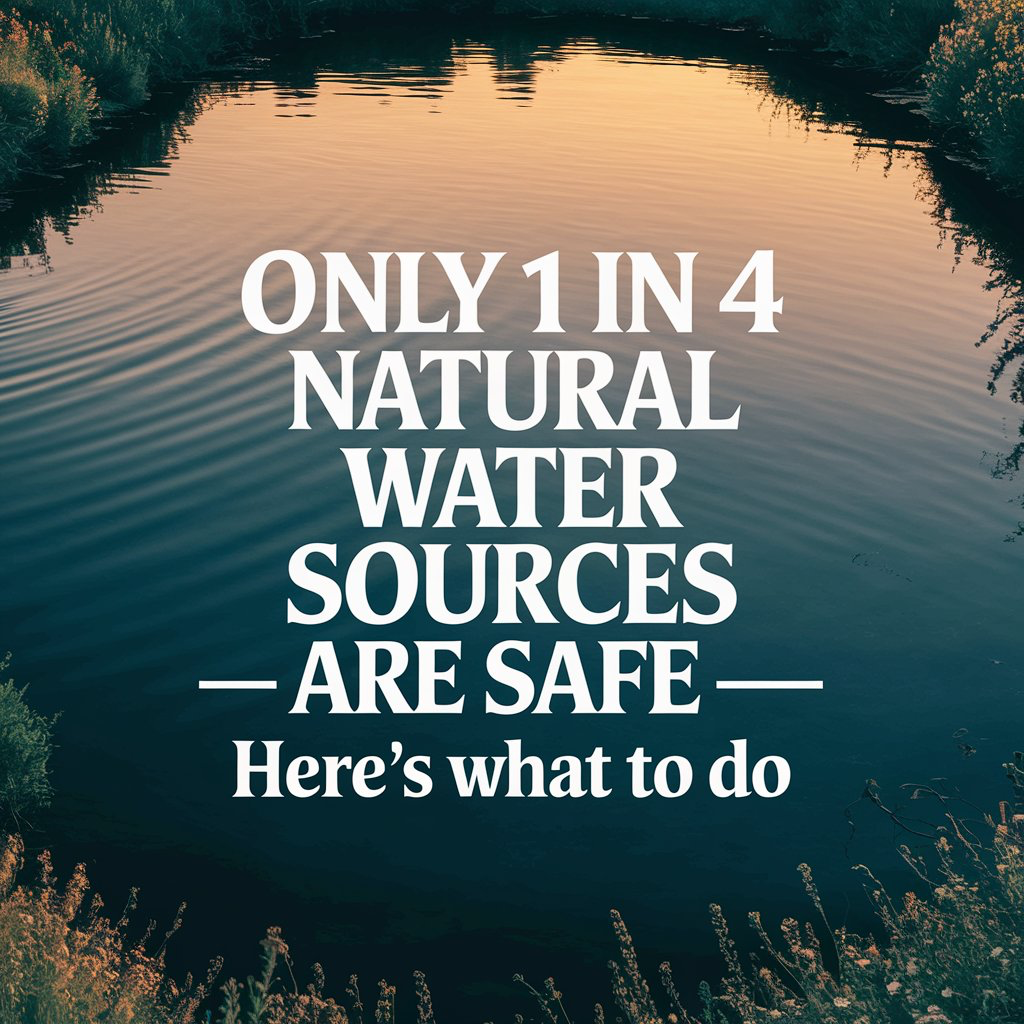
Our article on why clear-looking water can still be dangerous explains why appearance alone is never enough.
Every Family Should Own a Water Filter
A water filter is one of the smartest preparedness purchases you can make.
If your stored water runs low, filtration may provide access to additional drinking water that would otherwise be unsafe.
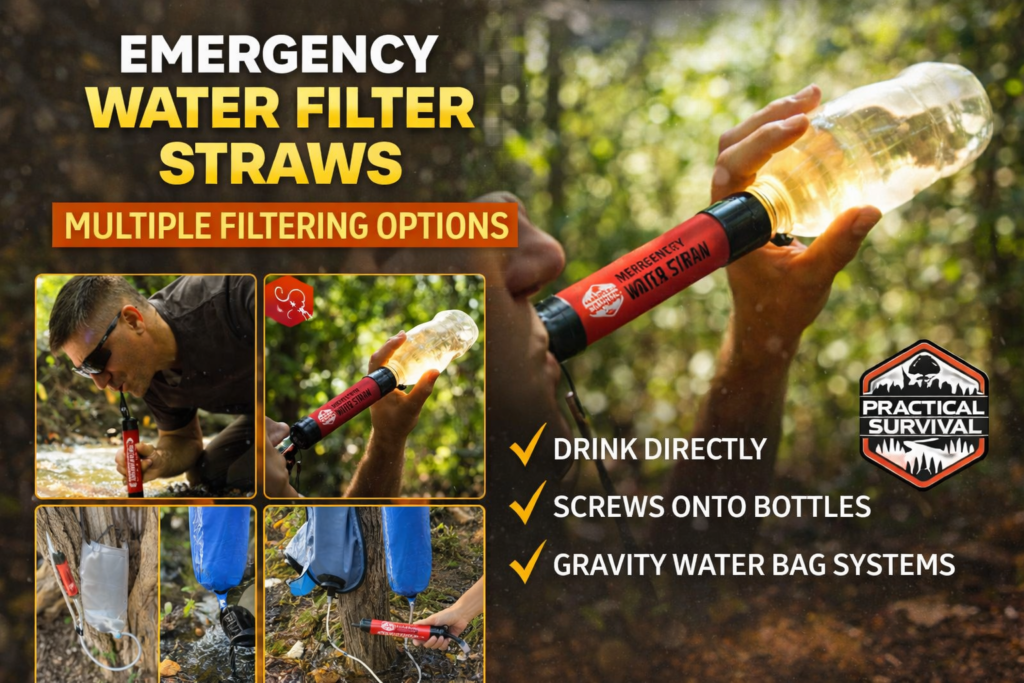
Many families keep a compact option like the one featured in these water straws that could save your life because they’re inexpensive, portable, and capable of filtering thousands of gallons.

For larger emergency planning, our guide to survival water purification systems covers additional options worth considering.
Don’t Wait Until Store Shelves Are Empty
One lesson repeats itself after nearly every major disaster.
People wait too long.
By the time severe weather warnings appear, bottled water is often one of the first items to disappear from stores.
Building a supply gradually is far easier and less expensive than competing with everyone else during a panic.
A Better Approach to Emergency Water Security
Bottled water is a great starting point.
But true preparedness comes from creating layers.
Stored water.
Additional storage capacity.
Rainwater collection.
Filtration.
Purification.
Backup plans.
The more layers you build, the less likely a water emergency becomes a family emergency.
Building Confidence Before You Need It
The best time to solve water problems is before they happen.
A few cases of bottled water today can provide tremendous peace of mind tomorrow.
And when combined with smart storage, backup filtration, and a realistic emergency plan, you’ll be far better prepared than most households when the unexpected happens.
Related Water Preparedness Articles
Building a reliable emergency water plan takes more than simply storing a few bottles of water. Explore these helpful guides to strengthen your family’s preparedness:
- Emergency Water Preparedness Guide: Everything You Should Know
- How to Build a 30-Day Emergency Water Supply for Your Family
- Emergency Water Checklist: What Every Family Should Have
- How to Purify Water Without Electricity During an Emergency
- What Is the Safest Water Source During an Emergency?