Most people spend a lot of time thinking about food when they prepare for emergencies.
They stock canned goods, freeze-dried meals, rice, beans, and other pantry staples. While food storage is important, there is something far more critical to your survival.
Water.
The human body can survive for weeks without food under certain conditions. Water is a completely different story. Without adequate hydration, your body begins to fail much faster than most people realize.
You may have heard the survival rule of threes:
- Three minutes without oxygen
- Three hours without shelter in extreme conditions
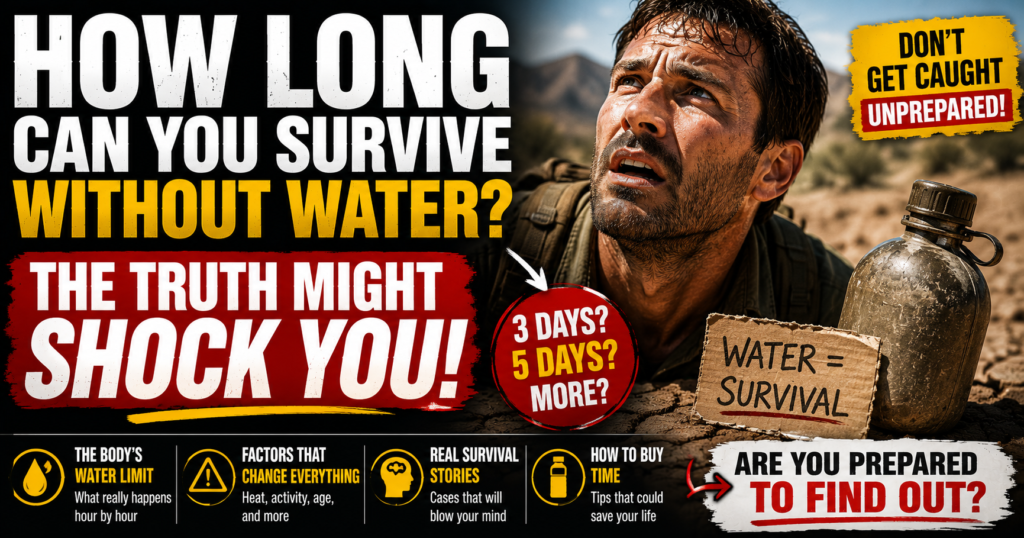
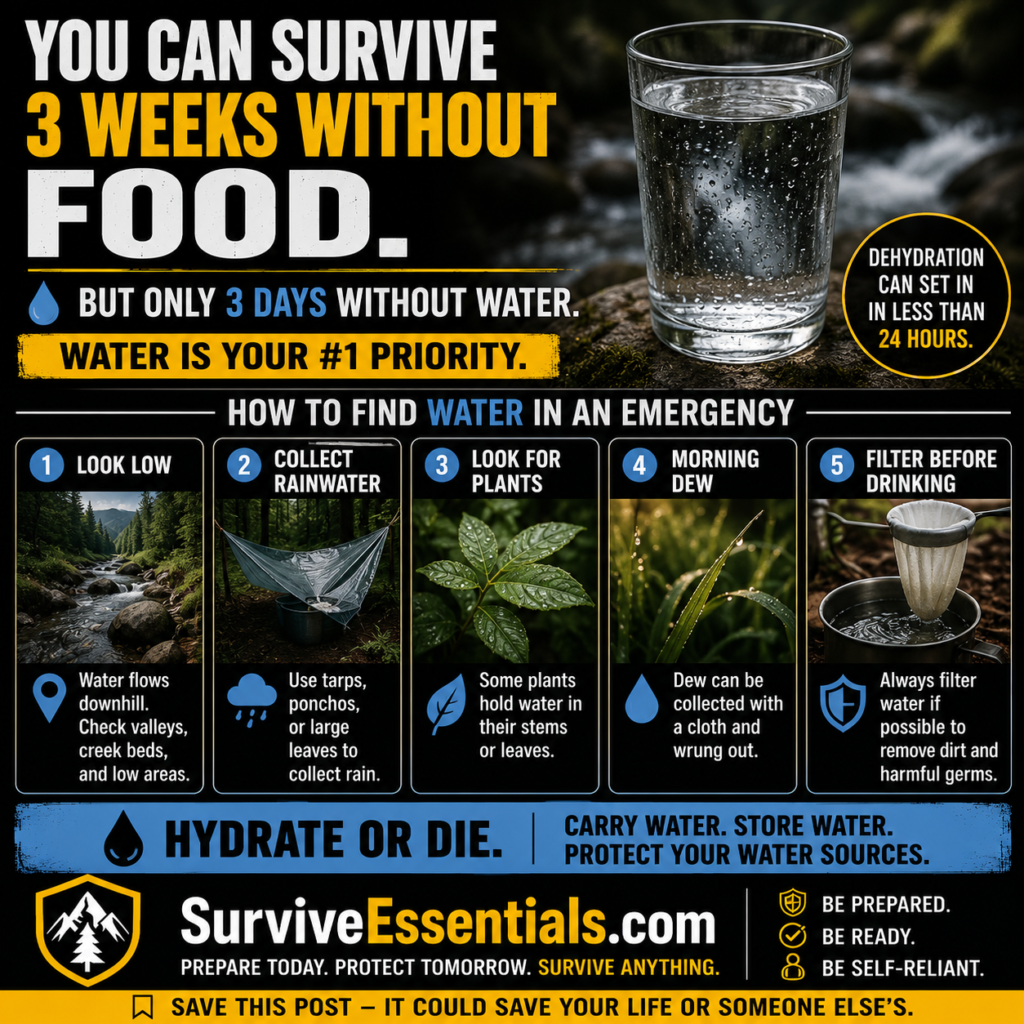
- Three days without water
- Three weeks without food
While these numbers are not exact for every situation, they highlight a critical truth. Water is your number one survival priority.
Whether you’re preparing for a natural disaster, power outage, grid-down event, or wilderness emergency, understanding water survival could one day save your life.
Why Water Is More Important Than Food
Your body is made up of roughly 60% water.
Every major system depends on it.
Water helps regulate body temperature, transport nutrients, lubricate joints, remove waste, support brain function, and maintain healthy circulation.
When water becomes scarce, your body immediately begins conserving what remains.
As dehydration worsens, physical and mental performance rapidly decline.
This is why experienced survivalists focus on water before almost everything else.
Before building massive food stockpiles, many preparedness experts recommend creating a reliable emergency water supply.
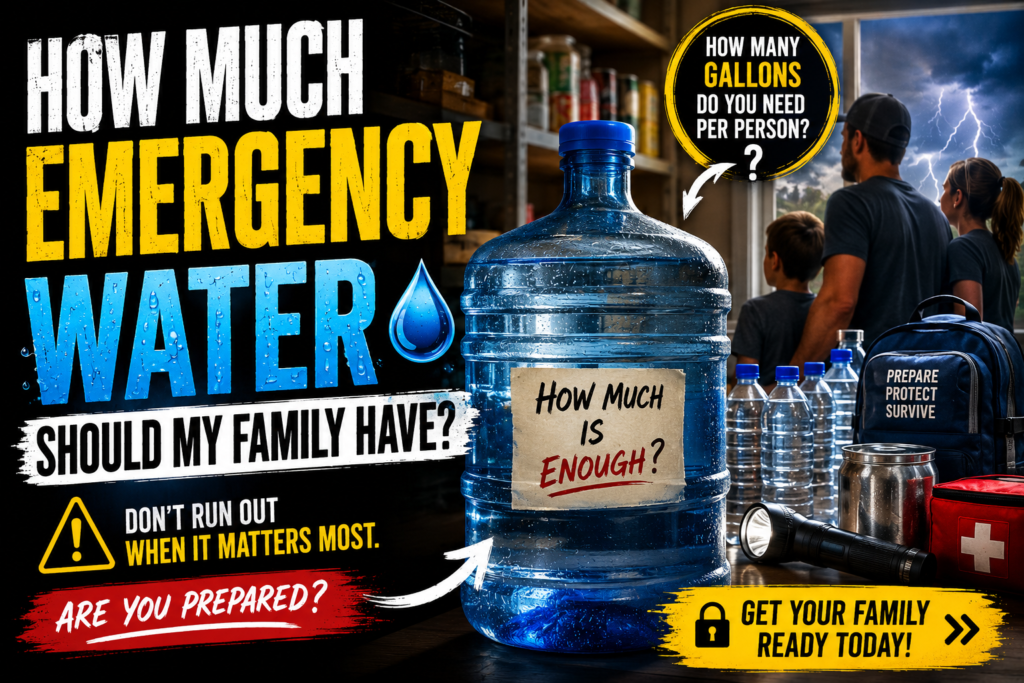
If you’re just getting started, read our guide on how much emergency water should a family store to calculate your household’s needs.
How Long Can a Person Survive Without Water?
There is no single answer because every situation is different.
Several factors affect survival time:
- Temperature
- Humidity
- Physical activity
- Age
- Overall health
- Access to shade
- Body size
Under ideal conditions, some individuals may survive slightly longer than three days.
In extreme heat, however, serious dehydration can develop within hours.
Many survival experts consider three days to be a realistic average guideline rather than a strict rule.
The reality is that symptoms become dangerous long before death occurs.
Confusion, poor judgment, weakness, dizziness, and heat-related illness can quickly turn a difficult situation into a deadly one.


The First Signs of Dehydration
Many people wait until they feel extremely thirsty before drinking water.
That is a mistake.
Thirst is actually a sign that dehydration has already started.
Early symptoms often include:
- Dry mouth
- Headaches
- Fatigue
- Reduced energy
- Dark urine
- Dry skin
- Mild dizziness
At this stage, drinking water can usually reverse the problem quickly.
Ignoring these warning signs allows dehydration to worsen.
What Happens During Severe Dehydration?
As water loss continues, the body struggles to maintain normal function.
Symptoms become much more serious.
These can include:
- Rapid heartbeat
- Confusion
- Difficulty concentrating
- Muscle cramps
- Low blood pressure
- Lack of sweating
- Heat exhaustion
- Heat stroke
Severe dehydration is a medical emergency.
Without intervention, organ failure and death can eventually occur.
This is why having access to safe drinking water is one of the most important aspects of emergency preparedness.


Where Can You Find Water During an Emergency?
If your stored water runs out, finding additional sources becomes critical.
Fortunately, water exists in more places than many people realize.
Streams and Creeks
Water naturally flows downhill.
Low-lying areas often contain streams, creeks, and drainage channels.
Moving water is generally preferable to stagnant water, although it should still be filtered and purified whenever possible.
Rainwater Collection
Rain can provide a valuable emergency water source.
Tarps, plastic sheeting, ponchos, buckets, and containers can all help collect rainwater.
Many preparedness-minded homeowners also install rain collection systems.
Morning Dew
While not a large source, dew can provide small amounts of water in survival situations.
Cloths can be dragged across vegetation and then wrung into a container.
Plant Moisture
Some plants contain usable moisture within their leaves and stems.
However, plant identification is important because some species may be toxic.
Household Emergency Sources
Many people overlook water already available inside their homes.
Potential emergency sources may include:

- Water heaters
- Toilet tanks
- Stored bottled water
- Ice cubes
- Certain plumbing systems
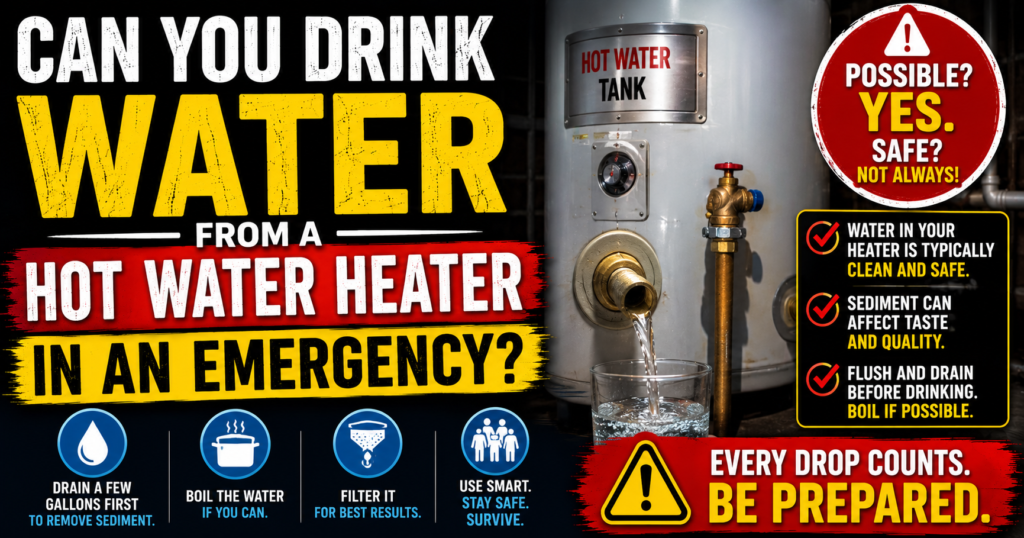
Our guide on can you drink water from a hot water heater in an emergency explains one of the most overlooked emergency water reserves.
Never Assume Water Is Safe
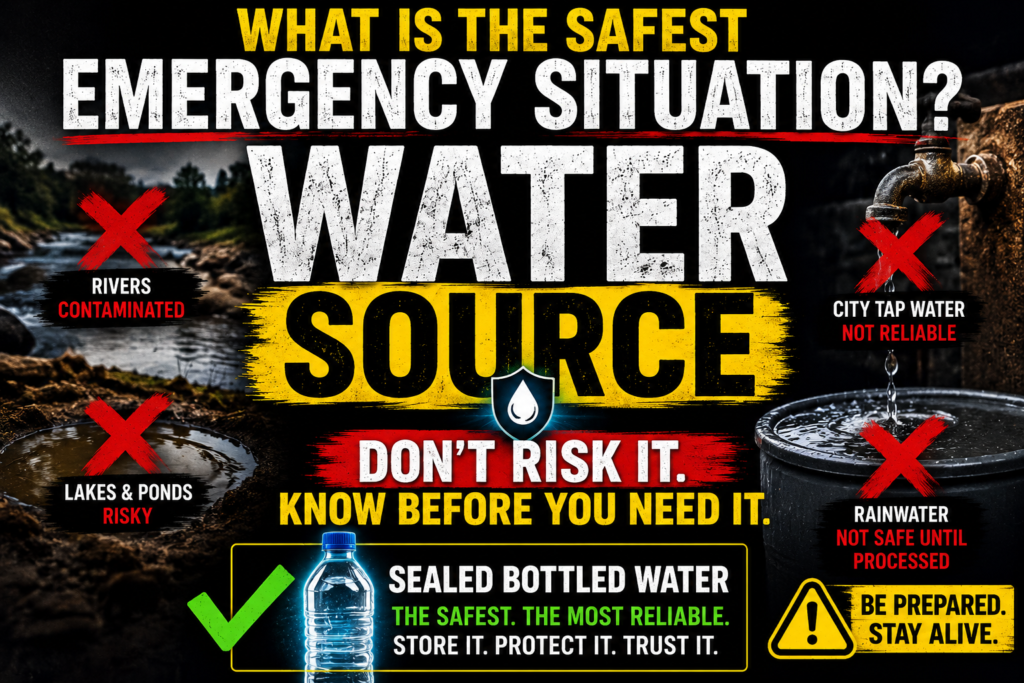
One of the most dangerous mistakes people make is assuming clear water is safe to drink.
Crystal-clear water can still contain:
- Bacteria
- Viruses
- Parasites
- Agricultural runoff
- Industrial contaminants
- Animal waste
This is why purification matters.
Our article Wild Water Looks Clean, Here’s Why You Should Never Trust It explains why appearance alone tells you almost nothing about water safety.
How to Purify Water During an Emergency
Finding water is only half the challenge.
Making it safe to drink is equally important.
Boiling
Boiling remains one of the most effective purification methods.
Proper boiling kills most disease-causing organisms.
Water Filters
Portable filtration systems can remove many dangerous contaminants.
High-quality filters are a valuable addition to every preparedness kit.
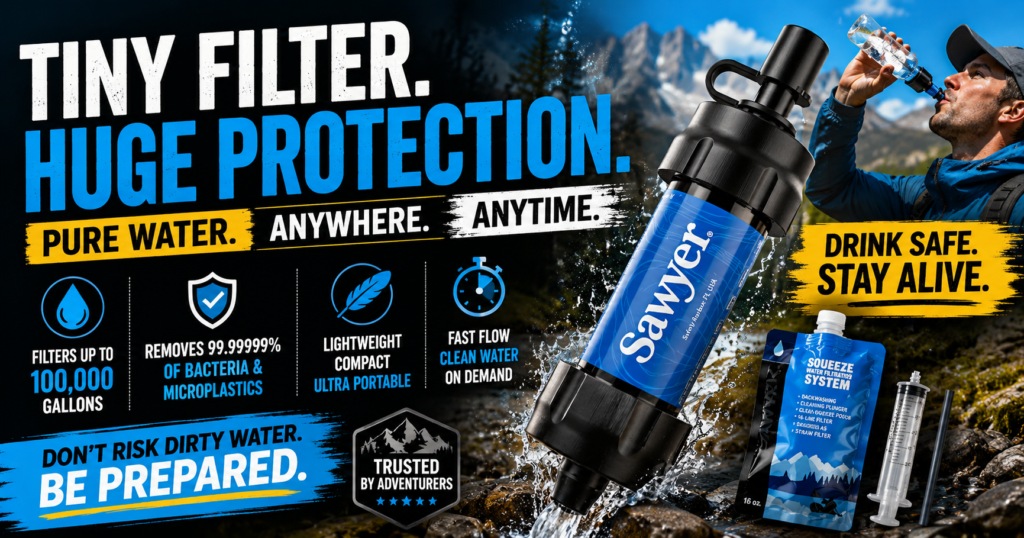
Our review of this tiny water filter that could save your life in an emergency explains why many survivalists never leave home without one.
Chemical Treatment
Water purification tablets and liquid disinfectants can help kill harmful microorganisms.
These products are lightweight and easy to store.
Combined Methods
When possible, combining filtration and purification provides the highest level of protection.
How Much Water Should You Store?
Many emergency management agencies recommend storing at least one gallon of water per person per day.
That amount covers drinking and basic sanitation.
However, many preparedness experts recommend storing more whenever possible.
Factors that increase water needs include:
- Hot weather
- Physical labor
- Children
- Pregnancy
- Medical conditions
- Pets
A family of four can go through water surprisingly fast.
That’s why having both stored water and backup collection methods is important.
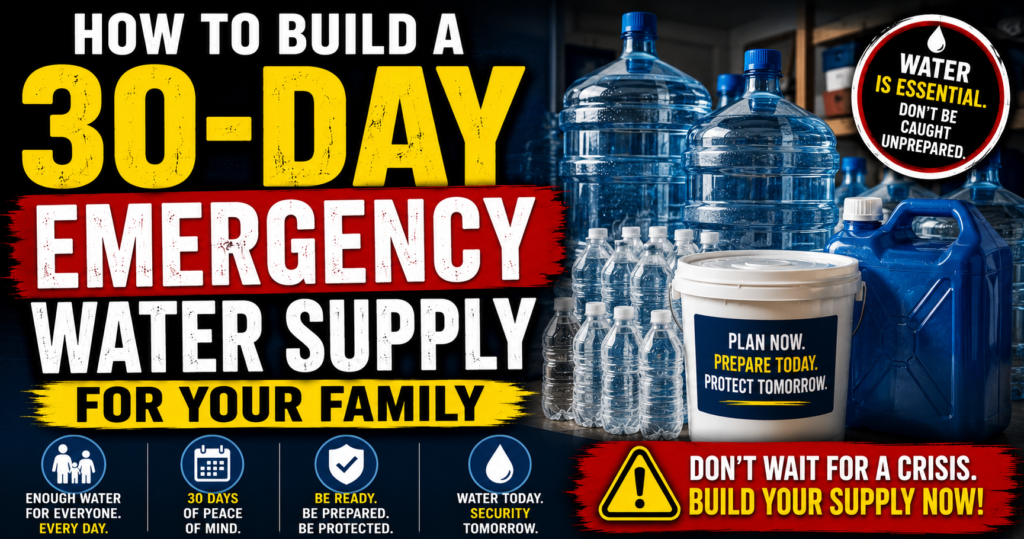
Our guide on how to build a 30-day emergency water supply for your family can help you create a realistic storage plan.
Common Water Storage Mistakes
Many people believe a few cases of bottled water are enough.
Unfortunately, that often isn’t true.
Common mistakes include:
Not Storing Enough
Most households underestimate their actual water usage.
Ignoring Rotation
Stored water should be inspected periodically.
Using Poor Containers
Not all containers are suitable for long-term storage.
Having No Backup Plan
Stored water eventually runs out.
Every preparedness plan should include collection and purification methods.
Our article on water storage mistakes that could leave your family unprepared covers these issues in greater detail.
Why Every Emergency Plan Starts With Water
Food shortages are uncomfortable.
Water shortages are life-threatening.
If a hurricane, winter storm, earthquake, flood, or extended power outage disrupts local infrastructure, access to safe water can disappear quickly.
Prepared families understand that water security is the foundation of survival.
Food, shelter, first aid supplies, and emergency gear all matter. But without water, none of those resources remain useful for very long.
This is why water should be one of the first areas addressed when building any preparedness plan.
For a complete overview, our Emergency Water Preparedness Guide: Everything You Should Know brings together many of the most important water storage, purification, and emergency planning strategies in one place.

Water Is Survival
The average person may survive weeks without food, but only days without water.
That reality alone makes water the single most important resource in nearly every emergency situation.
The good news is that preparation is simple.
Store water.
Learn how to find water.
Learn how to purify water.
Have multiple backup plans.
Because when an emergency happens, the families who have water are often the families who stay safe, healthy, and self-reliant while everyone else is scrambling to find their next drink.