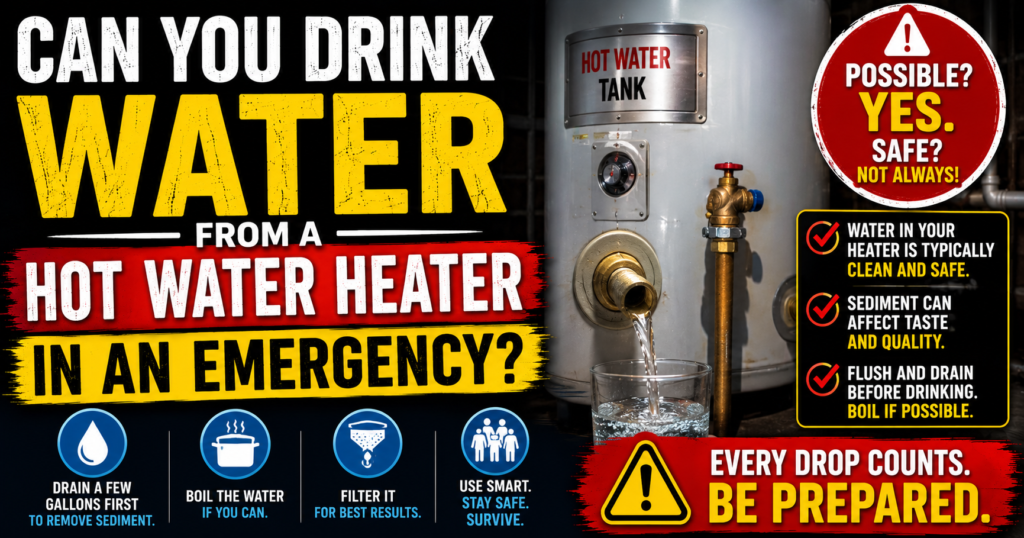
Most people walk past one of the largest emergency water supplies in their home every single day.
They never think about it.
It’s tucked away in a basement, utility room, garage, or closet.
The hot water heater.
If a major storm, water outage, winter freeze, or other disaster suddenly cuts off your water supply, your water heater could become an incredibly valuable resource.
The surprising part is that many homeowners have no idea how much water is sitting inside that tank.
In an emergency, knowing how to access that water could provide days of additional drinking water for your family.
How Much Water Is Inside a Water Heater?
Most residential water heaters hold far more water than people realize.
Common tank sizes include:
- 30 gallons
- 40 gallons
- 50 gallons
- 60 gallons
- 80 gallons
A typical 50-gallon water heater contains enough water to significantly extend a family’s emergency supply.
That’s one reason preparedness experts often recommend learning where your water heater is located and how it works before an emergency happens. Water heaters are designed to store large quantities of water for household use.
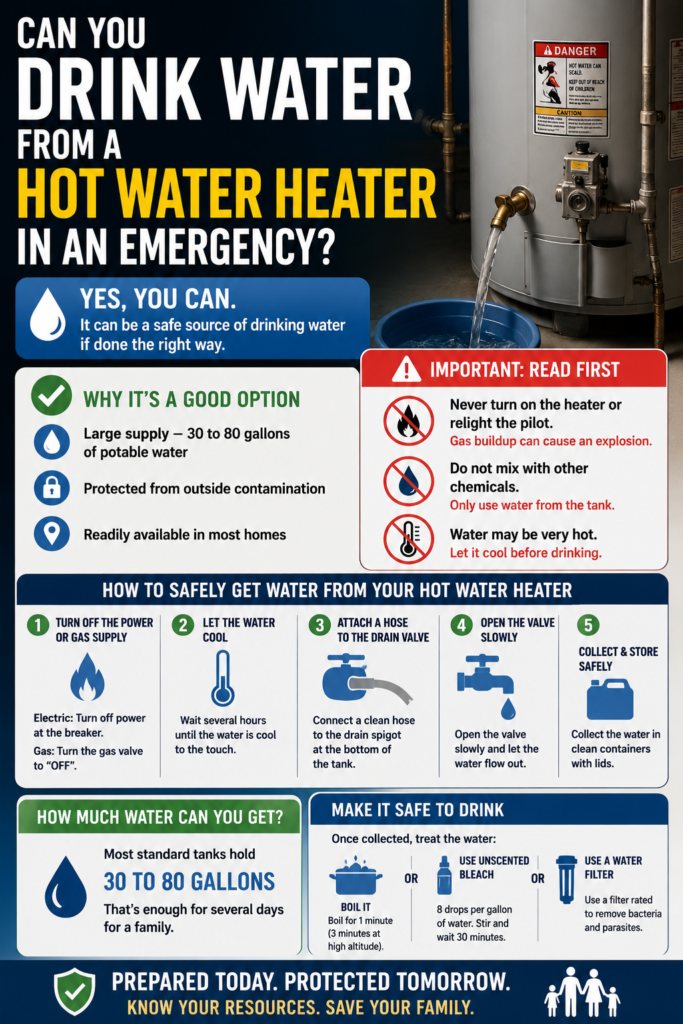
Is Water From a Hot Water Heater Safe to Drink?
In many situations, yes.
The water inside your water heater originally came from the same source as the water flowing from your faucets.
However, several factors affect whether it should be used.
These include:
- The age of the water heater
- Maintenance history
- Sediment buildup
- Water quality entering the home
- Whether the tank has been damaged
A well-maintained water heater generally provides a much safer emergency water source than many outdoor alternatives.
If your choice is between a maintained water heater and untreated pond water, the water heater is usually the better starting point.



Why This Water Source Is Often Overlooked
Most people focus on:
- Bottled water
- Rainwater
- Rivers
- Creeks
- Lakes
Few people realize they may already have dozens of gallons of water sitting inside their home.
This is one reason a layered preparedness plan is so important.
The more sources you understand, the more options you’ll have during an emergency.
Water Heaters Are a Backup, Not a Primary Plan
While a water heater can provide valuable emergency water, it should never be your only plan.
Stored water should always come first.
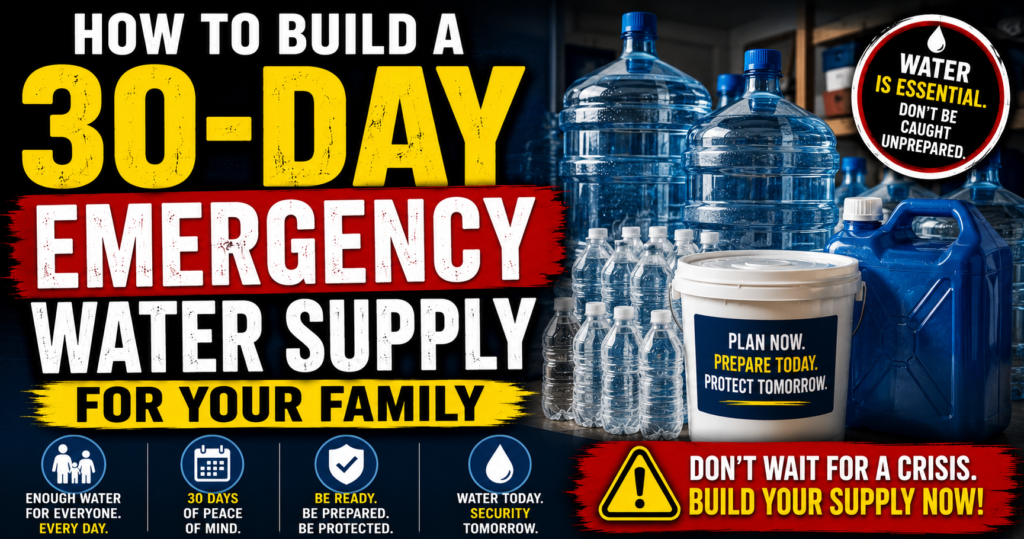
If you’re still building your supply, start with how to build a 30-day emergency water supply for your family.
A dedicated water supply is easier to access and doesn’t require draining household equipment.
Think of your water heater as an additional layer of protection.

What Should You Do First During a Water Emergency?
If officials announce a water system failure or contamination issue, act quickly.
One of the smartest moves is securing additional clean water while it’s still available.
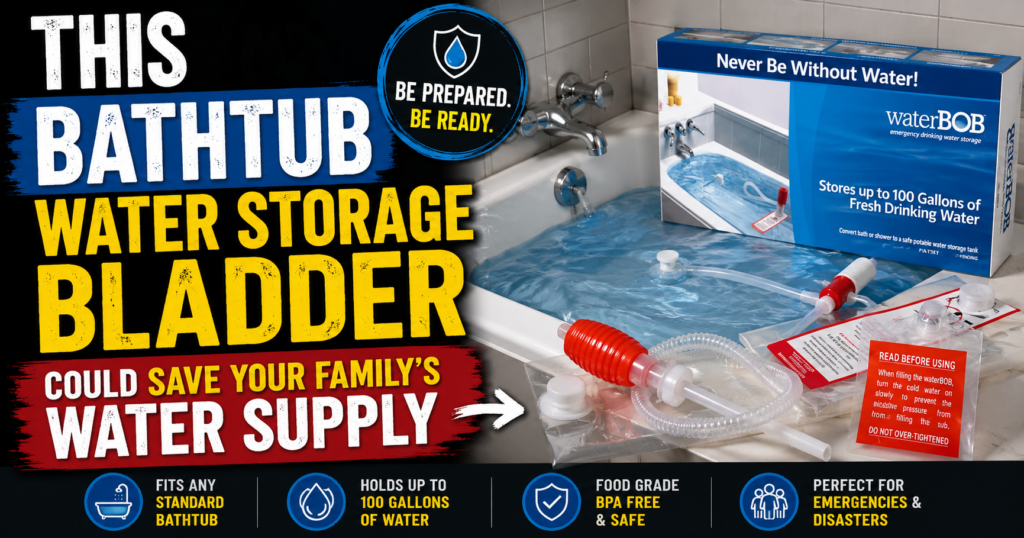
That’s why many preparedness-minded families keep solutions like this bathtub water storage bladder that could save your family’s water supply available before major storms.
Being able to quickly store up to 100 gallons of clean tap water before service is interrupted can dramatically increase your preparedness.
For families with limited storage space, it may be one of the easiest ways to create a large emergency reserve.
What About Sediment in the Tank?
One concern with older water heaters is sediment.
Minerals naturally settle inside many tanks over time.
Sediment buildup is one reason manufacturers and maintenance professionals often recommend periodic flushing of water heaters.
If your water heater hasn’t been maintained in years, the water near the bottom of the tank may contain more sediment than water from your regular faucets.
This doesn’t automatically make it unusable, but it’s something to consider.

Can You Use Hot Water Heater Water for More Than Drinking?
Absolutely.
Even if you choose not to drink it, water from a water heater may be useful for:
- Cooking
- Washing hands
- Basic hygiene
- Cleaning
- Emergency sanitation
- Flushing toilets
During a prolonged outage, every gallon matters.
How Long Could Water Heater Water Last?
The answer depends entirely on your household size.
A 50-gallon water heater could provide:
- One person with several weeks of drinking water
- A family of four with several days of drinking water
- Additional sanitation water if used carefully
That’s why understanding your overall water needs is so important.
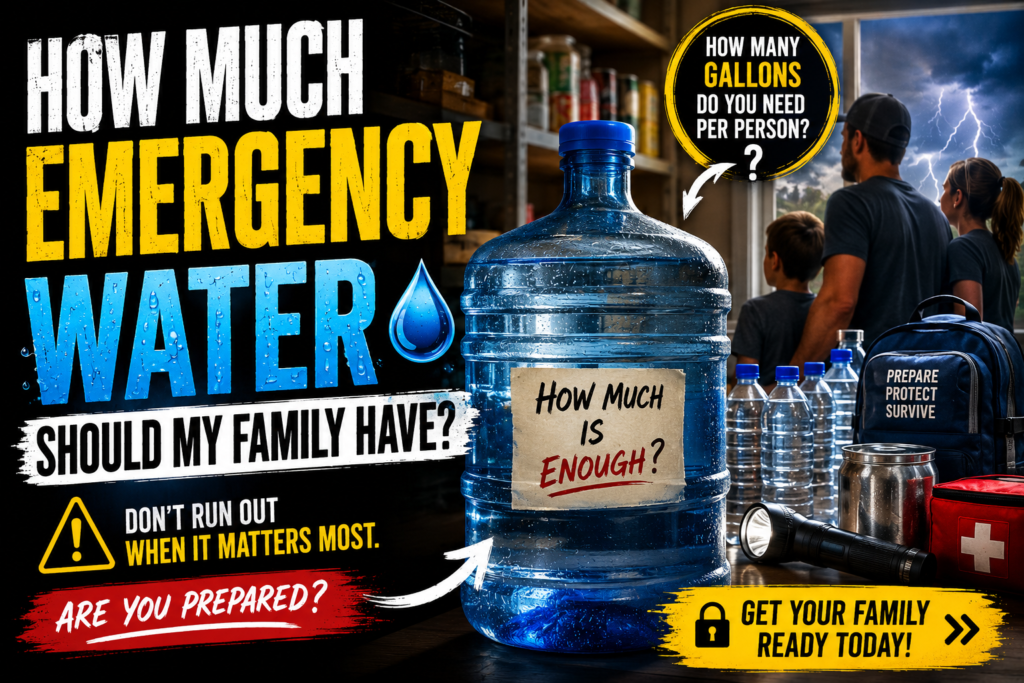
If you haven’t already, read how much emergency water a family should store to see how quickly water gets used during a crisis.
Don’t Forget About Alternative Water Sources
The strongest emergency plans never depend on a single source.
A good strategy may include:
- Bottled water
- Water heater water
- Bathtub emergency storage
- Rainwater collection
- Water filtration
- Water purification
Each layer increases your resilience.
If one option becomes unavailable, another remains.
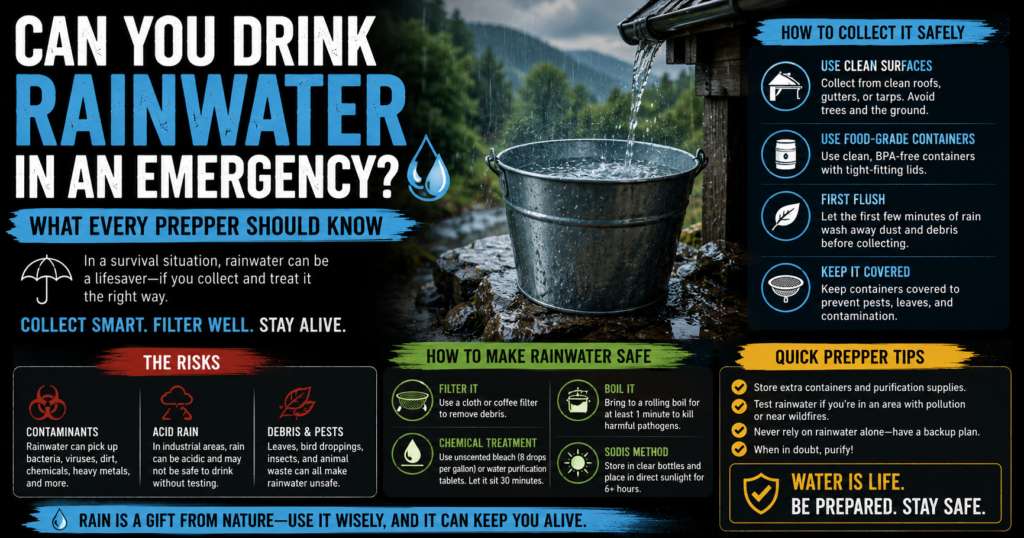
For example, if you’re considering rainwater as a backup source, check out Can You Drink Rainwater in an Emergency?.
Every Family Should Have a Water Filter
Eventually, every stored water supply runs low.
That’s where filtration becomes critical.
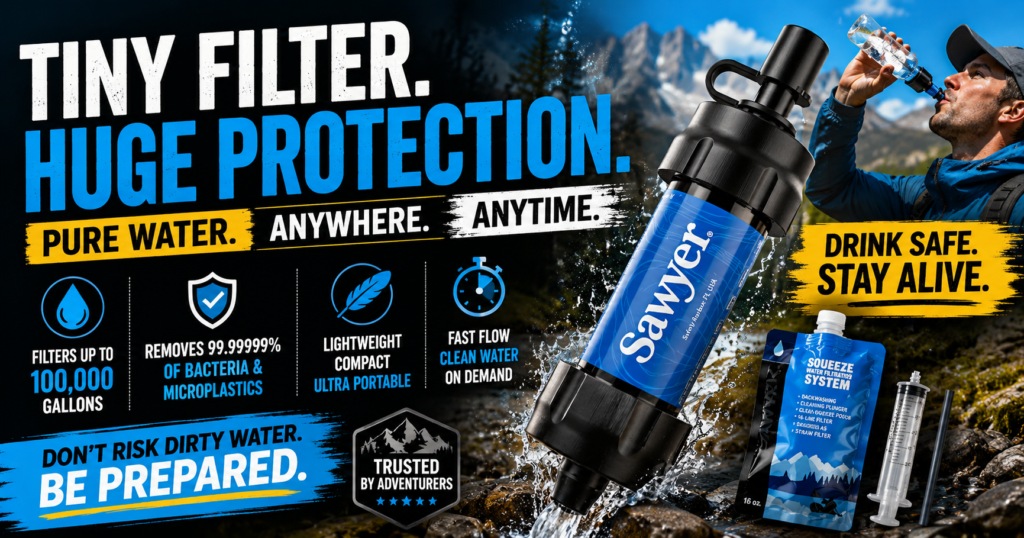
One of the simplest preparedness upgrades is keeping a portable filter available.
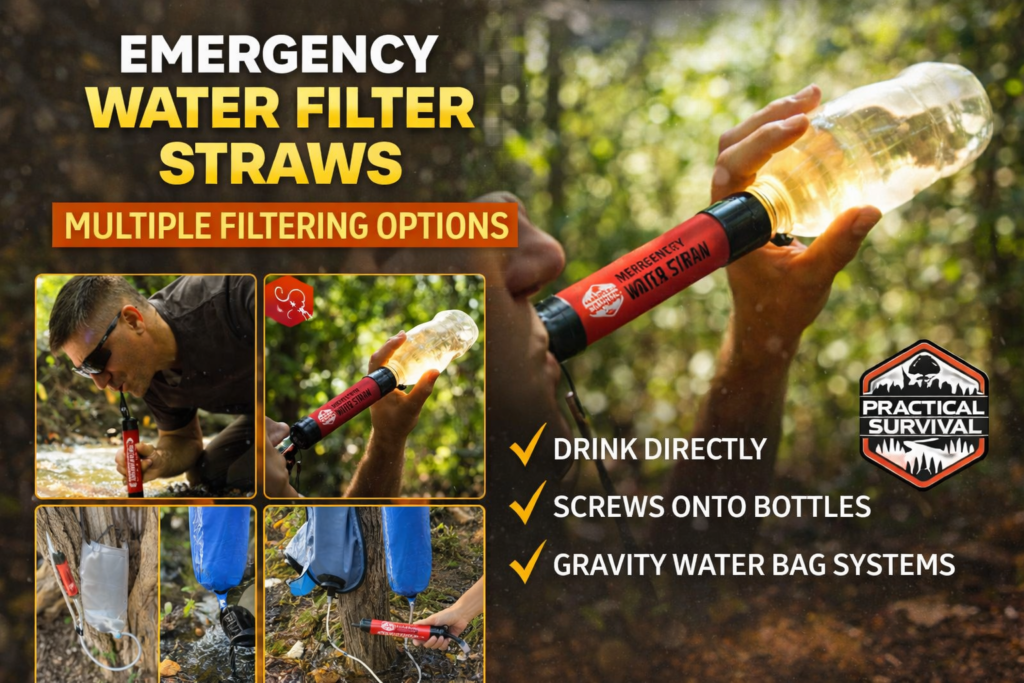
Our review of these emergency water straws that could save your life explains why they’re popular among preppers, campers, and emergency planners.
A compact filter takes up almost no space while providing access to thousands of gallons of treated water if needed.

Why Planning Beats Panic Every Time
One of the biggest lessons from every major disaster is that prepared families usually have more options.
They aren’t trying to figure everything out after the emergency starts.
They already know where their water is coming from.
They already have backup plans.
They already understand the resources available inside and around their home.
Your water heater may never need to serve as an emergency water source.
But if the day comes when the faucets stop running, you’ll be glad you knew it was there.
Related Water Preparedness Articles
Building a reliable emergency water plan takes more than simply storing a few bottles of water. Explore these helpful guides to strengthen your family’s preparedness:
- Emergency Water Preparedness Guide: Everything You Should Know
- How to Build a 30-Day Emergency Water Supply for Your Family
- Emergency Water Checklist: What Every Family Should Have
- How to Purify Water Without Electricity During an Emergency
- What Is the Safest Water Source During an Emergency?