Most people know they should store emergency water.
Very few actually store enough.
A couple of cases of bottled water might feel like plenty when they’re sitting in the garage. But when you start calculating how much water your family actually uses every day, those supplies suddenly don’t look so impressive.
Water is one of the first things you’ll need during a disaster. Whether you’re dealing with a tornado, winter storm, hurricane, extended power outage, flood, or another emergency, your stored water supply may determine how comfortable and safe your family remains during the crisis.
The problem is that most preparedness advice is either too vague or completely unrealistic.
Let’s look at what a real family should actually store.
Why Water Matters More Than Food
Many new preppers immediately focus on food.
That’s understandable.
Food is important.
But water becomes critical much faster.
You can survive for weeks without food.
You cannot survive long without water.
Dehydration affects:
- Physical strength
- Mental alertness
- Decision making
- Body temperature regulation
- Overall survival
Without enough water, even simple tasks become difficult.
That’s why water should be one of the first areas addressed in any preparedness plan.
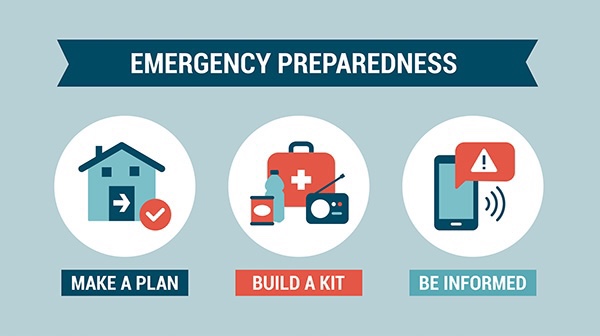
If you’re just getting started, our guide on emergency preparedness steps for safeguarding your home covers additional supplies every household should consider.
The One Gallon Rule
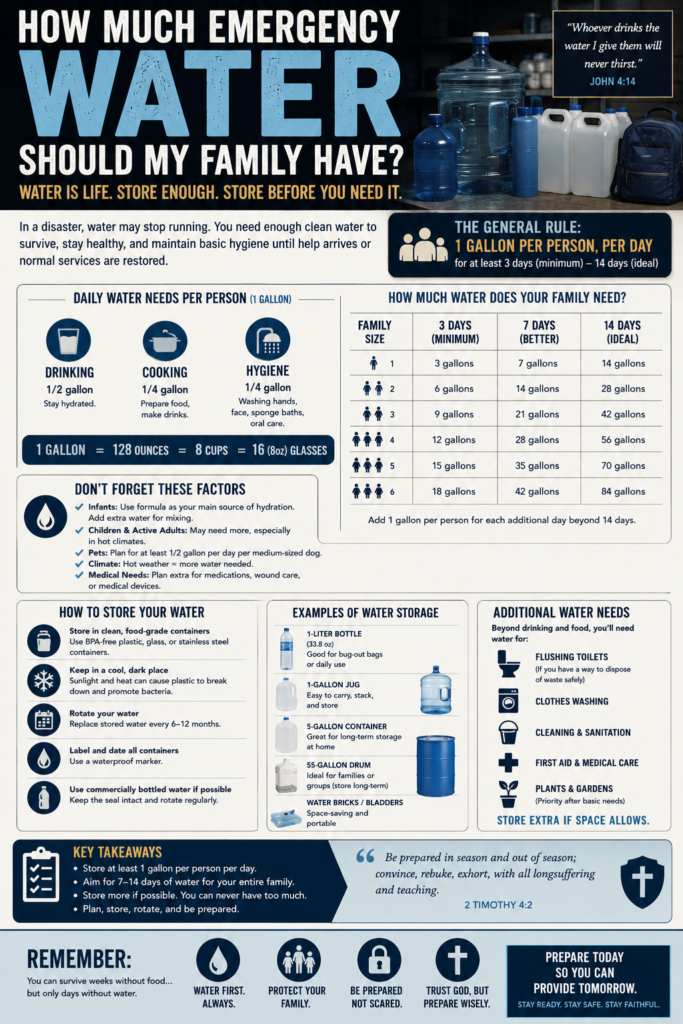
Most emergency preparedness organizations recommend storing at least one gallon of water per person per day.
This gallon covers:
- Drinking
- Basic food preparation
- Minimal sanitation


Why Most Families Need More Than One Gallon Per Day
The one-gallon rule assumes a fairly controlled situation.
Real emergencies rarely work that way.
Additional water may be needed for:
- Hot weather
- Children
- Elderly family members
- Pets
- Cooking
- Cleaning wounds
- Taking medications
- Personal hygiene
A more comfortable target is often closer to two gallons per person per day if storage space allows.
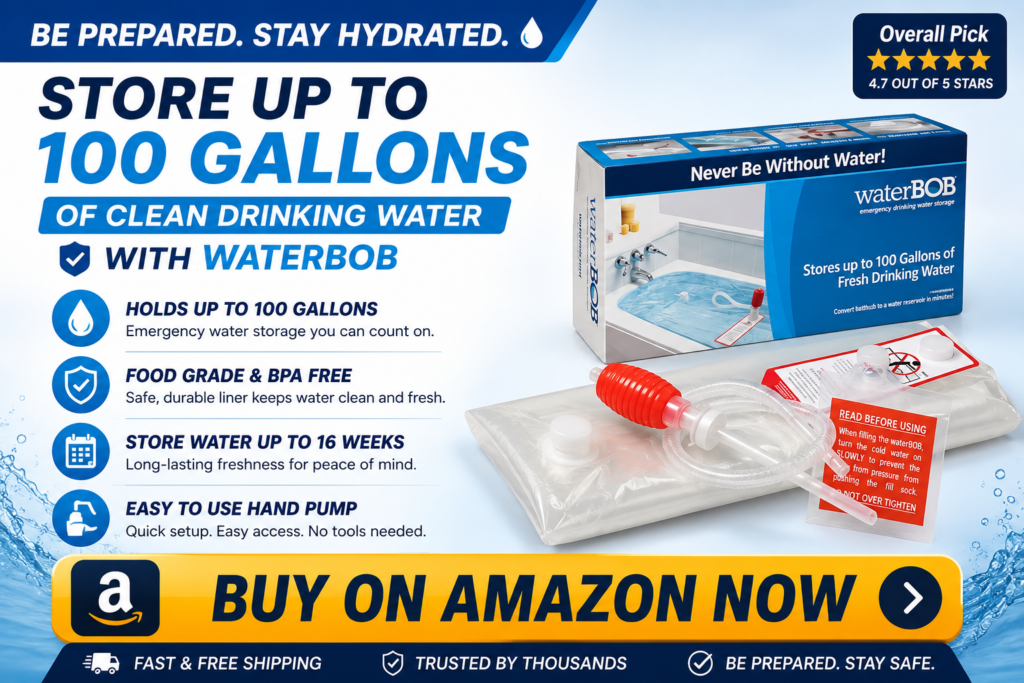
Check this awesome 100 gallon emergency water storage: https://amzn.to/3RUxFPh
Families that have experienced long outages often discover they use more water than expected.
How Long Should You Plan For?
Three days is often considered the minimum emergency preparedness target.
The problem is that many disasters last much longer.
Consider planning for:
72 Hours
This covers many short-term emergencies.
Two Weeks
This is where many preparedness experts recommend families aim.
Two weeks gives you a much larger safety margin.
Thirty Days
Families focused on serious preparedness often work toward a month of water security.
You don’t need to build a 30-day supply overnight.
Start small and build gradually.
What About Bottled Water?
Bottled water is one of the easiest ways to start.
Advantages include:
- Easy storage
- Affordable
- Portable
- Widely available
The key is proper storage.
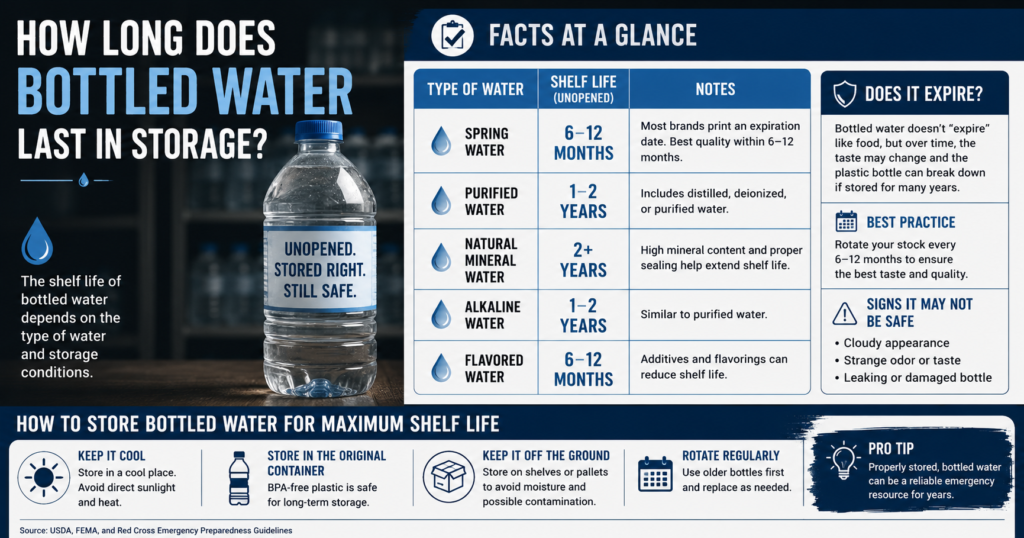
If you’ve ever wondered how long those cases of water will actually last, read How Long Does Bottled Water Last in Storage?.
Why Stored Water Is Only Part of the Plan
Eventually every stored water supply runs out.
This is where many preparedness plans fail.
You should also have a method for obtaining and treating additional water.
That might include:
- Rainwater collection
- Water filtration
- Water purification
- Nearby water sources
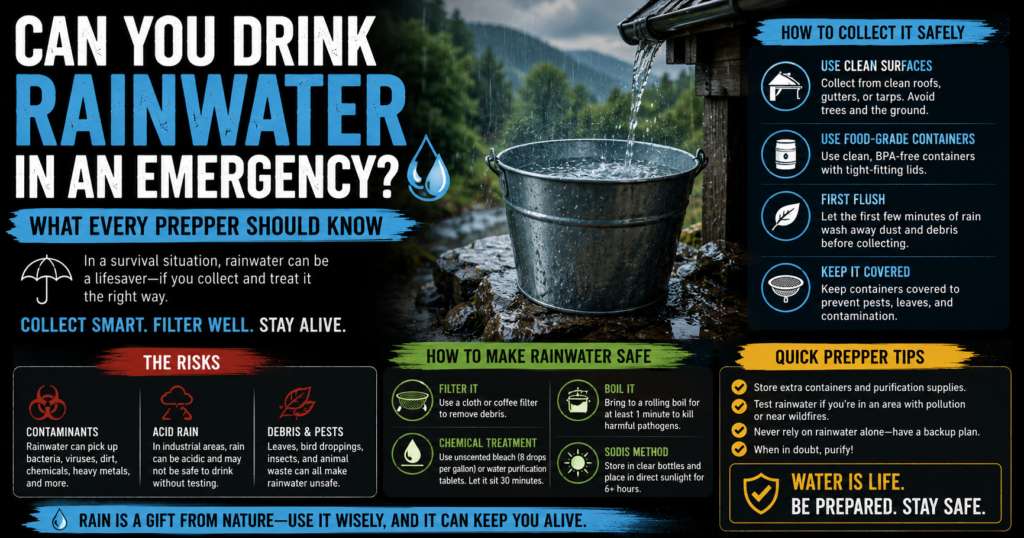
For example, many people don’t realize that rainwater can become an important emergency resource. Our guide on Can You Drink Rainwater in an Emergency? explains when rainwater may be useful and how to make it safer.

Never Assume Clear Water Is Safe
One dangerous mistake is assuming that water that looks clean is safe to drink.
Unfortunately, many contaminants are invisible.
Bacteria, parasites, and harmful microorganisms often cannot be seen.
Before drinking water from any unfamiliar source, understand the risks.
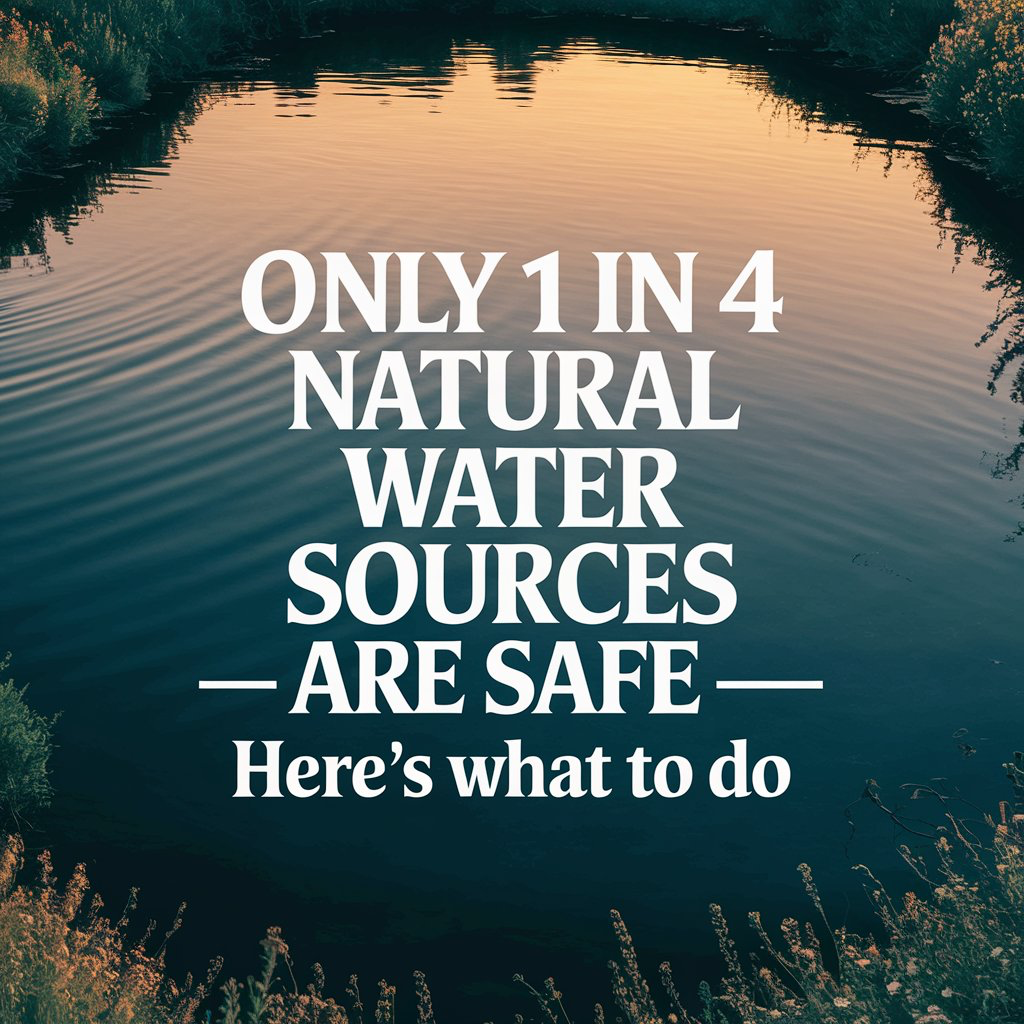
Our article on why clear-looking water can still be dangerous explains why appearances can be misleading.
Every Family Needs a Backup Filtration Method
Stored water should be your first layer of protection.
Filtration should be your second.
If your emergency lasts longer than expected, a reliable filter may become one of your most valuable tools.
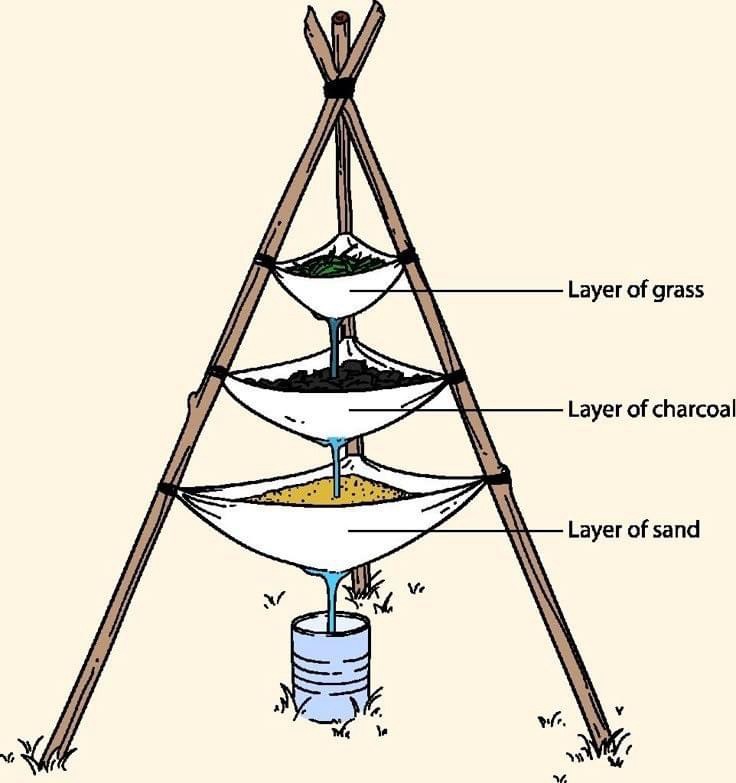
Our guide to survival water filtration systems that actually work explains several options worth considering.
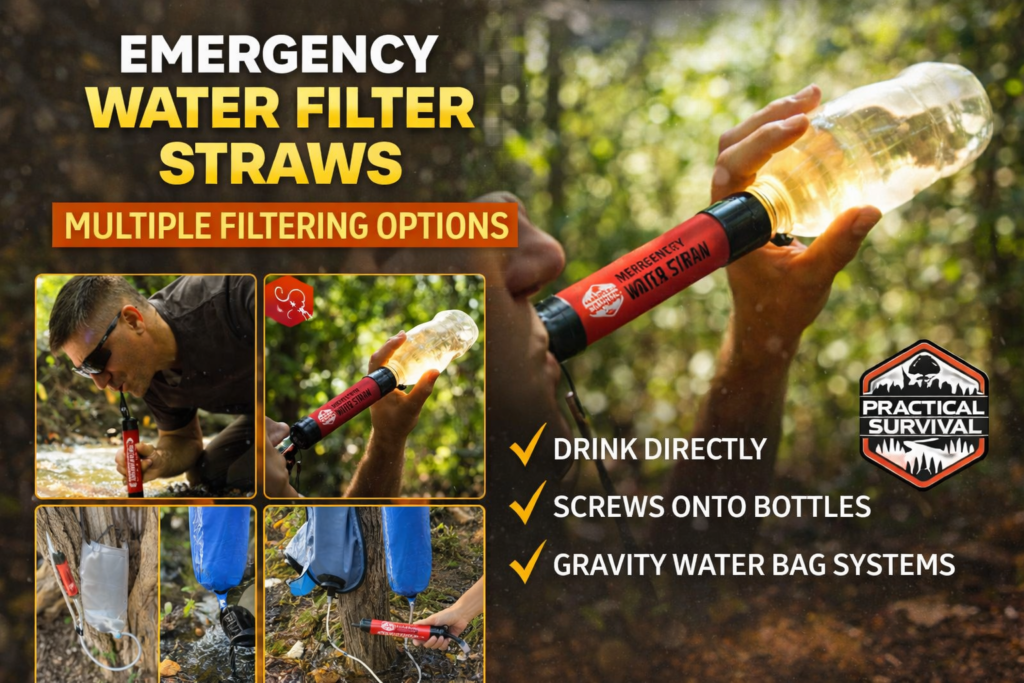
For portable emergency kits, we also reviewed these emergency water straws that can filter thousands of gallons while taking up very little space.
Water Storage Mistakes That Can Leave You Unprepared
Many families make the same mistakes:
Storing Too Little
A few cases of water disappear surprisingly fast.
Ignoring Pets
Animals need water too.
No Backup Water Source
Stored water eventually runs out.
No Filtration Method
You need a way to make additional water safer to drink.
Waiting Until Disaster Is Coming
By the time a storm warning appears, shelves are often already empty.
What Is a Realistic Goal?
For most households, a realistic progression looks like this:
- Three days of water
- One week of water
- Two weeks of water
- One month of water
- Backup collection and filtration methods
Building preparedness slowly is far better than never starting.
Every gallon stored today is one less gallon you’ll have to worry about during an emergency.

Related Water Preparedness Articles
Building a reliable emergency water plan takes more than simply storing a few bottles of water. Explore these helpful guides to strengthen your family’s preparedness:
- Emergency Water Preparedness Guide: Everything You Should Know
- How to Build a 30-Day Emergency Water Supply for Your Family
- Emergency Water Checklist: What Every Family Should Have
- How to Purify Water Without Electricity During an Emergency
- What Is the Safest Water Source During an Emergency?