When a major disaster strikes, clean drinking water becomes one of the first things people worry about.
Maybe a hurricane knocks out utilities. A winter storm freezes pipes. A tornado damages local infrastructure. Or perhaps you’re dealing with a long-term emergency where grocery stores and bottled water supplies disappear quickly.
In situations like these, many people look up at the sky and wonder:
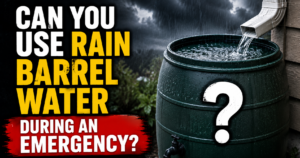
Can I just drink rainwater?
The answer is more complicated than a simple yes or no.
Rainwater can absolutely become an important emergency water source, but there are risks that every prepper, camper, homesteader, and emergency-minded family should understand before depending on it.
The good news is that rainwater is often cleaner than many other emergency water sources. The bad news is that collecting it incorrectly can introduce contaminants that make you sick when you can least afford it.
Why Water Should Be Your First Emergency Priority
Most people focus on food first.
That’s understandable because hunger is uncomfortable.
The reality is that dehydration becomes dangerous much faster than a lack of food.
Many preparedness experts recommend securing your water plan before worrying about long-term food storage.
If your family only has enough water for a couple of days, your emergency preparations have a major weakness.
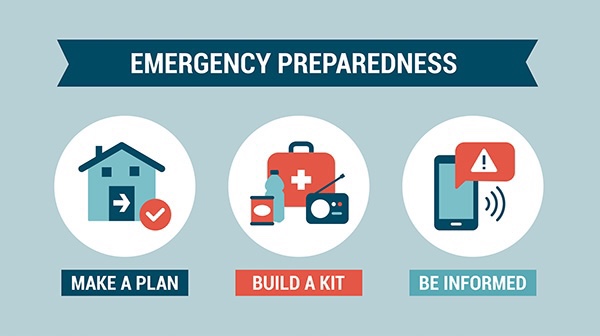
That’s why we often recommend starting with a complete preparedness plan before buying random gear. Our guide on emergency preparedness steps for safeguarding your home covers several important areas families frequently overlook.
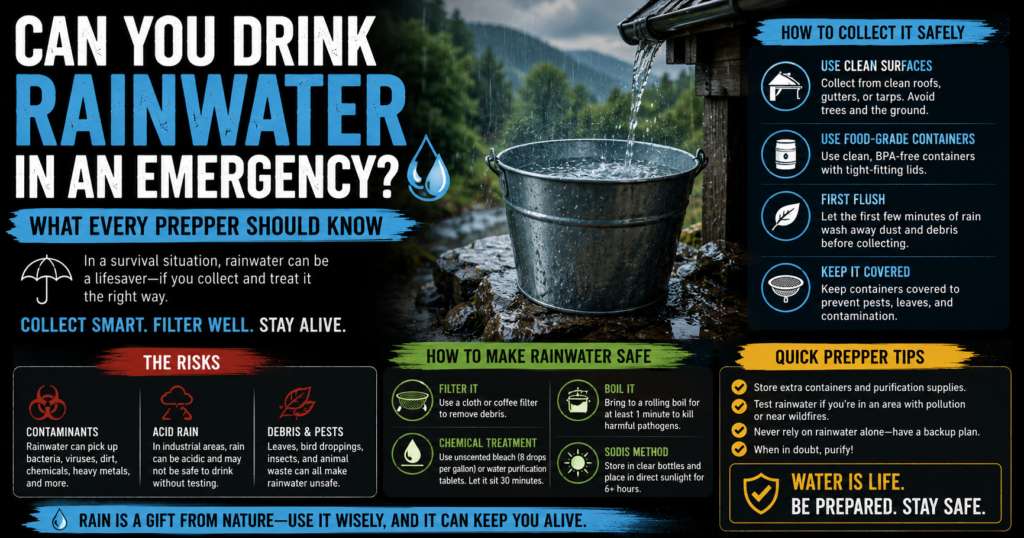
Is Rainwater Safe to Drink?
Rainwater falling directly from the sky is generally cleaner than water found in rivers, ponds, ditches, and stagnant pools. Understanding Survival Water Purification: Essential Wild Tips helps ensure collected rainwater is made safer before drinking.
However, clean does not necessarily mean safe.
As rain falls, it can collect:
- Dust
- Air pollution
- Smoke particles
- Bacteria
- Bird droppings
- Roof contaminants
- Insect debris
The biggest problem usually isn’t the rain itself.
The biggest problem is what the water touches before it reaches your container.
A clean tarp collecting rainwater in an open field is very different from rainwater running across an old roof covered with debris and animal waste.


Why Clear Water Can Still Be Dangerous
One of the most common mistakes beginners make is assuming that clear water equals safe water.
Unfortunately, bacteria, viruses, parasites, and other harmful contaminants are usually invisible.
Crystal-clear water can still make you extremely sick.
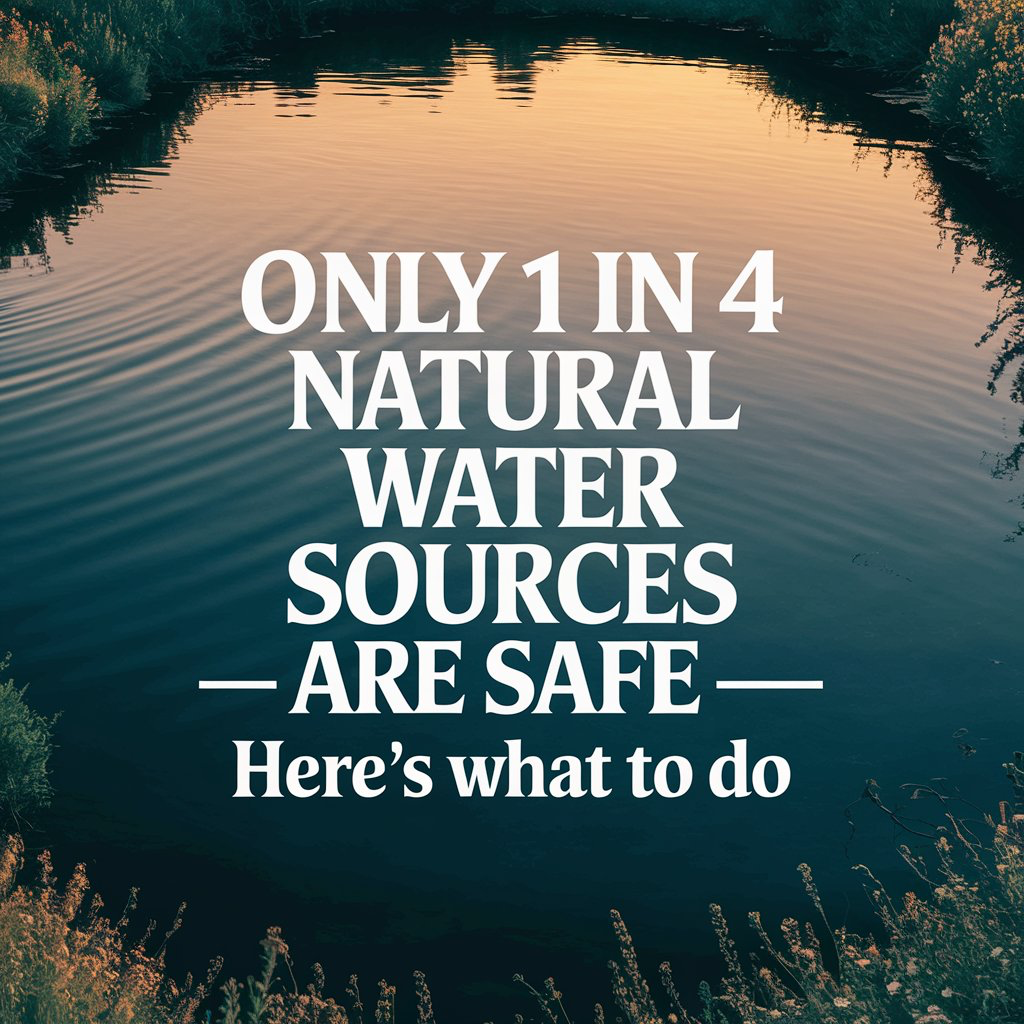
That’s one reason we published Why Wild Water That Looks Clean Should Never Be Trusted.
Many dangerous waterborne illnesses come from water that appears perfectly safe.
Your eyes simply cannot detect most of the threats that matter.
Is Rainwater Better Than Pond Water?
In most situations, yes.
A freshly collected batch of rainwater is generally preferable to:
- Pond water
- Ditch water
- Muddy creek water
- Flood water
- Standing water
Those sources often contain animal waste, bacteria, parasites, and other contaminants that can create serious health problems.
That doesn’t automatically make rainwater safe.
It simply means it may be the cleaner option available.

The Best Ways to Collect Rainwater During an Emergency
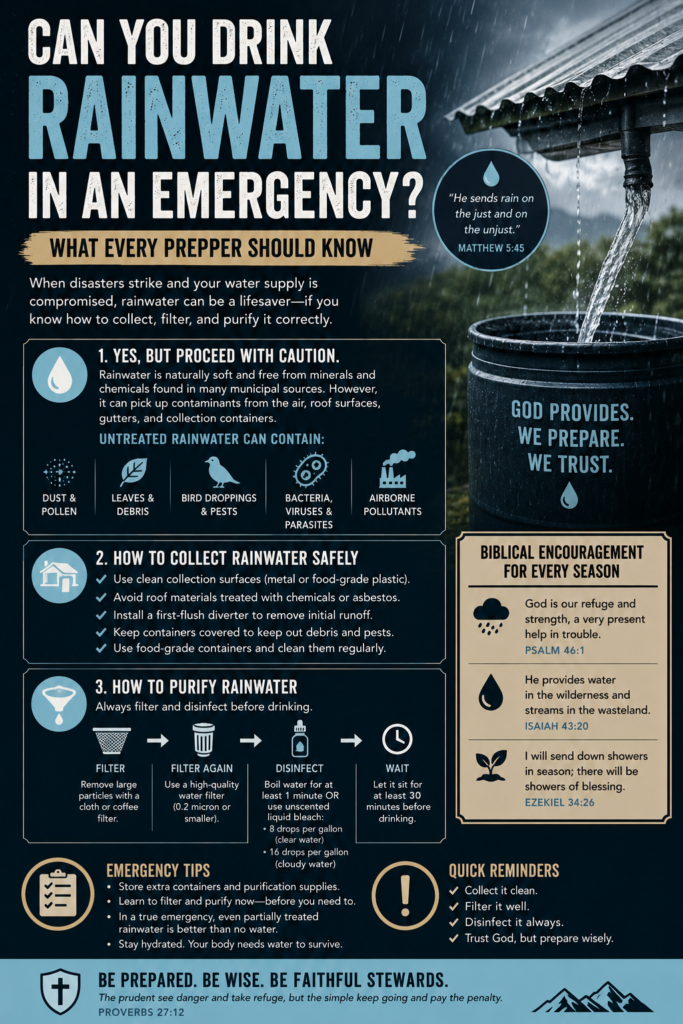
The safest rainwater collection methods include:
Clean Tarps
A new or thoroughly cleaned tarp can create an effective emergency rain catchment system.
Stretch the tarp so water naturally funnels toward a clean collection container.
Food-Grade Containers
Whenever possible, store collected rainwater in containers intended for food or drinking water.
Avoid containers that previously held:
- Fuel
- Chemicals
- Pesticides
- Cleaning products
Even small amounts of residue can contaminate an entire water supply.
Rain Barrels
For long-term preparedness, rain barrels can provide substantial water storage capacity.
Many homesteaders and self-reliant families use rain collection systems as part of a larger emergency plan.
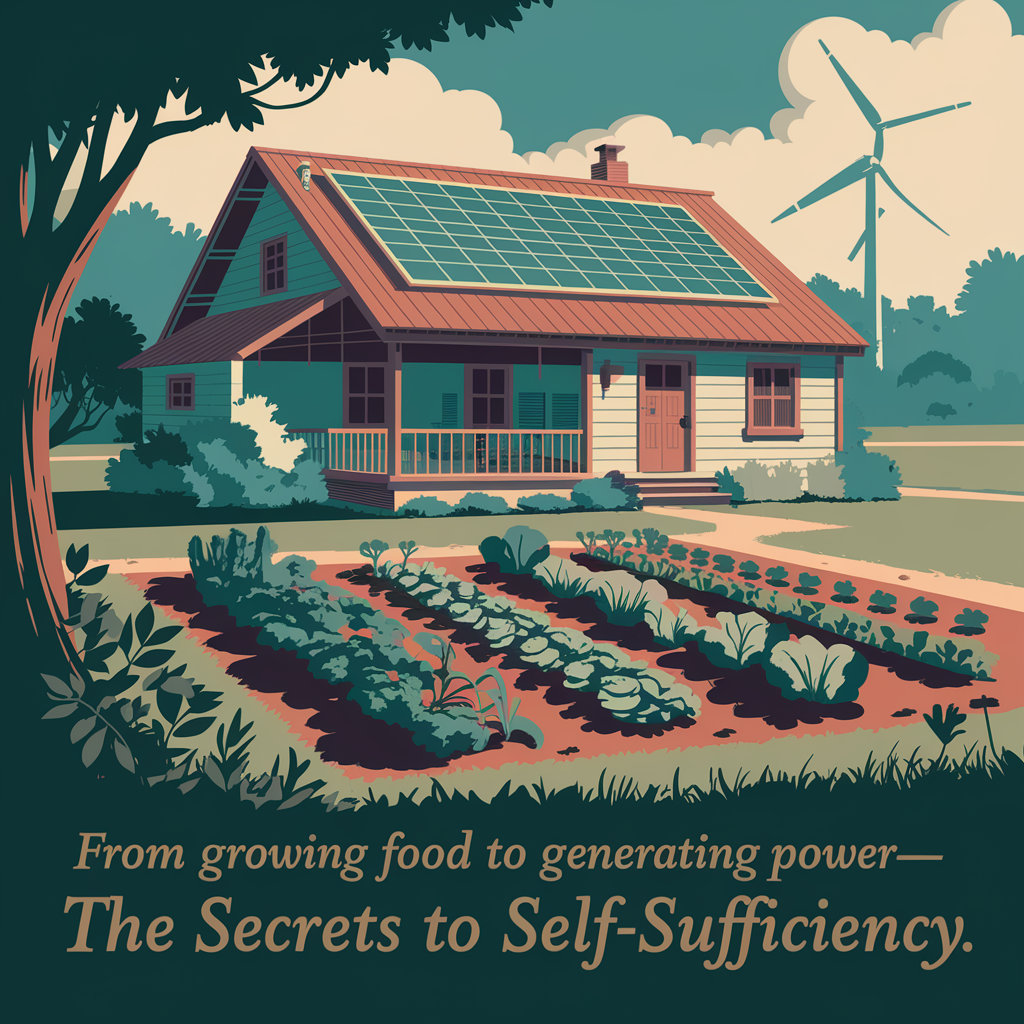
If you’re interested in becoming less dependent on outside systems, check out The Ultimate Guide to a Self-Sufficient Lifestyle.
Should You Filter Rainwater Before Drinking?
Whenever possible, yes.
Filtration adds an extra layer of protection against contaminants that may have entered the water during collection.
This becomes especially important if the rainwater:
- Touched a roof
- Passed through gutters
- Sat in storage
- Was collected during storms
A quality water filtration system should be part of every emergency plan.

Our guide on the best survival water filtration systems explains several options that work well during emergencies.
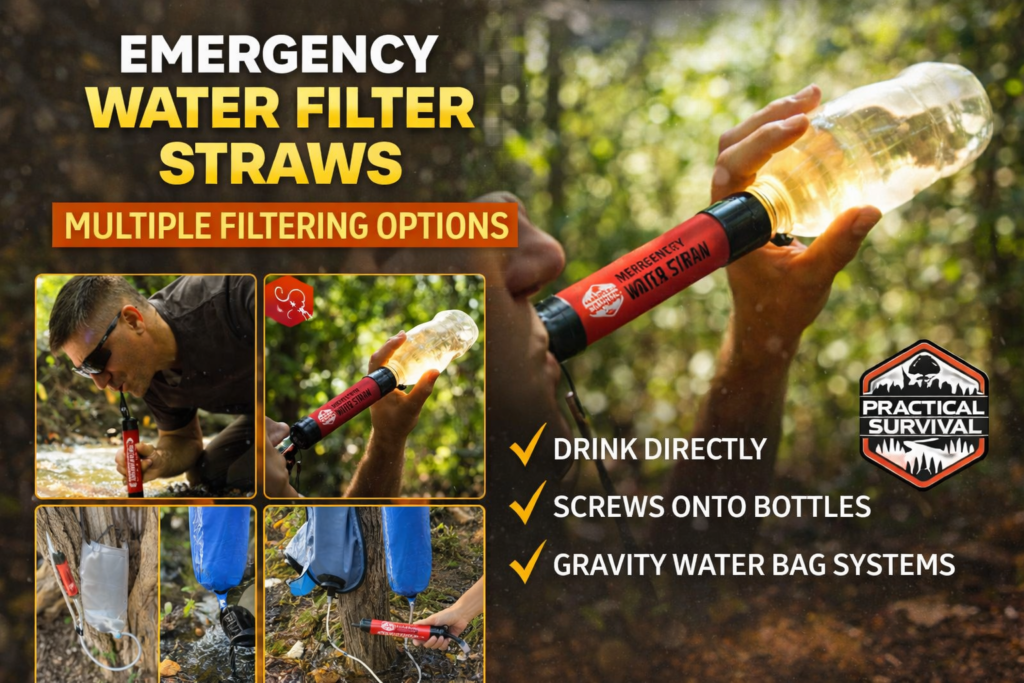
For portable emergency kits, we also reviewed these emergency water straws that could save your life because they can filter thousands of gallons while taking up almost no space.
What If You Don’t Have a Water Filter?
Filtration is ideal.
But emergencies don’t always happen when you’re prepared.
If a filter isn’t available, boiling becomes one of your best options.
Bringing water to a rolling boil can kill many harmful microorganisms.
This is another reason fire-starting remains one of the most valuable survival skills a person can learn.

Our article on mastering fire starting in survival situations can help you improve this critical skill before you need it.
How Much Rainwater Can You Collect?
Many people underestimate how much water a simple roof can produce.
A moderate rainfall event can generate hundreds of gallons of water from an average residential roof.
That’s one reason rainwater collection has become popular among:
- Homesteaders
- Off-grid families
- Gardeners
- Emergency preparedness enthusiasts
Rainwater can provide an important backup water source when municipal systems fail.


Common Rainwater Collection Mistakes
Assuming Rainwater Is Automatically Safe
Rainwater should always be evaluated and treated whenever possible.
Using Dirty Containers
A clean water source can quickly become contaminated inside a dirty container.
Ignoring Water Storage
Collected water should be stored properly to prevent contamination.
Waiting Until Disaster Strikes
Learning how to collect and treat water during a crisis is much harder than learning beforehand.
Preparedness works best when skills are practiced ahead of time.
What About Long-Term Emergencies?
A few days without water is difficult.
Weeks without reliable water can become life-threatening.
That’s why experienced preppers rarely depend on a single solution.
Instead, they create layers.
Those layers often include:
- Stored water
- Rainwater collection
- Water filtration
- Water purification
- Backup collection methods
The more options you have available, the less likely you are to face a true water emergency.

Emergency Water Planning for Families
A common recommendation is storing at least one gallon of water per person per day.
Many families discover this isn’t nearly as much as they expected.
Water is needed for:
- Drinking
- Cooking
- Hygiene
- Medications
- Basic sanitation
Even a short disruption can quickly exhaust a small supply.
Building multiple water sources into your emergency plan provides a much stronger safety net.
Frequently Asked Questions
Can rainwater make you sick?
Yes. Rainwater can contain bacteria, parasites, pollutants, and contaminants collected during the collection process.
Can you drink rainwater directly from the sky?
Fresh rainwater is generally cleaner than many surface water sources, but treatment is still recommended whenever possible.
Is rainwater safer than river water?
Often yes, especially compared to stagnant or contaminated surface water. However, treatment is still important.
How long can rainwater be stored?
Properly stored rainwater can last for extended periods, but storage conditions, container quality, and contamination risks all matter.
What’s the safest emergency water source?
The safest emergency water source is usually properly stored drinking water. Rainwater, filtration systems, and purification methods serve as important backups when stored supplies run low.
Final Thoughts For Now..
Rainwater can absolutely play an important role in an emergency water plan.
But it should never be your only plan.
The most prepared families combine stored water, filtration systems, purification methods, and collection strategies so they’re ready no matter what happens.
When clean water becomes difficult to find, having multiple options available can make all the difference.
Related Water Preparedness Articles
Building a reliable emergency water plan takes more than simply storing a few bottles of water. Explore these helpful guides to strengthen your family’s preparedness:
- Emergency Water Preparedness Guide: Everything You Should Know
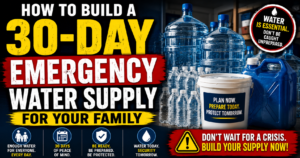
- How to Build a 30-Day Emergency Water Supply for Your Family
- Emergency Water Checklist: What Every Family Should Have
- How to Purify Water Without Electricity During an Emergency
- What Is the Safest Water Source During an Emergency?