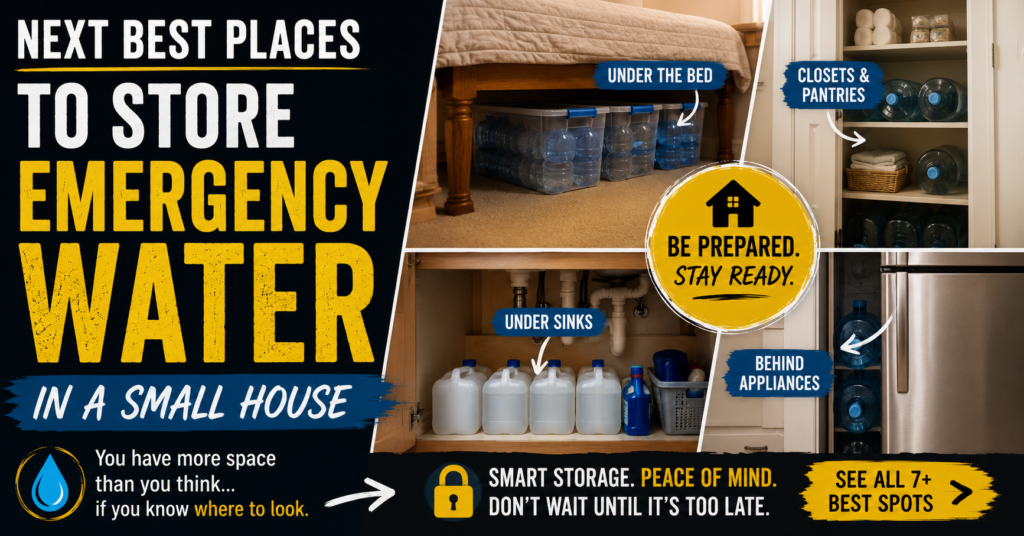
One of the biggest reasons families never build an emergency water supply is simple.
They think they don’t have enough room.
If you live in a small house, apartment, townhouse, mobile home, or even a larger home with limited storage, finding space for emergency water can seem impossible.
After all, water is heavy.
It’s bulky.
And unlike emergency food, you can’t easily stack months worth of it in a single closet.
The good news is that most homes have far more potential water storage space than people realize.
The key is knowing where to look.
Why Water Storage Matters More Than Most People Think
Many emergencies don’t start with a dramatic disaster.
Sometimes a water outage begins with a broken water main, a severe storm, frozen pipes, flooding, or a treatment plant issue.
When that happens, grocery store shelves empty quickly.
People who have never stored water before suddenly realize they have very little available.
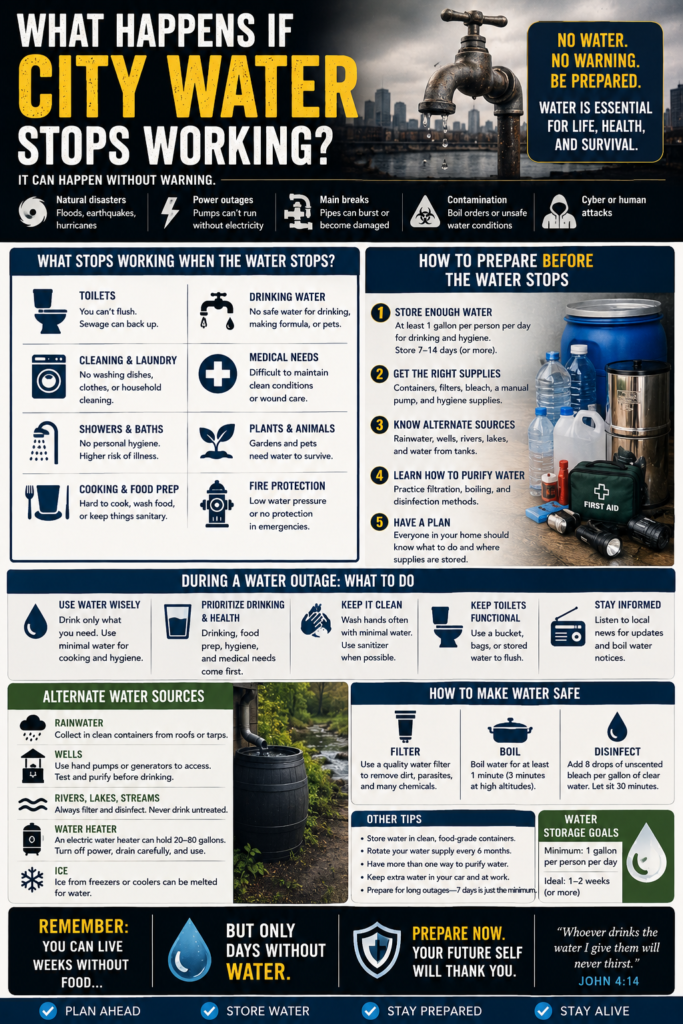
Our recent guide on what happens if city water stops working explains just how disruptive even a short-term water outage can become.
Water isn’t just for drinking.
You’ll need it for:
- Cooking
- Hygiene
- Medications
- Pets
- Basic sanitation
That’s why every family should have a plan before an emergency occurs.
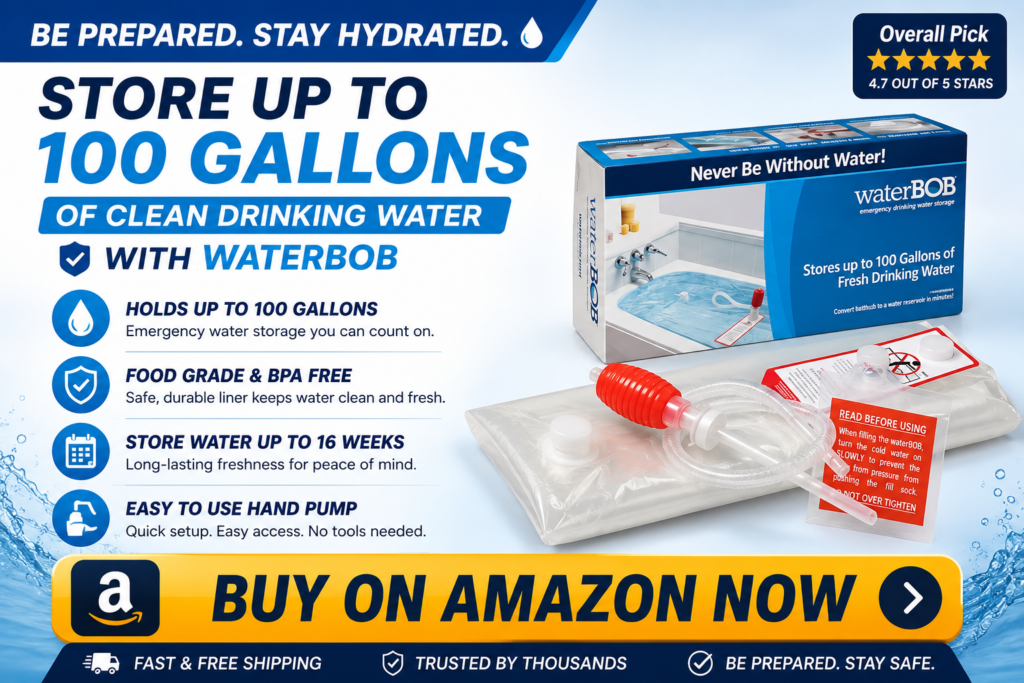
Check this awesome 100 gallon emergency water storage: https://amzn.to/3RUxFPh
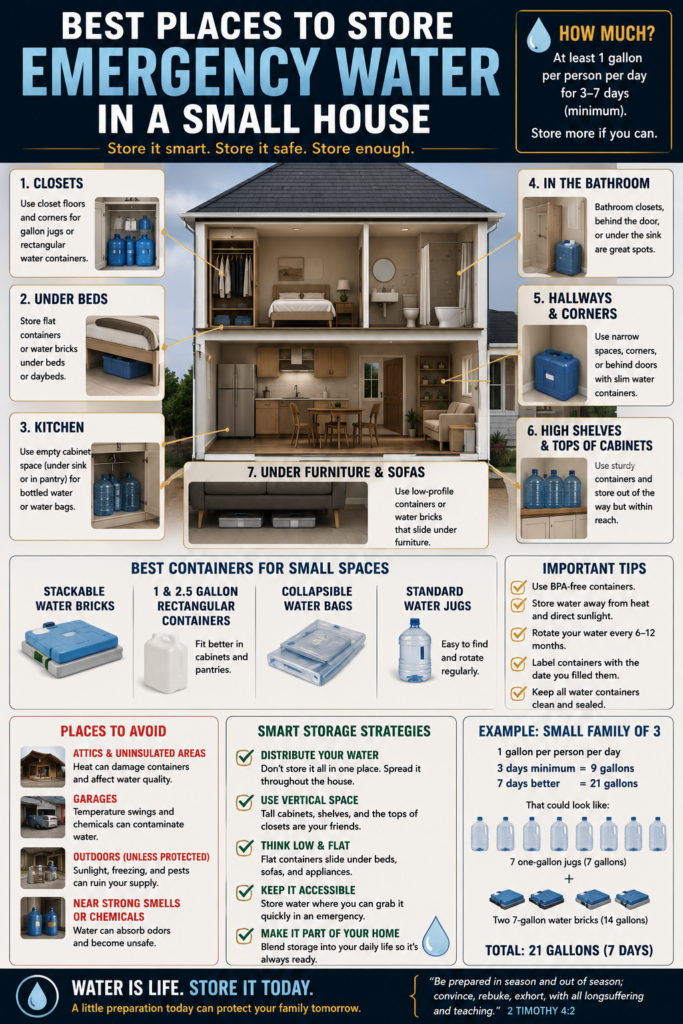
Under Beds Are One of the Most Overlooked Storage Areas
Most people waste a surprising amount of space under their beds.
Low-profile water containers can fit beneath many bed frames while remaining easy to access.
This location has several advantages:
- Protected from sunlight
- Usually climate controlled
- Doesn’t take away living space
- Easy to rotate periodically
For many small homes, under-bed storage can hold a significant portion of a family’s emergency water supply.

Interior Closets Often Work Better Than Garages
Many people immediately think of storing water in the garage.
That isn’t always the best choice.
Garages frequently experience:
- Extreme summer heat
- Freezing winter temperatures
- Large temperature swings
Instead, consider interior closets whenever possible.
Hall closets, spare bedroom closets, and utility closets often provide a more stable environment for long-term water storage.
Use the Space Behind Furniture
Look around your home.
Many pieces of furniture sit several inches away from the wall.
Those gaps can sometimes accommodate water containers that remain completely hidden from view.
Good candidates include:
- Sofas
- Dressers
- Entertainment centers
- Bookshelves
A few gallons stored in several locations can add up surprisingly fast.
Don’t Ignore Unused Cabinet Space
Many kitchens contain cabinets that are rarely used.
The same is true for laundry rooms and utility rooms.
While you don’t want water containers interfering with daily life, unused cabinet space can be an excellent location for smaller water reserves.
Guest Rooms Make Excellent Storage Areas
If you have a spare bedroom, you’re sitting on valuable preparedness real estate.
Water can often be stored:
- Under beds
- In closets
- Behind furniture
- Along unused walls
Because guest rooms typically see less daily traffic, they often provide ideal storage conditions.


Basements Are Great If They Stay Dry
Basements can be excellent for emergency water storage.
They usually remain cooler than garages and offer substantial space.
However, flooding is a concern.
Never store your entire water supply directly on the floor if basement flooding is possible.
Simple shelving can help protect your investment.
Water Storage and Water Filtration Should Work Together
Many families focus entirely on storing water.
That’s important.
But every stored supply eventually runs out.
A smart preparedness plan includes both storage and filtration.
That way you have options if an emergency lasts longer than expected.
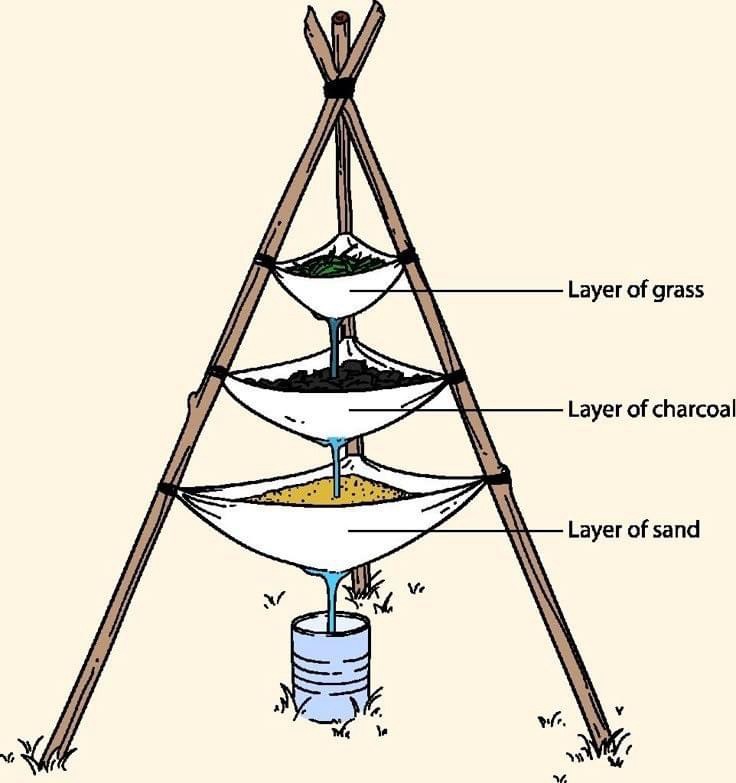
Our guide to survival water purification systems that actually work explains several effective backup solutions.
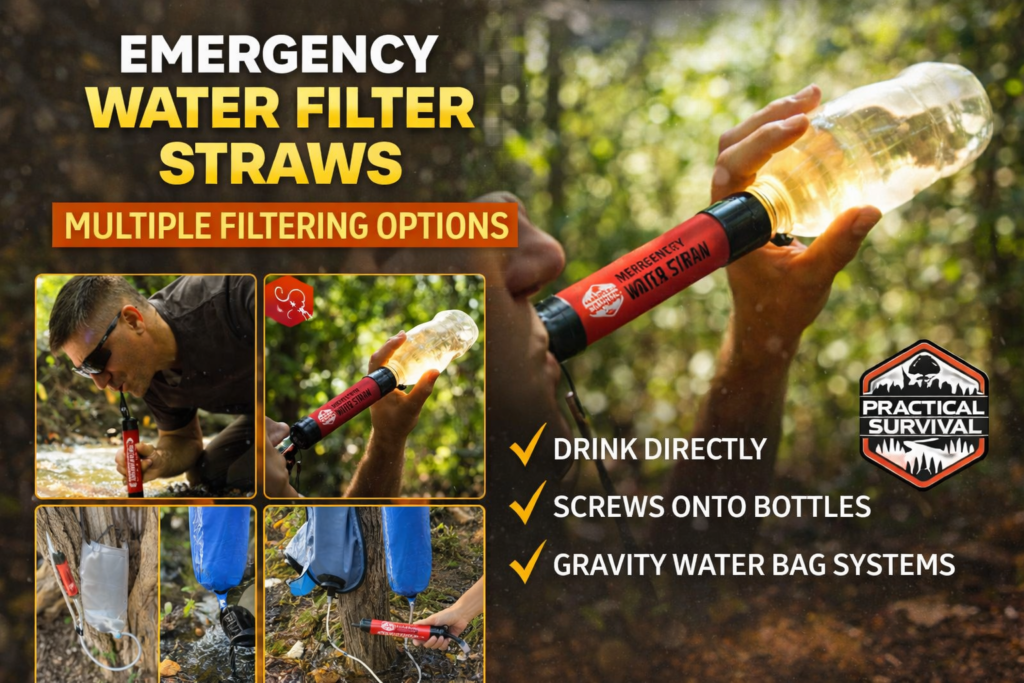
Many families also keep emergency water straws available because they’re lightweight, compact, and capable of filtering large amounts of water.
Avoid These Common Water Storage Locations
Not every storage location is a good choice.
Try to avoid:
Attics
Attics often experience extreme heat during summer.
Near Gasoline or Chemicals
Water containers can absorb odors and contaminants from nearby chemicals.
Direct Sunlight
Sunlight encourages algae growth and can degrade containers over time.
Outdoor Storage
Unless specifically designed for outdoor use, most containers last longer indoors.
Start Small If Space Is Tight
One mistake new preppers make is believing they must immediately store hundreds of gallons.
You don’t.
Start with a realistic goal.
Then expand.
Even a week’s worth of water is dramatically better than none.
If you’re still calculating how much water your household actually needs, read how much emergency water a family should store before purchasing containers.
The Hidden Advantage of Multiple Storage Locations
Many preparedness beginners store all their water in one place.
Spreading supplies throughout your home offers several advantages.
If one area becomes damaged, inaccessible, or contaminated, your entire supply isn’t lost.
Multiple storage locations also make it easier to fit water into a smaller home.
A Simple Water Storage Plan Any Family Can Follow
A practical approach looks like this:
- Store a few cases of bottled water immediately.
- Add water storage to closets and under beds.
- Expand into guest rooms or basement areas.
- Build toward at least two weeks of supply.
- Add backup filtration and purification methods.
This approach is affordable, manageable, and far less overwhelming than trying to prepare all at once.
Small Homes Can Still Be Well Prepared
The biggest preparedness advantage isn’t having the largest house.
It’s having a plan.
Families living in small homes successfully build emergency water supplies every day by making smart use of available space.
With a little creativity, most households can store far more water than they initially thought possible while maintaining a comfortable and organized home.
Related Water Preparedness Articles
Building a reliable emergency water plan takes more than simply storing a few bottles of water. Explore these helpful guides to strengthen your family’s preparedness:
- Emergency Water Preparedness Guide: Everything You Should Know
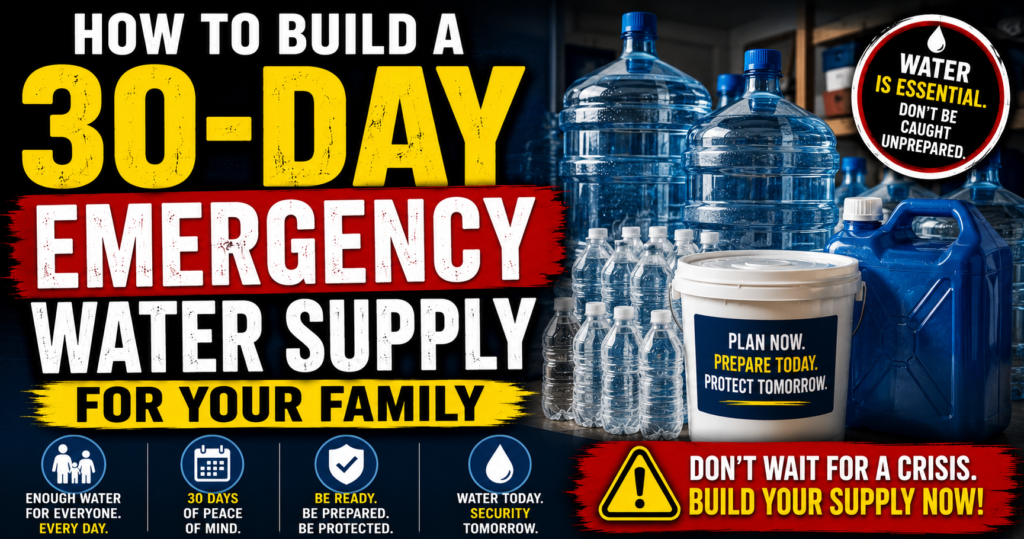
- How to Build a 30-Day Emergency Water Supply for Your Family
- Emergency Water Checklist: What Every Family Should Have
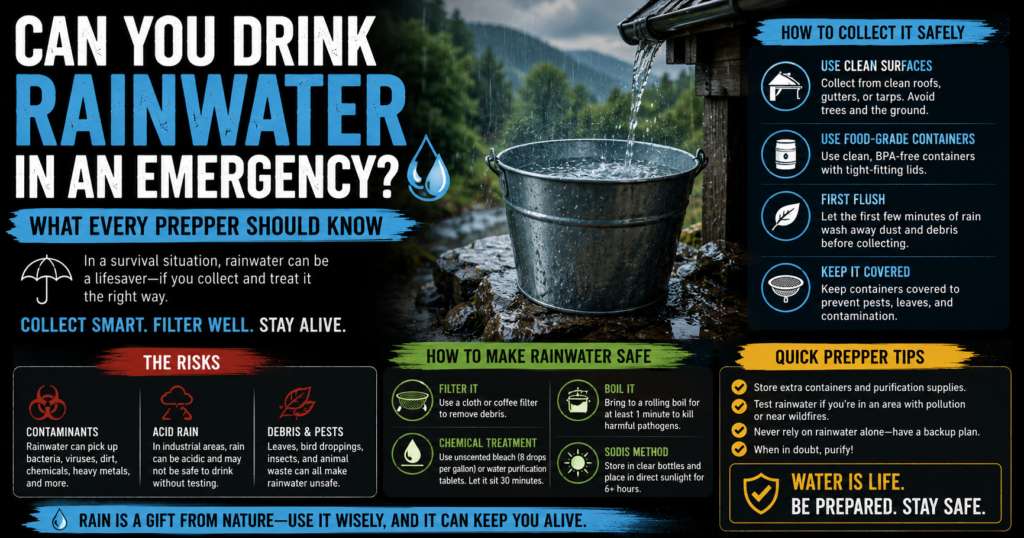
- How to Purify Water Without Electricity During an Emergency
- What Is the Safest Water Source During an Emergency?