The time to build your stockpile is not when the storm is on radar. It’s not when the news is covering grid vulnerabilities. It’s right now, on an ordinary Tuesday, when store shelves are full and you can think clearly instead of panic-buying whatever’s left.
Most people who end up underprepared for a long-term power outage didn’t lack the means to prepare. They lacked the system. They bought a few extra cans here, a flashlight there, and assumed it added up to something meaningful. It didn’t.
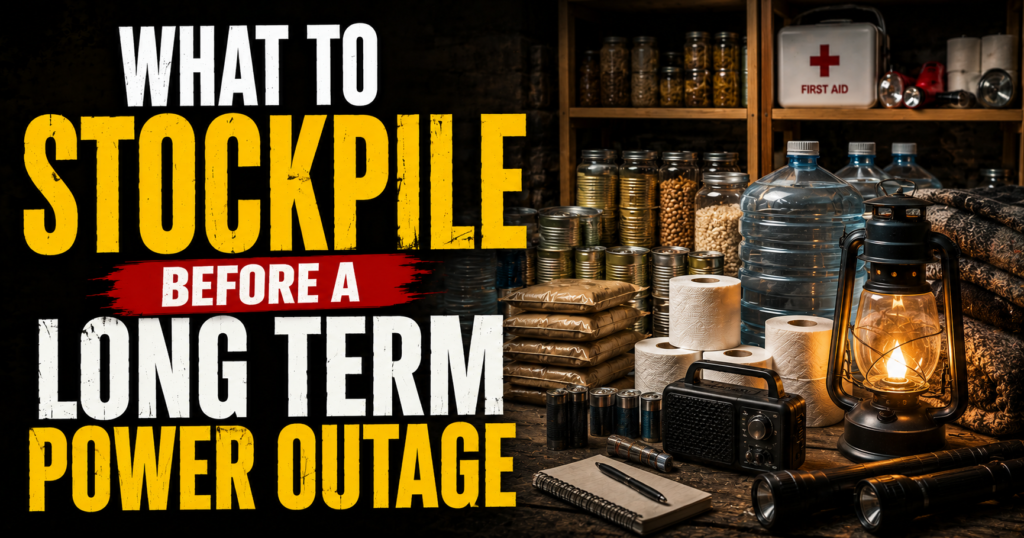
A real stockpile is built category by category with specific targets, rotated to stay fresh, and sized to your actual household needs. This is how you build one.
Set Your Target Timeline First
Before you buy a single item, decide what you’re preparing for. A two-week power outage requires a very different stockpile than a two-month grid-down scenario. Both are worth planning for. Neither is the same plan.
Start with two weeks as your minimum target. FEMA’s baseline recommendation is 72 hours — which is laughably inadequate for anything beyond a localized short-term event. Two weeks covers the realistic duration of most severe weather events, regional infrastructure failures, and the kind of supply chain disruptions that follow major natural disasters.

Once you’ve built and tested a two-week stockpile, extend to a month. Then three months. Each milestone makes you meaningfully more resilient than the one before it, and the incremental cost of extending from two weeks to a month is far lower than building from zero to two weeks.


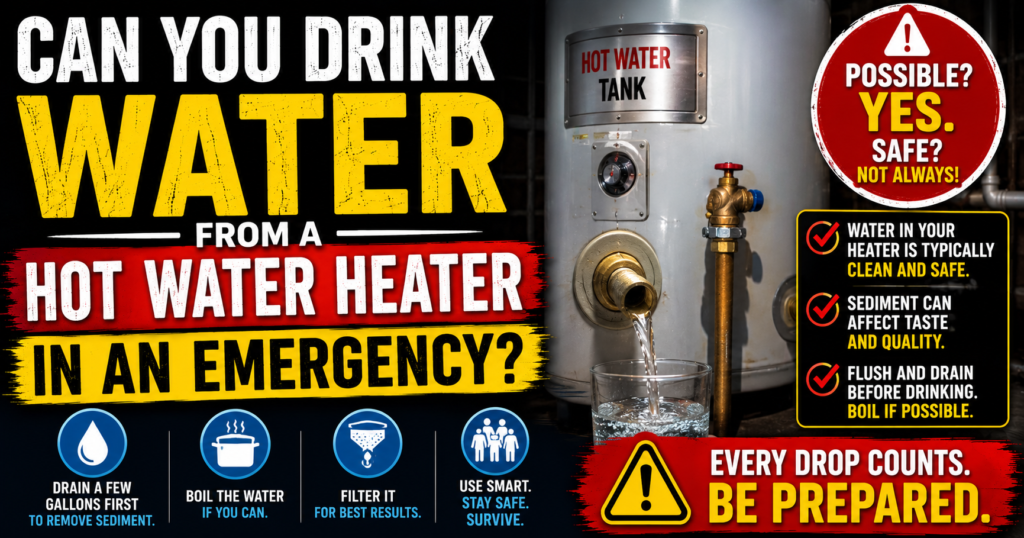
Water Stockpile
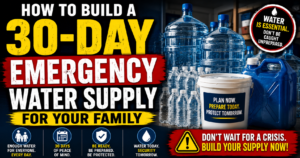
Water is the most urgent stockpile category and the one most people underinvest in because it’s heavy, bulky, and unglamorous compared to food and gear.
The math: One gallon per person per day minimum for drinking and basic sanitation. Two gallons per person per day for comfortable living including cooking and hygiene. For a family of four over two weeks, that’s 56 gallons at minimum and 112 gallons for comfortable margin.
Storage options:
- Food-grade 5-gallon jugs — stackable, manageable weight per container, widely available
- 55-gallon food-grade barrels — most cost-effective per gallon, requires a hand pump, takes significant floor space
- WaterBOB bathtub bladder — fills a standard bathtub with 100 gallons of clean water in minutes when an emergency is incoming
- Cases of commercial bottled water — convenient but expensive per gallon and produces significant plastic waste over time
Whatever storage method you choose, treat stored water with unscented liquid chlorine bleach — eight drops per gallon — if storing in non-commercial containers. Rotate your stored water every six to twelve months.
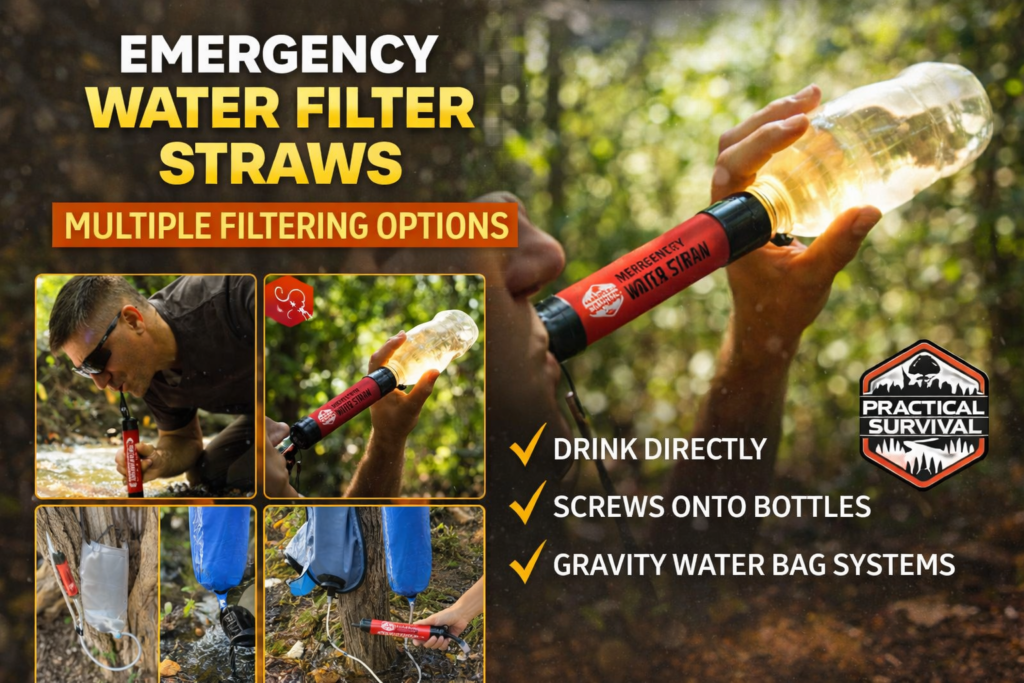
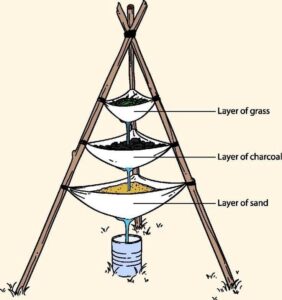
Stored water covers you in the short term. Your filtration system covers you for the long term. The Emergency Water Straws turn any water source into drinkable water and belong in both your bug out bag and your home stockpile. A stream, a pond, a rain collection barrel — all of it becomes your water supply when your stored water runs low.
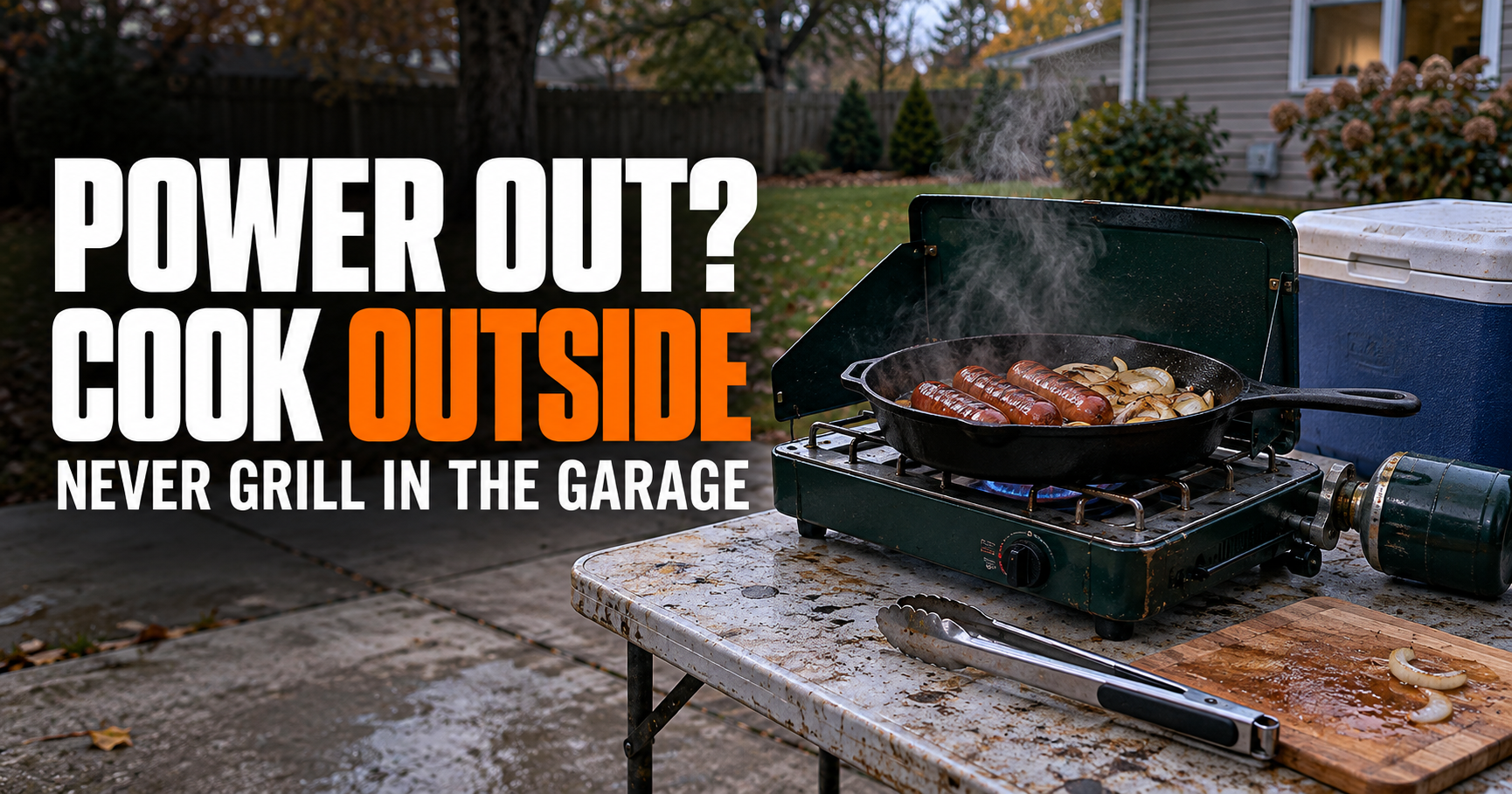


Food Stockpile
A proper long-term food stockpile has three layers working together: shelf-stable pantry staples for bulk calories, freeze-dried meals for convenience and nutrition variety, and ready-to-eat items requiring no preparation at all.
Layer 1 — Bulk Pantry Staples
These are the calorie foundation of your stockpile. Cheap, store indefinitely with proper storage, and familiar enough that your family will actually eat them under stress.
- White rice — 25–30 year shelf life in sealed containers, 1,600 calories per pound, the single most cost-effective calorie stockpile item available
- Dried beans and lentils — high protein, long shelf life, pairs with rice for complete nutrition
- Rolled oats — 30 year shelf life sealed, fast cooking, kid-friendly
- Pasta — 2 year shelf life unopen, high calorie, fast cooking
- Honey — indefinite shelf life, natural preservative, calories and sweetener
- Salt — indefinite shelf life, food preservation, essential electrolyte
- Cooking oil — 1–2 year shelf life, critical for calorie density in cooking
- Canned goods — vegetables, fruit, meat, soups — 2–5 year shelf life, no cooking required
- Peanut butter — 1–2 year shelf life, calorie dense, no refrigeration needed
Store bulk staples in food-grade five-gallon buckets with gamma seal lids. Mylar bags inside the buckets with oxygen absorbers extend shelf life dramatically and protect against moisture and pests. Label every container with the pack date.
Layer 2 — Freeze-Dried Meals
Freeze-dried meals are the most practical long-term food investment for most families. Lightweight, compact, 25-year shelf life, genuine nutritional content, and genuinely edible — not the cardboard emergency rations people imagine.
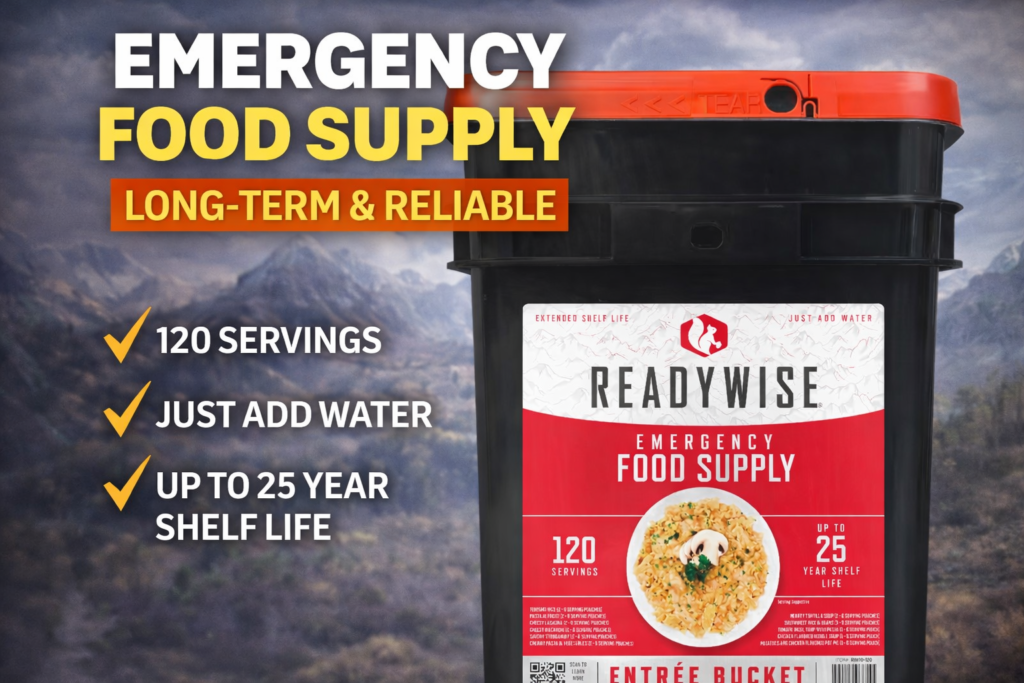
The ReadyWise 120-serving emergency food supply is the standard starting point. One bucket handles one person for roughly two months at reduced calorie intake, or covers a family of four for two weeks at one meal per person per day. Stack multiple buckets to hit your timeline target.
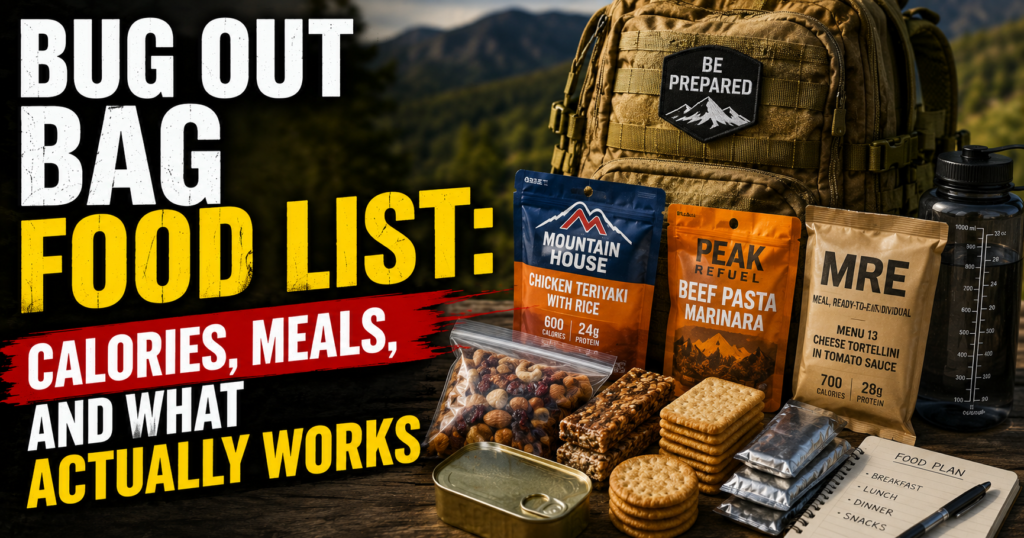
Freeze-dried meals serve double duty — they’re your home stockpile anchor and the food source you pull individual pouches from to rotate into your bug out bag food supply. Buy enough to cover both.
Layer 3 — Ready to Eat
These items require zero preparation and zero cooking equipment. They’re your fallback when fire isn’t possible, water is too scarce to rehydrate freeze-dried meals, or you’re moving and can’t stop to cook.
- Protein and granola bars
- Beef jerky and meat sticks
- Nuts and trail mix
- Crackers
- Dried fruit
- Single-serve peanut butter packets
- Hard candy
Power and Fuel Stockpile
Backup power is only as good as the fuel backing it up. A generator with no stored fuel is an expensive paperweight on day three of a grid-down event.
Gasoline: Store in approved containers with fuel stabilizer added. Untreated gasoline degrades in 30–60 days. Stabilized gasoline stays viable for 12–24 months. Rotate your supply by using and replacing it regularly. For most families, 10–20 gallons of treated gasoline covers meaningful generator runtime.
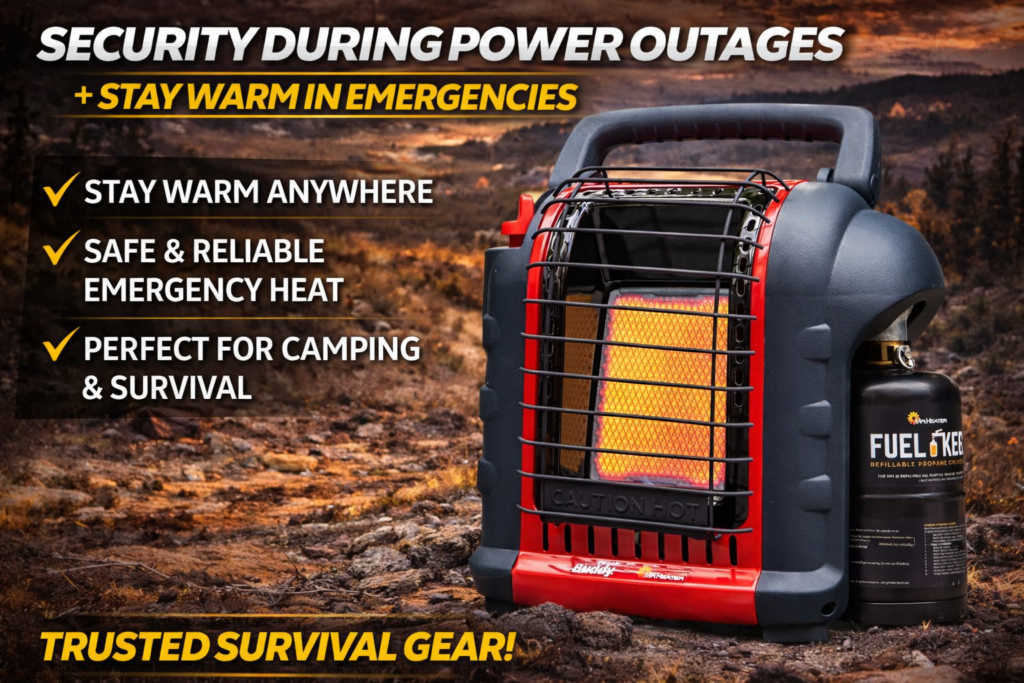
Propane: More stable than gasoline, stores indefinitely in sealed tanks. Covers both your portable propane heater and propane cooking equipment. Standard 1-pound cylinders are convenient but expensive per BTU — invest in a 20-pound tank and a refillable adapter for serious stockpiling.
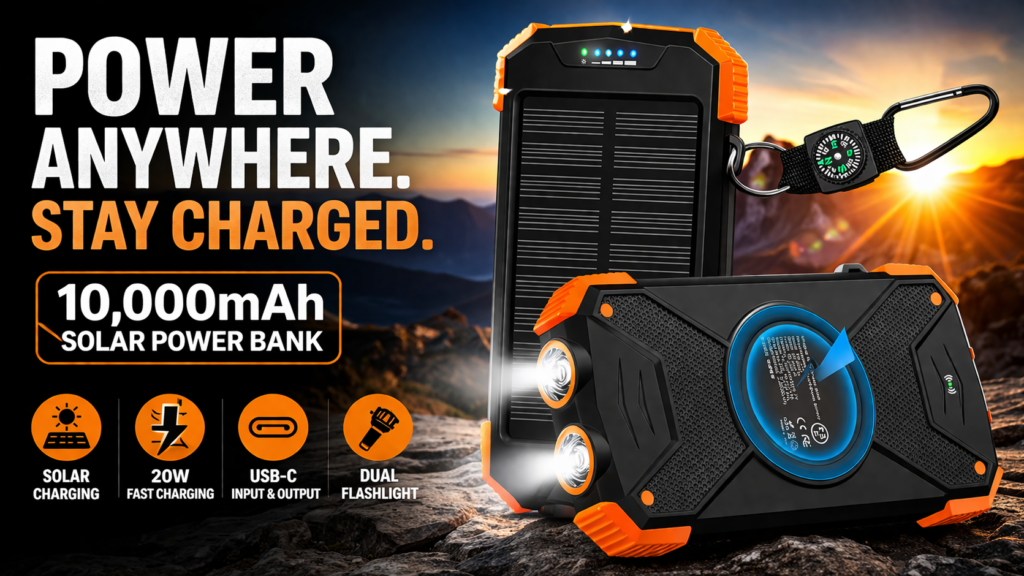
Solar charging: The BLAVOR solar power bank requires no fuel stockpile at all — sunlight is the fuel. Keep it charged and it becomes your device charging solution that never runs dry. For larger power needs, portable solar panels paired with battery storage extend this capability significantly.
Batteries: Alkaline batteries in AA, AAA, C, D, and 9V formats covering every device in your household. Lithium batteries last significantly longer in cold temperatures — worth the premium for flashlights and radios stored in unheated spaces. Rotate every two years.


Light Stockpile
Darkness is more operationally disruptive than most people expect. After the first night stumbling around with one flashlight and a dead phone screen, you realize fast that adequate lighting is a genuine survival asset.
- Minimum two high-quality flashlights per household — the AKNEAR rechargeable flashlight is the primary recommendation
- One headlamp per person for hands-free work
- Box of emergency candles with holders
- Glow sticks — mark rooms, signal, low-battery backup
- Spare batteries for every battery-powered light source you own
Medical Stockpile
In a prolonged power outage, pharmacies close and medical facilities get overwhelmed. Your medical stockpile needs to handle both acute care and ongoing medication needs for your entire household.
- 30-day minimum supply of all prescription medications — ask your doctor about emergency supplies
- Comprehensive trauma first aid kit — the MyFAK 132-item trauma kit is the baseline
- Hemostatic wound powder like BleedStop for severe bleeding
- Over-the-counter medications in bulk — pain relievers, antihistamines, antidiarrheal, antacids, cold medicine
- Wound care supplies — gauze, medical tape, antiseptic, nitrile gloves in quantity
- Thermometers, blood pressure cuff if relevant, glucose monitor if diabetic family members
If your household includes anyone on critical prescription medication — insulin, blood thinners, heart medication — their supply is the highest-priority item in your entire stockpile. Address it first before any other category.


Sanitation Stockpile
When municipal water stops, sanitation becomes a genuine health crisis fast. Stock these before you need them.
- Hand sanitizer — multiple large bottles
- Wet wipes — cases, not packs
- Unscented liquid bleach — water purification and surface disinfection
- Heavy-duty garbage bags in bulk
- 5-gallon bucket with lid for emergency toilet use
- Kitty litter or sawdust for waste management
- Nitrile gloves — buy a box of 100
- Female hygiene products if applicable — stock a three-month supply
- Toilet paper — at minimum a one-month supply
Communication Stockpile
- NOAA hand-crank emergency radio — your primary information source when everything else is down
- Pair of GMRS two-way radios with spare batteries
- Printed physical maps of your region and bug out routes
- Waterproof notebook and pencils — communication doesn’t always mean electronic

Tools and Miscellaneous
- Manual can opener — obvious but frequently forgotten
- Cast iron cookware — works on any heat source, lasts indefinitely
- Matches and lighters in bulk
- Duct tape — multiple rolls
- Paracord — 100 feet minimum
- Basic hand tools — hammer, screwdrivers, pliers, adjustable wrench
- Cash in small bills — ATMs and card readers don’t work without power
- Copies of critical documents — IDs, insurance, medical records, stored in a waterproof bag
How to Build Your Stockpile Without Breaking the Budget
A complete two-week family stockpile built all at once is a significant expense. Built over three to six months with a systematic approach, the same stockpile is entirely manageable on a normal household budget.
The method that works: add one extra item from your stockpile list to every regular grocery trip. An extra bag of rice. An extra can of beans. An extra box of batteries. Over weeks those additions accumulate into months of supply without a single painful budget hit.
Prioritize by consequence. Water and medical first — the categories where being short causes the fastest harm. Food second. Power and fuel third. Everything else fills in around those foundations.
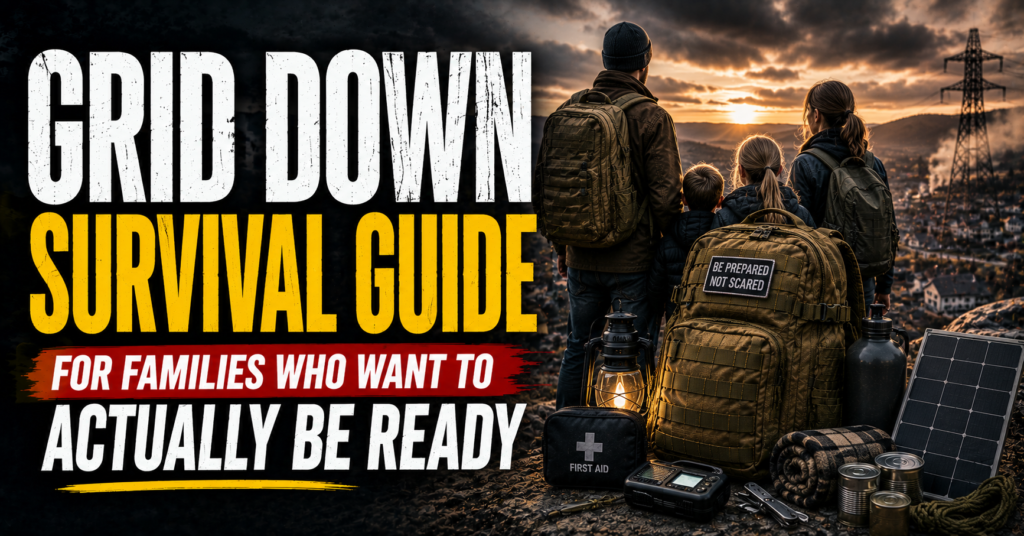
Review and rotate quarterly. The grid-down survival guide covers how all of these stockpile categories work together in an actual extended emergency. Build the supply first. Then understand the system that deploys it.
About the Author: Jake Mercer spent 11 years in emergency management before turning his focus to practical preparedness education. He lives with his wife and three kids in rural Tennessee, where quarterly stockpile reviews are a household habit. He writes for Survive Essentials covering gear, planning, and the practical steps that turn good intentions into real preparedness.