White rice is one of the most overlooked survival foods available today. While many people spend hundreds or even thousands of dollars on freeze-dried meals, expensive emergency food kits, and specialty preparedness products, a simple bag of white rice from the grocery store may provide one of the best long-term food storage solutions available.
When properly stored, white rice has the potential to last 25 years or more while remaining affordable, versatile, and calorie-dense. For preppers, homesteaders, campers, and families who simply want greater peace of mind, learning how to store rice correctly is one of the smartest preparedness skills you can develop.
Whether you’re preparing for natural disasters, long-term power outages, supply chain disruptions, or simply want a reliable emergency food supply, white rice deserves a place in your preparedness plan.
Why White Rice Is a Survival Food Staple
Preparedness experts have recommended white rice for decades because it checks nearly every box when it comes to emergency food storage.
First, it is incredibly affordable. You can store hundreds of pounds of rice for less than the cost of many commercial emergency food kits.
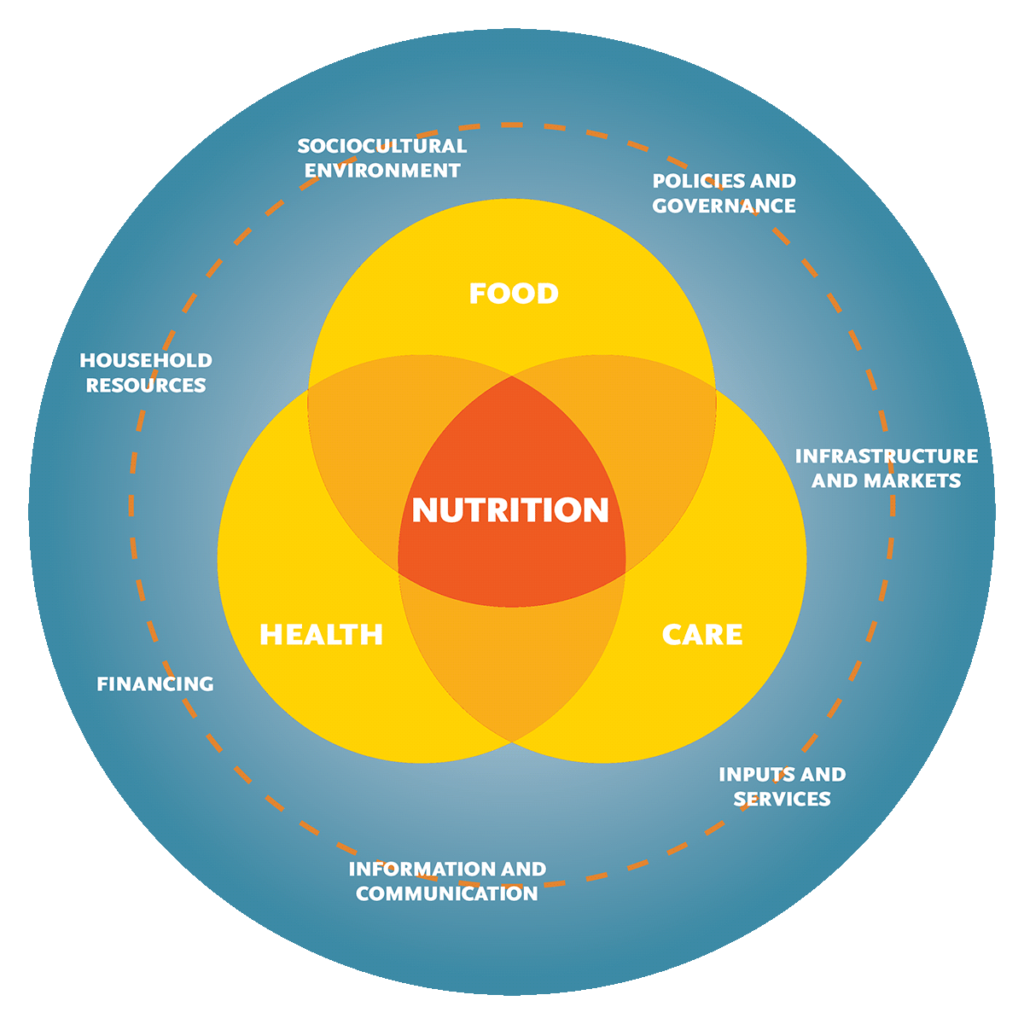
Second, rice is packed with calories. In a survival situation, calories matter. Your body requires energy to stay warm, work, think clearly, and remain healthy. Calories are only one part of preparedness, and The Role of Nutrition in Survival Situations explains the broader role of nutrition during emergencies.
Third, rice is easy to store. Unlike many foods that require refrigeration or specialized storage methods, rice can be stored efficiently in a relatively small space.
Finally, white rice has an exceptional shelf life when stored properly.
Building a food reserve is only one part of emergency preparedness. It’s also important to have reliable water, shelter, and basic survival supplies. Our guide on building a complete survival kit covers the essential gear every family should consider.
How Long Does White Rice Last?
The answer depends largely on how it is stored.
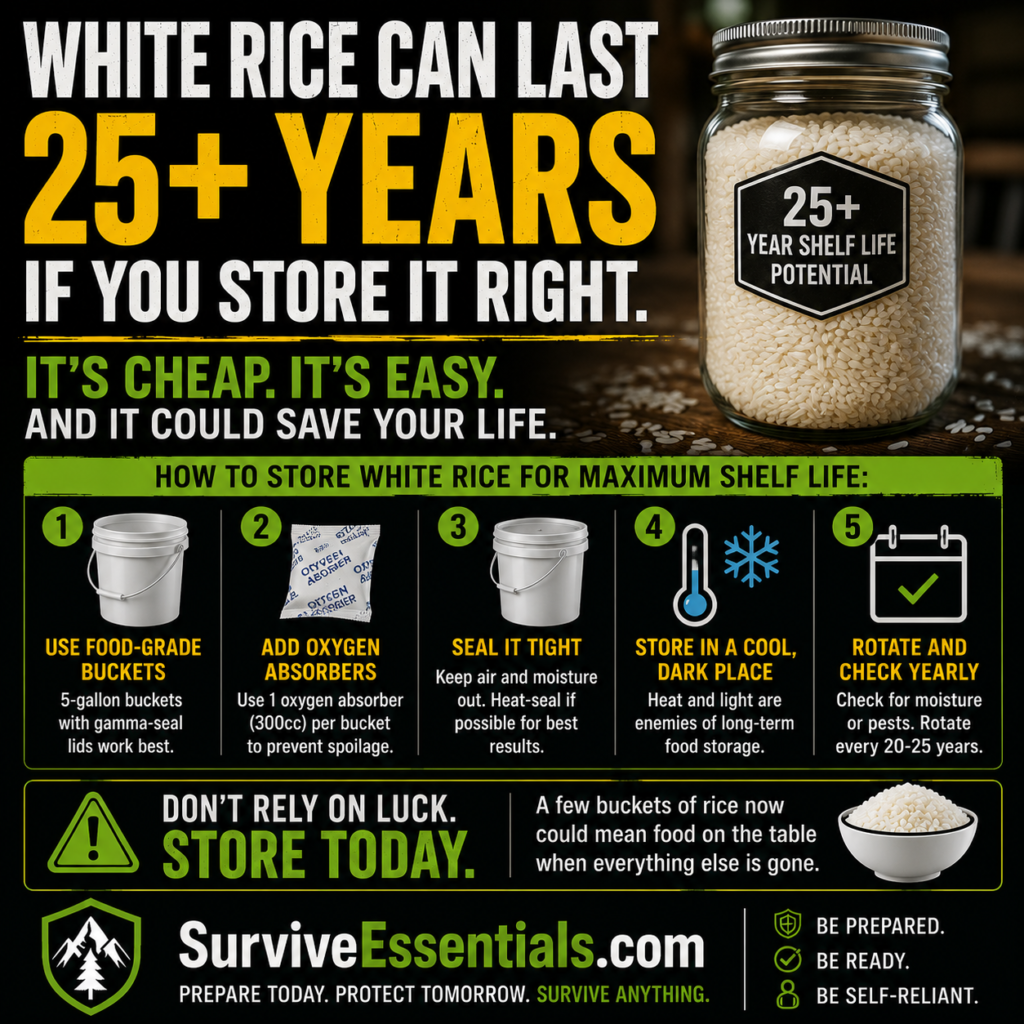
A bag of rice sitting in its original packaging inside a kitchen cabinet may remain usable for several years. However, that same rice stored using proper long-term food storage techniques can potentially remain viable for 25 years or even longer.
The biggest threats to rice storage include:
- Oxygen
- Moisture
- Heat
- Light
- Pests
When these factors are controlled, white rice becomes one of the longest-lasting foods available for home storage.
This is why many emergency food programs, preparedness organizations, and experienced preppers rely heavily on rice as a foundation food.



Why White Rice Lasts Longer Than Brown Rice
Many people assume all rice stores the same way, but that is not true.
Brown rice contains natural oils within its outer bran layer. Over time, these oils can become rancid, reducing shelf life significantly.
White rice has had this outer layer removed during processing.
Without those oils, white rice becomes far more stable during long-term storage.
While brown rice may only maintain peak quality for months to a few years depending on conditions, properly stored white rice can remain usable for decades.
For anyone building a long-term emergency food supply, white rice is usually the preferred choice.
How Rice Can Help During Emergencies
Food security becomes extremely important during emergencies.
Natural disasters can close roads, disrupt deliveries, and empty store shelves quickly. Severe storms can leave communities without power for days or even weeks.
Rice provides several advantages during these situations.
It stores compactly.
It provides substantial calories.
It pairs well with canned meats, beans, vegetables, and other shelf-stable foods.
It can help stretch food supplies much further than relying solely on canned goods or expensive emergency meals.

If you’re preparing for extended emergencies, you may also want to read our guide on what to stockpile before a long-term power outage.
The Best Way to Store White Rice Long Term
Simply tossing bags of rice into a closet is not enough if your goal is maximum shelf life.
Proper storage makes all the difference.
Use Mylar Bags
Mylar bags create an excellent barrier against oxygen and light.
These bags have become a standard tool within the preparedness community because they significantly improve long-term food storage.
Add Oxygen Absorbers
Oxygen absorbers help remove oxygen trapped inside the storage container.
Reducing oxygen helps prevent spoilage and discourages insect activity.
Many preparedness experts use oxygen absorbers whenever storing rice, beans, pasta, and other long-term foods.
Heat Seal the Bags
Once the oxygen absorbers are added, the Mylar bags should be sealed.
Heat sealing creates an airtight environment that helps protect the food for years.
Store Bags Inside Food-Grade Buckets
Food-grade buckets add another layer of protection.
They help prevent punctures, rodent damage, moisture exposure, and accidental impacts.
Many long-term storage systems use five-gallon food-grade buckets because they are affordable, durable, and easy to stack.
Choose a Cool Storage Area
Temperature plays a huge role in shelf life.
A cool, dark basement generally provides much better storage conditions than a hot attic or garage.
Lower temperatures help preserve food quality for much longer periods.

Common Rice Storage Mistakes
Many people unknowingly shorten the shelf life of their food storage by making avoidable mistakes.
Leaving Rice in Original Packaging
Store packaging is designed for transportation and short-term storage.
It is not designed for decades of protection.
Thin plastic and paper bags can eventually allow moisture, oxygen, and pests to reach the food.
Storing Food in High Heat
Heat is one of the biggest enemies of long-term food storage.
Even perfectly packaged rice will degrade faster if stored in consistently high temperatures.
Ignoring Moisture
Moisture can destroy food supplies quickly.
Even small amounts can lead to mold growth or spoilage.
Airtight storage is critical.
Forgetting About Pest Protection
Rodents and insects can ruin large quantities of food surprisingly fast.
Food-grade buckets provide an important layer of defense against these threats.


How Much Rice Should You Store?
Every family has different preparedness goals.
Some people want enough food for a few days.
Others prepare for several weeks, months, or even longer.
One pound of dry white rice contains approximately 1,600 calories.
A 50-pound bag contains roughly 80,000 calories.
That means a relatively small amount of storage space can hold a significant emergency food reserve.
Many preparedness-minded families gradually build their supplies over time rather than purchasing everything at once.
Rice and Water Go Hand in Hand
Storing food is important, but food without water creates another problem.
Rice requires water for cooking, which means emergency water storage should be part of every preparedness plan.
Many experienced preppers prioritize water storage even before food storage.

Our guides on how much emergency water a family should store and how to build a 30-day emergency water supply can help you develop a complete preparedness strategy.
What Foods Store Well Alongside Rice?
Rice works best when paired with other shelf-stable foods.
Popular options include:
- Dry beans
- Lentils
- Freeze-dried vegetables
- Canned meats
- Powdered milk
- Pasta
- Oats
- Salt
- Sugar
- Cooking oils
Having a variety of foods improves nutrition and prevents meal fatigue during extended emergencies.

You can also supplement your food storage plan with foods found in nature. Our guide to 30 wild foods that could save your life in the wilderness covers many useful options.
Is White Rice Enough for Survival?
Rice is an excellent survival food, but it should not be your only food source.
A healthy preparedness plan includes a balance of carbohydrates, protein, fats, vitamins, and minerals.
Rice provides calories and energy, but long-term nutrition requires additional food sources.
Think of rice as a foundation rather than the entire structure.
Combining rice with beans, canned meats, vegetables, and other stored foods creates a much more complete emergency food system.



Emergency Food Storage and Peace of Mind
One of the greatest benefits of long-term food storage is peace of mind.
Prepared families are often less stressed during emergencies because they know they have resources available.
Food shortages, winter storms, power outages, hurricanes, and other disruptions become much less intimidating when your pantry contains months of food.
Preparedness is not about fear.
It is about reducing uncertainty and increasing self-reliance.

Our article on the ultimate guide to a self-sufficient lifestyle explores additional ways families can become more independent and resilient.
White Rice Remains One of the Best Preparedness Investments
Very few foods offer the combination of affordability, shelf life, calorie density, and versatility that white rice provides.
When properly packaged with oxygen absorbers, sealed in Mylar bags, protected inside food-grade buckets, and stored in a cool location, white rice can potentially remain viable for 25 years or longer.
For families building an emergency food reserve, rice remains one of the smartest and most cost-effective preparedness purchases available.
Whether you’re creating your first emergency pantry or expanding a long-term food storage plan, a few buckets of properly stored rice today could provide tremendous value when it matters most.