Power outages are inconvenient when they last an hour.
They become serious when they last a day.
But when a power outage stretches into several days or even weeks, communication suddenly becomes one of the most important resources you have.
Most people focus on food, flashlights, batteries, and generators when preparing for an emergency. Those things matter, but staying connected to the outside world can be just as important. Knowing what is happening, receiving emergency updates, contacting loved ones, and accessing critical information can make the difference between a manageable situation and a dangerous one. These practical Emergency Communication Tips for Staying Connected in a Crisis cover multiple ways to stay connected, conserve power, and receive reliable updates when normal systems are disrupted.
The good news is that staying connected during a long power outage is easier than many people think if you prepare before the lights go out.
Why Communication Becomes Critical During Extended Outages
When electricity disappears, many of the systems we rely on every day begin to fail.
Internet service may go down.
Cell towers may become overloaded.
Television stations may stop broadcasting.
Wi-Fi routers stop working.
Charging devices becomes difficult.
Without communication, people often rely on rumors and guesswork. That can lead to poor decisions and unnecessary panic.
Reliable communication allows you to:
- Receive weather alerts
- Monitor emergency situations
- Contact family members
- Check road conditions
- Learn where aid is available
- Get evacuation instructions
- Stay informed about restoration efforts
Information is a survival tool.
The more information you have, the better decisions you can make.
Your Smartphone Is Still Your Most Valuable Tool
Even during a power outage, your smartphone remains one of your most useful pieces of equipment.
Modern smartphones provide:
- Emergency alerts
- Maps
- Flashlights
- Weather updates
- Emergency contacts
- Text messaging
- News updates
The challenge is preserving battery life.
Many people waste valuable power during the first few hours of an outage and later discover they have no way to communicate.
Turn On Battery Saver Mode Immediately
Most smartphones have built-in battery-saving features.
Activating these settings can dramatically extend battery life.
Don’t wait until your battery is nearly empty.
Enable power-saving settings as soon as you realize the outage may be prolonged.
Lower Screen Brightness
Your display is one of the largest power consumers on your phone.
Reducing brightness can add several extra hours of battery life.
Close Background Apps
Apps running in the background constantly consume power.
Close anything you don’t absolutely need.
Use Text Messages Instead of Calls
Text messages often succeed when cellular networks become congested.
They use far less bandwidth than voice calls and require less battery power.

Portable Power Banks Are Worth Every Penny
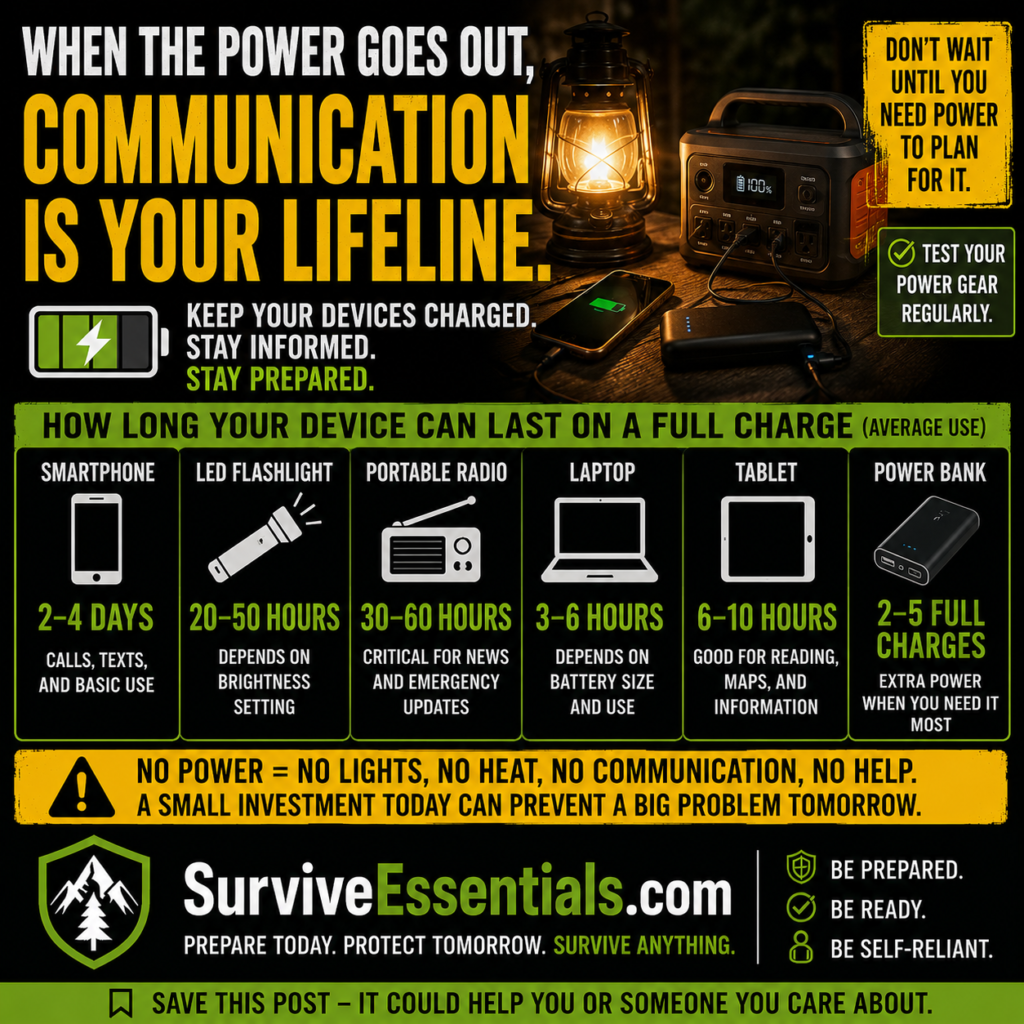
One of the simplest ways to stay connected is by keeping portable battery banks charged and ready.
A quality power bank can recharge a smartphone multiple times.
That extra power may provide:
- Days of additional communication
- Access to emergency alerts
- Weather updates
- Contact with family members
- Navigation assistance
Many preparedness experts recommend keeping multiple power banks fully charged at all times.
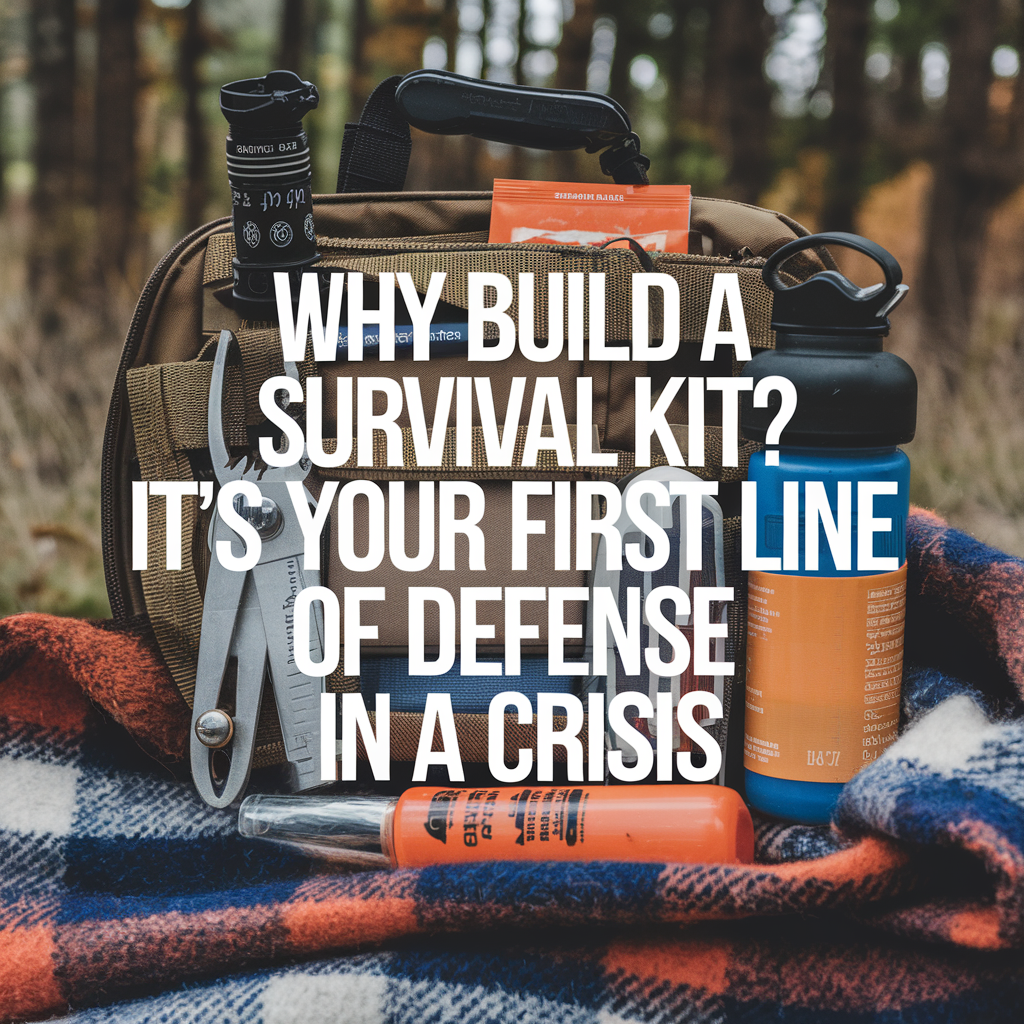
If you’re building an emergency kit, our guide to the Ultimate Survival Kit covers many other preparedness essentials worth considering.
Emergency Radios Are Still Incredibly Valuable
Many people assume the internet will always be available.
That assumption can become dangerous during large-scale emergencies.
Battery-powered and hand-crank emergency radios remain one of the most reliable communication tools available.
Emergency radios can provide:
- NOAA weather alerts
- Emergency broadcasts
- Evacuation notices
- Public safety updates
- Disaster information
Unlike smartphones, radios often continue functioning even when cellular networks struggle.
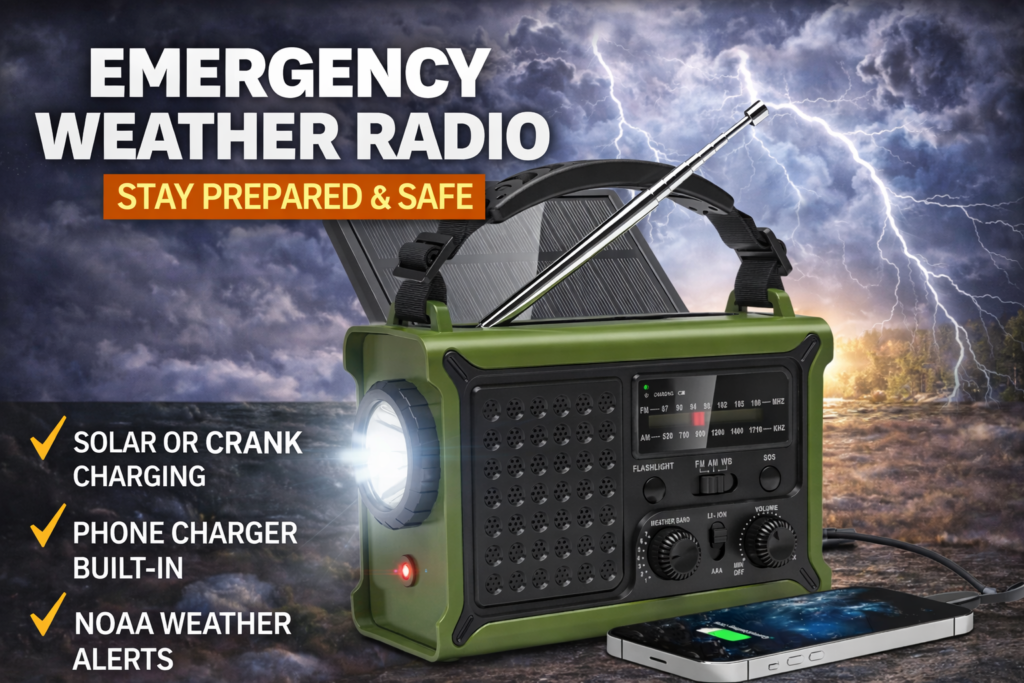
Our review of This Emergency Radio Keeps You Informed When Everything Else Fails explains why every preparedness-minded family should own one.
Have Multiple Ways to Charge Devices
Relying on a single charging method is a mistake.

Redundancy is one of the foundations of preparedness.
Portable Power Stations
Portable power stations can recharge phones, tablets, radios, and small electronics multiple times.
They provide significantly more capacity than standard power banks.
Solar Chargers
Solar charging systems can generate electricity even during extended outages.
While they may charge devices more slowly, they provide renewable energy when traditional power sources are unavailable.
Vehicle Charging
Your vehicle can serve as an emergency charging station.
Many people overlook this option until they desperately need it.
Just be careful not to drain your vehicle battery unnecessarily.
Generators
Generators provide one of the most reliable backup power sources for extended outages.

If you’re comparing options, check out our guide on Propane vs Diesel vs Solar: Which Backup Power Actually Wins?.
Create a Family Communication Plan Before Disaster Strikes
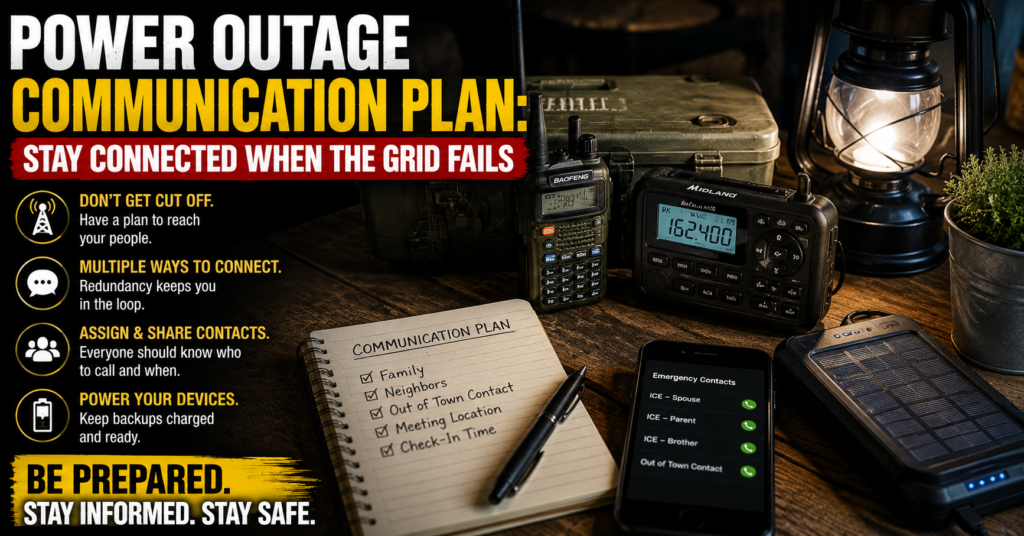
One of the biggest mistakes families make is assuming they will simply call each other during an emergency.
Communication plans should be established before they become necessary.
Designate Emergency Contacts
Choose one or more emergency contacts outside your local area.
Sometimes long-distance communication remains available even when local systems become overloaded.
Establish Meeting Locations
Have predetermined locations where family members can reunite if communication becomes impossible.
Keep Printed Contact Information
Most people store phone numbers exclusively on their devices.
A dead phone can instantly eliminate access to critical contact information.
Maintain a printed backup.



Don’t Depend Entirely on the Internet
The internet is incredibly useful, but it should never be your only source of information during an emergency.
Long power outages can disrupt internet infrastructure in unexpected ways.
Smart preparedness includes having multiple information sources available.
That may include:
- Emergency radios
- Local broadcasts
- Printed maps
- Community information centers
- Trusted emergency contacts
The more backup options you have, the more resilient your communication plan becomes.
Water and Communication Should Be Your Top Priorities
Most preparedness discussions focus heavily on food.
Food matters, but water and communication often become urgent much faster.
Without water, survival time becomes extremely limited.
Our article on How Long Can You Survive Without Water? The Truth Might Shock You explains why water should be at the top of every emergency preparedness plan.
You should also review our comprehensive Emergency Water Preparedness Guide to ensure your family has adequate supplies before disaster strikes.
Long-Term Power Outages Require Long-Term Planning
Many people prepare for a few hours without electricity.
Far fewer prepare for a week or longer.
Extended outages create challenges beyond simple inconvenience.
You may lose:
- Internet access
- Phone charging capability
- News broadcasts
- GPS navigation
- Weather updates
- Access to emergency information
Preparing now is significantly easier than scrambling later.
Our article on What to Stockpile Before a Long-Term Power Outage provides additional preparedness recommendations for families looking to become more self-reliant.
Communication Is a Survival Tool
When people think about survival gear, they often picture knives, flashlights, food supplies, and first aid kits.
Communication tools deserve a place on that list.
The ability to receive information, contact loved ones, monitor emergencies, and make informed decisions becomes incredibly valuable during a prolonged power outage.
A charged phone, emergency radio, portable power bank, backup power source, and family communication plan can dramatically improve your ability to navigate an emergency safely.
The best time to prepare for a power outage is before it happens.
Because once the lights go out, staying connected may become one of the most important things you do.