Your bug out bag might kill you. Not because of what’s missing from it — because of how much is in it.
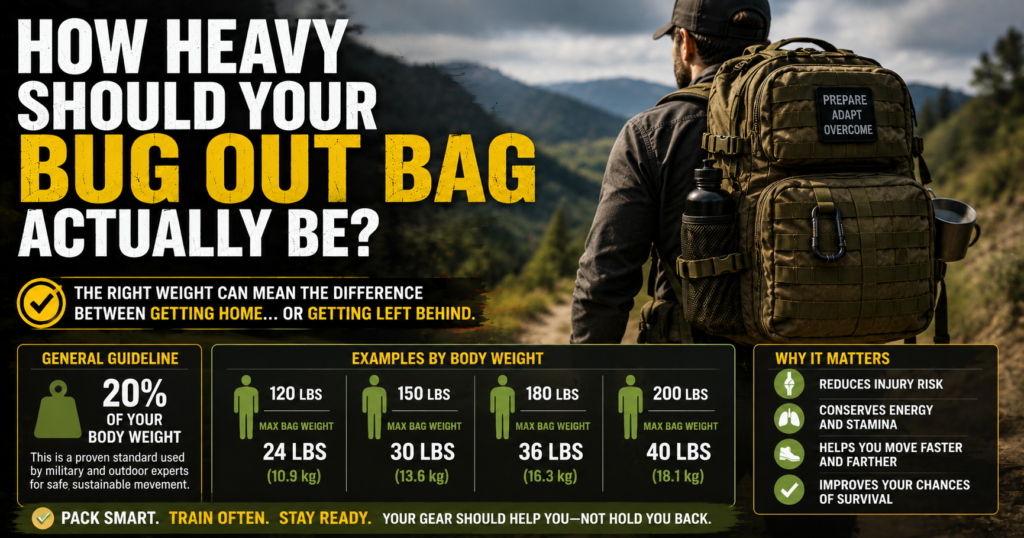
Overpacking is the most common mistake preppers make, and it’s a dangerous one. A bag that’s too heavy doesn’t just slow you down. It destroys your knees on long descents, blows out your lower back on day two, causes blisters that become infected wounds, and burns through your calorie reserves twice as fast. In a real evacuation scenario, an overloaded pack can turn a survivable situation into one that isn’t.
This guide covers the real numbers — how much your bag should weigh, how to calculate it for your body and fitness level, where to cut weight without cutting survival capability, and how to test your setup before you actually need it.
The Weight Rule Nobody Wants to Hear
Your loaded bug out bag should weigh no more than 20–25% of your body weight. That’s the upper limit — not the target.
For a 160-pound adult, that means a maximum pack weight of 32–40 pounds. For a 130-pound adult, 26–33 pounds. For most people who haven’t been training regularly with a weighted pack, aim for the lower end of that range. You can always add capability as your fitness improves. You can’t uninjure your back in the field.
Children’s packs should never exceed 10–15% of their body weight. A 70-pound child carries seven to ten pounds maximum. That’s a small daypack with snacks, a change of clothes, and their comfort items — not a miniature version of an adult rig.
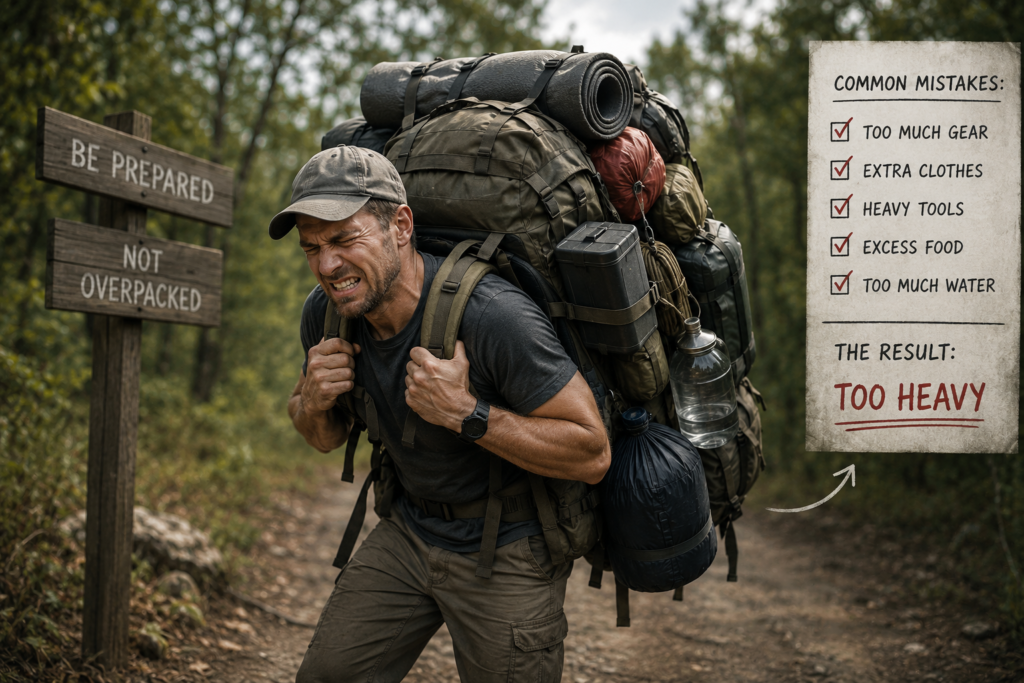
These aren’t arbitrary numbers. They come from decades of military research on load-bearing capacity and injury rates. The U.S. Army has spent enormous resources studying exactly how much weight a human body can carry over distance before performance degrades and injury risk spikes. The answer is consistent: past 30% of body weight, most people are no longer moving efficiently. Past 40%, they’re accumulating damage with every mile.


What Your Pack Actually Weighs
Most people who think they’ve built a reasonable bug out bag have never actually weighed it. They estimate. They’re almost always wrong — usually by ten pounds or more in the wrong direction.
Before you go any further, do this: Pack your bag completely. Every item you plan to carry. Then put it on a bathroom scale. Subtract your body weight. That number is your starting point.
If you’re over your 20–25% threshold, you have a weight problem that needs solving before anything else. If you’re under it, check that you haven’t cut critical survival categories to get there.

The Weight Budget: How to Allocate Your Pounds
Think of your total pack weight as a budget. Every category gets an allocation. When one category goes over, something else has to come down.
Here’s a realistic weight breakdown for a well-built 30-pound bug out bag:
- Bag itself: 3–4 lbs
- Water (1 liter + filter): 3–4 lbs
- Food (72 hours): 5–7 lbs
- Shelter (tarp, mylar bags, paracord): 2–3 lbs
- Clothing (one change, rain layer): 3–4 lbs
- Fire kit: 0.5–1 lb
- First aid kit: 1–2 lbs
- Navigation and communication: 1–2 lbs
- Tools (knife, multi-tool, duct tape): 1–2 lbs
- Light (flashlight, headlamp): 0.5–1 lb
- Miscellaneous (documents, cash, hygiene): 1–2 lbs
That gets you to 22–32 pounds depending on your specific gear choices — right in the target zone for most adults. Notice what’s not on that list: duplicate items, comfort gear that serves no survival function, and anything you packed because it seemed like a good idea without calculating its weight contribution.
The Heaviest Offenders
Some categories carry disproportionate weight relative to their survival value. These are where most overpacked bags go wrong.
Water
Water weighs 2.2 pounds per liter. Carrying three liters is 6.6 pounds of water alone — before the bottle or hydration bladder. Most preppers overpack water because they’re afraid of running out, without accounting for the filtration system that eliminates that fear.
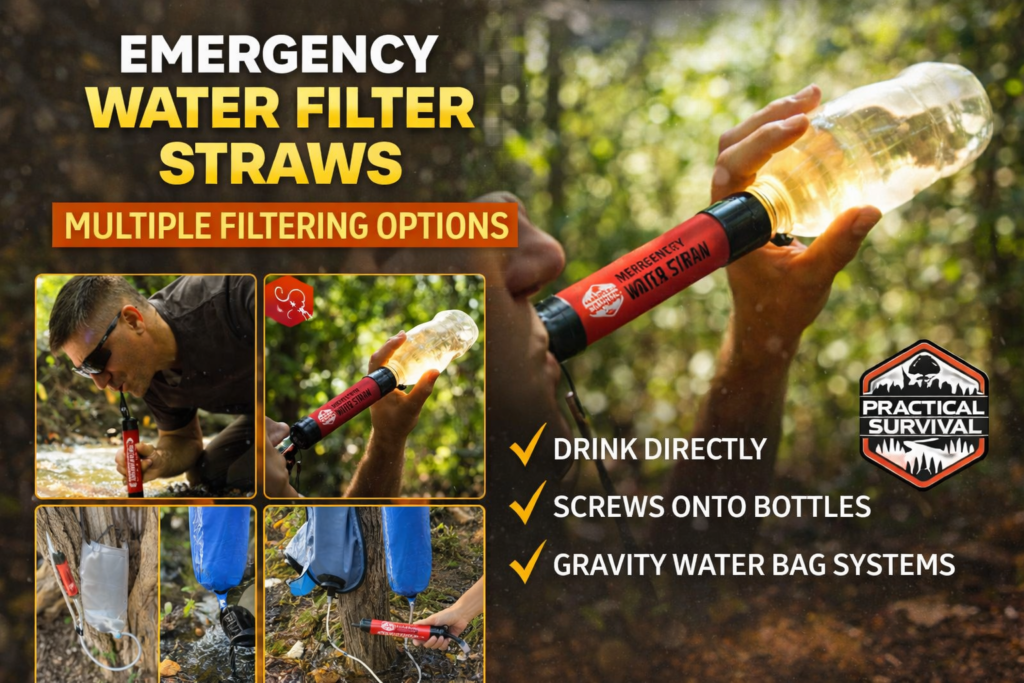
The Emergency Water Straws weigh almost nothing and filter up to 1,800 gallons each. Carry one liter of water as your immediate supply and rely on your filter for the rest. You shed nearly four pounds instantly and gain access to unlimited water from any source you encounter.
Food
Canned food is the biggest weight mistake in survival food planning. A single can of beans weighs nearly a pound and delivers maybe 400 calories. An ounce of mixed nuts delivers 170 calories. The math is not close. Stick to freeze-dried pouches, calorie-dense ready-to-eat items, and leave anything in a can for your home storage pantry.
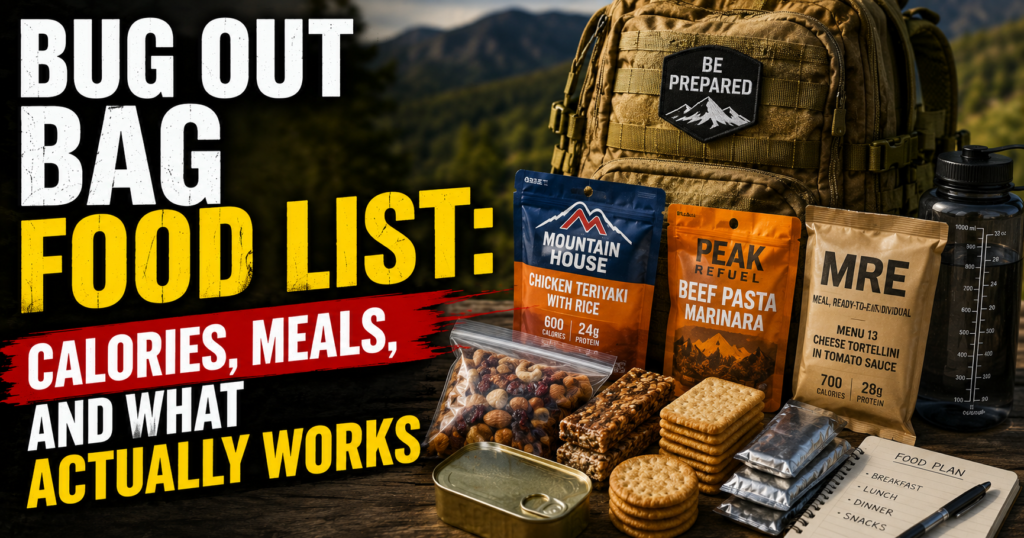
Review the full breakdown in the bug out bag food list — every item there was chosen with weight-to-calorie ratio as a primary factor.
Clothing
People dramatically overpack clothing. You need one complete change of clothes, one extra pair of wool or synthetic socks, a rain layer, and a warm layer if your climate demands it. That’s it. Cotton is the enemy — it holds moisture, dries slowly, and loses all insulating value when wet. Every clothing item in your pack should be wool or synthetic.
Tools
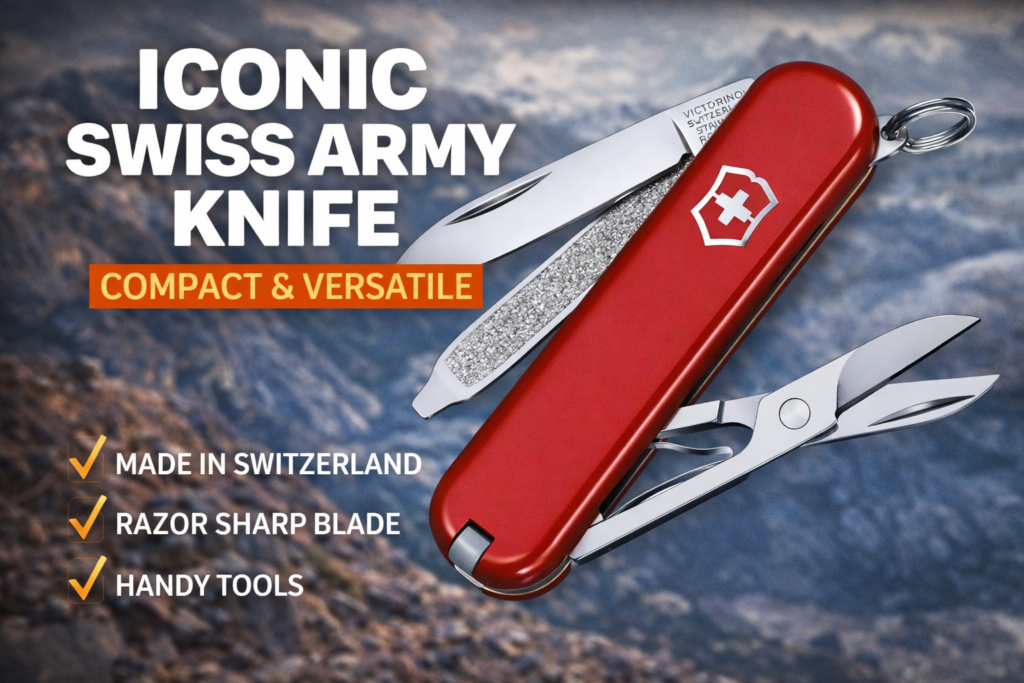
A quality multi-tool replaces a dozen individual tools. A fixed-blade knife handles what the multi-tool can’t. Between those two items, you have the mechanical capability you need. Resist the urge to pack redundant tools that duplicate function without adding capability.
The Bag Itself
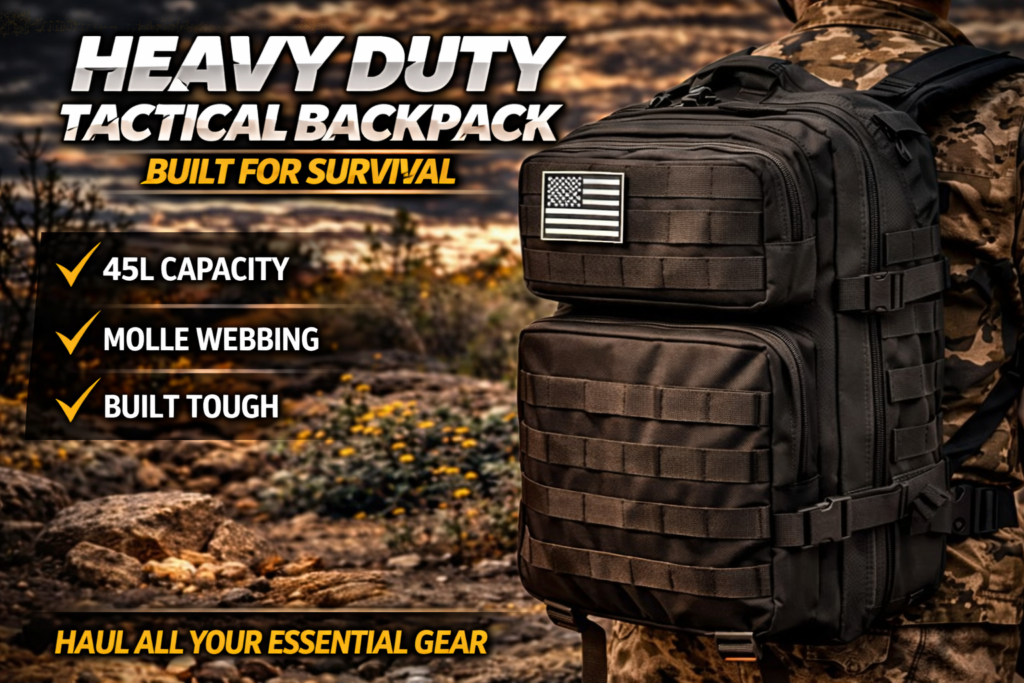
A cheap bag that weighs five pounds empty is a problem before you put a single item in it. The QT&QY 45L Tactical Backpack is built for serious use and comes in well under four pounds empty — durable enough to handle real conditions without the dead weight of inferior construction.
Where Not to Cut Weight
Weight reduction has a limit. These categories are non-negotiable regardless of what the scale says.
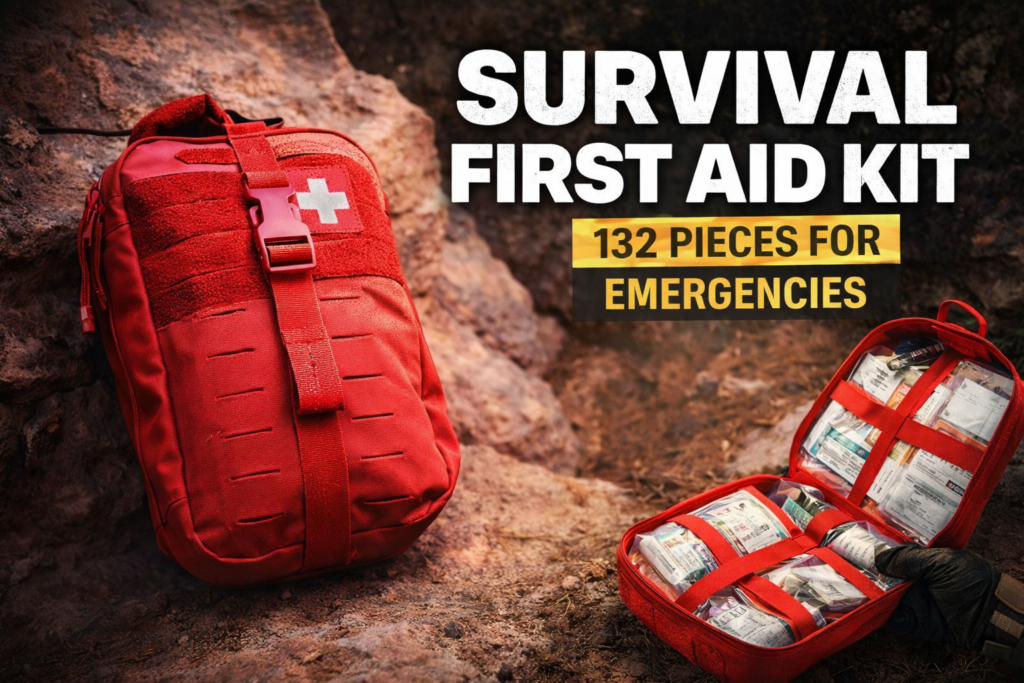
First aid. The MyFAK trauma kit weighs about two pounds. That two pounds could be the difference between a wound you manage and a wound that kills you three days into a bug out when there’s no hospital within reach. Do not trim your medical kit to save weight.
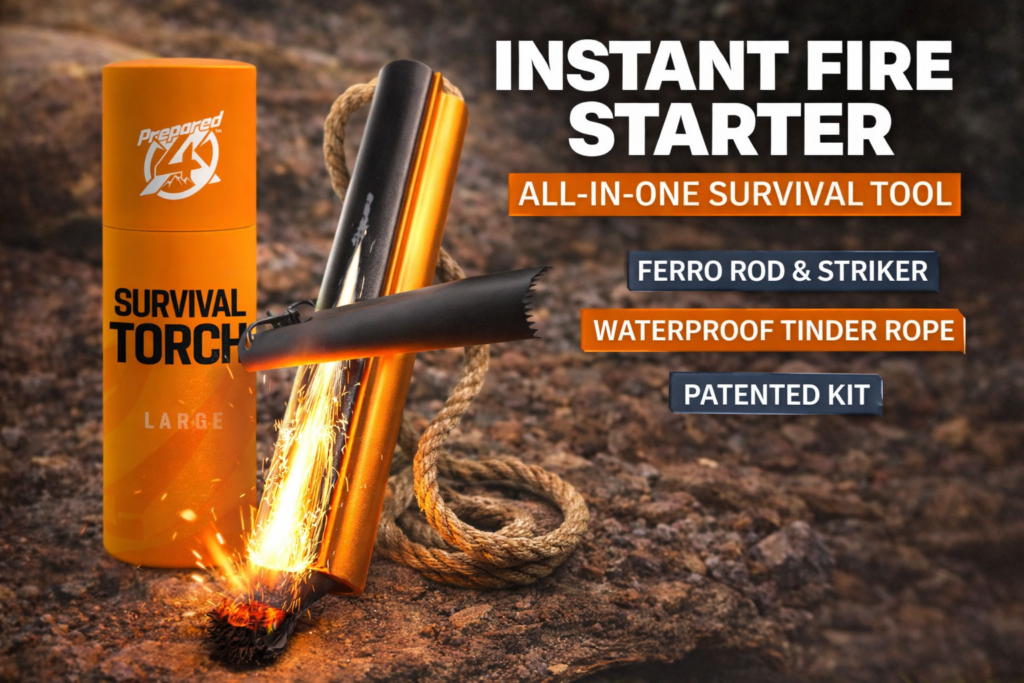
Fire starting. Three fire-starting methods weigh a few ounces total. Your ferro rod kit, a lighter, and waterproof matches together weigh under half a pound. Fire is warmth, water purification, and cooked food. It earns every gram it takes up in your pack.
Navigation. A quality compass like the SUUNTO MC-2 weighs three ounces. Your printed maps weigh a few more. Navigation is how you get from where you are to where you’re going — cutting it is not an option.
Communication. The NOAA emergency radio gives you situational awareness when all other information channels are gone. It’s under a pound. Keep it.
How Fitness Changes the Equation
Your pack weight limit is not fixed. It scales with your fitness and your training.
A person who regularly hikes with a loaded pack, maintains a reasonable level of cardiovascular fitness, and has built the lower back and hip strength to carry weight efficiently can push toward the 25–30% threshold without the same injury risk as someone who hasn’t trained.
This is worth stating directly: the best thing you can do for your bug out capability has nothing to do with gear. It’s getting in better shape. A fit person with a 35-pound pack will outperform an unfit person with a 20-pound pack every single time, over every kind of terrain, for every hour of a multi-day evacuation.
Start training with your actual packed bag. Put it on and walk. Add distance gradually. Your body will tell you exactly where your limits are — and those limits will expand as you build the specific strength and endurance that load-carrying demands.
Testing Your Pack Before You Need It
Here’s the test that reveals everything: Pack your bag completely, put it on at 6 a.m., and walk five miles. No car. No shortcuts. Five miles on foot with your full pack the way you’ve built it.
By mile three you’ll know what’s too heavy. By mile four you’ll know what’s in the wrong pocket. By mile five you’ll know exactly what you’re going home to reorganize.
Do this test at least twice a year. Do it in different weather. Do it with your family if they’ll be bugging out with you. A bag that feels manageable in your living room feels completely different after two hours on your back in July heat.
The test also reveals fit issues with your bag. Hip belt position, shoulder strap angle, sternum strap height — all of it matters enormously for how weight distributes across your body. A properly fitted pack carrying 30 pounds feels dramatically better than a poorly fitted pack carrying 20. Spend time getting the fit right.
Weight Versus Capability: Finding the Balance
The goal is not the lightest possible bag. It’s the most capable bag you can carry efficiently for the distance your bug out plan requires.
If your bug out route is three miles to a family member’s house, you can carry more. If your plan involves a 20-mile overland hike to a rural retreat, you need to get ruthlessly efficient about weight. Your pack weight target should be calibrated to your specific plan — not to a generic number from an article on the internet, including this one.
Map your bug out route. Calculate the realistic distance on foot. Factor in elevation change, terrain type, and the physical condition of every member of your group. Build your pack weight target around those specific realities.
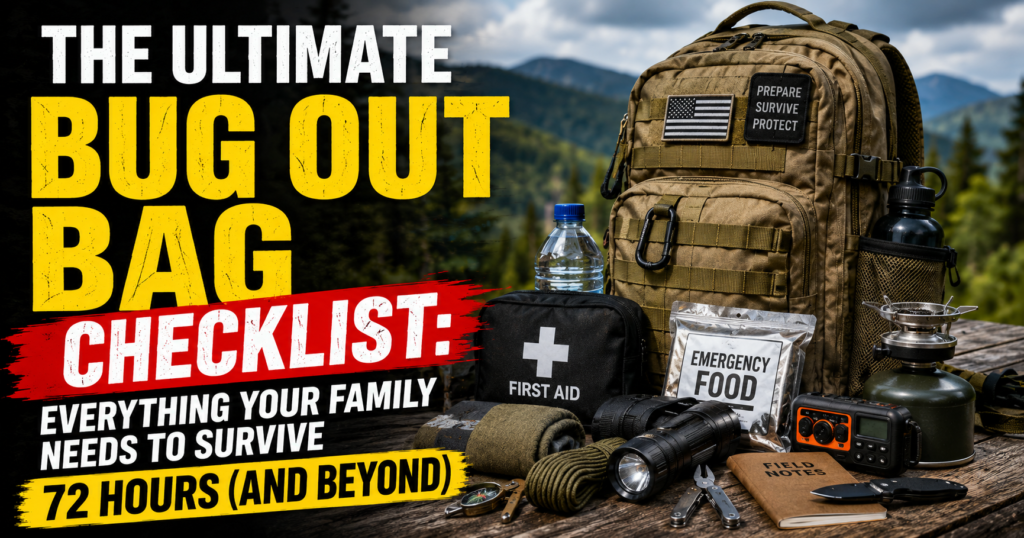
Everything in your bug out bag should earn its place on that route. If it can’t justify its weight in survival value for your specific plan, it doesn’t go in the bag.
About the Author: Jake Mercer spent 11 years in emergency management before turning his focus to practical preparedness education. He lives with his wife and three kids in rural Tennessee, where he tests gear year-round across varied terrain. He writes for Survive Essentials covering gear, planning, and the physical realities of real-world survival scenarios.