When my power goes out, one of the first things I think about is everything sitting inside the refrigerator and freezer.
Milk. Meat. Eggs. Leftovers. Frozen food. Probably hundreds of dollars worth of groceries if I recently stocked up.
The good news is I don’t immediately start moving food around.
In fact, the first thing I do is almost nothing.
I keep the doors shut.
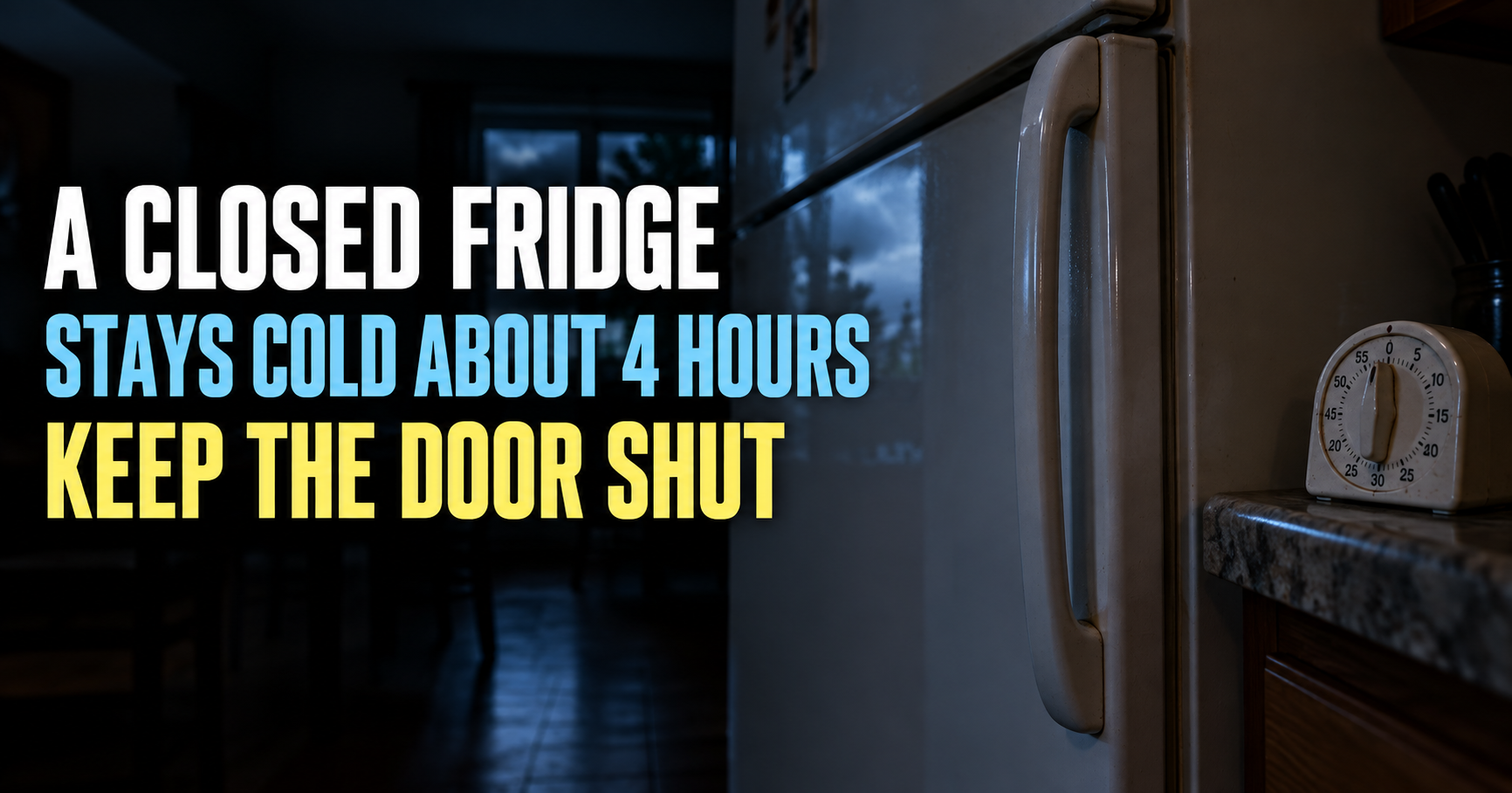
A closed refrigerator can keep food cold for about 4 hours during a power outage. A full freezer can maintain its temperature for roughly 48 hours, while a half-full freezer is closer to 24 hours, as long as I leave the door closed.
Those numbers are useful, but I don’t treat them like a magic countdown clock. What actually matters is the temperature of the food.
Here’s how I handle it.
The First Thing I Do Is Write Down When the Power Went Out
This takes five seconds and saves me from guessing later.
If the lights went out at 2:15 p.m., I make a mental note or put it in my phone.
Six hours later, I don’t want to be asking everyone:
“Was it noon when the power went out? Or was it around 3?”
That matters when I’m deciding whether refrigerated food is still safe.
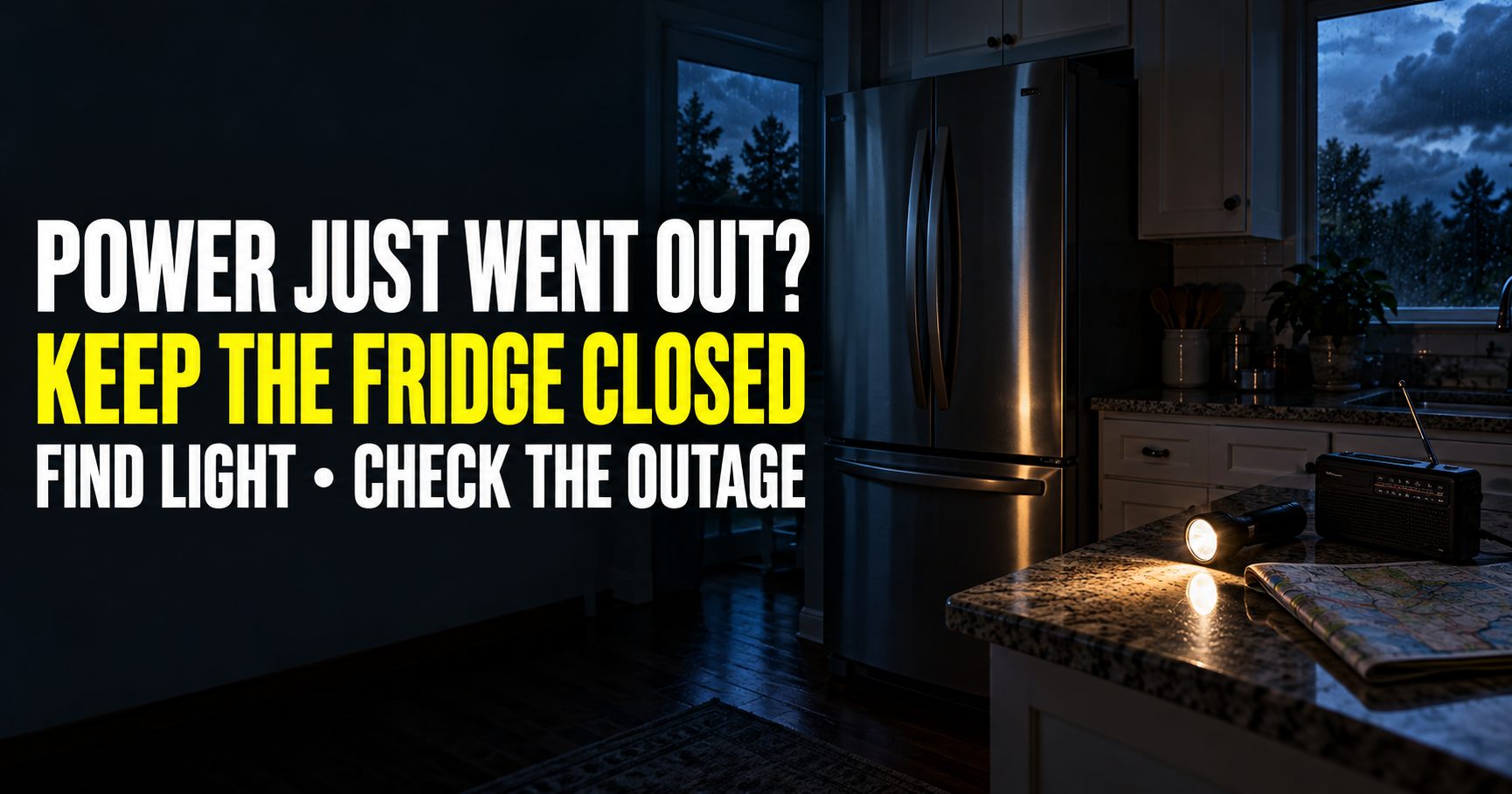
It’s also one of the reasons my first-hour power outage routine includes protecting cold food almost immediately.
My Refrigerator Gets About Four Hours If I Leave It Closed
Four hours is the number I keep in my head for the refrigerator.
But there’s an important part people miss.
That assumes I’m keeping the door closed.
If everyone keeps opening the refrigerator to grab drinks, look for snacks, or check whether the food “still feels cold,” I’m letting cold air escape.
So I treat the refrigerator differently once the electricity goes out.
I don’t browse.
If I need something, I decide what I’m getting first, open the door, grab it, and shut the door.
That’s it.


My Freezer Gives Me Much More Time
The freezer is where I have more breathing room.
A full freezer can hold its temperature for around 48 hours with the door closed.
A half-full freezer is closer to 24 hours.
That difference makes sense when you think about it.
All those frozen packages are essentially large blocks of cold thermal mass packed together.
A full freezer helps itself stay cold.
That’s why, when I know severe weather is coming, I like having my freezer reasonably full.
If I don’t have enough food to fill it, frozen containers of water can take up some empty space and later provide extra ice.
I Keep an Appliance Thermometer Inside
This is one of those cheap preparedness items that doesn’t look exciting but answers the question I actually care about.
How warm did it get in there?
I prefer knowing instead of guessing.
I want my refrigerator at 40°F or below and my freezer around 0°F during normal operation.
During an outage, the refrigerator thermometer gives me a much better picture than touching a jug of milk and saying, “Feels pretty cold.”
My hand isn’t a food thermometer.

Four Hours Does Not Mean Everything Magically Spoils at 4:01
This is an important distinction.
The four-hour refrigerator guideline tells me roughly how long an unopened refrigerator can maintain a safe temperature.
The real food-safety issue is temperature.
Once perishable foods spend too long above 40°F, bacteria can multiply quickly.
So if my refrigerator still measures 38°F after several hours, that’s useful information.
If it has been sitting well above 40°F for hours, that’s a very different situation.
This is why I like having an actual thermometer inside before the outage happens.
The Foods I’m Most Careful With
I don’t treat every item in the refrigerator the same.
The foods I’m particularly cautious about include things like:
- Raw meat
- Poultry
- Fish and seafood
- Milk
- Eggs
- Leftovers
- Cooked meat
- Soft cheeses
- Other refrigerated perishables
Those aren’t foods I want to gamble with.
A bottle of mustard and a package of raw chicken aren’t the same food-safety problem.

I Never Taste Food to See If It’s Safe
This is another mistake I won’t make.
If I’m questioning whether something has been sitting too warm for too long, I don’t take a bite to “test it.”
Spoilage isn’t the only concern.
Food can contain harmful bacteria without smelling terrible or looking obviously spoiled.
I would rather throw away questionable chicken than spend the next two days violently sick during a power outage.
That’s not wasteful preparedness.
That’s risk management.
If the Outage Is Going Past Four Hours, I Change Strategies
This is where I stop simply waiting.
If I have good reason to believe we’re heading into a longer outage, I start thinking about moving important refrigerated foods into a cooler with ice or frozen gel packs.
The goal remains the same.
Keep those foods at 40°F or below.
If I’ve prepared ahead of time, frozen water containers and ice packs become extremely useful here.
This is also why I don’t wait until hour six to start thinking about ice.


I Save the Most Valuable Food First
If cooler space is limited, I prioritize.
I’m probably not fighting to save every condiment in the refrigerator door.
I’m thinking about the foods that are:
- Expensive
- Highly perishable
- Useful for upcoming meals
- Difficult to replace during the outage
If I have $100 worth of meat and dairy sitting next to $8 worth of condiments, I know where my limited ice and cooler space are going.
That’s a practical decision that gets overlooked in generic outage checklists.
I Use the Refrigerator and Freezer Differently
This is another reason I don’t immediately start moving everything.
My freezer has a much longer cold window than my refrigerator.
If the freezer is full and staying closed, I may have close to two days before I need to make bigger decisions.
So I don’t destroy that advantage by repeatedly opening the freezer.
I protect the cold that’s already inside.
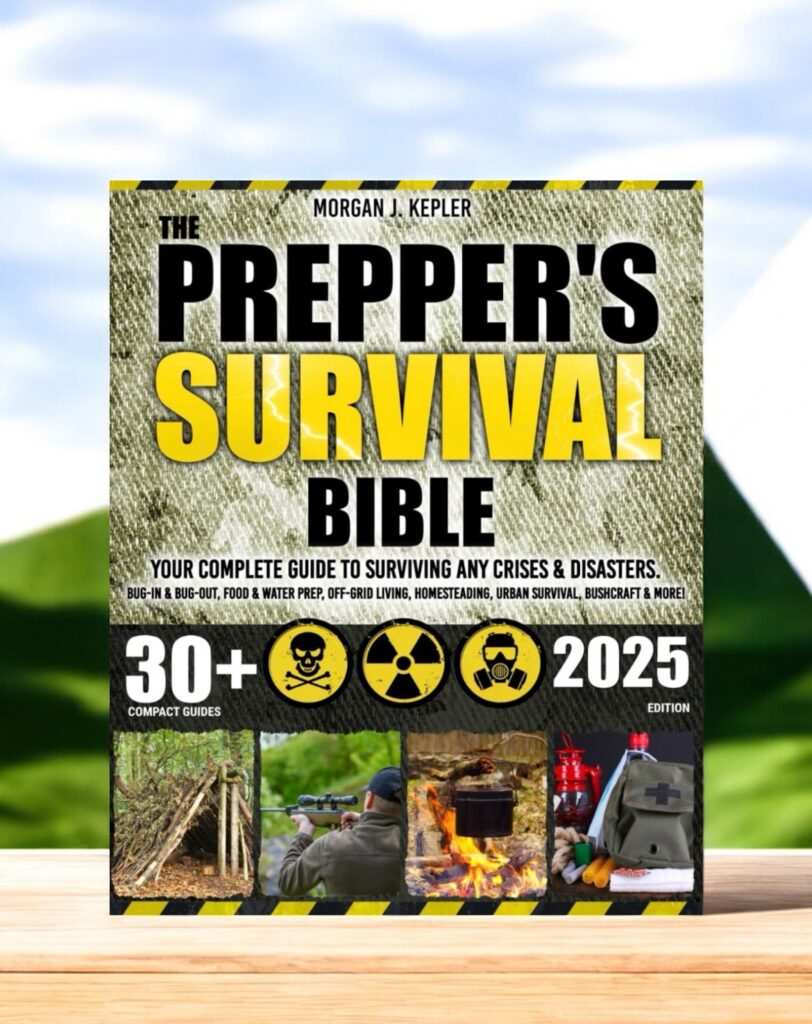
What If My Freezer Is Only Half Full?
Then I assume I have less time.
Roughly 24 hours is the guideline I use for a half-full freezer with the door closed.
If severe weather is forecast ahead of time, this is where preparation pays off.
I’ll freeze water ahead of the storm.
That does three things for me.
First, it fills empty freezer space.
Second, it helps maintain cold temperatures.
Third, as it eventually melts, I have additional water available.
That’s a much better use of empty freezer space than air.
I Group Frozen Food Together
If there’s empty space in the freezer, keeping frozen packages grouped together can help them retain cold.
I don’t spread everything around just because it looks organized.
During an outage, I want that frozen mass working in my favor.

It’s the same basic principle as packing a cooler tightly.
What About Food That Still Has Ice Crystals?
This is where an actual thermometer becomes valuable again.
Frozen food that still contains ice crystals or remains at 40°F or below may often be safely refrozen.
Quality can suffer after thawing and refreezing, but food safety and food quality aren’t exactly the same thing.
I’m much more comfortable making that decision with temperature information than guessing based on how the package feels.
My Generator Isn’t Automatically Running the Whole House
Once I realize an outage is going long, refrigeration becomes one of the strongest arguments for starting backup power.
But I don’t need every appliance in my house running.
Keeping a refrigerator or freezer cold periodically can be far more important than powering TVs and convenience appliances.

I’ve covered the portable generator I consider useful for keeping essential equipment running.
My approach is to prioritize the loads that protect something important.
Food preservation absolutely qualifies.
I Think About What That Food Is Worth
This is one part of generator economics people overlook.
Imagine you have:
- $300 worth of meat in a chest freezer
- $150 worth of refrigerated groceries
- Another $200 worth of frozen food in the kitchen freezer
That’s $650 worth of food.
Suddenly having backup power doesn’t seem like it’s only about convenience.
A generator may protect a significant amount of money during a prolonged outage.
Of course, I still need to operate it safely, including proper outdoor placement and carbon monoxide precautions.
If the Outage Could Last Days, I Start Eating Strategically
This is something I don’t see discussed enough.
If I know we’re facing a long outage and I can’t preserve everything indefinitely, I change the meal plan.
Instead of eating shelf-stable emergency food first, I may start using refrigerated food while it’s still safely cold.
Then I move toward frozen foods as appropriate.
Shelf-stable foods can wait.
They aren’t going anywhere.
This lets me reduce waste instead of watching fresh food spoil while eating canned food that would have lasted another two years.
I Don’t Cook Questionable Food to “Make It Safe”
Cooking isn’t my fix for food that has been stored unsafely.
If a perishable food has spent too much time at unsafe temperatures, I discard it.
I don’t assume grilling it thoroughly resets the clock.
That’s another gamble I don’t need to take during an emergency.
A Power Outage Is Why I Keep Shelf-Stable Food Too
My entire food plan shouldn’t depend on refrigeration.
That’s especially important if I’m preparing for something longer than a normal storm outage.
I want food available that doesn’t require:
- Refrigeration
- Freezing
- Complicated cooking
- Large amounts of water
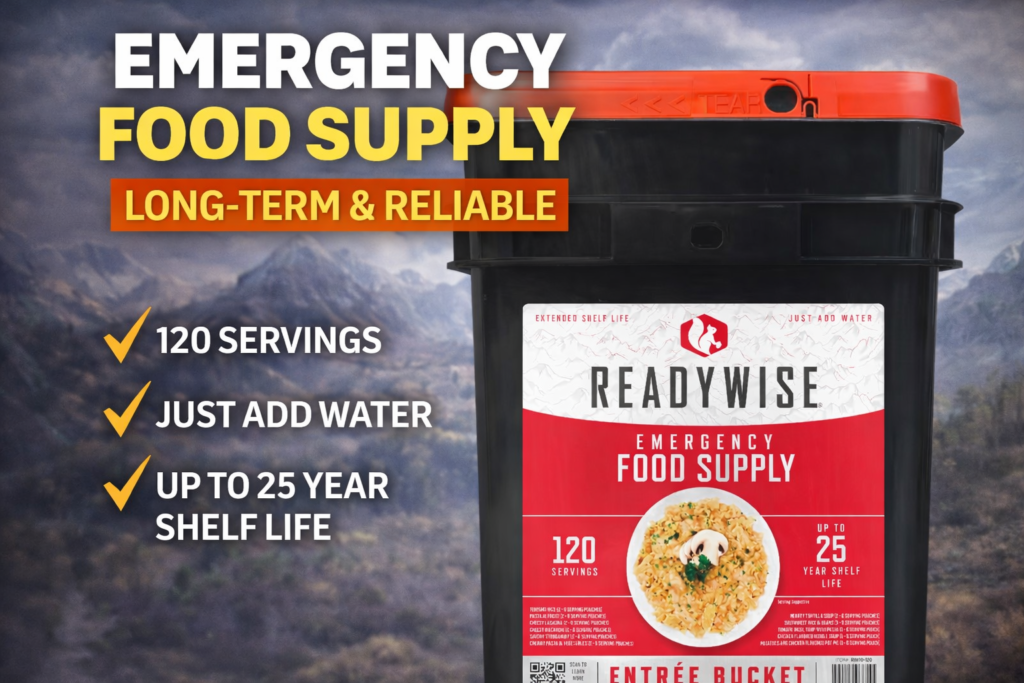
We’ve covered an emergency food supply designed for situations where normal food access becomes unreliable.
I see that kind of food as another layer, not a replacement for my normal pantry.
What I Do Before a Storm Makes a Huge Difference
If I know a serious storm is coming, I don’t just charge my phone.
I think about the refrigerator and freezer too.
I’ll make sure they’re properly cold before the storm arrives.
I freeze water.
I avoid unnecessary door opening.
I make sure coolers are accessible.
I locate ice packs.
I check that the generator is actually ready rather than simply assuming it will start.
That preparation can buy me hours or even days of additional food protection.
The One-Cup Freezer Trick Is Useful Too
There’s a simple trick we’ve covered before that can tell you whether a freezer may have thawed significantly while you were away.
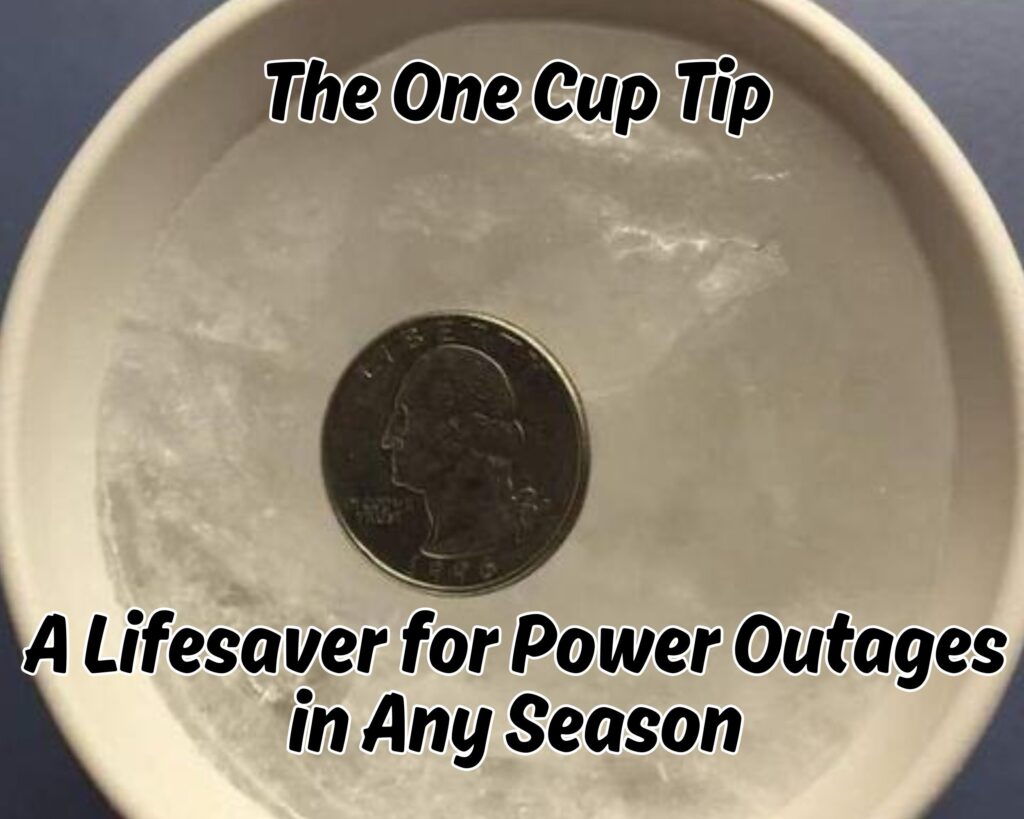
Our one-cup power outage trick uses frozen water and a coin to provide a basic clue about whether the freezer thawed and refroze.
I wouldn’t use that trick instead of proper temperature information when I’m standing there during an outage.
But it’s useful when the power may have gone out while nobody was home.
What If I Was Away When the Power Failed?
This is where things get harder.
If I don’t know:
- When the power went out
- How warm the refrigerator became
- How long food stayed warm
then I have less information to work with.
Again, an appliance thermometer helps.
So does knowing whether frozen foods still contain ice crystals.
What I don’t do is assume food is safe simply because the electricity came back on and the refrigerator is cold again.
The temperature after restoration doesn’t tell me what happened six hours earlier.
My Quick Refrigerator Rule During an Outage
When the lights go out, this is what I actually remember:
Four hours for the refrigerator.
About 48 hours for a full freezer.
About 24 hours for a half-full freezer.
Keep the doors closed.
Keep perishable food at 40°F or below.
Those simple numbers are much easier to remember when I’m dealing with everything else happening during an outage.
If I Know It’s Going to Be a Long Blackout
A four-hour outage and a four-day outage are completely different problems.
Once I’m dealing with days instead of hours, I stop treating food preservation as an isolated issue.
Now I’m thinking about:
- Generator fuel
- Cooking
- Water
- Shelf-stable food
- Communication
- Lighting
- Heating or cooling
- Sanitation
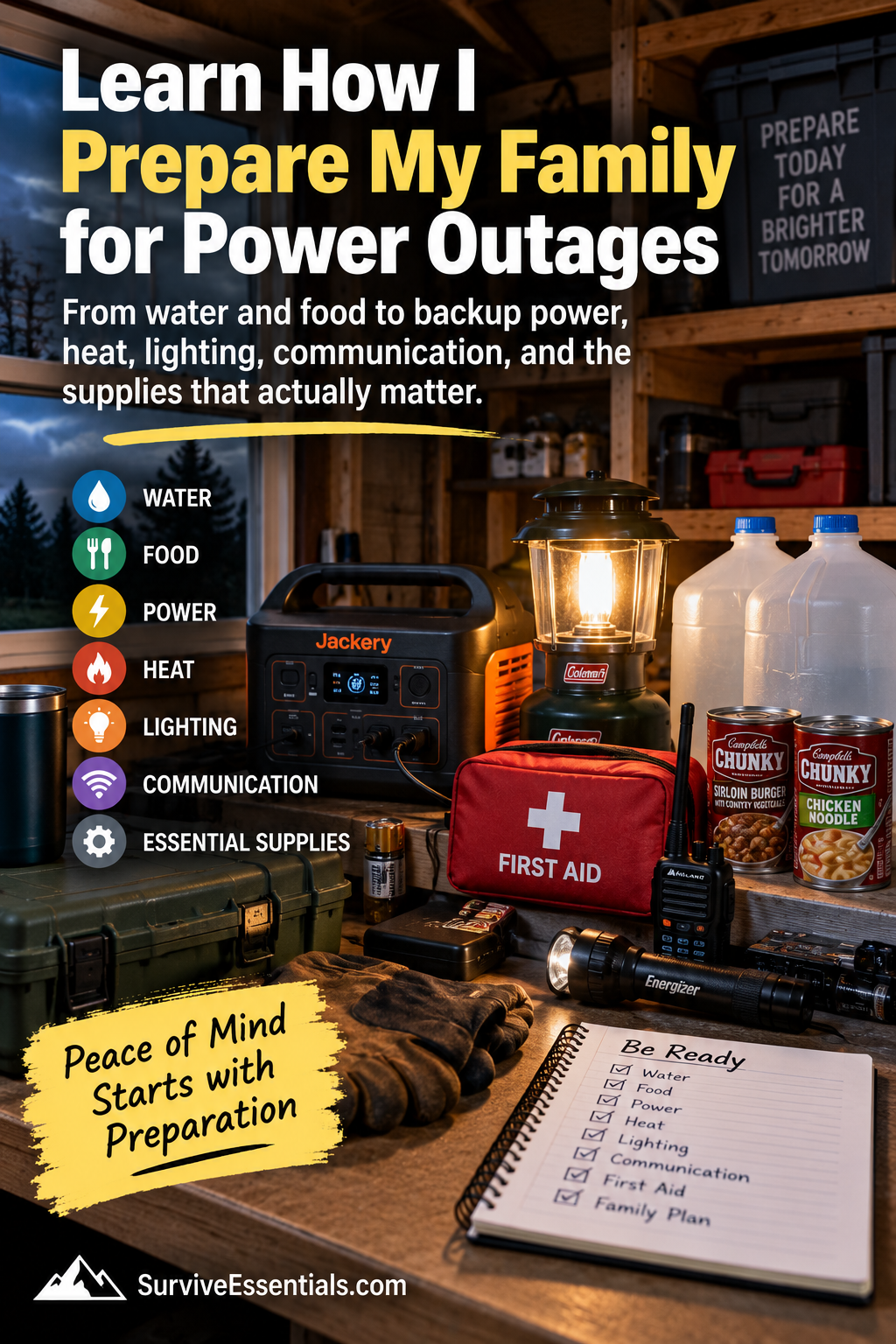
That’s where my broader power outage preparedness plan for a long blackout comes into play.
And if we’re talking about something much more serious than a normal outage, I’ve also put together a grid-down survival guide for families.
What I Would Buy Before Another Outage
If I were starting from zero and my main concern was protecting refrigerated food, I wouldn’t begin by buying complicated survival gear.
I’d start with:
- Refrigerator thermometer
- Freezer thermometer
- Several reusable ice packs
- A good cooler
- Frozen water containers
- Backup power appropriate for my refrigerator or freezer
- Enough shelf-stable food that losing refrigeration doesn’t leave me without meals
That’s a practical food-preservation setup I can use for ordinary storms as well as bigger emergencies.
I Protect the Cold Before Trying to Create More of It
That’s the principle I keep coming back to.
The refrigerator is already cold.
The freezer is already frozen.
My first job is preserving that advantage.
Keep the doors closed.
Know when the outage started.
Watch the temperature.
Use ice strategically.
Then bring in backup power if the outage is going long enough to justify it.
Doing those things in the right order can save a surprising amount of food, money, and frustration.
And when everyone else is standing in front of an open refrigerator asking whether the milk still smells okay, I’d much rather have an actual temperature and know exactly what happened.
About the Author
Caleb Mercer writes about blackout preparedness, backup power, emergency communications, and keeping everyday households functioning when utilities fail. His work for the Survive Essentials Power Outages and Backup Power sectionfocuses on practical steps people can actually use during storms, extended outages, and other real-world disruptions.