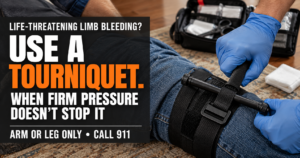
A tourniquet isn’t something I reach for every time someone gets a deep cut.
It’s there for a much more serious problem:
Life-threatening bleeding from an arm or leg.
That’s the distinction I want burned into my memory before an emergency ever happens.
If someone has a small cut that’s bleeding steadily, I’m not automatically putting a tourniquet around their arm.
If someone has a catastrophic injury to an arm or leg and blood is flowing continuously or spurting, the situation is completely different.
That’s when seconds matter.

What Makes Bleeding Life-Threatening?
I don’t try to measure the blood.
I’m looking at the injury and the person.
The American Red Cross identifies continuous or spurting blood and substantial blood loss as warning signs of life-threatening external bleeding. Someone may also begin showing signs of shock as significant blood loss continues.
That can include things like pale or cool skin, weakness, confusion, rapid breathing, or becoming less responsive.
At that point, I’m not thinking about whether this is something I can patch up at home.
I’m getting emergency medical help.
I Call 911 as Early as Possible
A tourniquet is first aid.
It isn’t definitive medical treatment.
If another person is there, I want them calling 911 while bleeding control begins.
If I’m alone and have a phone available, I call emergency services as quickly as the situation allows and follow the dispatcher’s instructions.
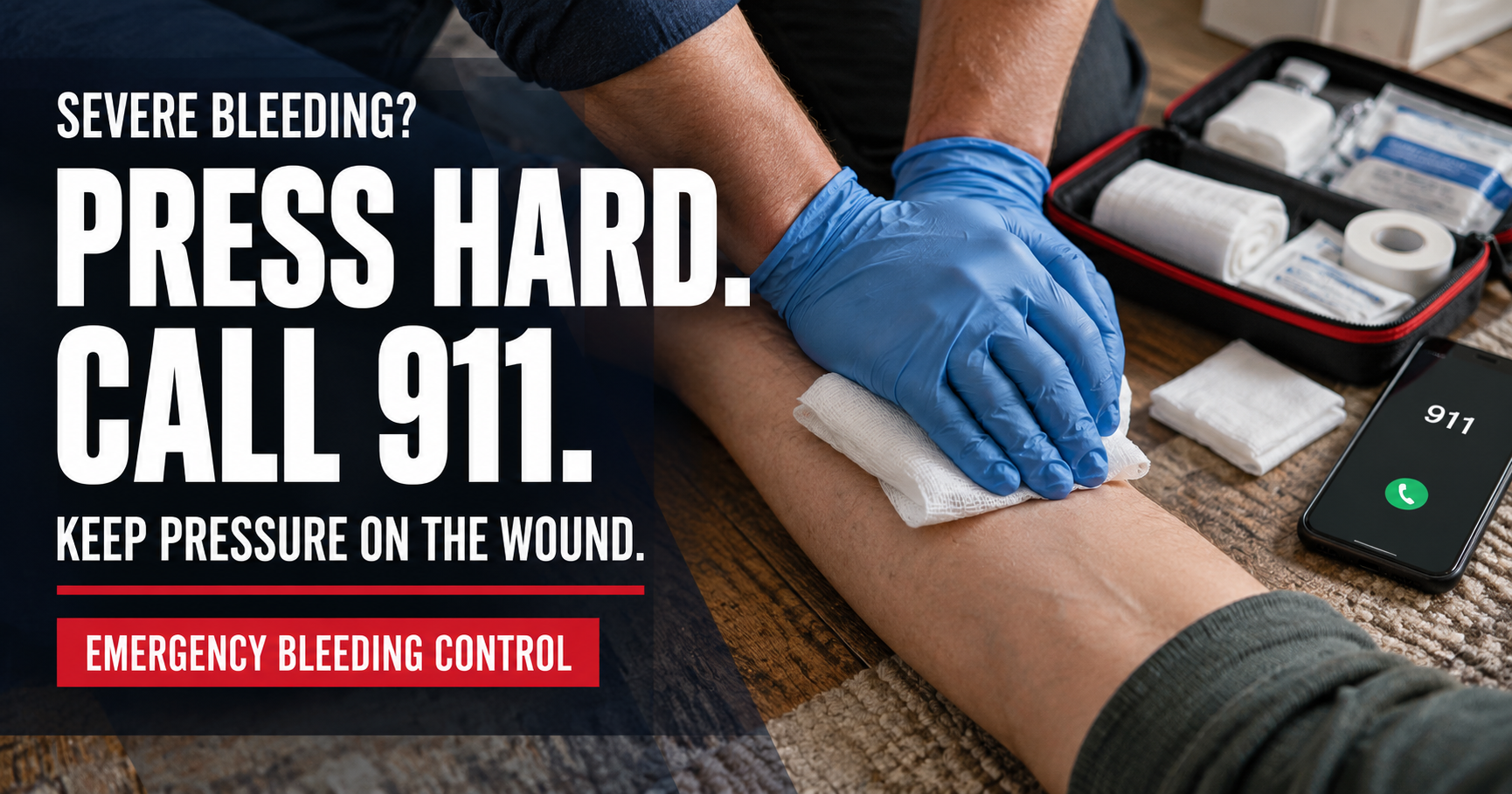
This connects directly with our guide on how I stop heavy bleeding during an emergency.
The tourniquet is one possible part of controlling the bleeding while professional care is on the way.


The Injury Has to Be on an Arm or Leg
This is one of the easiest rules to remember.
A standard commercial tourniquet is for life-threatening extremity bleeding.
That means an arm or leg.
I don’t put one around someone’s neck.
I don’t wrap one around the chest.
I don’t put one around the abdomen.
I don’t try to use one for severe bleeding from the groin or shoulder where a normal extremity tourniquet can’t be positioned appropriately.
Those wounds can require other bleeding-control techniques, including direct pressure and, for certain wounds, packing when trained to do so.
The tool has to match the injury.
I Don’t Wait Until Someone Is Nearly Unconscious
This is an important change from the old idea that a tourniquet should only be considered after trying everything else for a long time.
For life-threatening extremity bleeding, modern bleeding-control training supports early use of a tourniquet.
I don’t spend several minutes watching someone lose a dangerous amount of blood because I’m afraid the tourniquet is somehow a last-resort device.
When the bleeding is truly life-threatening and the location is appropriate, that’s exactly the problem a commercial tourniquet is designed to address.

But I Still Don’t Use One for Every Bleeding Arm or Leg
There’s an important balance here.
A cut can bleed a lot and still not require a tourniquet.
For bleeding that isn’t life-threatening, direct pressure may be appropriate.
That’s why recognizing severity matters so much.
I don’t make the decision based on:
“There’s blood, so use a tourniquet.”
I make it based on:
“This is life-threatening extremity bleeding that needs to be stopped now.”
A Commercial Tourniquet Is What I Want in My Kit
If I’m deliberately preparing for severe bleeding, I want a commercially manufactured tourniquet intended for that job.
Not a shoelace.
Not a piece of paracord.
Not the narrow belt I’m wearing.
Not whatever random strap happens to be nearby.
Improvised tourniquets can be difficult to make effective, especially without training.
I’d rather own the proper equipment before the emergency.
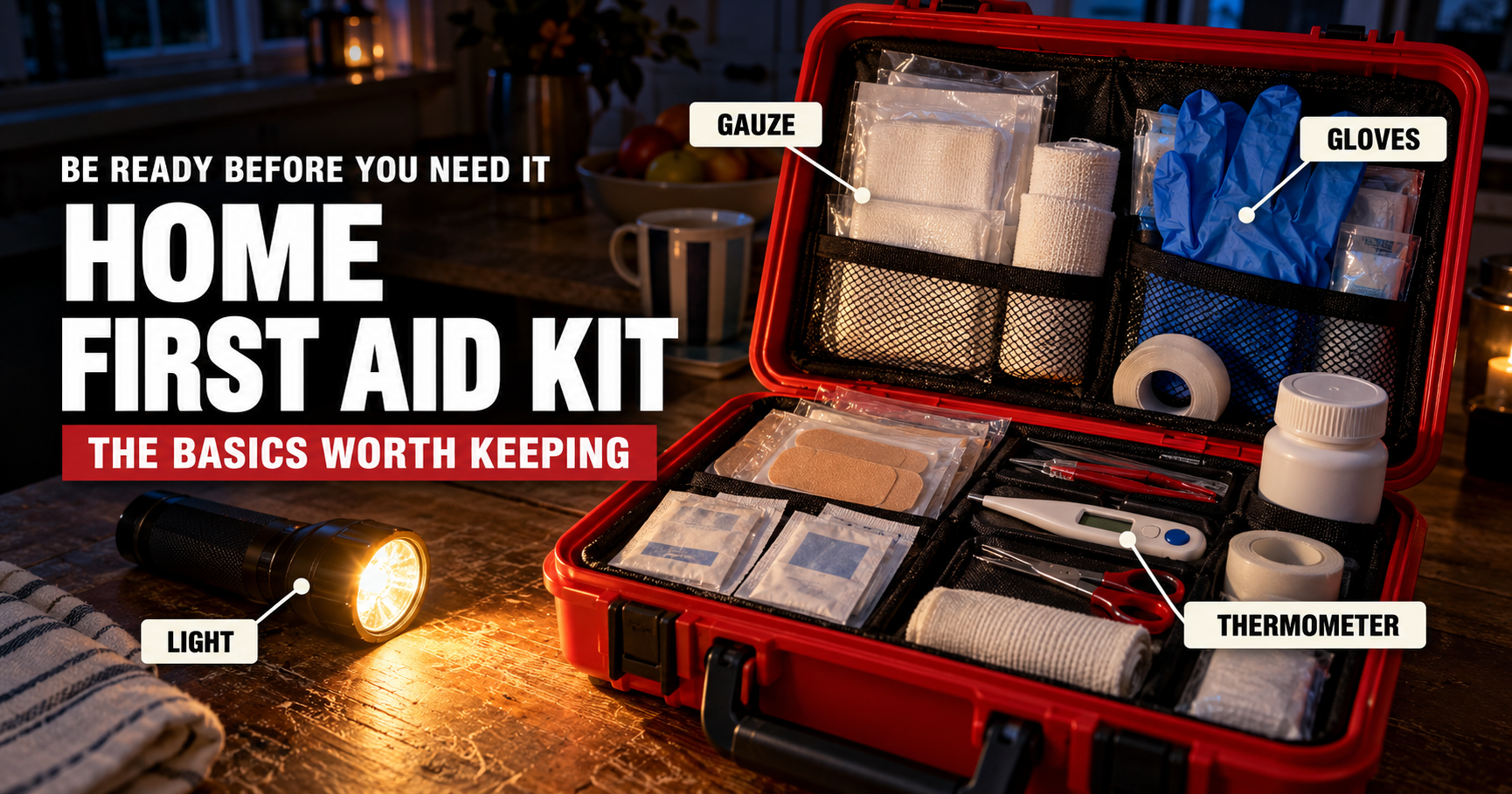
That’s why a serious bleeding-control section belongs in the home emergency first aid kit we’re building.
I Want to Learn With a Training Tourniquet
Buying the tourniquet isn’t the same as knowing how to use it.
This is one area where I think hands-on training is especially worthwhile.
I want to know what the device feels like.
How the strap feeds.
How the windlass works.
How tight it actually needs to become.
Where it should be positioned.
What mistakes people make.
That’s much easier to learn when nobody is bleeding.
For repeated practice, I’d rather have training equipment designated for that purpose than repeatedly wear out the emergency tourniquet I’m depending on.
Where Do I Put the Tourniquet?
For life-threatening bleeding from an arm or leg, STOP THE BLEED training teaches positioning the tourniquet above the wound, between the wound and the torso, and not directly over a joint.
If I can clearly identify the bleeding site, I follow the placement method I’ve been trained to use.
If the exact source can’t be quickly identified because of conditions such as darkness, multiple injuries, or clothing, recognized bleeding-control training also addresses rapid placement strategies.
This is one of those areas where actual instruction beats trying to memorize a sentence from an article.

I Don’t Put It Over the Knee or Elbow
This is a simple rule worth remembering.
Not over a joint.
A tourniquet needs to compress the limb effectively.
The knee and elbow aren’t appropriate placement locations.
If the wound is near a joint, placement decisions need to account for that while still positioning the tourniquet between the bleeding site and the torso.
Again, training makes this much easier to understand than trying to figure it out during an emergency.
I Don’t Put It Below the Wound
The goal is to reduce blood flow reaching the injured area.
That means the tourniquet belongs on the side of the wound closer to the torso.
Putting it farther down the arm or leg doesn’t accomplish what I’m trying to do.
This is another basic detail I want understood beforehand.

It Has to Be Tight
This surprises people.
A properly applied tourniquet can hurt.
That’s not necessarily evidence that something has gone wrong.
The device has to become tight enough to control life-threatening arterial blood flow.
A loosely applied tourniquet that allows severe bleeding to continue hasn’t solved the emergency.
STOP THE BLEED training specifically teaches tightening the tourniquet until the bleeding stops.
I Watch the Bleeding, Not Just the Tourniquet
Once the tourniquet is applied, I check whether it actually controlled the life-threatening bleeding.
That’s the goal.
If severe bleeding continues, the device may need further tightening. Depending on the situation and training, a second tourniquet may sometimes be placed above the first.
I don’t simply see a tourniquet wrapped around the limb and assume the problem is solved.
I need the bleeding controlled.
I Don’t Loosen It Every Few Minutes
This is one of the most important things I want people to stop doing.
Once a tourniquet has been appropriately applied for life-threatening bleeding, I don’t periodically loosen it to “let blood back into the limb.”
I don’t remove it because the person says it hurts.
I don’t loosen it because the bleeding stopped.
Once it is controlling life-threatening bleeding, I leave it in place for EMS and medical professionals to manage.
I Note the Time
If possible, I record when the tourniquet was applied.
Many commercial tourniquets include an area where the application time can be written.
If that’s available, I use it.
Otherwise I make the time clear however I reasonably can and tell EMS when they arrive.
That information is useful to the medical team taking over care.
I Don’t Cover the Tourniquet Up and Forget About It
I want the tourniquet visible enough that arriving medical professionals can immediately see it.
I don’t bury it underneath blankets or clothing without making sure EMS knows it’s there.
When they arrive, one of the first things I tell them is that a tourniquet was applied and when.
What If the Wound Is Too High on the Limb?
Some severe wounds occur near the shoulder or groin where normal tourniquet placement may be difficult or impossible.
That’s where other recognized bleeding-control methods become particularly important.
STOP THE BLEED teaches wound packing and direct pressure for appropriate wounds where a standard extremity tourniquet can’t be used effectively.
Again, that’s a skill I’d rather learn hands-on.
I don’t want my first attempt at packing a severe wound happening after reading three paragraphs on my phone.
Bleeding Powder Isn’t a Replacement for a Tourniquet When One Is Needed
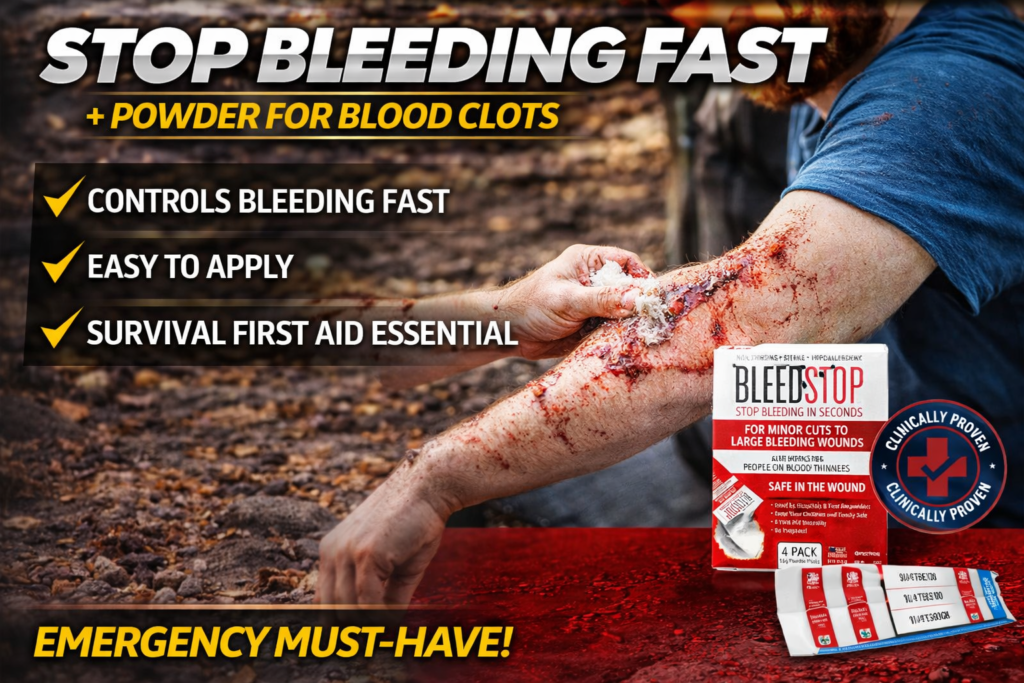
We already have BleedStop first aid powder in our preparedness lineup.
That’s another bleeding-control tool.
But I don’t use a hemostatic product as an excuse to delay an indicated tourniquet for catastrophic arm or leg bleeding.
Different tools solve different problems.
For serious preparedness, I want to understand where each one fits rather than assuming one product handles every bleeding injury.
I Still Want Gloves and Gauze Nearby
Even when a tourniquet is the major intervention, the rest of my bleeding-control supplies still matter.
Gloves help protect me from blood exposure.
Gauze and dressings may be needed for other wounds.
An injured person may have more than one injury.
That’s why I don’t store the tourniquet as some random standalone survival gadget.
It belongs with the rest of the bleeding-control equipment.
One Tourniquet May Not Be Enough for the Household Kit
This is something I think about when building a serious home kit.
An emergency can involve more than one injured person.
One person can have more than one severely injured limb.
A single tourniquet gives me exactly one tourniquet.
For a more complete household trauma setup, having more than one properly manufactured device can make sense.
But again, I don’t buy a pile of advanced medical equipment before learning how to use it.
Capability comes from equipment and training.
I Don’t Buy a Questionable Tourniquet Just Because It’s Cheap
This isn’t where I’m trying to save $15 by buying something of unknown quality.
If a tourniquet ever comes out of my emergency kit for real, the situation is already serious.
I want equipment from a reputable manufacturer with a design intended for bleeding control.
I don’t want to discover during an emergency that the windlass snaps, the strap slips, or the hardware can’t tolerate the force required.
This Is One Piece of Gear I Hope Never Gets Used
That’s the strange thing about buying serious first aid equipment.
I hope it sits there for years.
I hope all the training feels unnecessary.
I hope the worst injury we deal with is a scraped knee.
But if the day comes when somebody has life-threatening bleeding from an arm or leg, that’s not when I want to start wondering whether a tourniquet would have been worth keeping around.
I’d rather have the right tool, know exactly where it is, and already understand how to use it.
I Don’t Try to Remove a Tourniquet Myself
Once a tourniquet has been properly applied for life-threatening bleeding and is controlling that bleeding, I leave it alone.
The injured person may complain that it hurts.
That’s understandable. A properly tightened tourniquet can be very painful.
But pain isn’t a reason for me to loosen it and allow life-threatening bleeding to start again.
I leave removal or adjustment to the medical professionals taking over care.
I Don’t Periodically Release It to “Save the Limb”
This is an old idea that still gets repeated.
I don’t loosen the tourniquet every 10 or 15 minutes to restore circulation.
Doing that can allow severe bleeding to resume.
The entire reason the tourniquet was applied was because uncontrolled blood loss posed an immediate threat to the person’s life.
Once it is working, I leave it working.
I Tell EMS Exactly What Happened
When professional help arrives, I don’t simply say, “They’re hurt.”
I give them useful information.
If I know it, that includes:
- How the injury happened
- Where the major bleeding occurred
- Whether direct pressure was attempted
- Whether the wound was packed
- Whether a tourniquet was applied
- What time it was applied
- Whether more than one tourniquet was used
- Changes I noticed in the person’s condition
- Relevant medical information I know
Then I let the professionals take over.
I Keep Watching the Person After the Bleeding Stops
Stopping visible blood loss doesn’t mean everything is suddenly fine.
Someone who has already lost a significant amount of blood may still be critically injured.
I watch their breathing and responsiveness.
I pay attention to changes in skin color, confusion, weakness, unusual sleepiness, rapid breathing, and other signs that their condition may be worsening.
This ties directly into another article we’ll build in this first-aid cluster about recognizing shock after an injury.
I Help Keep Them From Getting Too Cold
A person who has experienced significant blood loss can become cold.
That’s one reason I keep an emergency blanket in the home emergency first aid kit.
If conditions are cold, wet, or windy, protecting the injured person from the environment becomes even more important.
I don’t pile blankets over the tourniquet so nobody can see it.
I want the person protected from cold while keeping important bleeding-control equipment visible to arriving responders.
I Don’t Give Them Food or Drink Unless Medical Professionals Direct It
Someone who has lost blood may complain of thirst.
That doesn’t mean I automatically give them something to eat or drink.
A seriously injured person may need emergency procedures after reaching the hospital.
I follow instructions from the 911 dispatcher and medical professionals rather than trying to solve thirst while waiting.
I Don’t Let Them Walk Around to Prove They’re Okay
People sometimes react strangely after an injury.
Adrenaline is powerful.
Someone can be seriously hurt and still insist:
“I’m fine.”
If I’ve just applied a tourniquet for life-threatening bleeding, this isn’t a minor injury.
I don’t encourage the person to stand up and walk around.
I keep them as safe and still as practical while monitoring their condition and waiting for professional help.
A Tourniquet Doesn’t Mean I Ignore Other Injuries
A severe accident can cause more than one problem.
Maybe the tourniquet stopped bleeding from a leg, but the person also hit their head.
Maybe they have another wound.
Maybe they were involved in a vehicle crash or crushed by something.
I don’t become so focused on the tourniquet that I forget there’s an entire injured person in front of me.
Once the immediate life-threatening bleeding is being controlled, I continue monitoring and follow emergency-dispatch instructions.
I Don’t Remove an Object Stuck in the Wound
If something is deeply embedded in an injury, I don’t yank it out so I can get a better look.
Removing an embedded object can potentially make bleeding worse.
Instead, I leave it in place, avoid pushing on the object itself, and use appropriate first-aid measures around it while getting professional medical help.
This is another example of why emergency first aid sometimes means not doing the thing that initially feels obvious.
A Partially Amputated Limb Is an Emergency
This is exactly the kind of catastrophic extremity injury where life-threatening bleeding control becomes critical.
I’m not trying to finish an amputation.
I’m not trying to clean everything up before calling for help.
I’m controlling life-threatening bleeding using appropriate methods within my training and getting emergency medical care immediately.
The uglier an injury looks, the more important it becomes for me to fall back on simple, recognized first-aid priorities rather than panic.
A Complete Amputation Needs More Than Bleeding Control
My first priority is still the injured person.
Life-threatening bleeding comes first.
Emergency medical services need to be activated immediately.
If a body part has been completely amputated, I follow the emergency dispatcher’s instructions for preserving it for transport rather than improvising.
I don’t let concern about the amputated part distract me from the person who is losing blood.
The patient comes first.
I Don’t Use a Tourniquet for Bleeding From the Head
A standard limb tourniquet isn’t for a head wound.
The same goes for the neck, chest, abdomen, or torso.
Those injuries can still involve life-threatening bleeding.
They simply require different first-aid approaches.
This is why I don’t think of a tourniquet as a “stops bleeding” device for every location.
It’s a specialized tool for appropriate severe extremity bleeding.
Groin and Shoulder Bleeding Are Different Too
These areas are sometimes called junctional areas because they’re near where the limbs meet the torso.
A standard extremity tourniquet may not be positionable above the wound in the normal way.
That’s where proper direct pressure and wound-packing skills can become especially important for someone trained to perform them.
Again, I don’t want to learn wound packing for the first time from an article while someone is actively bleeding.
This is exactly the kind of skill worth practicing in a recognized bleeding-control course.
What If I Don’t Have a Tourniquet?
If life-threatening bleeding is happening and I don’t have the ideal equipment, I still act.
I call 911.
I apply firm direct pressure.
For appropriate wounds and within my training, wound packing may be used.
I follow emergency-dispatch instructions.
What I don’t do is spend several minutes searching the garage for materials to build a perfect homemade tourniquet while someone continues losing blood.
The immediate priority is controlling the bleeding with the effective methods and materials available.
Improvised Tourniquets Aren’t My Preparedness Plan
Could there be an extreme situation where no commercial tourniquet is available and improvisation becomes necessary?
Possibly.
But that’s not how I build my kit ahead of time.
If I already know a commercial tourniquet can be useful for life-threatening extremity bleeding, I’d rather buy appropriate equipment now than plan to sacrifice a belt and figure it out under stress.
Preparedness is supposed to reduce improvisation.
A Shoelace Is Not What I Want Around an Injured Limb
Narrow improvised materials can be particularly problematic.
A proper commercial tourniquet is designed to distribute pressure and mechanically tighten enough to control severe bleeding.
A shoelace, thin cord, or similar narrow material wasn’t designed for that job.
That’s another reason I don’t treat random household objects as equivalent to purpose-built medical equipment.
The Tourniquet Needs to Be Accessible
I don’t bury it at the bottom of the first aid kit.
If I need a tourniquet, I’m already dealing with one of the most time-sensitive injuries the kit is designed to address.
I want the bleeding-control section immediately identifiable.
That includes:
Gloves.
Gauze.
Appropriate larger dressings.
Hemostatic supplies if carried.
Tourniquets.
Everything doesn’t need its own giant pouch.
It just needs to make sense when I’m under stress.
I Consider Keeping More Than One
For a serious home trauma kit, one tourniquet may not be enough.
There could be multiple injured people.
One person could have more than one severely injured limb.
A very large limb or difficult bleeding situation may require additional equipment.
If I’m trained to use tourniquets and intentionally building a serious bleeding-control kit, having more than one reputable commercial device makes sense to me.
I Don’t Store Them Somewhere That Ruins Them
Medical equipment still needs reasonable storage.
I follow the manufacturer’s storage recommendations.
I don’t leave critical bleeding-control equipment where moisture, extreme temperatures, chemicals, physical damage, or constant abuse can compromise it.
That’s especially important for vehicle kits, where temperatures can become extreme.
I periodically inspect the tourniquet along with the rest of my emergency medical supplies.
I Inspect It Instead of Assuming It’s Fine Forever
A tourniquet may sit unused for years.
That’s exactly what I hope happens.
But I still inspect emergency equipment periodically.
I look at the strap.
The buckle.
The windlass.
The securing components.
The packaging if applicable.
If something looks damaged or questionable, I don’t keep it as my lifesaving backup because throwing it away feels wasteful.
This is emergency equipment.
I want confidence in it.
I Keep Training Equipment Separate
If I’m repeatedly practicing tourniquet application, I prefer having equipment dedicated to training.
That way the tourniquets in the emergency kit aren’t being tightened, loosened, thrown around, stepped on, and repeatedly stressed during practice.
I can mark the training device clearly so nobody accidentally returns it to the emergency kit.
That’s a simple way to practice without confusing training gear with equipment I’m depending on for real.
Tourniquet Training Makes a Great Family Preparedness Skill
For adults and older family members capable of learning it appropriately, bleeding-control training can be extremely valuable.
A serious injury may happen to me.
If I’m the person bleeding, my first aid knowledge doesn’t help nearly as much if nobody else around me knows where the equipment is or what to do with it.
Preparedness shouldn’t depend entirely on one person in the household.
That’s true for generators.
It’s true for shutting off the water.
And it’s definitely true for first aid.
I Want My Family to Know Where the Trauma Supplies Are
They don’t necessarily need to memorize every medical item.
But capable household members should know:
Where the main first aid kit is.
Where the bleeding-control supplies are.
How to call emergency services.
Which household members have important medical conditions or allergies they may need to tell responders about.
That’s useful preparedness without turning the house into a medical classroom.
Farm, Workshop, and Storm Cleanup Injuries Are Why I Take This Seriously
Tourniquets can sound like military or disaster gear until I think about the equipment ordinary people use.
Chainsaws.
Mowers.
Power tools.
Farm machinery.
Broken glass.
Sheet metal.
Storm debris.
Vehicle accidents.
Severe extremity injuries aren’t limited to some imaginary end-of-the-world scenario.
That’s why serious bleeding control makes sense as part of an ordinary household emergency plan.
The Goal Is Not to Become Comfortable Using a Tourniquet
I hope I never need one.
That’s different from being afraid to learn how one works.
I want the knowledge to feel familiar even though the situation never does.
I want to know where the equipment is.
I want to recognize the kind of bleeding it’s intended for.
I want to understand placement.
I want to know that it needs to be tightened until life-threatening bleeding stops.
And I want to know that once it’s working, I leave it in place for the medical professionals taking over.
That’s enough to make me far more useful during an emergency than someone opening the package for the first time.
My Simple Rule for Tourniquet Use
If I had to reduce this entire article to one thing I’d remember under stress, it would be this:
A commercial tourniquet is for life-threatening bleeding from an arm or leg.
Not every cut.
Not every bleeding wound.
Not the neck.
Not the torso.
Not because I don’t feel like holding pressure.
When catastrophic extremity bleeding is happening, I call for emergency help, use recognized bleeding-control methods I’m trained to perform, apply the tourniquet correctly when indicated, tighten it until the severe bleeding stops, note the time, and leave it in place.
That’s the role I want the tourniquet to have in my first aid kit.
Nothing more complicated than that.
About the Author
Grant Holloway writes about practical first aid, bleeding control, emergency medical preparedness, and building household emergency kits around skills people can actually learn before they’re needed. His work for Survive Essentialsfocuses on recognized first-aid principles, useful preparedness equipment, and knowing the limits of home emergency care while professional medical help is on the way.