A home first aid kit should be able to handle more than scraped knees and paper cuts.
That’s the standard I use when putting one together.
Most of the time, we’re probably reaching into it for something simple: a bandage, gauze, tweezers, an instant cold pack, or supplies for a minor wound.
But that’s not the situation I really prepare around.
I’m thinking about the cut that won’t stop bleeding while clearing storm damage. The burn that happens while we’re cooking during a power outage. The twisted ankle when the roads are covered in ice. Or an injury during a larger emergency when an ambulance might not arrive as quickly as it normally would.
That’s why I don’t judge a first aid kit by the giant number printed on the package.
A “300-piece first aid kit” isn’t necessarily better than a 100-piece kit if most of those extra pieces are tiny bandages and wipes.
What matters to me is much simpler:
What problems can this kit actually help us deal with until appropriate medical care is available?
I Build My First Aid Kit Around Problems, Not Piece Count
Before buying anything, I think about the injuries we’re realistically preparing for at home.
That includes:
- Small cuts and scrapes
- Larger wounds
- Bleeding
- Burns
- Sprains and strains
- Blisters
- Swelling
- Minor eye problems
- Splinting and stabilization
- Personal medical needs
- Situations where professional help may be delayed
That approach keeps me from getting distracted by a huge item count.
I’d rather have fewer useful supplies that I understand than a giant pouch filled with things I can’t identify.
Ordinary Bandages Still Matter
Preparedness doesn’t mean every injury is a life-threatening emergency.
Most aren’t.
So yes, I keep plenty of ordinary adhesive bandages.
I prefer an assortment of sizes because the same little strip isn’t ideal for every cut.
The American Red Cross recommends assorted adhesive bandages as part of a family first aid kit, along with sterile gauze, roller bandages, absorbent dressings, tape, gloves, an emergency blanket, cold compress, thermometer, tweezers, and other basic supplies.
That’s a good foundation.
Then I build beyond it based on the household.

Gauze Is One of the Things I Want Plenty Of
This is where a better home kit starts separating itself from the tiny kit in the kitchen drawer.
I want sterile gauze pads in useful sizes.
Small adhesive strips are great for small wounds. They’re not what I want when dealing with something larger.
Gauze gives me much more flexibility for covering wounds and, when appropriate, helping apply pressure.
Roller gauze is useful too because it can help hold dressings in place.
I don’t want three pieces of gauze hidden underneath 75 adhesive bandages just so the manufacturer could advertise a huge piece count.
Larger Absorbent Dressings Belong in the Kit
This is another item I specifically look for.
The Red Cross recommends absorbent compress dressings as part of a family first aid kit, and that makes sense to me.
If someone has a larger wound, I want something designed to cover more than a tiny area.
I also organize these supplies where they’re easy to reach.
If somebody is bleeding badly, that’s not the moment I want to dump the entire first aid kit onto the floor searching for a dressing.

Gloves Stay Near the Top
Before dealing with somebody else’s blood or body fluids, I want gloves available.
I use nonlatex disposable gloves and keep several pairs.
For a preparedness kit, I’d rather have extras than the bare minimum. They’re small, lightweight, and disposable.
Once a pair has been used, it’s done.
If an emergency lasts several days or more than one person gets injured, having two pairs of gloves suddenly doesn’t feel like much.
Good Medical Tape Is Worth Having
Tape isn’t exciting survival gear.
It’s still something I’d hate to be without.
I keep proper medical tape for securing dressings and gauze.
More importantly, I know where it is.
My wound-care supplies stay together instead of being scattered throughout the bag.
That sounds like a minor organizational detail until someone is actually injured.
Antiseptic Supplies Have a Place
I keep appropriate antiseptic supplies for situations where they’re useful.
But I don’t look at 40 individually wrapped antiseptic wipes and convince myself I have an advanced emergency medical kit.
They’re one tool.
That’s it.
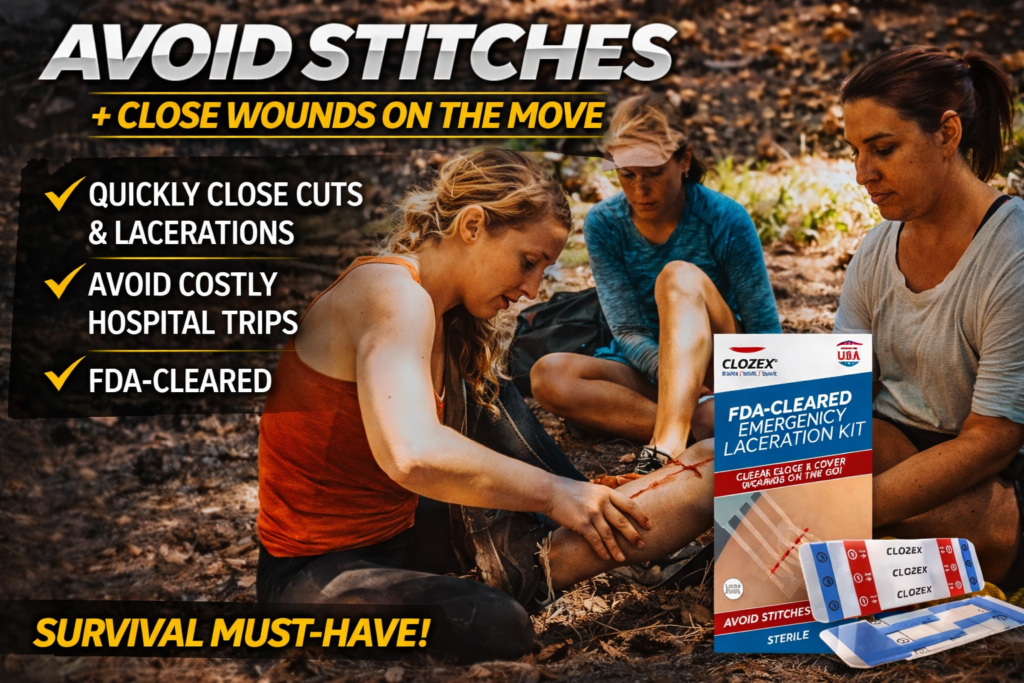
Wound cleaning deserves its own discussion because there are plenty of things people routinely pour into wounds that I wouldn’t automatically use simply because they’re available.
We’ll deal with that properly as we build this first-aid cluster.
Tweezers Are Simple but Useful
Splinters and small pieces of debris aren’t major emergencies, but they’re common.
A decent pair of tweezers takes up practically no room.
I keep them somewhere easy to find instead of buried underneath everything else.
They’re one of those inexpensive items that gets used far more often than some of the dramatic-looking survival gear people buy.

I Want Scissors That Can Actually Cut Something
This is something I check when buying a premade kit.
Tiny cheap scissors may technically count as one of the pieces.
That doesn’t make them useful.
I want scissors capable of cutting gauze, tape, and clothing when necessary.
If I’m relying on a tool in an emergency kit, I want to know it actually performs the job it’s supposed to perform.
An Instant Cold Pack Is Worth the Space
At home, I’d normally grab ice from the freezer for an appropriate minor injury.
During a blackout, evacuation, storm, or other emergency, that isn’t guaranteed.
An instant cold compress gives me another option for appropriate swelling, strains, and sprains.
It doesn’t take much room and doesn’t depend on electricity.
That’s exactly the kind of simple redundancy I like.
A Thermometer Gives Me Information Instead of a Guess
If someone feels sick during an emergency, I’d rather know their actual temperature than touch their forehead and say they feel warm.
A basic digital thermometer is cheap information.
I make sure it works.
If it requires batteries, I keep that in mind too.
This is exactly the kind of inexpensive item that becomes more useful when normal services are disrupted.
I Keep an Emergency Blanket With the Medical Supplies
An emergency blanket doesn’t immediately look like first aid equipment until somebody needs protection from cold conditions.
Maybe the injury happened outside.
Maybe we’re waiting for help.
Maybe the electricity is out during winter.
Maybe the injured person can’t move around easily.
An emergency blanket weighs almost nothing and gives me another option.
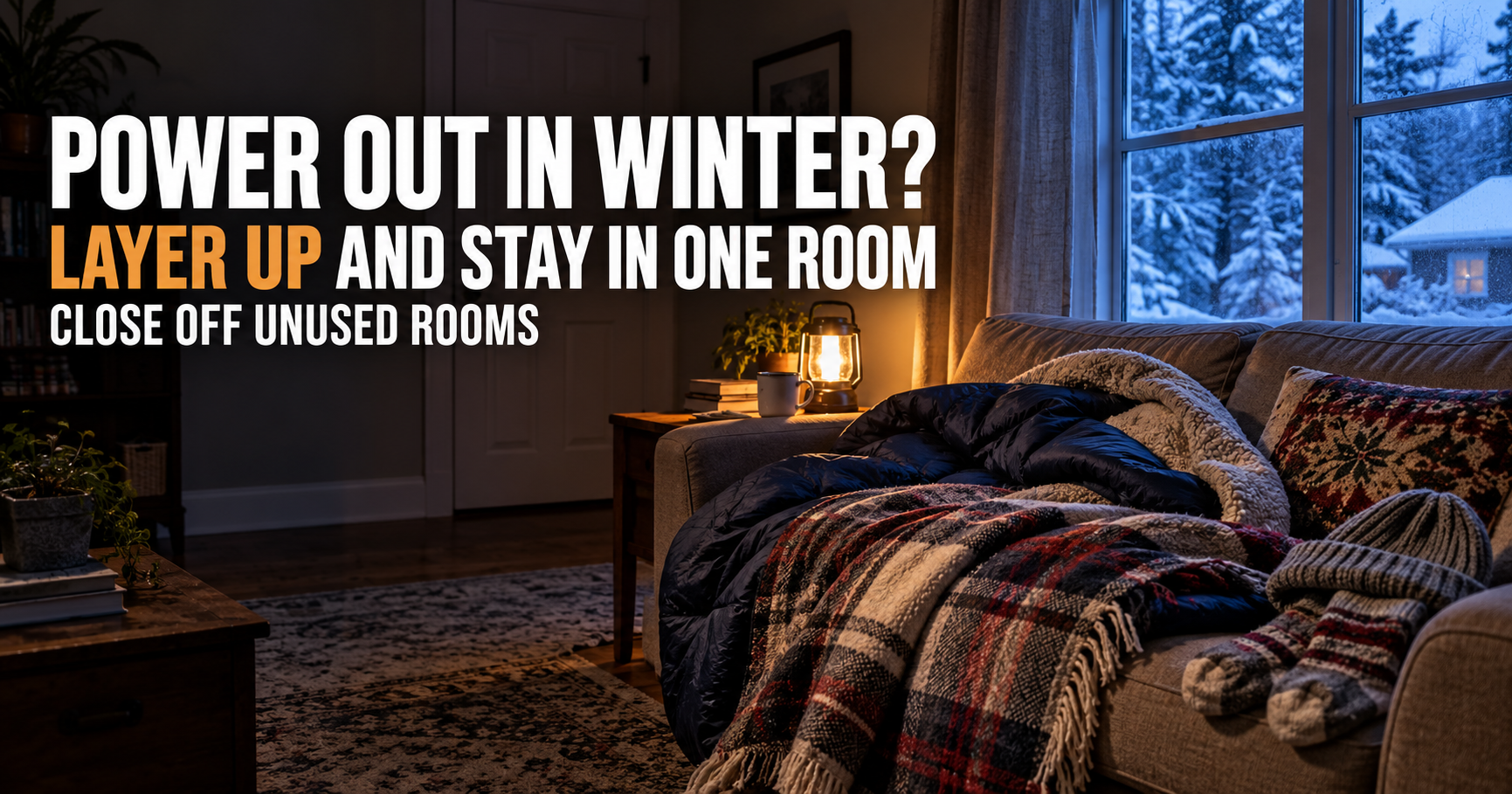
It also fits naturally with the winter power-outage plan we’ve already built.
Preparedness problems rarely stay neatly separated into categories.
I Keep First Aid Instructions in the Kit
This might seem old-fashioned when everyone has a smartphone.
I don’t care.
During an emergency, I don’t assume my phone is charged, cell service works, the internet works, or that I’ll remember everything correctly while stressed.
A printed first aid reference gives me something that doesn’t need a signal or battery.
But even that isn’t a substitute for actual training.
The Supplies Matter More When Somebody Knows How to Use Them
This may be the most important thing I can say about building a serious first aid kit.
Buying medical supplies can create false confidence.
Owning a tourniquet doesn’t mean I know how to use one.
Owning gauze doesn’t automatically mean I know how to manage serious bleeding.
Having a CPR barrier doesn’t mean I know CPR.
If I’m serious about preparedness, first aid and CPR training are some of the most valuable skills I can add.
I’d rather have a sensible kit and good training than an enormous trauma bag filled with equipment nobody in the house understands.
I Like Starting With a Good Premade Kit
I don’t think everyone needs to buy every supply individually.
A good premade kit gives me an organized foundation.
Then I can open it, learn what’s inside, and add whatever the household needs.
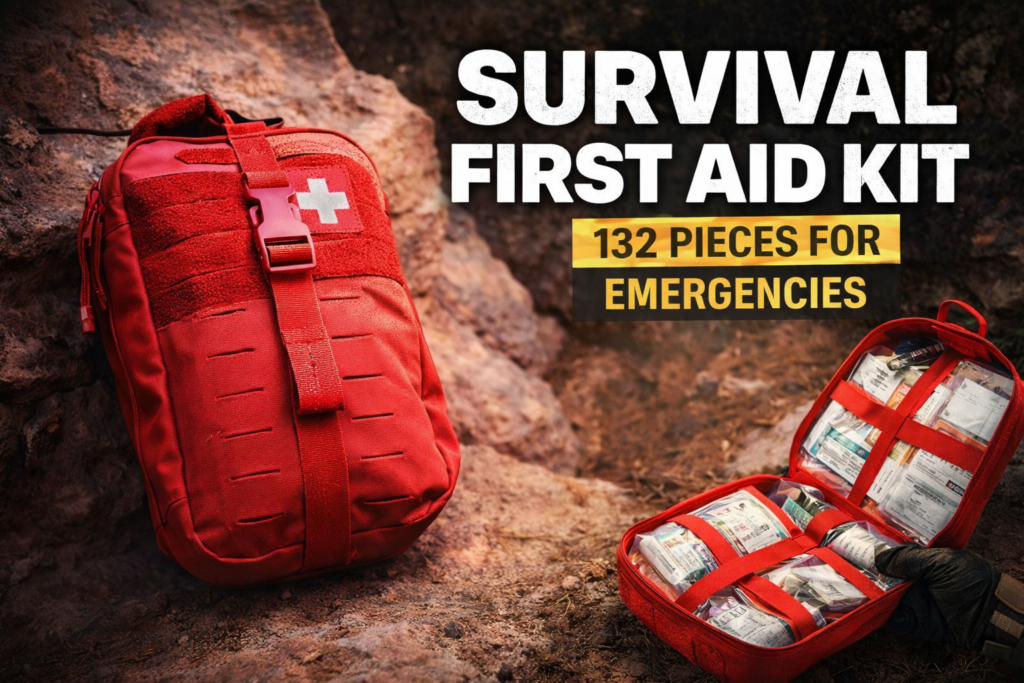
We’ve already taken a closer look at the first aid kit I’d rather have when a real emergency happens.
That’s the MY MEDIC MyFAK Standard, which gives me a much broader assortment of medical and trauma supplies than the little convenience kits I normally see.
For me, the organization is almost as important as what’s inside.
When something happens, I want to find what I need quickly.
The First Aid Kit I’d Start With at Home
If I wanted one ready-made kit as the foundation of my emergency medical supplies, this is the one I’d look at first.
Check the MY MEDIC MyFAK Standard First Aid Kit on Amazon
I still wouldn’t buy it, throw it in a closet, and call myself prepared.
I’d open it.
I’d learn where everything is.
I’d figure out what each item does.
And I’d add anything specific to my household that isn’t included.
My Family’s Medical Needs Don’t Come in a Generic First Aid Kit
This is where customization really matters.
No company selling a first aid kit knows my household.
Depending on the family, that can mean personal medications, medical supplies, allergy information, important health information, and emergency contacts.
The generic kit is the starting point.
The people living in the house determine what else belongs there.
I Keep Important Medical Information Accessible
If somebody else has to help during an emergency, I don’t want every important detail locked inside one person’s memory.
Depending on the household, useful information may include current medications, allergies, important medical conditions, emergency contacts, and healthcare-provider information.
Sensitive information still needs to be handled appropriately.
But emergency information that nobody can access during an emergency isn’t especially useful.
Serious Bleeding Is Where the Kit Changes
This is the point where I’m no longer talking about ordinary household first aid.
Severe bleeding can become life-threatening quickly.
That’s why I want appropriate bleeding-control supplies available and, just as importantly, the knowledge to use them.
I don’t bury those supplies at the bottom of the bag underneath a pile of tiny bandages.
If they’re needed, they may be needed quickly.
Direct Pressure Is Something I Prepare For
For serious external bleeding, direct pressure is one of the fundamental bleeding-control measures.
That means I want gloves, appropriate dressings, and enough gauze available.
I don’t want to discover that my giant first aid kit contains two small gauze pads when somebody has a substantial wound.
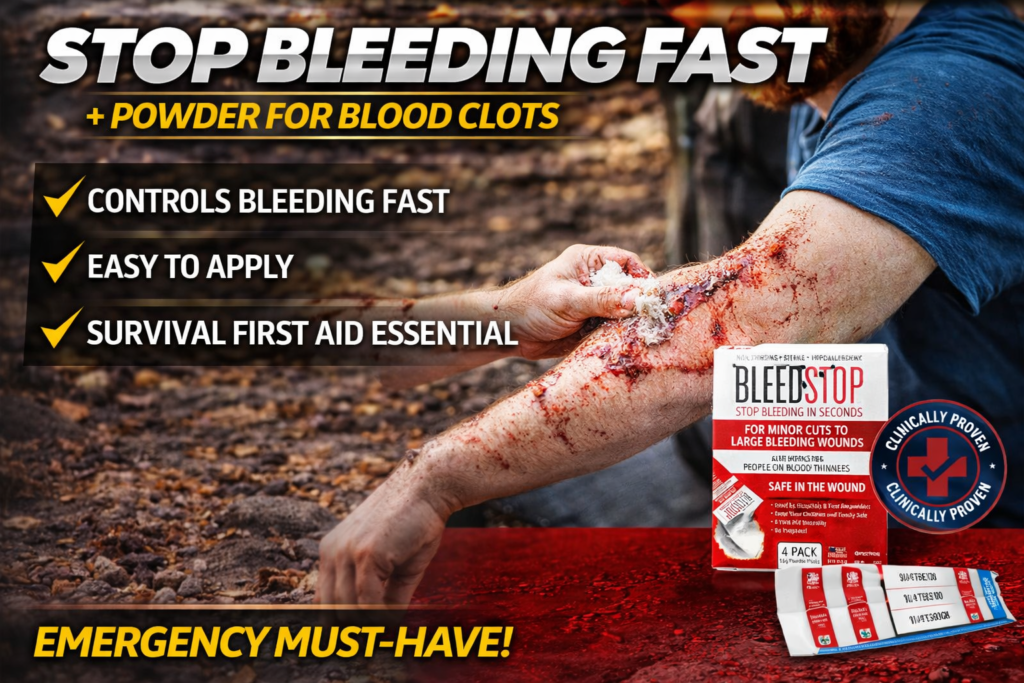
We already have BleedStop first aid powder covered on Survive Essentials, which gives me another bleeding-control product to consider as part of the broader setup.
Another Bleeding-Control Supply I Keep in Mind
For a preparedness kit built beyond ordinary cuts and scrapes, this is one of the products we’ve already looked at:
See BleedStop First Aid Powder on Amazon
I don’t treat any hemostatic product as a magic replacement for direct pressure, proper training, or emergency medical care.
It’s another tool.
That’s how I look at most preparedness gear.
Tourniquets Deserve More Than One Line on a Checklist
A properly manufactured commercial tourniquet can be an important piece of severe-bleeding equipment when used for the right type of life-threatening extremity bleeding.
But this is exactly where I don’t want someone buying medical equipment solely because a survival checklist told them to.
I want training.
Tourniquet use deserves its own article, where we can carefully cover when one is appropriate, what kind of bleeding we’re talking about, and why improvising medical care based on something seen online can be dangerous.
For now, the important point is that my home first aid kit should account for serious bleeding, not merely small cuts.
Burns Need Their Own Place in My Planning
Burns are another realistic emergency injury.
Power outages can change how people cook and heat their homes.
Camping involves fire.
Portable heaters get hot.
Generators get hot.
Storm cleanup and repairs introduce their own risks.
So burn preparedness belongs in this kit and deserves its own focused article later in this cluster.
I don’t want to bury actual burn guidance inside a giant list of supplies.
I Want Basic Support and Stabilization Supplies
Sprains, strains, and suspected fractures are realistic injuries too.
Someone slips during an ice storm.
Someone falls while clearing debris.
An ankle rolls while carrying equipment.
Those aren’t far-fetched survival scenarios.
Triangular bandages and appropriate basic support supplies take up very little room and can be useful within the limits of someone’s first aid training.
Again, knowledge matters as much as the equipment.
I Don’t Forget About Eye Protection
This is where first aid and prevention overlap.
A lot of emergency injuries happen while people are doing work they don’t normally do.
Cutting branches.
Clearing debris.
Using generators.
Making temporary repairs.
Working around dust and flying material.
Sometimes the best first aid supply is the protective equipment that prevents the injury in the first place.
I keep that mindset throughout the rest of my preparedness gear too.
I Keep the Kit Somewhere Everyone Can Actually Find It
A perfectly stocked first aid kit doesn’t help much if nobody knows where it is.
I want one primary location that’s easy for the household to remember and appropriate for whatever is stored inside.
I don’t bury the kit behind Christmas decorations.
I don’t move it from closet to closet.
And I don’t let it slowly disappear underneath everything else we store.
If somebody gets hurt and I’m not home, another adult in the house should be able to find the first aid supplies without calling me to ask where they are.
That sounds basic, but basic preparedness is usually what matters most.
I Don’t Keep Every First Aid Supply in One Place
The main home kit can be the most complete, but I still like smaller kits in other places where injuries are realistic.
That could include:
- Vehicles
- Workshop or garage
- Bug-out bags
- Camping gear
- Other frequently used areas away from the house
The smaller kits don’t have to duplicate every single thing in the main one.
They’re there so basic medical supplies are available when the big kit is 20 miles away.
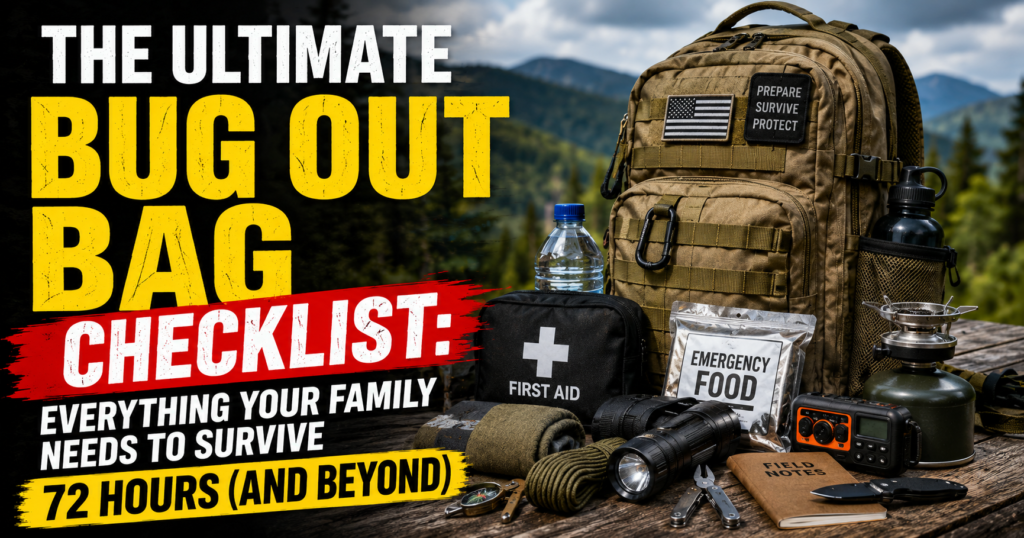
This also ties naturally into the 72-hour family bug-out bag we’ve already built.
A home medical kit and a bug-out first aid kit have different jobs.
My Home Kit Can Be Heavier
At home, weight isn’t a major concern.
I’m not carrying the kit ten miles on foot.
That means I can keep more gauze, additional gloves, larger dressings, extra cold packs, more wound-care supplies, and household-specific items.
A bug-out kit has to balance capability against weight and space.
My home kit doesn’t have that same restriction.
If having extra useful supplies makes sense, I’d rather have them.
I Don’t Forget About the First Aid Kit During a Power Outage
Medical emergencies don’t stop because the electricity went out.
If anything, a blackout can create more opportunities for somebody to get hurt.
People are walking through dark rooms.
Generators are running.
Extension cords are everywhere.
Food is being cooked differently.
Portable heaters may be in use.
Storm debris may need to be cleared.
Basements may be taking on water.
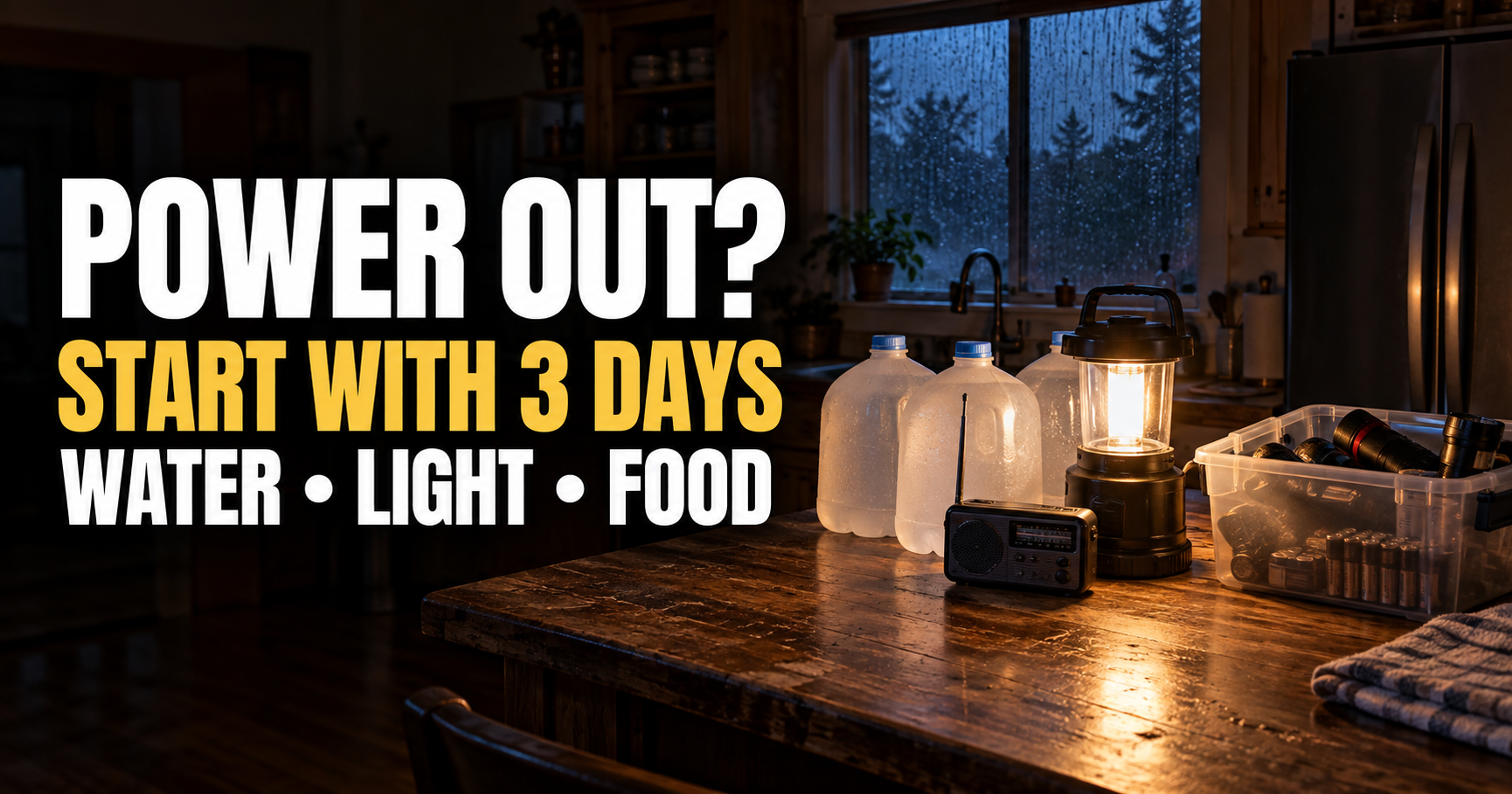
That’s why the first aid kit belongs alongside the rest of my long power-outage preparedness plan.
It’s not a separate type of preparedness.
It’s another layer of the same plan.
Storm Cleanup Is One of the Times I Especially Want It Close
This is something I think gets overlooked.
The storm itself may be over.
That doesn’t mean the danger is over.
Now people start moving branches.
Using chainsaws.
Climbing ladders.
Dragging debris.
Repairing fences.
Working around damaged buildings.
That’s exactly when cuts, punctures, eye injuries, sprains, and more serious accidents can happen.
I don’t leave the medical kit buried in the house while everyone is outside doing cleanup.
I want it accessible.
I Keep a Flashlight With or Near the Medical Supplies
Trying to examine an injury in a dark house is frustrating.
A flashlight gives me another simple layer.
It also means I’m not using one hand to hold my phone flashlight while trying to help someone with the other.
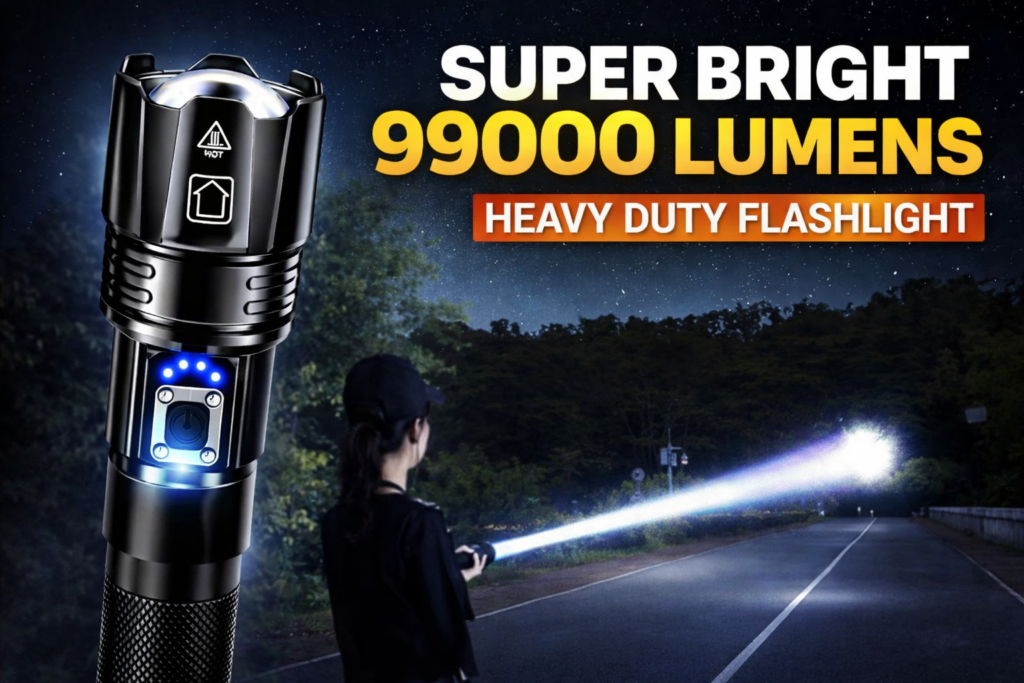
We’ve already covered the rechargeable flashlight I like for emergency use.
I don’t necessarily need that exact light inside the first aid bag, but dependable lighting needs to be part of the overall emergency setup.
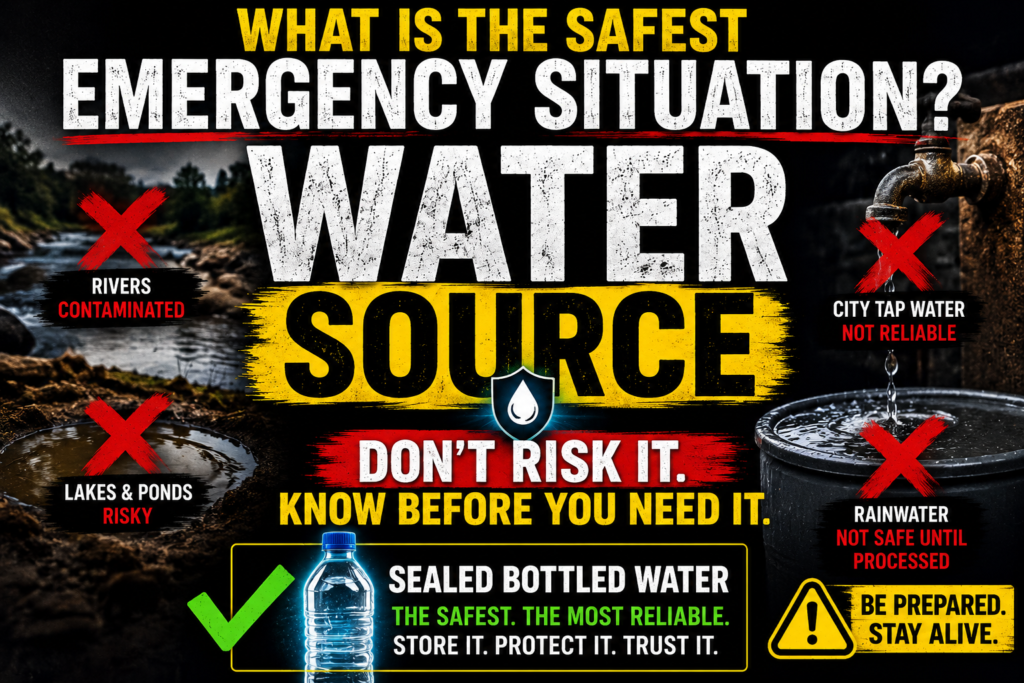
I Think About Clean Water Too
Wound care and sanitation become much more difficult if safe water isn’t available.
That’s another reason first aid doesn’t exist in isolation.
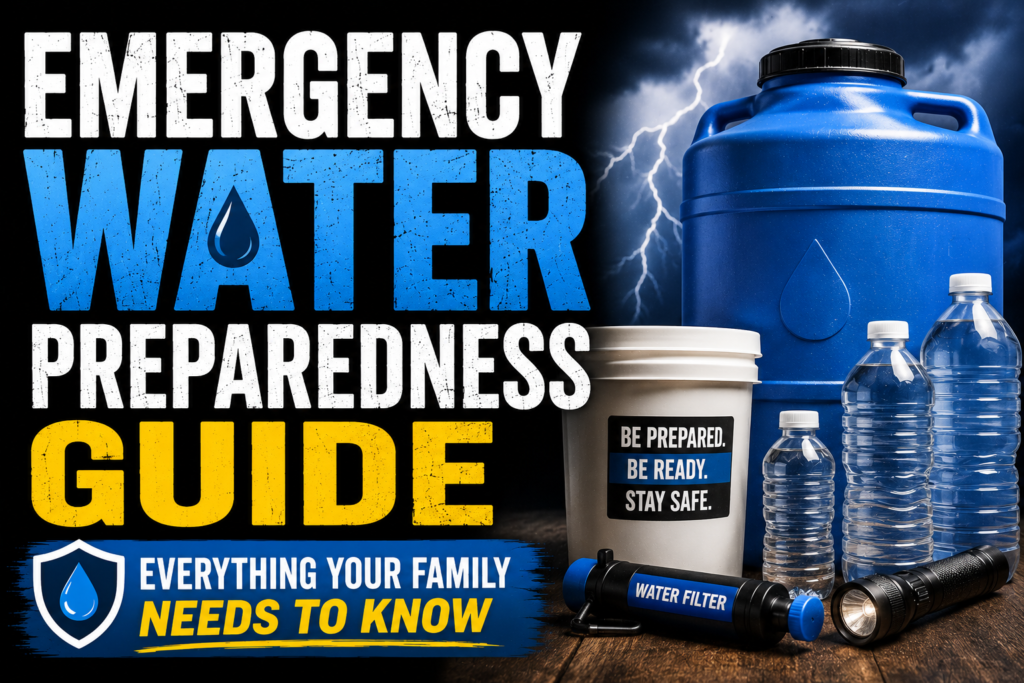
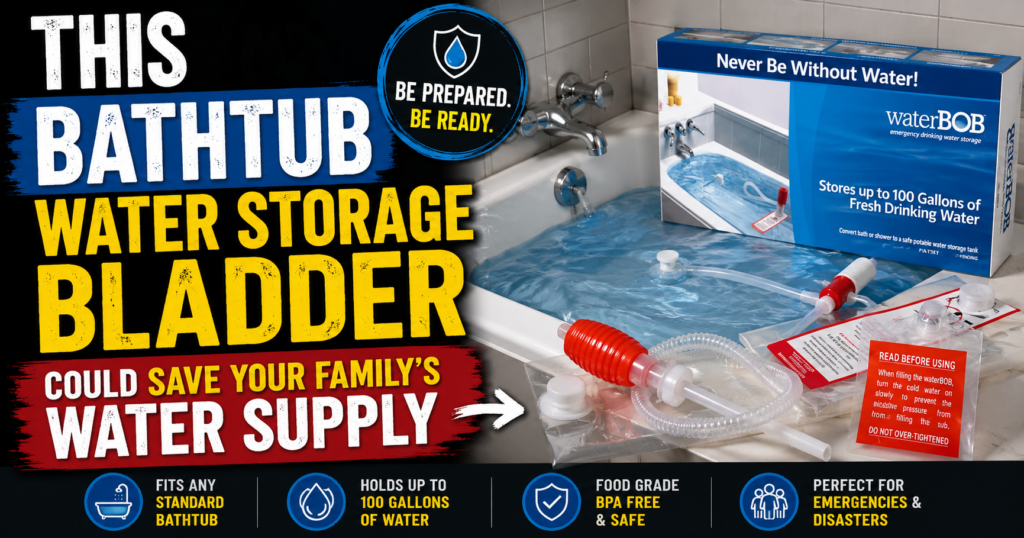
We’ve already built a complete emergency water preparedness guide covering stored water, purification, backup sources, and what happens when normal water service disappears.
If an emergency affects both medical care and water, I’m much better off having solved the water problem beforehand.
I Check Expiration Dates Instead of Forgetting the Kit for Five Years
This is where emergency supplies quietly become less dependable.
Someone buys a first aid kit.
It goes into a closet.
A few things get used.
Nobody replaces them.
Years pass.
Then the family finally needs the kit during an actual emergency.
I don’t want that.
I periodically open mine and check it.
I look for:
- Used supplies that were never replaced
- Expired products
- Damaged sterile packaging
- Dried-out or deteriorated adhesive products
- Missing gloves
- Dead batteries in any electronic equipment
- Personal medical supplies that need updating
The American Red Cross also recommends checking first aid kits regularly and replacing expired or used contents.
A kit isn’t really prepared if half of it disappeared three years ago.
I Replace Supplies as Soon as I Use Them
This is one habit that keeps the kit from slowly becoming useless.
If I use several gauze pads, I replace them.
If we use the last instant cold pack, I replace it.
If gloves get used, I restock them.
I don’t rely on remembering six months later.
When the immediate situation is over, restoring the kit is part of cleaning up afterward.
Some First Aid Supplies Last Longer Than Others
This is another reason I don’t assume the entire kit has one expiration date.
Different products age differently.
Medications deserve particular attention.
Sterile products need intact packaging.
Adhesives can deteriorate.
Certain medical products have manufacturer expiration dates.
Battery-powered equipment needs functioning batteries.
We’ll eventually answer what first aid supplies actually expire in its own article because it’s a useful question and deserves more than a blanket “replace everything every few years.”
I Don’t Throw Away Something Just Because the Bag Looks Old
On the other hand, I don’t automatically dump an entire first aid kit in the trash because I’ve owned it for several years.
I inspect the individual contents.
Some things may need replacement.
Others may still be perfectly usable.
The goal isn’t wasting supplies.
The goal is knowing what I can actually depend on.
I Keep Medications Separate Enough That I Can Manage Them
Medications introduce another issue.
I don’t want random loose pills rolling around the bottom of the first aid bag.
Anything kept for household use needs to be clearly identified, appropriately stored, and checked for expiration.
Personal prescription medications need even more attention.
Exactly what belongs in a family’s emergency medication plan depends on the people in the household and guidance from their healthcare professionals.
That’s not something a generic survival checklist can decide for everyone.
Kids Change What I Keep and How I Store It
A household with children needs to think about two things at the same time.
The medical supplies need to be accessible quickly to the adults.
Potentially dangerous contents need to be stored appropriately away from young children.
Those goals can coexist.
I don’t put the kit somewhere so inaccessible that nobody can reach it during an emergency, but I also don’t leave medications and medical tools where a small child can treat the bag like a toy box.
Pets Need Their Own Supplies Too
I don’t assume every human first aid supply is automatically appropriate for an animal.
If pets are part of the household emergency plan, I like having pet-specific information and supplies based on veterinary guidance.
That may eventually deserve its own article.
For this kit, the main thing is remembering that pets can get injured during storms, evacuations, and disasters too.
I Keep Emergency Numbers Somewhere Other Than My Phone
Phones fail.
Batteries die.
Screens break.
During a larger disaster, somebody else may need to make the call.
So I like having important numbers written down.
That can include household emergency contacts and other relevant medical information.
This takes almost no space and costs practically nothing.
It’s exactly the kind of boring preparation that becomes useful when technology isn’t cooperating.
I Don’t Let the First Aid Bag Turn Into a Survival Junk Drawer
This happens easily.
A flashlight gets thrown in.
Then some batteries.
Then a pocketknife.
Then matches.
Then random medications.
Then a snack.
Six months later, nobody can find the gauze.
I keep the medical kit focused on medical needs.
Other emergency equipment has its own place.
Organization matters because speed matters when somebody is hurt.
I Organize by What I Might Need Together
I don’t obsess over making the inside look pretty.
I organize it so it makes sense under stress.
Minor wound supplies can stay together.
Larger gauze and dressings together.
Gloves easy to grab.
Bleeding-control supplies immediately identifiable.
Cold packs together.
Personal medical items clearly marked.
That way I’m thinking:
What problem am I dealing with?
rather than:
Which of these 14 little zippered pockets did somebody put the gauze in?
I Practice Opening the Kit Before I Need It
This sounds almost ridiculous.
It isn’t.
Some organized medical kits have several compartments, removable sections, color coding, and different supply groups.
That’s useful only if I understand the layout.
When I first get a kit, I go through it.
I don’t need to memorize the location of every bandage.
But I should know where the important categories are.
Especially the supplies I might need quickly.
A First Aid Kit Doesn’t Turn My House Into an Emergency Room
This is an important boundary.
Preparedness isn’t about trying to perform advanced medical care at home because I bought a nice medical bag.
The kit is there to help with appropriate first aid, stabilize situations within my training, handle minor injuries, and help bridge the gap until professional medical care is available when it’s needed.
There are injuries where calling 911 or seeking emergency medical care is the correct response.
Having supplies doesn’t change that.
I Want to Know When an Injury Is Beyond Home First Aid
This is where the upcoming first aid cluster becomes especially useful.
It’s not enough to tell someone what supplies to buy.
We need to answer the real questions that happen after an injury.
How much bleeding is too much?
When should I use a tourniquet?
Does this cut need stitches?
How should I clean a wound?
When is a burn serious?
What do I do if help is delayed?
Those are the questions that turn a pile of supplies into useful preparedness knowledge.
What I Would Put in My Home Emergency First Aid Kit
If I were building one from scratch today, my starting categories would include:
- Assorted adhesive bandages
- Sterile gauze pads in several sizes
- Roller gauze
- Larger absorbent dressings
- Medical tape
- Multiple pairs of nonlatex gloves
- Appropriate antiseptic supplies
- Tweezers
- Good medical scissors
- Instant cold packs
- Thermometer
- Triangular bandages
- Emergency blanket
- Appropriate bleeding-control supplies
- Printed first aid instructions
- Household-specific medical supplies
- Current medication and emergency information
- Any additional medical equipment I’m properly trained to use
Then I compare that against the premade kit I’m considering.
That’s how I find the gaps.
I Don’t Need Every Medical Gadget Sold to Preppers
This is another place where it’s easy to overspend.
A medical product can look impressive without being useful to someone who doesn’t know when or how to use it.
I’d rather spend some of that money on legitimate first aid training.
The more advanced the equipment becomes, the more important that training becomes.
Preparedness gear should increase capability.
It shouldn’t create false confidence.
Training May Be the Most Important Thing Missing From My Kit
The bag can contain everything on my list and still have one major weakness.
Me.
If I don’t know what to do, the equipment can only help so much.
That’s why first aid, CPR, AED, and appropriate bleeding-control training are worth considering as part of the actual preparedness plan.
I can replace expired gauze.
Knowledge stays with me.
And unlike another piece of equipment, it doesn’t add weight to the emergency bag.
I Want This Kit Ready for an Ordinary Tuesday Too
This is something I like about first aid preparedness.
I don’t need a hurricane, earthquake, or grid failure to make the supplies useful.
Someone can get hurt doing yard work.
Cooking dinner.
Working in the garage.
Playing outside.
Cutting firewood.
Doing home repairs.
A good first aid kit earns its place even if the major disaster I’m preparing for never happens.
That’s exactly the kind of preparedness purchase I prefer.
The Goal Isn’t Owning More Medical Supplies
The goal is being more capable when somebody gets hurt.
That’s why I don’t obsess over whether my kit contains 132 pieces, 298 pieces, or 500 pieces.
I care about whether the useful things are there.
I care whether they’re still in good condition.
I care whether I can find them quickly.
And most importantly, I care whether I know what to do with them.
A well-built home emergency first aid kit gives me options.
Training tells me which option makes sense.
That’s the combination I want sitting in my house before anybody needs it.
About the Author
Grant Holloway writes about practical first aid, emergency medical preparedness, disaster readiness, and the supplies ordinary households can keep ready before professional help is available. His work for Survive Essentials focuses on realistic household preparedness, understanding the purpose behind emergency gear, and building useful systems rather than collecting equipment simply because it appears on a survival checklist.