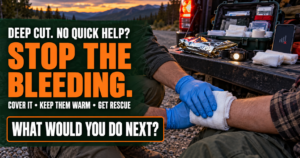
A deep cut is one of those injuries where being prepared can buy me time, but it doesn’t turn my house into an emergency room.
That’s an important distinction.
If a bad storm has trees across the road, we’re snowed in, emergency services are overwhelmed, or another disaster temporarily makes medical care harder to reach, I want to know how to handle the first few minutes and hours correctly.
But I don’t use the situation as an excuse to convince myself a serious wound suddenly doesn’t need professional care.
My goal is straightforward:
Control dangerous bleeding. Protect the wound. Avoid making it worse. Keep watching the injured person. Get professional medical help as soon as I reasonably can.

First, I Decide Whether This Is Already a 911 Emergency
A “deep cut” can mean very different things.
Maybe the skin is split open but bleeding is controlled.
Or maybe blood is flowing continuously, spurting, or accumulating quickly.
Those aren’t the same situation.
The American Red Cross considers continuous or spurting blood and substantial blood loss signs of potentially life-threatening bleeding.
If I’m looking at that kind of bleeding, I’m not starting with wound cleaning.
I’m starting with bleeding control and emergency help.
I Call for Help Even If I Think It Will Be Delayed
Blocked roads or overwhelmed emergency services don’t mean I simply don’t call.
If the injury is serious, I still contact 911 or the appropriate emergency service.
They may know which roads are open.
They may have resources I don’t know about.
A dispatcher can also give instructions based on the actual situation.
The Red Cross recommends activating emergency medical services for life-threatening bleeding and other obvious life-threatening conditions.
Preparedness helps me manage the gap.
It doesn’t mean I voluntarily create a bigger gap.

Bleeding Control Comes Before Cleaning
This is probably the most important thing I want clear.
If the wound is bleeding heavily, I don’t stand at the sink trying to wash dirt out of it.
I control the bleeding.
Mayo Clinic recommends firm direct pressure with sterile gauze or a clean cloth for severe bleeding and specifically says not to spend time trying to clean a severely bleeding wound.
That priority makes sense.
Blood loss can become dangerous much faster than an ordinary dirty wound becomes infected.
I Use Firm Direct Pressure
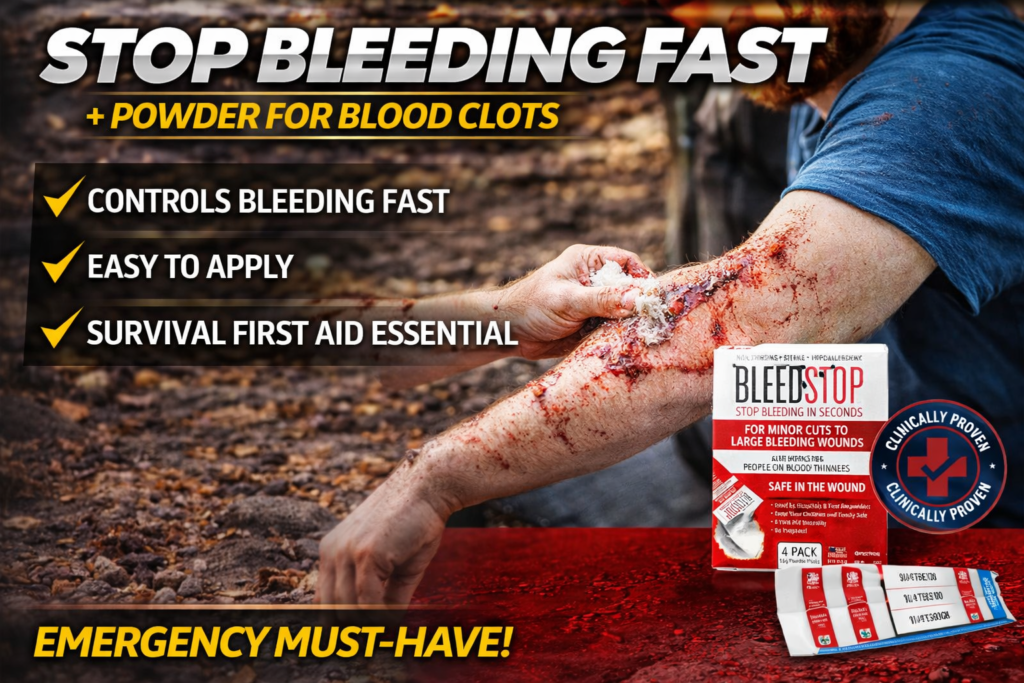
For serious external bleeding, I find the source and apply firm, steady pressure with an appropriate dressing.
The Red Cross recommends placing a dressing over the wound and applying steady, firm pressure directly over the bleeding site.
I don’t press for 20 seconds and lift everything to see whether it worked.
I maintain effective pressure.
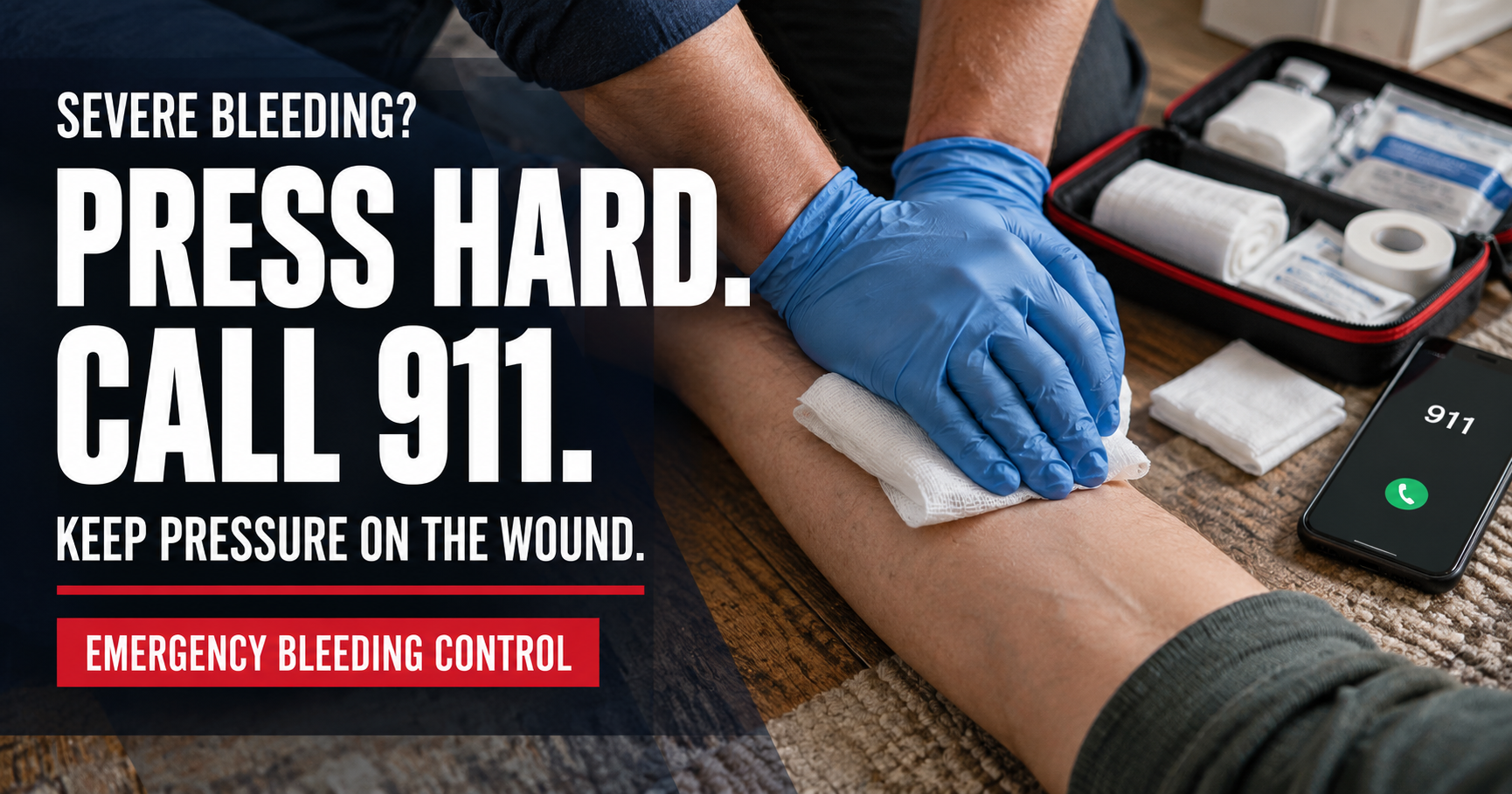
That’s something we’ve covered much more thoroughly in how I stop heavy bleeding during an emergency.
If It’s Life-Threatening Arm or Leg Bleeding, the Plan Changes
For life-threatening bleeding from an arm or leg, a properly used commercial tourniquet may be appropriate for someone trained to use it.
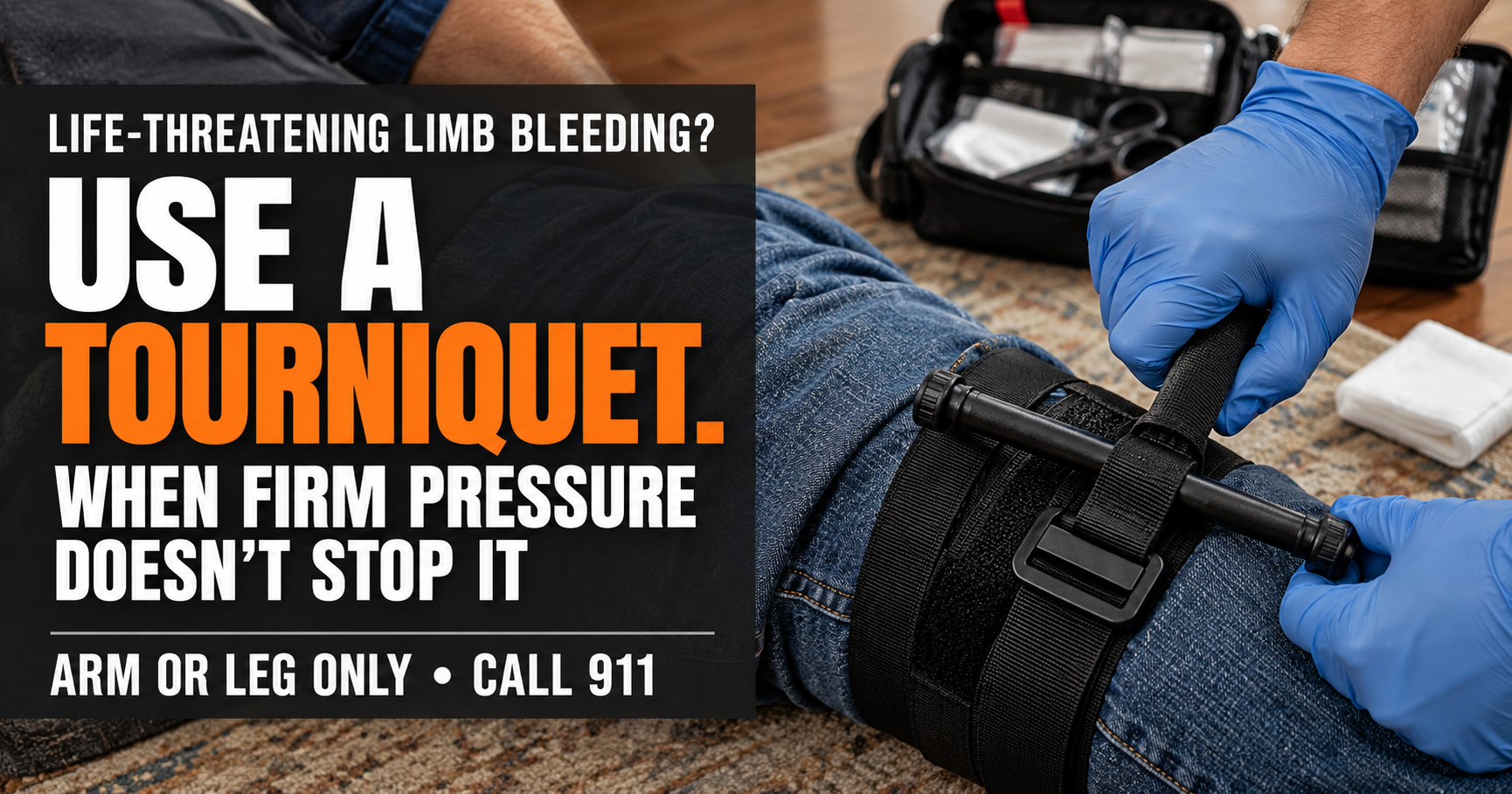
We’ve already built a dedicated guide explaining when I would use a tourniquet during an emergency.
I don’t repeat that entire process here.
The important point is that a deep cut with catastrophic extremity bleeding isn’t merely a wound-care problem.
It’s a life-threatening bleeding emergency.
I Don’t Remove a Deeply Embedded Object
Suppose the injury happened while clearing storm debris and a large piece of metal, glass, or wood is still deeply embedded.
I don’t pull it out.
The Red Cross specifically warns that removing an embedded object can make bleeding substantially worse. Its guidance is to apply pressure around the object, stabilize it with dressings, and seek medical care.
This is one of those situations where the natural reaction can be exactly the wrong reaction.
I don’t need the wound to look tidy.
I need the injured person to remain as stable as possible.
I Don’t Probe the Wound
If I can’t see how deep the cut goes, I don’t stick my fingers, tweezers, or anything else inside to investigate.
Mayo Clinic specifically advises against probing severe wounds.
If I can see fat, muscle, tendon, bone, or another deeper structure, I’ve already learned enough.
It’s deep.
I don’t need to explore further.
Once Dangerous Bleeding Is Controlled, I Reassess
Now I look at the whole situation.
Where is the cut?
How deep does it appear?
Are the edges gaping?
Can the person normally move the injured area?
Is there numbness?
Could something still be inside?
Was the wound caused by a dirty object, bite, puncture, machinery, or broken glass?
Those details help me understand how urgently I need professional evaluation.
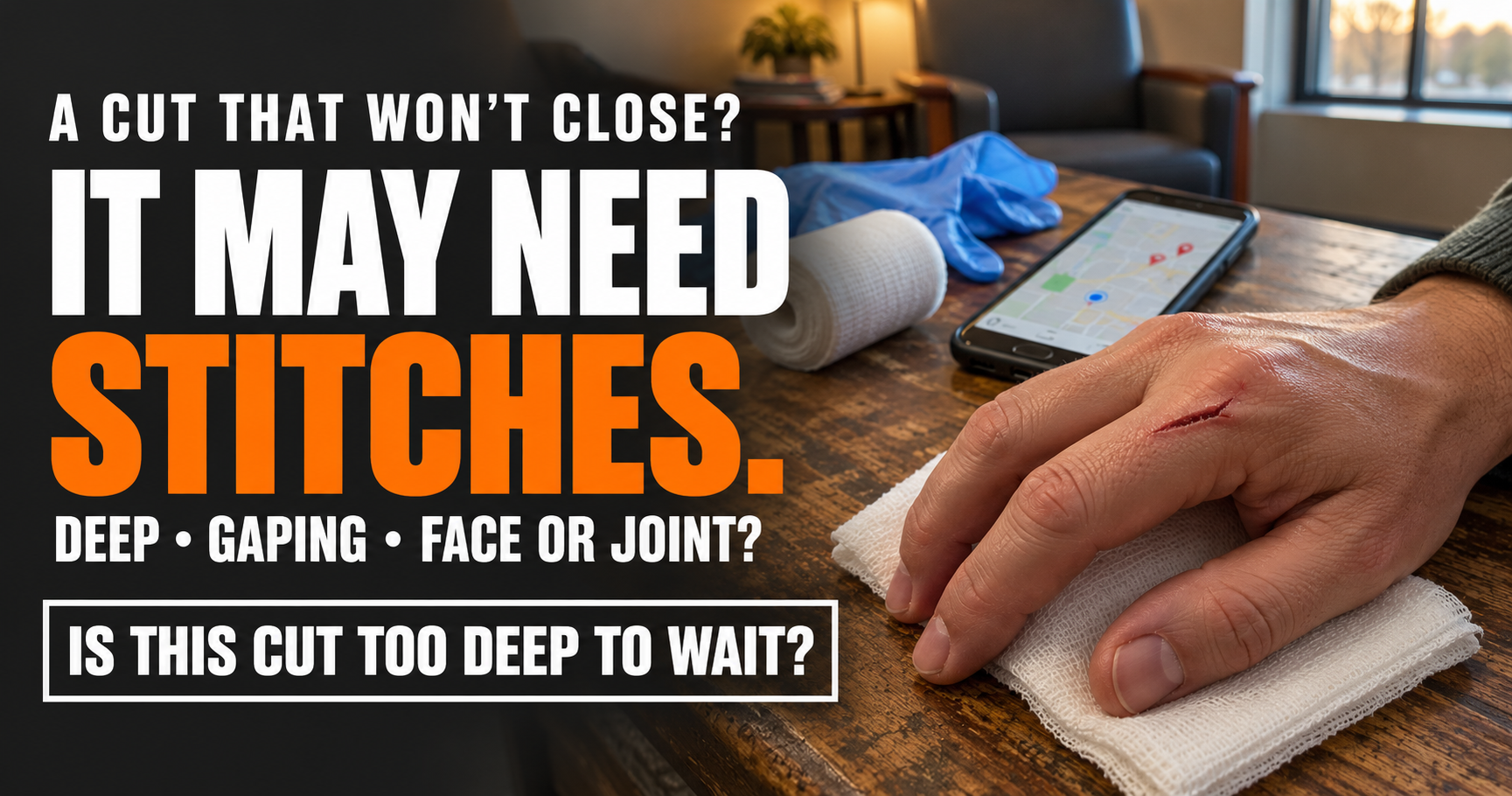
Our article on how I know whether a cut may need stitches goes deeper into those warning signs.
I Don’t Force a Deep Wound Closed Just Because Help Is Delayed
This is where I think survival advice can become dangerous.
Someone can’t reach urgent care immediately, so they decide the logical answer is sewing or gluing the wound shut themselves.
That’s not my plan.
A deep wound may contain contamination or foreign material.
There may be damage underneath the skin.
The appropriate closure method may depend on location, depth, contamination, and how long ago the injury occurred.
I don’t turn delayed medical access into DIY surgery.
A Suture Kit Doesn’t Change My Training
Owning medical-looking equipment doesn’t give me medical training.
I can buy all kinds of things online.
That doesn’t mean I know when they’re appropriate or how to use them safely.
My first aid supplies exist to help me stabilize and protect the injured person while proper care is unavailable.
They’re not there to convince me I’m suddenly qualified to perform procedures I wouldn’t normally perform.
If Bleeding Is Controlled and Cleaning Is Appropriate, I Use Clean Water
For a wound that’s appropriate to irrigate after immediate bleeding concerns have been handled, clean running water is extremely useful.
Mayo Clinic recommends rinsing ordinary cuts with water and cleaning around the wound with soap, while avoiding hydrogen peroxide and iodine in the wound because they can irritate tissue.
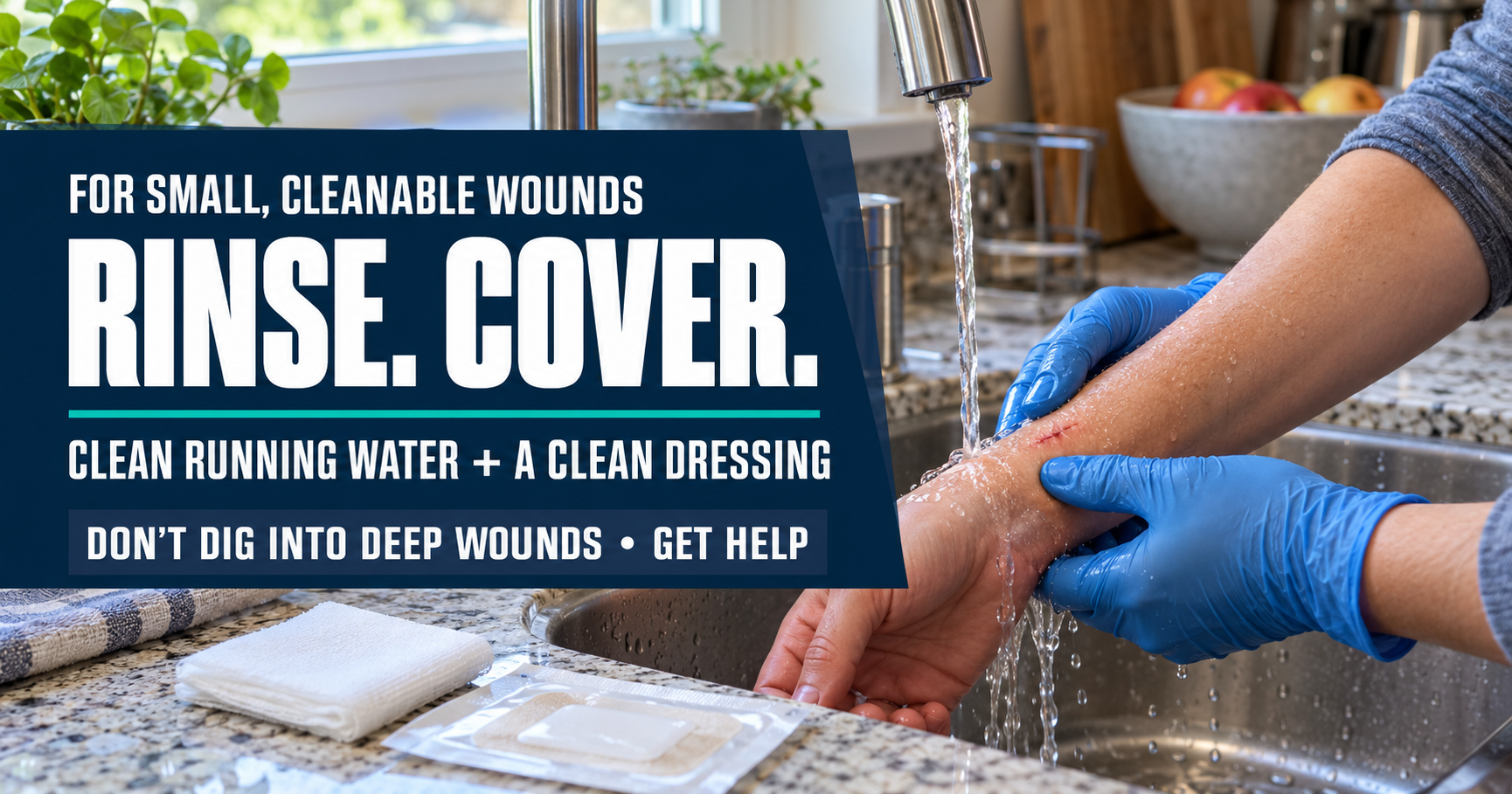
We’ve already gone much deeper into this in how I clean a wound during an emergency.
I don’t need to make wound cleaning complicated just because the overall situation is stressful.
I Don’t Use Dirty Water Because It’s All I Can See
This becomes especially important after floods and severe storms.
A creek, puddle, rain barrel, or floodwater may look clear.
That doesn’t make it appropriate for an open wound.
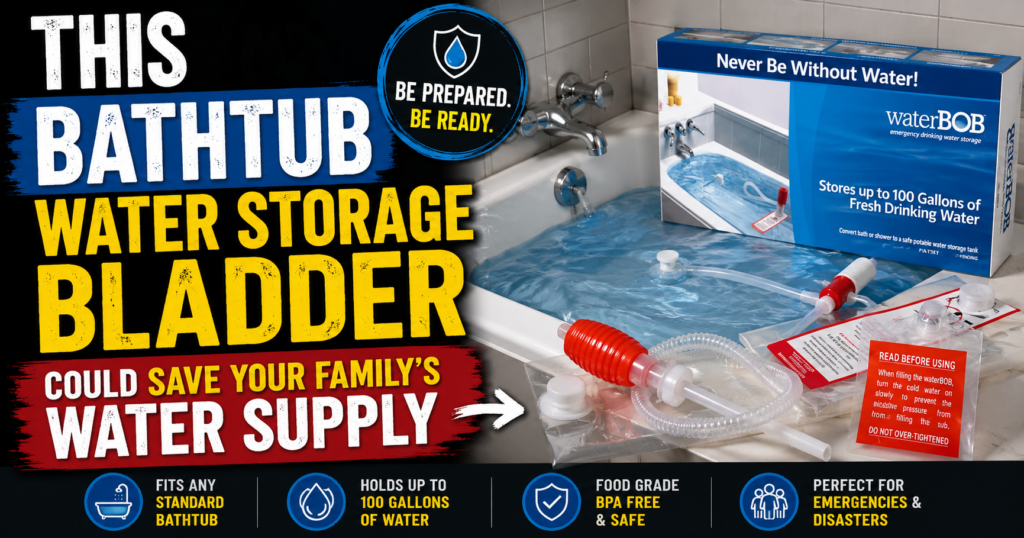
If normal running water isn’t available, this is another reason having clean stored emergency water matters.
Our emergency water preparedness guide isn’t only about thirst.
Clean water can support cooking, hygiene, sanitation, and appropriate first aid too.
I Remove Only Debris I Can Safely Remove
For an appropriate wound, loose superficial debris that rinses away is one thing.
Material that’s deeply embedded is another.
Mayo Clinic recommends medical care when dirt or debris can’t be removed from a wound.
I don’t start digging.
If it won’t come out easily with appropriate irrigation or superficial removal, I leave the deeper problem for someone qualified to handle it.
I Protect the Wound After It’s Cleaned
Once an appropriate wound has been cleaned and bleeding is controlled, I cover it with an appropriate clean dressing.
Mayo Clinic recommends covering ordinary cuts with a bandage, rolled gauze, or gauze secured with tape and changing the covering at least daily or whenever it becomes wet or dirty.
With a deeper wound that still needs professional evaluation, I’m thinking less about making it pretty and more about protecting it from further contamination while I work on getting the person to care.
I Don’t Wrap It So Tight That I Create Another Problem
A dressing needs to stay in place.
That doesn’t mean I crank a bandage around an arm or leg until the hand or foot becomes numb, cold, pale, or blue.
When the Red Cross discusses securing dressings after bleeding has stopped, it also recommends checking circulation beyond the injury.
If circulation looks impaired, that’s a problem.
I want the wound protected without unnecessarily compromising blood flow.
I Keep Extra Dressings Available
A deep wound may need more than one dressing before professional care becomes available.
Maybe the first becomes wet.
Maybe it gets dirty.
Maybe the delay lasts overnight.
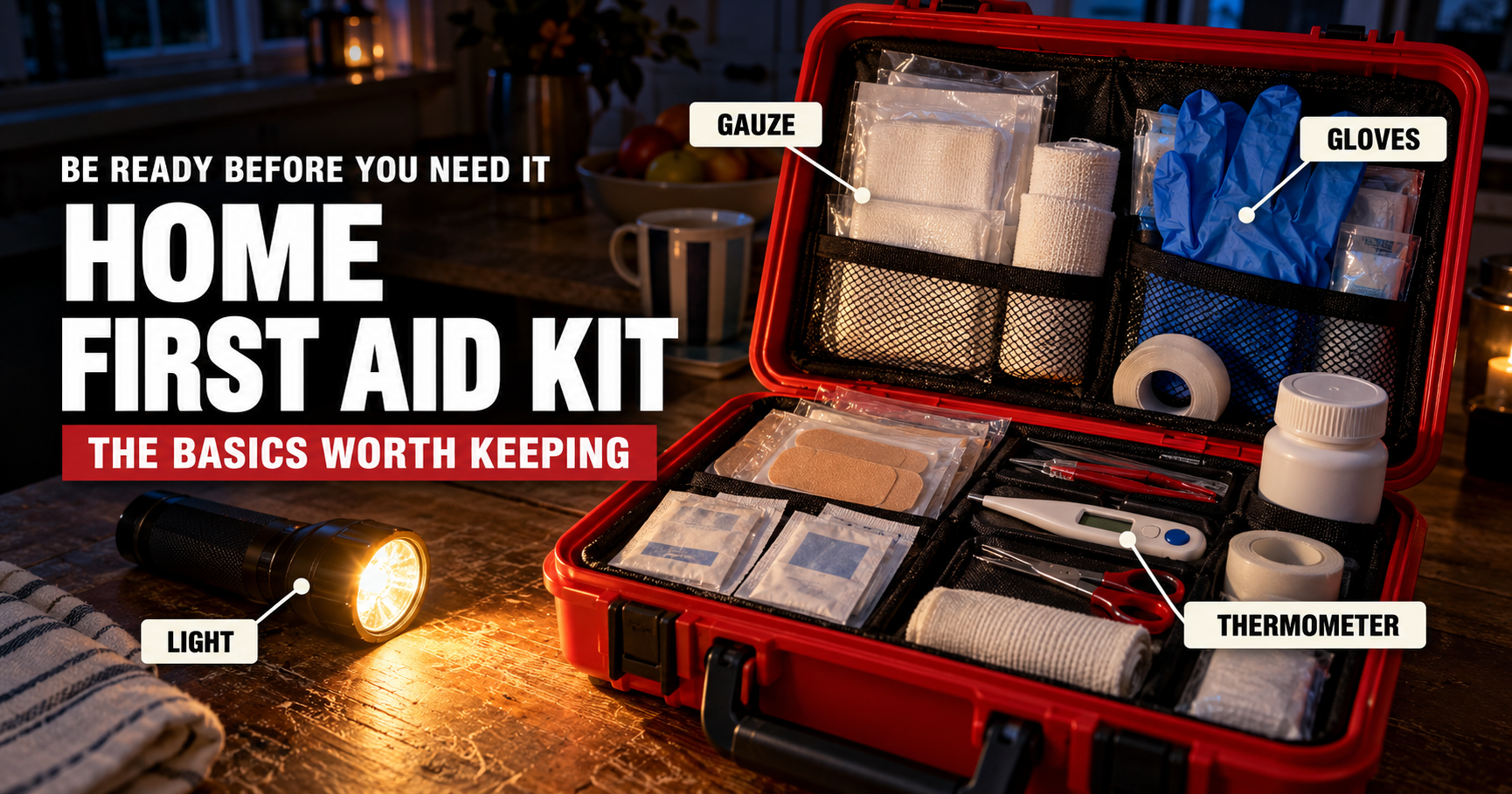
This is exactly why I wanted more than a handful of tiny bandages when we built the home emergency first aid kit.
Gauze and dressings are boring right up until someone actually needs them.
Then I want plenty.
I Don’t Keep Taking the Dressing Off to Look
Once the wound is protected, I don’t disturb it every 15 minutes because I’m curious.
If there’s a reason to change the dressing, that’s different.
But repeatedly uncovering and handling a wound isn’t helping.
I monitor the person and the dressing without constantly interfering with the wound itself.
A Deep Puncture Makes Me More Cautious
Some of the wounds that concern me most don’t look dramatic.
A nail can create a tiny opening and still drive contamination deep into tissue.
Mayo Clinic notes that puncture wounds often don’t bleed much despite being deep and recommends immediate medical attention for several higher-risk situations, including deep dirty wounds, certain metal-object injuries, bites, deep wounds in critical locations, and potentially deep wounds over joints.
So “not bleeding much” doesn’t automatically mean “not serious.”
Hand and Foot Wounds Get My Attention
There are a lot of important structures packed into hands and feet.
If a deep cut affects normal movement or sensation, I don’t treat that as something a bandage can solve.
Numbness, tingling, weakness, or loss of normal movement can suggest deeper injury.
That’s another reason professional evaluation remains the goal even if circumstances temporarily delay it.
Bites Are Not Wounds I Casually Manage for Days
Animal and human bites introduce their own infection concerns.
An animal bite may also raise rabies questions depending on the animal and circumstances.
Mayo Clinic recommends immediate medical attention for puncture wounds caused by animal or human bites.
If the roads are temporarily blocked, I still contact medical professionals as soon as possible and explain exactly what happened.
I Think About Tetanus Too
Deep and dirty wounds can change tetanus recommendations.
Mayo Clinic advises medical evaluation regarding tetanus vaccination when a deep or dirty wound occurs and the person’s last tetanus shot was more than five years ago.
That’s another reason I like knowing basic vaccination information before an emergency.
Trying to remember whether the last booster was four years ago or fourteen years ago isn’t something I want to do while dealing with a serious injury.
I Watch the Whole Person, Not Just the Cut
This matters especially after significant blood loss.
Someone may become pale.
Cold.
Dizzy.
Weak.
Confused.
Very thirsty.
Less responsive.
Those can be signs of shock.
The Red Cross describes shock as a life-threatening condition caused by inadequate oxygen-rich blood flow and lists signs including rapid weak heartbeat, rapid breathing, pale or cool moist skin, altered responsiveness, and excessive thirst.
If I’m seeing those changes, this isn’t simply a wound-care problem anymore.
I Keep Them From Getting Too Cold
The Red Cross recommends protecting someone with life-threatening bleeding from becoming too cold or overheated while waiting for EMS.
That’s why something as simple as an emergency blanket belongs with the first aid supplies.
If we’re already dealing with a winter storm, power outage, or outdoor accident, environmental exposure can make an already serious situation worse.
I Don’t Give Food or Drink to Someone With a Serious Injury
If the injury is serious enough that emergency treatment may be needed, I don’t start feeding the person while we’re waiting.
The Red Cross specifically advises against giving food or drink when life-threatening internal bleeding is suspected, and I follow dispatcher or medical-professional instructions for seriously injured people rather than improvising.
Someone being thirsty doesn’t automatically mean giving them a drink is the right move.
I Keep Trying to Solve the Access Problem
This is what makes this article different from ordinary wound care.
Maybe I genuinely can’t reach the hospital right this second.
That doesn’t mean I settle in for three days of home treatment.
I keep looking for the safest realistic path to care.
Has the road reopened?
Can EMS reach us from another direction?
Is there another medical facility accessible?
Can emergency management help?
Has the weather improved enough to travel safely?
I don’t stop asking those questions simply because the wound is bandaged.
I Don’t Let “No Help Right Now” Turn Into “No Help Needed”
This is the line I keep coming back to.
There’s a big difference between:
I can’t reach medical care right now.
and:
I don’t need medical care.
A blocked road doesn’t make a damaged tendon repair itself.
A power outage doesn’t make a contaminated puncture less likely to cause trouble.
A snowstorm doesn’t make a deep, gaping wound suddenly appropriate for home closure.
My first aid supplies are buying me time.
I use that time to protect the injured person while continuing to work toward professional care.
I Keep Track of What Happened
If care is delayed for several hours, I make a few notes.
Nothing elaborate.
I want to remember:
- Approximately when the injury happened
- How it happened
- How severe the initial bleeding was
- What I used to control the bleeding
- Whether a tourniquet was used and when
- How the wound was contaminated
- How it was cleaned
- Any loss of movement or sensation
- Changes in pain, swelling, or appearance
- Relevant medications, allergies, or medical conditions if known
When we eventually reach professional care, that’s much more useful than trying to reconstruct everything from memory.
I Watch for Bleeding Starting Again
A wound that stopped bleeding can begin again if the injured area gets moved, bumped, or disturbed.
That’s another reason I don’t encourage unnecessary activity.
If significant bleeding resumes, I go back to bleeding control.
For life-threatening bleeding, that means treating it as the emergency it is rather than simply adding another loose bandage.
Our heavy bleeding guide covers that process in much more detail.
I Watch for Increasing Swelling
Some swelling around an injury isn’t surprising.
Rapidly increasing or severe swelling concerns me more, especially when it comes with worsening pain, numbness, loss of normal movement, changes in skin color, or circulation problems farther down the limb.
Those are not things I try to solve by tightening the bandage.
They make professional evaluation more important.
I Check Beyond a Bandaged Arm or Leg
If I’ve wrapped an injured arm or leg, I pay attention to what the hand, fingers, foot, or toes look and feel like beyond the dressing.
Are they becoming unusually pale or blue?
Cold?
Numb?
Tingly?
Is normal movement changing?
A dressing needs to protect the wound.
It shouldn’t create a circulation problem of its own.

I Watch Closely for Infection
If professional care is delayed, this becomes increasingly important.
I don’t expect a wound to look exactly the same every hour.
But certain changes concern me.
Increasing redness.
Increasing warmth.
Swelling.
Worsening pain.
Pus or foul-smelling drainage.
Fever.
Redness spreading farther away from the wound.
Those are reasons I want medical care rather than continuing to treat the injury as routine home first aid.
I Don’t Wait for an Infection to Become Terrible
This is especially important during an emergency.
It’s tempting to think:
Maybe it’ll look better tomorrow.
Sometimes waiting is reasonable for a minor injury that’s clearly improving.
A deep wound showing worsening signs is different.
If access to medical care has become possible, I don’t delay simply because we’ve already managed the wound at home for a day.
The fact that we got through the first night doesn’t mean the danger is over.
Red Streaking Gets My Attention
If redness appears to be spreading away from the wound, especially along with fever, increasing pain, swelling, or illness, I want prompt medical evaluation.
I don’t mark that down as a normal part of healing and wait several more days.
This is another reason I inspect a significant wound instead of covering it and completely forgetting about it.
Fever Changes My Plan
A fever developing after a significant wound is another warning sign.
Now I’m thinking beyond the local injury.
If the person is becoming generally ill along with worsening wound symptoms, I work harder to get medical care.
A first aid kit isn’t going to solve a spreading infection.
I Don’t Start Random Leftover Antibiotics
This is one emergency shortcut I avoid.
Maybe there’s an unfinished antibiotic prescription sitting in a cabinet.
That doesn’t mean it’s the correct medication for this wound, the correct dose, the correct duration, or appropriate for the injured person.
I don’t turn delayed access to a doctor into permission to prescribe medication myself.
If infection is suspected, I want qualified medical guidance.
I Keep the Wound as Clean and Protected as Practical
If we’re waiting longer than expected for care, I focus on the things I can reasonably control.
Clean hands before wound care.
Gloves when appropriate.
Clean dressings.
Protection from dirt.
Keeping the dressing dry when practical.
Appropriate dressing changes.
Avoiding unnecessary handling.
Those aren’t dramatic survival techniques.
They’re useful.
I Don’t Soak a Deep Wound
I don’t put a significant open wound into a bathtub, creek, pond, swimming pool, hot tub, or other body of water.
Keeping it protected from questionable water becomes even more important when professional care is delayed.
This is particularly true during flooding, when water may contain sewage, chemicals, and other contamination.
Showering and Wound Care Aren’t Automatically the Same for Every Injury
Whether and when a particular wound can get wet depends on the wound and how it’s being treated.
If a clinician hasn’t evaluated it yet, I don’t assume prolonged soaking is harmless.
Once professional care becomes available, I follow the specific wound-care instructions I’m given rather than a generic rule from another injury.
I Protect the Wound During Necessary Movement
Maybe staying completely still isn’t realistic.
Perhaps we need to evacuate.
Maybe we’re moving to a neighbor’s house.
Maybe the injured person has to be transported over rough roads.
I secure the dressing appropriately and try to protect the injured area from unnecessary movement or impact.
For an injured arm or leg where a fracture or deeper injury is also possible, I become even more cautious about movement.
Deep Cuts Can Hide More Than Skin Damage
This is why I keep repeating that a deep cut isn’t merely a closure problem.
Underneath the skin are nerves, tendons, muscles, blood vessels, joints, and other structures.
A wound can look fairly calm after the bleeding stops while still involving deeper damage.
Loss of normal movement or sensation is especially important information.
I don’t assume that because the skin eventually heals, everything underneath it will too.
A Deep Hand Cut Makes Me Particularly Cautious
Hands are complicated and important.
If someone has a deep cut on the hand and suddenly can’t normally move a finger, has numbness, or has another obvious change in function, that’s not something I’d casually watch for several days.
Even if roads are temporarily blocked, professional evaluation remains a priority as soon as we can safely reach it.
The Same Goes for Wounds Over Joints
A deep wound over a knee, elbow, knuckle, ankle, or another joint deserves extra attention.
Movement can repeatedly pull the wound open.
There may also be deeper structures involved.
If the wound is deep enough that I’m already worried about it, its location over a joint gives me another reason not to rely entirely on home care.
I Don’t Try to Close a Dirty Wound Just to Make It Look Better
A wound can look much neater when the edges are pulled together.
That doesn’t mean closing it is the right thing to do.
If contamination remains inside, trapping it underneath closed skin can create another problem.
That’s why wound cleaning, contamination, injury age, location, and underlying damage all matter when a professional decides how to manage a wound.
I don’t make that decision based on appearance alone.
I Don’t Keep Reopening It Either
At the other extreme, I don’t constantly manipulate a wound that’s already protected.
I don’t pull the edges apart to see how deep it is.
I don’t repeatedly probe it.
I don’t remove material that appears deeply embedded.
My goal while care is delayed is stability and protection, not investigation.
I Keep the Person Hydrated Normally Unless the Injury Is Serious Enough That EMS Says Otherwise
For an ordinary stable injury, normal hydration needs don’t disappear.
But when someone has a serious injury, significant blood loss, altered responsiveness, or may require emergency treatment, I follow the instructions from emergency dispatchers or medical professionals about food and drink.
I don’t use one blanket rule for every cut.
The person’s overall condition matters.
Pain Is Information
I expect a deep cut to hurt.
What interests me is how that pain changes.
Is it gradually settling?
Or is it becoming dramatically worse?
Does movement cause unexpected severe pain?
Is pain increasing along with redness, swelling, warmth, drainage, or fever?
Worsening pain can tell me the situation is changing.
I don’t simply keep masking it and stop paying attention.
I Don’t Exceed Medication Directions Trying to Control Pain
If an over-the-counter medication is appropriate for the person, I follow its labeled directions and consider their existing medications and medical conditions.
I don’t double doses because the injury hurts badly.
And severe pain that can’t reasonably be controlled is another reason I want medical evaluation rather than simply stronger home treatment.
I Prepare for the Possibility We Need to Leave Quickly
If weather or another disaster is what delayed care, conditions can change.
A road may open.
Emergency responders may finally become available.
A neighbor with appropriate transportation may reach us.
I don’t want to spend 45 minutes finding shoes, medication lists, identification, and the first aid supplies when that opportunity appears.
If the injury is significant, I keep what we need reasonably ready to go.
I Bring Relevant Information With Us
When we finally reach care, I want to be able to explain the situation clearly.
How long ago did the injury happen?
What caused it?
Was it exposed to soil, floodwater, animal saliva, rusty farm equipment, broken glass, or something else?
How was the bleeding controlled?
Was a tourniquet used?
How was the wound cleaned?
Did movement or sensation change?
When was the last tetanus vaccination, if known?
Did fever, swelling, drainage, or increasing pain develop?
Those details can help the medical team understand what happened during the delay.
I Bring Medication and Allergy Information Too
If the injured person takes medications or has important allergies, I want that information available.
This is exactly why we included basic medical information when building the home emergency first aid kit.
During a normal day, somebody can probably pull up a medical portal or call another family member.
During a widespread outage, I don’t assume that will be easy.
The First Aid Kit Needs Enough Supplies to Bridge the Delay
This is where the contents of the kit start making sense.
Extra gauze.
Gloves.
Tape.
Dressings.
Clean water or saline access.
Emergency blanket.
Bleeding-control supplies.
A printed first aid reference.
None of that turns me into a clinician.
It simply gives me the ability to handle the first stage of the emergency more effectively.
That’s exactly what I want preparedness equipment to do.
I Restock Everything Afterward
Once the situation is over, I don’t throw the half-empty medical kit back into the closet.
I replace what we used.
Gauze.
Gloves.
Dressings.
Tape.
Bleeding-control supplies.
Anything damaged or contaminated.
The next emergency shouldn’t start with me discovering that the last one emptied the kit.
I Also Think About Why Help Was Hard to Reach
This is where a medical emergency can teach me something about the rest of my preparedness plan.
Was communication the problem?
Transportation?
Blocked roads?
Weather?
No backup power?
No clean water?
Did nobody know where the first aid kit was?
Was important medical information unavailable?
Those aren’t strictly medical problems.
They’re preparedness problems.
And I can improve them before the next emergency.
Sometimes the Best Medical Supply Is Better Communication
If I can contact 911, a healthcare provider, emergency management, or another source of qualified help, I may be able to make better decisions while physically isolated.
That’s one reason emergency communications will eventually become its own cluster on Survive Essentials.
Medical supplies help.
Information helps too.
I Don’t Want to Be Completely Dependent on the Internet
If the electricity and cellular network are both having problems, I don’t want every bit of first aid information to exist on a website I can’t reach.
That’s why I like having a legitimate printed first aid reference in the kit.
I also value actual training.
Skills don’t lose signal.
Training Makes Delayed Help Much Less Frightening
I can’t control whether a storm knocks trees across every road around me.
I can control whether I’ve learned basic first aid beforehand.
Bleeding control.
CPR.
AED use.
Recognizing shock.
Basic wound care.
Those skills don’t replace professional medical treatment.
They make me more useful while I’m waiting for it.
That’s a major difference.
What I Would Actually Do With a Deep Cut While Help Is Delayed
I don’t want a complicated 50-step procedure in my head.
My basic approach is:
- Make sure the scene is safe.
- Call for professional help when the injury warrants it, even if response may be delayed.
- Control serious bleeding first.
- Use appropriate bleeding-control methods I’m trained to perform.
- Don’t remove deeply embedded objects.
- Don’t probe the wound.
- Once bleeding is controlled, clean an appropriate wound with suitable clean water or saline.
- Protect it with clean dressings.
- Avoid trying to perform DIY suturing or other procedures beyond my training.
- Monitor movement, sensation, circulation, pain, swelling, bleeding, and signs of infection.
- Keep the person protected from environmental extremes.
- Keep trying to reach appropriate medical care.
That’s realistic.
And it’s something I can actually remember when I’m stressed.
Being Prepared Doesn’t Mean Treating Everything at Home
I think this is one of the most important ideas in the entire first-aid cluster.
Self-reliance isn’t refusing help.
It’s being capable when help isn’t immediately standing beside me.
A good first aid kit can give me supplies.
Training can give me skills.
Stored water can give me a way to handle appropriate wound cleaning when utilities fail.
Emergency communication can help me reach people who know more than I do.
But a deep wound can still need professional care.
My job is to keep the situation from getting worse while that care is delayed.
If I can control the bleeding, protect the wound, recognize dangerous changes, avoid doing something that causes more damage, and safely get the person to appropriate care when access returns, then the preparedness plan did exactly what I needed it to do.
About the Author
Grant Holloway writes about practical first aid, wound care, bleeding control, emergency medical preparedness, and handling the critical period before professional help becomes available. His work for Survive Essentials focuses on realistic household preparedness, useful first-aid skills, and understanding how to stabilize an emergency without mistaking preparedness for a replacement for professional medical care.