The biggest mistake I could make with emergency communication is buying one device and assuming I’m covered.
A phone is incredibly useful.
Until the battery dies.
A walkie talkie is useful.
Until the other person is out of range.
A weather radio is useful.
But it can’t call my family.
Ham radio can do things the others can’t.
But only if someone actually knows how to use it.
That’s why I don’t think about emergency communication as choosing the one best device.
I think about layers.
Each device should solve a different problem.
And if one layer fails, I want another one behind it.
My Phone Is Still the First Communication Device I Use
I’m not starting with radios just because this is a preparedness site.
If cellular service works, I’m using my phone.
It gives me:
Voice calls.
Text messaging.
Maps.
Weather alerts.
Internet access.
Emergency notifications.
Location information.
Photos.
Contact lists.
That’s an incredible amount of capability in one small device.
The problem isn’t that phones are bad emergency tools.
The problem is that they’re so useful that it’s easy to become completely dependent on them.
A Backup Phone Battery Comes Next
A phone with no battery isn’t much of a communication device.
That’s why one of the simplest emergency upgrades is backup power.
A charged power bank can keep a phone working much longer during:
Power outages.
Evacuations.
Road emergencies.
Extended storms.
Travel delays.
I don’t need a complicated radio setup before handling something this basic.
Keep the phone alive first.


Text Messaging Is Worth Trying When Calls Don’t Work Well
If cellular networks are overloaded, I may still try sending a short text.
Something simple:
We’re safe.
At Grandma’s house.
Heading home.
Meet at our backup location.
That conveys what matters without requiring a long conversation.
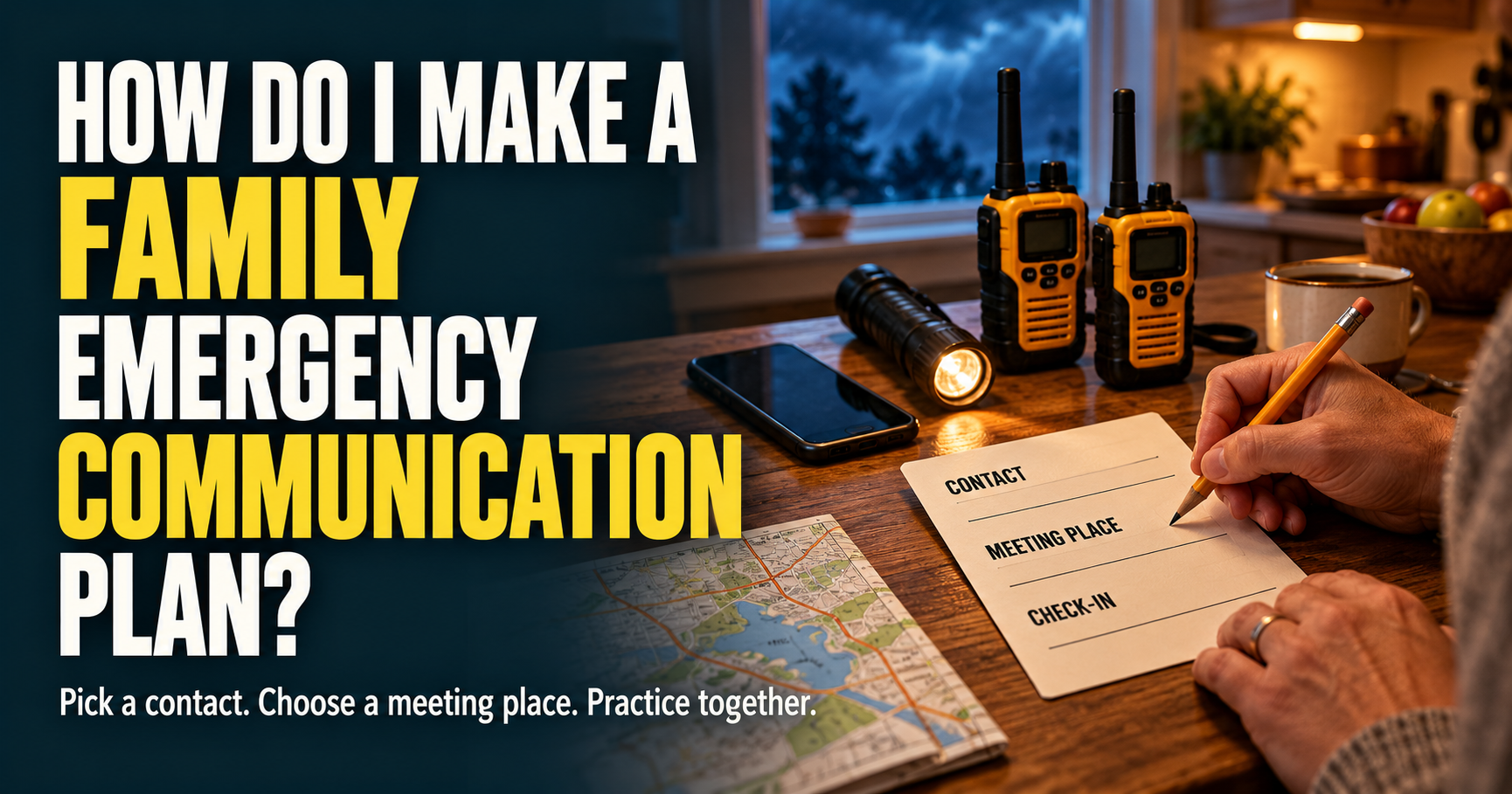
This is also why our family emergency communication plan is so important.
Everyone already knows what those messages mean.
A NOAA Weather Radio Solves a Completely Different Problem
My phone and weather radio overlap in one area:
Emergency information.
But they don’t depend on exactly the same systems.
That’s why I like having a dedicated NOAA weather radio in the house.
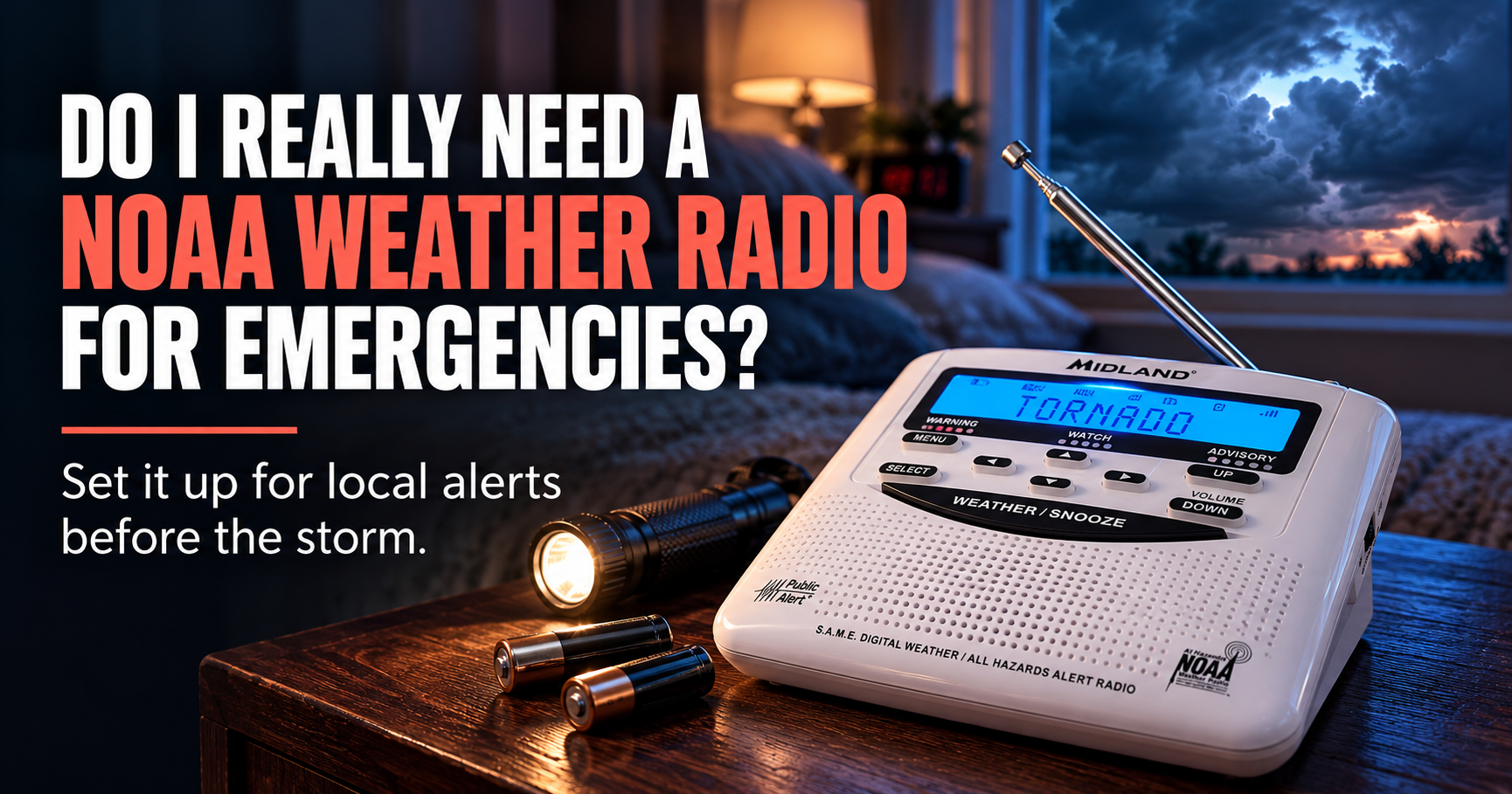
We just covered why I think a NOAA weather radio is still worth having even with a smartphone.
A dedicated alert radio can sit quietly until a warning is issued.
That matters especially overnight.

The Home Weather Radio I’d Use
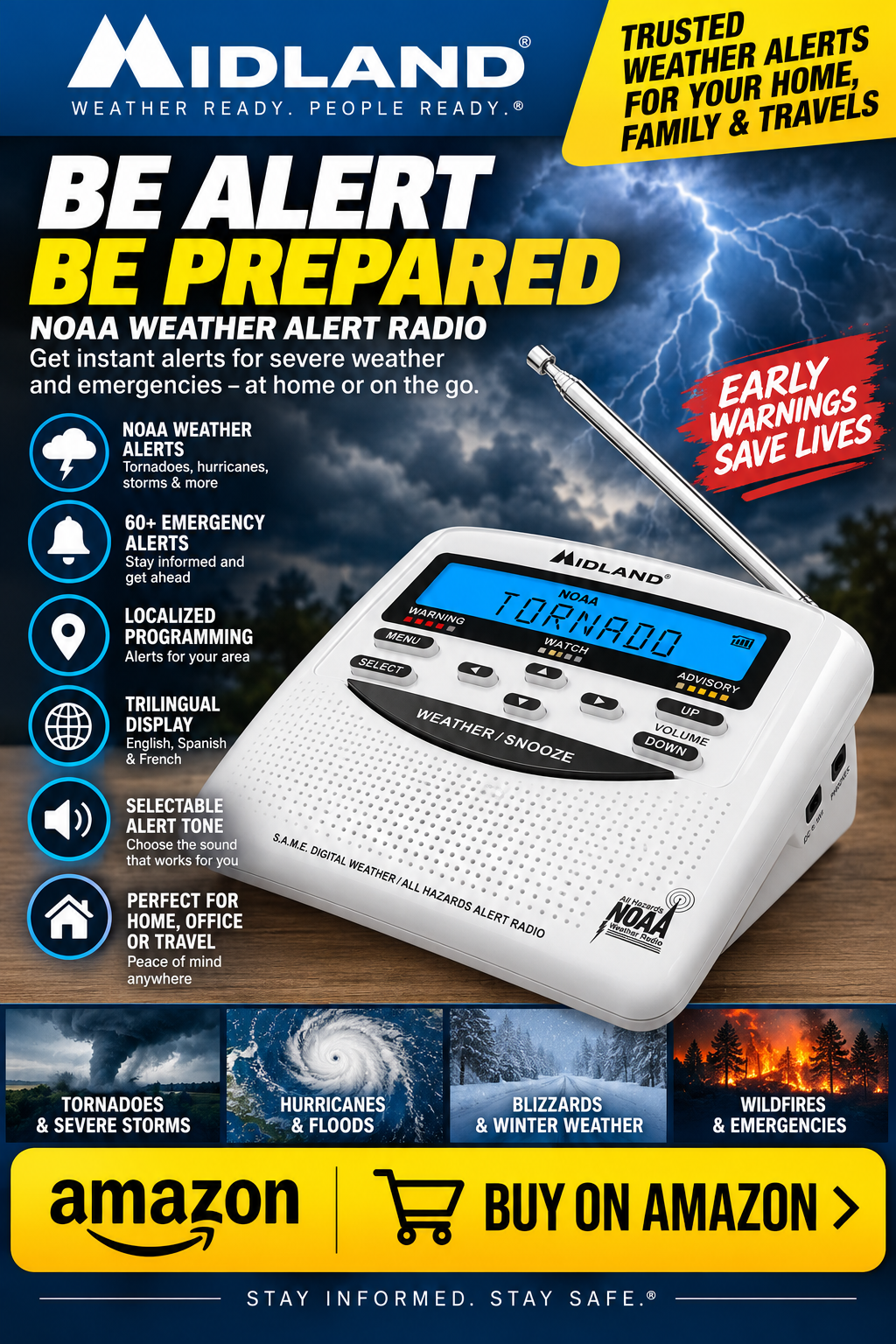
For a permanent home alert radio, I like the Midland WR120B NOAA Emergency Weather Alert Radio.
The feature I care about most is localized SAME programming.
That means the radio can be set for specific areas instead of treating every warning within transmitter range as equally relevant.
For a bedside weather-alert radio, that’s exactly what I want.
It has one clear job:
Wake me up when something important is happening in my area.
A Portable Emergency Radio Is Still Worth Having Too
The home alert radio isn’t necessarily the radio I want to grab during an evacuation.
For that, I prefer something portable.
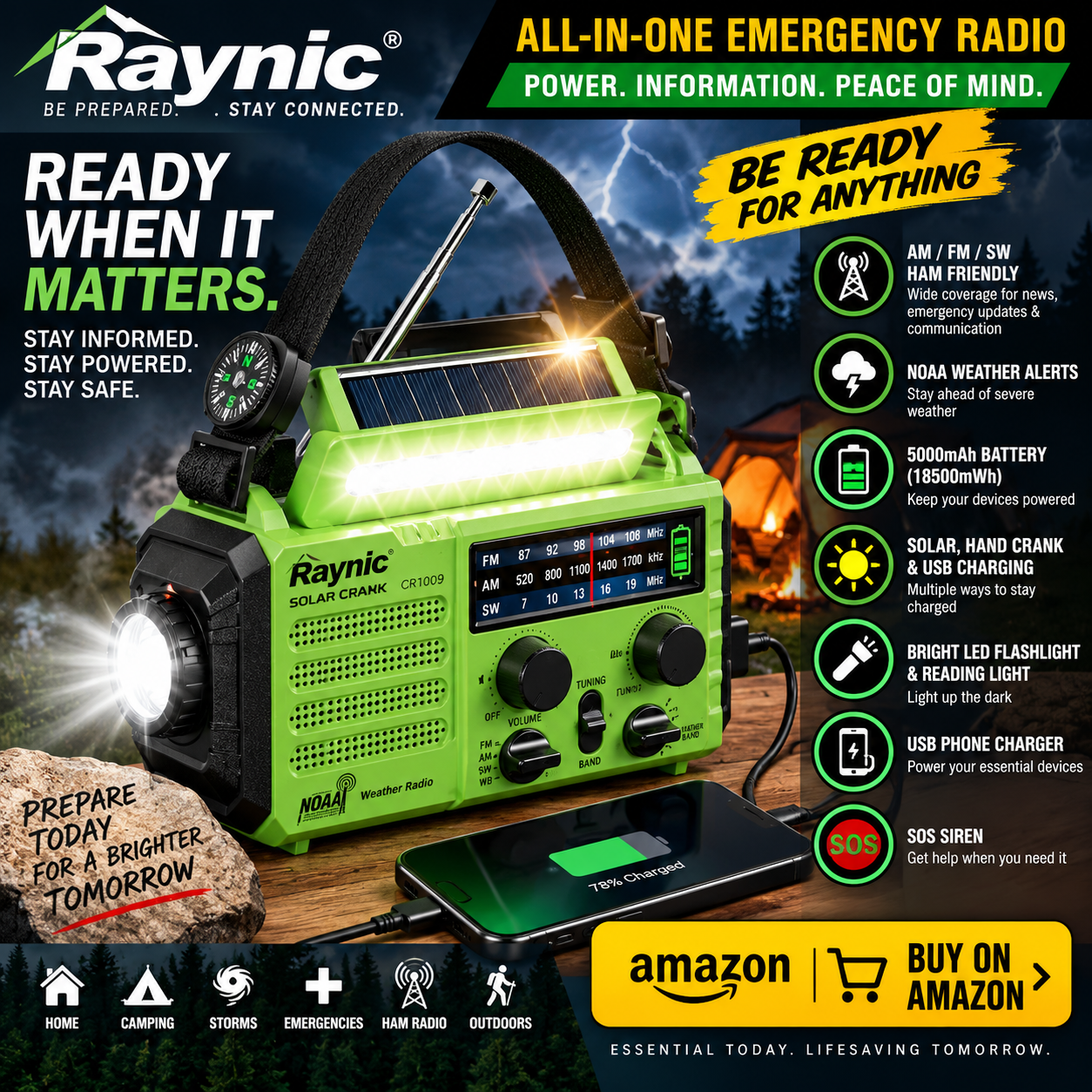
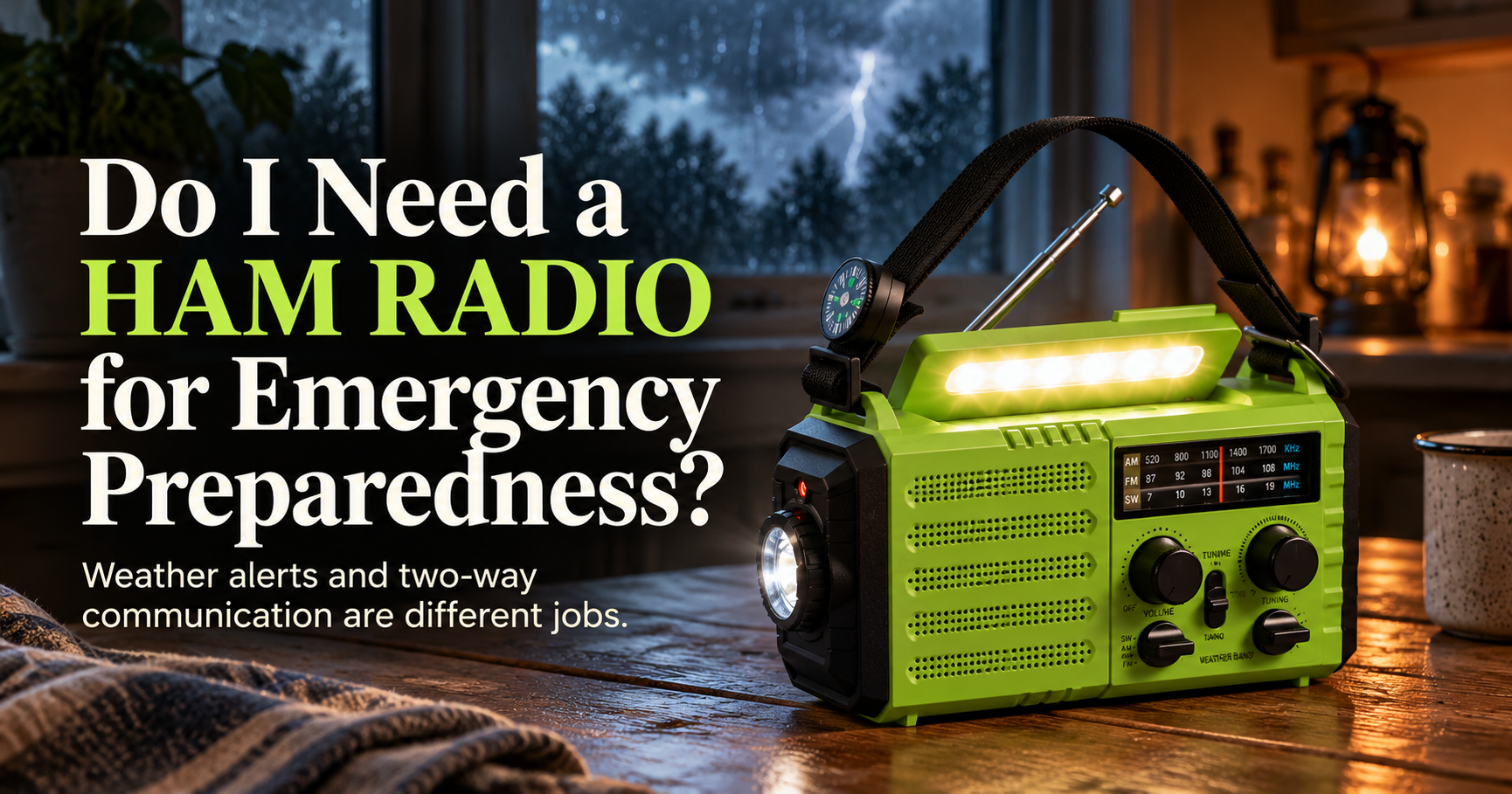
The 5000mAh Solar Hand Crank Emergency Weather Radio gives me another type of backup.
NOAA reception.
AM/FM/SW.
Rechargeable battery.
Hand-crank charging.
Solar backup.
Flashlight.
Emergency phone charging.
That’s much more useful when I’m away from normal household power.


Walkie Talkies Handle Nearby Two-Way Communication
Now we’re solving another problem entirely.
The weather radio tells me what’s happening.
Walkie talkies help family members talk to each other.
That’s why they deserve a place in the system.
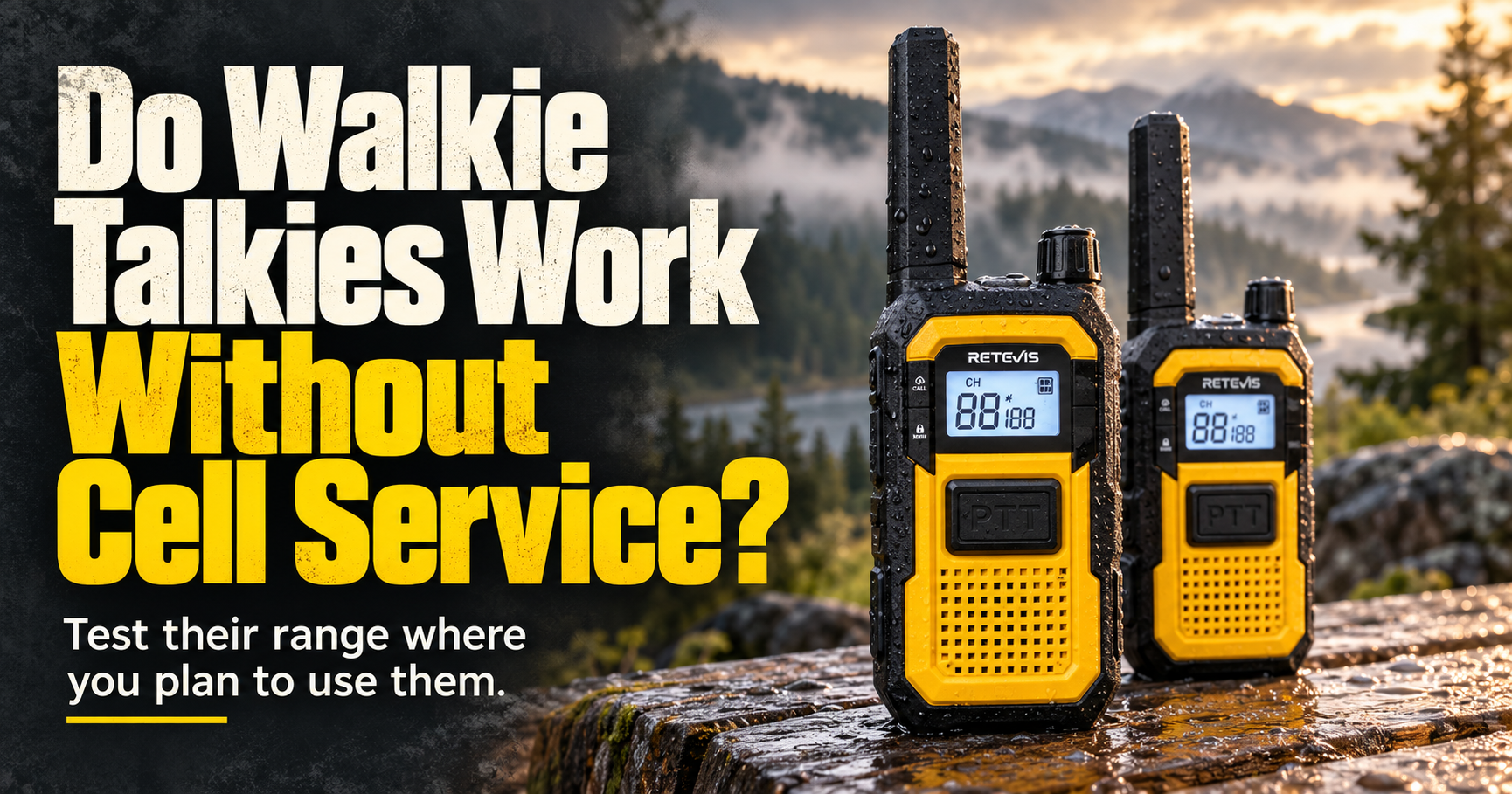
We’ve already covered why walkie talkies can work when cell service is down.
They communicate directly over radio frequencies.
No cell tower required for normal radio-to-radio communication.
The Walkie Talkies We’re Using
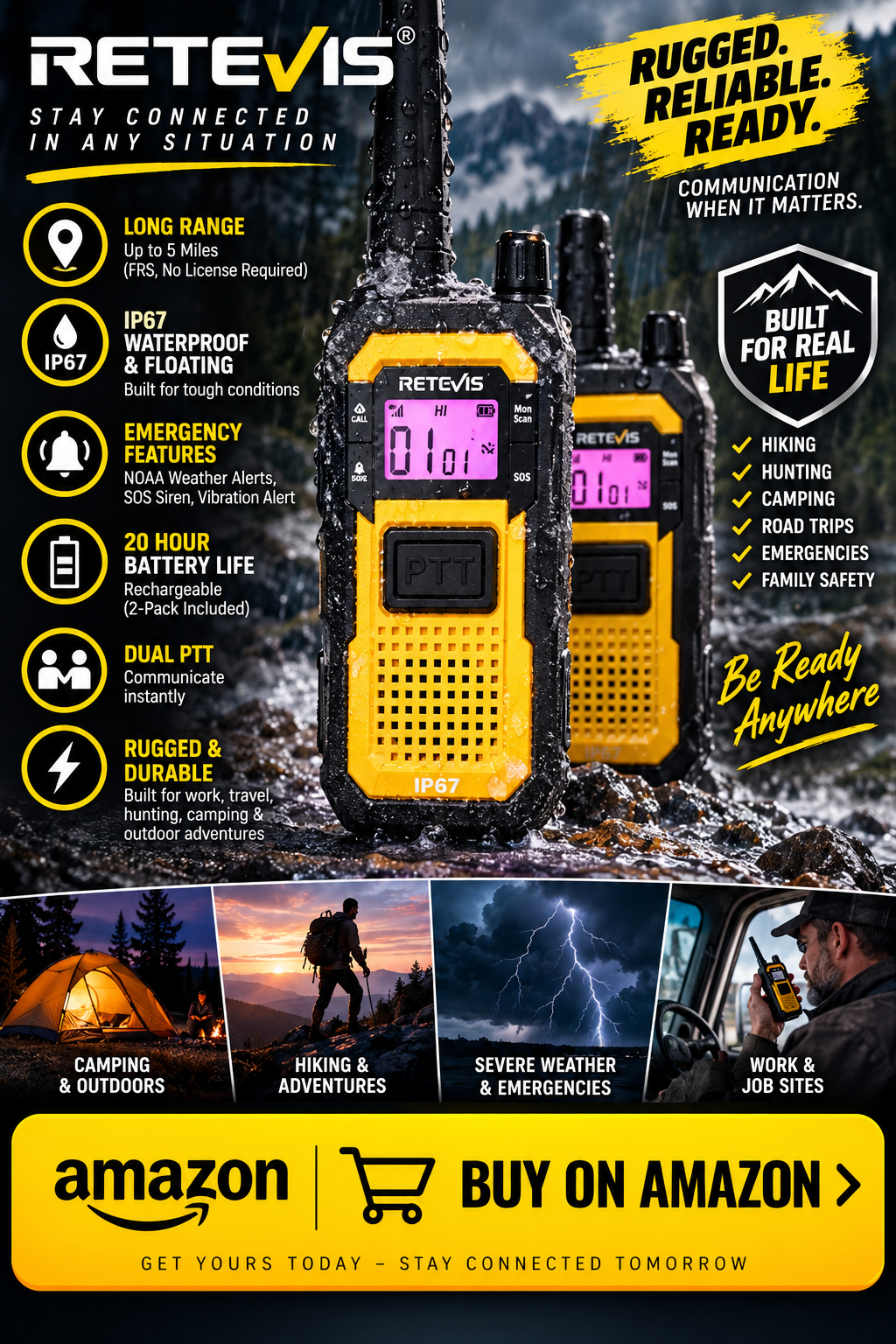
For local family communication, I like the Retevis RB48 FRS Walkie Talkies.
They’re much more interesting to me for preparedness than tiny toy-style radios because they’re rugged, rechargeable, IP67 waterproof, and include NOAA reception.
But I don’t buy them because I think they’ll replace a phone over huge distances.
I buy them for nearby communication.


Walkie Talkies Are Best When the Distance Is Realistic
This is where people get disappointed.
A radio box might advertise an impressive maximum range.
Real life has:
Hills.
Trees.
Houses.
Concrete.
Vehicles.
Metal buildings.
Elevation changes.
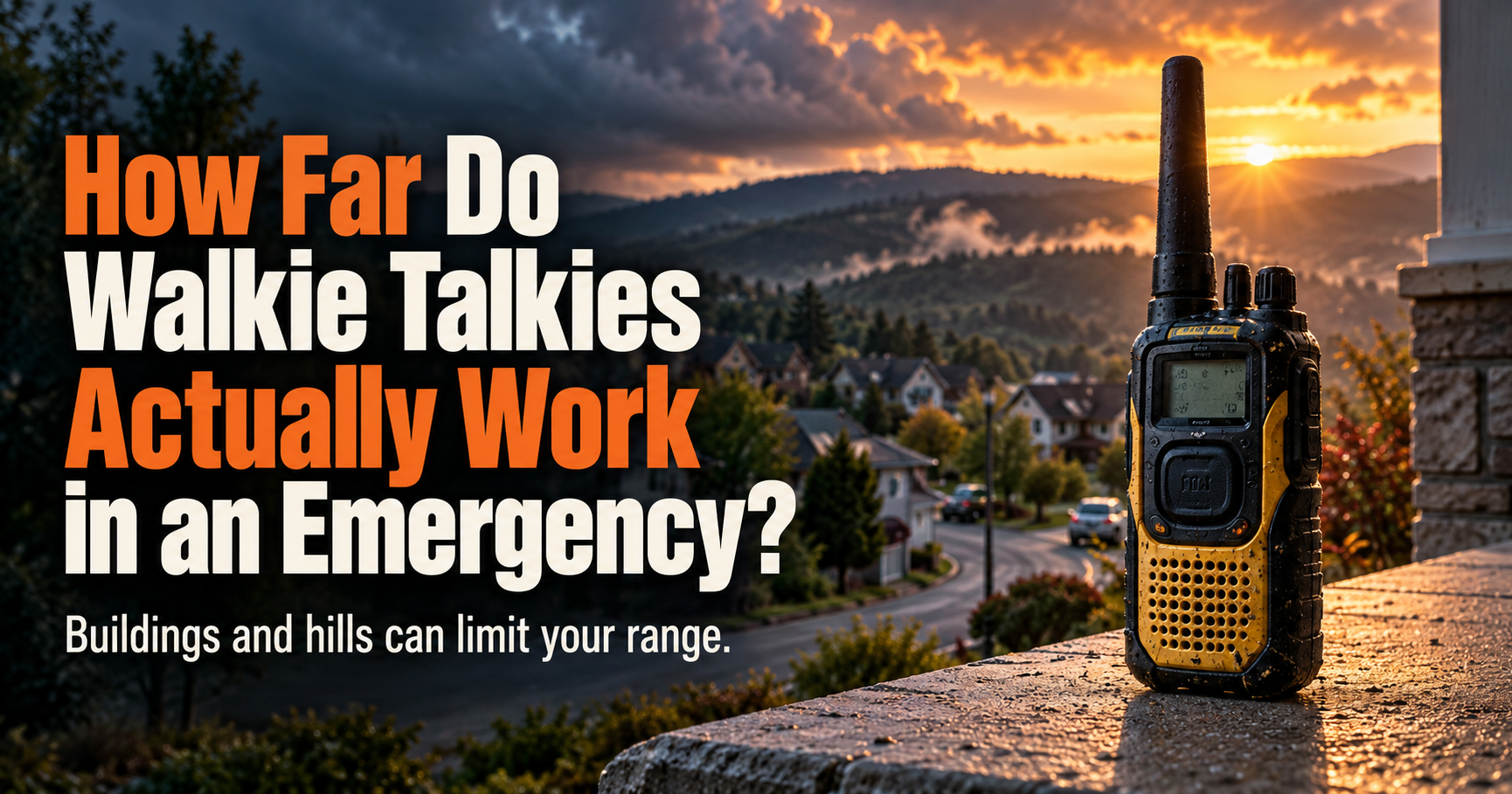
We’ve already broken down how far walkie talkies actually work in an emergency.
For me, the question isn’t:
Can these theoretically reach 30 miles?
It’s:
Can they reach the places my family actually needs them to reach?
That’s why I test them.
Where Walkie Talkies Make Sense to Me
I’d use them for:
Multiple vehicles traveling together.
A farm or larger property.
Camping.
Nearby family members.
Neighborhood communication.
Short-distance evacuation coordination.
Those are exactly the situations where a simple FRS radio can be incredibly useful.
Ham Radio Fills a Bigger Communication Gap
Walkie talkies are simple.
Ham radio is much more capable.
But it also requires more learning.
That’s why I don’t treat them as competing options.
We already covered whether I think ham radio is worth having for emergency preparedness.
For someone willing to get licensed and practice, amateur radio can open up communication options far beyond basic family radios.
Ham Radio Is a Skill, Not Just Another Device
This is important.
I wouldn’t buy a ham radio and throw it into the emergency closet.
That doesn’t accomplish much.
I’d want to understand:
Frequencies.
Repeaters.
Radio operation.
Local nets.
Antennas.
Backup power.
Proper operating procedures.
That’s what turns the radio into a useful emergency tool.
Repeaters Can Extend Radio Coverage
Some radio systems can use repeaters.
A repeater receives a signal and retransmits it, often from a better location.
That can dramatically increase communication range.
But I also don’t want my entire radio plan depending on repeaters.
They’re infrastructure too.
Power can fail.
Equipment can be damaged.
So direct radio communication still matters.
Satellite Devices Solve Another Problem Entirely
Suppose I’m hiking somewhere with:
No cell service.
No nearby family radios.
No local repeater access.
Nobody nearby listening on the radio I’m carrying.
That’s when satellite communication starts becoming much more interesting.
Satellite messengers can provide communication far beyond what normal walkie talkies can do because they’re connecting through satellites instead of nearby towers or radios.
That’s a completely different category.
I Wouldn’t Buy Satellite Equipment for Everyday Neighborhood Use
This comes back to matching the tool to the problem.
If I’m trying to communicate with my wife in another vehicle during an evacuation, satellite messaging would be overkill.
Walkie talkies may be perfect.
If I’m hiking somewhere truly remote, walkie talkies may be the wrong tool.
Satellite communication may be much more appropriate.
Preparedness gets expensive fast when every device is treated like something everybody needs.
I don’t think that’s necessary.
A Car Radio Is Still an Emergency Information Source
This is easy to overlook.
If the house is without power but my vehicle is functioning, the car radio may still receive local broadcasts.
That gives me another way to gather information.
AM/FM radio isn’t glamorous.
It still works.
During a widespread emergency, local broadcasters may carry:
Weather information.
Closures.
Official announcements.
Shelter information.
Other updates.
I don’t dismiss older technology just because smartphones are better most days.
An AM/FM Radio Can Be More Useful Than People Think
The same applies to a portable emergency radio.
During a long outage, local stations may become one of the easiest ways to hear what is happening.
NOAA is excellent for hazard information.
Local AM/FM can provide community-level reporting.
Those complement each other.
Paper Is an Emergency Communication Tool Too
This might sound strange.
But a written plan communicates information when electronics can’t.
Phone numbers.
Meeting places.
Addresses.
Radio channels.
Emergency contacts.
Instructions.
We’ve already built those pieces into our family emergency communication plan.
A laminated card in a wallet can be more useful than a dead smartphone.
A Physical Map Belongs in the Same Conversation
Communication doesn’t always mean talking.

Sometimes the important information is:
Where do I go?
What road can I use?
Where is the meeting place?
If my phone maps aren’t available, an offline map or physical map still works.
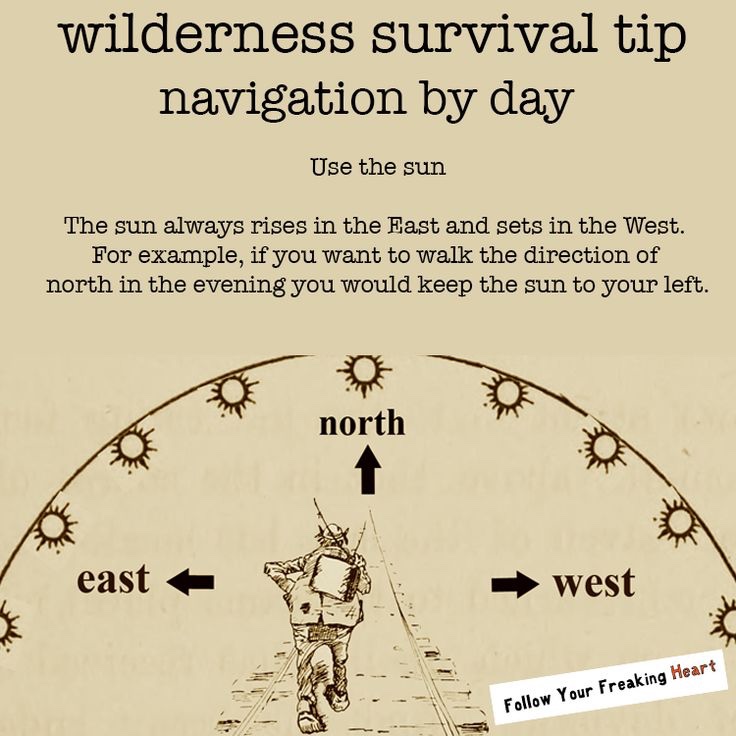
That’s another reason our broader survival navigation guide connects naturally with emergency communications.
If my family has agreed to meet somewhere, everyone still needs to find it.
An Emergency Whistle Is Still Communication
This is about as simple as equipment gets.
A whistle can carry farther than yelling and uses far less energy.
I’m not pretending a whistle replaces a radio.
But if I’m trying to signal someone nearby after:
A collapse.
Storm damage.
Outdoor injury.
Getting separated while hiking.
A whistle can be genuinely useful.
Sometimes communication isn’t a conversation.
It’s simply:
I’m here.
Flashlights Can Communicate Too
Light can signal:
Location.
Distress.
Direction.
Presence.
Again, this isn’t replacing a radio.
But emergency communication isn’t limited to speech.
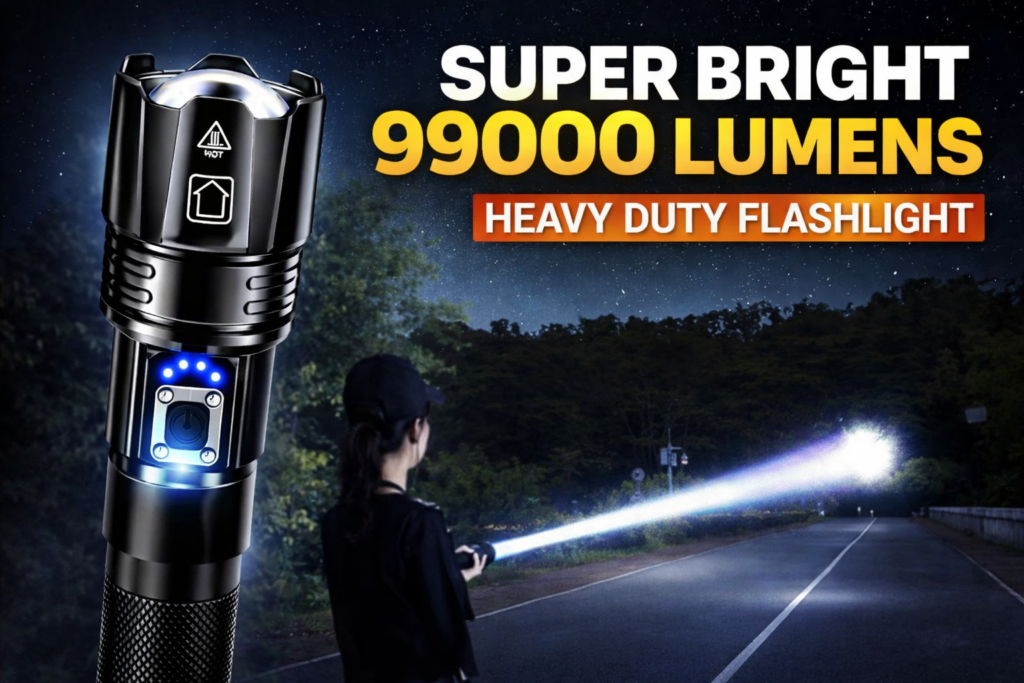
If visibility is poor or it’s dark, light can become another way of getting someone’s attention.
I Would Build the System Around Failure Scenarios
This is the easiest way for me to decide what devices I need.
Instead of asking:
What’s the best emergency communication device?
I ask:
What failed?
That changes the answer.
If Cellular Service Works
Use the phone.
Call.
Text.
Check alerts.
Use maps.
There’s no prize for using radio when normal communication works perfectly.
If Voice Calls Are Struggling
Try a short text.
Keep it concise.
Use the family plan.
Don’t waste battery repeatedly making unnecessary calls.
If Cell Service Is Completely Down
Nearby family members can try walkie talkies.
That’s exactly where our cell-service-free walkie talkie guide comes in.
If I Need Official Weather Information
Use NOAA Weather Radio.
At home, the Midland WR120B gives me localized warning capability.
Away from home, the portable hand-crank weather radio gives me a mobile backup.
If I Need Longer-Range Two-Way Radio Communication
That’s where ham radio or another appropriate radio system may make more sense.
But only if I’ve prepared for it ahead of time.
If I’m Deep in Remote Country
Then I start thinking about communication designed for places beyond normal cellular and local-radio coverage.
That’s where satellite equipment becomes more relevant.
If Everything Electronic Fails
Now the plan itself becomes the communication system.
Everybody already knows:
Where to meet.
Who picks up the children.
Where to go.
Who the out-of-area contact is.
What to do next.
That’s why I keep saying equipment doesn’t replace planning.
The Best Emergency Communication System Is Layered
If I were building mine from scratch, I wouldn’t buy everything at once.
I’d work through the layers.
Layer One: Phone
Already owned.
Extremely capable.
Layer Two: Backup Phone Power
Keeps the most useful device operating longer.
Layer Three: NOAA Weather Alert Radio
Provides another independent source of urgent information.
Layer Four: Walkie Talkies
Provide local communication without cellular service.
Layer Five: Written Family Plan
Still works when technology doesn’t.
Layer Six: More Advanced Radio or Satellite Equipment
Added when my specific situation justifies it.
That’s enough for most households to build a very strong system.
I Don’t Need Every Communication Device Ever Made
This is important.
Preparedness can turn into gear collecting.
I don’t want that.
If I never leave an urban area and have excellent cellular coverage, my priorities may be completely different from someone living on a remote ranch.
If I spend weekends deep in wilderness areas, satellite communication becomes more interesting.
If I’m involved with community emergency response, amateur radio might become much more valuable.
I build around my actual risks.
Redundancy Doesn’t Mean Duplication
I don’t need five devices that all fail for the same reason.
That’s not much redundancy.
I want different systems.
Cellular.
Radio.
Broadcast.
Written plans.
Physical meeting places.
Different systems fail differently.
That’s what makes the setup stronger.
Power Is Part of the Communication System
This keeps coming up for a reason.
Every electronic communication device eventually needs power.
Phone.
Walkie talkie.
Ham radio.
Satellite messenger.
Portable radio.
That’s why our communication preparedness overlaps so strongly with our power-outage preparedness.
Backup batteries and charging aren’t optional extras.
They’re part of communication.
I Keep Charging Equipment With the Devices
I don’t want the radio in one tote and its charging cable somewhere else in the house.
Same with power banks.
Keep the pieces together.
A preparedness system should be easy to use when I’m tired and stressed.
Not an Easter egg hunt.
I Would Test Everything Before Storm Season
The best emergency communication test is boring.
That’s good.
Charge the phones.
Send a test message.
Turn on the NOAA radio.
Make sure the Midland alerts and receives correctly.
Test the walkie talkies.
Drive around and learn their range.
Check backup batteries.
Review the family meeting locations.
Ten or fifteen minutes can expose a lot of problems.
I Would Make Sure Everyone Can Use the Equipment
This may matter more than how expensive the equipment is.
If I’m the only person who understands the radios, I don’t have a family communication system.
I have my communication system.
Other adults should know the basics.
Older kids can learn the basics.
Everyone doesn’t need to be a radio expert.
They just need enough knowledge to use the tools they’re expected to use.
Simple Instructions Beat Complicated Ones
For the walkie talkies:
Turn it on.
Channel 5.
Push to talk.
Release to listen.
If no answer, try Channel 8.
That’s usable.
For the family plan:
Can’t reach us?
Contact this person.
Can’t get home?
Go here.
That’s usable.
Preparedness should reduce confusion.
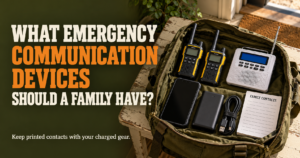
What Emergency Communication Devices Should a Family Have?
For an ordinary household, my core list is actually pretty short.
A working smartphone.
Backup charging.
A NOAA weather alert radio.
A portable battery-powered emergency radio.
Simple two-way radios if nearby family communication would be useful.
Written contact information and meeting locations.
Everything beyond that depends on the family.
Ham radio?
Excellent for someone willing to learn it.
Satellite communication?
Excellent for remote travel.
But I don’t need to buy every device just because it exists.
What I’d Build First
If I were starting tonight, I’d do it in this order.
Make the family emergency communication plan.
Get backup phone power.
Add a dedicated NOAA weather radio.
Add walkie talkies if they solve a real local communication problem.
Practice with everything.
Then decide whether I actually need ham radio or satellite capability.
That’s a much smarter approach than buying a pile of radios and trying to figure out afterward what they’re supposed to do.
Communication Is Really About Options
That’s the biggest thing I’ve taken away from building this entire cluster.
I don’t need one magical radio.
I need options.
Phone works?
Great.
Cell service overloaded?
Try text.
Cell service gone?
Use nearby radios.
Dangerous weather coming?
Monitor NOAA.
Need more advanced radio communication?
Ham radio becomes an option.
Nobody can reach anybody?
Follow the family plan.
The strongest communication system isn’t the one with the most expensive equipment.
It’s the one that gives my family a clear next move when the first option fails.
That’s exactly what I want from emergency preparedness.
About the Author
Caleb Mercer writes about emergency communications, power outages, backup power, and practical household preparedness for Survive Essentials. His work focuses on building redundant systems before they’re needed, understanding which communication tools solve different failures, and helping families stay informed and connected when normal services become unreliable.