If my house gets water from a private well, I assume a power outage can eventually become a water outage too.
That’s one of the biggest differences between living on a well and being connected to city water.
The water may keep flowing for a little while after the electricity goes out. That can make it seem like everything is fine.
Then the pressure drops.
The faucet slows down.
And eventually nothing comes out.
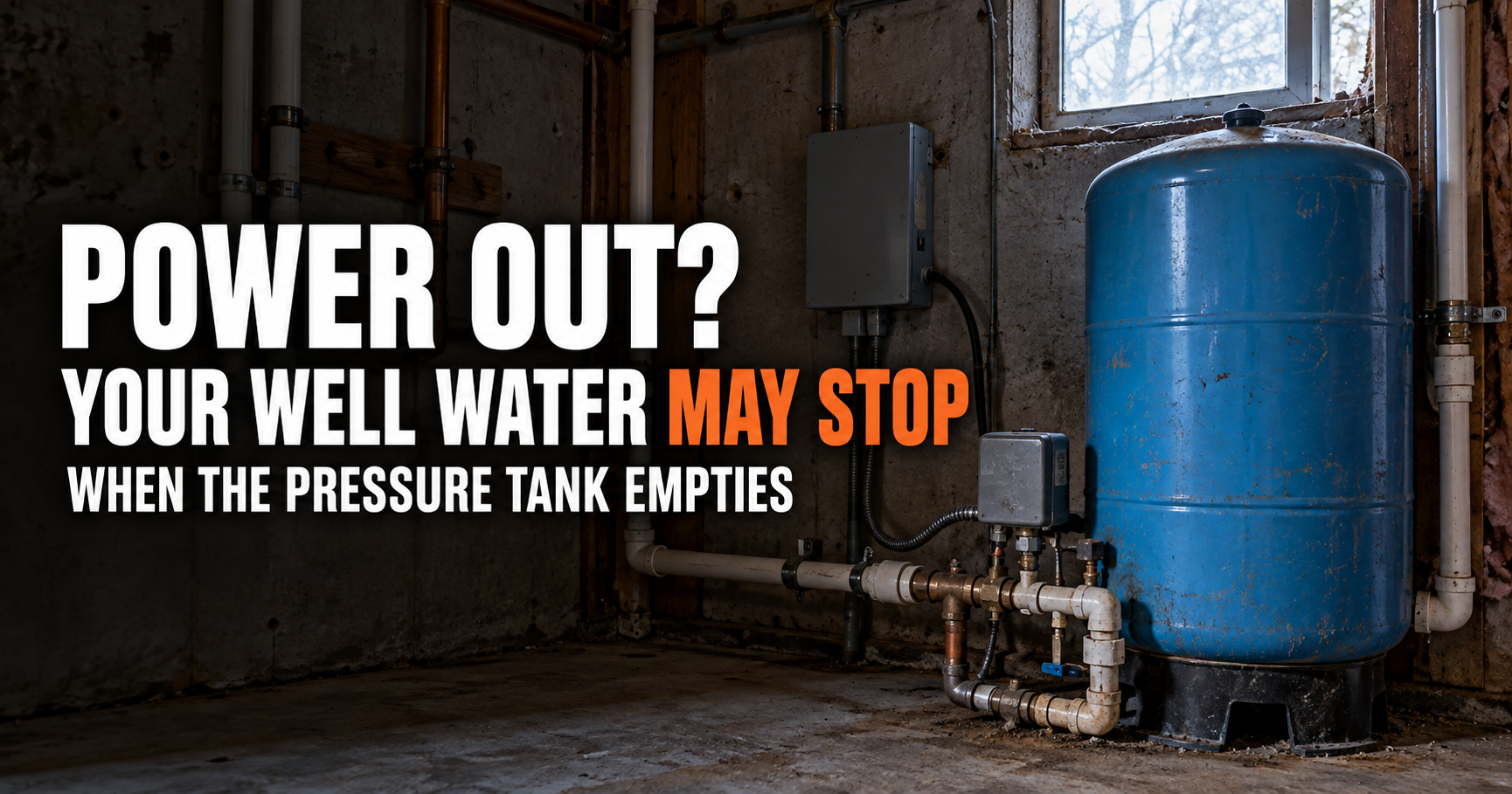
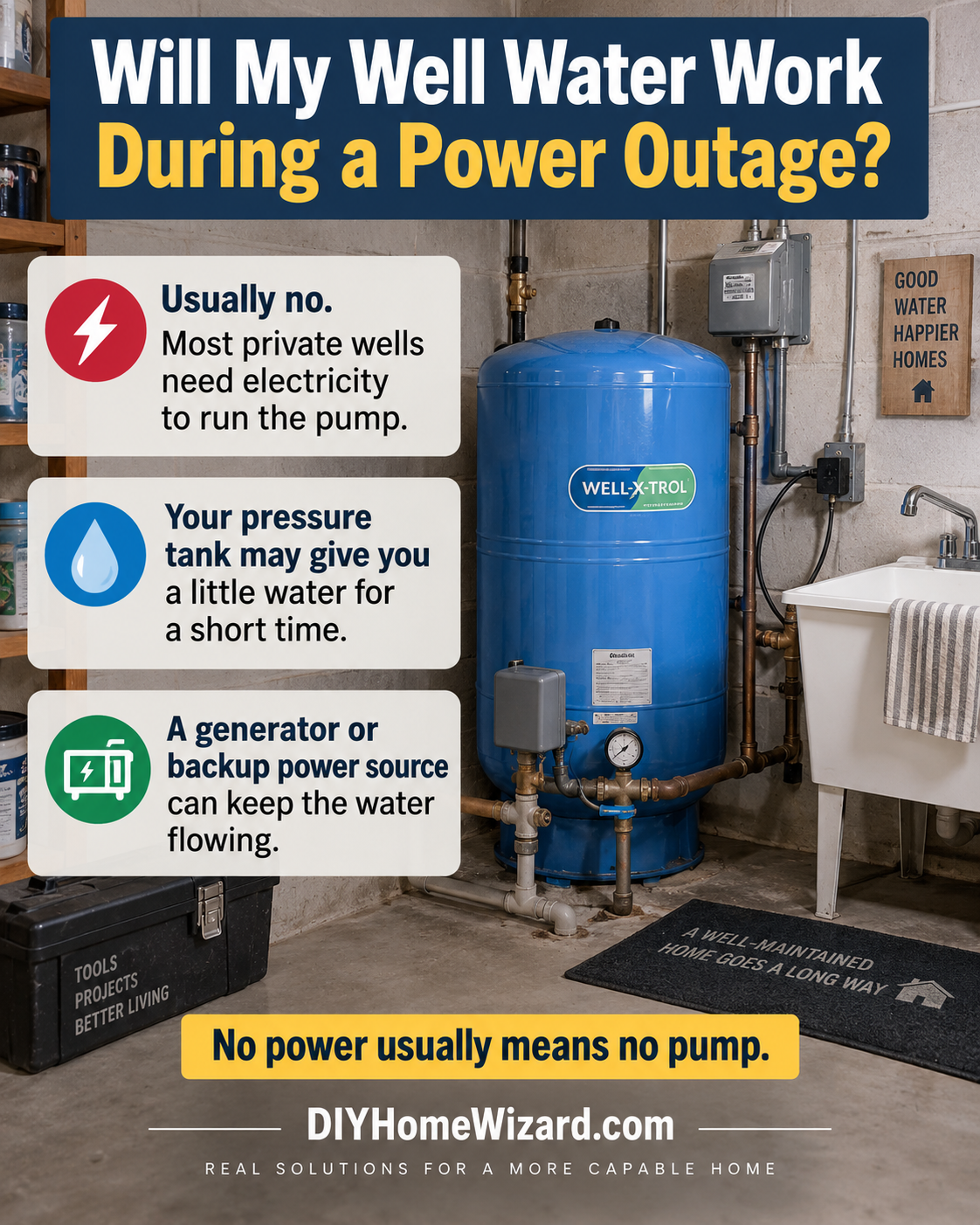
The reason is pretty simple: the water may be underground, but I still need electricity to run the well pump that brings it into my house.
That’s why I treat my well as one of the most important electrical loads in a long blackout.
Why Does My Faucet Still Work Right After the Power Goes Out?
This confuses a lot of people the first time it happens.
The electricity goes out.
They walk to the sink.
Water still comes out.
So they assume the well is working without electricity.
Usually, that’s not what’s happening.
A typical private well system has a pressure tank.
The pump has already pushed water into the system and created pressure before the electricity failed.
When I open a faucet, that stored pressure can continue pushing some water through the plumbing.
But I’m using a limited reserve.
Once the pressure falls far enough, the pump would normally turn back on.
Without electricity, it can’t.
That’s when the water stops.

I Don’t Treat the Pressure Tank Like a 40-Gallon Emergency Water Tank
This is an important detail.
If someone tells me they have a 40-gallon pressure tank, that does not necessarily mean they have 40 gallons of usable water sitting there after the power fails.
A pressure tank’s job is primarily maintaining pressure and preventing the well pump from switching on every time somebody uses a tiny amount of water.
The usable drawdown can be only a fraction of the tank’s total labeled capacity.
So I don’t build my emergency water plan around whatever number is printed on the pressure tank.
If I need emergency water, I store emergency water.


I Start Conserving Well Water Immediately
If the power goes out and my well isn’t connected to backup power, I don’t keep using water normally just because the faucets still work.
That remaining pressure is useful.
I want to make it count.
I’m not taking a long shower.
I’m not starting laundry.
I’m not running the dishwasher.
I’m not letting water run while brushing my teeth.
I’m thinking about the things that matter most.
Drinking.
Medication.
Basic cooking.
Essential hygiene.
Every unnecessary gallon I use is one less gallon available before the pressure disappears.
This Is Why I Store Drinking Water Before the Outage
I don’t want my pressure tank to be my emergency water supply.
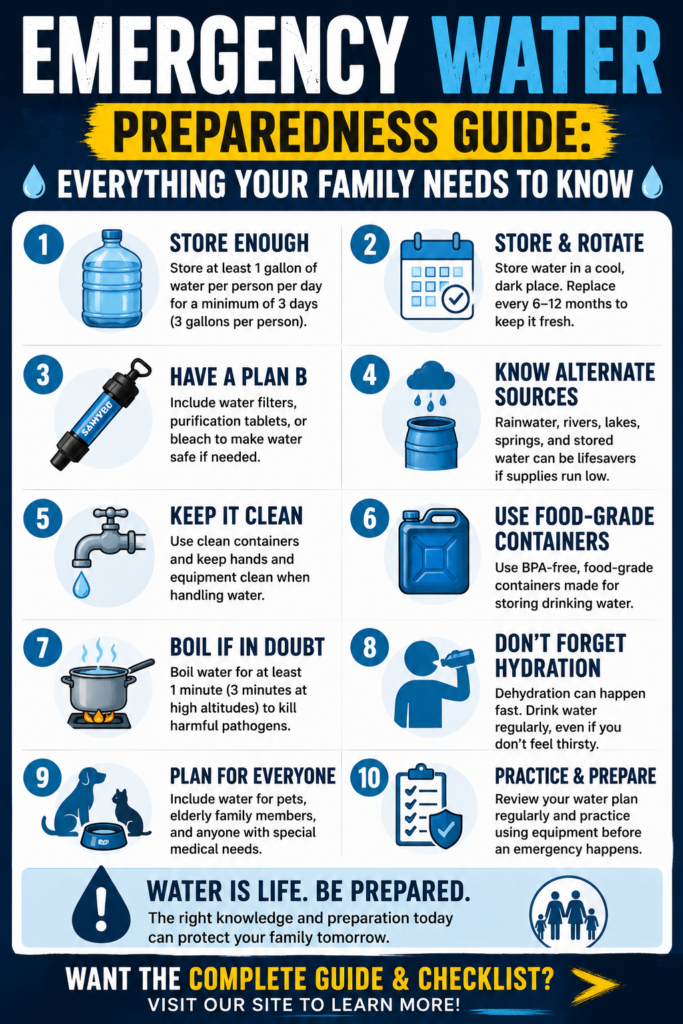
We already built a complete emergency water preparedness guide around this exact problem.
My first layer is water I’ve already stored.
Then I have backup ways to obtain and treat more.
That’s much better than discovering after the power fails that my entire water plan depended on an electric pump.


If a Winter Storm Is Coming, I Fill Extra Water Beforehand
This is one of the easiest things I can do.
If I have warning that an ice storm, blizzard, severe thunderstorm, or another major event is approaching, I use the electricity while I still have it.
I fill appropriate emergency water containers.
I make sure drinking water is available.
I think about toilet water.
I make sure pets and livestock are covered if applicable.
I’m essentially letting the grid do the hard work before it disappears.
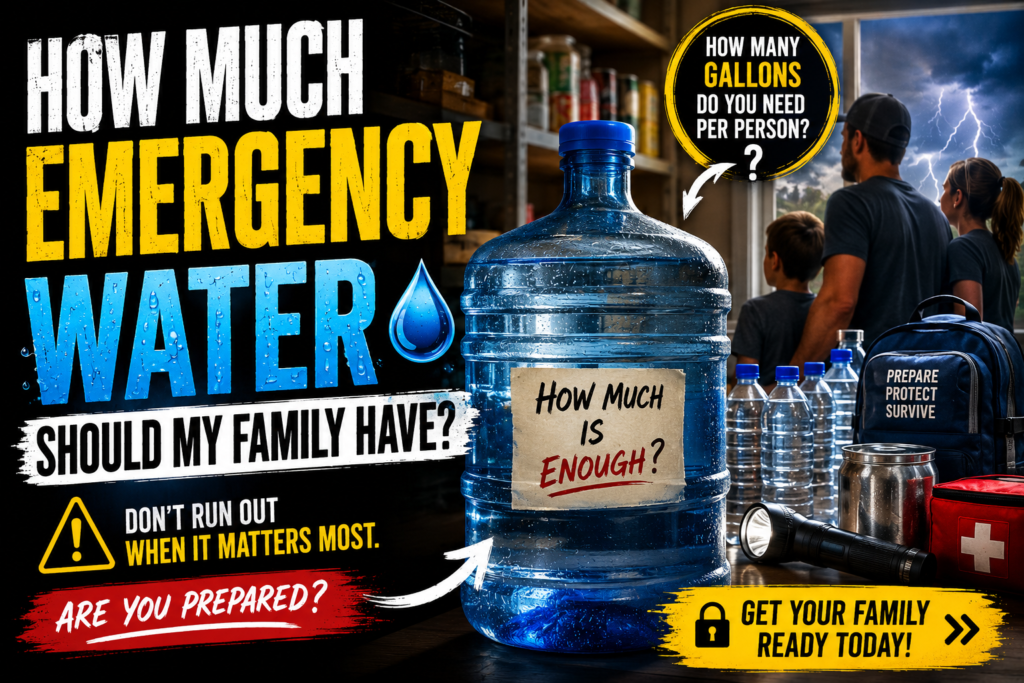
That’s also why we’ve covered how much emergency water a family should actually store.
Water disappears faster than most people expect.
A Bathtub Water Bladder Makes Even More Sense With a Well
This is one of the situations where I really like temporary water storage.
I don’t necessarily want 100 gallons of water permanently occupying part of my house.
But if a major storm is coming?
That’s different.
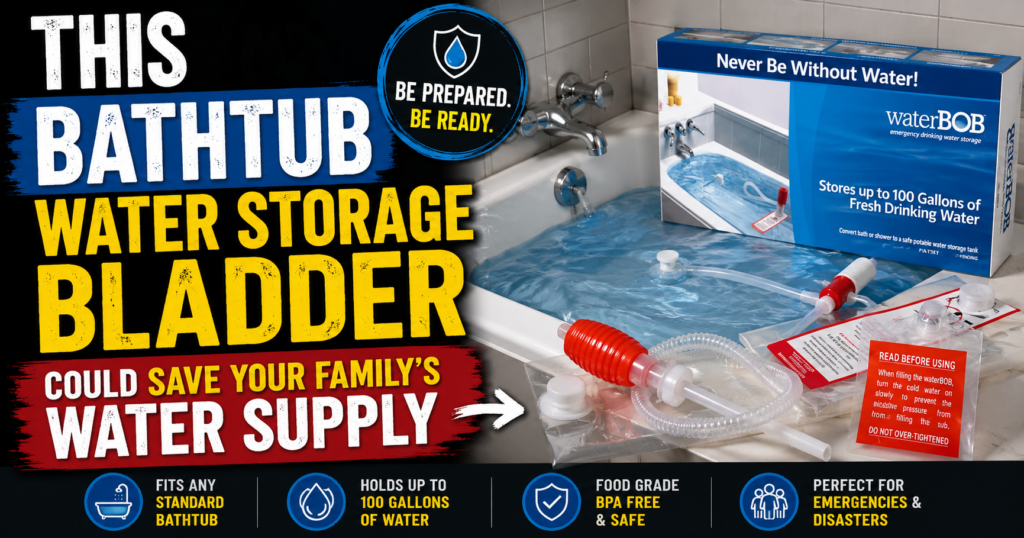
We’ve reviewed a bathtub emergency water bladder that can quickly create a large temporary reserve.
I can fill it while the well pump still works.
Then if electricity disappears, I have a large supply already inside the house.
The Temporary Water Storage Option I’d Keep Ready
The bathtub bladder we’ve been using in our emergency-water setup holds up to 100 gallons and folds away when it isn’t needed.
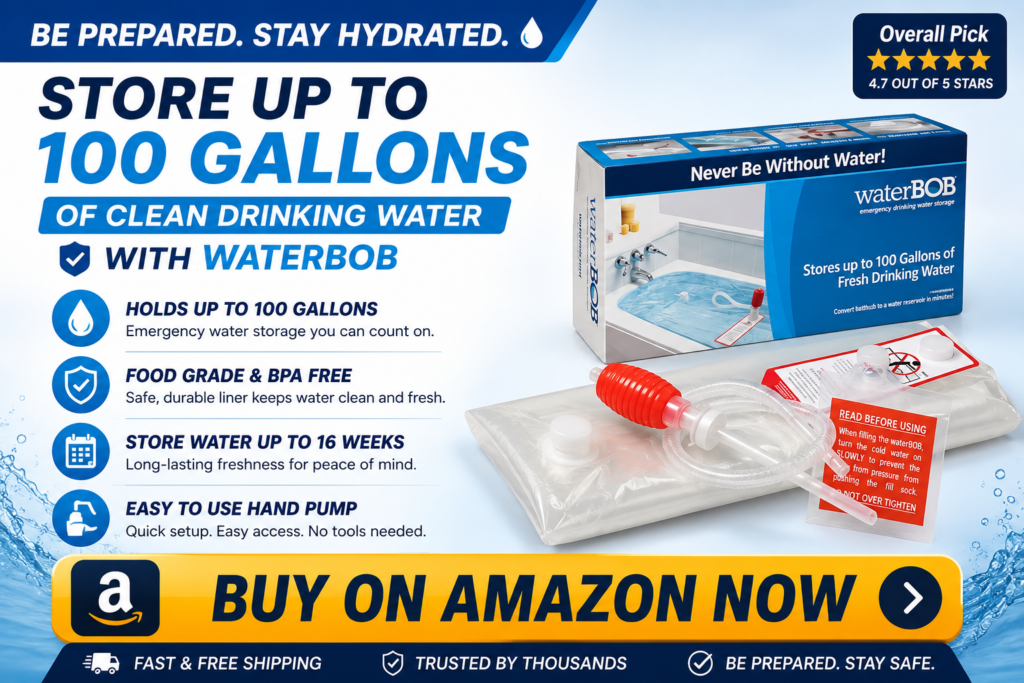
Check the 100-gallon bathtub emergency water bladder on Amazon
For a well household facing an approaching storm, that’s the kind of product that solves a very real problem.

Can I Run My Well Pump With a Generator?
Potentially, yes.
But this isn’t something I guess about.
Well pumps can have significant startup electrical demands.
The pump motor may briefly need substantially more power when it starts than it uses once it’s running.
That means I need to know things like:
- Pump horsepower
- Voltage
- Running electrical demand
- Starting demand
- Generator output
- How the generator will be safely connected
A generator that’s perfect for my refrigerator and phone chargers may not automatically be appropriate for my well pump.
I Find Out What Well Pump I Own Before the Emergency
This is exactly the kind of information I don’t want to hunt for during a blackout.
Before I buy backup power for the well, I want to know what pump I’m dealing with.
I check the well records if I have them.
I check the pump controls and documentation.
If necessary, I talk to the well contractor or electrician who understands the system.
Then I size backup power around actual equipment.
I don’t buy a generator first and hope the well likes it.

Well-Pump Starting Watts Can Be Surprisingly High
Motor startup is where generator sizing becomes important.
A well pump may require considerably more power for a moment when the motor starts.
That’s why looking only at the pump’s normal running wattage can mislead me.
The exact requirement depends on the pump, depth, voltage, wiring, and system.
I don’t rely on a generic chart as my final answer.
I verify my equipment.
That’s especially important if I’m trying to run the well alongside a refrigerator, freezer, or other motor-driven appliance.
My Small Portable Generator May Not Run the Well
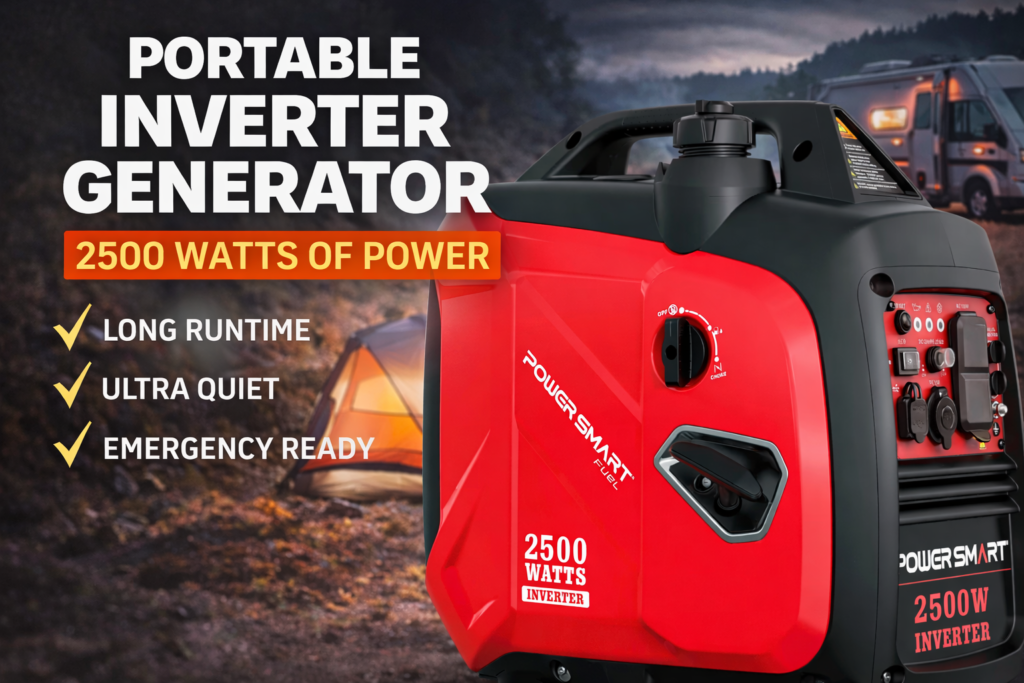
We’ve been using this portable inverter generator as an example throughout the blackout cluster.
It’s useful for selected essential loads.
That doesn’t mean I automatically assume it can start my particular well pump.
A small generator might handle refrigerators, lights, charging equipment, and other modest loads beautifully while being undersized for a deep-well pump.
That’s why I separate generator ownership from generator planning.
Owning one doesn’t mean it powers everything.


I Never Backfeed the Well Through a Random Outlet
If my well equipment needs to be powered through household wiring, I want a proper electrical setup.
I don’t make a homemade cord and try to energize the house backward through a wall outlet.
If I want generator power feeding circuits or hardwired equipment, I want the appropriate transfer equipment and electrical work.
This is one place where I would rather pay a qualified electrician than improvise.
Water is important.
So is not electrocuting somebody.
I Test the Well on Backup Power Before I Need It
If I’ve installed a legitimate generator setup for the well, I want to test it on a normal day.
Does the pump start?
Does the generator handle the startup load?
Does the pressure tank refill?
Does everything operate normally?
Can I run another essential appliance at the same time?
How long does it take to restore pressure?
Those answers become incredibly useful during a real outage.
I Don’t Necessarily Run the Well Pump Continuously
This is where a pressure tank can actually help me.
If I have backup power capable of running the pump, I may be able to use generator runtime strategically.
I can restore pressure.
Fill emergency containers.
Handle necessary water use.
Then shut down the generator when other loads don’t need it.
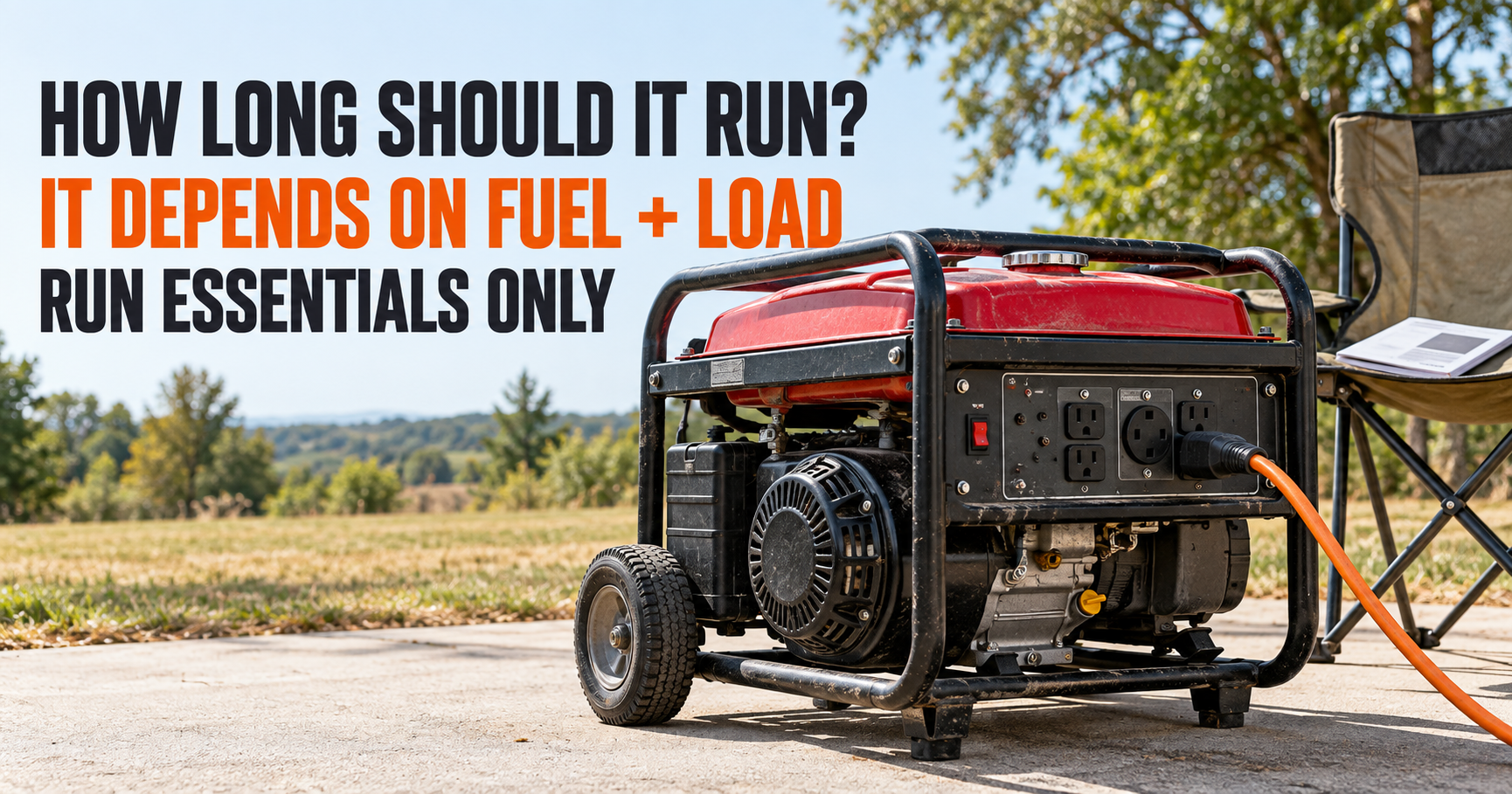
The exact strategy depends on my system, but the principle is the same one I use in how I manage generator runtime during a long power outage.
I want every gallon of fuel accomplishing useful work.
When the Well Pump Runs, I Fill Water Containers Too
If I’ve started the generator and brought the well back online, I take advantage of it.
I don’t only fill one glass of water.
I’ll consider topping off appropriate emergency containers while the pump is available.
That gives me another buffer before I need to run the generator again.
The generator is already running.
The well pump is already working.
I might as well create some stored water.
Toilets Become Part of the Problem
This is something people don’t immediately connect to the well pump.
Every toilet flush uses water.
If my well isn’t pumping, that water is coming from the limited supply I still have available.
Suddenly flushing the toilet becomes part of my emergency water budget.
That’s why the next article in this cluster will go directly into:
Can I Flush My Toilet When the Power Is Out?
The answer isn’t exactly the same for every house.
I Separate Drinking Water From Toilet Water
I don’t want to use perfectly good bottled drinking water to flush a toilet if I have another suitable water source.
This is where alternative emergency water becomes useful.
Depending on the situation, nonpotable water may be useful for sanitation while I protect stored drinking water for actual consumption.
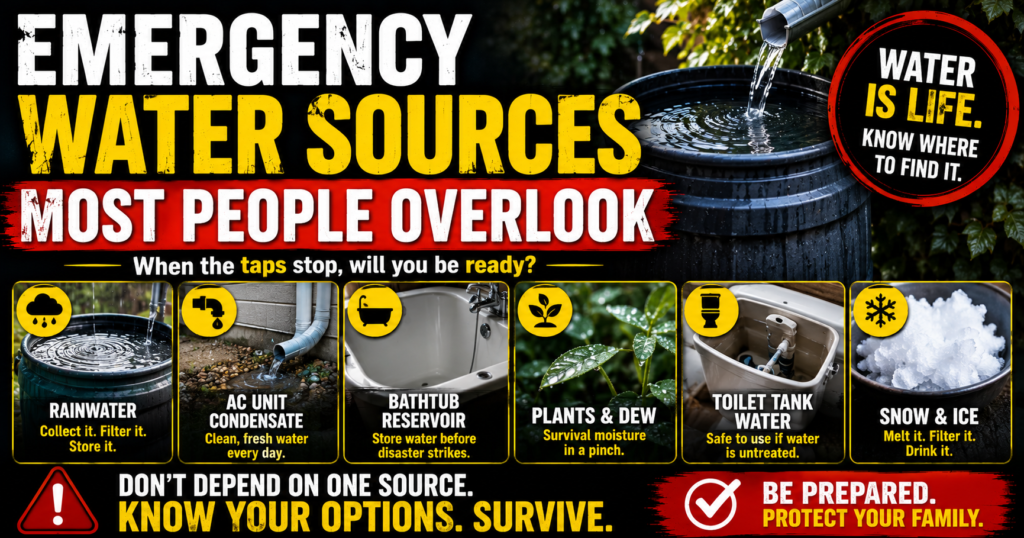
Our guide to emergency water sources most people overlook goes much deeper into those options.
The basic idea is simple.
Not every gallon needs to serve the same purpose.
My Hot Water Heater May Hold Additional Water
There’s another water source sitting inside many homes that people completely forget about.
The tank-style water heater.
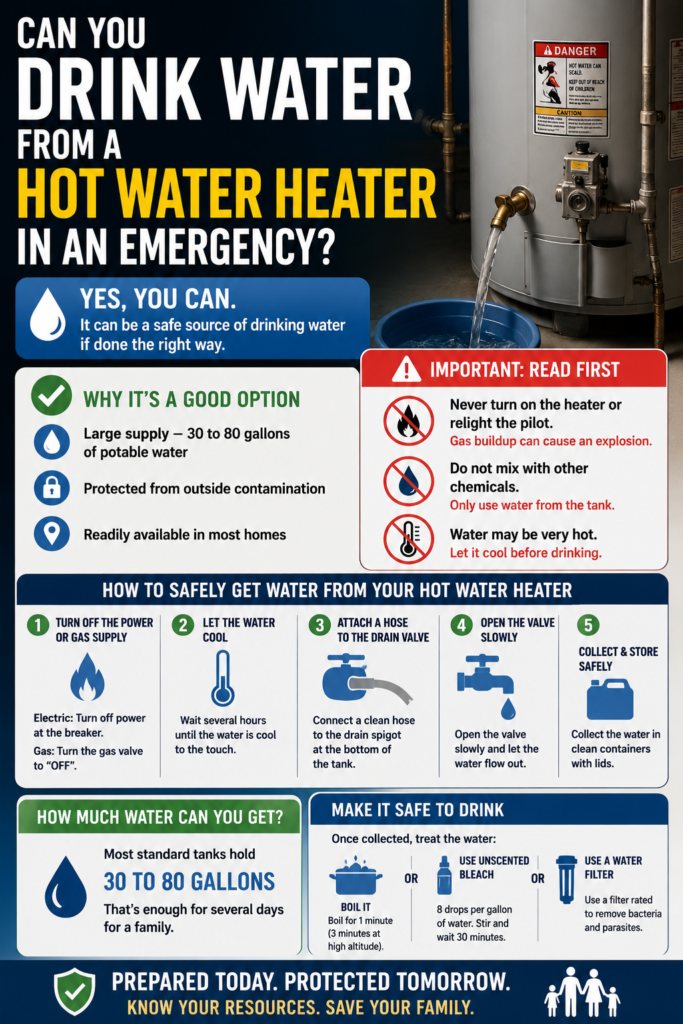
We’ve already covered whether water from a hot water heater can be used during an emergency.
I don’t count on that instead of storing water.
But in a longer outage, knowing where additional water exists gives me more options.
And options are what preparedness is really about.
I Keep a Water Filter Even Though I Own a Well
Having a well doesn’t guarantee unlimited emergency drinking water.
If the pump doesn’t work and the outage lasts long enough, I may eventually need another source.
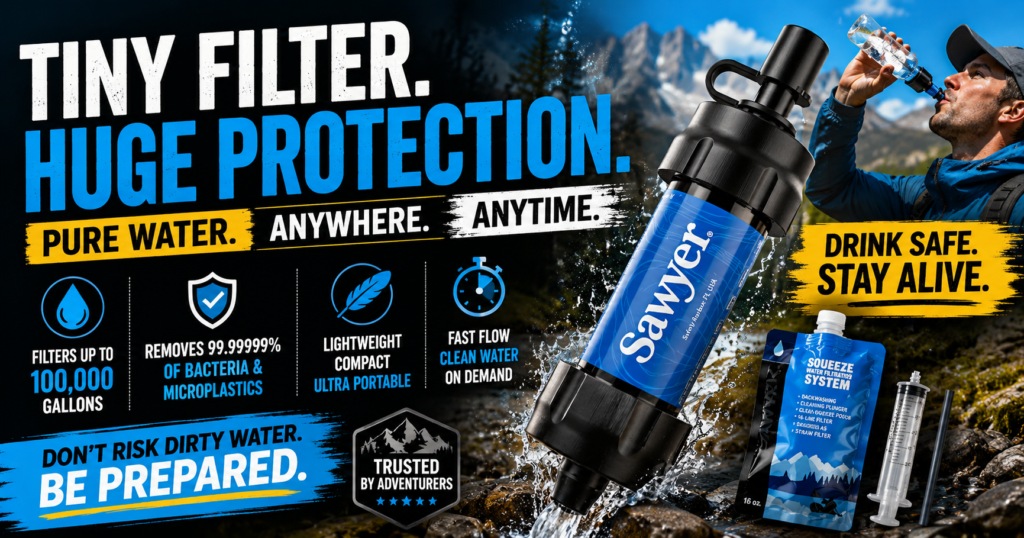
That’s why I like keeping a compact Sawyer Mini water filter as another emergency layer.
It’s small enough that storing one is easy.
The Backup Filter I’d Keep With My Water Supplies
If my stored water eventually runs low, I want another way to deal with suitable alternative sources.
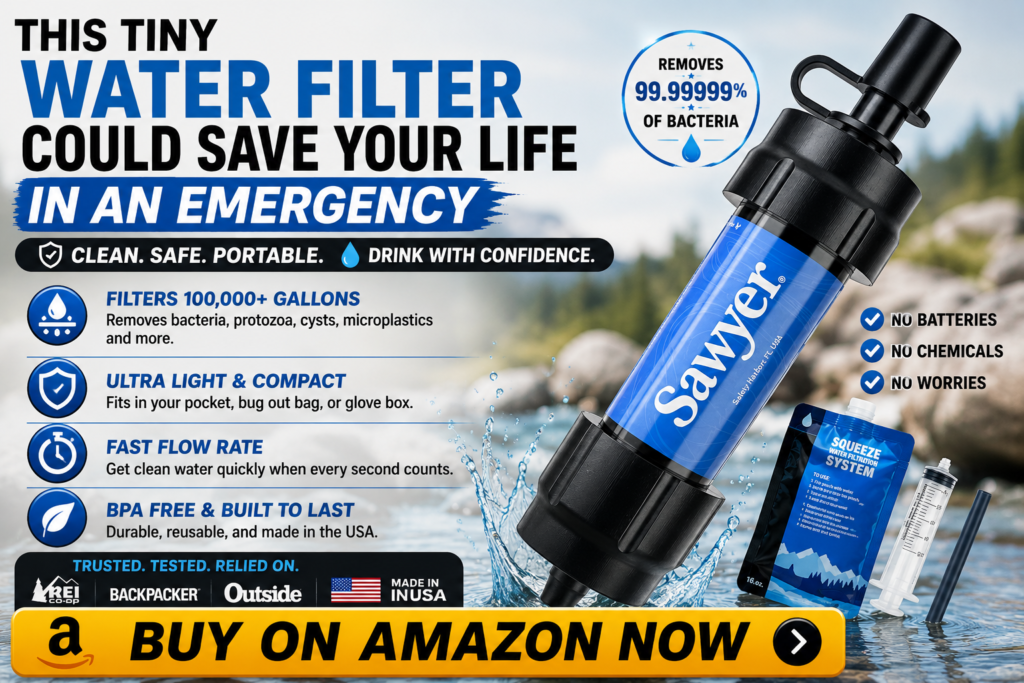
Check the Sawyer Mini water filtration system on Amazon
A filter doesn’t replace stored water or make every contaminated source safe, but it gives me another option I wouldn’t otherwise have.
I Don’t Assume Clear Well Water Is Automatically Safe After Flooding
Power outages often happen during severe storms.
Severe storms can also bring flooding.
If floodwater has reached or potentially contaminated the well, that’s a completely different situation from a simple electrical outage.
I don’t say:
“The pump works again, so the water must be fine.”
Flood contamination may require well inspection, disinfection, and water testing before I rely on it for drinking.
That’s especially important if surface water has reached the wellhead.
I Protect the Wellhead Before the Storm Too
Preparedness isn’t only about the pump.
I want the well itself maintained properly.
I pay attention to:
- Well cap condition
- Drainage around the wellhead
- Physical damage
- Potential contamination sources
- Flood risk
If severe weather damages the well, restoring electricity doesn’t necessarily restore safe drinking water.
Winter Adds Another Problem
A winter power outage can affect the well while also threatening plumbing inside the house.
Now I’m dealing with two separate water concerns.
The pump isn’t working.
And pipes may freeze as the house gets colder.

That’s why my winter power outage strategy includes thinking about plumbing before indoor temperatures get dangerously low.
A burst pipe can turn an electrical outage into a major home repair.
I Know Where My Main Water Shutoff Is
Every capable adult in my household should know this.
If a pipe breaks, I don’t want to start searching for the shutoff while water is pouring into the house.
I locate it beforehand.
I make sure it’s accessible.
I make sure I understand how to operate it.
That’s preparedness that costs me nothing.
A Generator Can Solve the Well Problem, but It Creates Other Responsibilities
Once I start using a generator, I now have:
- Fuel management
- Carbon monoxide safety
- Electrical load management
- Weather protection
- Maintenance
- Refueling procedures
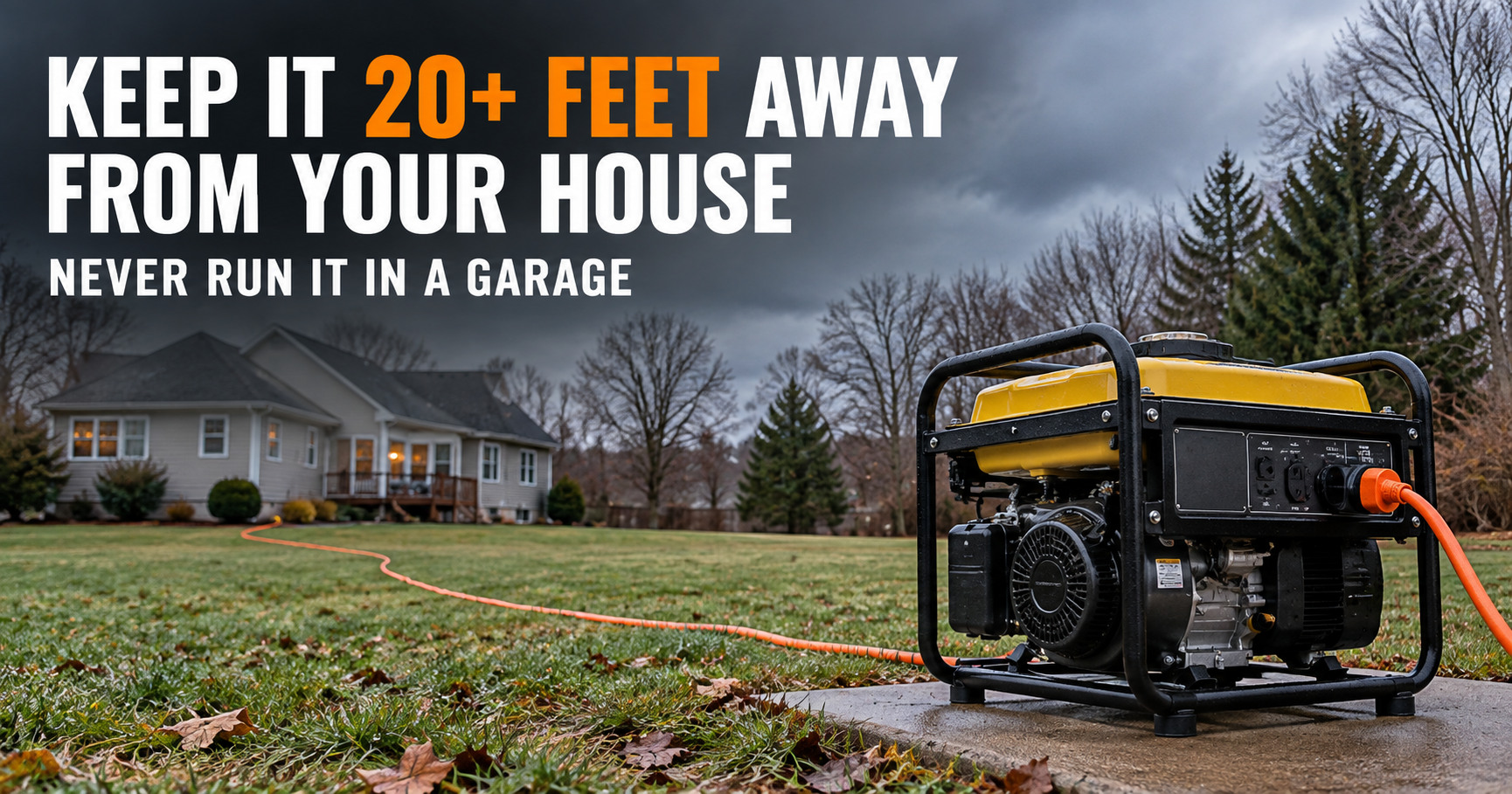
That’s why I’ve already covered how far I keep my generator from the house.
The well needing electricity doesn’t change my generator safety rules.
The generator stays outside.
I Treat Water as a Higher Priority Than Convenience Power
If generator capacity is limited and I have to choose between running the well pump and powering entertainment equipment, that’s not much of a decision for me.
Water wins.
If I can use generator power to:
Fill water containers.
Restore pressure.
Handle sanitation.
Protect my household water supply.
That’s useful generator time.
I can live without television.
My Well-Outage Plan Is Simple
Before severe weather:
- Store drinking water.
- Fill additional containers if the threat is serious.
- Know what pump I own.
- Know whether my generator can actually start it.
- Test the backup setup.
- Keep generator fuel available.
- Know where my main water shutoff is.
- Maintain the well and wellhead.
- Keep backup filtration available.
After the electricity goes out:
- Conserve the remaining pressure immediately.
- Stop unnecessary water use.
- Use stored drinking water first.
- Restore the pump with properly sized backup power if my system supports it.
- Refill emergency containers while the pump is running.
- Protect drinking water from being wasted on sanitation.
- Watch for freezing or contamination problems.
That’s far better than discovering the well depends on electricity after the faucets stop.
The Best Time to Solve This Is While the Faucet Still Works
That’s the part I keep coming back to.
A private well gives me a lot of independence.
But it isn’t automatically independent from electricity.
The water can be sitting hundreds of feet below my property and still be completely inaccessible from the kitchen sink if I don’t have a working pump.
So I plan for that connection ahead of time.
I store water.
I understand my pressure tank.
I learn what my pump actually needs.
And if running the well during an outage matters to my household, I build a proper backup-power plan around the pump before the storm arrives.
Then when the lights go out, I don’t have to wonder whether the water is next.
I already know what I’m going to do.
About the Author
Caleb Mercer writes about blackout preparedness, backup power, private-well outages, emergency water, and practical ways to keep a household functioning when utilities fail. His work for the Survive Essentials Power Outages and Backup Power section focuses on understanding how household systems depend on one another so families can solve problems before an outage turns one failed utility into several.