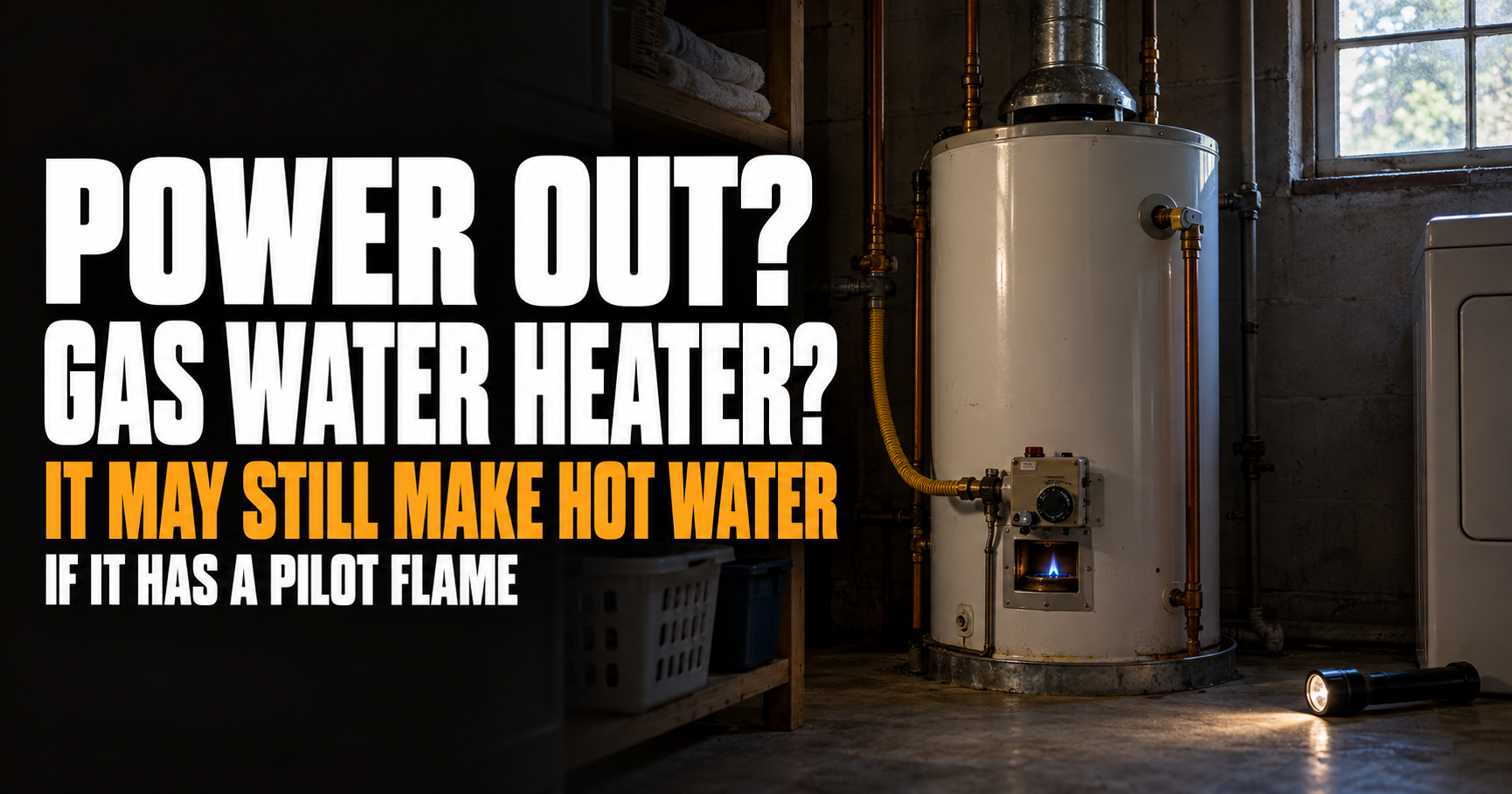
When my electricity goes out, having a gas water heater doesn’t automatically mean I’ll still have unlimited hot water.
Sometimes I will.
Sometimes I won’t.
The difference usually comes down to how my particular water heater ignites the burner, controls the gas, and vents the exhaust.
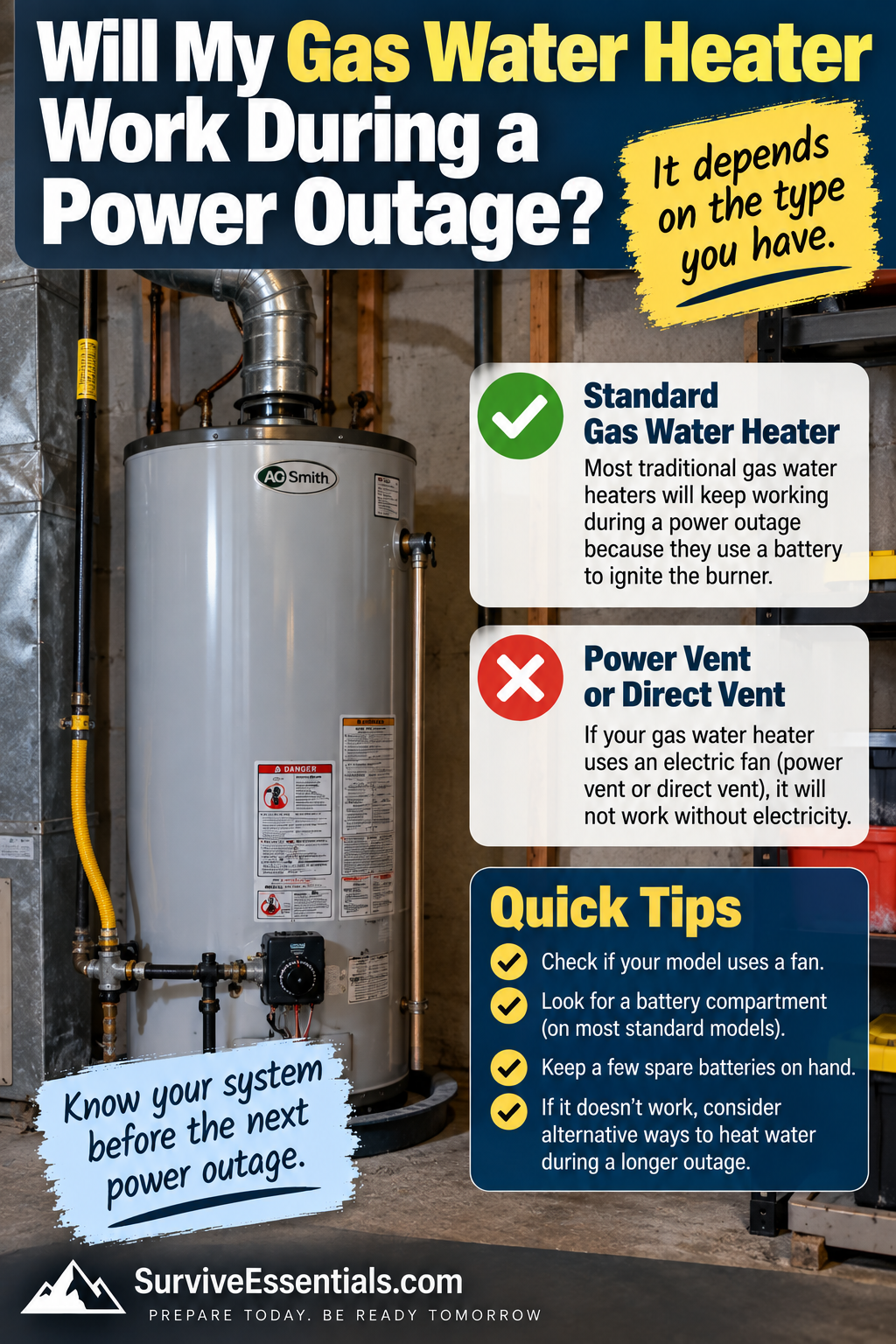
An older tank-style gas water heater with a standing pilot and natural draft may keep heating water through the entire blackout.
A newer gas water heater with electronic ignition may stop heating.
A power-vented gas water heater normally needs electricity for its blower.
And most gas tankless water heaters still need electricity even though natural gas or propane creates the heat.
So I don’t look at the word “gas” on the water heater and assume I’m covered.
I figure out what kind I actually own.
The Quickest Answer Depends on My Water Heater
Here’s how I think about the common types.
Traditional Gas Tank With a Standing Pilot
This is the setup most likely to keep working normally without household electricity.
The small pilot flame stays lit and can ignite the main burner when the tank needs heat.
If the unit uses mechanical or self-powered controls and natural-draft venting, grid electricity may not be necessary for normal operation.
Gas Tank With Electronic Ignition
This may stop heating when the electricity goes out.
Gas is still available, but the system may need electricity to control and ignite the burner.
Power-Vented Gas Water Heater
I expect this type to need electricity.
The powered exhaust blower is part of the safe operating system.
No blower means the heater shouldn’t simply keep burning gas and dumping exhaust wherever it can go.
Gas Tankless Water Heater
I also expect most modern gas tankless units to stop producing hot water without electricity.
Gas provides the heat, but electricity commonly powers the controls, ignition, sensors, and combustion fan.
That’s why I identify the heater before making any blackout plans around it.

I Look for a Power Cord First
This isn’t a perfect diagnostic method, but it’s an easy clue.
If my gas water heater is plugged into a normal electrical outlet, that’s a pretty strong sign electricity is involved in its operation.
I look around the heater.
Is there a cord?
Electronic display?
Powered blower sitting on top?
Control panel?
Electrical disconnect?
Those clues tell me I’m probably not dealing with an old-school completely grid-independent tank.


A Blower on Top Is a Big Clue
Power-vented water heaters are usually easy to recognize once I know what I’m looking for.
Instead of relying entirely on hot exhaust naturally rising through a conventional flue, they use an electric blower to move combustion gases.
That blower requires electricity.
So if I see one, I don’t expect the water heater to operate normally during a blackout unless I have compatible backup power.
I definitely don’t try to bypass the blower or its safety controls.
The venting system is part of what keeps combustion gases out of my house.
I Look at the Ignition System Too
A standing pilot is another useful clue.
That’s the little flame that stays burning continuously.
Traditional gas water heaters using a standing pilot may be able to operate without normal household electricity.
Electronic ignition is different.
If the heater needs an electrically generated spark or another electrically powered ignition system every time the burner fires, the outage can prevent the burner from lighting.
That’s why two neighbors can both have natural-gas water heaters and get completely different results during the same blackout.
The Manual Gives Me a Better Answer Than Guessing
If I’m still unsure, I find the model number.
Then I check the manufacturer’s instructions for that exact unit.
I’m looking for things like:
- Electrical requirements
- Ignition type
- Venting system
- Power-failure instructions
- Restart procedures
- Backup-power restrictions
That’s much better than deciding based on the water heater’s age or appearance.
I May Still Have Hot Water Even If the Heater Stopped Heating
This is an important distinction.
A tank-style water heater stores hot water.
If the power goes out and the burner can no longer operate, the hot water already inside the insulated tank doesn’t instantly become cold.
I may still have usable hot water for a while.
How long depends on things like:
- Tank size
- Insulation
- Starting temperature
- How much hot water we use
- Incoming cold-water temperature
So the first hot shower after the outage doesn’t necessarily prove the water heater is still operating.
I may simply be using heat that was already stored in the tank.


I Conserve That Stored Hot Water
If I know the water heater can’t reheat during the outage, I treat hot water like another limited resource.
I’m not taking a 30-minute shower.
I’m not letting hot water run while washing dishes.
I use what I need and conserve the rest.
That’s especially important if I have no idea whether the electricity will return in an hour or two days.
A Gas Tankless Heater Is Different
Tankless sounds like it should be perfect for a blackout.
There’s no giant electric heating element if it’s gas-fired.
But the burner isn’t the only thing happening inside a modern tankless unit.
The heater may need electricity for:
- Electronic controls
- Flow sensors
- Ignition
- Gas-valve control
- Combustion fan
- Safety sensors
- Temperature regulation
Without those systems, the unit generally won’t simply start producing hot water.
So I don’t assume “gas tankless” means “off-grid hot water.”


The Good News Is Some Gas Units Don’t Need Much Backup Electricity
This is where gas water heaters can still have an advantage.
If gas is providing the actual heat and electricity is only running controls, ignition, and a blower, the electrical requirement may be much smaller than electrically heating an entire tank of water.
That can make backup power more realistic.
But I still check the exact manufacturer’s electrical specifications before connecting anything.
I Don’t Guess About Battery Backups
A small UPS or battery system may look like an obvious solution for a gas tankless heater or electronically controlled tank heater.
Maybe it is.
Maybe the manufacturer doesn’t approve that particular setup.
Maybe the unit requires a certain power quality.
Maybe the venting system has startup requirements I haven’t considered.
I don’t improvise backup power for a combustion appliance.
I check what the manufacturer allows.

A Generator May Keep Some Gas Water Heaters Running
If the water heater requires ordinary electrical power for controls or venting, a generator may potentially supply it.
Again, I verify the electrical requirements first.
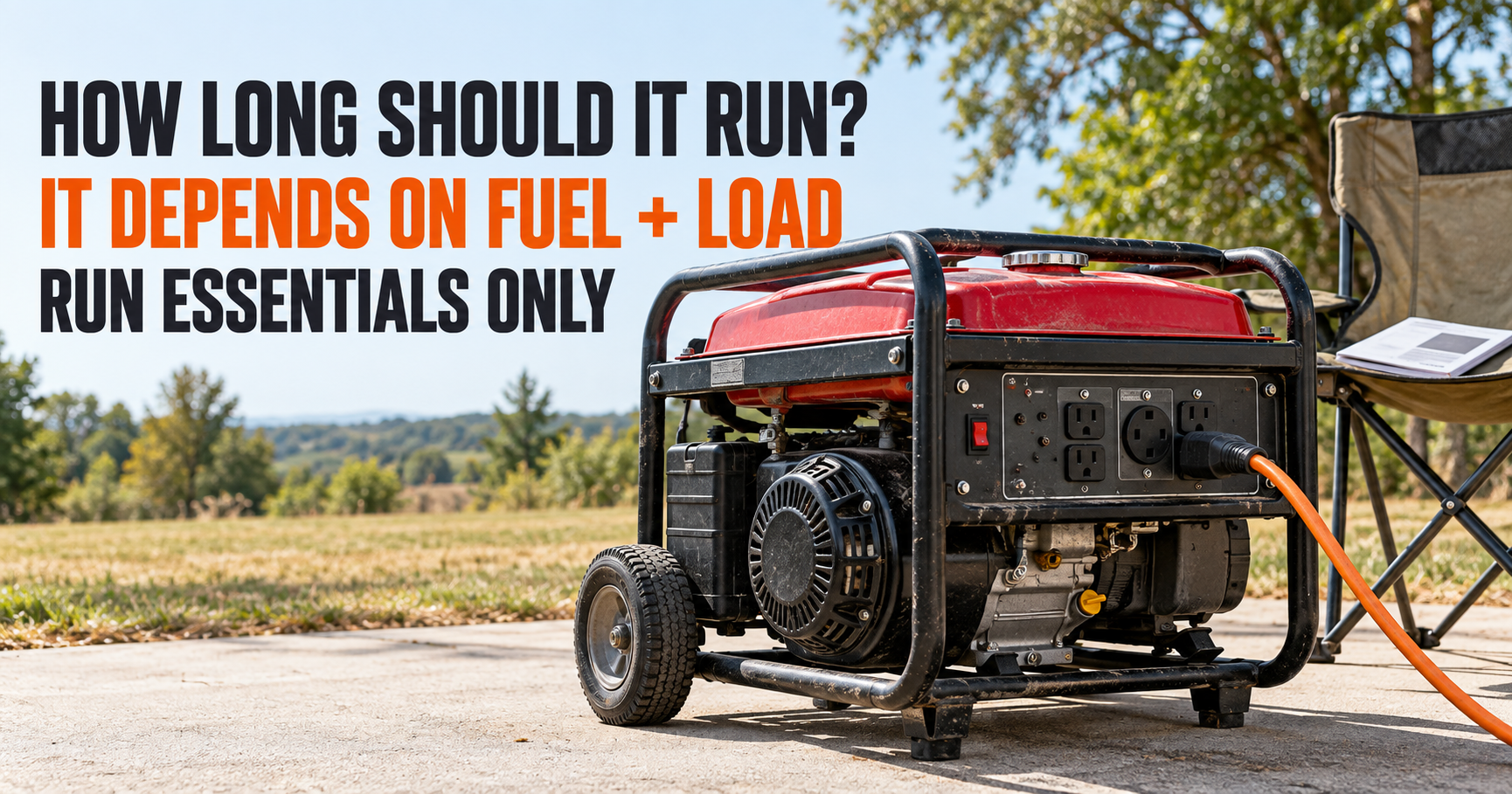
We’ve already covered how I manage generator runtime during a power outage.
A water heater becomes another possible load in that plan.
But I don’t automatically prioritize hot showers over refrigeration, water pumping, medical equipment, or other critical loads.
I Prioritize the Well Before the Water Heater
This is especially important in a house with a private well.
If the well pump isn’t running, producing hot water isn’t my first problem.
I need water.
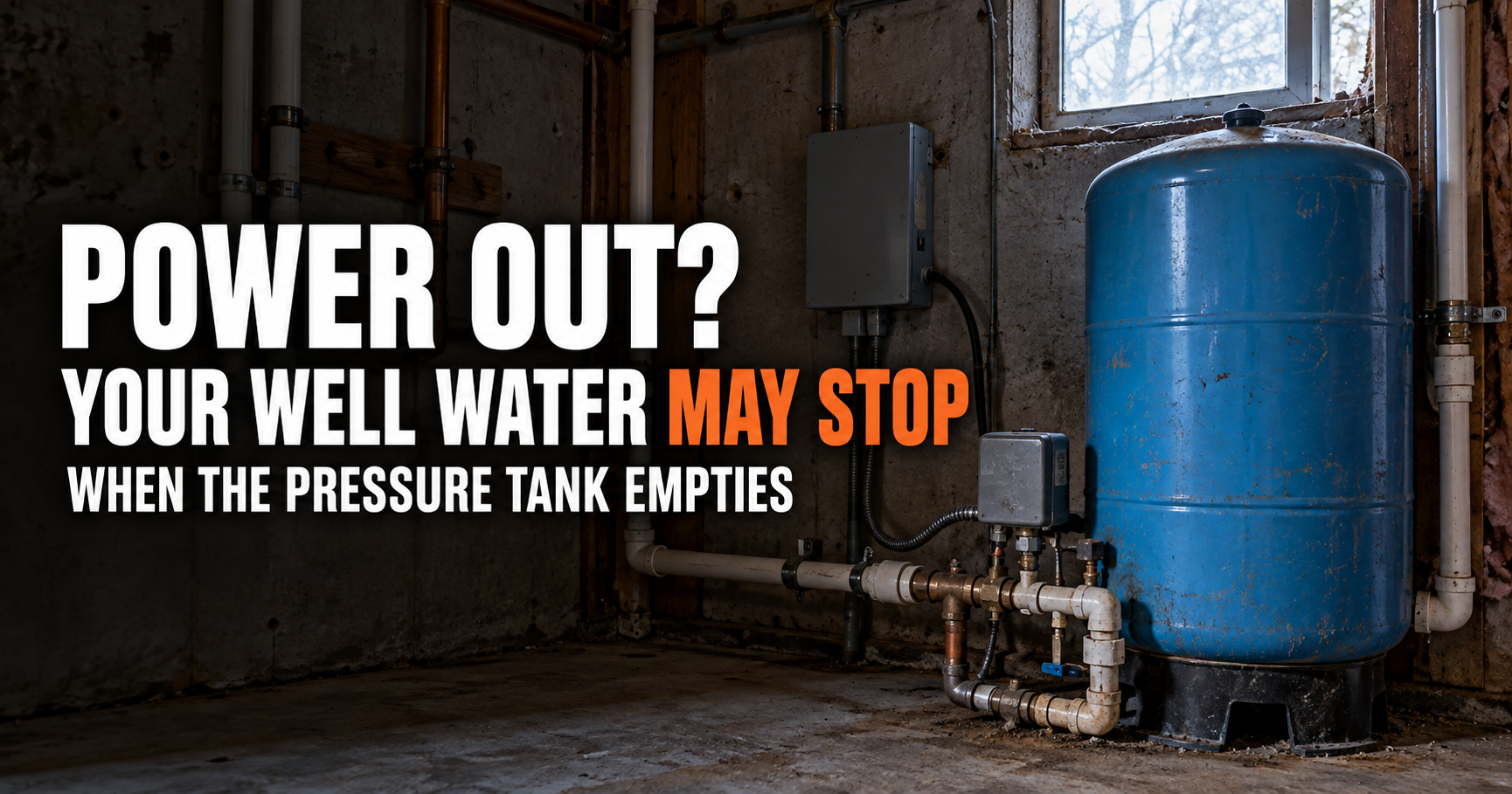
That’s why I already covered what happens to my well during a power outage.
If generator capacity is limited, restoring water pressure may matter far more than reheating the water.
Hot water isn’t particularly useful if I can’t get water into the house.
City Water Makes the Situation Easier
If I’m connected to municipal water and pressure remains normal, cold water may continue flowing even when my water heater can’t heat it.
That means I still have:
- Drinking water
- Toilet water
- Hand-washing water
- Cooking water
Hot water becomes a comfort and hygiene problem rather than a total water-supply problem.
That’s a much easier emergency to manage.
I Don’t Waste Stored Drinking Water Just Because Hot Water Is Gone
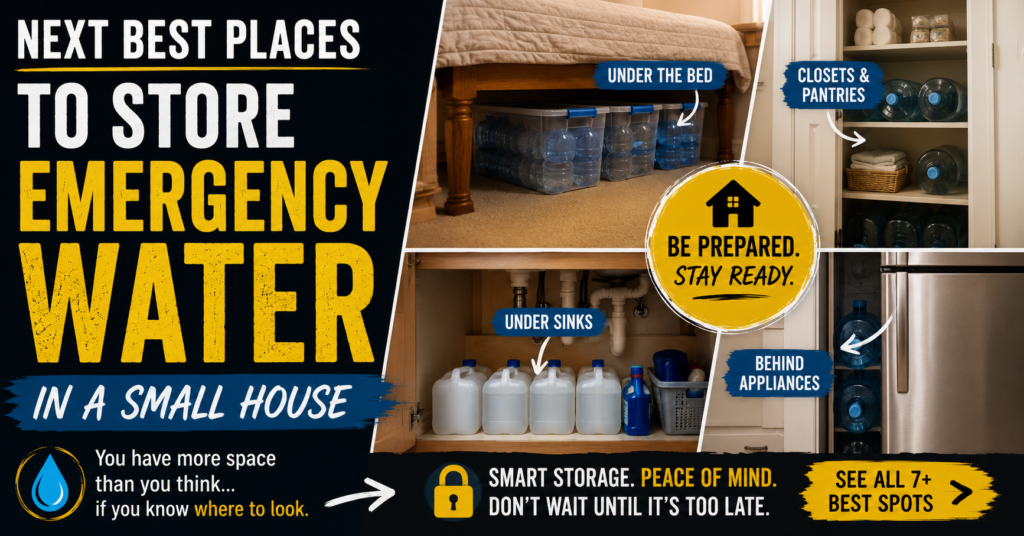
This connects directly with the emergency-water cluster we already built.
If I still have safe cold tap water, I use it appropriately.
If normal water service is affected too, I protect the clean water I’ve stored.
Our complete emergency water preparedness guide covers the larger strategy.
Electricity, water, and hot water are connected, but they’re not the same problem.
The Water Heater Itself Can Be an Emergency Water Source
This is one of the most useful things many homeowners don’t realize.
A tank-style water heater may contain dozens of gallons of water.
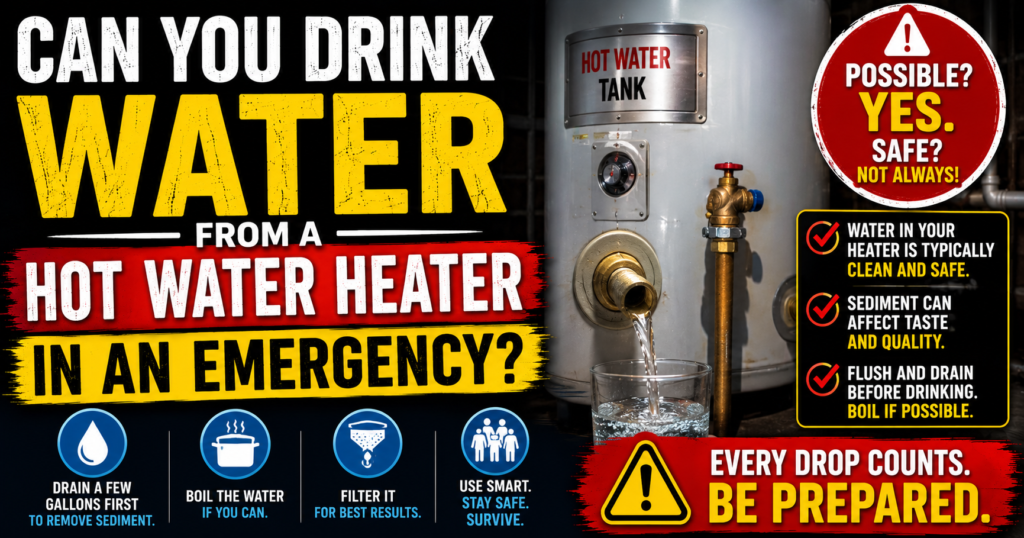
We’ve already covered using water from a hot water heater during an emergency.
That’s a different issue from whether the heater can continue making hot water.
Even if the burner can’t operate, the tank may still represent a substantial amount of stored water.
That’s another reason I learn how my own system works before an emergency.
I Don’t Drain the Water Heater Casually
Knowing that water exists in the tank doesn’t mean I immediately drain it the second the electricity fails.
If normal water service remains available, there’s usually no reason.
If I’m considering using tank water during a genuine water emergency, I follow the appropriate procedure for my system.
Gas and electric water heaters have different shutdown considerations.
I don’t start opening valves on equipment I don’t understand.
I Never Bypass a Power-Vent Safety System
This deserves its own section.
If my gas water heater won’t run because the electric exhaust blower has no power, I don’t try to make the burner operate without the blower.
I don’t jumper switches.
I don’t bypass sensors.
I don’t modify venting.
The unit is designed to verify safe venting before allowing combustion.
That’s exactly the kind of safety system I leave alone.
Carbon Monoxide Still Matters
Anything burning natural gas or propane produces combustion gases that need to be vented properly.
So even if my gas water heater works perfectly during the outage, I still want working carbon monoxide alarms.
And because we’re specifically talking about a power outage, I want CO protection that doesn’t become useless when grid electricity disappears.
Battery-powered alarms or alarms with functioning battery backup are important layers.
If I Smell Gas, Hot Water Stops Being My Concern
If I smell gas around the water heater or anywhere else inside the house, I don’t keep troubleshooting because everyone wants a shower.
I treat a suspected gas leak seriously.
I leave the area and follow the gas utility’s emergency instructions from a safe location.
Getting hot water working is never worth ignoring a fuel-gas problem.
I Don’t Manually Light Something That Isn’t Designed for It
Older standing-pilot water heaters may have manufacturer procedures for relighting the pilot.
Electronic-ignition units are different.
I don’t hold a lighter inside an electronically controlled water heater because the power is out.
If the manual doesn’t tell me to manually light it, I don’t invent my own procedure.
When the Power Comes Back, I Give the Heater Time
If I have an electronically controlled or power-vented gas water heater, restoring electricity may allow it to resume normal operation.
That doesn’t necessarily mean instant hot water.
If the tank cooled substantially, the burner needs time to reheat it.
A tankless unit may resume on-demand operation more quickly once all of its required systems have power.
I don’t start resetting everything repeatedly if it doesn’t produce hot water in ten seconds.
I Check for Error Codes Before Resetting Things
Modern water heaters often provide diagnostic lights or displays.
If mine doesn’t resume normal operation, I look for the manufacturer’s fault information.
An error code is useful.
Repeatedly unplugging the heater, resetting breakers, or trying random fixes can erase useful clues without solving the actual problem.
I prefer information over guessing.
I Don’t Confuse an Outage Problem With a Gas-Supply Problem
Sometimes two things happen at once.
Maybe the electricity is out.
Maybe propane is also low.
Maybe the gas utility interrupted service.
Maybe a pilot blew out.
Maybe a storm damaged venting.
If the water heater isn’t working after electricity returns, I don’t automatically assume the outage itself caused everything.
I troubleshoot methodically or call someone qualified.
What About an Electric Water Heater?
An electric tank water heater is simpler in one sense.
No grid electricity means the heating elements aren’t heating.
But the already-hot water stored in the insulated tank can remain warm for a while.
I conserve it.
Running a typical electric water heater from a small portable generator is a much bigger electrical challenge than supplying the modest controls on many gas-fired systems.
That’s why I don’t treat all water heaters the same in my backup-power plan.
I Figure Out My Water Heater Type Before Storm Season
This takes a few minutes.
I look at the unit.
I find the model number.
I read the manual.
Then I answer:
- Gas or electric?
- Tank or tankless?
- Standing pilot or electronic ignition?
- Natural draft or power vent?
- Does it plug into an outlet?
- What happens when power fails?
- What does the manufacturer allow for backup power?
Now I know exactly what to expect.
That’s far better than discovering it while the house is dark.
My Blackout Hot-Water Plan Is Pretty Simple
If I have a standing-pilot gas tank that doesn’t require household electricity, I may be fortunate enough to keep normal hot water.
If I have an electronic or power-vented gas tank, I expect stored hot water to be available initially but don’t assume the heater can reheat without backup power.
If I have gas tankless, I expect it to need electricity for controls and safe operation.
If I have an electric water heater, I know the stored heat is finite.
Then I plan around what I actually own.
I Don’t Build an Emergency Around Hot Showers
Hot water is nice.
It’s useful for cleaning and comfort.
But during a serious outage, it isn’t at the top of my priority list.
I’m thinking about:
Safe drinking water.
Heat during winter.
Food preservation.
Medical needs.
Communication.
Sanitation.
Those things come first.
If I can maintain hot water too, great.
If I can’t, I adapt.
That’s the mindset behind my larger power outage preparedness plan for a long blackout.
Find Out What You Own Before the Lights Go Out
This entire question becomes much easier once I stop thinking in terms of “gas water heater” and start thinking about the actual equipment.
Standing pilot?
Electronic ignition?
Power vent?
Tankless?
Those details determine whether natural gas alone is enough.
The good news is that I don’t need to wait for an outage to find out.
I can walk over to the water heater today, find the model number, check the electrical connection, and read the manual.
Five minutes of figuring that out now means one less mystery to solve with a flashlight later.
And that’s exactly the kind of preparedness I want.
About the Author
Caleb Mercer writes about blackout preparedness, household backup power, heating, water systems, generators, and the everyday equipment people discover they depend on only after utilities fail. His work for the Survive Essentials Power Outages and Backup Power section focuses on understanding how real household systems behave during outages so families can plan around the equipment they actually own.