If someone told me my electricity was going to shut off Friday evening and wouldn’t come back until Monday evening, I wouldn’t fill a shopping cart with every survival gadget I could find.
I’d think about what my family is actually going to do for those 72 hours.
We need to drink.
We need to eat.
We need light after dark.
We need working phones.
We need a way to know what’s happening.
We may need heat in January or relief from dangerous heat in July.
We need toilets and basic sanitation.
And I need to keep a short power outage from becoming an expensive mess involving spoiled food, frozen pipes, or a dead well pump.
Three days is long enough to expose almost every weakness in a household preparedness plan.
It’s also short enough that I can prepare for it surprisingly well without turning my home into a survival warehouse.
I Start With Water, Not the Generator
If I’m preparing for three days, water comes first.
Electricity and water can fail together.
That’s especially obvious if I’m on a private well, but municipal systems can have problems during major disasters too.
For a normal 72-hour setup, I want enough drinking water already stored that I’m not depending on finding or filtering water immediately.
And I don’t only think about drinking.
I’m thinking about water for:
- Cooking
- Medications
- Basic hygiene
- Pets
- Sanitation
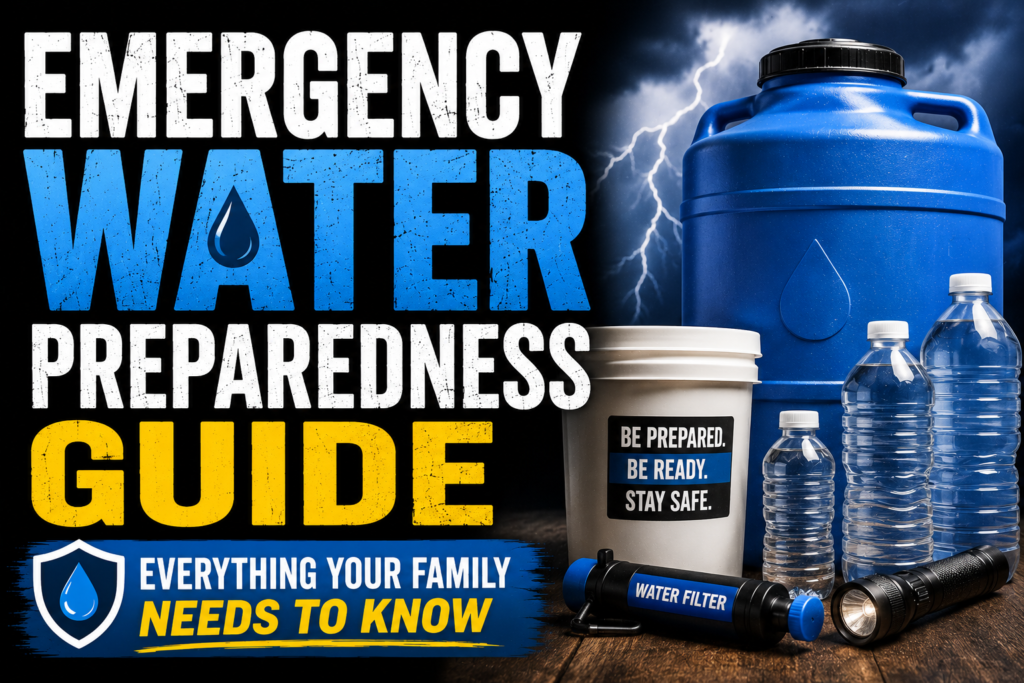
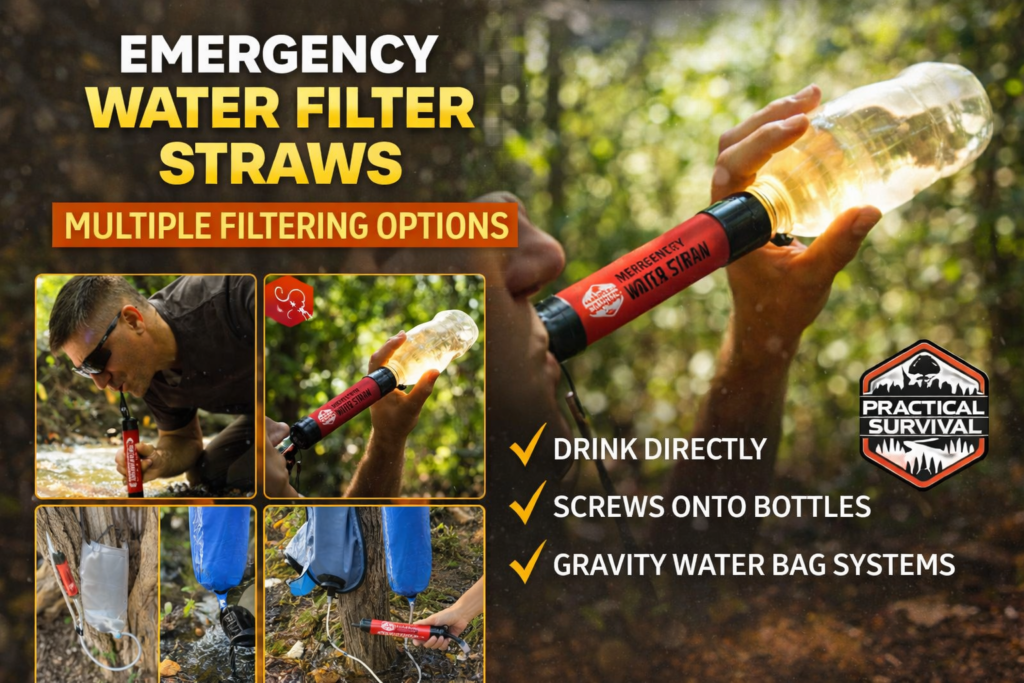
We’ve already built a complete emergency water preparedness guide around this because water deserves its own plan.
If I discovered tonight that my family didn’t have enough emergency water, I’d fix that before buying another flashlight.
If I’m on a Well, I Store More Water Before the Storm
This is one of those situations where knowing my house matters.
If I use a private well, the pump normally needs electricity.
I may have some usable pressure after the outage begins, but I don’t treat that as a three-day water supply.
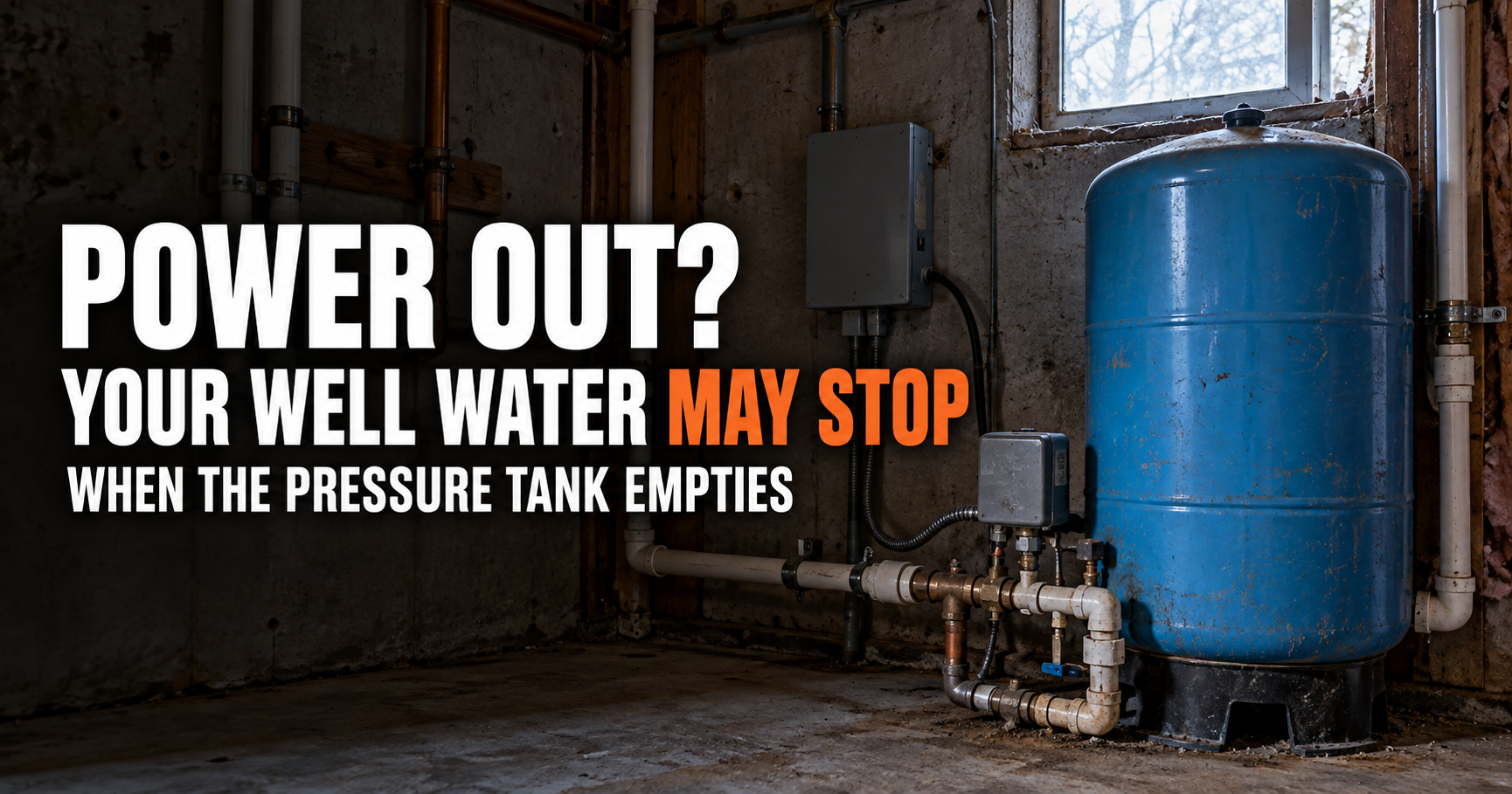
I’ve covered exactly what happens to my well water when the electricity goes out.
If severe weather is approaching, I take advantage of the working pump beforehand.
I fill my emergency containers while electricity is still cheap, easy, and available.
A Bathtub Bladder Can Give Me a Huge Temporary Reserve
This is one product that makes much more sense to me when I’m preparing for a known storm.
I don’t necessarily need 100 gallons of water permanently occupying floor space.
But I might really appreciate having it during a three-day outage.
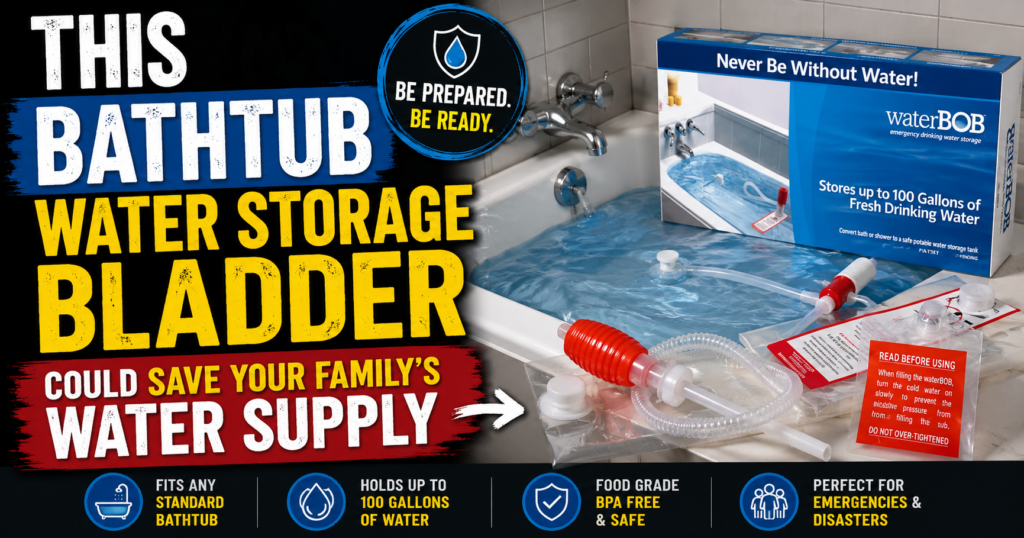
We’ve reviewed a bathtub emergency water bladder that can hold up to 100 gallons.
It folds away when I’m not using it and gives me a way to store a lot of clean tap water before the outage.
The Water Backup I’d Keep Ready for an Approaching Storm
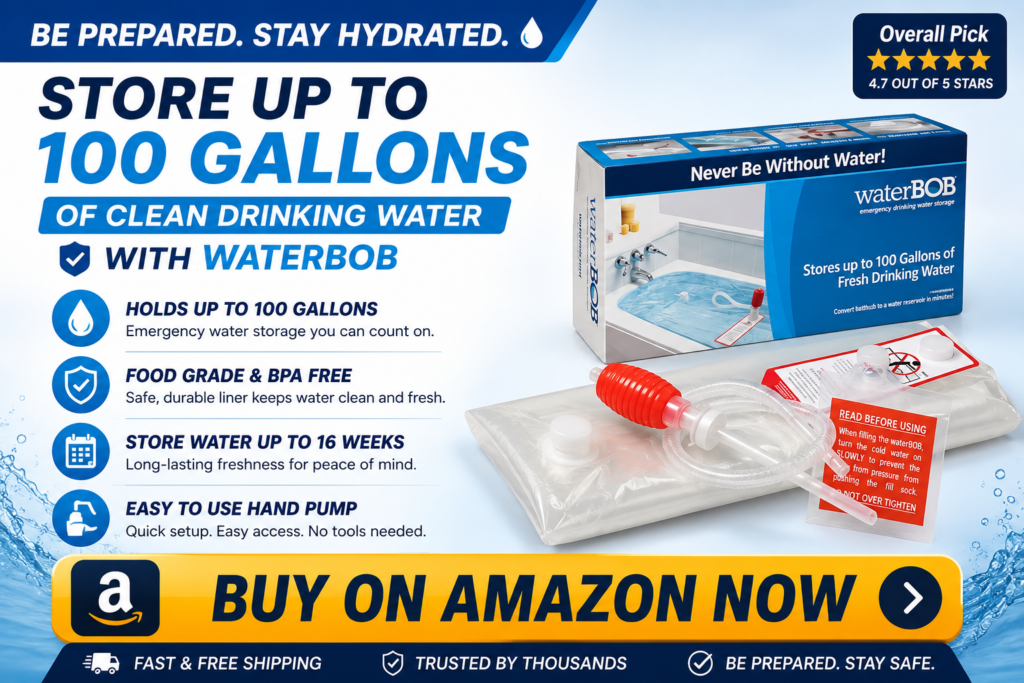
Check the 100-gallon bathtub emergency water bladder on Amazon
For me, this is especially useful in a well-water home where losing electricity can eventually mean losing normal faucet pressure too.
I Want Three Days of Food That Doesn’t Create Another Problem
I don’t need 72 gourmet emergency meals.
I need food we will actually eat and that I can prepare with whatever utilities remain available.
I like a combination of normal pantry food and shelf-stable emergency food.
That might include things like:
- Canned meat
- Peanut butter
- Crackers
- Shelf-stable snacks
- Canned fruit
- Canned meals
- Dry foods that are easy to prepare
- Food that can be eaten without cooking
I don’t want every meal depending on electricity.
That’s the whole point.
I Eat the Refrigerator Food Before the 20-Year Food
This is something I think people get backwards.
If my electricity is going to be off for three days and I can’t keep everything cold indefinitely, I’m not opening expensive long-term emergency food while tonight’s normal groceries spoil.
I use food strategically.
Perishable food gets attention first while it’s still safe.
Shelf-stable food can wait.
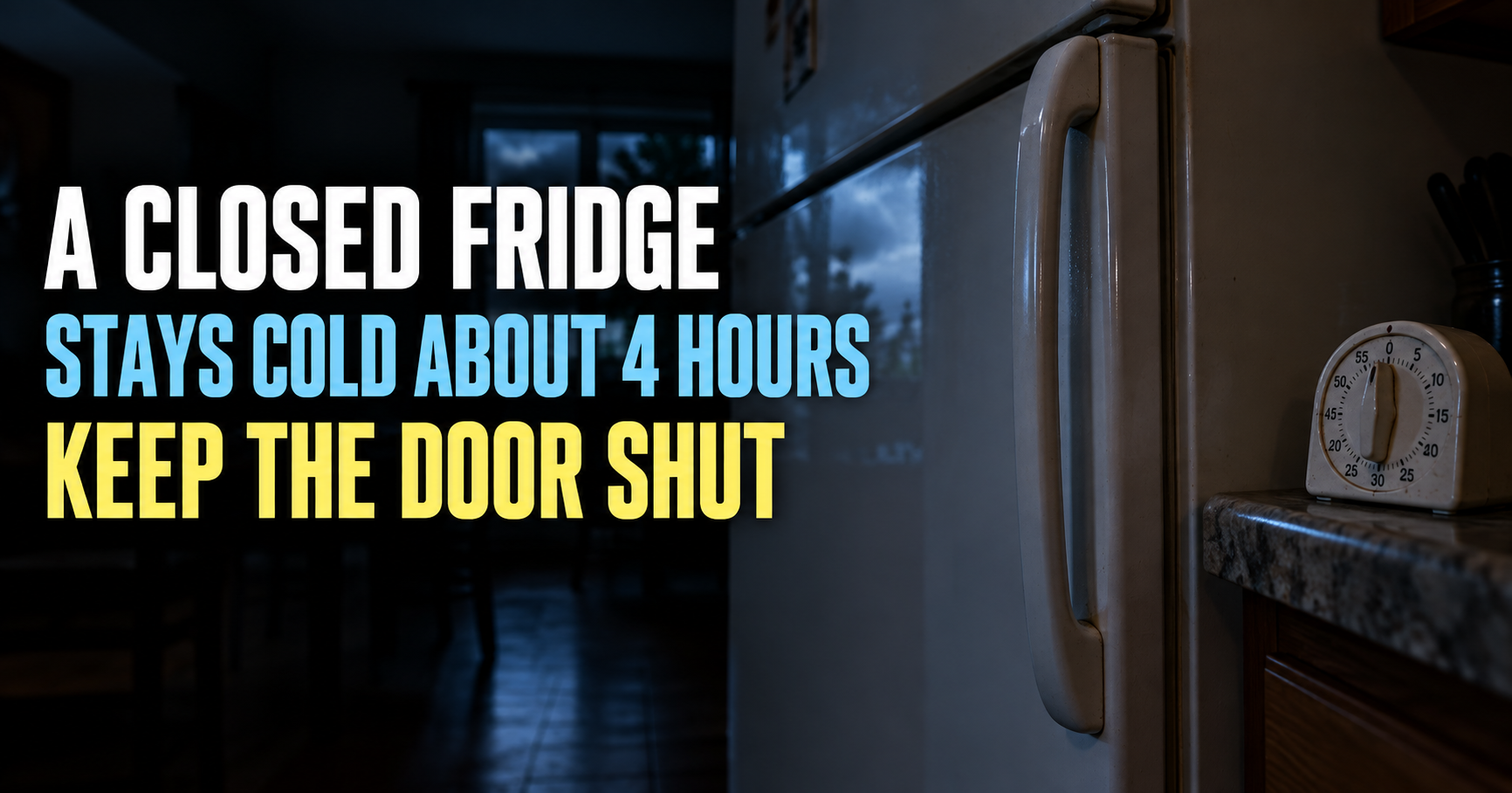
I’ve already covered how long I expect my refrigerator to stay cold without power and how I determine whether my freezer thawed during an outage.
Those are two things I want understood before the blackout.
I Keep a Manual Can Opener
This deserves its own little section because it’s such an easy mistake.
A pantry full of canned food isn’t nearly as useful if the only can opener is electric.
I keep a manual one.
Cheap.
Simple.
No battery.
No fuel.
Exactly the kind of preparedness gear I like.
I Want at Least One Way to Cook Without Grid Electricity
For three days, I can eat a lot of food without cooking.
That doesn’t mean I want to.
A hot meal can make a miserable outage feel a lot more normal.
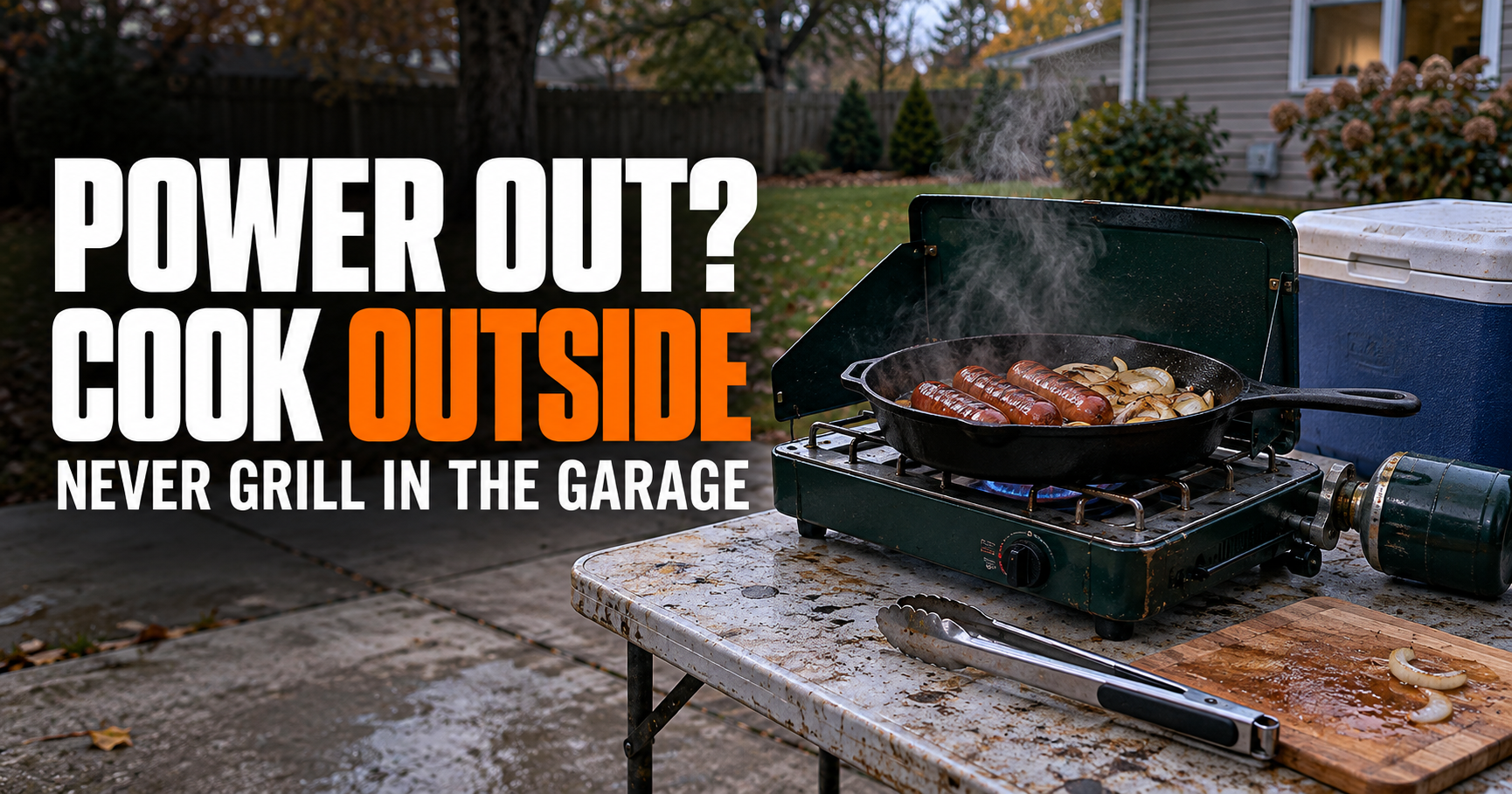
We’ve already covered how I cook food when the power is out.
The biggest thing I remember is that equipment designed for outdoor cooking stays outdoors.
I don’t move a charcoal grill into the kitchen because it’s raining.
I don’t bring a propane grill into the garage.
Carbon monoxide can turn an inconvenient blackout into something much worse.
I Keep Emergency Food Behind My Normal Pantry
I like having another layer behind the food we normally eat.
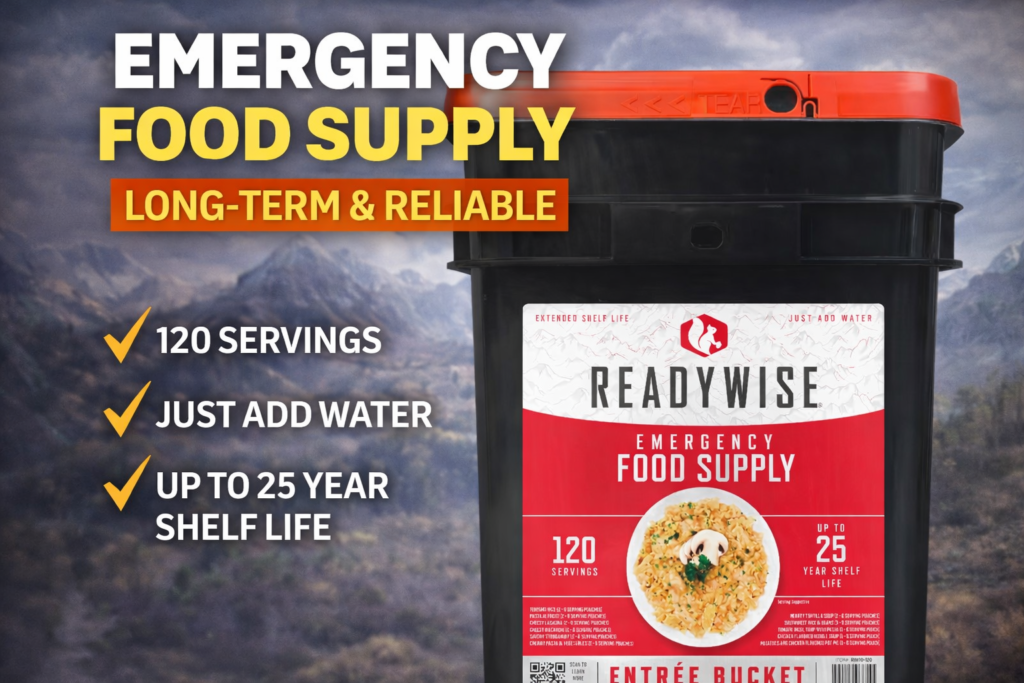
We’ve reviewed an emergency food supply designed for longer disruptions.
I don’t see that as my first meal on Friday night.
I see it as insurance.
If the refrigerator food is gone, stores aren’t functioning normally, roads are bad, or the outage stretches longer than expected, I still have another option.

Every Person Needs a Real Light Source
I don’t count the flashlight on my phone as my household lighting plan.
My phone battery is too useful for communication.
For three days, I want:
- Flashlights
- Lantern-style room lighting
- Spare batteries
- Rechargeable lights where useful
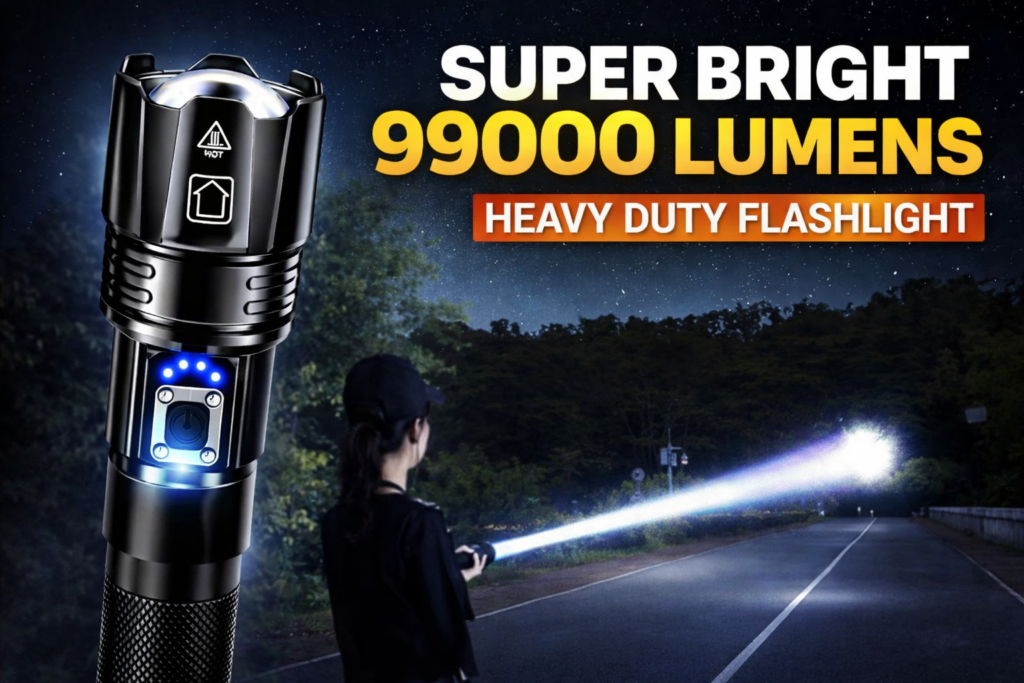
I’ve already reviewed the bright rechargeable flashlight I like for emergency use.
But I don’t want one flashlight for the entire family.
If somebody needs to use the bathroom while I’m outside checking the generator, the house shouldn’t suddenly be dark again.
I Prefer Battery Lights Over Filling the House With Candles
Candles work.
They also introduce open flames when everyone is already moving around differently in a dark house.
I use battery and rechargeable lighting first.
That becomes even more important with kids and pets.
The blackout is already the emergency.
I don’t need to add a house fire.
I Want My Phone Working on Day Three
A fully charged phone on Friday night is not a three-day communication plan.
That’s why I want backup charging.
We’ve already covered how I keep my phone charged during a power outage.
My basic setup includes:
- Charged power bank
- Charging cables
- Vehicle charger
- Generator charging when I’m already running it
- Battery-saving settings
The biggest trick is simply not wasting the battery.
The Solar Power Bank Is One of My Easier Backup Layers
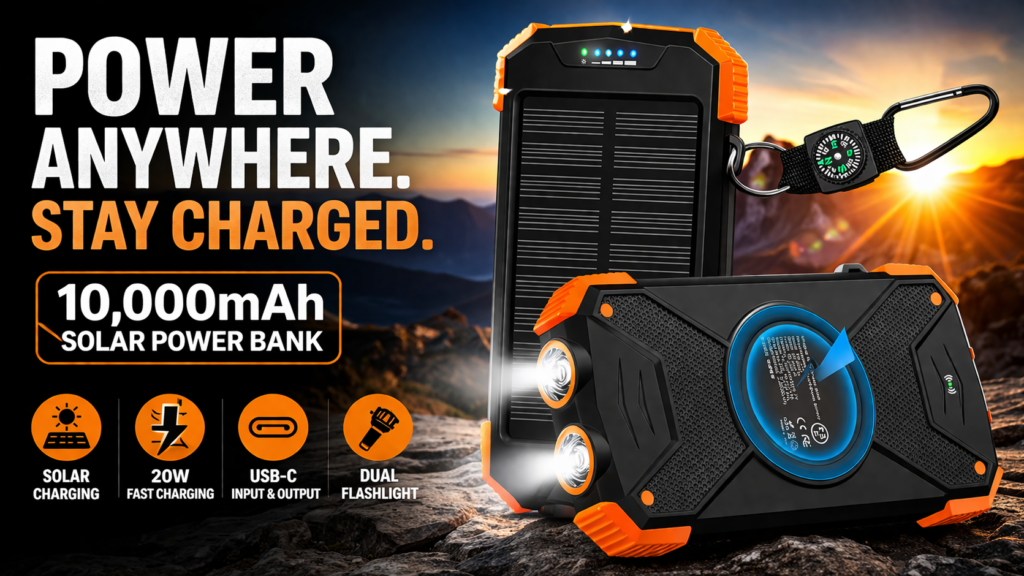
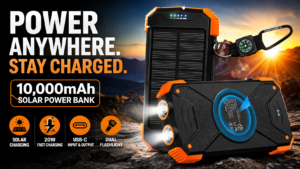
We’ve been using this portable solar power bank as one of the charging options in this cluster.
I like having stored battery power available immediately.
The small solar panel is backup charging, not an excuse to begin the outage with an empty power bank.
The Power Bank I’d Charge Before the Storm
Check the solar power bank on Amazon
I want it sitting at full charge before the weather arrives.
I Want an Emergency Radio That Doesn’t Depend on My Phone
My phone does too many jobs already.
I don’t want to drain it streaming weather coverage for hours.
A separate emergency radio lets me move that job off the phone.
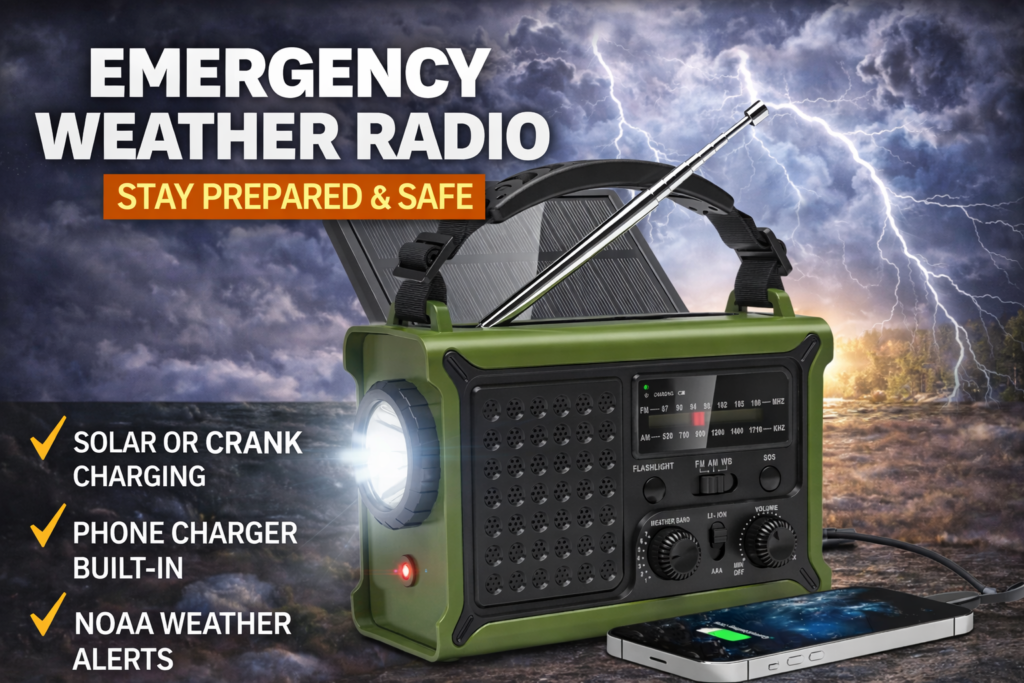
We’ve reviewed the emergency radio I use as an example for blackout communication.
It combines weather information, AM/FM radio, backup charging, lighting, and emergency features.
The Emergency Radio I’d Want During Those 72 Hours
Check the emergency weather radio on Amazon
If cellular service becomes unreliable, I’m especially glad I didn’t make my smartphone the only source of outside information.
I Want a Real First Aid Kit
Three days is plenty of time for somebody to get hurt.
Actually, a blackout can increase the opportunities.
People are walking around in poor lighting.
Using generators.
Cooking differently.
Clearing storm damage.
Handling tools.
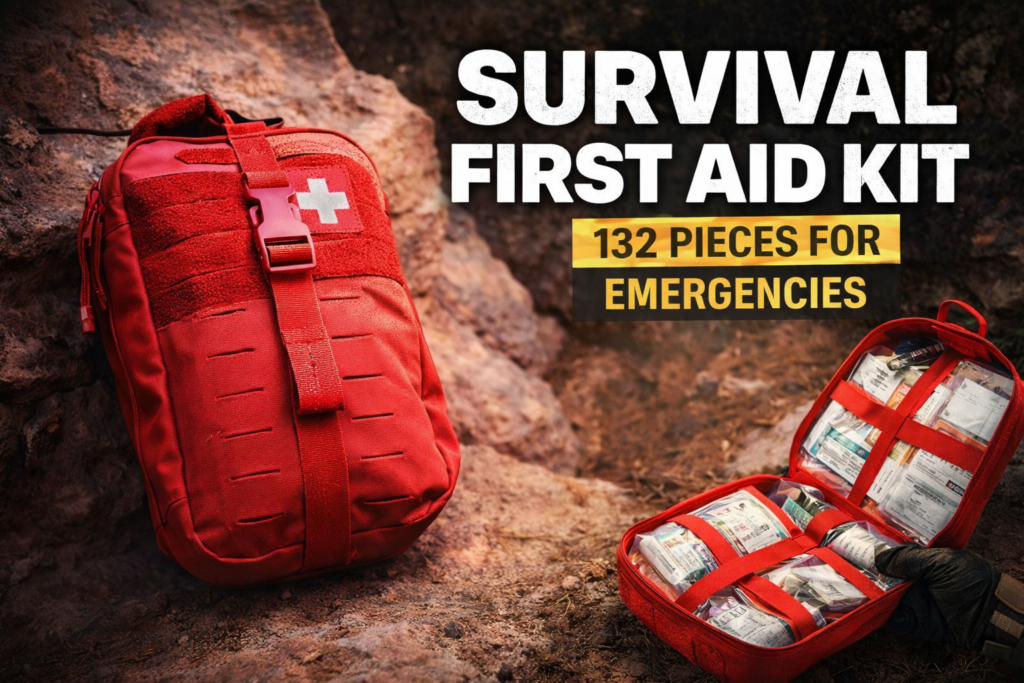
We’ve already reviewed the first aid kit I’d rather have when something more serious happens.

I don’t want to discover during the outage that my “first aid kit” contains six tiny bandages and an alcohol wipe.
I Check Prescription Medications Before the Storm
This is more important than another survival gadget.
If someone in the household takes essential medication, I want enough available.
If a medication requires refrigeration, I need to know how I’m keeping it within its required storage conditions.
I don’t guess about medication temperature requirements.
I check the label and talk with the pharmacist or medical provider when necessary.
That plan belongs in the emergency kit just as much as flashlights do.
I Want Backup Power, but I Don’t Need to Power Everything
For a three-day outage, a portable generator can dramatically change the experience.
Food stays cold.
Phones get charged.
The well may potentially operate if the generator and electrical setup are appropriate.
Other essential equipment may continue working.
But I don’t try to recreate normal grid electricity.
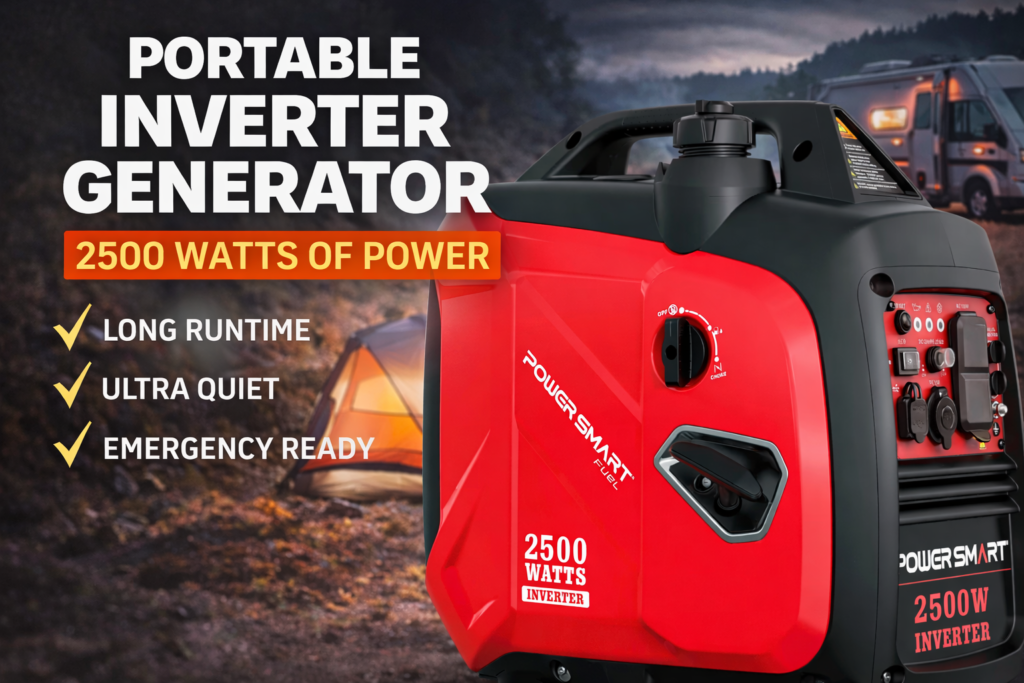
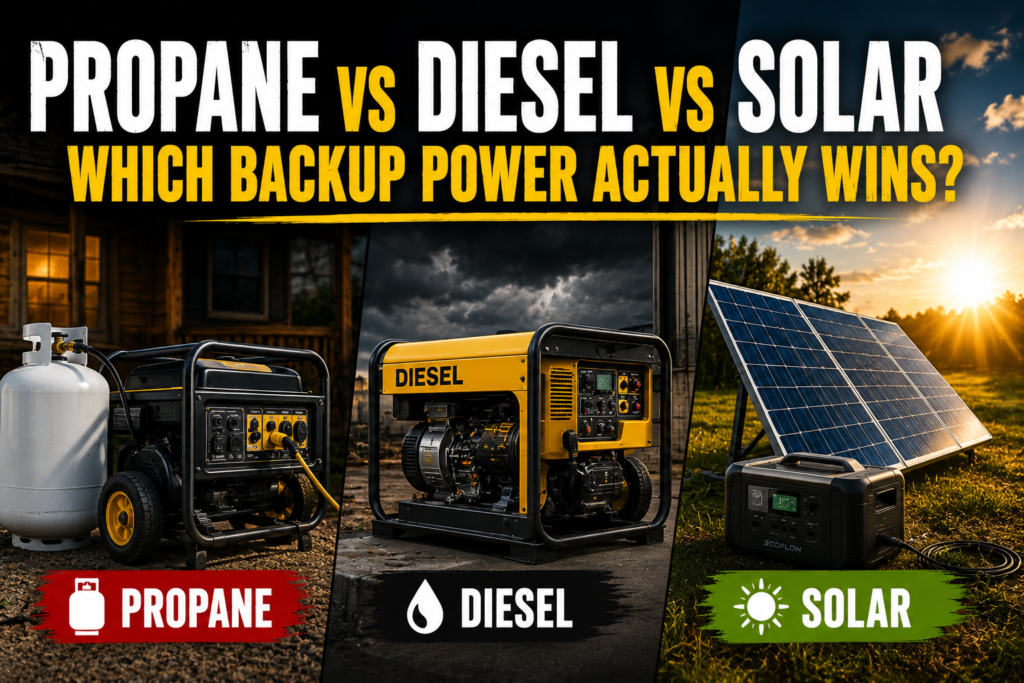
We’ve reviewed the portable inverter generator I’ve been using throughout this blackout series.
It’s a 2,500-watt-class unit intended for selected loads.
The Generator I’d Compare for a Basic 72-Hour Setup
Check the PowerSmart 2500-watt inverter generator on Amazon
Before buying, I still calculate the electrical requirements of the equipment I actually intend to run.
Generator Fuel Is Part of the Generator
This sounds ridiculously obvious.
Yet people buy a generator and don’t think seriously about how long their fuel supply lasts.
For a three-day outage, I want to know:
- How much fuel I have
- How quickly my generator burns it
- Where the fuel is safely stored
- What I’m actually powering
- How I’m getting more if the outage lasts longer
That’s why I don’t necessarily run the generator nonstop.
My guide on how long I run a generator during a power outage explains how I think about fuel conservation.
I Decide the Generator Location Before Friday
Not after the power goes out.
Before.
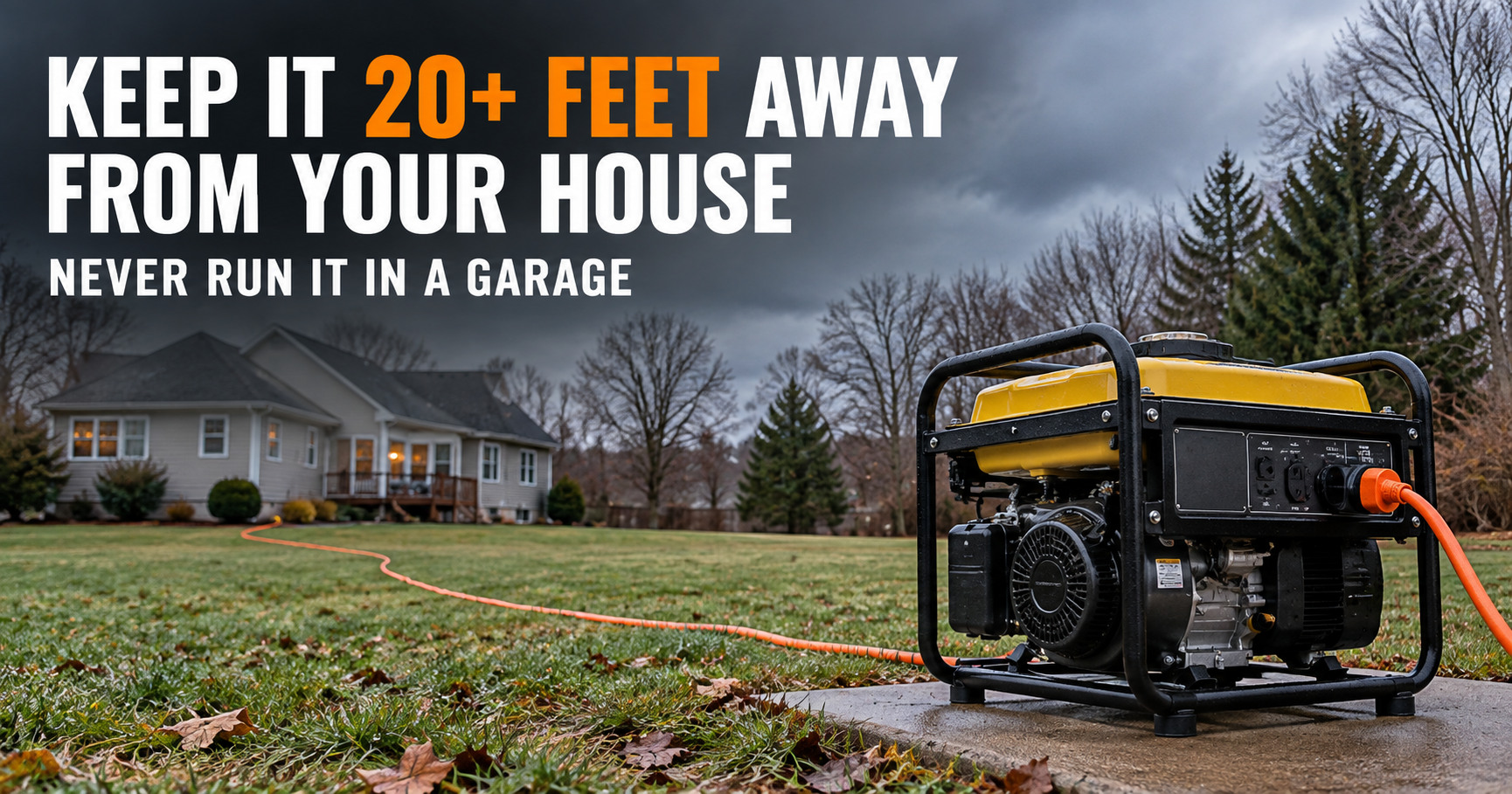
I’ve already covered how far I keep my portable generator from the house.
I want it outside, at least 20 feet from the house and openings, with exhaust directed away.
I also want the correct extension cords and a weather plan.
The garage isn’t my generator shelter.
I Want Working Carbon Monoxide Alarms
This jumps near the top of my list any time generators, propane heaters, fireplaces, or other combustion equipment enter the plan.
I want CO alarms that still function during an electrical outage.
Same with smoke alarms.
Three days without utility electricity does not mean three days without fire and carbon monoxide protection.
Winter Changes My 72-Hour Kit Completely
If this hypothetical Friday-to-Monday outage happens in January, warmth becomes one of my biggest priorities.
We’ve already covered how I keep the household warm during a winter power outage.
I want:
- Warm clothing
- Blankets
- Sleeping bags
- Safe backup heat
- Heating fuel
- CO alarms
- A plan for plumbing
- Somewhere warm to go if my setup fails
Three days at 15°F is a much bigger problem than three days at 65°F.
I Like Having a Portable Propane Heater as Another Layer
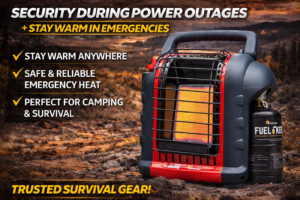
We’ve also gone deep into using an indoor-rated propane heater during a power outage.
The Portable Buddy we’ve featured can provide up to 9,000 BTU of heat.
I use a heater like that according to the manufacturer’s exact indoor-use, ventilation, clearance, and operating instructions.
The Backup Heater We’ve Been Using
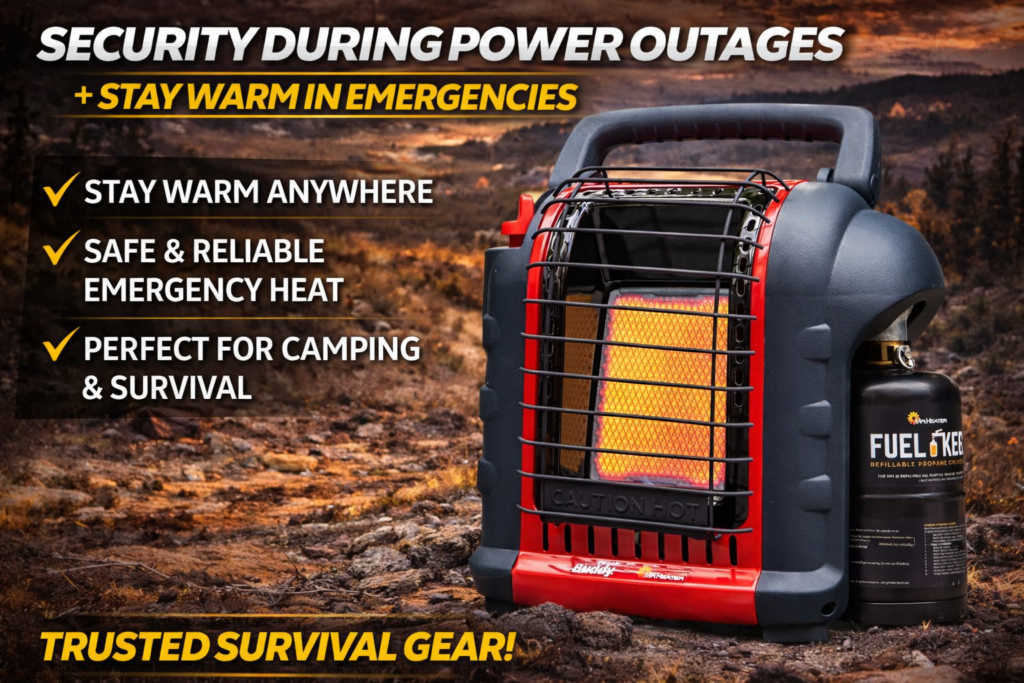
Check the 9,000 BTU Portable Buddy Heater on Amazon
I don’t make one heater my entire winter survival plan. It’s one layer.
Summer Changes the Kit in the Opposite Direction
If the outage happens during extreme heat, I’m worried about cooling.
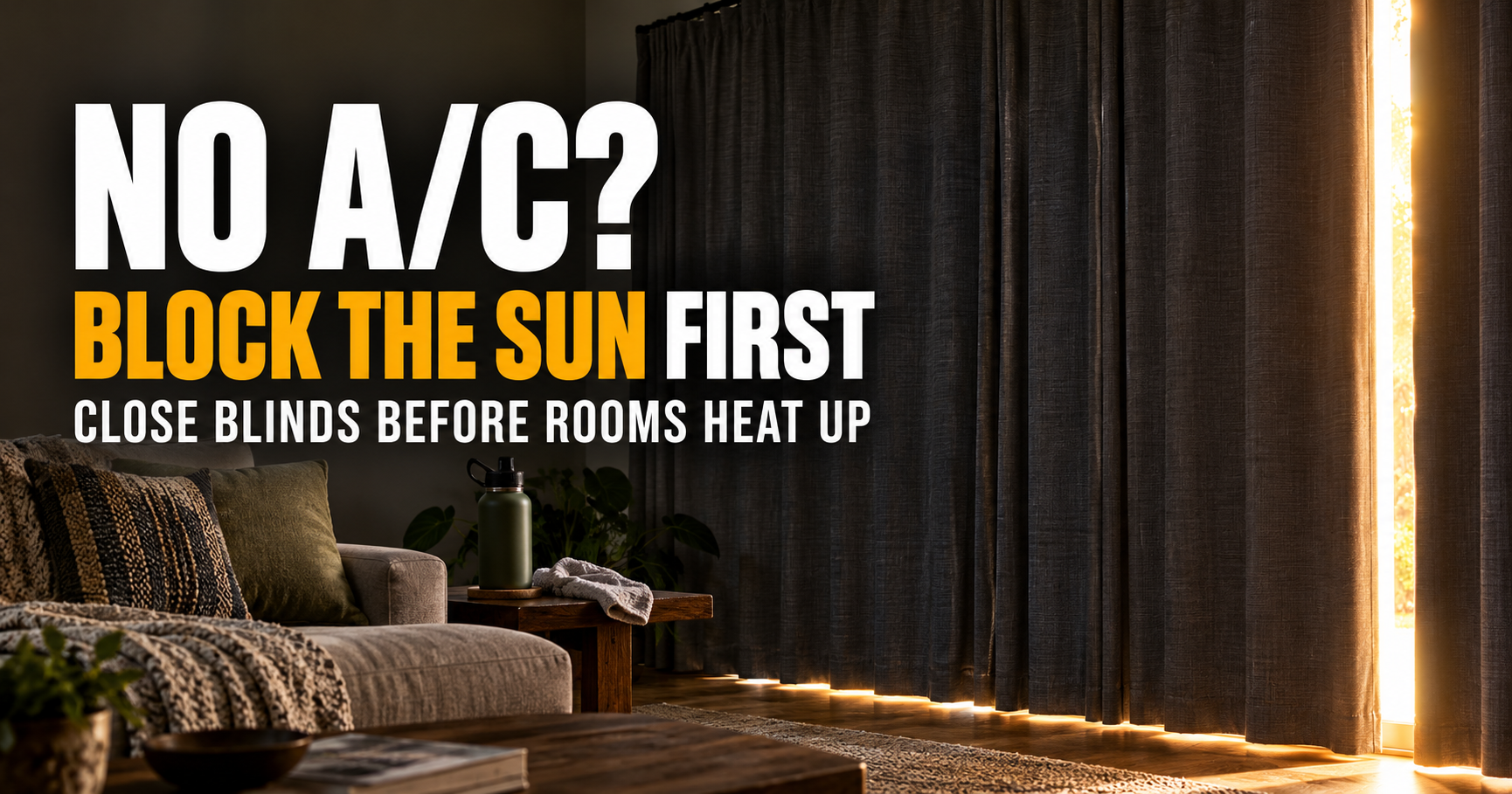
We’ve covered how I keep my house cooler during a summer power outage.
For three hot days, I’d especially want:
- Plenty of drinking water
- Battery-powered fans
- Window coverings
- Lightweight clothing
- Cooling towels where useful
- A plan for sleeping
- A known air-conditioned location I can go to
I don’t try to prove how tough I am by sitting in a dangerously hot house.
I Figure Out the Toilet Before It Becomes a Problem
A three-day outage is long enough for sanitation to matter.
We’ve covered whether I can flush my toilet when the power is out.
The answer depends on the house.
City water.
Well water.
Gravity sewer.
Septic.
Sewage pump.
I want to know what I have.
If I need alternative water for flushing, I identify it before my stored drinking water starts disappearing into the toilet.
I Don’t Assume the Gas Furnace Will Work
This surprises homeowners every winter.
Natural gas may still be flowing, but most modern forced-air gas furnaces need electricity for their blower, ignition, controls, and safety systems.
We’ve already covered whether my gas furnace works during a power outage.
If winter heat depends on generator power, I want that electrical setup solved and tested before the outage.
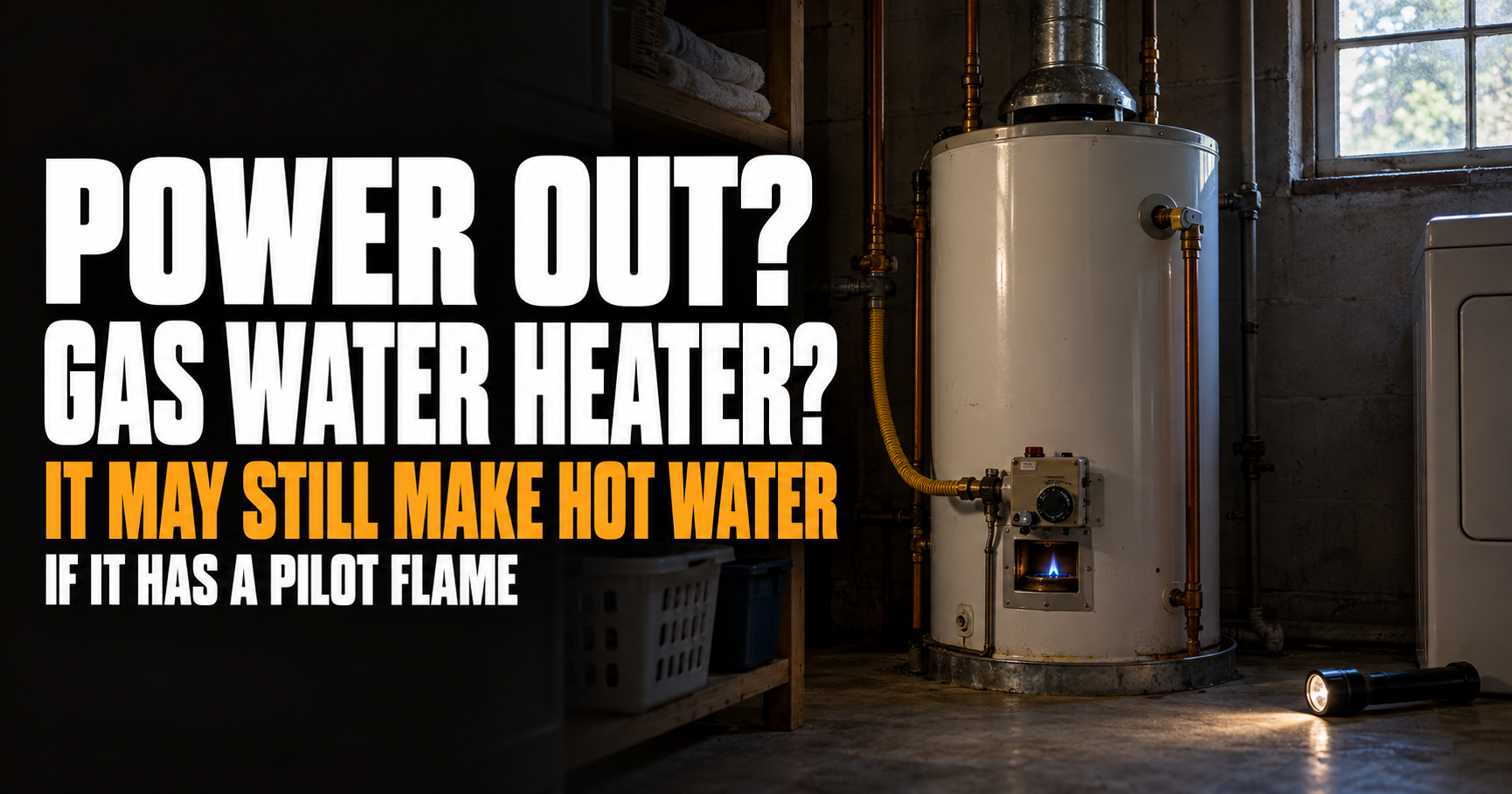
I Don’t Assume the Gas Water Heater Will Work Either
Same problem.
Some traditional standing-pilot tank water heaters can continue operating without normal household electricity.
Other gas water heaters need electricity for ignition, controls, or power venting.
Our guide on whether a gas water heater works during a blackout explains how I identify what I own.
I don’t want to learn about my water heater by accident on Saturday morning.
I Keep Some Cash
A three-day regional outage can affect more than houses.
ATMs.
Card terminals.
Gas stations.
Stores.
Internet connections.
I keep some cash in smaller denominations.
It’s boring preparedness.
That’s usually the useful kind.
I Fill the Vehicle Before the Storm
If I know bad weather is coming, I don’t leave the vehicle nearly empty.
A full or mostly full tank gives me options.
I may need to:
- Leave
- Get supplies
- Reach family
- Charge electronics
- Reach a warming or cooling center
Gas stations also depend on electricity.
Waiting until the blackout to buy fuel can become a problem.
I Keep the Vehicle Outside If I’m Using It for Power or Warmth
I never idle the vehicle inside the garage.
Not even with the garage door open.
If I need the engine running, the vehicle is outside in a properly ventilated location.
Carbon monoxide doesn’t care that I’m only trying to charge a phone.
I Keep Important Information on Paper
Phones fail.
Batteries die.
Networks go down.
I keep a paper copy of important information such as:
- Family phone numbers
- Utility contact information
- Insurance information
- Medical contacts
- Medication information
- Emergency meeting locations
I don’t want every important number in my life trapped behind one dead phone screen.
I Think About Kids Before They Get Bored
This sounds minor compared with water and heat.
After about six hours, it stops feeling minor.
If I have children in the house for three days without normal television, internet, game systems, or routines, I want something for them to do.
Books.
Coloring supplies.
Board games.
Cards.
Downloaded movies on a charged tablet.
Simple toys.
Keeping children occupied can make the entire household calmer.
That’s preparedness too.
Pets Get Their Own Supplies
Pet food isn’t part of my food supply unless I actually stored it.
Neither is pet water.
For three days, I make sure animals have:
- Food
- Water
- Medication
- Leashes or carriers
- Warmth or cooling as needed
They’re part of the household plan.
My 3-Day Blackout Setup Fits Into Seven Categories
If I had to strip everything down, I would organize