When my power goes out, I don’t immediately start a fire or drag the grill onto the porch.
The first thing I ask is simpler:
Do I even need to cook this meal?
That’s something I think gets missed in a lot of blackout advice.
If I’m facing an outage that might last several days, cooking fuel becomes another limited resource. So does water. So does the cold remaining inside my refrigerator.
I don’t want to burn propane for 45 minutes making a complicated dinner when I have perfectly good food sitting in the pantry that I can eat with almost no preparation.
My blackout cooking plan starts with using the easiest food first, then adding cooking methods only when they’re actually useful.
First, I Figure Out How Long the Outage Might Last
A two-hour outage doesn’t change dinner very much.
A two-day outage does.
A two-week outage changes almost everything.
I check the utility situation, weather, and extent of the outage before I start burning through emergency supplies.
If restoration looks close, I may simply wait.
If we’re clearly settling in for the night, I start thinking differently.
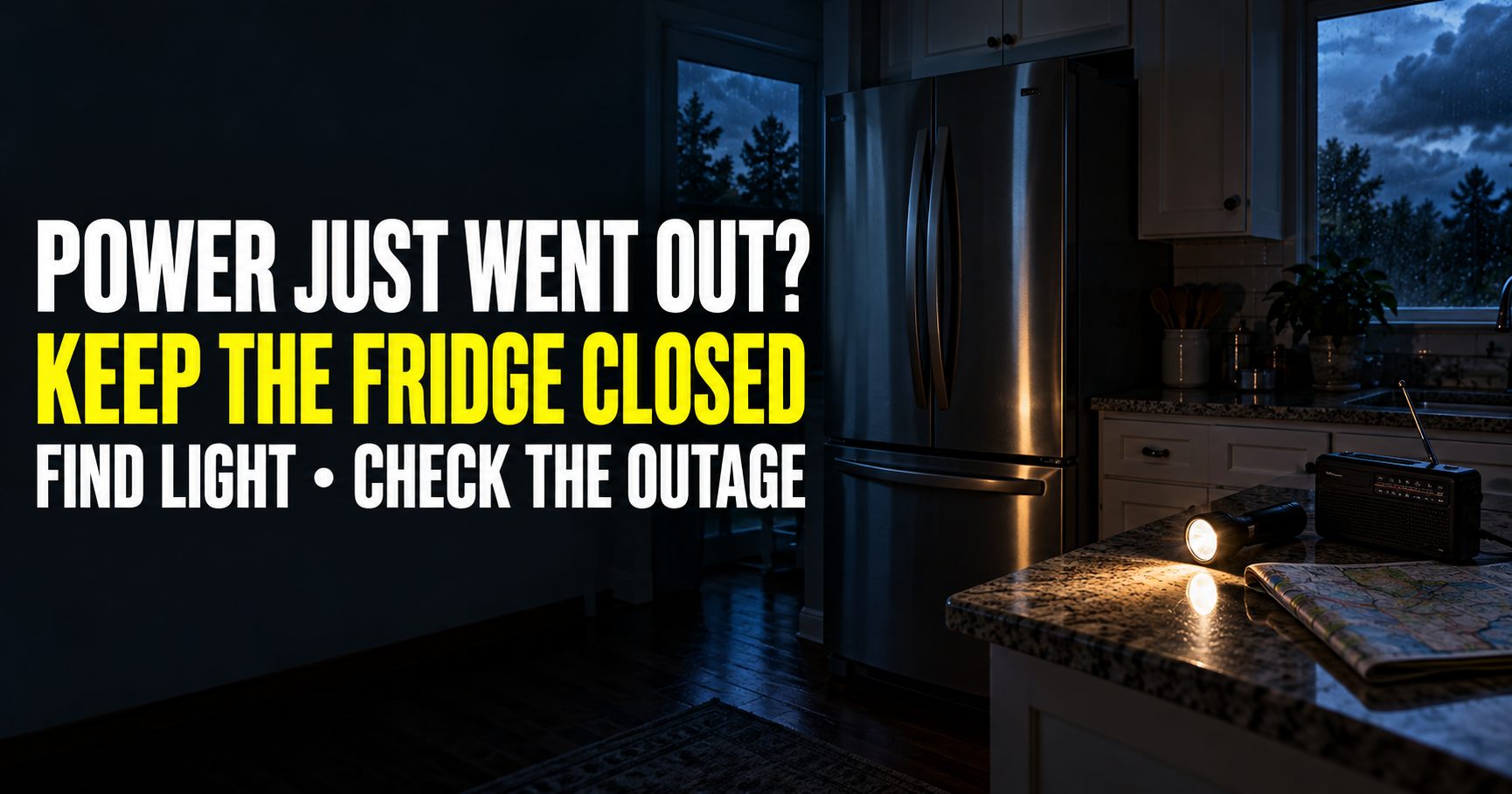
My first-hour blackout routine covers the other things I’m doing while I make that decision.
I Eat Food That Needs to Be Used Before Opening Emergency Food
This is probably the biggest practical difference in my approach.
If the refrigerator is slowly warming and I have food that is still safely cold but won’t remain that way indefinitely, that’s the food I’m thinking about first.
I’m not opening a 25-year emergency meal while $20 worth of meat is sitting in a refrigerator that may lose power all night.
I use food strategically.
Generally, I’m thinking in this order:
- Perishable refrigerated food while it is still safely cold
- Frozen food as it begins becoming necessary to use
- Normal shelf-stable pantry food
- Long-term emergency food
Obviously, food safety comes first.
I don’t eat questionable food just because I hate wasting it.
But I also don’t waste food by eating my longest-lasting supplies first.
I Know How Long the Refrigerator Gives Me
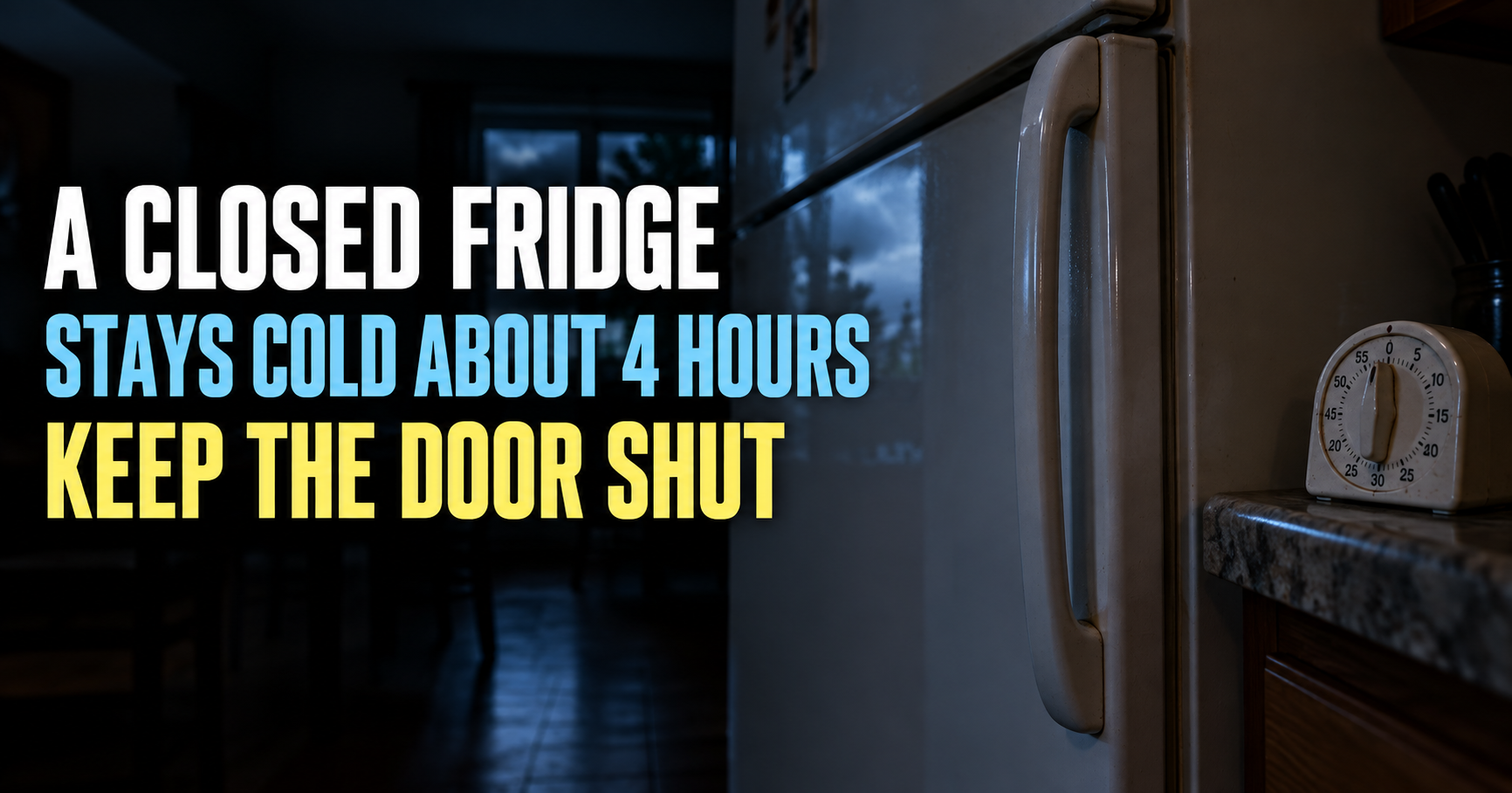
This is why I wrote how long my refrigerator stays cold without power.
An unopened refrigerator generally gives me about four hours of safe cold storage.
A full freezer can hold temperature much longer.
That gives me time to make decisions instead of panicking.
I keep those doors shut until I actually need something.
Sometimes the Best Blackout Meal Requires No Cooking
This is my favorite way to save fuel.
I keep foods around that I can eat without heating.
Things like:
- Peanut butter
- Crackers
- Bread or tortillas
- Canned tuna or chicken
- Ready-to-eat canned foods
- Nuts
- Dried fruit
- Shelf-stable snacks
- Certain canned fruits
- Other foods my family already eats
I don’t build my emergency pantry entirely around food that requires 20 minutes of boiling.
That’s especially important if water is limited too.
I Keep a Manual Can Opener
This is one of those tiny things that becomes hilarious until it isn’t.
A pantry full of canned food isn’t nearly as convenient when the only can opener in the kitchen is electric.
I keep a normal manual opener.
Cheap.
Simple.
No batteries.
No fuel.
That’s exactly what I want during an outage.
I Don’t Heat Canned Food Just Because I Normally Would
A lot of commercially canned food is already fully cooked.
Heating may make it taste better.
That doesn’t mean heating is always necessary.
If I’m trying to conserve fuel during a serious outage, I’m willing to eat some things at room temperature.
Preparedness meals don’t have to look like Sunday dinner.
They need to safely feed people.

If I Have a Gas Stove, I Don’t Automatically Assume It Works Normally
This depends on the appliance.
Some gas ranges can potentially be lit manually during an outage.
Others rely on electronic controls and safety systems that may prevent normal operation.
I check the manufacturer’s instructions for my exact stove.
I don’t start dismantling ignition systems or bypassing safety features because I saw someone do it online.
And even if my gas burners work, I use them for cooking.
Not heating the house.
I Never Use My Gas Oven as a Space Heater
This came up in our winter-outage articles, but it belongs here too.
A stove or oven is a cooking appliance.
I don’t leave it running with the door open because the house is cold.
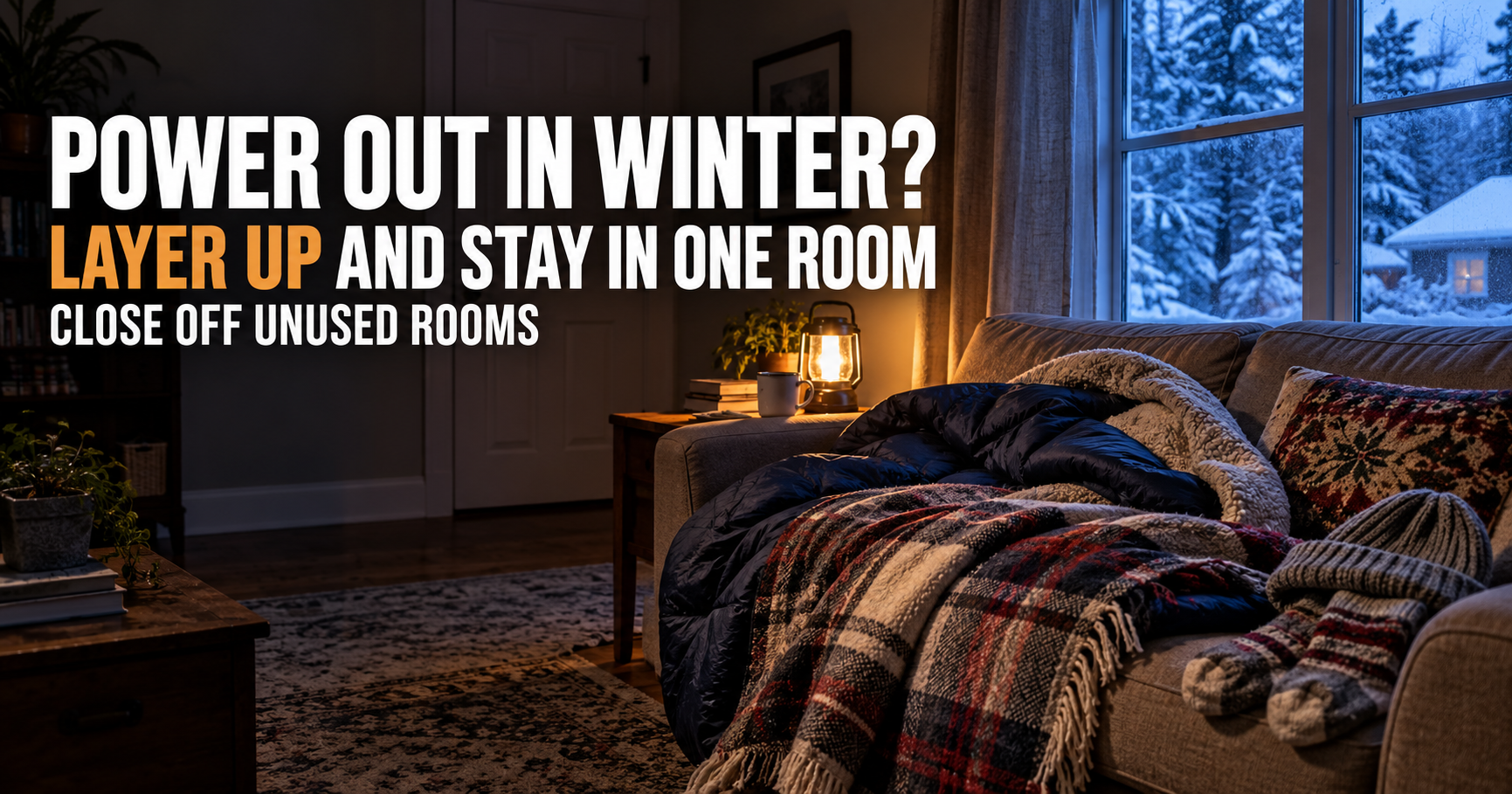
If heat is the problem, I use my winter blackout plan instead.
Cooking and heating are two different jobs.
Trying to combine them can create a dangerous situation.
My Outdoor Grill Becomes Extremely Useful
If I have a propane or charcoal grill, a blackout is one of the situations where it earns its place.
I can cook meat.
Heat food.
Boil water.
Use cookware.
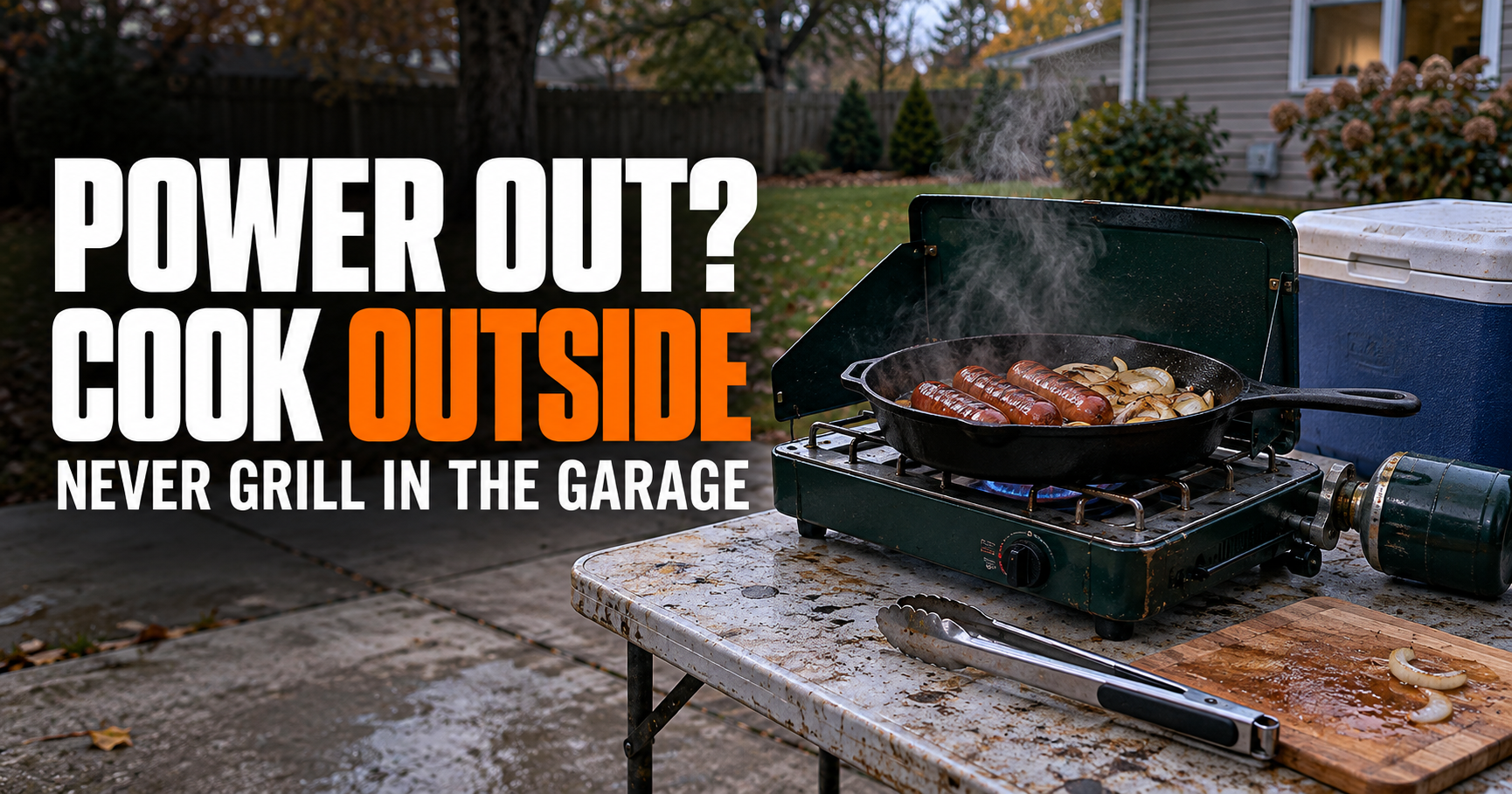
But the grill stays outdoors.
Not in my kitchen.
Not in my garage.
Not in my enclosed porch.
Not just inside the garage door because it’s raining.
Combustion produces carbon monoxide.
The food isn’t worth bringing that hazard into the house.
I Keep Outdoor Cooking Equipment Away From Openings
I don’t put the grill right beside an open kitchen window so I can pass food through it.
I want exhaust away from:
- Doors
- Windows
- Garage openings
- HVAC air intakes
- Other paths into the house
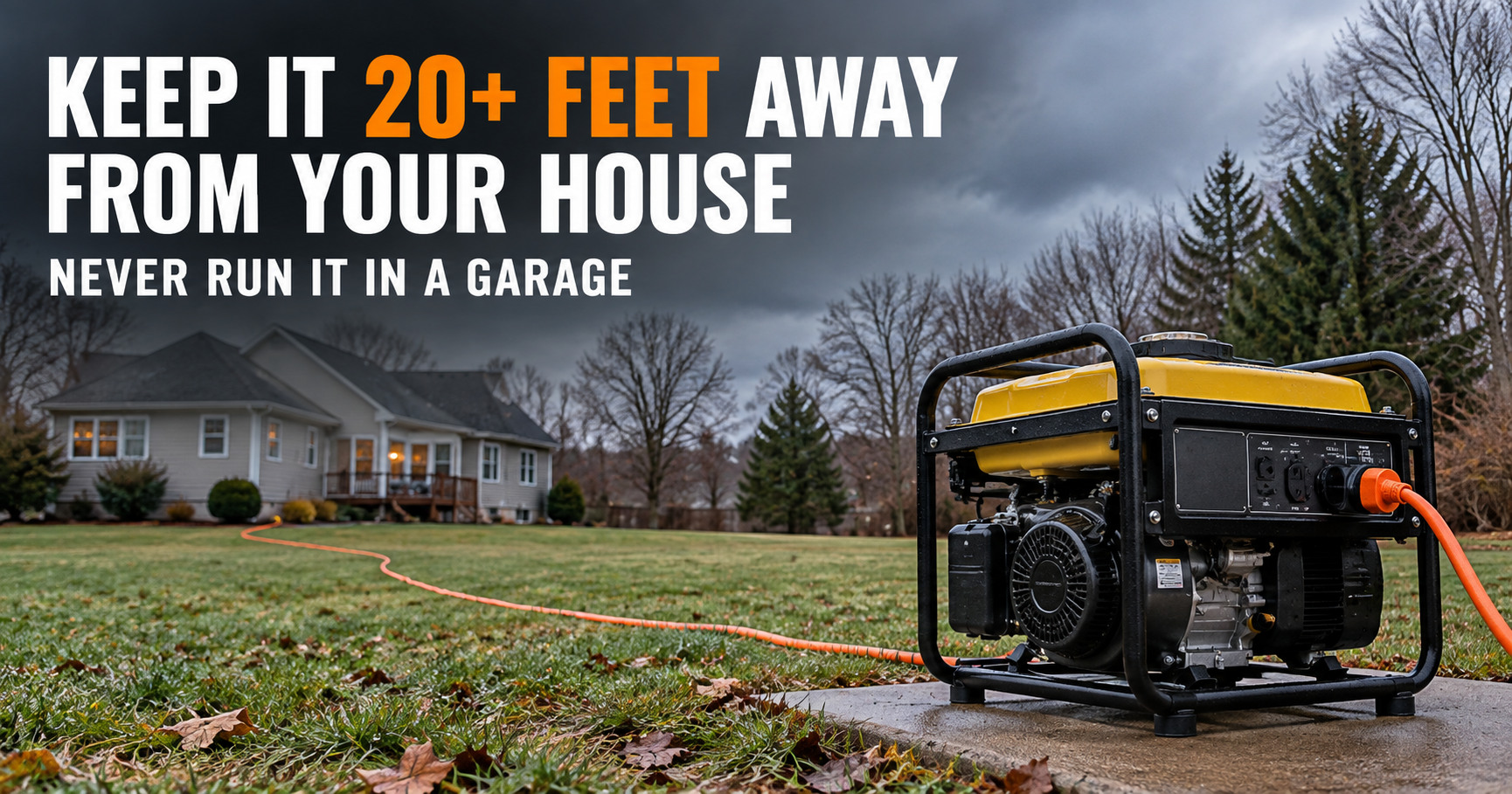
This is the same principle I use when deciding how far I keep my generator from the house.
Combustion equipment belongs outside and away from openings.
A Camp Stove Is One of the Most Useful Blackout Cooking Tools
A basic outdoor camp stove is hard to beat.
It’s portable.
It’s easy to use.
It doesn’t require a giant cooking fire.
And it lets me control how much fuel I’m burning.
If I’m boiling water or cooking something in a skillet, I may not need to fire up a large grill.
Again, I use it outside.
I don’t move it onto the kitchen counter because it’s cold outside.
I Practice With My Cooking Equipment Before I Need It
This is a recurring theme in preparedness for me.
The first time I use an unfamiliar camp stove shouldn’t be during a storm.
I want to know:
How does it light?
What fuel does it use?
How long does the fuel last?
Does my normal cookware fit?
How stable is it?
How do I shut it down?
Those are easy questions to answer on a normal Saturday.
They’re irritating questions during a blackout.
Fire Gives Me Another Cooking Option
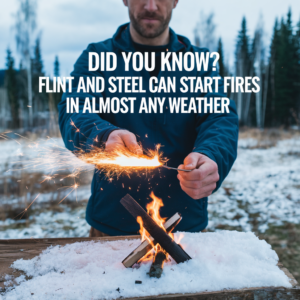
If I already know how to safely build and manage a fire, it gives me another way to cook.
But I don’t assume owning matches means I know how to cook over one.
Fire management is a skill.
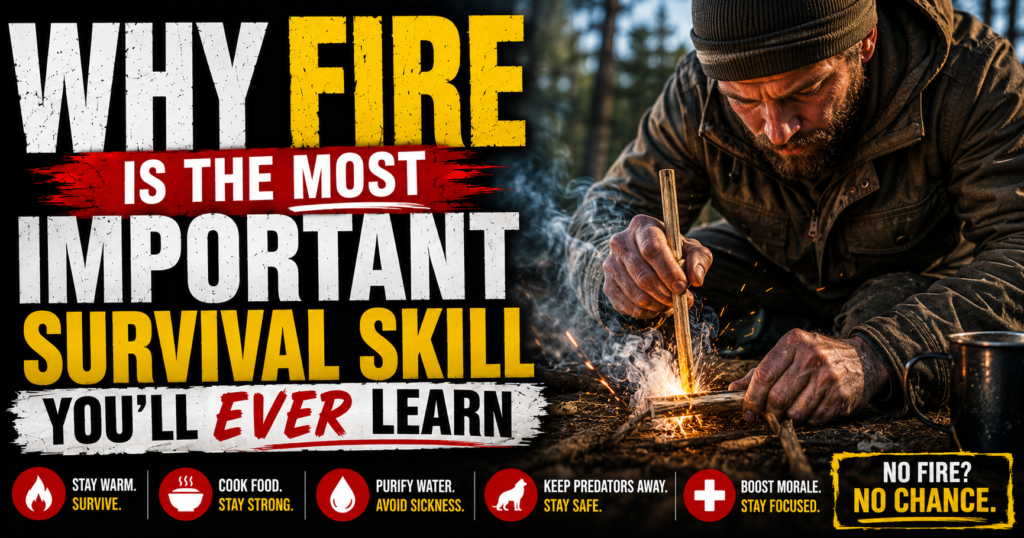
We’ve already covered why I consider fire one of the most important survival skills.
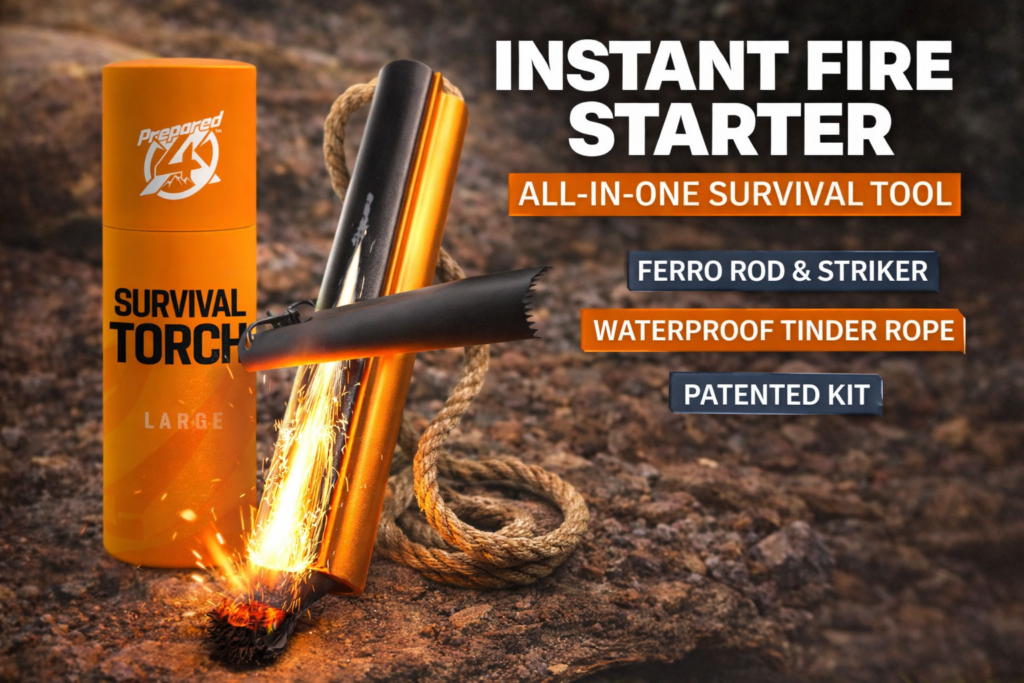
And if starting a reliable fire is something you’re still building confidence with, we’ve also looked at a compact fire-starting tool I keep as part of my survival gear.
During a normal household blackout, fire isn’t necessarily my first cooking choice.
It’s another layer.
I Don’t Build an Indoor Fire Somewhere That Wasn’t Designed for One
No improvised campfire in the living room.
No charcoal grill in the fireplace.
No metal bucket full of coals inside the garage.
If I have a properly maintained fireplace or wood stove designed and vented for indoor use, that’s different.
Otherwise, combustion cooking stays outside.
I don’t let desperation rewrite basic fire and carbon monoxide safety.
A Solar Cooker Gives Me a Fuel-Free Option
This is where one of the more unusual products on Survive Essentials becomes genuinely interesting.
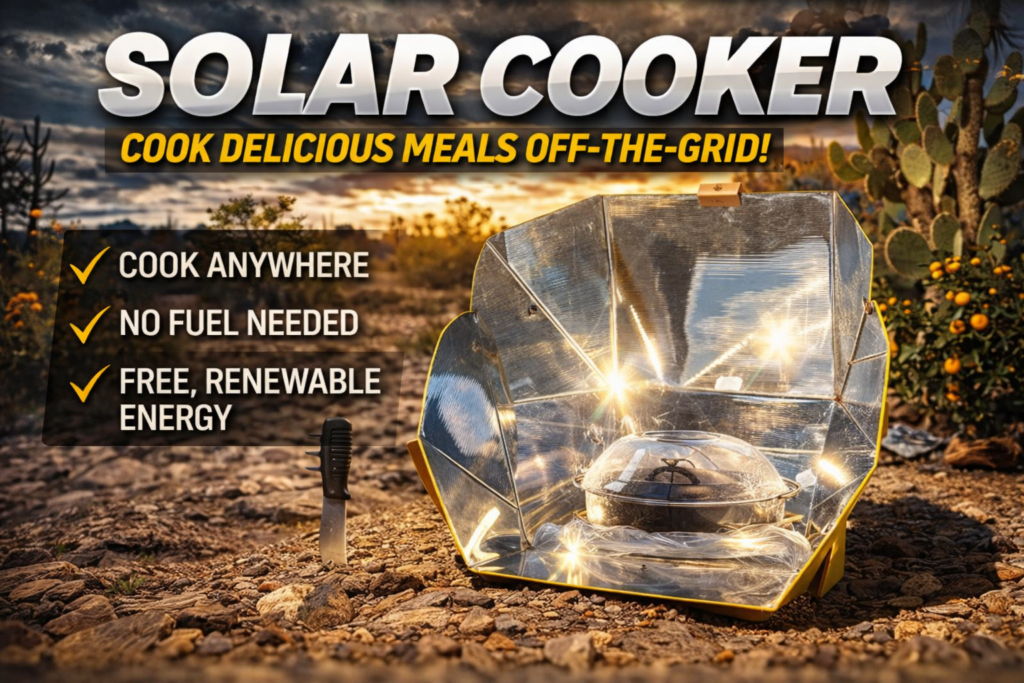
We’ve already covered a solar cooker that lets me cook food using sunlight instead of fuel.
That’s obviously weather dependent.
It isn’t my midnight cooking solution.
It isn’t very useful during a cloudy ice storm.
But during a sunny extended outage, being able to cook without consuming propane, gasoline, charcoal, or firewood is valuable.
I like anything that preserves another limited resource.
I Save Fuel Whenever the Sun Can Do the Work
That’s how I look at solar cooking.
If I have plenty of sunlight and enough time, why burn propane?
Every meal I can cook without consuming stored fuel leaves more fuel available for:
- Bad weather
- Nighttime
- Faster cooking
- Boiling water
- Other emergencies
I don’t need solar to replace every cooking method.
It just needs to take some pressure off the others.
I Think About Water Before Choosing the Meal
Some emergency foods require a surprising amount of water.
Rice.
Pasta.
Dried beans.

Dehydrated meals.
They’re all useful foods.
But if my well pump isn’t working, water may be more valuable than cooking fuel.
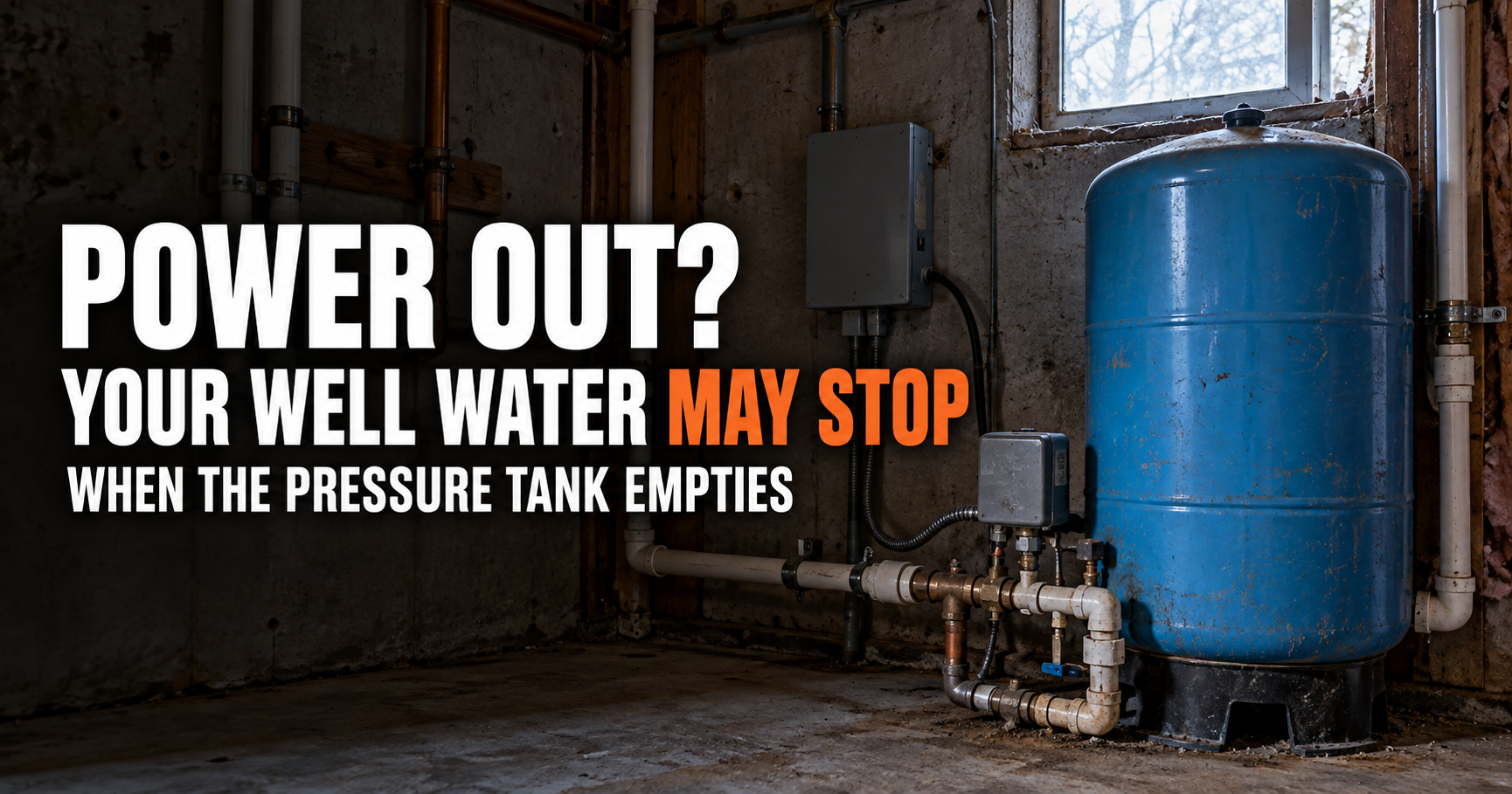
I’ve already covered what happens to my well during a power outage.
If water is limited, I adjust the menu.
That’s why I like having some foods that don’t require cups and cups of water to prepare.
I Don’t Pour Cooking Water Away Without Thinking
Depending on what I’m cooking and food-safety considerations, water can sometimes be used more efficiently.
For example, I can choose meals where the cooking liquid becomes part of the food instead of boiling something in a large pot and dumping the water afterward.
Soups and one-pot meals make a lot of sense when both water and fuel matter.
Efficiency becomes part of cooking.
One-Pot Meals Save More Than Cleanup
A one-pot meal can reduce:
- Fuel
- Water
- Dishwashing
- Cleanup
- Time
That’s useful during a long blackout.
I don’t need three burners and four pans to prove I can still cook.
I want the simplest safe meal that feeds everyone.
I Cook Larger Amounts Carefully
If I’m already burning fuel and I can safely handle the food afterward, cooking enough for multiple people at once makes sense.
What I don’t want is producing a huge batch of leftovers when I no longer have reliable refrigeration.
That’s an important difference.
During a normal week, leftovers are convenient.
During an outage, leftovers may become another food-safety problem.
So I cook enough.
Not necessarily enough for three days.
Leftovers Get More Complicated Without Refrigeration
If I can’t keep cooked food safely cold, I don’t plan around storing leftovers like normal.
That changes portion sizes.
It also changes which recipes make sense.
I’d rather finish a smaller meal safely than make a huge pot of food and watch half of it sit at unsafe temperatures.
I Use a Food Thermometer
Cooking during a blackout doesn’t change safe internal cooking temperatures.
A grill may cook differently than my normal stove.
A camp stove flame may be unfamiliar.
Outdoor conditions can affect cooking.
A simple food thermometer removes guesswork.
That’s especially useful for meat and poultry.
I Don’t Judge Meat Safety by Color Alone
Outdoor cooking can make people more casual.
I don’t say:
“Looks done.”
I check.
Emergency conditions are exactly when I don’t want food poisoning.
If normal medical services are disrupted, getting sick from undercooked food becomes an even bigger problem than usual.
My Freezer Becomes My Menu Planner
If the outage is clearly going long and frozen food begins thawing, I start making decisions.
Food that is still safely cold but unlikely to remain frozen indefinitely may move up the menu.
That’s much smarter than eating crackers while expensive meat slowly becomes unusable.
We’ll deal specifically with how I know whether freezer food thawed during an outage in another article because that question deserves its own answer.
If I Have a Generator, I Still Don’t Waste Electricity Cooking Everything
A generator opens more possibilities.
But electric cooking appliances can use a lot of power.
I don’t automatically plug in an electric range or giant countertop appliance just because the generator is running.
I think about electrical load and fuel use.
Sometimes using an outdoor camp stove makes much more sense than turning gasoline into electricity and then turning that electricity back into heat.
I Make Generator Runtime Do Several Jobs
If I do use generator power for cooking or another kitchen appliance, I want the generator accomplishing other useful jobs at the same time.
Cool the refrigerator.
Recharge phones.
Recharge power banks.
Run the well if my setup supports it.
Charge emergency lighting.
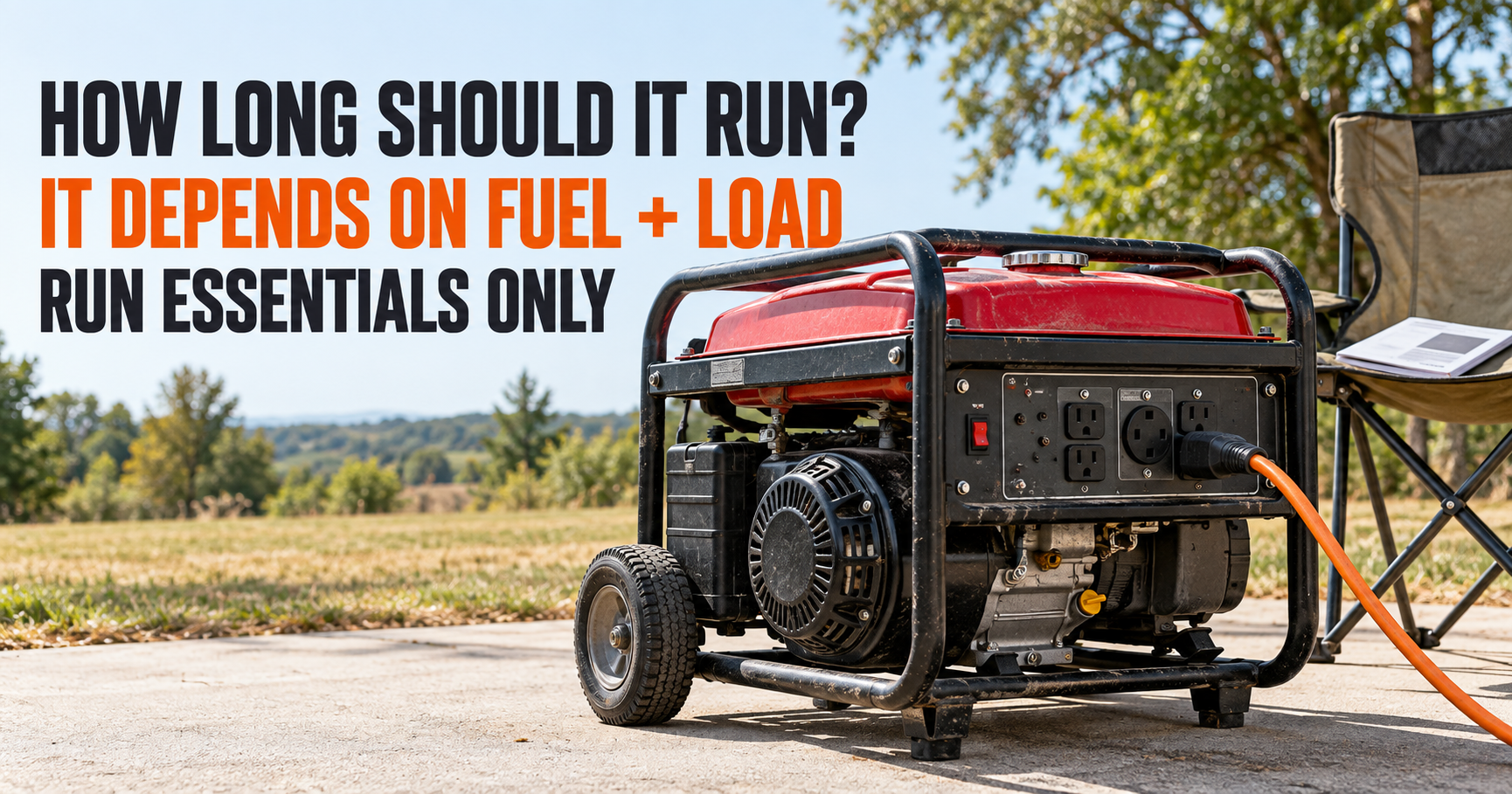
I’ve already explained how I manage generator runtime during an outage.
I don’t burn fuel casually.
Emergency Food Gives Me a Backup When Normal Cooking Stops Making Sense
There may come a point where fresh food is gone, pantry options are limited, and the outage keeps going.
That’s when dedicated emergency food becomes much more useful.
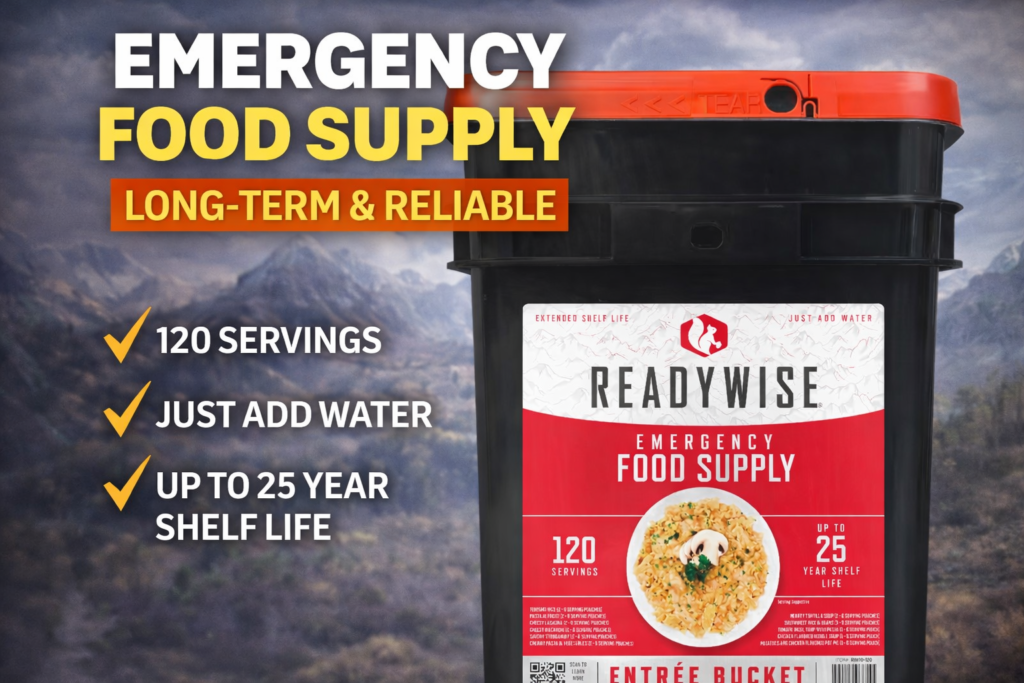
We’ve covered the emergency food supply I like having for situations where normal food access becomes unreliable.
I don’t open that first.
I keep it behind my normal pantry.
It’s another layer.
I Keep Meals Familiar When I Can
An outage is already disruptive.
Especially for kids.
I don’t think emergency food has to be strange survival rations if I have other options.
Peanut butter sandwiches.
Canned soup.
Tuna and crackers.
Grilled meat.
Simple pasta when water is plentiful.
Foods people recognize can make a stressful situation feel much more normal.
That’s worth something.
I Plan for the Baby and Pets Separately
This is easy to overlook in generic food-storage lists.
Infants may need formula.
Pets need food too.
Special diets don’t disappear because the grid went down.
If someone in the household has allergies, diabetes, swallowing problems, or another dietary requirement, I build that into the food plan beforehand.
Emergency food needs to feed the people who actually live in my house.
I Don’t Forget the Manual Can Opener
Yes, I’m mentioning it twice.
Because it’s exactly the kind of $10 item people discover they don’t own when they’re staring at a can of food during an outage.
I keep one with the emergency kitchen supplies.
Not buried in camping equipment somewhere else.
My Blackout Cooking Setup Is Pretty Simple
If I were starting from scratch, I would want:
- Shelf-stable food that requires no cooking
- Manual can opener
- Outdoor camp stove
- Appropriate stored fuel
- Outdoor grill if I already use one
- Basic cookware
- Food thermometer
- Fire-starting supplies
- Drinking and cooking water
- Solar cooker as an optional fuel-saving layer
- Emergency food for longer disruptions
That’s enough to give me several ways to feed the family.
I don’t need a commercial kitchen.
I Never Let Convenience Move Combustion Indoors
This is the rule I want everyone in the household to understand.
It’s raining?
Camp stove stays outside.
It’s snowing?
Grill stays outside.
It’s cold?
Charcoal stays outside.
It’s inconvenient?
Still outside.
Carbon monoxide doesn’t become safe because the weather is unpleasant.
What I Cook First During a Multi-Day Blackout
My rough strategy looks like this:
Early in the Outage
Use refrigerated perishables that are still safely cold and need to be used.
As the Outage Continues
Evaluate frozen foods and use appropriate items before they are lost.
After Perishables
Move deeper into shelf-stable pantry foods.
Long-Term
Use dedicated emergency food and longer-term supplies as necessary.
That order helps reduce waste while protecting the food designed to last the longest.
Cooking Is Only One Part of the Blackout Food Problem
The longer the electricity stays off, the more everything connects.
Cooking.
Refrigeration.
Water.
Fuel.
Food safety.
Sanitation.
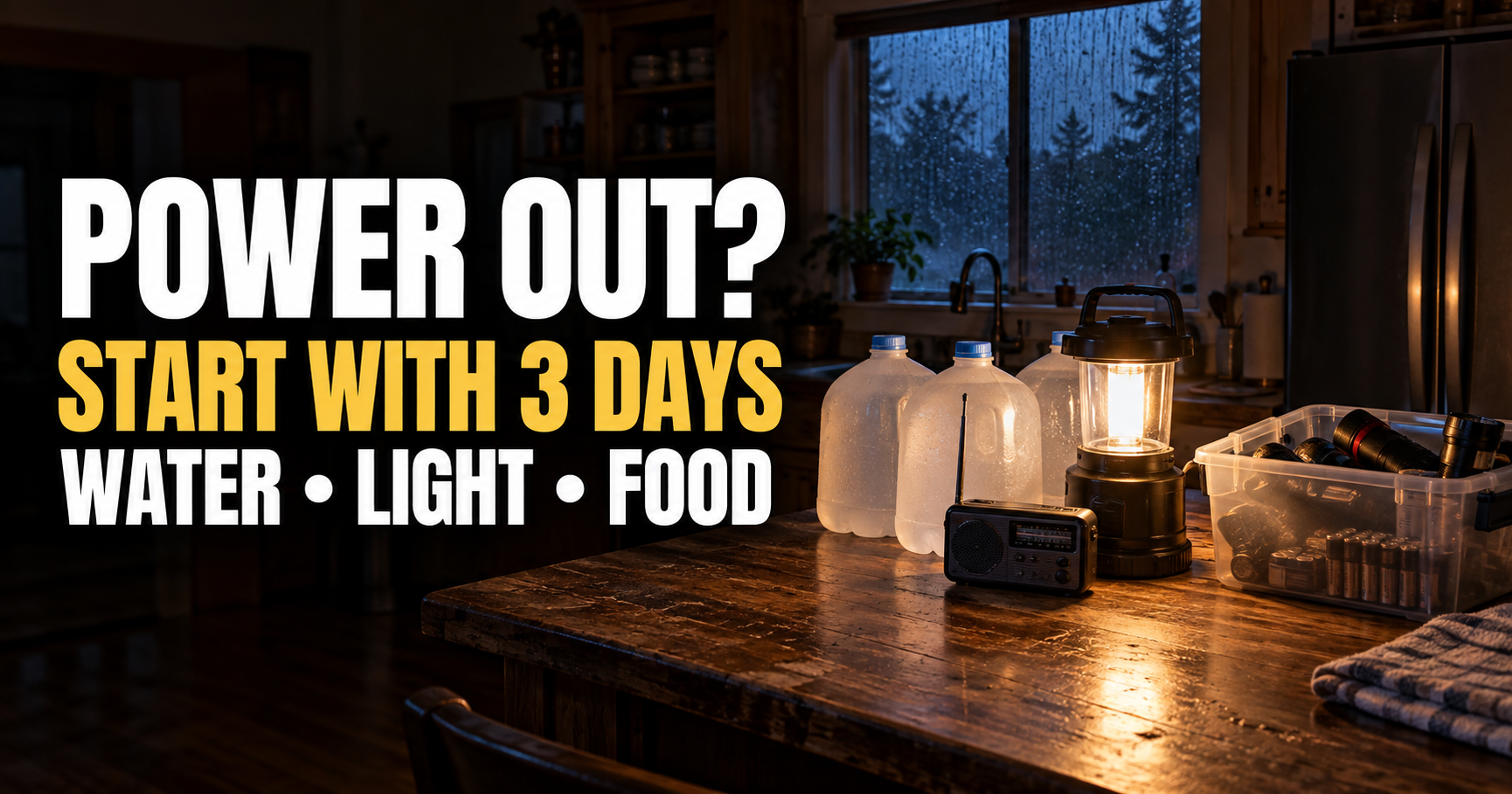
That’s why my broader long-blackout preparedness plan doesn’t treat food as an isolated problem.
The best cooking method isn’t very useful if I don’t have safe water.
A freezer full of meat isn’t helpful if I can’t cook it safely.
And 30 days of emergency food isn’t as useful if I burn through all my cooking fuel during the first week.
I want the whole system working together.
My Best Blackout Meal Is Usually the Simplest One
That’s probably the biggest lesson.
I don’t need to recreate my normal kitchen.
I need to feed people safely without wasting resources or creating another emergency.
Sometimes that means grilling food before it spoils.
Sometimes it means boiling water on a camp stove.
Sometimes it means using sunlight.
And sometimes it means opening a can, grabbing the manual opener, and eating something without cooking it at all.
Every meal I can prepare safely while conserving fuel, water, and electricity makes the rest of the outage easier.
That’s what I’m trying to accomplish.
About the Author
Caleb Mercer writes about blackout preparedness, emergency cooking, backup power, food storage, water, and the practical household problems that appear when utilities fail. His work for the Survive Essentials Power Outages and Backup Power section focuses on simple systems families can actually use when normal appliances, refrigeration, water, and other everyday conveniences suddenly disappear.