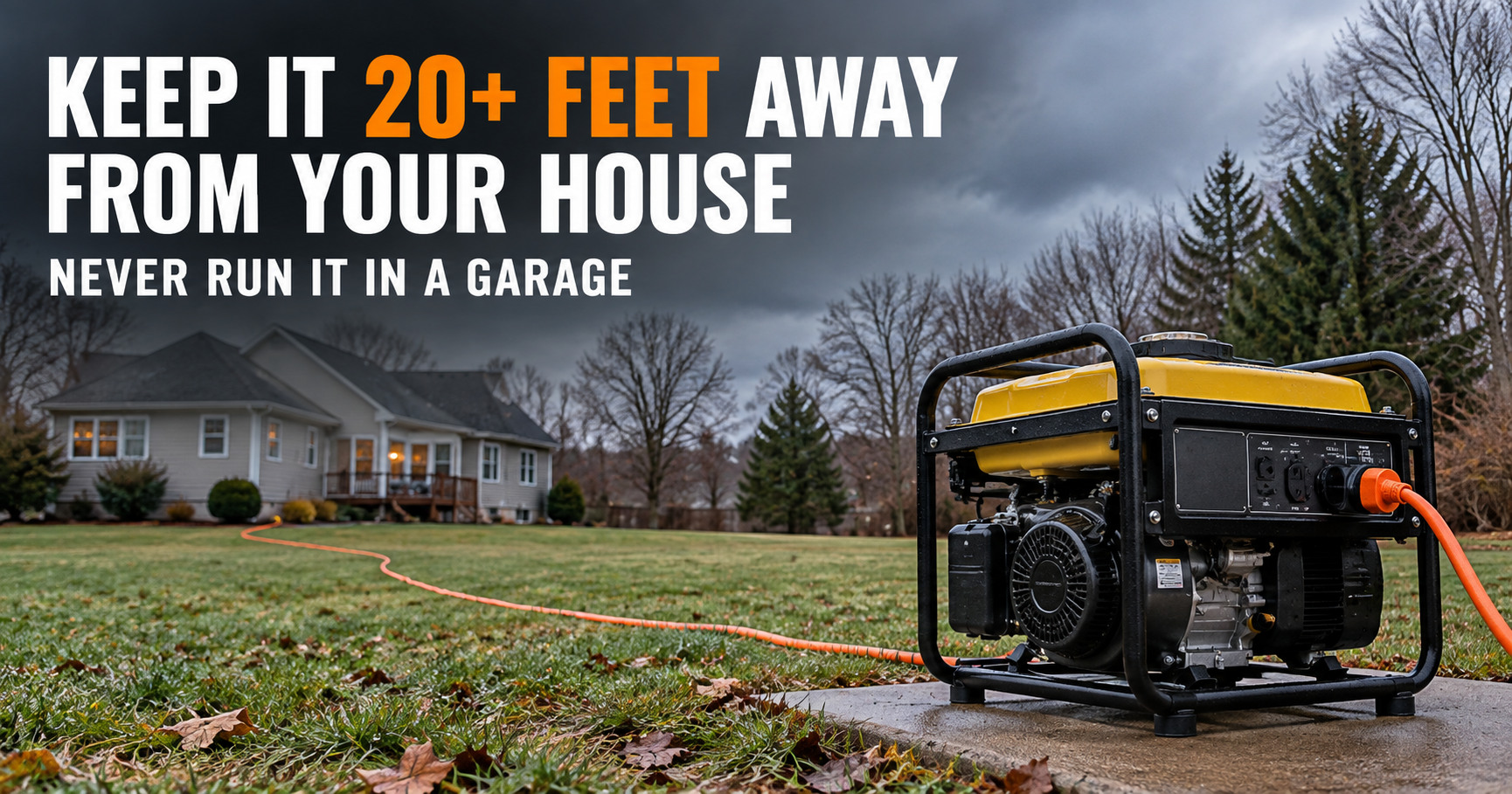
If I’m running a portable generator during a power outage, I don’t put it right outside the back door just because that’s the easiest place to reach.
I don’t put it in the garage with the door cracked either.
And I definitely don’t put it on a covered porch beside an open window.
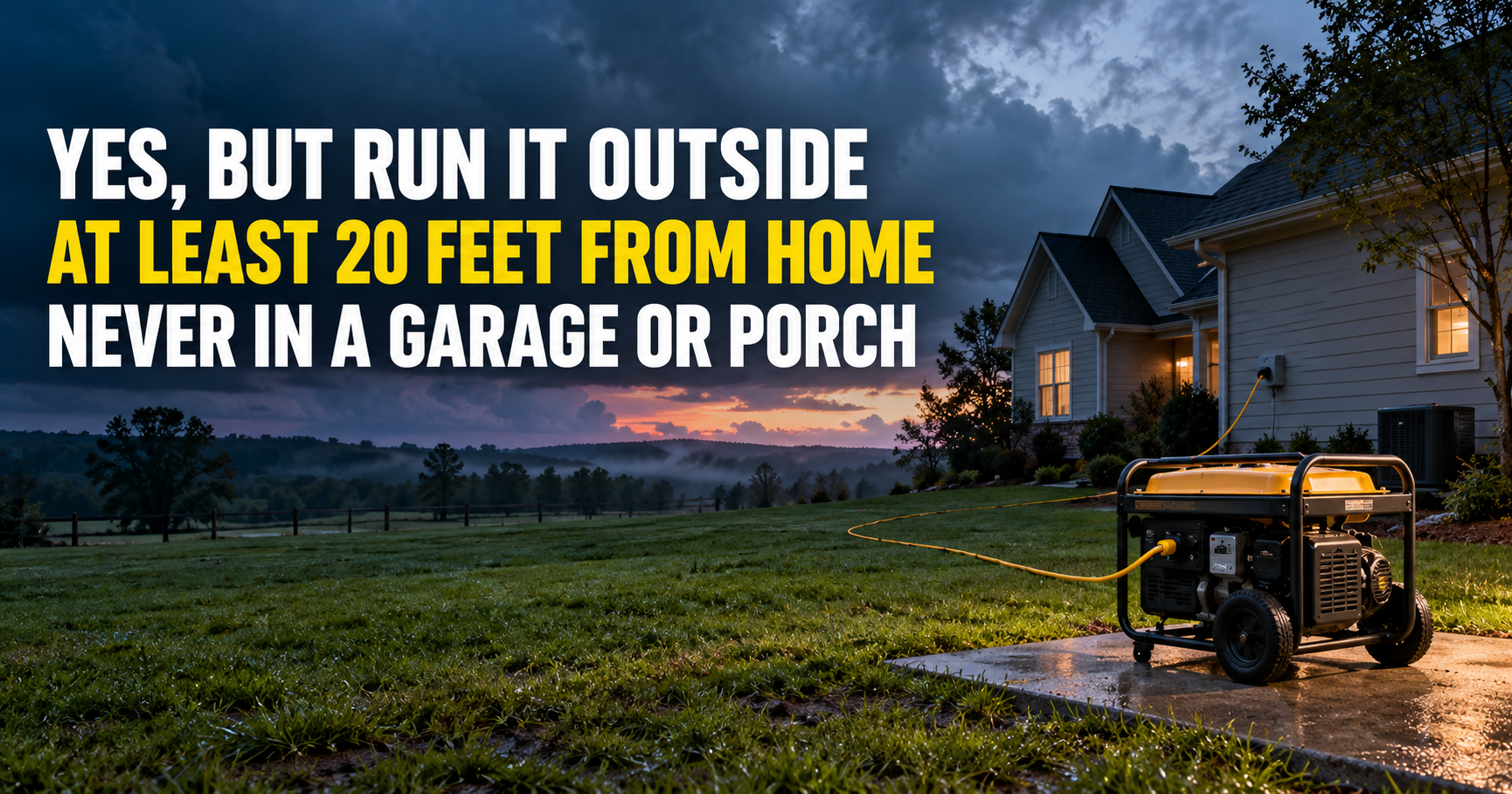
My starting rule is simple: I want the generator outside and at least 20 feet away from the house, with the exhaust pointed away from the home.
That’s farther than a lot of people realize.
When the power goes out in bad weather, it’s tempting to put the generator somewhere convenient and protected. Unfortunately, some of the most convenient locations are exactly where I don’t want a gasoline engine running.
Here’s how I choose a safer spot and why I figure this out before the lights ever go out.
I Start With 20 Feet
For a portable generator, I use 20 feet from the house as my minimum starting point.
I especially pay attention to openings such as:
- Windows
- Exterior doors
- Garage doors
- Dryer vents
- Fresh-air intakes
- Other openings that could allow exhaust into the house
Carbon monoxide doesn’t need an open front door to become a problem.
Generator exhaust outside can still enter a building through openings.
That’s why I don’t think only about where the generator itself is sitting.
I think about where its exhaust is going.



Why I Don’t Put the Generator Right Outside a Window
This seems obvious when I say it out loud.
But think about what happens during a real outage.
It’s hot.
The air conditioner doesn’t work.
Someone opens a bedroom window.
The generator is sitting outside powering the refrigerator.
Now I’ve potentially created a path for exhaust to enter the house.
That’s exactly the kind of situation I want to prevent before it happens.
I don’t position the generator based only on what windows are currently closed.
I consider doors, windows, vents, and other openings that might be used later.


Carbon Monoxide Is the Real Reason I Take This So Seriously
A portable generator burns fuel.
That engine produces carbon monoxide.
Carbon monoxide is especially dangerous because I can’t depend on my senses to detect it.
I can’t see it.
I can’t smell it.
And I don’t want my safety plan to depend on somebody feeling sick before realizing there’s a problem.
That’s why generator placement isn’t a minor detail in my blackout plan.
It’s one of the first things I decide.
I Never Run My Generator in the Garage
This is one shortcut I won’t take.
Not with the garage door closed.
Not with it halfway open.
Not with it completely open.
My garage is still attached to my house, and exhaust can find its way into living spaces.
The same rule applies to:
- Basements
- Sheds that aren’t specifically designed for safe generator operation
- Crawlspaces
- Enclosed porches
- Carports that create an unsafe exhaust situation
- Any other partially enclosed space
A generator needs to be outside.
Opening a garage door doesn’t magically turn the garage into outdoors.


I Don’t Run It Inside a Detached Building Just Because the Building Isn’t My House
This is another distinction worth making.
If I have a detached shed 30 feet from the house, I don’t automatically assume the generator belongs inside it.
The engine still produces exhaust.
The generator still needs proper ventilation.
The unit still creates heat.
And the manufacturer may have specific clearance and operating requirements.
If I’m building a dedicated generator enclosure or shelter, I want something actually designed around safe generator operation.
I don’t simply close a gasoline engine inside whatever building happens to be available.
Exhaust Direction Matters Too
Distance is only part of the setup.
I point the exhaust away from the house.
I don’t want the hot exhaust aimed toward:
- Windows
- Doors
- Vents
- People
- Pets
- Combustible materials
I also pay attention to wind.
I can’t control the wind, and wind direction can change, but I can avoid starting with the exhaust pointed directly at the house.


I Check Where My Furnace and HVAC Intakes Are
This is something I think deserves more attention.
A generator may be 20 feet from a window and still be poorly positioned if it’s near an outside air intake.
Every house is different.
Before an outage, I walk around mine and identify the places where outside air can enter.
That’s much easier to do during daylight on a normal afternoon than at 10 p.m. during a storm.
I Want Carbon Monoxide Alarms Inside the House
Good generator placement is one layer.
Carbon monoxide alarms are another.
I want working CO alarms inside my house whether I’m planning to use a generator or not.
If I’m depending on fuel-burning emergency equipment during a blackout, they become even more important.
I also don’t want alarms that become useless the second utility power disappears.
Battery-powered alarms or alarms with battery backup make sense for outage preparedness.

I Test Those Alarms Before Storm Season
An alarm isn’t helping me if the battery died six months ago.
So this becomes part of my normal preparedness routine.
I test the alarms.
I replace batteries when required.
I pay attention to the age and replacement instructions for the alarms themselves.
Generator safety starts before I ever pull the starter cord.
What If My Extension Cord Won’t Reach 20 Feet?
Then I solve the extension-cord problem.
I don’t solve it by moving the generator against the house.
That’s backwards.
If my safe generator location requires a longer cord, I want a properly rated outdoor extension cord suitable for the load I’m putting through it.
I don’t grab three lightweight household cords and daisy-chain them across the yard.
The generator location comes first.
Then I build the electrical setup around that location.


I Use Heavy-Duty Outdoor-Rated Extension Cords
If I’m directly powering appliances from a portable generator, the cord matters.
I want a cord that’s:
- Rated for outdoor use
- Properly sized for the electrical load
- Long enough for safe generator placement
- In good condition
- Equipped with the proper grounding connection
I inspect it before I need it.
Cuts, damaged insulation, loose connections, or missing grounding prongs aren’t things I want to discover during an outage.
I Never Backfeed My House Through an Outlet
If I’m using extension cords, they run from the generator to the equipment I’m powering.
What I don’t do is make some homemade cord and plug the generator into a household wall outlet.
That’s backfeeding.
It can energize wiring in dangerous ways and put utility workers and other people at risk.
If I want a generator connected to household circuits, I want the proper transfer equipment installed for that purpose.
This isn’t an area where I improvise.
Where I Put the Generator Before I Run My Refrigerator
The refrigerator is one of the first major appliances I may want to protect during a longer outage.
But I don’t let the urgency of saving food make me sloppy about generator placement.
I’ve already explained how I run my refrigerator from a portable generator during a blackout.
My sequence is:
- Choose the safe generator location.
- Position the exhaust away from the house.
- Make sure the generator is protected appropriately from weather.
- Run a properly rated cord.
- Then connect the load.
I don’t start with the refrigerator and work backward until the generator ends up five feet from the kitchen window.
Rain Makes Generator Placement More Complicated
A lot of outages happen because the weather is terrible.
That’s the annoying part.
I need the generator outdoors, but I also need to keep electrical equipment dry.
The solution isn’t moving it into the garage.
I want weather protection that allows the generator to remain outdoors with the ventilation and clearances required by its manufacturer.
That’s something I prepare before the storm.
Trying to build a generator shelter in pouring rain with no electricity is exactly the kind of problem I’d rather avoid.
I Don’t Throw a Tarp Directly Over a Running Generator
I want rain protection without trapping heat or exhaust.
A running generator gets hot.
It needs airflow.
So I don’t simply wrap it in plastic or toss a tarp directly over the machine.
If I’m using a generator tent, canopy, enclosure, or other weather protection, I want it intended for that purpose and compatible with my particular generator.
I Think About Standing Water Too
If the yard is flooding, my normal generator location may no longer be usable.
Electricity and standing water don’t mix.
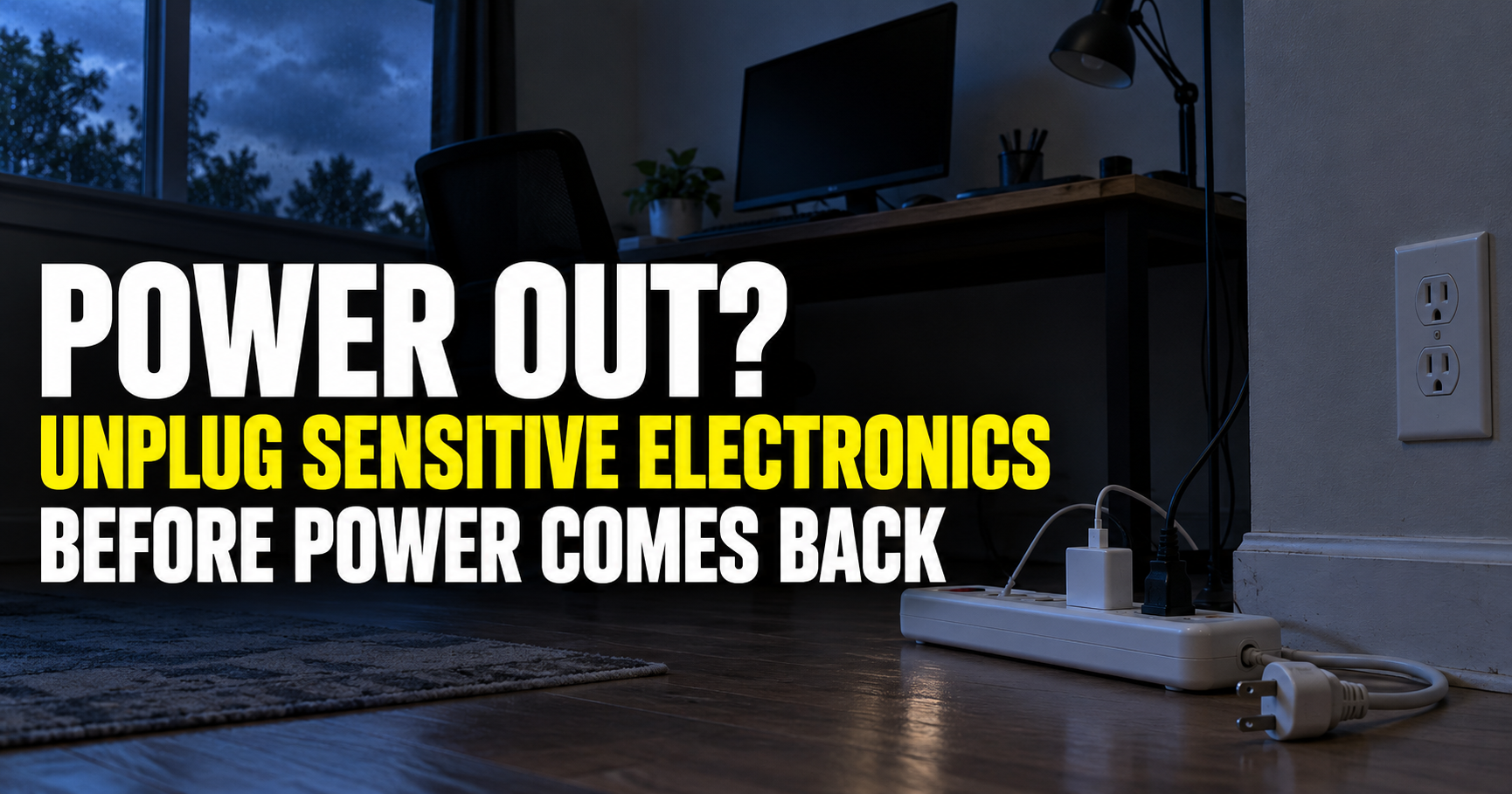
I don’t operate the generator while it’s sitting in water.
I also don’t stand in water while handling plugs and electrical connections.
This is another reason I like having more than one possible outdoor generator location planned.
Storm conditions can change the property.
I Don’t Put It Somewhere People Will Trip Over the Cord
Safety doesn’t stop with carbon monoxide.
If I’m running a heavy extension cord through a doorway or across a walkway in the dark, I’ve created another hazard.
I plan the cord route too.
I want to avoid:
- High-traffic walkways
- Places where children play
- Areas pets use
- Standing water
- Sharp edges
- Vehicle paths
A generator setup should become boring once it’s operating.
I don’t want people constantly stepping around it.
I Keep Kids Away From the Generator
Portable generators get hot.
They’re loud.
They have moving engine components.
They contain fuel.
They’re not something I let children investigate because they’re curious about why the lights work again.
I establish a clear area around the unit.
The same goes for pets.
I Don’t Store My Gasoline Beside the Running Generator
The generator needs fuel.
That doesn’t mean my fuel cans need to sit beside a hot engine.
I store gasoline in approved containers and in an appropriate location away from living areas and ignition sources.
When it’s time to refuel, I shut the generator down and let it cool according to the manufacturer’s instructions.
I never refuel it while it’s running.
I Don’t Move the Generator While It’s Hot Just Because the Wind Changed
This is another reason good initial placement matters.
A generator can become extremely hot during operation.
I don’t want to be dragging a hot, fuel-filled machine around the yard every hour.
I choose the best practical location beforehand and monitor conditions.
If something changes enough that the location becomes unsafe, I shut the equipment down before making changes.
My Generator Location Is Part of My Fuel Plan
This sounds strange until you’ve actually carried fuel and equipment around during an outage.
I want the generator somewhere that is safe but still practical to access.
Twenty feet isn’t half a mile.
I can maintain a safe separation from the house without putting the generator in some remote corner of the property that’s miserable to reach.
I want to be able to:
- Inspect it
- Check oil
- Shut it down
- Refuel safely
- Monitor cords
- Hear if the engine starts behaving differently
Safe doesn’t have to mean inconvenient.
I Also Think About Generator Theft
A generator sitting outside during a widespread outage is valuable.
People can hear it.
That doesn’t mean I move it into an unsafe enclosed area.
Instead, security becomes another part of my setup.
Exactly how I secure equipment depends on the property, but I think about theft before the emergency rather than after somebody notices the generator running.
Safety from carbon monoxide still comes first.
Smaller Generators Can Make Placement Easier
One reason I like portable inverter generators for essential loads is exactly what the name suggests.
They’re portable.
I’m not trying to move a giant machine around every time the grid fails.
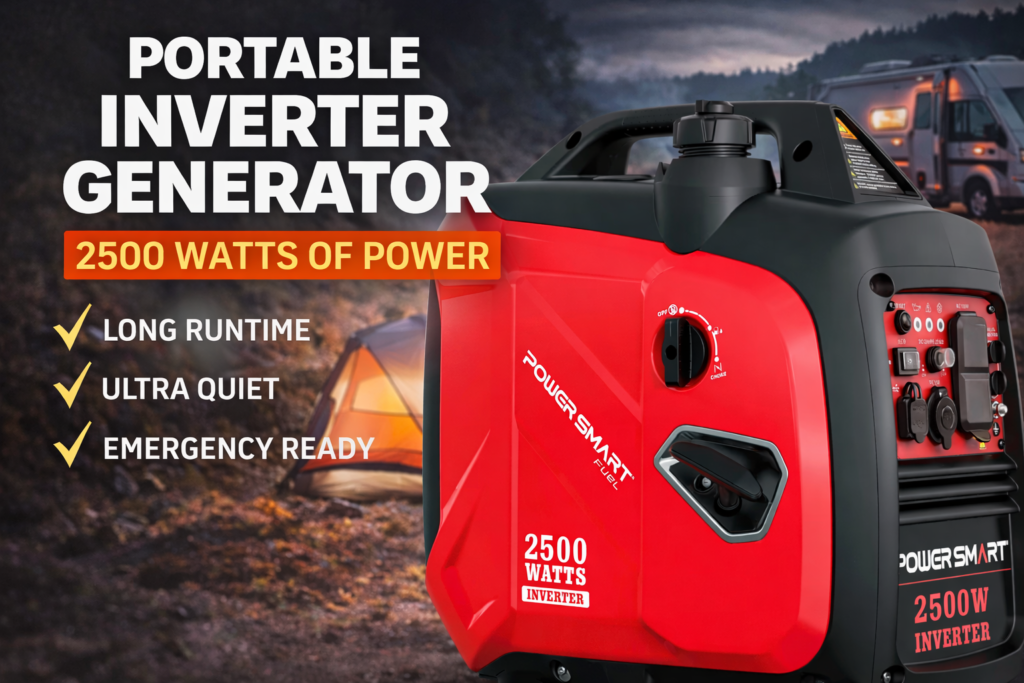
We’ve already covered the PowerSmart portable inverter generator I consider for basic emergency backup.
For a household focused on refrigeration, charging, lighting, and selected essential loads, a smaller unit can be much easier to position and manage.
Looking for a Portable Generator for Essential Loads?
The model we’ve been using throughout this blackout cluster is a PowerSmart 2500-watt inverter generator.
Check the PowerSmart 2500-watt generator on Amazon
I still calculate my actual appliance loads before buying, but portability is something I consider right alongside wattage.
I Decide the Generator Spot Before the Outage
This is probably the most useful thing I can tell someone reading this before a storm.
Go outside now.
Look at your house.
Find your doors.
Find your windows.
Find your vents and air intakes.
Measure out at least 20 feet.
Figure out where the generator could safely operate.
Then figure out whether your extension cords actually reach from that location to the appliances you’re planning to power.
That’s a ten-minute exercise on a normal afternoon.
During a freezing blackout at midnight, it’s a completely different experience.
I Test the Entire Setup Once
I don’t just start the generator in the driveway and declare the test successful.
I test the system.
Can I place it where I planned?
Does the cord reach?
Does the refrigerator run?
Can I close the door without crushing the cord?
Does the generator comfortably handle the load?
Where does the exhaust travel?
Can everyone in the household avoid the equipment?
Does my carbon monoxide alarm work?
That’s what I want to know.
My Generator Runtime Strategy Starts With Safe Placement
Once the generator is positioned correctly, then I can start worrying about efficiency.
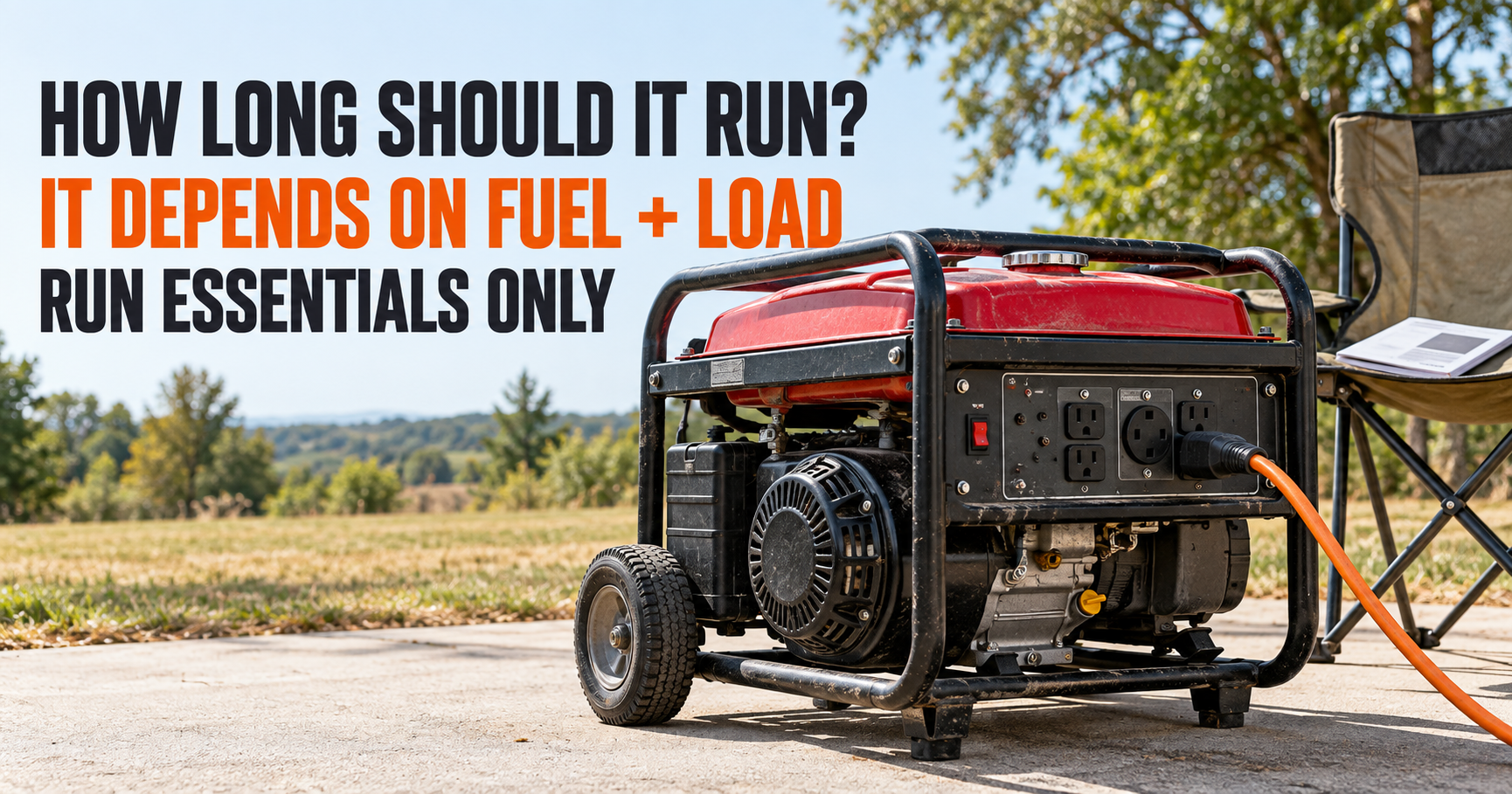
I’ve already explained how long I run a generator during a power outage and how I stretch my fuel.
But none of those fuel-saving strategies matter if I’ve put the generator somewhere dangerous.
Safe placement comes first.
Fuel management comes second.
The Same Rule Applies During a Long Blackout
The longer an outage lasts, the easier it becomes to get comfortable and start taking shortcuts.
That’s exactly when I don’t want to.
Day one:
Generator 20 feet away.
Day three:
Still 20 feet away.
Rain starts:
Still outside.
It’s freezing:
Still outside.
I’m tired:
Still outside.
Carbon monoxide doesn’t become less dangerous because I’ve been without electricity for 72 hours.
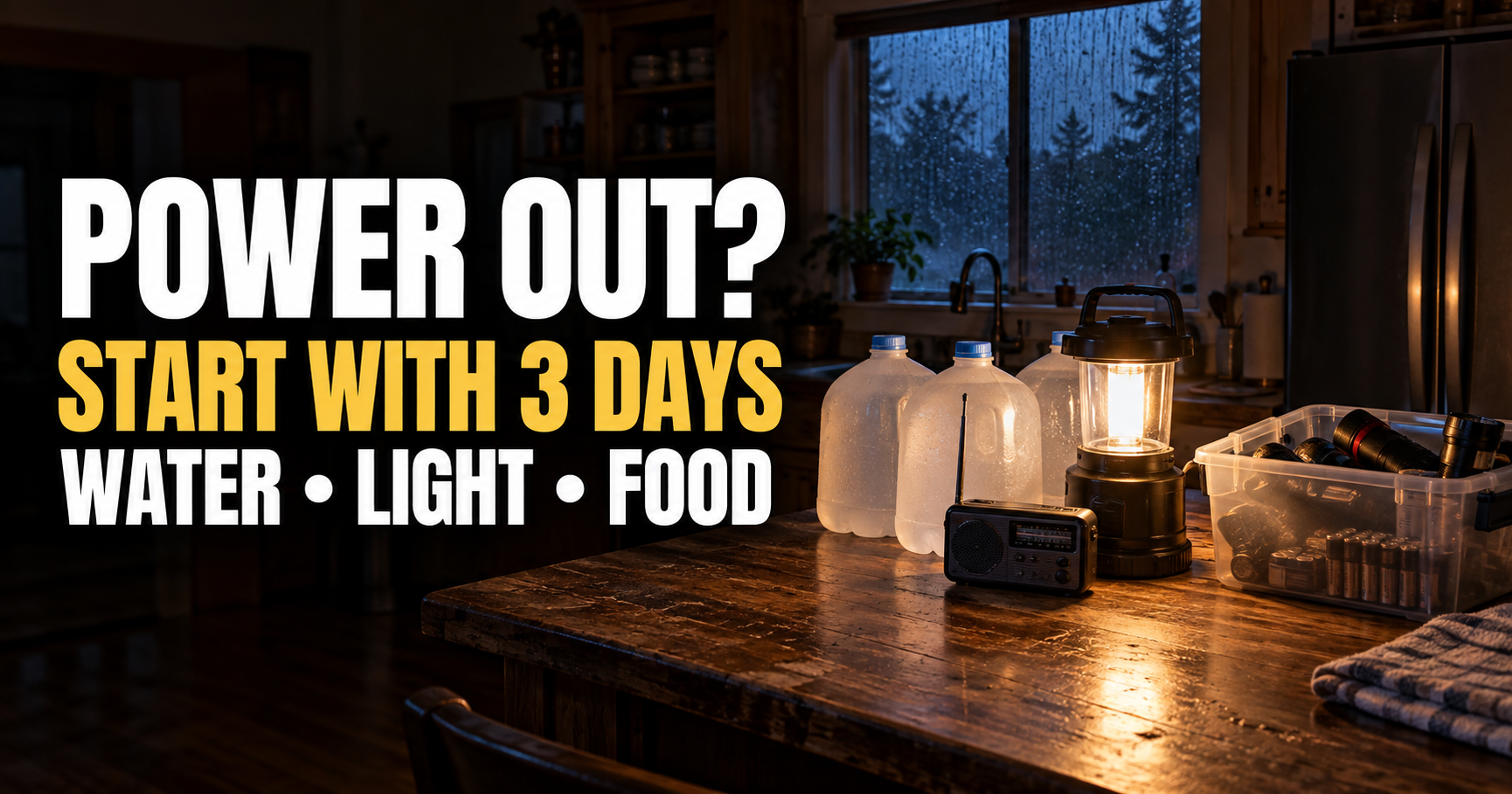
That’s why I build the safe setup into my long-blackout preparedness plan from the beginning.
My Simple Generator Placement Rule
If somebody asked me to remember only a few things, I’d make it these:
- Outside.
- At least 20 feet from the house and its openings.
- Exhaust pointed away from the home.
- Never in the garage, basement, or another enclosed or partially enclosed space.
- Keep it dry without enclosing it.
- Use properly rated outdoor cords.
- Have working carbon monoxide alarms inside.
That’s simple enough to remember when everything else is going wrong.
Twenty Feet Is Easier to Plan Today Than During a Blackout
A portable generator can be one of the most useful pieces of equipment I own during an extended outage.
It can protect food.
Charge communication equipment.
Run important appliances.
Potentially help maintain water access.
But I don’t let the usefulness of the generator make me casual about where I put it.
I can replace spoiled food.
I can replace a generator.
I can’t undo carbon monoxide poisoning after somebody has been seriously hurt.
So before the next outage, I choose the location, measure the distance, check my cords, test my alarms, and run through the setup once.
Then when the lights actually go out, generator placement isn’t another decision I have to make in the dark.
I already know exactly where it’s going.
About the Author
Caleb Mercer writes about generators, blackout preparedness, backup power, emergency communications, and keeping households functioning safely when utilities fail. His work for the Survive Essentials Power Outages and Backup Power section focuses on practical setups people can test before an emergency rather than learning critical safety lessons during one.