Yes, walkie talkies can work without cell service.
That’s actually one of the biggest reasons I like having them for emergency preparedness.
Two compatible radios can communicate directly with each other without routing the conversation through a cell tower, Wi-Fi network, internet connection, or phone company. That direct connection is one layer in a broader family system of emergency communication devices.
So if cell service disappears during a storm, widespread outage, evacuation, or another emergency, properly functioning walkie talkies may still let nearby family members communicate.
But there’s an important limitation.
Walkie talkies aren’t unlimited-range replacements for cell phones.
Their usefulness depends heavily on distance, terrain, buildings, radio power, antennas, battery life, and what kind of radio I’m using.
That’s why I’d rather understand what they’re genuinely good at than buy a pair based on a giant mileage number printed on the package.
How Do Walkie Talkies Work Without Cell Service?
Walkie talkies communicate directly over radio frequencies.
I press the push-to-talk button on one radio.
That radio transmits my voice.
Another compatible radio tuned appropriately receives it.
There doesn’t need to be a cell tower between us.
That’s completely different from a normal cell phone call.
My phone relies on cellular infrastructure and a much larger communication network.
Walkie talkies can communicate radio to radio.
That simplicity is exactly what makes them attractive during emergencies.
If Cell Towers Go Down, Will My Walkie Talkies Still Work?
Yes, losing cellular service doesn’t automatically affect normal direct radio communication.
If two radios could communicate before the cellular outage, they may continue communicating afterward.
Both people still need radios.
The radios need to be compatible.
They need power.
And they need to remain within usable range.
That’s the tradeoff.
I lose the enormous network behind my cell phone, but I gain a communication method that doesn’t depend on that network.


The Radios I’m Looking at for This Job
For a family emergency setup, I want something sturdier than the tiny toy-style radios most people picture when they hear “walkie talkie.”
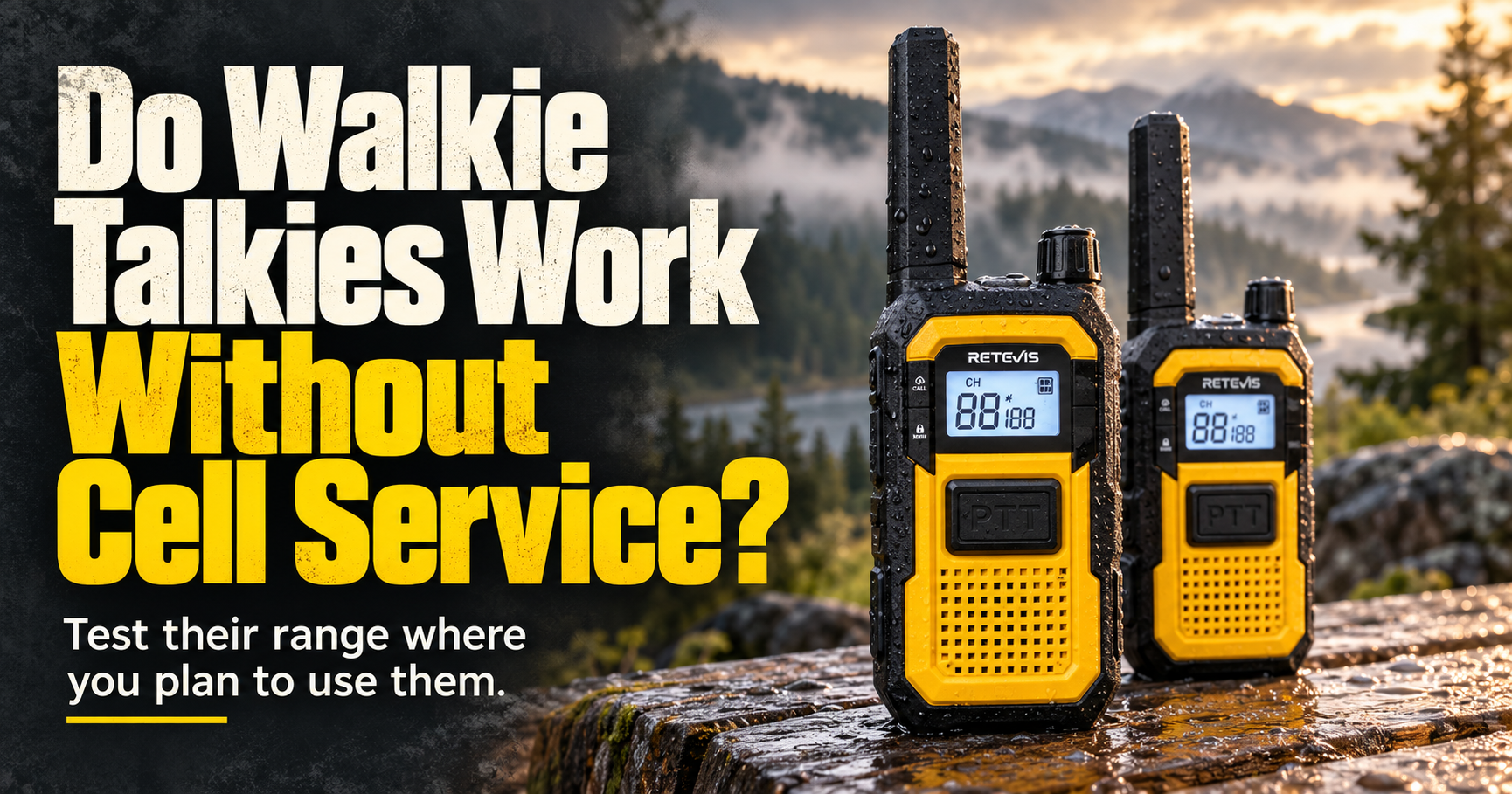
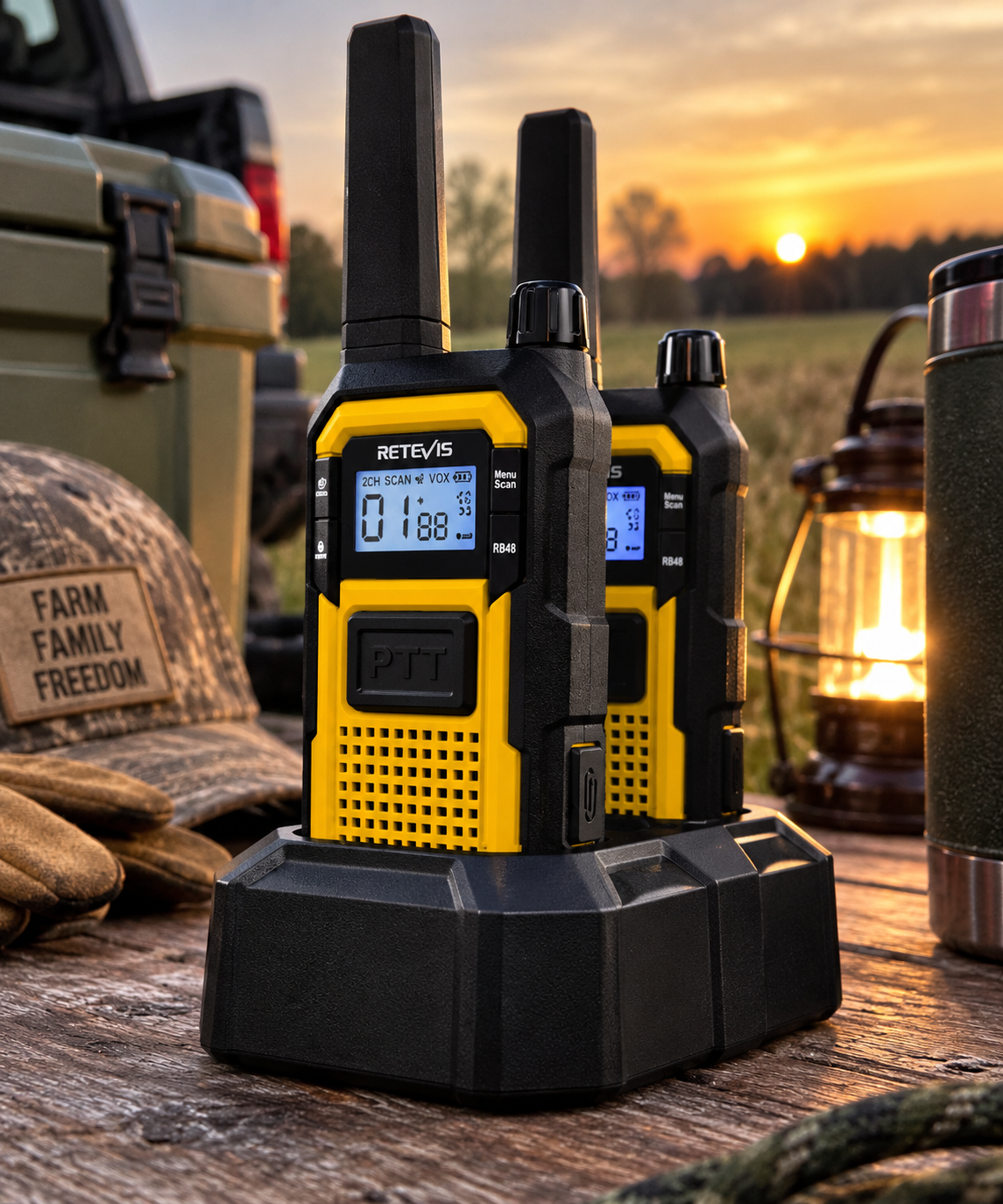
The pair I’m looking at is the Retevis RB48 FRS Walkie Talkies.
Check the Retevis RB48 FRS Walkie Talkies on Amazon
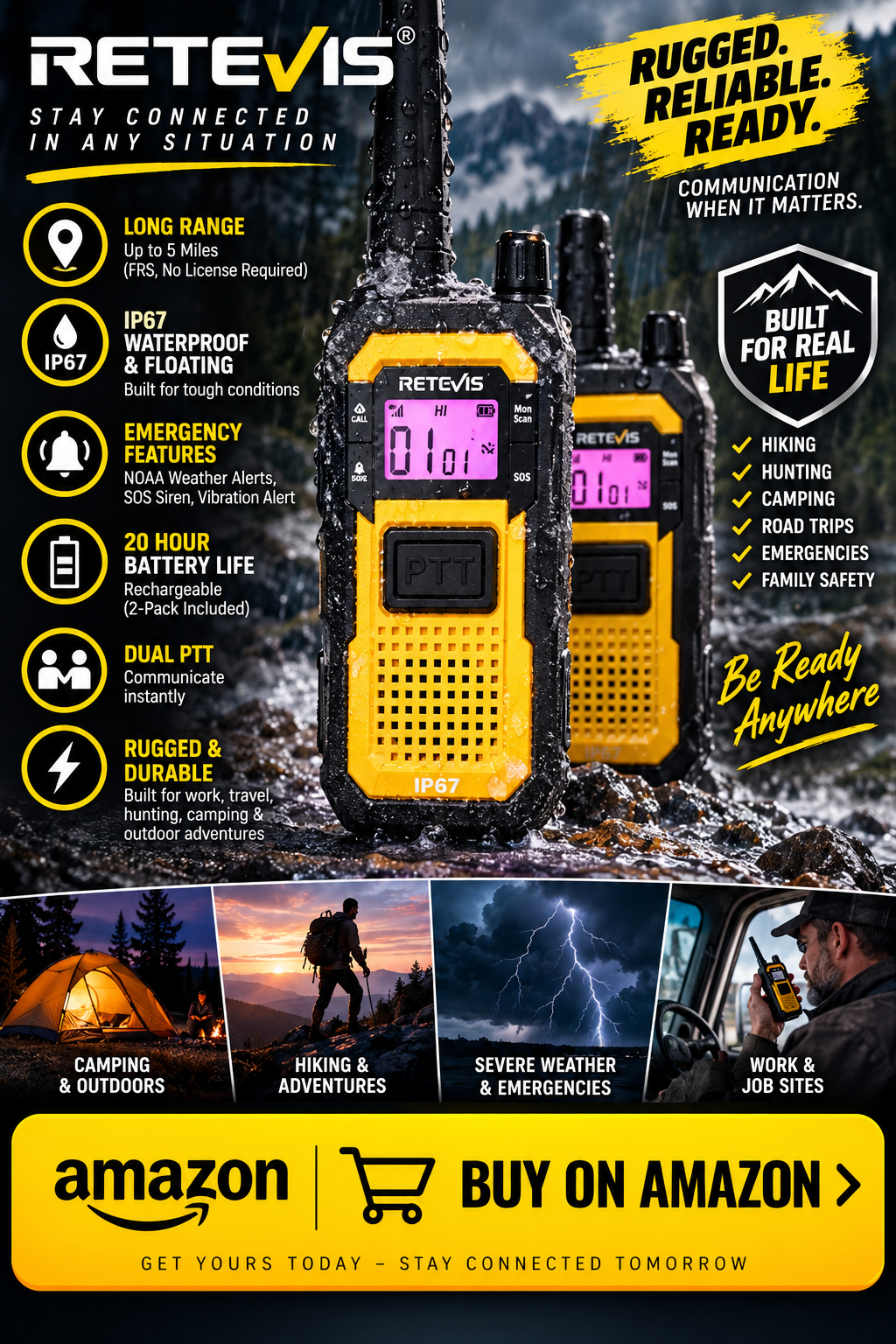
These caught my attention because they’re built around features that actually make sense for emergency and outdoor use.
They’re FRS radios, so they’re straightforward for normal family use.
They’re IP67 waterproof and dust-resistant.
They have NOAA weather reception.
They use rechargeable batteries.
They offer USB-C charging.
They have dual push-to-talk buttons.
And they’re built much more like work radios than children’s walkie talkies.
That’s closer to what I want sitting with my emergency equipment.
Why I Like FRS for Family Emergency Communication
FRS stands for Family Radio Service.
For a normal household, that’s attractive because FRS radios are designed for simple short-range personal communication.
I don’t need everyone in the family studying amateur radio just to use them.
Once I have the radios set up, I can show someone:
Turn this on.
Use this channel.
Push here to talk.
Release it to listen.
That’s about as simple as emergency communication gets.
The Retevis RB48 Is an FRS Radio
That’s one reason this particular model fits the article well.
The Retevis RB48 uses FRS frequencies.
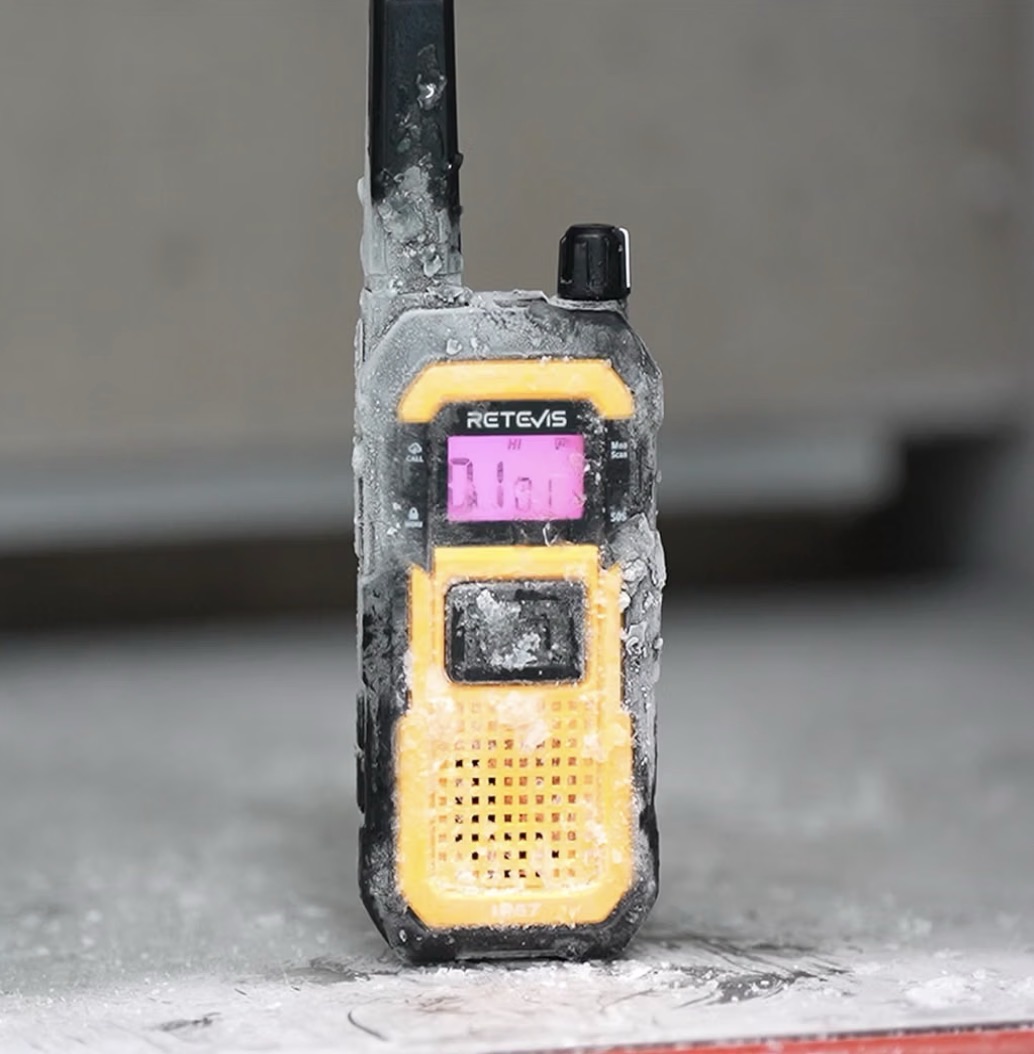
For a household looking for uncomplicated two-way communication, I like that better than buying advanced equipment that nobody else understands.
Ham radio is fantastic for the right person.
We already covered whether I think ham radio is worth having for emergency preparedness.
But I don’t expect every member of my household to become an amateur-radio operator.
FRS radios fill a different role.
They’re Not Dependent on the Internet Either
This matters just as much as cellular service.
If my home internet is down, the radios don’t care.
If Wi-Fi isn’t working, they don’t care.
If the cable company has an outage, they don’t care.
If I can’t open a messaging app, the radios don’t care.
That’s the beauty of direct communication.
There isn’t much infrastructure between me and the person I’m trying to reach.
But I Can’t Talk Across the Country With Them
This is where expectations need to stay realistic.
If I hand someone one of these radios and they drive three states away, we’re not going to keep chatting directly.
Walkie talkies are primarily local communication tools.
Think:
Around a farm.
Across a campground.
Between vehicles traveling together.
Around a neighborhood.
Between family members during an evacuation.
Across a jobsite.
Around a large property.
Those are situations where I think they make a lot of sense.
How Far Will Walkie Talkies Really Work?
There isn’t one range number I trust for every situation.
Actual usable range depends on far more than distance.
Terrain matters.
Buildings matter.
Trees matter.
Elevation matters.
The antenna matters.
Interference matters.
Where I’m standing matters.
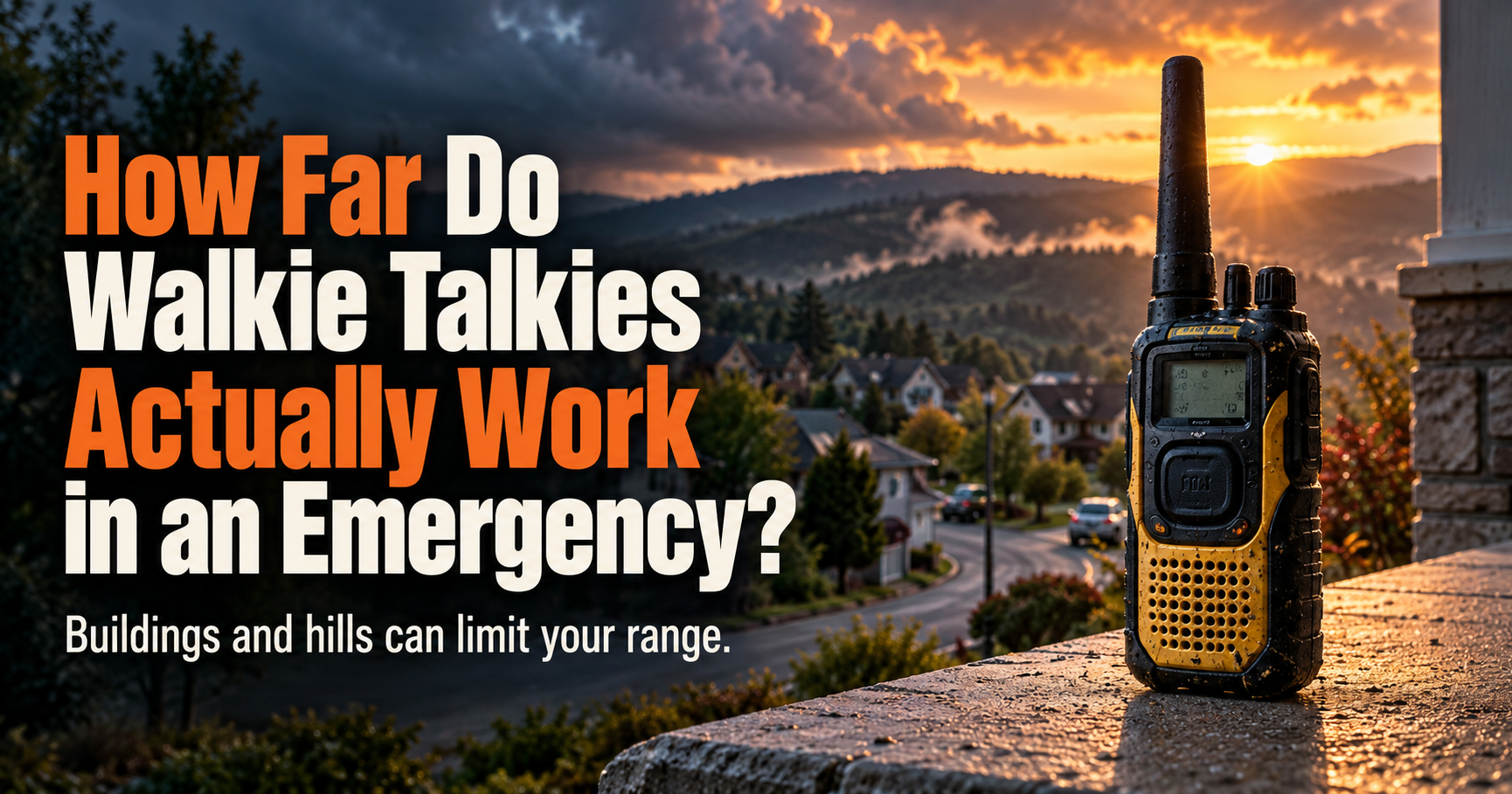
The same two radios could perform very differently in an open field than they do in a neighborhood full of houses. The practical differences are explained in this guide to how terrain changes walkie-talkie range.
That’s why I don’t buy any walkie talkie solely because the package promises some huge maximum distance.

Open Ground Is Completely Different From a Neighborhood
Imagine two people standing on elevated open ground with relatively few obstacles.
That’s one of the better situations for radio communication.
Now put those same people on opposite sides of town.
Between them are:
Homes.
Metal buildings.
Concrete.
Vehicles.
Trees.
Terrain changes.
Power infrastructure.
Now the usable range can look completely different.
That’s why the phrase long range walkie talkie needs context.
Long range compared with what?
And under what conditions?
Hills Can Be a Major Problem
A hill or ridge between two handheld radios can dramatically affect communication.
Radio works much better when the path between antennas is favorable.
If I’m down in a low area and another family member is on the other side of a large ridge, I might struggle even though we’re not tremendously far apart.
Moving to higher ground can sometimes make a noticeable difference.
That’s worth knowing before the emergency.
Trees and Dense Woods Can Affect Range Too
If I’m using radios while camping, hunting, hiking, or foraging, forests matter.
Dense vegetation and uneven terrain can reduce practical range.
That doesn’t make walkie talkies useless in the woods.
Far from it.
It just means the range I get in an open pasture probably won’t match the range I get deep in heavy timber.
This Is Why I Would Test Them at Home
This may be the most useful thing I can do after buying radios.
I would actually test them where I expect to use them.
Give one radio to another person.
Then try them:
Inside the house.
Outside.
At the back of the property.
Down the road.
At a neighbor’s house.
Between vehicles.
From the places family members are likely to be.
That tells me more than any range claim.
Now I know:
From the house to the barn, these work.
From our house to this intersection, these work.
Once someone goes behind that ridge, communication becomes unreliable.
That’s useful emergency information.
Waterproofing Matters More Than It Sounds
This is one feature I especially like on the RB48.
Emergency equipment gets used when conditions aren’t perfect.
Rain.
Mud.
Snow.
Wet hands.
Flooding.
Outdoor work.
A radio I’m scared to get wet isn’t ideal emergency equipment.
The Retevis RB48 carries an IP67 rating, which gives me much more confidence using it outside than I would have with a lightweight indoor-style radio.
I still take care of my equipment.
I just like having some extra protection built into it.
Dust Protection Is Useful Too
Water isn’t the only thing emergency equipment encounters.
There’s dust.
Dirt.
Farm work.
Construction debris.
Gravel roads.
Camping.
Keeping dust out matters if I’m planning to use the radios for years instead of treating them as disposable electronics.
This is another reason I lean toward a heavier-duty model for preparedness.
The Dual PTT Buttons Are Actually Practical
PTT means push-to-talk.
The RB48 has a push-to-talk control available in more than one position.
That may sound like a minor feature, but it can be handy when wearing gloves or carrying the radio differently.
Emergency gear is full of little features that sound pointless until I need them.
Anything that makes basic operation easier is a win for me.
NOAA Reception Adds Another Useful Layer
This is another feature I like.
The radios can receive NOAA weather information.
That doesn’t mean I would stop keeping a dedicated emergency weather radio.
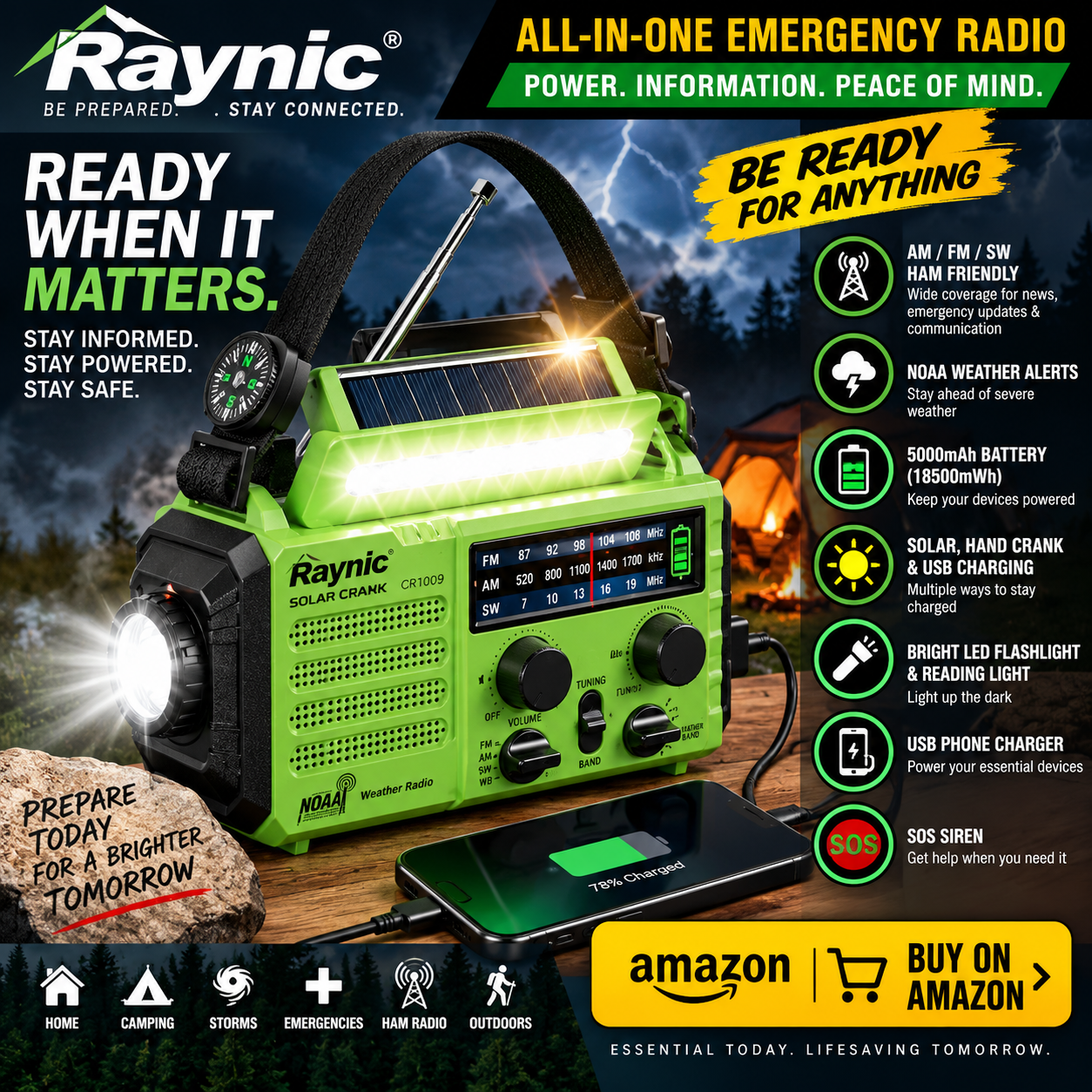
I still like having the 5000mAh Solar Hand Crank Emergency Weather Radio because it serves a broader information and backup-power role.
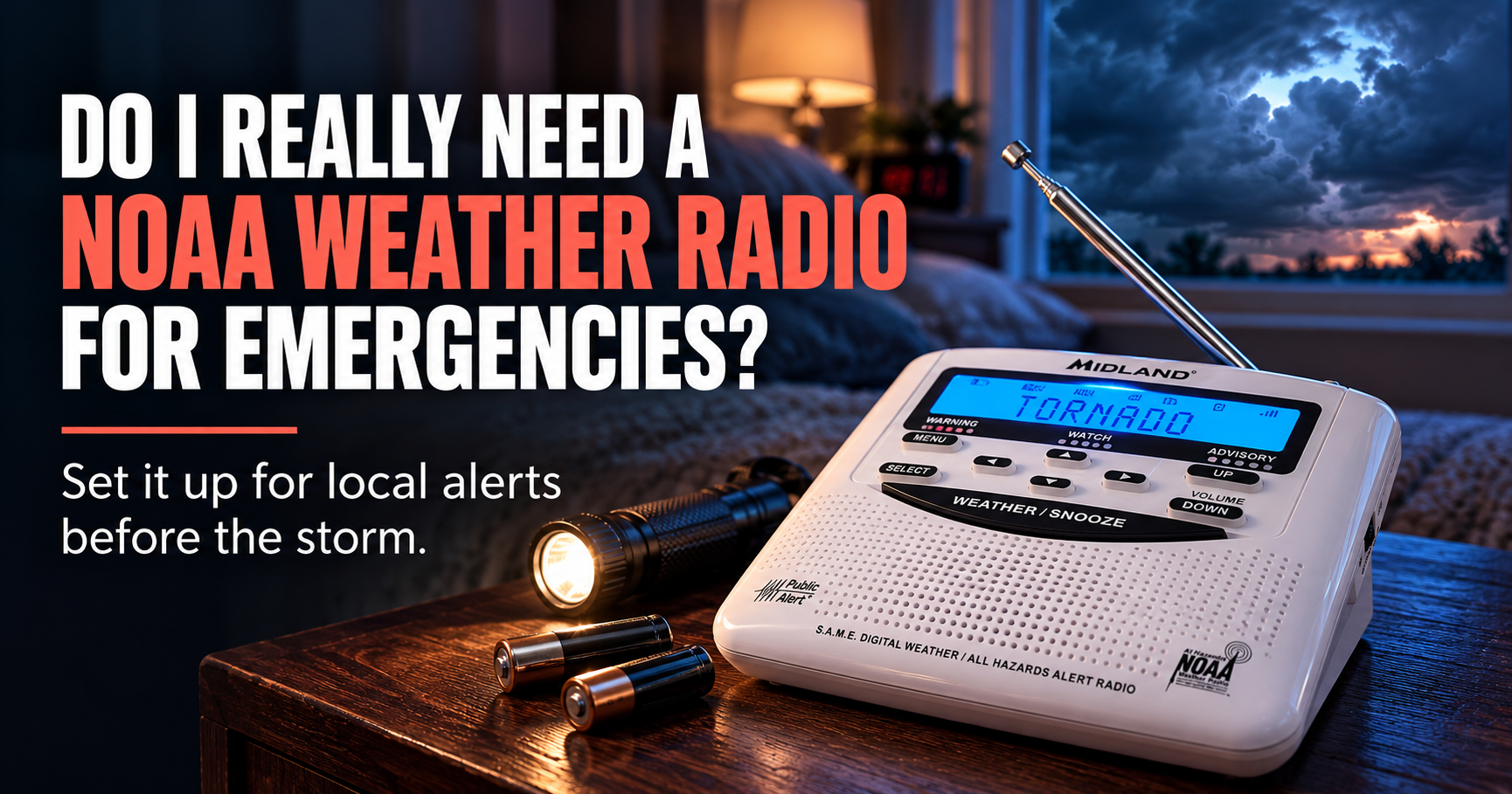
But having NOAA reception in the walkie talkies gives me another way to hear weather information.
That’s redundancy.
And redundancy is exactly what I want during an emergency.
My Weather Radio and Walkie Talkies Do Different Jobs
I think of them like this:
The weather radio tells me:
What is happening?
The walkie talkie helps me ask:
Where are you?
That’s why I wouldn’t choose one or the other.
They complement each other.
The weather radio gives me outside information.
The walkie talkies help my family communicate locally.
Rechargeable Batteries Are Convenient
I like rechargeable radios because I’m not constantly feeding them disposable batteries.
But rechargeable also creates a responsibility.
I have to keep them charged.
A walkie talkie sitting dead in a drawer isn’t emergency communication.
It’s clutter.
So I’d build charging into the regular preparedness routine.
Maybe every few months.
Before severe-weather season.
Before camping.
Before traveling.
Before a predicted winter storm.
I want to know they’re ready.
USB-C Charging Makes Backup Power Easier
This is a feature I particularly like.
The RB48 uses USB-C charging.
That gives me more options than a radio requiring only one special wall charger.
Depending on the setup, I may be able to recharge from:
A power bank.
A portable power station.
A vehicle.
Other USB power sources.
That’s much more useful during an outage.
I’ve learned to pay attention to charging connections on emergency equipment because power options matter after the wall outlets stop working.
I Would Still Keep the Charging Accessories Together
Nothing is more annoying than owning rechargeable equipment and having no idea where the cable went.
So the charging equipment stays with or near the radios.
Not in some random drawer.
Not in the garage behind Christmas decorations.
With the communication gear.
That sounds simple because it is.
Simple preparedness habits work.
Walkie Talkies Are Great Between Vehicles
This may be one of the best practical uses.
Imagine two or three vehicles evacuating together.
Everyone has phones.
But cell service is overloaded or unavailable.
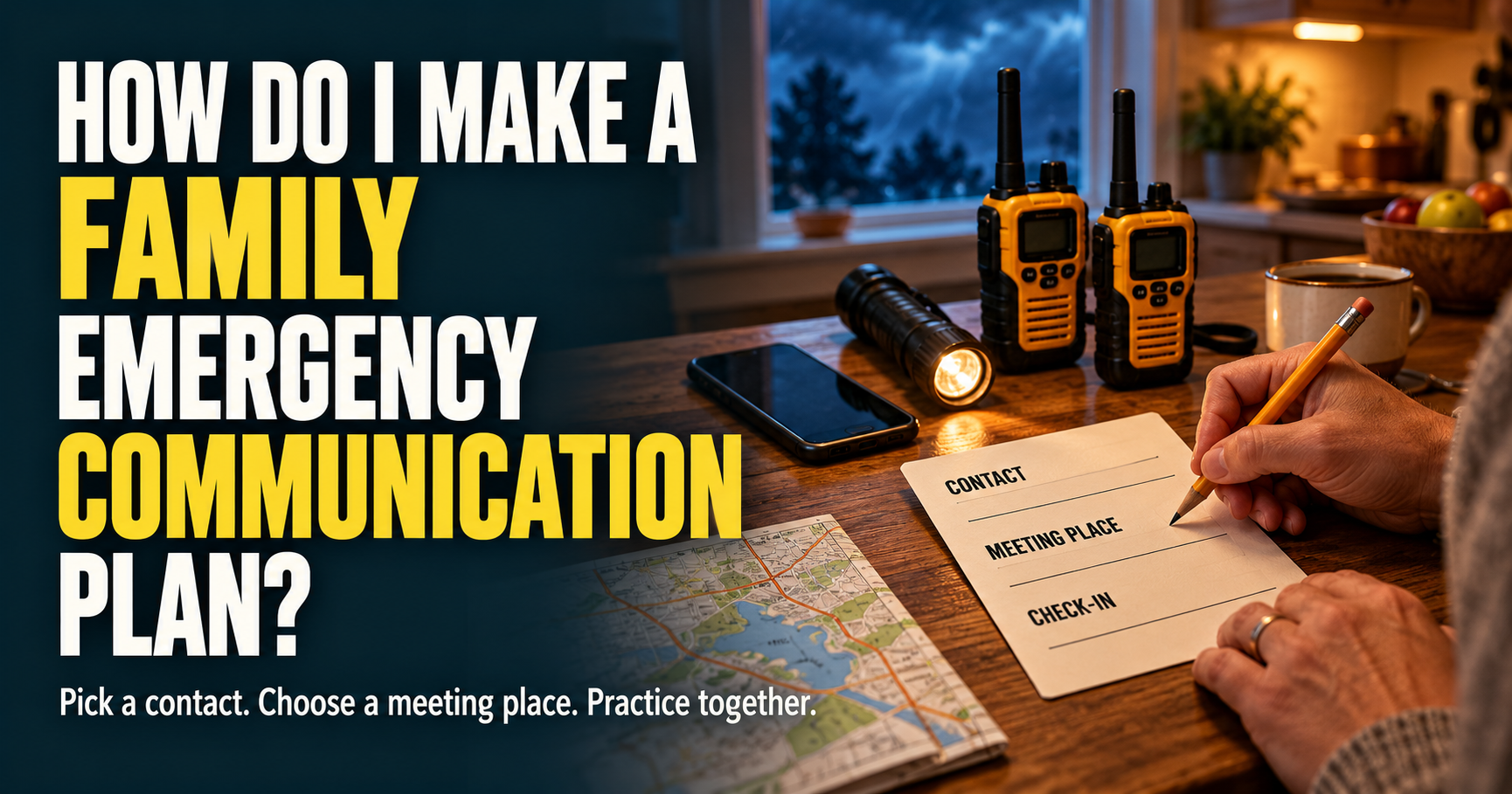
Instead of repeatedly trying to call each other, the radios can handle simple messages. Those messages work best when everyone already follows the same family emergency communication plan.
“We’re turning right.”
“Pull over ahead.”
“We’re stopping for fuel.”
“We lost sight of the last vehicle.”
That’s incredibly practical.
And it doesn’t require cellular service.
They’re Useful Around a Farm Too
Large properties are another natural fit.
Someone is near the house.
Someone is working in a field.
Someone is checking animals.
Someone is at another building.
Even when phones work, radios can be faster.
Push.
Talk.
Done.
And because I’m already using them during ordinary life, I know they’ll work when something unusual happens.
That’s the kind of emergency equipment I like best.
They’re Great for Camping and Outdoor Trips
Camping is another good place to practice.
Family members can split into groups and use the radios normally.
We learn:
How far they reach.
How the audio sounds.
How the batteries perform.
Which channels we use.
What settings confuse people.
That experience carries directly into emergency use later.
I Would Pick a Primary and Backup Channel Ahead of Time
I don’t want everyone scrolling through channels during a crisis.
I’d pick one primary channel and one backup.
Then make sure the family knows them.
I could even put a small label somewhere visible.
PRIMARY: 5
BACKUP: 8
Whatever we choose.
The exact channel matters less than everyone knowing the plan.
Codes Don’t Necessarily Mean Privacy
Some radios let me use CTCSS or DCS codes.
Those settings can reduce how much unrelated traffic I hear.
But I don’t treat that as encrypted private communication.
Radio traffic can potentially be heard by others using compatible equipment.
So I avoid broadcasting sensitive information.
No passwords.
No financial information.
No Social Security numbers.
No unnecessary private details.
I assume somebody else could be listening.
I Would Teach Everyone Simple Radio Etiquette
This doesn’t need to become complicated.
Press the button.
Wait a moment.
Talk clearly.
Keep it short.
Release the button.
Listen.
That’s enough for family communication.
I don’t need everyone sounding like an emergency dispatcher.
I just want clear information.
Short Messages Are Better
Instead of:
“Hey, I was thinking maybe we’ll stop at that place that’s coming up because I think we might need gas and I’m not sure how far the next place is…”
Say:
“We’re stopping at the next gas station.”
Much better.
Radio channels are shared resources.
Clear and short wins.
I Wouldn’t Count on One Channel Always Being Empty
Other people may be using FRS radios too.
That becomes even more likely during:
Camping.
Large events.
Severe weather.
Community emergencies.
So if our main channel gets crowded, having a backup already chosen is helpful.
Again, I don’t want to invent the plan while something is going wrong.
The Radios Need to Be Distributed
Buying two radios and storing both in the same emergency bag defeats the purpose.
If people might become separated, radios need to go with the groups.
One in each vehicle.
One with each group leaving the property.
One at the house and one with the person working outside.
Communication only works if both sides have a radio.
Walkie Talkies Don’t Replace My Phone
I still use the phone first when the phone works.
Why wouldn’t I?
Phones give me:
Voice calls.
Texts.
Internet.
Maps.
Emergency alerts.
Weather.
Photos.
Location information.
Walkie talkies are the backup layer.
They’re there specifically because phones can fail.
Texting Can Still Be Worth Trying During Network Problems
If cell service is struggling, I may try a short text even when voice calls aren’t going through reliably.
Sometimes a small message has a better chance of getting through than a full voice conversation.
So I don’t instantly give up on the phone.
I move through communication options logically.
Phone.
Text.
Radio.
Backup plans.
That’s what layers are for.
Walkie Talkies and Ham Radio Aren’t Competitors
I don’t see them as either-or equipment.
They solve different problems.
Walkie talkies are simple.
Ham radio can offer much broader capabilities for someone willing to learn and become licensed.
That’s why I like having ham radio as its own part of the emergency communication plan.
For ordinary family communication, FRS radios may actually get used more often.
For more advanced emergency communication, amateur radio opens additional doors.
Walkie Talkies Aren’t Rescue Beacons
This is important.
If I’m deep in the wilderness and nobody with a compatible radio is within range, pressing the button isn’t magically contacting rescue.
Walkie talkies are communication devices between radios.
They’re not guaranteed emergency beacons.
For truly remote travel, I would consider other communication tools designed specifically for those conditions.
Different risks require different equipment.
Would I Use the Retevis RB48 for Emergency Preparedness?
For local family communication, yes, I like the setup.
The combination makes sense to me:
FRS operation.
Heavy-duty design.
IP67 waterproofing.
NOAA reception.
Rechargeable battery.
USB-C charging.
Dual PTT controls.
And a two-pack gives me the minimum thing every walkie-talkie system needs:
Two radios.
See the Retevis RB48 FRS Walkie Talkies here
What I would not do is buy them and leave them sealed until the emergency.
I’d use them.
Test them.
Charge them.
Learn their real range around my own property.
Make sure everyone knows the channels.
That turns them from another product into actual preparedness equipment.
My Emergency Communication Setup Is Becoming Layered
This is exactly what I’ve wanted from this cluster.
I don’t want communication depending on one thing.
My setup would include:
Cell phones.
Text messaging.
Backup phone charging.
A dedicated emergency weather radio.
FRS walkie talkies for local family communication.
Ham radio if someone in the household wants the additional capability.
And a family plan that works even when every electronic device fails.
That’s a much stronger setup than simply hoping cell towers stay online.
Radios Still Don’t Replace a Family Plan
Let’s say the phones fail.
Walkie talkie is out of range.
Internet is down.
Nobody can reach anybody.
Now what?
Everyone should already know the answers to some basic questions.
Where do we meet?
Who gets the kids?
Where do we go if home isn’t safe?
Who is our out-of-area contact?
What’s our backup meeting location?
Technology is great.
Planning is better.
I want both.
So Do Walkie Talkies Work Without Cell Service?
Absolutely.
That’s one of their main advantages.
They’re communicating over radio frequencies, not relying on cellular towers to carry the conversation.
But I keep the expectations realistic.
They’re best for local communication.
Terrain and buildings affect range.
Batteries matter.
Both people need radios.
And the only way I really know how well my radios work is by testing them where I intend to use them.
For my own emergency setup, I’d much rather have something rugged enough for real outdoor use than a lightweight pair that lives in a junk drawer.
That’s why the Retevis RB48 FRS Walkie Talkies make sense to me for this role.
If cell service keeps working, great.
I’ll probably use my phone.
But if the screen suddenly says No Service, I like knowing that doesn’t automatically mean my family has no way left to talk.
About the Author
Caleb Mercer writes about emergency communications, power outages, backup power, and practical household preparedness for Survive Essentials. His work focuses on building communication layers before they’re needed, testing equipment under realistic conditions, and helping families stay connected when normal services become unreliable.