I used to lump every emergency radio into basically the same category.
Turn it on, hear weather information, maybe communicate somehow if things get bad.
Ham radio is different.
A normal emergency weather radio is mainly about receiving information. Ham radio can let you actually communicate with other licensed operators over distances that may range from around town to much farther away depending on the radio, antenna, frequency, terrain, repeaters, and operating conditions.
That makes ham radio extremely interesting for emergency preparedness.
But I don’t think every family needs to run out and buy one.
For some people, ham radio could become one of the most useful backup communication tools they own.
For others, a good weather radio, charged phones, backup battery power, and simple two-way radios may cover what they realistically need. Those layers are easier to evaluate together when building a family emergency communication setup.
The biggest difference is this:
Ham radio becomes valuable when you learn how to use it before the emergency happens.
What Is Ham Radio?
Ham radio is another name for amateur radio.
Licensed amateur radio operators use designated radio frequencies to communicate with each other for recreation, experimentation, public service, emergency communications, and other noncommercial purposes.
A direct radio contact doesn’t necessarily depend on:
Cell towers.
Internet service.
Cable lines.
A phone company.
That independence is exactly why amateur radio has such a strong reputation in emergency preparedness.
When storms or disasters damage normal communication infrastructure, trained amateur operators can sometimes keep information moving through radio networks.
Why Ham Radio Can Matter During a Disaster
Amateur radio operators have long supported emergency communications when regular systems are damaged or unavailable.
The Amateur Radio Emergency Service, commonly called ARES, is made up of licensed amateur radio operators who volunteer their skills and equipment for public-service communications during emergencies.
That means ham radio isn’t just a hobby built around talking to strangers.
There are organized systems where experienced operators help move information when normal communication networks are under stress.


But Ham Radio Is Not the Same as a Weather Radio
This distinction matters a lot.
A weather radio is usually much simpler.
Its job is to help me receive information.
That could include:
NOAA weather alerts.
Storm information.
Emergency broadcasts.
AM/FM radio.
Other available broadcasts depending on the model.
Ham radio adds something different:
Two-way communication.
I can potentially communicate with other operators instead of only listening.
But that added capability comes with more equipment knowledge, more practice, and licensing requirements for normal transmitting.
For Most Families, I Would Buy a Good Weather Radio First
Before I ever worried about becoming a ham-radio operator, I’d make sure my household had a reliable emergency radio.
The one I’d use for this role is this:
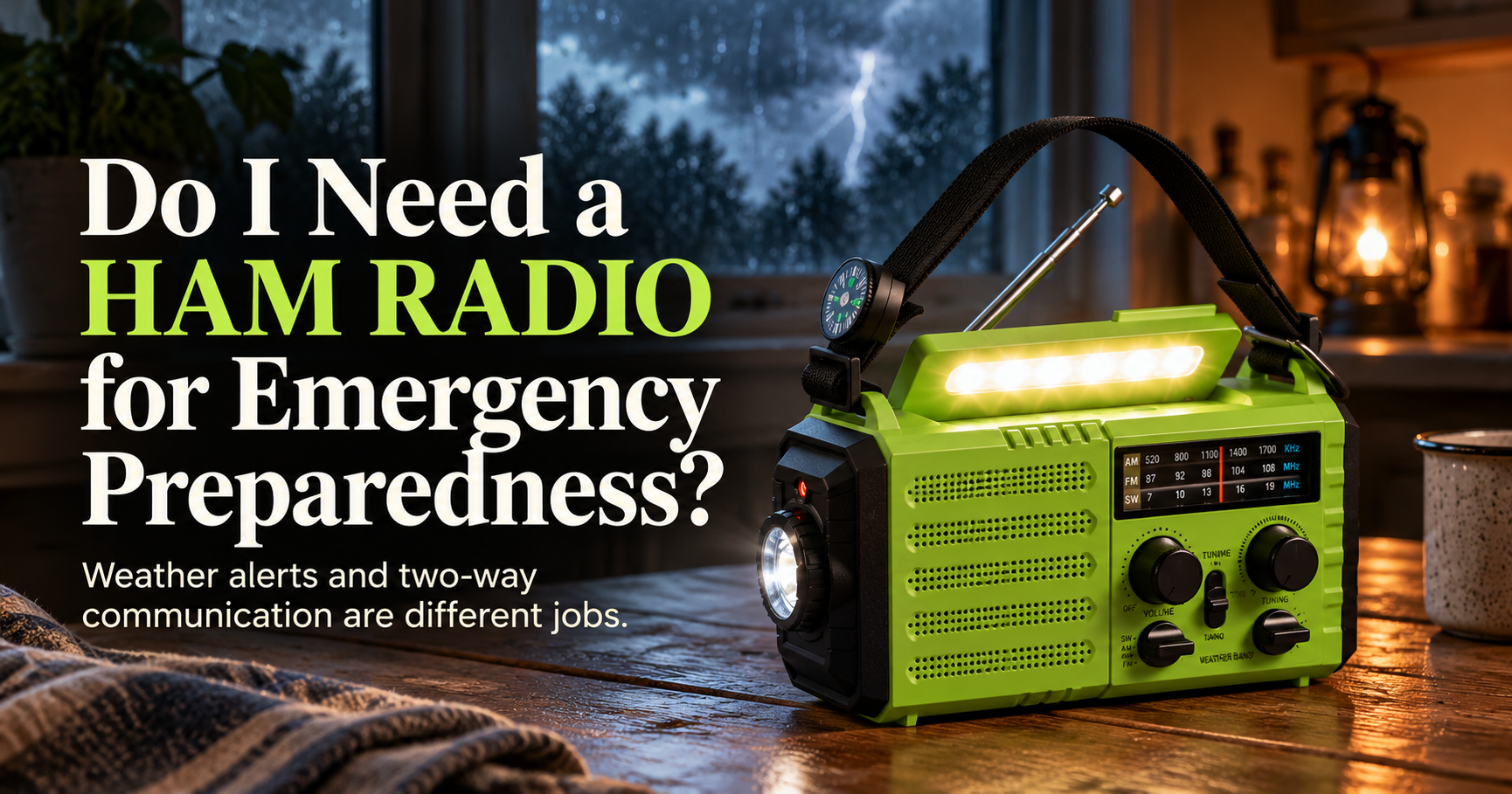
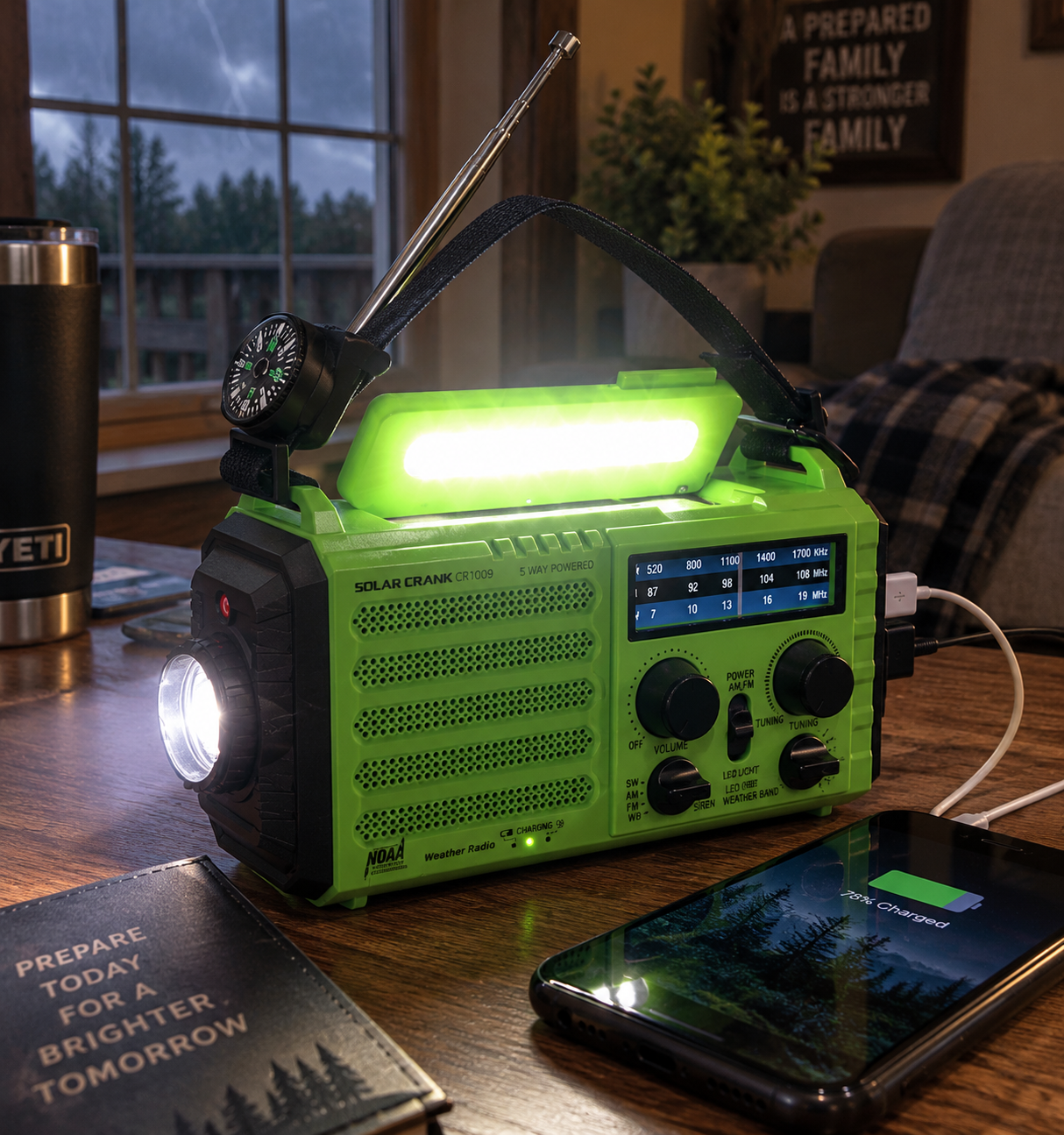
Weather Radio, 5000mAh Solar Hand Crank Emergency Radio on Amazon
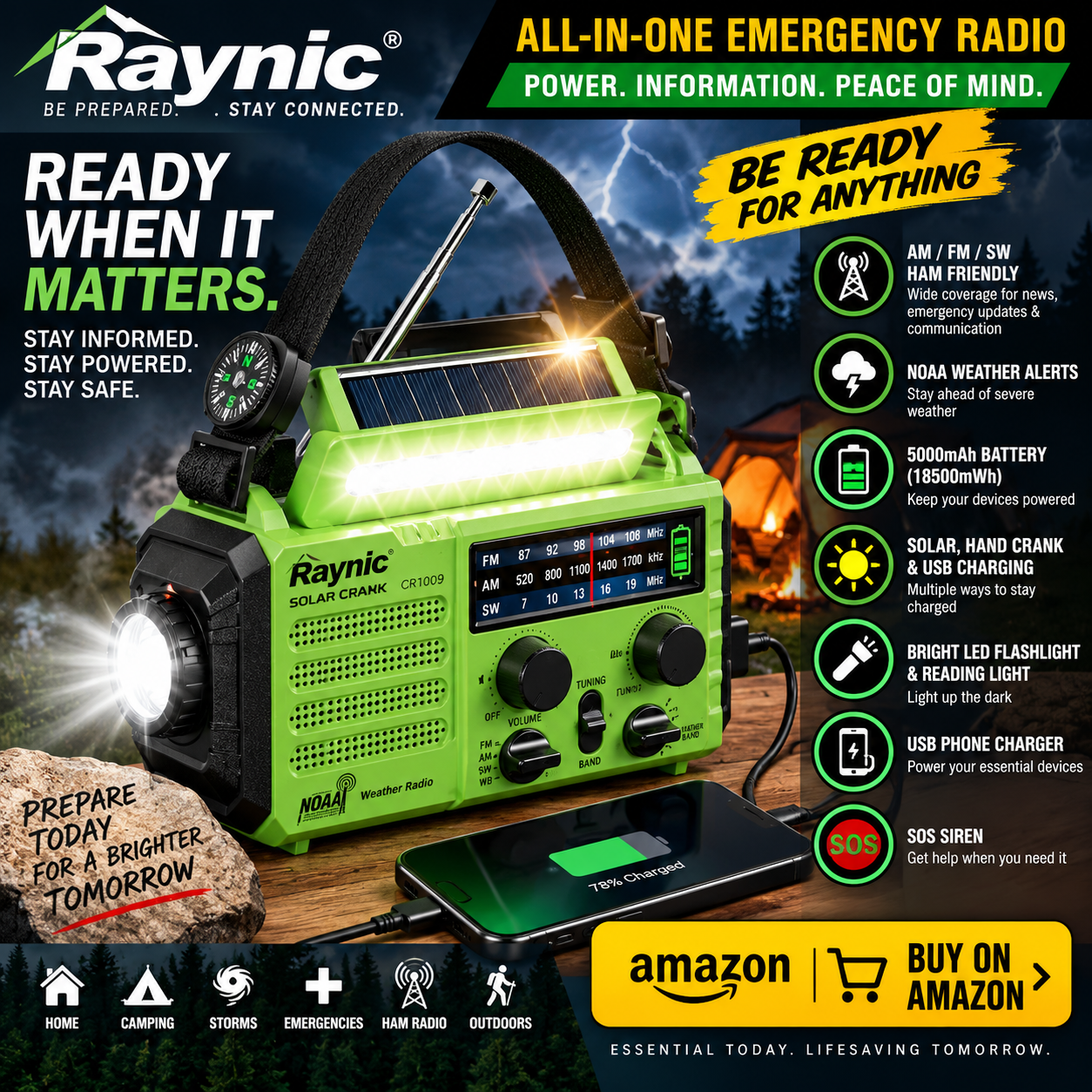
It gives me several things I want in one piece of emergency equipment:
NOAA weather alerts.
AM/FM/SW reception.
A built-in flashlight.
SOS siren.
Solar charging.
Hand-crank charging.
A 5000mAh internal battery.
The ability to provide some emergency phone charging.
That makes it useful even for somebody who has absolutely no interest in learning amateur radio.


Why I Like Having the Weather Radio Separate
If severe weather is moving into the area, I don’t want to mess with complicated radio equipment just to hear an alert.
I want something simple.
Turn it on.
Listen.
Get the information.
That’s the role a weather radio fills.
And unlike a phone, it isn’t completely dependent on having working cellular data or internet service.
That’s why I consider a weather radio a much more basic preparedness item than ham radio.
Ham radio comes later.
Do I Need a License to Use Ham Radio?
For normal amateur-radio transmitting in the United States, you generally need an FCC amateur radio license.
Listening is different.
You can receive amateur-radio transmissions without holding an amateur license.
But if my emergency communication plan depends on actually transmitting, I would get licensed and learn how to operate properly ahead of time.
I would not buy a radio, throw it into an emergency tote, and assume I’ll figure everything out when cell service disappears.
That defeats the whole purpose.
The Technician License Is Where Most Beginners Start
The entry-level amateur-radio license in the United States is the Technician class.
That gives a beginner useful amateur-radio privileges and creates a practical starting point for local and regional communication.
You don’t need to become an electrical engineer.
But you do need to learn some basics about:
Radio regulations.
Frequencies.
Operating procedures.
Radio safety.
Repeaters.
Call signs.
Basic equipment use.
For someone who actually wants emergency communication capability beyond a weather radio, I think learning those things has real value.
Buying a Ham Radio Does Not Make Me Prepared
This is the part I think gets overlooked.
Buying equipment feels productive.
Radio arrives.
Radio goes into bag.
Emergency communication solved.
Not really.
If I’ve never programmed it, never made a contact, don’t understand repeaters, and don’t know what frequency I’m supposed to use, the radio isn’t helping much.
Ham radio is partly equipment.
But it’s mostly a skill.


I Would Practice Before I Ever Needed It
If ham radio became part of my preparedness plan, I’d actually use it regularly enough that the controls felt familiar.
I’d learn how to:
Turn it on without thinking about it.
Change frequencies.
Use local repeaters.
Program useful channels.
Make a basic contact.
Use my call sign correctly.
Adjust power.
Understand antenna limitations.
Use backup power.
Participate in a local radio net.
Those are simple things once you’ve practiced.
They’re much harder when the lights are out and you’re stressed.
What Is a Repeater?
Repeaters are one of the first concepts a beginner usually encounters.
A small handheld radio communicating directly with another handheld may have fairly limited practical range.
Buildings, hills, trees, terrain, and antenna height all affect radio performance.
A repeater receives a radio signal and retransmits it, usually from an elevated location.
That can extend communication over a much larger area.
Local repeaters are one reason handheld amateur radios can be useful for emergency communication.
But I also wouldn’t assume every repeater will always work.
Repeaters depend on equipment and power too.
Some have backup power.
Some may not remain available during a prolonged disaster.
That’s why direct radio-to-radio communication is worth understanding too.
How Far Can Ham Radio Reach?
There is no honest single answer.
This is where advertising can get ridiculous.
Radio range depends on:
Frequency.
Transmit power.
Antenna.
Antenna height.
Terrain.
Buildings.
Atmospheric conditions.
Repeaters.
The radio itself.
Your license privileges.
A handheld radio used locally is very different from a properly equipped HF station capable of communicating over much longer distances.
So I don’t choose a radio because the box claims some giant range number.
I choose it based on what communication problem I’m actually trying to solve.
A Handheld Ham Radio Is Usually the Simplest Starting Point
For emergency preparedness, handheld transceivers are appealing because they’re portable.
I can carry one.
Use batteries.
Operate away from home.
Talk through local repeaters.
Practice with nearby operators.
That makes them much easier for a beginner than building an entire home radio station.
But I also keep my expectations realistic.
A little handheld radio with a small antenna isn’t magic.
A Home Ham Station Can Do Much More
Once someone gets deeper into amateur radio, a home station can become much more capable.
Better antennas.
Higher power.
More frequency bands.
More communication options.
Potentially much longer range.
That’s where ham radio can become an incredibly strong backup communication system.
But it also requires more money, more setup, and more knowledge.
I wouldn’t tell every beginner they need that on day one.
I Start With One Question
Before buying any communication equipment, I’d ask:
Who am I trying to communicate with?
That answer changes everything.
Three houses away?
Across a farm?
Across town?
Across the county?
Family members traveling separately?
Emergency volunteers?
Someone hundreds of miles away?
A weather radio solves none of those two-way problems.
Walkie-talkies may solve some.
Ham radio may solve others.
Satellite communication may make sense for a completely different situation.
There isn’t one perfect radio.
Ham Radio Becomes Most Interesting When Cell Service Fails
This is where it really fits Survive Essentials.
Cell phones are amazing.
But they depend on infrastructure.
Towers.
Backhaul connections.
Commercial power.
Network capacity.
Internet connections.
Ham radio can operate independently of much of that infrastructure.
That’s one reason licensed amateur operators have supported communications during real disasters when cell and wired networks were damaged.
The Weather Radio Still Works Beside It
I don’t see this as:
Weather radio or ham radio.
I see them as different layers.
My Weather Radio, 5000mAh Solar Hand Crank Emergency Radio is there to help me receive emergency information.
Ham radio is there if I want actual two-way amateur communication.
Those are different jobs.
And I like redundancy.
Power Still Matters
Every radio needs energy.
That includes ham equipment.
If I’ve been without power for several days and every battery is dead, the radio doesn’t do me much good.
That’s why I think about backup power at the same time.
For the weather radio, I like having multiple charging methods built in.
The 5000mAh solar hand crank emergency radio can use battery power, hand-crank charging, and solar charging as backup options.
I still wouldn’t depend entirely on the little solar panel for everyday charging.
But multiple methods give me options.
For ham equipment, I’d think about:
Spare radio batteries.
Vehicle charging.
USB charging where supported.
Power banks.
Portable battery stations.
Appropriate solar charging.
I Wouldn’t Depend on One Communication Method
This is one of my biggest preparedness rules.
I don’t want one point of failure.
My communication layers might include:
Cell phone.
Text messaging.
Weather radio.
Short-range family radios.
Ham radio.
Backup charging.
A family meeting plan.
Each covers a different failure.
Text Messaging Can Still Be Worth Trying
If a cellular network is congested, sometimes a short text may succeed when a voice call doesn’t.
I don’t assume that will always happen.
But it’s another tool.
That’s why ham radio isn’t automatically my first move whenever cellular service acts strange.
I use the simplest available system that still works.
What About Walkie-Talkies?
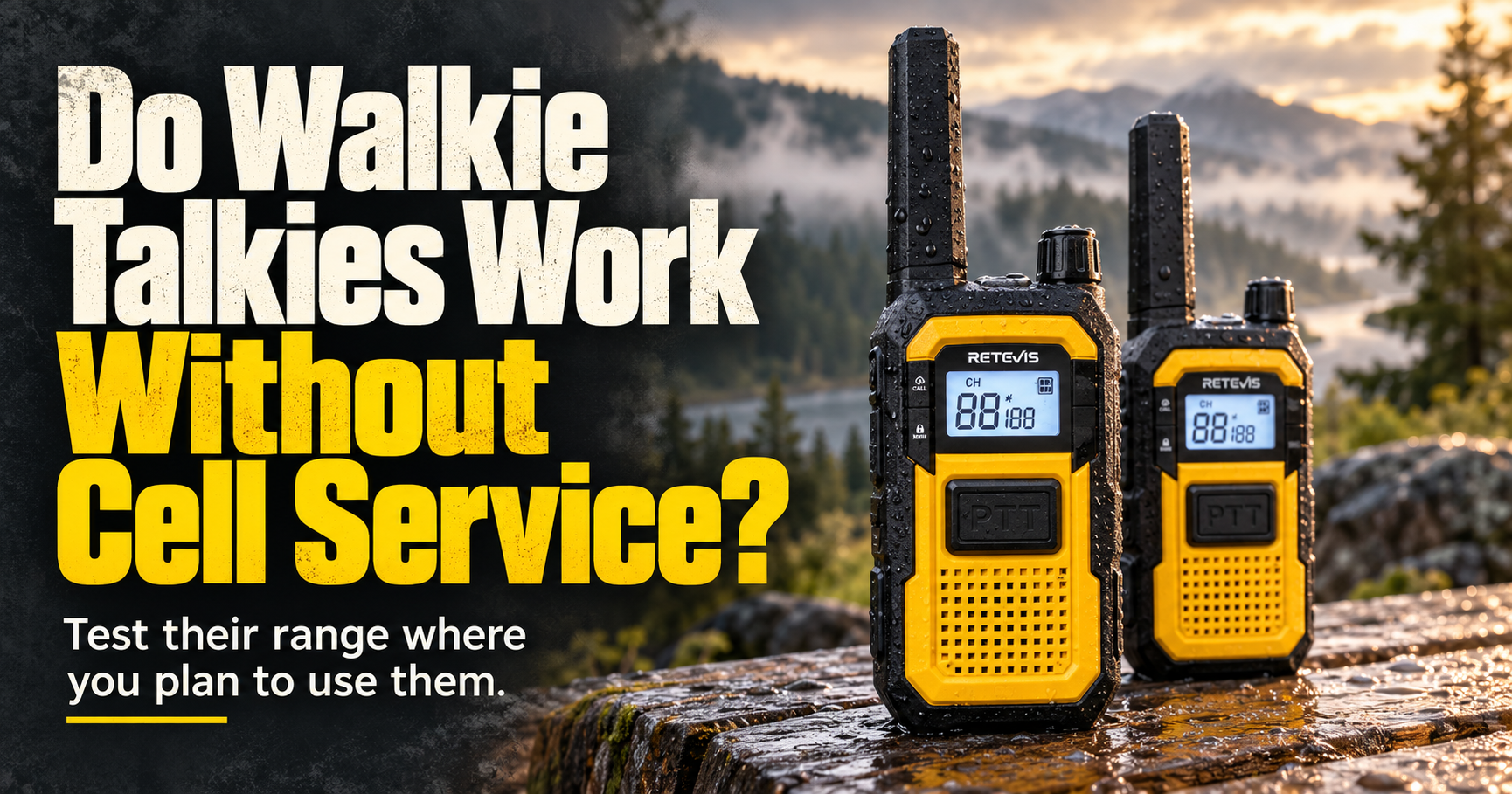
Walkie-talkies can be much easier for normal family communication over relatively short distances. For the practical details, see how walkie-talkies work without cell service before choosing between short-range radios and ham equipment.
They make sense for things such as:
Camping.
Farms.
Large properties.
Convoys.
Neighborhood communication.
Family evacuation coordination.
They’re different enough from ham radio that I’m covering them separately.
A family that only needs short-range communication may never need amateur radio at all.
Ham Radio Has Something Walkie-Talkies Don’t
Community.
That may be one of the most underrated advantages.
Local amateur-radio clubs often have experienced operators who know:
Local repeaters.
Coverage areas.
Emergency nets.
Equipment.
Antennas.
Backup systems.
Regional communication patterns.
That experience is hard to replace with a manual.
Ham radio isn’t only about owning a device.
It’s about joining a communication network that already exists.
Emergency Radio Nets Are Worth Learning
A radio net is an organized on-air gathering of operators.
Some are routine practice nets.
Some focus on emergency preparedness.
Participating teaches me how organized radio traffic actually works.
It also gives me practice listening before talking.
That’s valuable.
During a real emergency, I don’t want my first experience with radio procedure happening while everybody else is already dealing with problems.
I Would Learn My Local Repeaters Ahead of Time
A ham radio doesn’t arrive knowing which local systems I need.
I’d want to know:
What repeaters cover my area.
Which frequencies they use.
Whether access tones are needed.
Which clubs operate them.
What emergency nets exist.
What backup power those repeaters may have.
That’s the kind of information I want written down somewhere, not trapped inside my phone.
Ham Radio Is Not Private
Another thing beginners should understand:
I do not treat amateur radio like a private phone call.
Other people may be listening.
That means I avoid casually transmitting:
Bank information.
Passwords.
Social Security numbers.
Sensitive private information.
Anything else I wouldn’t want strangers hearing.
Even in an emergency, I keep that in mind.
Emergency Messages Should Be Short and Clear
If I’m using radio during a serious situation, I don’t need a five-minute story.
I want to communicate:
Who I am.
Where I am.
What happened.
What I need.
Whether anyone is injured.
Clear information matters more than long information.
That’s another skill that improves with practice.
Ham Radio Does Not Replace 911
If normal emergency services are working, that’s still where I go for an immediate life-threatening emergency.
Ham radio isn’t a substitute for police, fire, EMS, or 911.
It becomes especially valuable when normal communication systems are unavailable, damaged, or overwhelmed.
Amateur-radio groups such as ARES specifically train and organize around that backup-communication role.
I Wouldn’t Buy the Cheapest Radio Just Because It’s Cheap
There are extremely inexpensive radios available now.
That’s good because the hobby is accessible.
But I wouldn’t make price my only decision.
I’d look at:
Reliability.
Battery options.
Ease of programming.
Build quality.
Antenna compatibility.
Documentation.
Whether local radio operators are familiar with the model.
Whether it operates legally on the frequencies I plan to use.
Cheap equipment isn’t much of a deal if I never learn how to use it.
I Wouldn’t Start With the Most Expensive Radio Either
A $1,000 radio doesn’t give me $1,000 worth of skill.
A beginner is usually better off learning with equipment that matches their experience.
Then if ham radio turns into a serious part of the preparedness plan, upgrading makes more sense.
I like buying equipment after I understand why I need the upgrade.
Who Should Seriously Consider Ham Radio?
I think it makes the most sense if:
You live in a rural area.
Cell coverage is unreliable.
Severe storms regularly affect your region.
You want backup communication beyond your property.
You’re interested in emergency volunteering.
You enjoy technical skills.
You want communication independent of normal phone networks.
You’re willing to practice.
For those households, ham radio could become a very useful preparedness tool.
Who Probably Doesn’t Need Ham Radio Yet?
If somebody hasn’t handled the basics, ham radio wouldn’t be my first purchase.
I’d rather have:
Stored water.
Emergency food.
A working first aid kit.
Backup lighting.
Phone charging.
A dependable weather radio.
A family communication plan.
Those things solve more immediate problems.
Then I can decide whether amateur radio adds enough value to justify learning it.
My First Radio Purchase Would Still Be the Weather Radio
If someone asked me:
“I have no emergency radio equipment at all. What should I buy first?”
I would not immediately tell them to start studying amateur radio.
I’d start with something straightforward that gives them emergency information even if they never get a radio license.
For me, that’s this:
Weather Radio, 5000mAh/18500mWh Solar Hand Crank Emergency Radio
It covers the basic job first:
Helping me hear what’s happening.
Then if I want the ability to communicate beyond phones and short-range radios, I can start learning ham radio.
How I Would Layer Emergency Communications
My household communication setup would look something like this.
First:
Cell phones.
Second:
Backup phone charging.
Third:
A dependable NOAA-capable emergency weather radio.
Fourth:
Simple two-way radios where they make sense.
Fifth:
Ham radio for somebody in the household who is licensed and actually knows how to use it.
Behind all of that is the most important backup:
A family plan that doesn’t require electronics.
Where do we meet?
Who gets the kids?
Where do we go if home isn’t safe?
Who is our out-of-area contact?
What happens if nobody can call anybody?
Those decisions should be made before the emergency.
So Do I Need a Ham Radio?
Maybe.
I think ham radio is one of the most capable backup communication tools available to an ordinary household.
But I don’t think everybody needs one immediately.
If all I’m trying to do is receive weather alerts and emergency information, I’d start with the 5000mAh solar hand crank emergency weather radio.
If I want actual two-way communication that can function independently of cellular and internet systems, ham radio becomes much more interesting.
But I’d approach it differently from most emergency gear.
I wouldn’t just buy a radio.
I’d get licensed.
Practice.
Learn local repeaters.
Talk to real operators.
Figure out backup power.
Join a local net.
Understand how far my equipment really works.
Then the radio stops being another gadget sitting in a preparedness tote.
It becomes a skill.
The Skill Is What Makes Ham Radio Valuable
That’s what keeps coming back to me with preparedness.
Seeds are more useful when I already know how to garden.
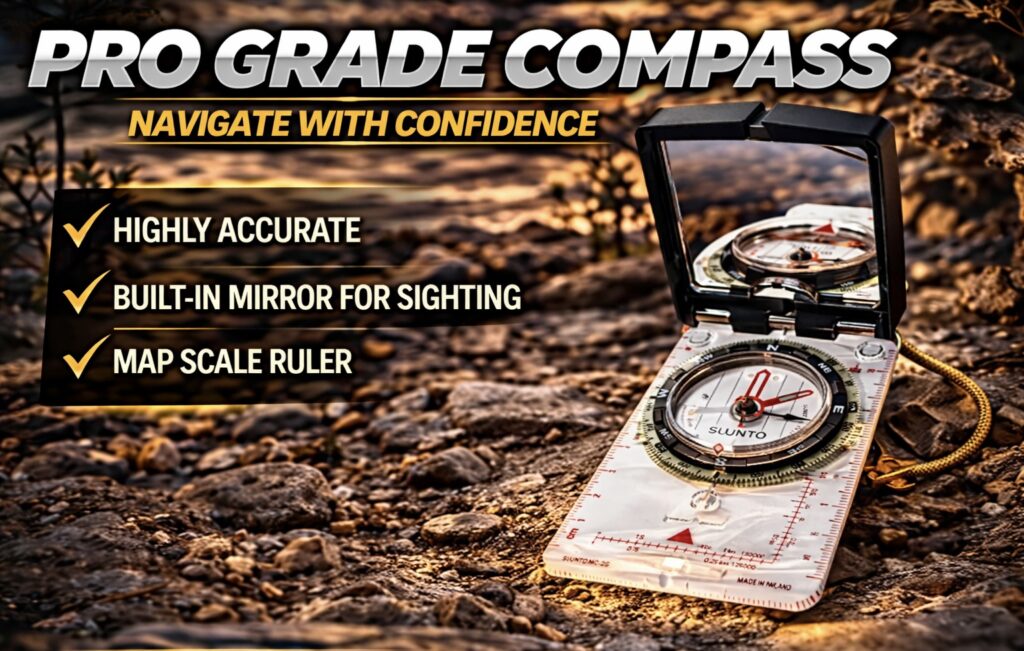
A compass is more useful when I already understand navigation.
First-aid supplies are more useful when I know what to do with them.
And ham radio is far more useful when I’ve already talked to people with it.
I wouldn’t get into amateur radio because I’m expecting every cell tower in America to disappear tomorrow.
I’d learn it because communication is one of those things that becomes incredibly valuable when normal systems stop cooperating.
If that emergency never happens, I still gained a useful skill.
If it does happen, I’m not opening a box and reading the manual for the first time in the dark.
That’s the kind of preparedness I want.
About the Author
Caleb Mercer writes about power outages, emergency communications, backup power, and practical household preparedness for Survive Essentials. His work focuses on building redundant systems before they’re needed, learning how emergency equipment actually works, and helping families stay informed and connected when normal services become unreliable.