Heavy bleeding is one of those emergencies where I don’t want to spend five minutes digging through a first aid bag trying to decide what to do.
I want to recognize that the situation is serious, call 911, get pressure on the wound, and use the right bleeding-control method for the location and severity of the injury.
That’s also why I think this belongs near the beginning of our first-aid cluster.
A lot of minor injuries give me time to think.
Life-threatening bleeding may not.
The Red Cross notes that severe blood loss can become life-threatening quickly, and its severe-trauma training warns that a person can die from severe blood loss in less than five minutes.
That changes how I prepare.
First, I Need to Recognize Dangerous Bleeding
Not every bleeding cut is a life-threatening emergency.
If I nick my finger opening a package, that’s obviously different from a serious chainsaw injury.
The Red Cross tells people to pay attention to both the amount of blood and how the blood is flowing.
Warning signs include blood that is continuously flowing or spurting and a substantial amount of blood loss. In a small child or infant, a smaller amount of blood loss can become life-threatening.
I don’t need to stand there trying to calculate ounces of blood.
If the bleeding looks severe, is flowing continuously, is spurting, or the injured person is beginning to look seriously ill, I treat the situation urgently.
I Call 911 Early
For life-threatening bleeding, this isn’t something I try to completely manage at home because I happen to own a good first aid kit.
I call 911 or have someone else call while care begins.
If another person is available, I make the instructions specific.
“Call 911 and come back.”
That’s better than yelling for somebody to “get help” and assuming they understood exactly what I meant.
The Red Cross emergency sequence for life-threatening bleeding includes calling 911 and getting appropriate equipment while providing care.

I Make Sure the Scene Is Safe
Before rushing in, I look at what caused the injury.
Downed power line?
Running machinery?
Traffic?
Broken glass?
Storm debris?
Aggressive animal?
I don’t help the injured person by becoming the second injured person.
The Red Cross starts its first-aid sequence by checking the scene for safety and using personal protective equipment when appropriate.
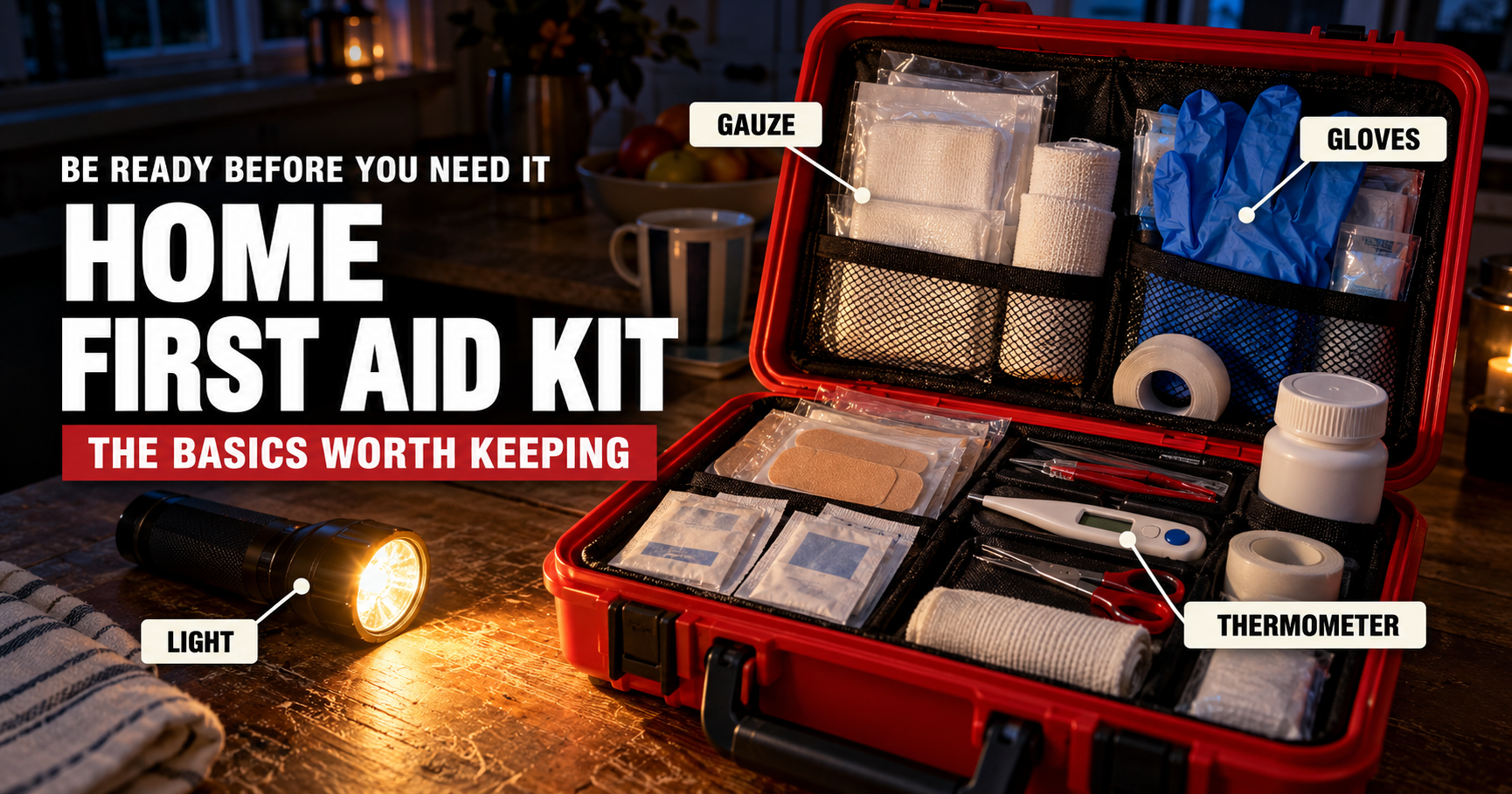
That’s one reason I keep gloves easy to reach in my home emergency first aid kit.
Direct Pressure Is My Starting Point
For serious external bleeding, direct pressure is fundamental.
I expose the wound enough to find where the blood is actually coming from.
Then I place an appropriate dressing over the wound and apply firm, steady pressure directly over it.
The American College of Surgeons STOP THE BLEED training describes direct pressure as placing absorbent material directly over the wound and pressing firmly enough to compress the bleeding vessels. Once pressure begins, it should be maintained rather than repeatedly lifting the dressing to look underneath.
That’s an important detail.
I don’t press for ten seconds, lift everything up, see blood, press again, and keep repeating the cycle.
I maintain pressure.
I Don’t Keep Peeking Under the Dressing
This is a very human reaction.
I want to know whether the bleeding stopped.
So I’m tempted to lift the gauze.
But constantly removing pressure works against what I’m trying to accomplish.
STOP THE BLEED training specifically instructs rescuers to maintain firm pressure rather than lifting the dressing to check the wound.
I watch what’s happening around the dressing instead.
And I keep pressure where it’s needed.
If Blood Comes Through, I Don’t Panic
A badly bleeding wound may soak through material.
That doesn’t automatically mean direct pressure isn’t working.
Current Red Cross guidance says that if blood soaks through the original gauze pad while pressure is being applied, another gauze pad can be placed on top. The original dressing should not be pulled away simply to inspect underneath it.
The important thing is maintaining effective pressure on the actual bleeding source.
Gloves Matter, but I Don’t Let Missing Gloves Stop Lifesaving Care
Ideally, I put on nonlatex disposable gloves before contacting another person’s blood.
That’s why I keep multiple pairs in the kit.
If proper PPE isn’t immediately available during life-threatening bleeding, STOP THE BLEED notes that available materials can still be used for pressure, and the Red Cross notes alternatives such as a plastic bag or having the injured person apply pressure themselves when possible.
The goal is reducing unnecessary blood exposure without delaying lifesaving bleeding control.
I Want Gauze and Larger Dressings Easy to Reach
This is exactly why our first-aid-kit article didn’t stop at adhesive bandages.
A tiny Band-Aid isn’t what I’m reaching for here.
I want:
- Gloves
- Gauze
- Larger absorbent dressings
- Appropriate bleeding-control supplies
- A commercial tourniquet I have been trained to use
Those items need to be organized where I can reach them quickly.
This isn’t the part of the kit I want buried beneath cold packs and blister pads.
Hemostatic Products Can Be Another Tool
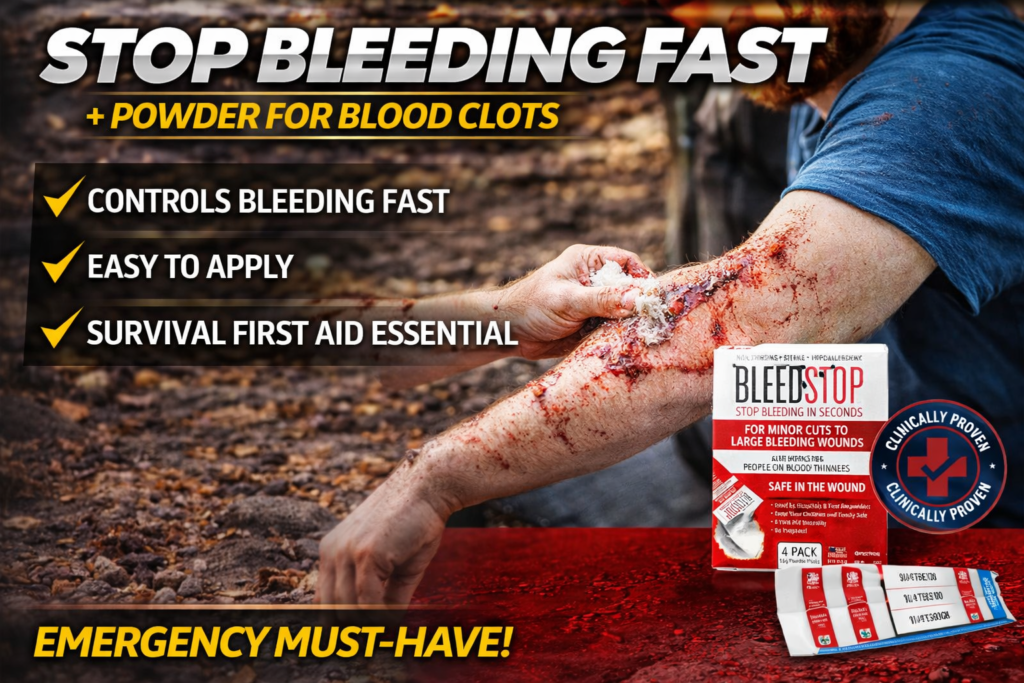
We already have BleedStop first aid powder covered on Survive Essentials.
Hemostatic products are designed to help promote clotting, but I don’t treat them as a replacement for the basic bleeding-control steps or emergency care.
The Red Cross includes hemostatic dressings as an option when applying direct pressure, and STOP THE BLEED kits commonly include hemostatic gauze as part of their bleeding-control equipment.
The Bleeding-Control Product We Already Keep in Mind
See BleedStop First Aid Powder on Amazon
I still want to understand exactly how the product is intended to be used before an emergency.
I don’t want the first time I read the instructions to be while somebody is bleeding heavily.
Wound Packing Is Different From Simply Covering a Wound
Some severe wounds may require packing when a tourniquet can’t appropriately be used or isn’t available.
This is a skill I want actual training for.
STOP THE BLEED teaches wound packing using bleeding-control gauze, ordinary gauze, or clean cloth when appropriate, followed by steady direct pressure. Its guidance particularly addresses wounds in areas such as the neck, shoulder, and groin where a normal extremity tourniquet isn’t the answer.
I don’t treat wound packing as something to improvise from a paragraph online.
This is exactly why hands-on bleeding-control training is valuable.

Tourniquets Are for the Right Kind of Severe Bleeding
A tourniquet is an incredibly important tool.
It is not my answer to every bleeding wound.
Current Red Cross guidance recommends a tourniquet, when trained, for life-threatening bleeding from an arm or leg. STOP THE BLEED likewise teaches tourniquet application for severe extremity bleeding.
That distinction matters.
Arm or leg.
Life-threatening bleeding.
Appropriate equipment.
Proper technique.
Those are very different conditions from putting a tourniquet around someone’s wrist because they have a deep kitchen cut.
I Want a Real Commercial Tourniquet
If I’m intentionally building a serious bleeding-control kit, I’d rather have a properly designed commercial tourniquet than make my entire plan depend on improvising one from whatever happens to be nearby.
STOP THE BLEED kits themselves include commercial tourniquets specifically intended to rapidly control massive bleeding from limbs.
But buying one isn’t enough.
I want to know how to use it.
That means opening a training device, practicing correctly, and ideally taking an actual bleeding-control course.
I Don’t Practice With the Tourniquet I’m Depending on Without Checking Its Guidance
This is another practical detail.
If I’m buying tourniquets for emergency use, I check the manufacturer’s instructions about training and reuse.
Some people keep a dedicated training tourniquet so their emergency equipment stays ready for actual use.
That’s the approach I prefer.
Training equipment can get marked, worn, twisted, and repeatedly stressed.
The emergency tourniquet should be ready when it’s genuinely needed.
Shock Is Something I Watch For
Severe bleeding isn’t only about the wound.
The entire body can begin struggling as blood loss progresses.
The Red Cross lists signs of shock that can include a rapid weak heartbeat, rapid breathing, pale or cool moist skin, altered responsiveness, and excessive thirst. Shock can be life-threatening.
If someone with serious bleeding becomes pale, confused, weak, dizzy, or less responsive, that gets my attention immediately.
This is another reason EMS needs to be on the way.
I Keep the Injured Person From Getting Too Cold
This might not be the first thing people associate with bleeding control, but the Red Cross specifically includes preventing the injured person from becoming too cold or overheated while waiting for EMS.
That’s another reason an emergency blanket belongs in my home first aid kit.
It’s lightweight.
It takes almost no room.
And it can become useful during a much more serious situation than the little scrapes most first aid kits get used for.
I Stay With Them and Watch for Changes
Once the bleeding is being controlled and EMS is coming, I don’t consider my job finished.
I stay with the person.
I watch their breathing and responsiveness.
I reassure them.
I watch for worsening signs of shock or renewed bleeding.
Those are all part of current Red Cross guidance for life-threatening external bleeding.
Sometimes the most useful thing I can do after the immediate bleeding is controlled is keep paying attention.
An Embedded Object Stays Put
If something is stuck deeply in the wound, I don’t yank it out.
Removing an embedded object can make bleeding much worse.
Red Cross guidance says not to remove it, to apply pressure around the object, stabilize it with dressings, and seek medical care.
That’s one of those rules I want to know before panic takes over.
My instinct might be:
Get that thing out.
Sometimes the safer first-aid decision is exactly the opposite.
I Don’t Turn This Into DIY Surgery
This is the boundary I keep throughout this entire first-aid cluster.
Preparedness means being able to help until appropriate medical care is available.
It doesn’t mean trying to become an emergency-room surgeon at home.
For life-threatening bleeding, I want to:
Recognize it.
Call for help.
Control the bleeding using techniques I’m trained to perform.
Watch the person’s condition.
Keep them as stable as possible until professional help arrives.
That’s enough responsibility without inventing procedures I’m not trained to perform.
I Don’t Remove a Tourniquet Once It’s On for Life-Threatening Bleeding
If a tourniquet has been properly applied for life-threatening bleeding, I don’t loosen it periodically to “give the arm or leg a break.”
I don’t remove it because the bleeding appears to have stopped.
Once it’s controlling life-threatening extremity bleeding, I leave it in place for EMS and medical professionals to manage.
I also note the time it was applied if possible.
That’s useful information for the medical team taking over care.
A Tourniquet Needs to Be Tight Enough to Stop the Bleeding
This isn’t supposed to be comfortable.
A properly applied tourniquet can be painful.
The goal is stopping life-threatening blood flow from an injured arm or leg.
If the bleeding continues after application, the tourniquet may need to be tightened further. Depending on the situation and training, a second commercial tourniquet may sometimes be needed.
This is another reason I strongly prefer hands-on training before ever needing one for real.
Reading about a tourniquet and actually practicing correct placement are two very different things.
I Don’t Put a Tourniquet Directly Over a Joint
Placement matters.
A tourniquet used for life-threatening extremity bleeding shouldn’t be placed directly over the knee or elbow.
STOP THE BLEED training teaches placing the tourniquet above the bleeding site, between the wound and the torso, while avoiding joints.
This is exactly the kind of detail that’s easy to forget if the only time I’ve ever thought about tourniquets was when I bought one.
We’ll go much deeper into this in the dedicated When Should I Use a Tourniquet? article rather than trying to turn this bleeding guide into a tourniquet manual.
I Don’t Automatically Reach for Bleeding Powder Before Pressure
Having extra bleeding-control products is useful.
But I still want the fundamentals burned into my memory.
Recognize serious bleeding.
Get emergency help coming.
Expose the source of the bleeding when possible.
Apply firm direct pressure.
Use appropriate bleeding-control equipment for the situation.
A product shouldn’t make those basic steps disappear.
That’s how I look at the BleedStop powder we already keep in our preparedness lineup.
It’s another option in the kit, not the entire plan.
I Want Bleeding Supplies Separated From Ordinary Bandages
This is one change I’d make to a lot of store-bought first aid kits.
I don’t want serious bleeding equipment scattered among blister pads, tiny adhesive strips, sting wipes, and other minor-care supplies.
I want to be able to open the kit and immediately identify the bleeding-control section.
That’s one reason organization mattered so much when we built the home emergency first aid kit.
When seconds matter, organization becomes part of the equipment.
I Keep More Gauze Than a Cheap Kit Usually Gives Me
Gauze is one of those supplies that’s easy to underestimate until it’s being used.
A couple of small sterile pads may be enough for an ordinary cut.
Serious bleeding can require much more material.
That’s one reason I’d rather build onto a good first aid kit than trust the piece count on a cheap kit.
If I use a significant amount of gauze during one emergency, I also replace it afterward.
The next emergency shouldn’t inherit an empty bleeding-control compartment.
Severe Bleeding During a Power Outage Is One Reason This Cluster Matters
Imagine dealing with a serious cut during storm cleanup while the electricity is already out.
The roads may be covered in debris.
Cell networks may be overloaded.
Emergency responders may have dozens of calls.
The house may be dark.
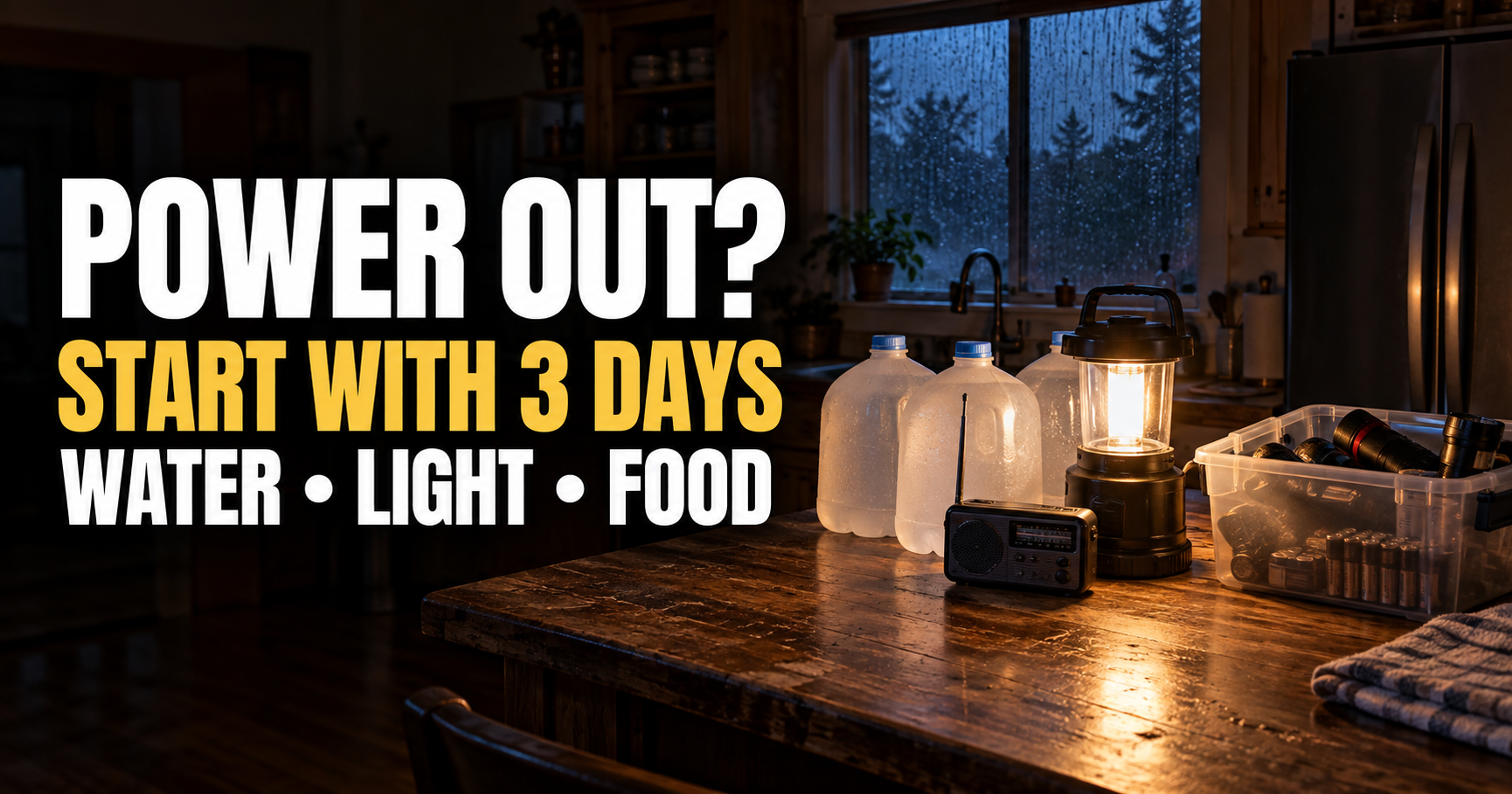
That’s why first aid belongs directly beside the power-outage preparedness system we’ve already built.
I’m not preparing because I expect to replace EMS.
I’m preparing because there may be a gap between the injury and professional care.
What happens during that gap can matter tremendously.
Storm Cleanup Is a Time I Take Bleeding Risk Seriously
After severe weather, people suddenly start doing dangerous work.
Chainsaws come out.
Broken glass gets moved.
Metal roofing gets handled.
Branches get cut.
Damaged fences get repaired.
People climb onto things.
And everyone may already be tired and distracted.
That’s when I want the first aid kit close rather than buried inside the house.
If I’m doing serious cleanup work, bleeding-control supplies aren’t an abstract survival item anymore.
They’re job-site safety equipment.
I Don’t Let Someone With Serious Bleeding Walk Around Unnecessarily
Once I’m dealing with major blood loss, I want the injured person as still and safe as practical while waiting for emergency care.
This isn’t the time for them to prove they’re fine by walking around.
I continue monitoring their condition and follow the instructions from emergency dispatchers and trained medical personnel.
If the situation changes, I tell the dispatcher.
The goal is getting them safely into professional care.
I Don’t Give Food or Drink Just Because Someone Says They’re Thirsty
Severe blood loss can cause thirst.
That doesn’t mean I automatically start giving the person food or drinks.
Someone with a serious injury may require emergency procedures or anesthesia once they reach medical care.
I follow EMS or dispatcher guidance rather than trying to make them more comfortable with food or beverages.
Again, preparedness sometimes means knowing what not to do.
I Don’t Wash Away My Progress on a Severe Wound
Minor wound cleaning and life-threatening bleeding are not the same situation.
If blood is pouring from a serious wound, my immediate priority is controlling that bleeding.
I’m not standing at the sink carefully washing the injury while significant blood loss continues.
Once the immediate emergency is controlled, wound management becomes a different conversation for medical professionals.
That’s why our future article about cleaning wounds will focus on wounds where cleaning is appropriate rather than confusing it with the first minutes of massive bleeding.
I Don’t Pour Random Household Products Into a Serious Wound
Preparedness communities are full of improvised medical advice.
Some of it has been repeated for generations.
That doesn’t make all of it good.
I don’t start pouring household powders, strong chemicals, alcohol, or whatever else happens to be nearby into a major wound because somebody once called it a survival trick.
For serious bleeding, I stick with recognized bleeding-control methods and products intended for that purpose.
A Nosebleed Is Usually a Different Situation
The word “bleeding” covers an enormous range of injuries.
Most ordinary nosebleeds are not treated like massive traumatic bleeding from an arm or leg.
I don’t grab a tourniquet because someone’s nose is bleeding.
This sounds obvious, but it illustrates why understanding the type and location of bleeding matters more than simply owning bleeding-control products.
The treatment has to match the problem.
Internal Bleeding Is Another Reason I Don’t Focus Only on Visible Blood
A person can have a serious injury without a dramatic pool of blood on the floor.
A major fall, vehicle crash, crushing injury, or hard blow can potentially cause internal injuries.
If someone has experienced significant trauma and develops concerning symptoms such as weakness, confusion, pale or clammy skin, severe pain, abdominal swelling, breathing problems, or reduced responsiveness, I don’t reassure myself simply because I can’t see much external bleeding.
That’s an emergency evaluation problem.
My first aid bag can’t fix internal bleeding.
I Take Blood-Thinning Medications Seriously
This is another reason knowing basic household medical information matters.
Some medications can affect bleeding.
If an injured person takes anticoagulant or antiplatelet medication, that’s useful information for emergency responders and healthcare professionals.
I don’t change someone’s medication because of an injury unless a qualified medical professional directs it.
I simply make sure the relevant information follows the patient into care.
Children Can Lose a Dangerous Amount of Blood Faster Than I Expect
A small child has far less total blood volume than an adult.
That means I don’t judge the seriousness of a child’s bleeding by comparing the amount of blood with what I would consider significant for a full-grown adult.
The Red Cross specifically notes that a smaller amount of blood loss can be life-threatening in a child or infant.
If the bleeding appears severe, I get emergency help.
Older Adults May Need Extra Attention Too
Age, medications, underlying medical conditions, and the circumstances of the injury can all affect how someone responds to blood loss.
That’s another reason I don’t rely on one visual rule like:
“That doesn’t look like enough blood to be dangerous.”
I look at the whole person.
How did the injury happen?
How are they acting?
Is the bleeding continuing?
Are they becoming pale, weak, confused, or less responsive?
When in doubt about potentially life-threatening bleeding, I would much rather involve emergency professionals early.
I Keep the Person Warm Without Overheating Them
Someone experiencing serious blood loss can become cold.
That’s another reason the emergency blanket in my first aid kit isn’t filler.
I can help protect the person from getting too cold while continuing to monitor them and waiting for EMS.
If we’re outside after a storm or dealing with a winter emergency, environmental exposure can make an already serious situation worse.
I Keep Talking to Them
This isn’t complicated medical equipment.
I stay with the injured person and communicate.
I can reassure them.
I can notice if their answers stop making sense.
I can notice if they’re becoming unusually sleepy or less responsive.
I can pass those changes along to the dispatcher or arriving EMS crew.
Monitoring is part of helping.
When EMS Arrives, I Tell Them What I Did
I don’t just step away without saying anything.
Useful information can include:
What happened.
Where the bleeding was coming from.
What bleeding-control methods were used.
Whether a tourniquet was applied.
When it was applied.
Whether the person’s condition changed.
Any relevant medical information I know.
Then I let the professionals take over.
I Restock the Kit Afterward
This seems trivial after a serious emergency, but eventually the supplies need to be replaced.
Gauze.
Gloves.
Hemostatic products.
Dressings.
Anything else that was used.
I don’t want to discover during the next emergency that the bleeding-control section is empty because nobody replenished it after the last one.
That’s part of maintaining the larger first aid setup.
The Most Valuable Upgrade May Be Training
If serious bleeding is something I’m intentionally preparing for, I would strongly consider taking a recognized bleeding-control course.
The American College of Surgeons STOP THE BLEED program is built specifically around teaching ordinary people how to recognize and respond to life-threatening bleeding.
That’s exactly the kind of training I want.
Not because I expect to become a trauma surgeon.
Because I want to know what to do during the minutes before the trauma professionals arrive.
I Would Practice Before the Emergency
Skills deteriorate when they’re never used.
If I’ve been trained to use a tourniquet or pack an appropriate wound, I want occasional practice with proper training equipment.
I don’t want my first attempt happening with shaking hands beside someone I care about.
That practice is one of the reasons I don’t think preparedness is simply buying things.
The gear matters.
Knowing how to use it matters more.
My Heavy-Bleeding Response Is Deliberately Simple
When something serious happens, I don’t want to remember a 37-step internet checklist.
The basic sequence in my head is:
- Make sure the scene is safe.
- Recognize potentially life-threatening bleeding.
- Call 911 or have someone call.
- Use gloves or another barrier when available.
- Apply firm direct pressure.
- Use appropriate wound-packing techniques when indicated and trained.
- For life-threatening arm or leg bleeding, use an appropriate commercial tourniquet when indicated and trained.
- Keep effective pressure or the tourniquet in place.
- Watch the person for shock and changes in responsiveness.
- Keep them from becoming too cold.
- Stay with them until professional help takes over.
That’s something I can actually remember under stress.
The First Aid Kit Buys Me Capability, Not Invincibility
Having gauze, bleeding-control products, gloves, and a tourniquet makes me better prepared than having nothing.
But the supplies don’t make a severe injury less serious.
The goal is controlling what I can during the time before professional care becomes available.
That’s why this is one of the areas where I value training so highly.
During a power outage, tornado cleanup, vehicle crash, farm accident, workshop injury, or ordinary day gone wrong, serious bleeding doesn’t give me much time to learn.
I want the knowledge beforehand.
I want the equipment within reach.
And if the day ever comes when I actually need either one, I want my response to be based on recognized bleeding-control practices rather than whatever improvised trick I happen to remember.
About the Author
Grant Holloway writes about practical first aid, bleeding control, emergency medical preparedness, and the supplies ordinary households can keep ready before professional help arrives. His work for Survive Essentials focuses on realistic first-aid readiness, recognized emergency-care principles, and building useful preparedness skills alongside the equipment kept at home.