A wound doesn’t need to look terrible to turn into a problem.
That’s something I keep in mind during an emergency, especially when normal routines are already disrupted.
Maybe I’m clearing branches after a storm and scrape my arm badly.
Maybe someone slips during a power outage and cuts their hand.
Maybe we’re camping, evacuating, or dealing with an extended emergency where getting to a clinic isn’t as simple as jumping in the truck.
Once immediate bleeding is under control, keeping an appropriate minor wound clean becomes one of my next concerns.
And I’ve learned that cleaning a wound doesn’t mean pouring every strong antiseptic I can find into it.
For many ordinary cuts and scrapes, plenty of clean running water is one of the most useful things I have.

First, I Decide Whether This Is Really a Wound I Should Be Cleaning Myself
This comes before everything else.
I’m not treating every open injury like a scraped knee.
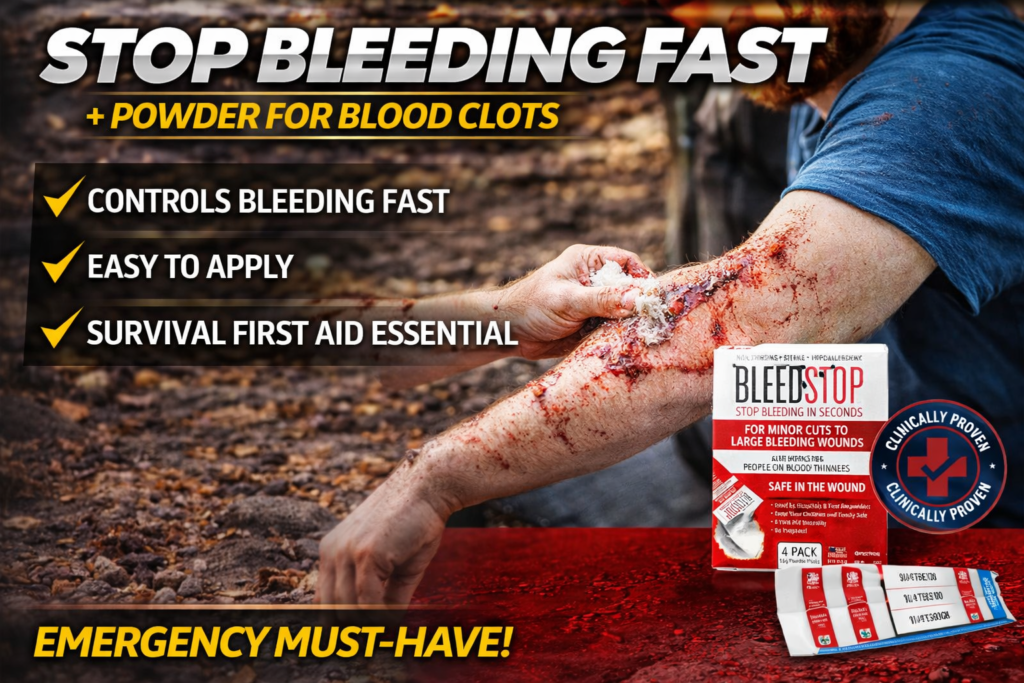
If someone has life-threatening bleeding, I’m dealing with that first and getting emergency medical help.
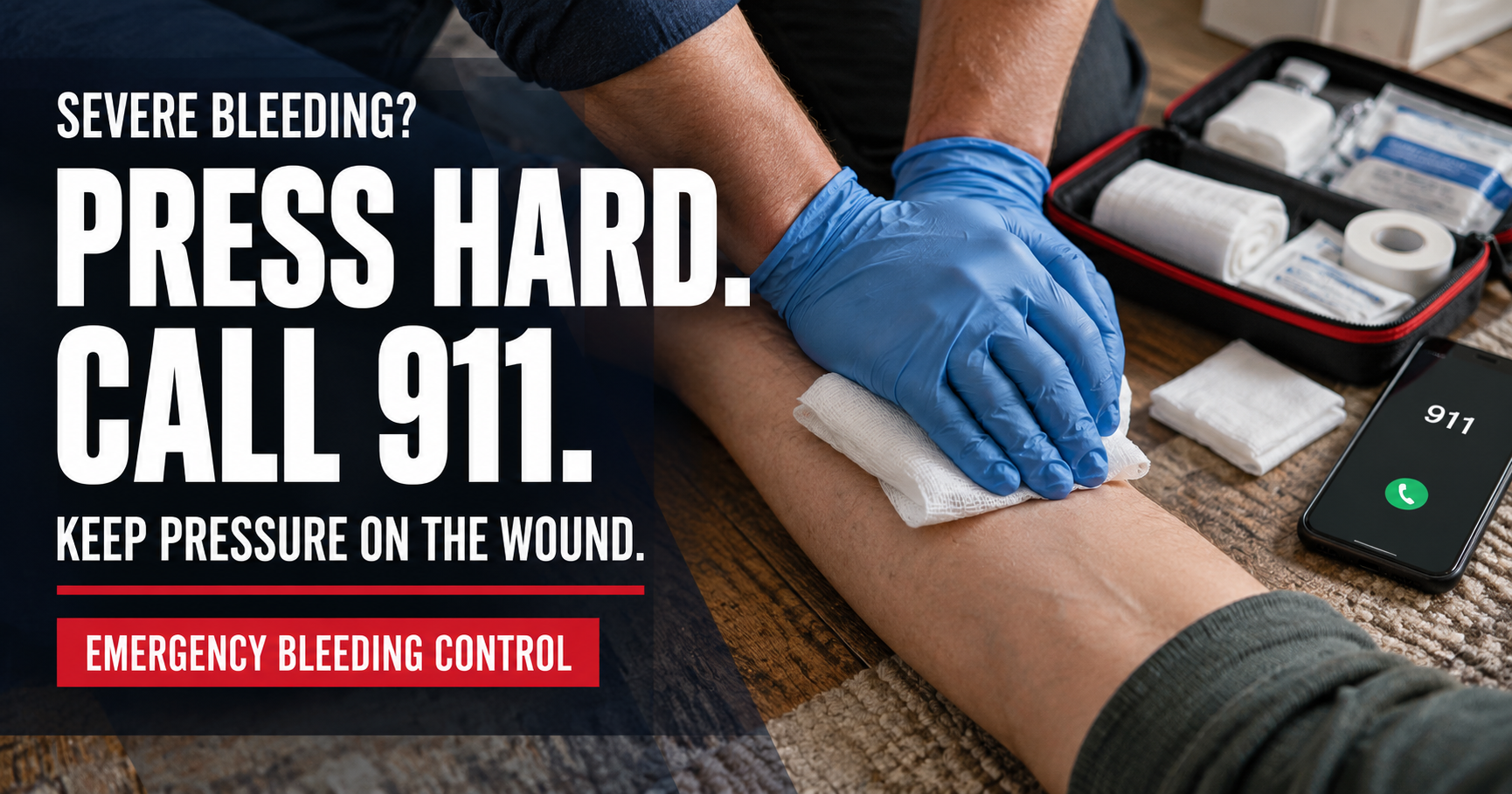
That’s exactly what we covered in how I stop heavy bleeding during an emergency.
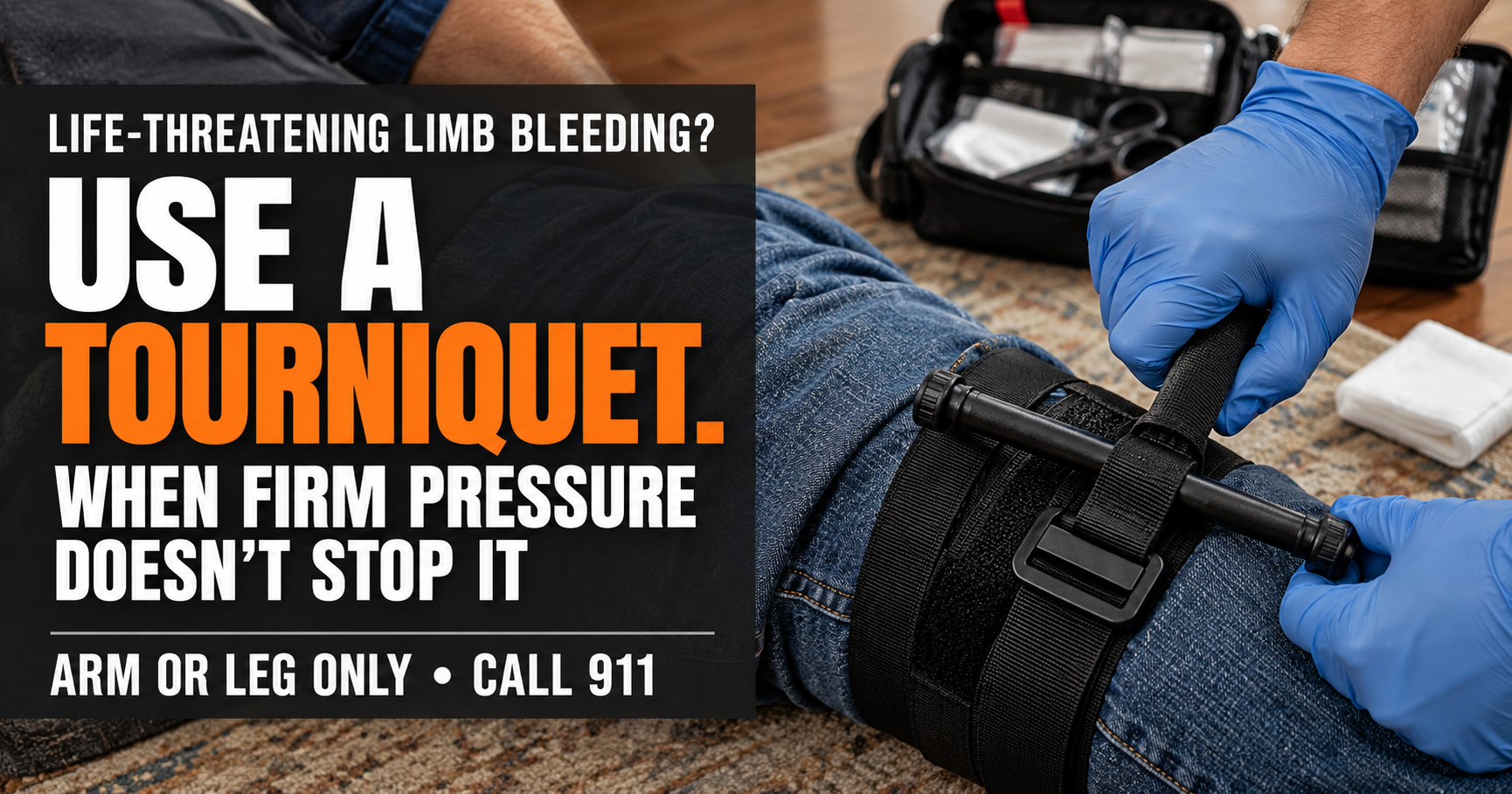
If the injury involves life-threatening bleeding from an arm or leg, we’ve also covered when a tourniquet may be appropriate.
Wound cleaning comes after immediate life threats have been addressed.

Some Wounds Need Medical Care Even If They Aren’t Bleeding Much
This is important because bleeding isn’t the only thing that determines how serious a wound is.
Puncture wounds are a good example.
A nail can make a relatively small hole in the skin without producing dramatic bleeding, yet the wound may be deep and contaminated.
Mayo Clinic recommends prompt medical attention for puncture wounds that are deep and dirty, caused by a metal object, caused by an animal or human bite, located deeply around certain critical areas, or involving a joint.
So I look beyond the amount of blood.


I Take the Location Seriously
A cut on the forearm isn’t automatically the same as a similar-looking wound on the face, hand, foot, or over a joint.
Hands and feet contain a lot of important structures packed into small spaces.
Wounds around joints can involve deeper structures.
Facial wounds can involve important structures and may need prompt treatment to reduce complications and scarring.
If there’s numbness, loss of normal movement, extreme pain, or reason to suspect deeper damage, that’s beyond what I consider routine home wound care.
If It’s a Minor Wound, I Start With Clean Hands
Before touching the wound, I clean my own hands when possible.
If disposable gloves are available, I use them appropriately.
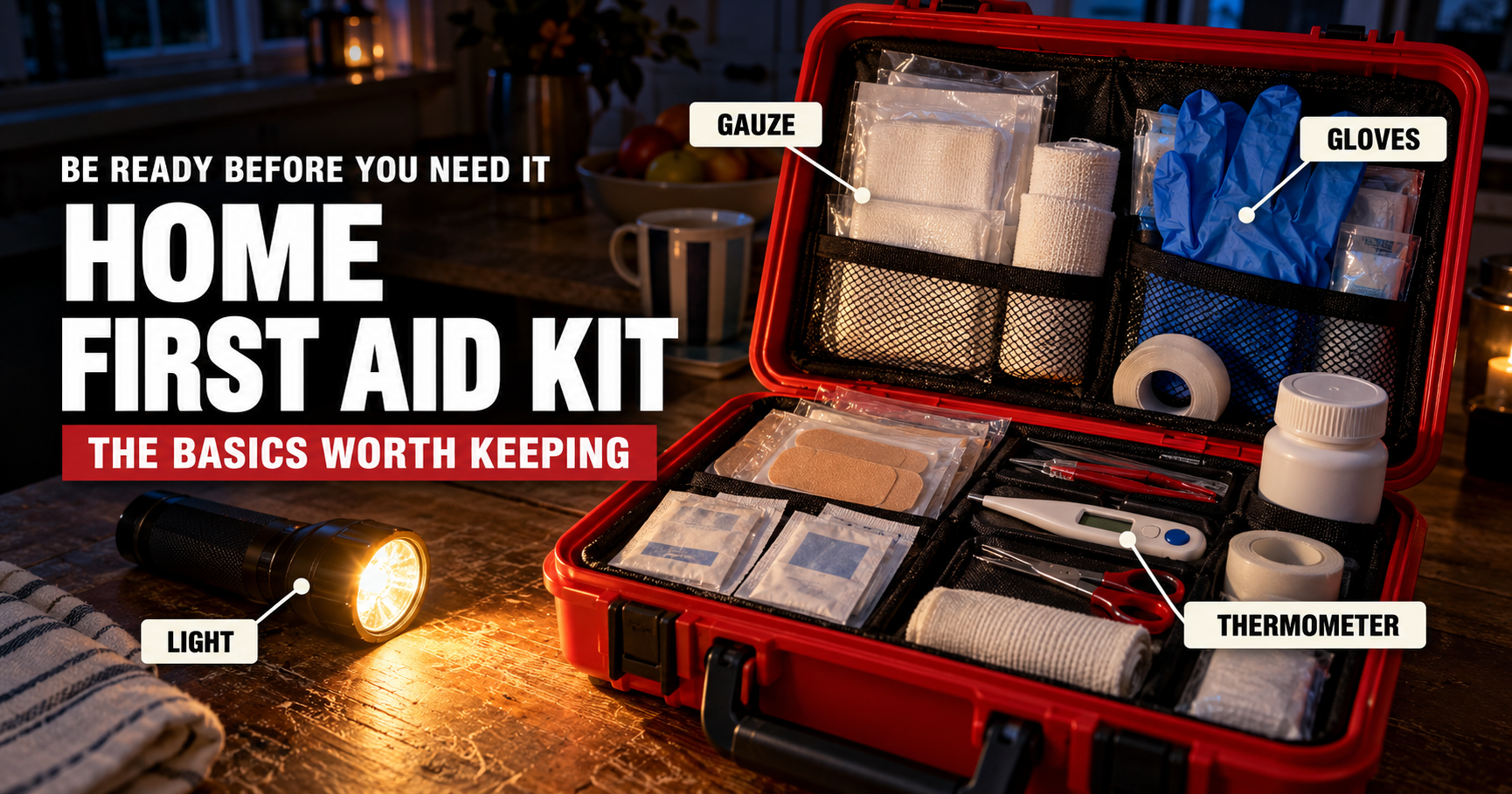
That’s one reason gloves stay near the top of the home emergency first aid kit we built.
I don’t want to introduce additional contamination while I’m trying to clean an injury.


I Control Minor Bleeding Before I Start Washing Everything
Small cuts and scrapes often stop bleeding on their own.
If needed, I use a clean bandage or cloth and gentle direct pressure.
For serious bleeding, of course, the situation changes completely.
I don’t spend precious time carefully washing a wound while someone is losing a dangerous amount of blood.
The severity determines the priority.
Clean Running Water Does More Work Than People Think
Once I’m dealing with an appropriate superficial wound and the bleeding situation is under control, irrigation becomes important.
The current American Heart Association and American Red Cross first-aid guidelines recommend thoroughly irrigating superficial wounds and abrasions until there’s no obvious debris or foreign material remaining.
They also say running tap water or sterile saline is reasonable for wound irrigation instead of antiseptic agents such as povidone-iodine.
That’s refreshingly simple.
I don’t need an exotic survival product to clean every ordinary wound.
I need appropriate clean water.
I Let the Water Flush Debris Away
For an ordinary cut or scrape, I’m trying to remove visible dirt and contamination without unnecessarily damaging tissue.
I rinse the wound thoroughly.
Mayo Clinic similarly recommends rinsing cuts and scrapes with water and washing around the wound with soap rather than putting soap directly into the wound.
If there’s a little superficial debris I can safely remove with clean tweezers, that’s one thing.
If something is deeply embedded, that’s completely different.
I Don’t Dig Around Inside a Wound
This is where I know my limits.
If debris is deeply stuck and doesn’t rinse away or come out easily, I don’t start digging around with tweezers, a pocketknife, or whatever else happens to be nearby.
Mayo Clinic recommends seeking professional care when debris can’t be removed, and MedlinePlus similarly advises against picking deeply embedded debris from a wound.
The goal is cleaning an appropriate wound.
It’s not performing minor surgery at the kitchen table.


I Don’t Pull Out a Deeply Embedded Object
This is another rule I want to know before panic sets in.
If a large object is deeply embedded in a serious wound, I don’t yank it out so I can clean underneath it.
Removing it can worsen bleeding and tissue damage.
I stabilize the situation within my training and get medical help. MedlinePlus specifically advises against removing long or deeply embedded objects.
I Don’t Pour Hydrogen Peroxide Into Every Cut
This is one of those old first-aid habits many of us grew up seeing.
Hydrogen peroxide bubbles, so it certainly looks like it’s doing something useful.
But for ordinary cuts and scrapes, Mayo Clinic advises against using hydrogen peroxide or iodine in the wound because they can irritate tissue.
I don’t need the wound to fizz to know it’s being cleaned.
Thorough irrigation with appropriate clean water is usually much less dramatic.
And that’s fine.
I Don’t Assume Alcohol Belongs Inside the Wound Either
Alcohol has legitimate uses.
Pouring it directly into an ordinary open wound isn’t my default wound-cleaning method.
Again, I come back to irrigation.
Running tap water or sterile saline gives me a straightforward way to flush away contamination without turning wound care into a chemistry experiment.
The goal isn’t making the wound hurt enough that I assume it must be clean.
Soap Goes Around the Wound
For an ordinary minor wound, I can clean the surrounding skin with soap and water.
I try not to get soap directly into the wound itself.
This helps clean the surrounding area without unnecessarily irritating exposed tissue.
It’s simple, inexpensive, and something most households already have.
What If the Power Is Out but the Water Still Works?
Then I take advantage of it.
A power outage doesn’t automatically mean municipal water stops flowing.
If I still have safe running tap water, that’s useful for appropriate wound irrigation.
This is another example of why the different Survive Essentials clusters connect.
Power, water, sanitation, and first aid can all become part of the same emergency.
What If I’m on a Private Well?
Now the situation can change quickly.
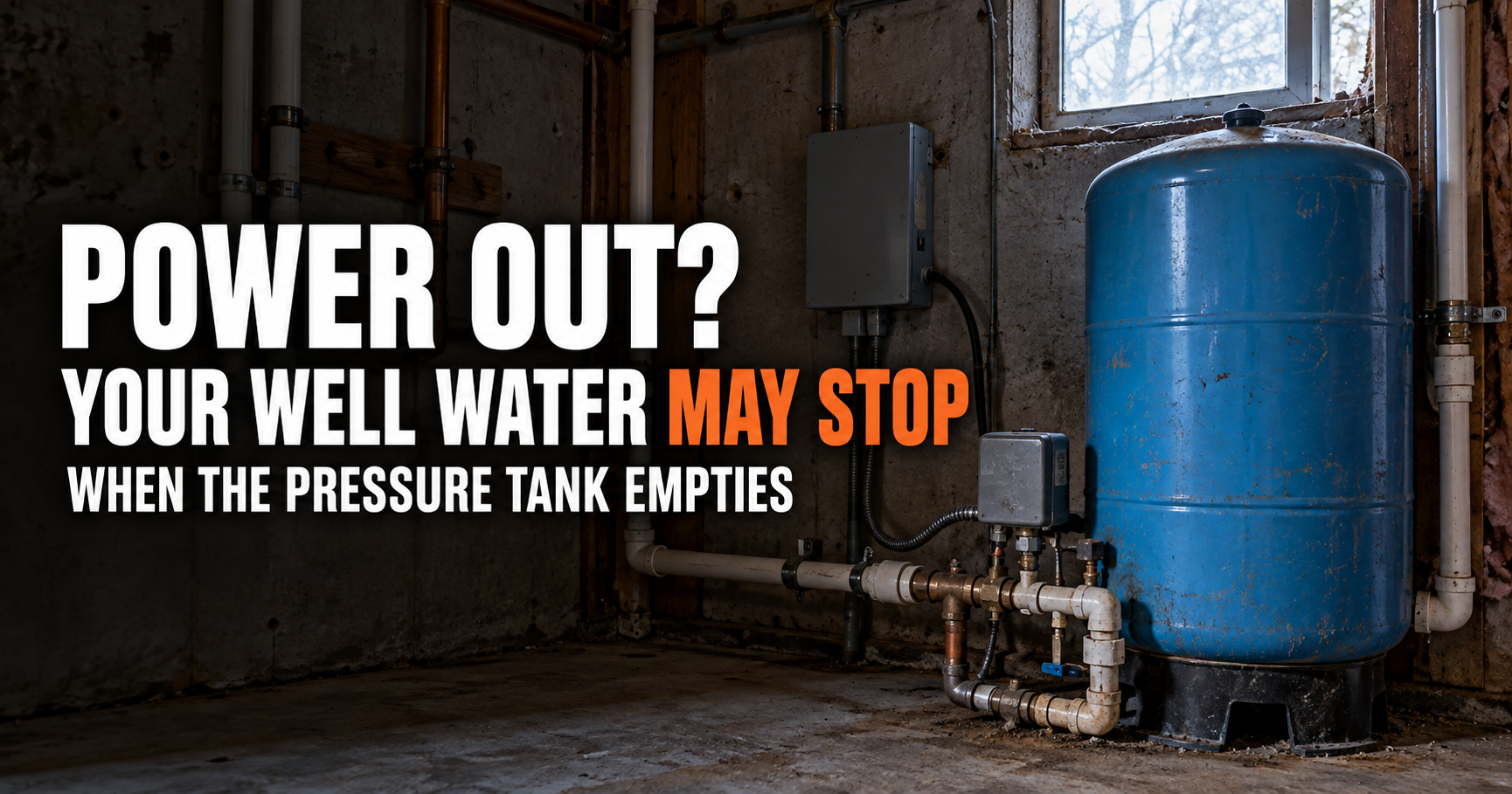
As we’ve already covered in what happens to my well during a power outage, an electric well pump may eventually stop supplying normal water pressure when the grid is down.
That means stored clean water becomes even more valuable.
I don’t want the first time I think about wound-cleaning water to be after the faucet stops working.
This Is Another Reason I Store Emergency Water
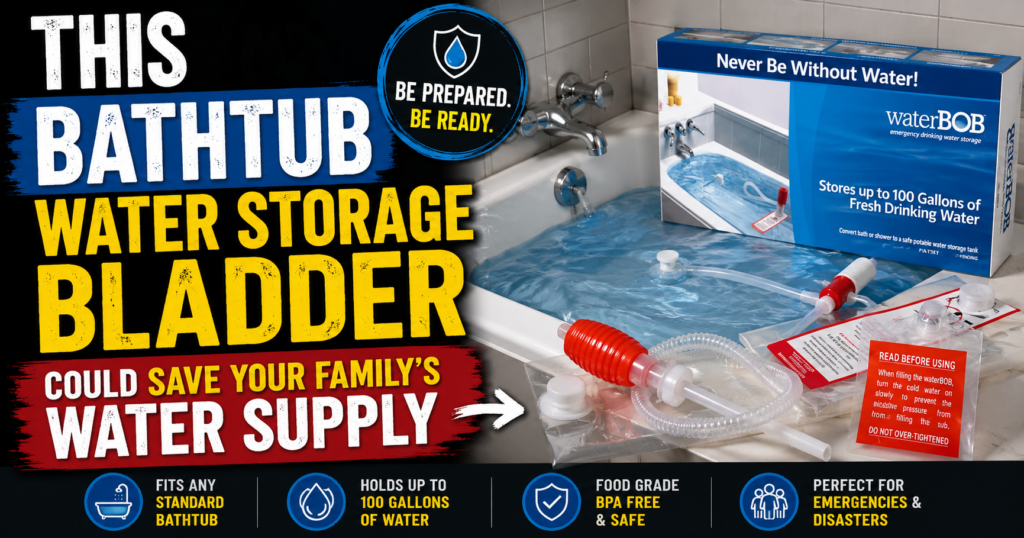
We’ve built an entire emergency water preparedness guide around drinking, cooking, sanitation, storage, and treatment.
First aid gives me another reason to want clean water available.
I don’t necessarily need hundreds of gallons solely for wound care.
But clean water is such a fundamental emergency resource that it solves several problems at once.
That’s the kind of preparedness supply I value most.
I Don’t Use Questionable Surface Water on an Open Wound
If I’m outdoors or normal water service has failed, I don’t casually rinse an open wound with water from a pond, creek, floodwater, or rain barrel because it looks clean.
Clear doesn’t mean free of microorganisms or contamination.
Floodwater especially can contain sewage, chemicals, debris, and other hazards.
An open wound gives contamination another way into the body.
I want an appropriate clean water source.
Floodwater and Open Wounds Are a Combination I Take Seriously
This matters during storms and disasters.
If I have an open wound, I try to keep it away from floodwater.
If a wound has been exposed to potentially contaminated water, I don’t simply cover it and forget what happened.
The contamination risk is different from an ordinary clean household cut.
That’s something I’d mention when seeking medical care.
Puncture Wounds Get Extra Attention
A puncture wound can look deceptively minor.
Small hole.
Not much blood.
Maybe barely any pain at first.
But the object can carry contamination deeper into tissue.
Mayo Clinic recommends cleaning a puncture wound with clear water and seeking medical attention for several higher-risk situations, including deep or dirty wounds, wounds caused by metal objects, bites, and deep wounds involving certain body areas or joints.
I don’t judge a puncture solely by the size of the hole.
Animal and Human Bites Aren’t Ordinary Cuts
A bite breaks the skin in a way that can introduce saliva and bacteria directly into the wound.
The 2024 AHA/Red Cross guidelines recommend medical evaluation as soon as possible for superficial wounds or abrasions caused by animal or human bites or contaminated with human or animal saliva.
Animal bites can also raise rabies considerations depending on the animal and circumstances.
That’s not something I try to solve with gauze and optimism.
Tetanus Is Another Thing I Think About
Dirty and puncture wounds can raise questions about tetanus protection.
If I don’t know when my last tetanus vaccination was, that’s useful information to figure out rather than guess.
Mayo Clinic advises contacting a healthcare professional about tetanus protection after certain deep or dirty wounds, particularly when vaccination isn’t current.
My first aid kit can’t replace vaccination history.
After Cleaning, I Protect the Wound
For an appropriate minor wound, cleaning is only part of the job.
Mayo Clinic recommends covering cuts with a bandage, rolled gauze, or gauze secured appropriately to help keep the wound clean, with the covering changed at least daily or whenever it becomes wet or dirty.
That means I want enough dressings in the kit to handle more than the first bandage.
If an emergency lasts several days, wound care doesn’t stop after day one.
I Don’t Put the Same Dirty Dressing Back On
If a dressing becomes wet, dirty, or otherwise needs changing, I replace it appropriately.
That’s one reason extra gauze and bandages matter more to me than a giant assortment of novelty items.
Wound care can consume supplies over several days.
A kit that looks enormous when unopened can shrink quickly once somebody actually needs daily dressing changes.
I Watch the Wound Instead of Assuming Cleaning Solved Everything
Cleaning a wound lowers contamination, but it doesn’t give me permission to ignore it afterward.
I watch for changes.
Increasing pain.
Swelling.
Warmth.
Drainage.
Pus.
Bad odor.
Fever.
Spreading changes around the wound.
Those can be signs that medical evaluation is needed.
A wound that looked manageable yesterday can become a different problem tomorrow.
I Pay Attention to Function Too
Can they move the injured finger normally?
Is there numbness?
Tingling?
Weakness?
Loss of feeling?
Severe pain with movement?
Those things can suggest deeper damage involving nerves, tendons, blood vessels, joints, or other structures.
That’s beyond simply keeping the skin clean.
I want professional evaluation when the injury suggests deeper structural damage.
I Don’t Let “We’re in an Emergency” Lower My Standards Too Far
This is an important mindset for me.
A disaster may make medical care harder to reach.
That doesn’t magically make a serious wound minor.
If anything, delayed care and disrupted sanitation can make wound management more important.
Preparedness helps me bridge the gap.
It doesn’t make infection, tendon damage, severe bleeding, bites, punctures, or deep wounds stop mattering.
Don’t Assume a Bandage Means the Wound Is Finished
Once a minor wound is cleaned and covered, I still pay attention to it.
The next day matters.
So does the day after that.
Current American Heart Association and Red Cross guidance says redness, swelling, foul-smelling drainage, increasing pain, or fever are reasons to inspect the wound and obtain medical care.
That’s especially important during an emergency when it might be tempting to say:
“We cleaned it. It’ll be fine.”
Maybe it will.
But I still watch it.
I Change a Dressing When It Gets Wet or Dirty
A dressing isn’t something I put on Monday and forget until Friday.
For ordinary cuts and scrapes, Mayo Clinic recommends changing the covering at least daily or whenever it becomes wet or dirty.
That’s another reason I keep more than one or two pieces of gauze in my home emergency first aid kit.
If someone needs several days of basic wound care, supplies disappear faster than expected.

I Don’t Think a Wound Needs to “Air Out”
This is another old idea I grew up hearing.
Leave the cut uncovered so it can breathe.
That isn’t automatically the best approach.
Current Red Cross material explains that keeping an appropriate wound moist and covered can promote healing, and current AHA/Red Cross guidance says covering clean superficial wounds with an occlusive dressing is reasonable.
For a tiny superficial scratch, covering may not always be necessary.
For something that needs protection from dirt and contamination, I want an appropriate dressing.
If the Bandage Sticks, I Don’t Rip It Off
This is one of those little things that can turn wound care into a bigger mess.
If a dressing has stuck to the wound, I don’t yank it away and reopen everything.
I work carefully and follow appropriate wound-care guidance.
The goal is protecting healing tissue, not repeatedly disturbing it every time I change the covering.
I Pay Attention to Increasing Pain
Pain immediately after getting cut isn’t surprising.
What concerns me more is a wound that starts getting increasingly painful instead of gradually improving.
Increasing pain is one of the warning signs current first-aid guidance associates with possible infection.
That’s information I take seriously.
Redness Can Tell Me Something Too
Some irritation around a fresh injury can occur.
What I don’t like is redness that is increasing or spreading, especially when it comes with warmth, swelling, worsening pain, drainage, or fever.
That’s when the situation is moving beyond simple home wound care.
I want medical evaluation rather than another layer of ointment and hope.
Pus or Bad-Smelling Drainage Gets My Attention
Drainage that becomes thick, discolored, or foul-smelling is another warning sign.
Current Red Cross guidance lists pus among the signs of an infected wound, while the AHA/Red Cross guidelines specifically identify foul-smelling drainage as a reason to seek medical care.
That’s not something I ignore because we’re in the middle of a storm or outage.
The emergency doesn’t make infection less important.
Fever Changes the Situation
If someone develops a fever along with concerning changes around a wound, I want medical advice.
A local wound problem can sometimes become a much larger health problem.
That’s one reason this cluster isn’t about teaching people to play doctor at home.
The goal is knowing what I can reasonably handle and recognizing when the situation has crossed that line.
Dirty Wounds Make Me Think About Tetanus
This is especially important in preparedness because a lot of emergency injuries are dirty.
Stepping on a nail.
Cutting myself on storm debris.
Getting punctured by something covered in soil.
A crush injury.
A contaminated wound.
The CDC classifies puncture wounds and wounds contaminated with dirt, soil, feces, or saliva among dirty or major wounds with increased tetanus risk. Burns, compound fractures, crush injuries, frostbite, and wounds containing dead tissue are also in that higher-risk group.
That’s something I want to know before I’m injured.
The “Rusty Nail” Isn’t Really the Whole Story
People often associate tetanus specifically with rusty metal.
The bigger issue is contamination and the type of wound.
CDC says the bacteria that cause tetanus are found in the environment, including soil, dust, and manure, and can enter through broken skin. Puncture wounds and contaminated wounds are particular concerns.
So I don’t look at a clean-looking piece of metal and assume there’s no tetanus concern simply because it wasn’t rusty.
I Keep Track of My Tetanus Vaccination Before I Need It
This is one piece of medical information worth knowing.
CDC’s current guidance says someone who completed the primary tetanus vaccine series generally doesn’t need another tetanus vaccination for any wound if the last dose was less than five years ago.
For a clean minor wound, a booster may be recommended when the last dose was 10 or more years ago.
For a dirty or major wound, the threshold is generally five or more years after the last dose for someone who completed the primary series. People with unknown, incomplete, or no vaccination history have different recommendations.
I don’t try to memorize every medical exception.
I simply want to know roughly when my last tetanus shot was so I can give a healthcare professional useful information.
Antibiotics Aren’t a Substitute for Tetanus Protection
This is another useful distinction.
CDC specifically says antibiotics aren’t recommended simply to prevent tetanus after a wound. Tetanus prevention depends on proper wound management and vaccination, with tetanus immune globulin used in certain higher-risk situations based on vaccination and immune status.
So I don’t keep leftover antibiotics around thinking they somehow replace wound care and vaccination.
I Don’t Take Somebody Else’s Leftover Antibiotics for a Cut
This is where emergency thinking can become bad medical thinking.
A wound looks questionable.
Someone remembers antibiotics sitting in a cabinet.
That doesn’t mean those antibiotics are appropriate for the situation, the organism involved, the person taking them, or the correct dose and duration.
If a wound appears infected or needs professional evaluation, I want actual medical care when it is available.
Preparedness doesn’t mean randomly prescribing medication to myself.
What If Medical Help Really Is Delayed?
This is the situation Survive Essentials is supposed to prepare for.
Maybe roads are blocked.
Maybe a major storm has overwhelmed local services.
Maybe we’re temporarily isolated.
That’s when good basic wound care matters even more.
I want clean water.
Clean dressings.
Gloves.
Enough supplies for repeated dressing changes.
A way to communicate.
And a plan for reaching professional care as soon as it becomes available if the wound is beyond basic first aid.
What I don’t do is let “help is delayed” become an excuse for pretending a serious injury isn’t serious.
I Keep Wounds Away From Floodwater
This deserves repeating because flooding and storm cleanup fit this site so well.
Floodwater can contain sewage, chemicals, debris, and microorganisms.
An open wound doesn’t belong in it.
If I already have a cut, I protect it as well as practical from contaminated water.
If a wound is exposed to floodwater, I clean it appropriately and pay closer attention to it afterward.
CDC has long emphasized prompt wound care after natural disasters because open wounds can become infected and tetanus exposure is a concern.
Gloves Help Prevent Wounds During Cleanup Too
Sometimes the best wound care is preventing the wound.
If I’m clearing storm debris, handling broken materials, or doing emergency repairs, work gloves can help reduce cuts and scrapes.
They’re not invincible.
They don’t make chainsaws safe.
But basic protective equipment is part of my first-aid thinking.
The less often I need the medical kit, the better.
I Use Eye Protection for the Same Reason
Storm cleanup throws debris everywhere.
So does cutting wood, repairing structures, working with damaged metal, and using power tools.
Eye protection isn’t technically something I use to clean a wound.
It belongs in the same preparedness mindset.
Prevent what I can.
Prepare to deal with what I can’t.
I Don’t Use My Drinking-Water Supply Carelessly
If normal water service is gone and I’m relying on stored potable water, wound care becomes another demand on that supply.
That’s worth considering when deciding how much emergency water my family should store.
Drinking comes first, obviously.
But water is also needed for cooking, hygiene, and potentially appropriate first aid.
That’s why emergency-water calculations shouldn’t be built around drinking alone.
I Keep Sterile Saline as a Useful Backup
Running potable tap water is perfectly reasonable for irrigating many superficial wounds according to current AHA/Red Cross guidance. Sterile saline is another reasonable option.
Having some saline available gives me another choice when running water isn’t practical.
I still don’t turn the first aid kit into a warehouse.
Clean water and good basic supplies solve a lot of ordinary problems.
A Water Filter Doesn’t Automatically Make Every Water Source Ideal for Wound Cleaning
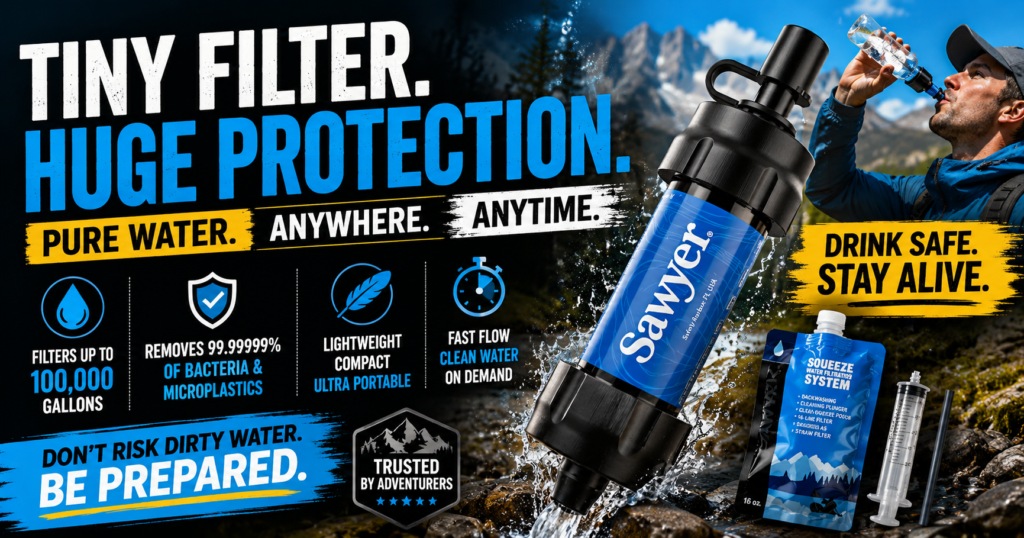
We already keep a Sawyer Mini as part of our emergency-water setup.
That’s an excellent preparedness tool for appropriate drinking-water situations.
But I don’t take the existence of a filter to mean I can collect any filthy or chemically contaminated water and confidently use it on an open wound.
Different contamination problems require different treatment.
This is especially important with floodwater and water potentially contaminated by chemicals.
I Take Bites Seriously
Animal and human bites deserve more caution than an ordinary scrape.
Current AHA/Red Cross first-aid guidance recommends medical evaluation as soon as possible for superficial wounds caused by animal or human bites or contaminated with saliva.
With an animal bite, there may also be questions about rabies exposure depending on the animal and circumstances.
I don’t try to settle those questions by searching pictures of the bite.
I get professional guidance.
Deep Cuts Are Where the Next Question Starts
Eventually I reach a wound that makes me ask:
Is cleaning and covering this actually enough?
Maybe the edges gape open.
Maybe it’s deep.
Maybe I can see deeper tissue.
Maybe it won’t stay closed.
Maybe it’s on the hand or face.
Maybe bleeding keeps restarting.
That’s a different question.
And it’s exactly why How Do I Know If a Cut Needs Stitches? belongs next in this cluster.
For this article, my boundary is simpler.
Minor appropriate wound?
Clean it thoroughly.
Remove obvious superficial debris when it can be done safely.
Protect it.
Monitor it.
Concerning wound?
Get professional medical evaluation.
I Don’t Want Wound Care to Become Complicated
The more I learn about first aid, the more I appreciate simple things.
Clean hands.
Clean water.
Enough irrigation.
Appropriate dressings.
A stocked first aid kit.
Knowing my tetanus status.
Watching for infection.
Recognizing when I’m out of my depth.
That’s much more useful than filling the cabinet with a dozen harsh products because their labels make them sound medical.
My Basic Wound-Care Routine
For an appropriate minor cut or scrape, my basic approach is straightforward.
First, I make sure there isn’t life-threatening bleeding or another immediate emergency.
Then I clean my hands and use gloves when appropriate.
I control minor bleeding.
I thoroughly rinse the wound with clean running tap water or sterile saline.
I clean around the wound appropriately.
I remove only superficial debris that can be safely removed.
I cover the clean wound when appropriate.
I change the dressing when it becomes wet or dirty and at least as recommended for the wound.
Then I watch for worsening pain, redness, swelling, warmth, concerning drainage, or fever.
And if something about the wound is beyond basic first aid, I don’t pretend otherwise.
The Best Wound-Care Supply Is Often Something I Already Store
Clean water isn’t exciting.
Gauze isn’t exciting.
Gloves aren’t exciting.
Neither is knowing when my last tetanus vaccination was.
But those are exactly the things that can matter after an ordinary injury.
That’s why I like building first aid the same way we’ve built the rest of Survive Essentials.
Not around the coolest piece of gear.
Around the problem I’m actually trying to solve.
A wound doesn’t care how impressive my emergency kit looks.
It needs appropriate care, clean supplies, and enough judgment to recognize when the injury belongs in professional hands.
About the Author
Grant Holloway writes about practical first aid, wound care, bleeding control, emergency medical preparedness, and the supplies families can keep ready before professional help is available. His work for Survive Essentials focuses on useful first-aid skills, realistic household preparedness, and understanding when an injury can be managed with basic care and when it’s time to seek professional medical treatment.