The most dangerous assumption in emergency preparedness is that the power will be back soon. It’s the assumption that keeps people from building real stockpiles, from taking grid-down planning seriously, and from having honest conversations with their families about what a prolonged outage actually looks like. A durable pantry reserve is one practical part of preparing for that possibility; see Can White Rice Really Last 25 Years? Here’s the Truth.
Sometimes the power does come back in a few hours. Sometimes it doesn’t come back for weeks. And in the scenarios that serious emergency planners lose sleep over, it might not come back in a recognizable form for much longer than that.
Understanding how long the grid can actually stay down — and why — is the foundation of realistic preparedness planning. Here’s what the data, the history, and the infrastructure reality actually show.
What the Historical Record Says
The United States has experienced multiple large-scale, prolonged power outages in recent decades. Each one produced lessons that most people forgot as soon as the lights came back on.
Hurricane Katrina (2005): Portions of Louisiana and Mississippi went without power for weeks. Some areas in New Orleans remained dark for over a month. The grid restoration effort required importing utility crews from across the country — and still took far longer than any official estimate suggested it would.
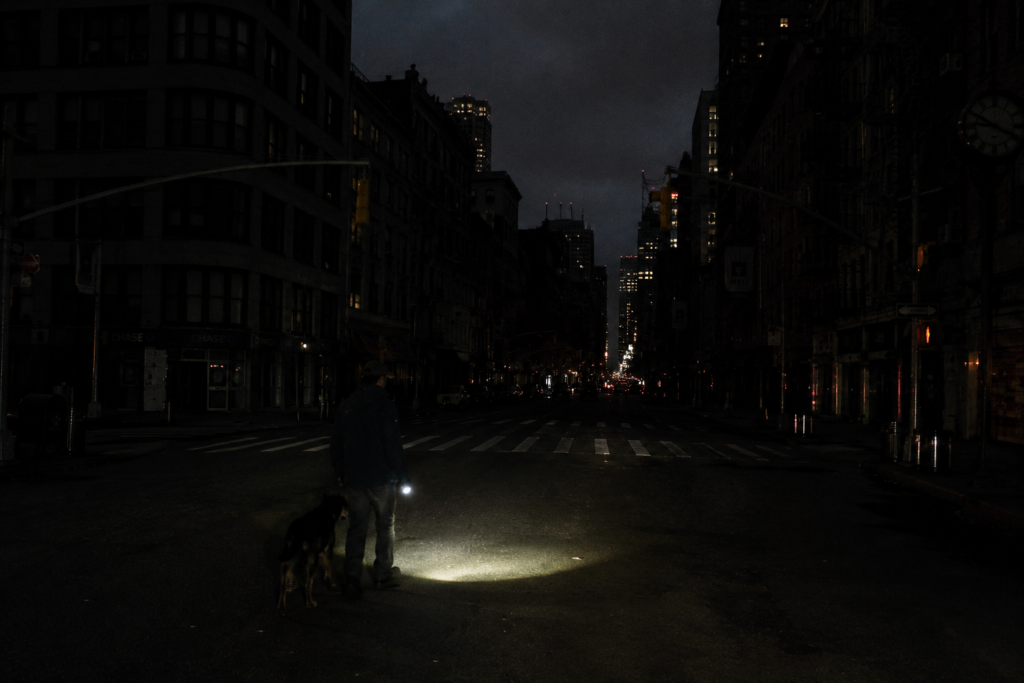
Hurricane Maria, Puerto Rico (2017): The most instructive example in modern American history. The island’s grid was so severely damaged that restoration took eleven months for the last customers to get power back. The median restoration time was months, not weeks. Nearly 3,000 people died in the aftermath — many from causes directly tied to the loss of power for medical equipment, refrigerated medications, and climate control.
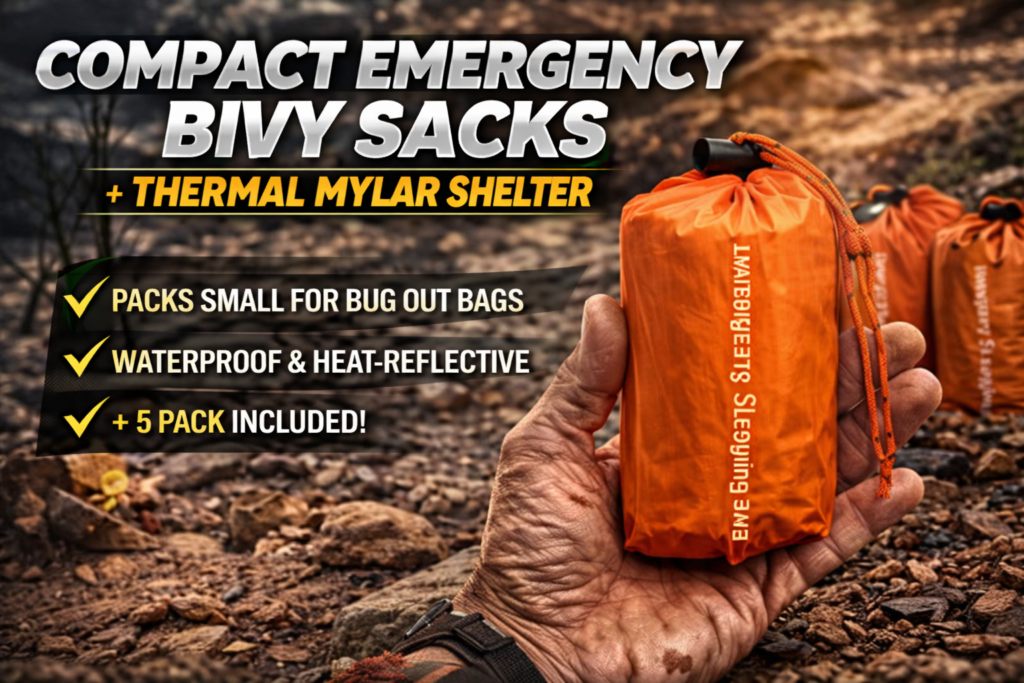
Texas Winter Storm Uri (2021): The ERCOT grid failed during an extreme cold event, leaving over four million households without power for days in sub-freezing temperatures. Over 250 people died. The official estimate when the outage began was hours. The reality for many households was four to seven days in dangerous cold. For preparing against a similar loss of heat, emergency sleeping bags for cold conditions may be a practical addition to a household’s cold-weather emergency supplies.
Northeast Ice Storm (2008): An ice storm across New Hampshire, Massachusetts, and surrounding states left over a million customers without power. Restoration took up to three weeks in the hardest-hit areas despite no major infrastructure destruction — just ice-covered lines and an overwhelmed utility response.
The pattern is consistent: official restoration estimates are almost always optimistic, actual restoration time for the last affected households is always longer than the average, and the people who prepared for the long end of the range fared dramatically better than those who prepared for the short end.


Why Grid Restoration Takes So Long
Most people assume restoring power is roughly like fixing a pipe — find the break, repair it, turn the water back on. The reality of grid restoration is dramatically more complex.
The Grid Is Not Designed for Rapid Rebuild
The electrical grid is an interconnected system of generation plants, high-voltage transmission lines, substations, distribution lines, and transformers. A failure at any level of this hierarchy affects everything downstream from it. Restoring power doesn’t mean fixing one thing — it means systematically restoring each layer of the hierarchy in sequence, from generation through transmission through distribution to individual homes.
High-voltage transmission infrastructure — the large towers and lines that move power over long distances — takes weeks to months to replace when damaged. The transformers that step voltage down at substations are some of the most critical and hardest to replace components in the system. Large power transformers are custom-built, often manufactured overseas, weigh hundreds of thousands of pounds, and have lead times of 12–18 months under normal ordering conditions. There is no significant strategic reserve of these transformers in the United States.
Skilled Labor Is the Bottleneck
Grid restoration requires skilled lineworkers — a specialized trade with years of training. There are a finite number of them in the country. In a regional disaster, utilities import crews from unaffected areas. In a national or multi-regional event, that labor pool is shared across too many simultaneous restoration efforts to move quickly anywhere.
Restoration Is Sequential Not Simultaneous
Utilities restore power in priority order: hospitals and critical infrastructure first, then densely populated areas, then progressively less dense areas last. Rural households are always restored last. If you live outside a major population center, your restoration timeline in any significant outage is substantially longer than the headline number you’ll hear on the news.

The Scenarios That Keep Emergency Planners Up at Night
Short-term outages from weather events are well-understood problems with well-understood recovery processes. The scenarios that produce genuinely open-ended grid-down timelines are different in kind, not just scale.
Coordinated Physical Attack on Substations
In 2013, a sniper attack on the Metcalf transmission substation in California took 17 transformers offline and came close to triggering a regional blackout. The attackers were never identified. A 2014 Federal Energy Regulatory Commission analysis found that destroying just nine of the country’s 55,000 substations could cause a coast-to-coast blackout lasting 18 months.
This is not a theoretical concern. It is a documented vulnerability that has been studied, reported on, and largely not addressed at the infrastructure level.
Cyberattack on Grid Control Systems
The 2015 and 2016 cyberattacks on Ukraine’s power grid — attributed to Russian state actors — successfully shut down power for hundreds of thousands of people by attacking the software control systems that manage grid operations. Similar attacks have been attempted against US grid infrastructure. A successful large-scale cyberattack on grid control systems could produce an outage that physical repair crews cannot address until the software threat is neutralized — an open-ended timeline measured in weeks to months.
Geomagnetic Storm
In 1859, a massive solar storm — the Carrington Event — sent a geomagnetic pulse through the Earth’s magnetosphere that set telegraph wires on fire across North America and Europe. A storm of equivalent magnitude today would induce currents in long transmission lines that could destroy transformers across the entire grid simultaneously.
The congressional EMP Commission estimated that a Carrington-class geomagnetic storm could leave a significant portion of the US without power for years — not months — due to the simultaneous destruction of transformers that take 12–18 months each to replace under normal conditions. Solar scientists estimate the probability of a Carrington-class event in any given decade at roughly 12%.
EMP Attack
A high-altitude nuclear detonation produces an electromagnetic pulse capable of destroying unshielded electronics across a wide geographic area. The EMP Commission report to Congress concluded that a successful EMP attack on the continental United States could produce grid-down conditions lasting years, with cascading failures across water, food, transportation, and financial systems.
This is the scenario the preparedness community refers to when discussing true long-term grid-down — the low-probability, catastrophic-consequence end of the spectrum worth understanding even if you’re primarily preparing for the far more likely shorter-term scenarios.
What This Means for Your Preparedness Timeline
You don’t need to prepare for every scenario equally. You need to prepare in proportion to likelihood and the severity of being underprepared.
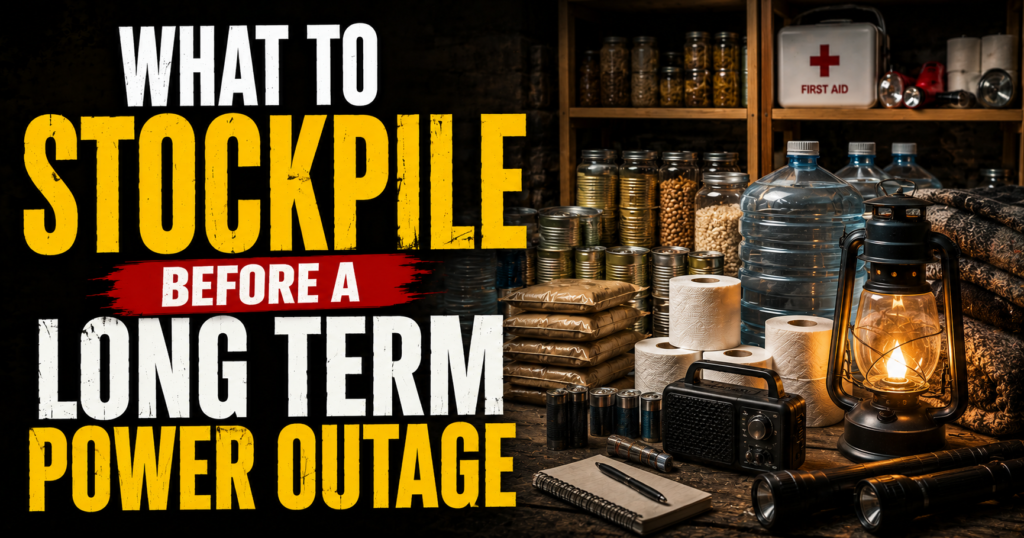
A weather-related outage lasting up to two weeks is the most likely scenario for most American households. Prepare for two weeks as your minimum baseline — covered in the complete stockpile guide and the grid-down survival guide.
A regional infrastructure failure lasting one to three months is less likely but not implausible. Extending your stockpile to 90 days significantly improves your resilience against this range without requiring extreme measures.
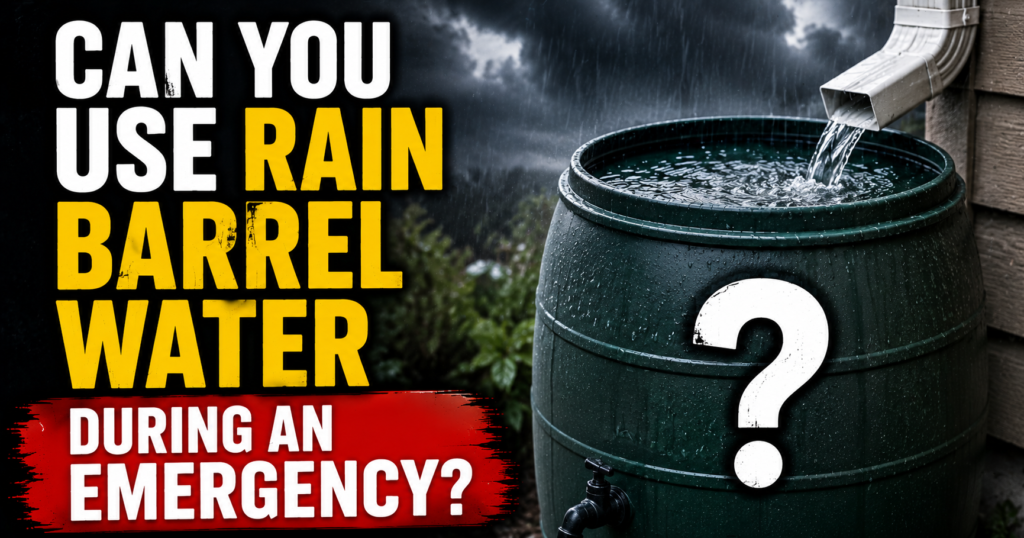
A multi-year grid-down scenario from EMP or catastrophic geomagnetic storm is low-probability but represents the extreme consequence end. Serious long-term preppers planning for this range are building genuine food production capability, water independence, and community-level resilience — not just storing more cans. One practical step toward rain barrels for water independence is adding rainwater collection to a layered emergency water plan.
The practical starting point for most families is the two-week threshold. Once that’s solid, extend outward. Your bug out bag covers you if staying home stops being viable. Your home stockpile covers you if staying is the right call. Your knowledge and skills cover you when both run out.



The One Week Test Most Families Fail
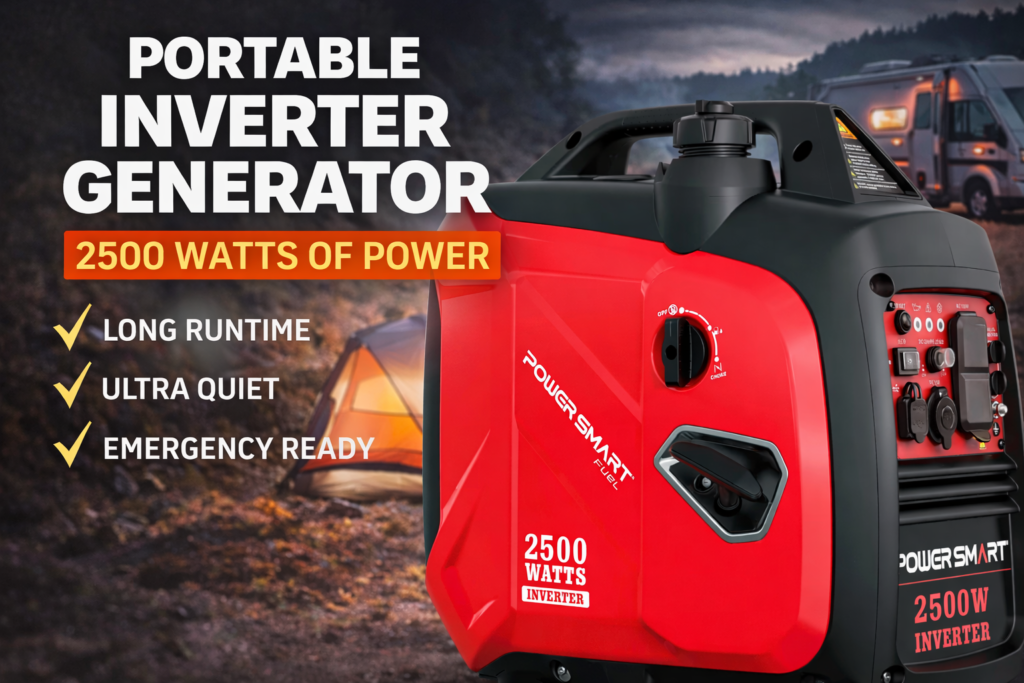
Right now, without buying anything or making any changes, how long could your household survive if the power went out and stayed out? As part of that assessment, a backup generator for extended outages may be worth evaluating if essential equipment needs electricity during a long outage.
Be honest. Count your actual drinkable water — not the tap you assume will keep running. Count your actual shelf-stable food — not the freezer that’ll spoil in 48 hours. Count your actual light sources with functioning batteries. Count your actual heat source when the furnace blower stops working. For households reviewing their water reserves, emergency water storage containers can be one option to consider alongside other storage methods.
Most households land somewhere between two and five days. That’s the starting point. The gap between where you are and where you need to be is exactly what the stockpile guide is designed to close — systematically, affordably, before the grid goes down rather than after.
About the Author: Jake Mercer spent 11 years in emergency management before turning his focus to practical preparedness education. He lives with his wife and three kids in rural Tennessee, where understanding infrastructure vulnerabilities is part of building a real family preparedness plan. He writes for Survive Essentials covering the threats, the gear, and the strategies that make the difference when systems fail.