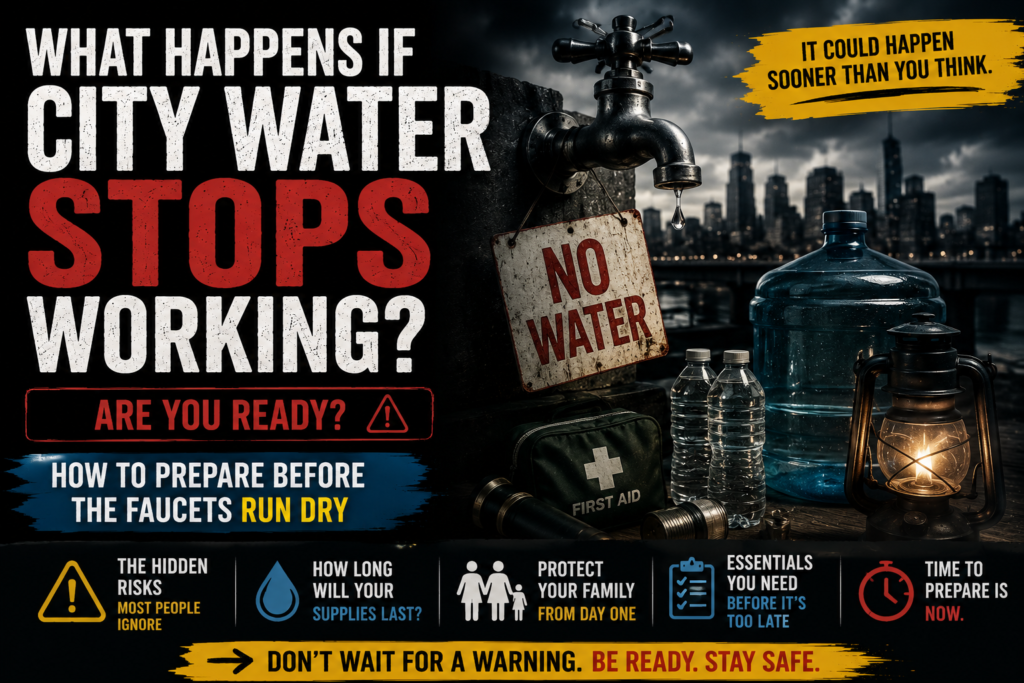
Most people never think about their water supply until the faucet stops working.
You turn the handle and nothing comes out.
No drinking water.
No showers.
No laundry.
No flushing toilets.
No way to wash dishes.
When city water fails, everyday life changes immediately.
The scary part is that many families only have enough water in the house to last a day or two before problems begin.
The good news is that water outages are one of the easiest emergencies to prepare for if you start before disaster strikes.
Why Does City Water Stop Working?
Most municipal water systems are incredibly reliable.
That’s why many people never consider the possibility that service could suddenly stop.
However, water systems depend on infrastructure, power, equipment, and treatment facilities that can fail.
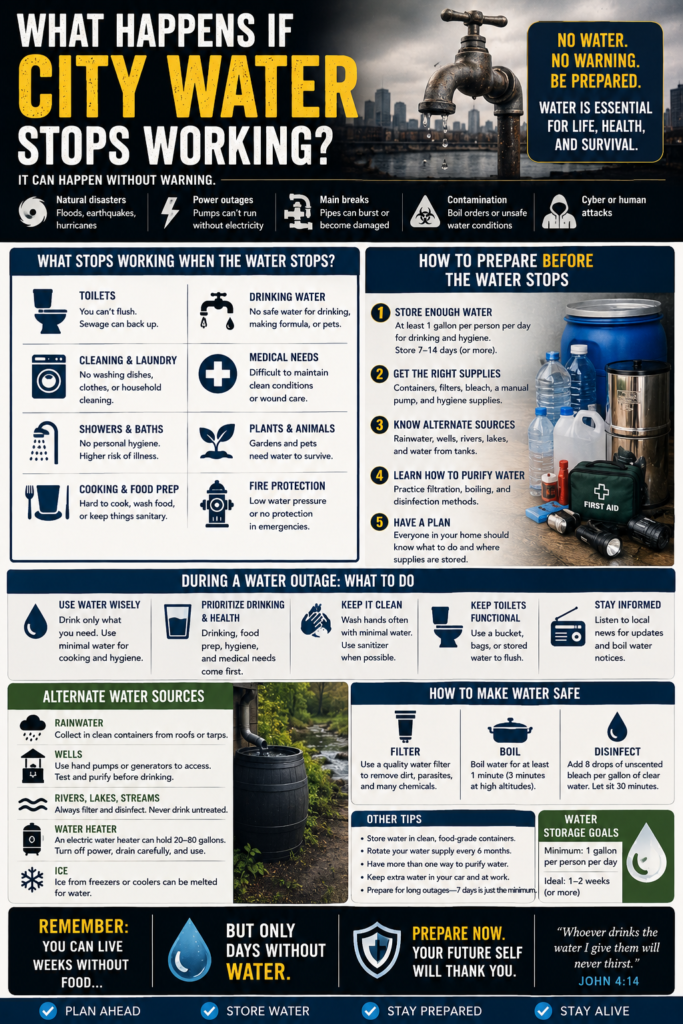
Common causes include:
- Severe storms
- Tornadoes
- Hurricanes
- Ice storms
- Flooding
- Water main breaks
- Power outages
- Treatment plant failures
- Equipment malfunctions
- Contamination events
Even a relatively small water main break can leave thousands of homes without service.
Larger disasters can affect entire communities for days.
What Happens First During a Water Outage?
The first thing most people notice is reduced water pressure.
Water may begin flowing slower than normal before stopping entirely.
In some situations, faucets may sputter or produce only a small trickle.
If authorities issue a boil water advisory, it means the water system can no longer guarantee that water is safe to drink without treatment.
Even if water is still flowing, additional precautions may be necessary.
How Long Can Water Outages Last?
Some outages last only a few hours.
Others can continue for days.
Major disasters may create disruptions lasting a week or longer.
After hurricanes, ice storms, and widespread flooding, some communities have experienced extended interruptions while infrastructure was repaired.
This is why emergency planners recommend storing water before you need it.
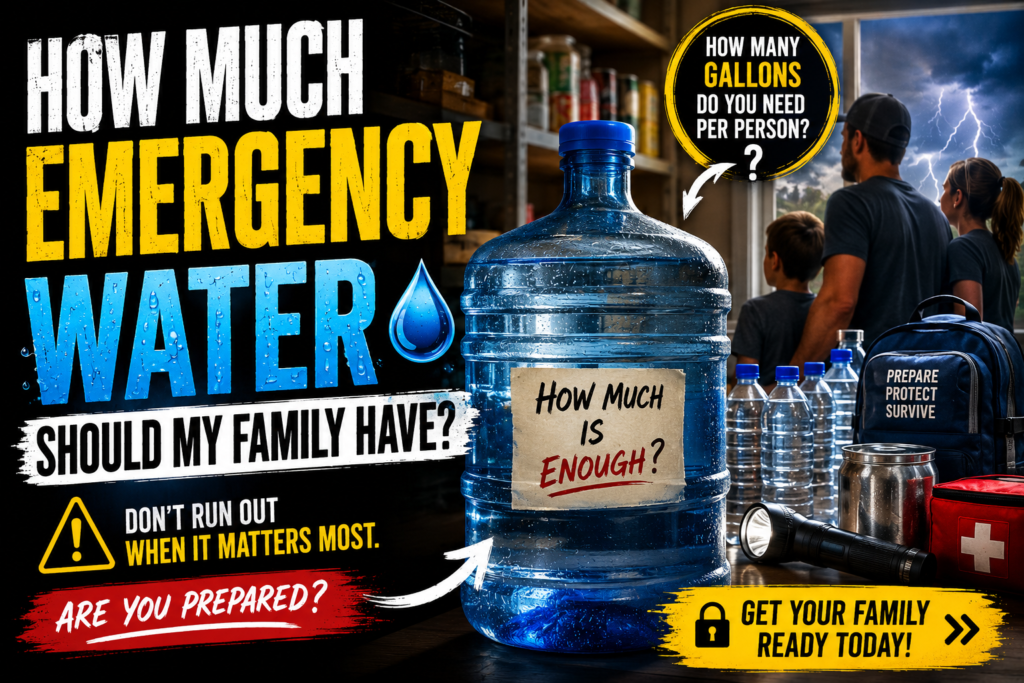
Our guide on how much emergency water a family should store can help you determine a realistic target based on your household size.
The Biggest Mistake Most Families Make
Most people assume they’ll have time to prepare.
Unfortunately, that’s not always true.
Once news spreads about a major outage, bottled water often disappears from store shelves within hours.
Anyone who has lived through a major storm has likely seen empty water aisles before the storm even arrives.
Preparedness is much easier when supplies are purchased gradually instead of during a panic.


Can You Flush Toilets Without Running Water?
Yes.
Many people don’t realize that toilets can still be flushed manually.
Pouring water directly into the toilet bowl will often create enough force to trigger a flush.
This doesn’t require city water pressure.
It simply requires having water available.
Stored water that is no longer suitable for drinking can often still be used for sanitation purposes.
Where Can You Get Water During an Emergency?
If city water becomes unavailable, you may need alternative sources.
Possible options include:
- Stored bottled water
- Water storage containers
- Rainwater collection
- Nearby natural water sources
- Community emergency distribution sites
Rainwater is one option many people overlook.
If collected properly, it may provide an important backup source during extended emergencies.
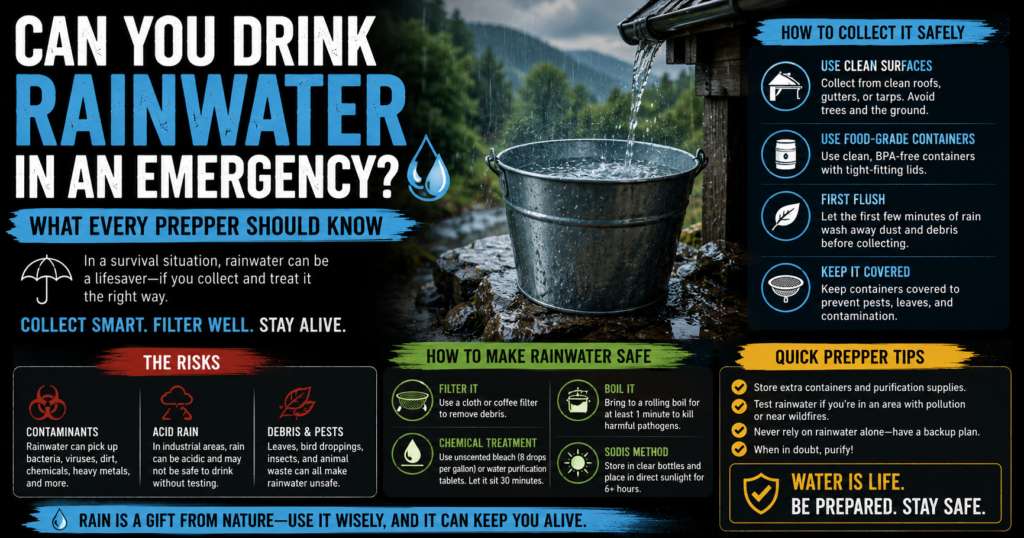
Our article on drinking rainwater during an emergency explains the risks, limitations, and best collection methods.
Never Assume Water Is Safe
One dangerous mistake is assuming that water is safe simply because it looks clean.
Unfortunately, many contaminants cannot be seen.
Bacteria, parasites, viruses, and other harmful organisms are often invisible.
That’s why it’s important to understand that appearance alone tells you very little about water quality.
Our guide on why clear-looking water can still be dangerous explains why visual inspection isn’t enough.
Every Family Needs a Backup Water Filter
Stored water is your first line of defense.
A reliable filtration system becomes your second.
If an outage lasts longer than expected, a filter may allow you to safely use water from sources that would otherwise be questionable.
That’s why many preparedness-minded families keep both stored water and filtration equipment on hand.
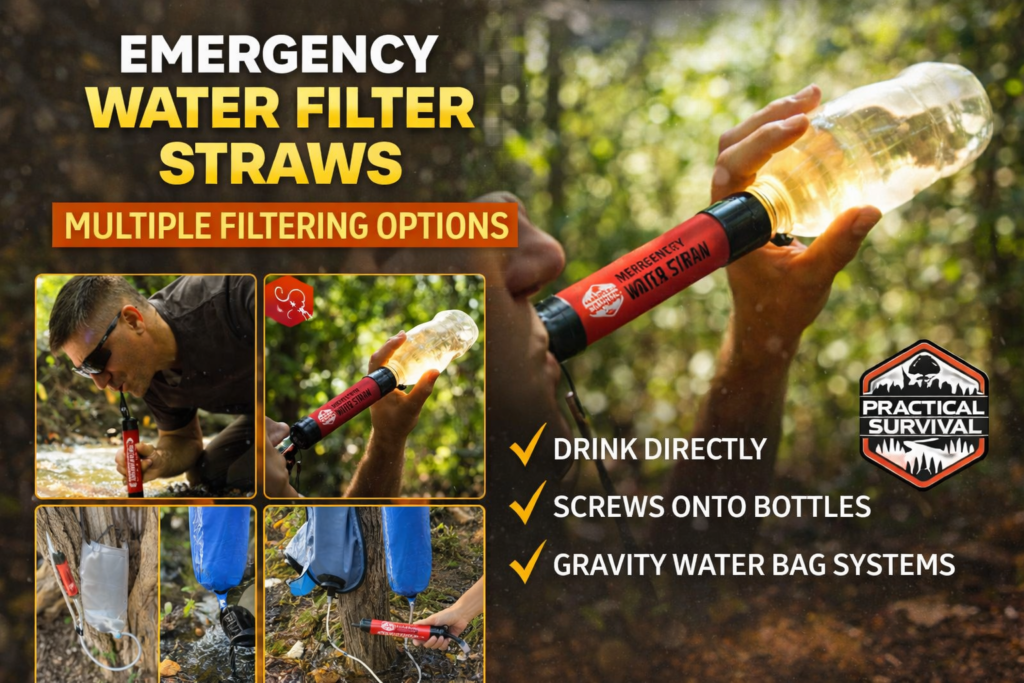
Our review of these emergency water straws shows how portable filtration can fit into almost any emergency kit.

For larger preparedness plans, you may also want to read our guide to survival water purification systems.
What About Cooking During a Water Outage?
Cooking often requires more water than people realize.
Water may be needed for:
- Drinking
- Food preparation
- Rehydrating emergency meals
- Washing dishes
- Cleaning surfaces
Families with emergency food supplies should always ensure they have enough water to prepare those foods.
Food storage and water storage should be planned together.
How Much Water Should You Store?
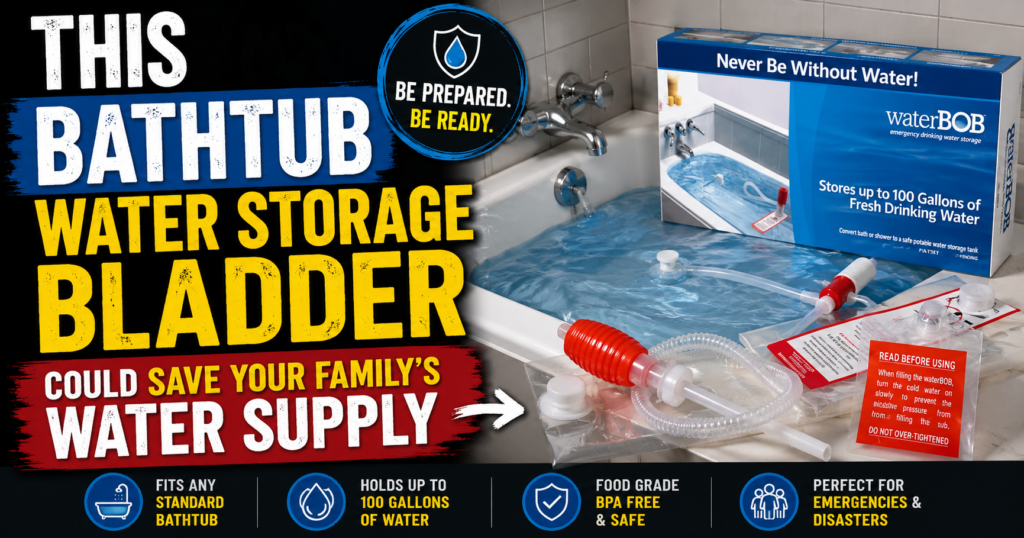
Emergency planners often recommend a minimum of one gallon per person per day.
Many experienced preppers prefer storing more whenever possible.
Water is used for far more than drinking.
It supports sanitation, cooking, hygiene, and medical needs.
The larger your household, the faster supplies disappear.

Warning Signs You Need a Better Water Plan
Your family may need additional preparation if:
- You only have a few bottles of water on hand
- You have no backup filtration method
- You rely entirely on municipal water
- You don’t know where emergency water would come from
- You have no plan for a week-long outage
Most families discover weaknesses in their preparedness plans only after an emergency begins.
Building a Layered Water Strategy
The most prepared households don’t depend on a single solution.
Instead, they build multiple layers of protection.
A strong emergency water plan may include:
- Stored bottled water
- Larger water reserves
- Rainwater collection options
- Portable filtration systems
- Water purification methods
- Knowledge of local water sources
If one layer fails, another remains available.
That flexibility can make a major difference during a prolonged emergency.
Final Thoughts
Water outages are far more common than many people realize.
Storms, equipment failures, infrastructure problems, and natural disasters can all interrupt service with little warning.
The families who handle these situations best aren’t necessarily the ones with the most gear.
They’re the ones who planned ahead.
Having stored water, backup filtration, and alternative water sources ready before an emergency begins can turn a stressful situation into a manageable inconvenience.
Related Water Preparedness Articles
Building a reliable emergency water plan takes more than simply storing a few bottles of water. Explore these helpful guides to strengthen your family’s preparedness:
- Emergency Water Preparedness Guide: Everything You Should Know
- How to Build a 30-Day Emergency Water Supply for Your Family
- Emergency Water Checklist: What Every Family Should Have
- How to Purify Water Without Electricity During an Emergency
- What Is the Safest Water Source During an Emergency?