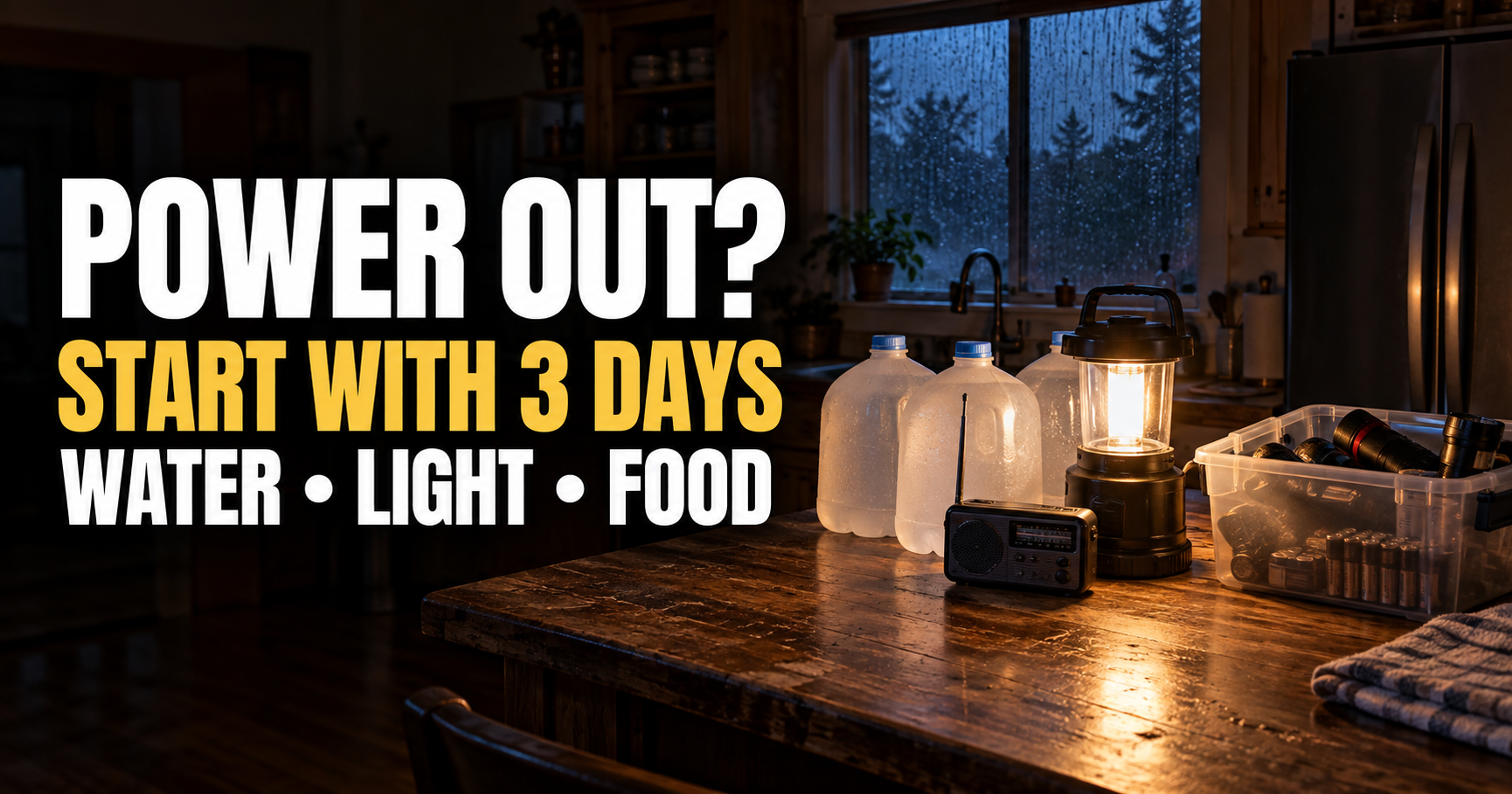
I’ve learned that preparing for a power outage isn’t really about preparing to sit in the dark for a few hours.
That’s the easy kind of outage.
I’m more concerned about the outage that starts on a cold Friday night and is still going Monday morning. Or the summer blackout where the refrigerator is warming up, phones are dying, the gas station can’t pump fuel, and nobody knows when the power is coming back.
That’s the kind of situation I prepare for.
I don’t think every family needs a bunker, a $10,000 generator system, or a garage packed from floor to ceiling with survival gear.
But I do believe every home should be able to function without electricity for at least several days.
Here’s how I approach it.
First, I Prepare for the Outage Before It Happens
I don’t want to be standing in Walmart with 200 other people looking for the last flashlight when a major storm is rolling in.
My basic blackout preparations happen ahead of time.
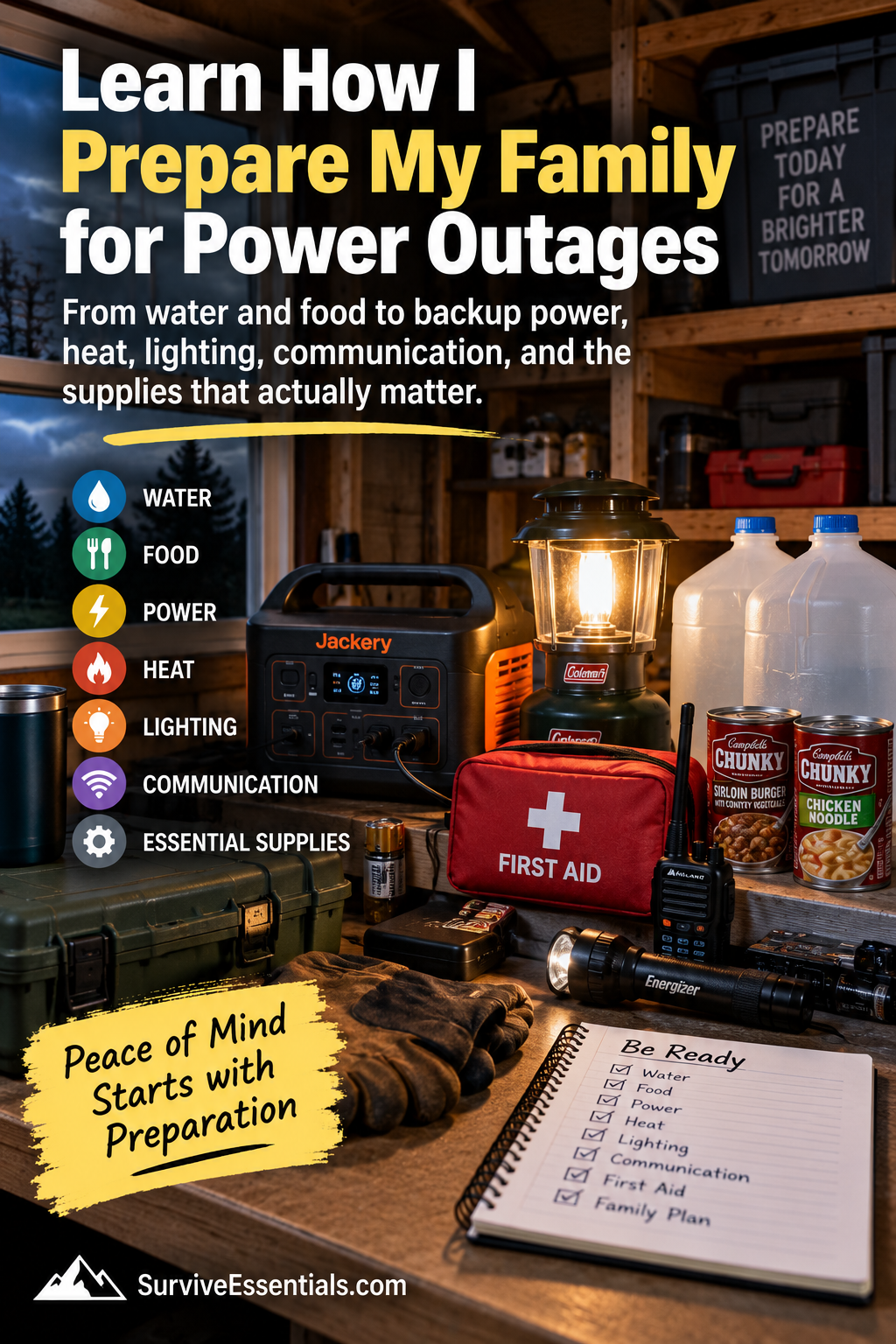
I want to know that I already have:
- Drinking water
- Food that doesn’t depend on refrigeration
- Multiple light sources
- Backup phone power
- A way to receive emergency information
- A safe cooking method
- A plan for heating or cooling
- Basic first aid supplies
- Backup power for essential equipment
- Enough supplies to stay home for several days
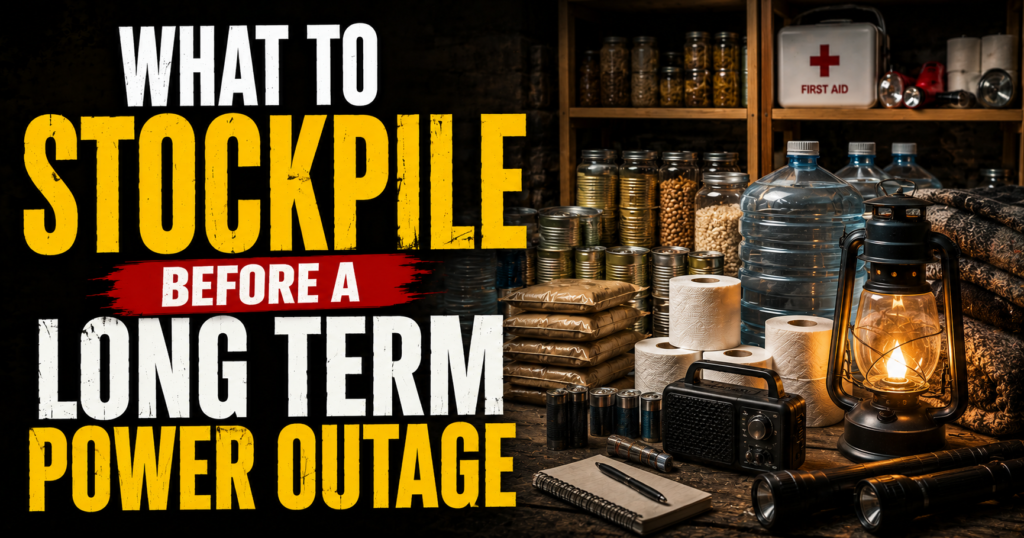
For a more aggressive long-duration setup, I’ve already put together a separate guide on what I would stockpile before a long-term power outage.
That goes much deeper into preparing for an outage that lasts longer than the usual storm-related blackout.

What I Do as Soon as the Power Goes Out
My first move isn’t reaching for the generator.
I figure out what’s actually happening.
I check whether neighboring houses have power.
I check the breaker panel.
I look for obvious storm damage from a safe location.
Then I check available outage information from the utility and local authorities.
If it’s obviously a widespread outage, I immediately start conserving the resources I can’t easily replace.
That means keeping the refrigerator closed, limiting unnecessary phone use, and getting lighting and communication equipment organized before dark.
I Keep an Emergency Radio Ready
Cell phones are incredible emergency tools.
But I don’t want my entire communication plan depending on one phone, one battery, and one cellular network.
That’s why I keep an emergency radio in my preparedness setup.
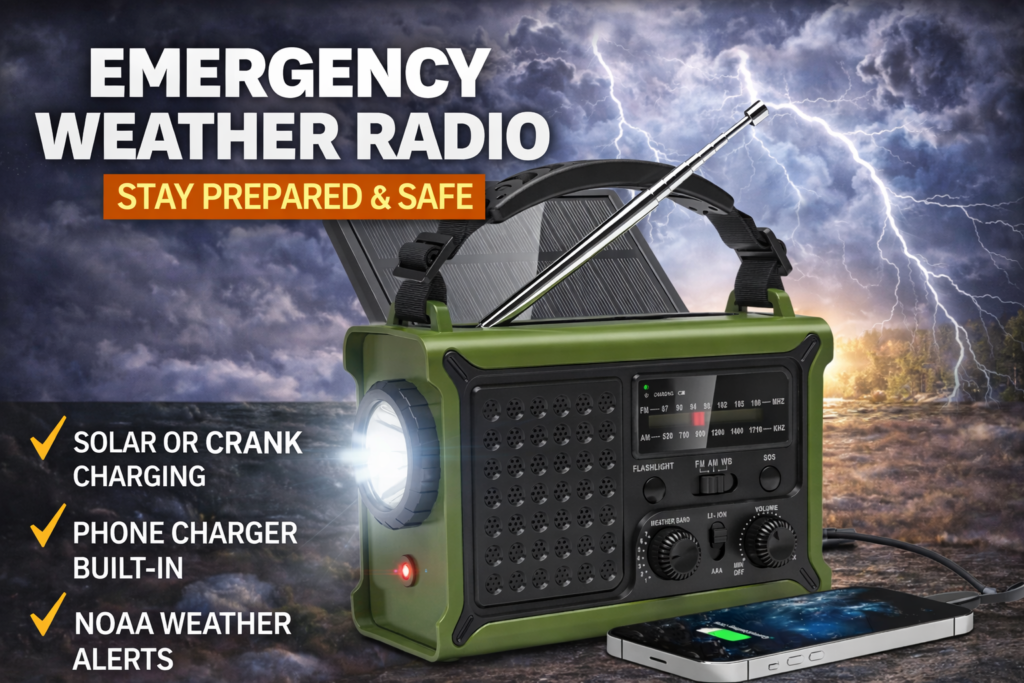
I’ve covered the emergency radio I like for staying informed when other systems fail.
The model I have linked there combines several useful emergency functions, including NOAA weather information, AM/FM radio, backup charging, lighting, and an SOS feature.
For me, that’s much more useful than owning another gadget that performs only one job.
During a serious outage, information matters.
I want to know whether I’m dealing with a six-hour inconvenience or a regional emergency that could last days.
I Treat My Phone Battery Like a Limited Resource
People burn through their phone batteries incredibly fast during outages.
They start checking social media.
Then the weather.
Then outage maps.
Then texting relatives.
A few hours later, the battery is sitting at 18%.
I don’t do that.
Once the power is out, I immediately lower screen brightness and switch on battery-saving settings.
I also keep portable charging available.
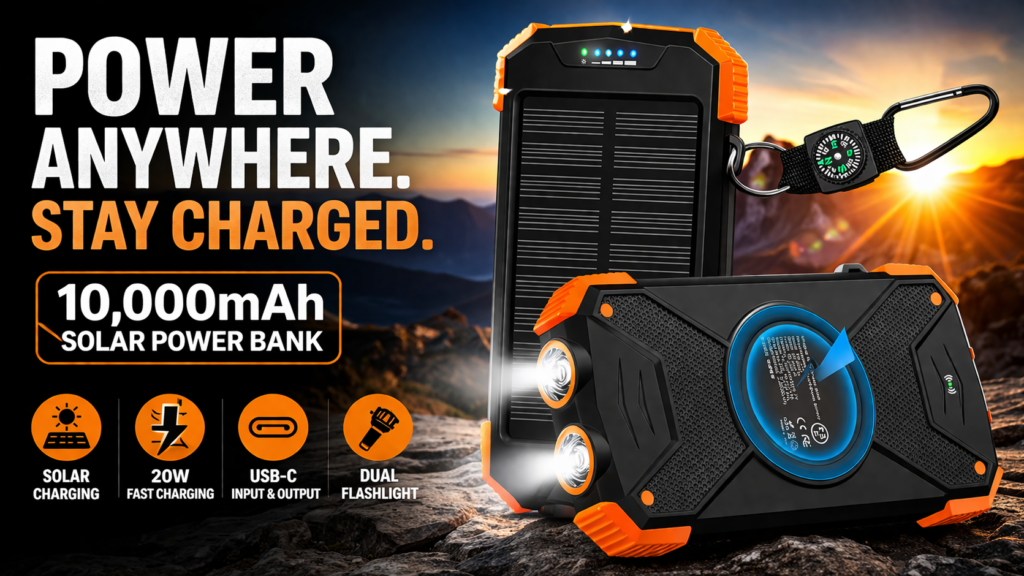
One compact option I’ve covered is this solar power bank for keeping a phone alive when regular charging isn’t available.
It’s not something I’d depend on as my entire electrical system. That’s not what a small power bank is for.
I see it as another layer.
And that’s how I approach almost everything in preparedness.
I don’t want one solution.
I want backups.

Lighting Is More Important Than People Think
A blackout during daylight is annoying.
A blackout after sunset changes your entire house.
Stairs become dangerous.
Bathrooms become difficult to navigate.
Finding supplies gets harder.
Kids get nervous.
Even basic tasks become frustrating.
I keep flashlights where I can reach them without searching through drawers in the dark.
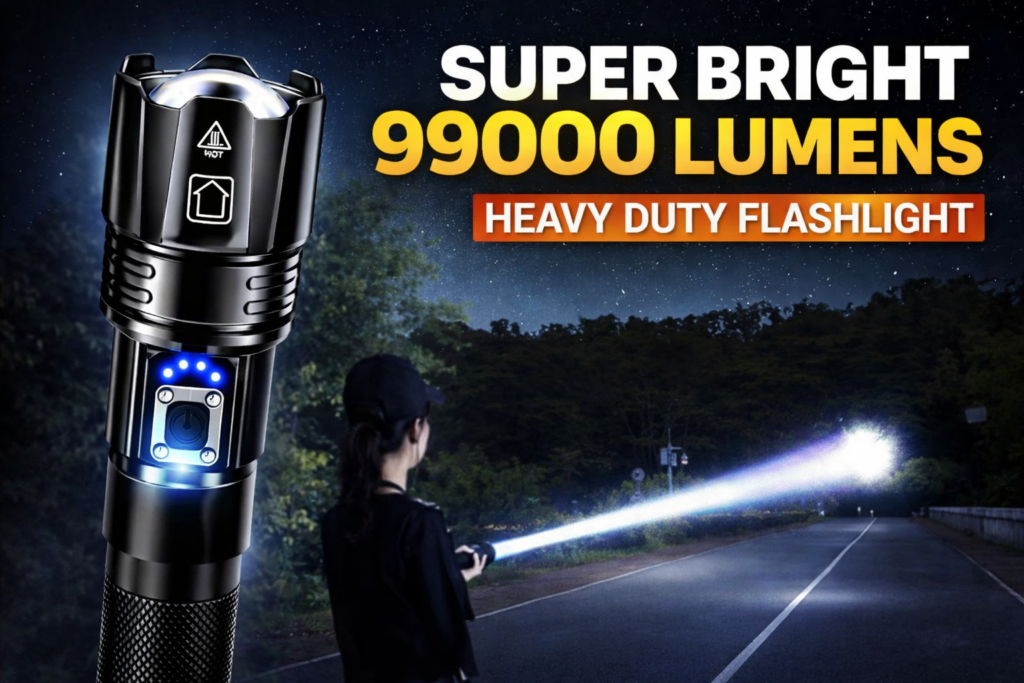
I’ve also reviewed a rechargeable emergency flashlight that gives me a serious amount of portable light.
But I don’t rely on one flashlight.
I like having a combination of flashlights, lanterns, and smaller lights available throughout the house.
One light breaks?
Fine.
A battery dies?
I have another.
That’s preparedness.
Don’t Burn Candles All Over the House
I understand why people immediately reach for candles during blackouts.
They’re cheap and familiar.
But open flames introduce another problem into an already abnormal situation.
If I’m using a candle, I keep it controlled and supervised.
For routine blackout lighting, I’d rather use battery-powered or rechargeable lights.
I don’t want to turn a power outage into a house fire.
Protect Your Refrigerator Immediately
This is one of those situations where doing nothing is often the right move.
Don’t keep opening the refrigerator.
Every time that door opens, cold air escapes.
I decide what I need before opening it, grab it quickly, and close the door.
If the outage starts looking serious, food preservation becomes a priority.
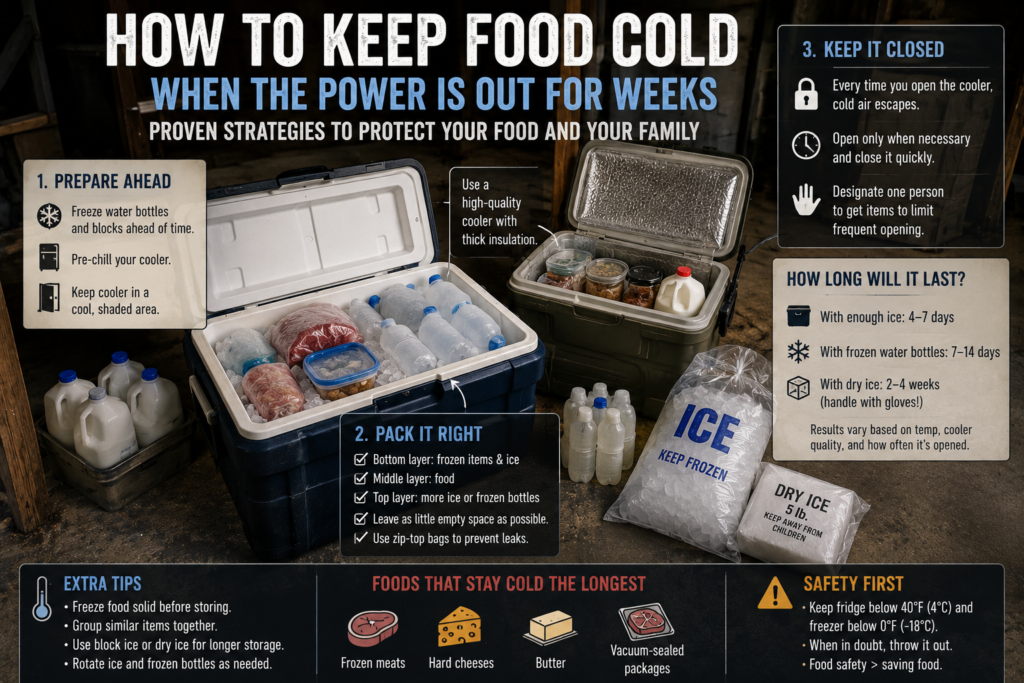
We’ve already gone much deeper into how I keep food cold when the power is out for an extended period.
That deserves its own plan because losing hundreds of dollars worth of food can turn an inconvenient blackout into an expensive one.
I Keep Food That Doesn’t Need Refrigeration
My emergency food plan doesn’t assume my refrigerator, freezer, microwave, or electric stove will work.
That’s important.
I want foods I can eat directly or prepare with very little equipment.
That might include shelf-stable foods, canned foods, dry staples, and dedicated emergency meals.
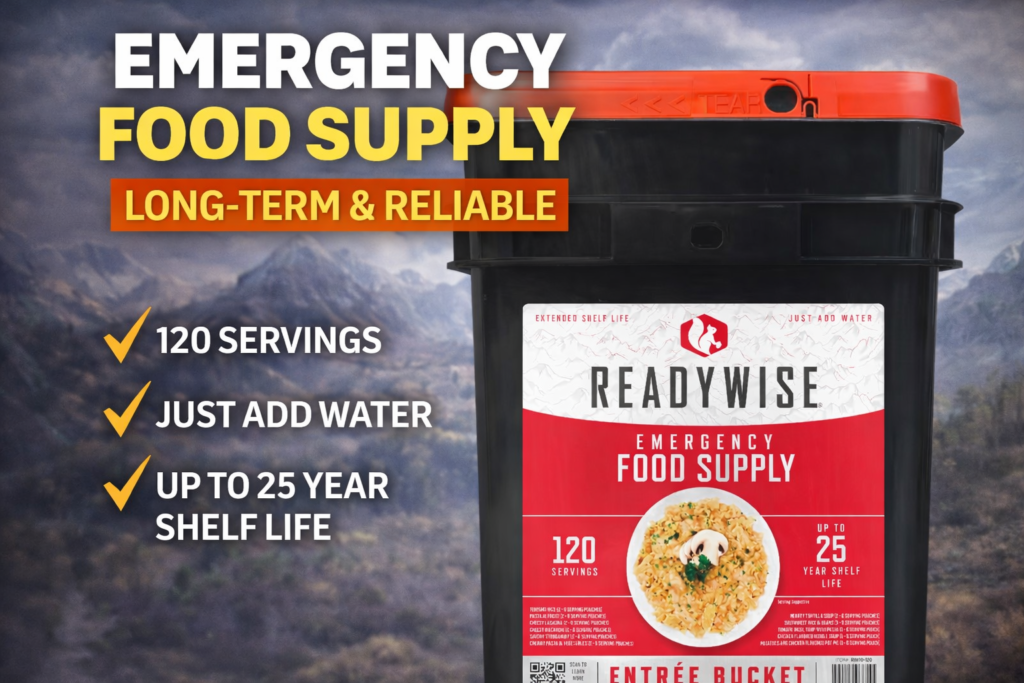
I’ve also looked at an emergency food supply designed specifically for situations where normal food access becomes unreliable.
I don’t think emergency food should replace a normal pantry.
I see it as insurance.
Regular pantry first.
Longer-term emergency food behind it.


Water Still Matters During a Power Outage
People don’t always connect power outages with water problems.
They should.
Some homes depend on electric well pumps.
Municipal water systems depend on infrastructure and pumping equipment.
Major disasters can affect electricity and water at the same time.
That’s why I don’t build my power-outage plan without a water plan.
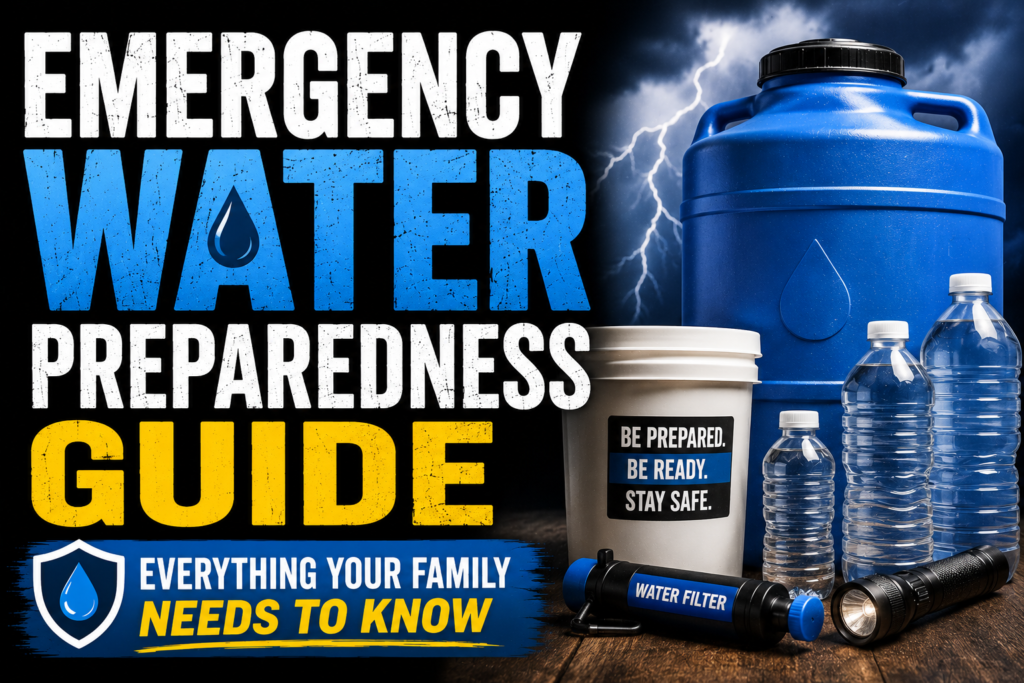
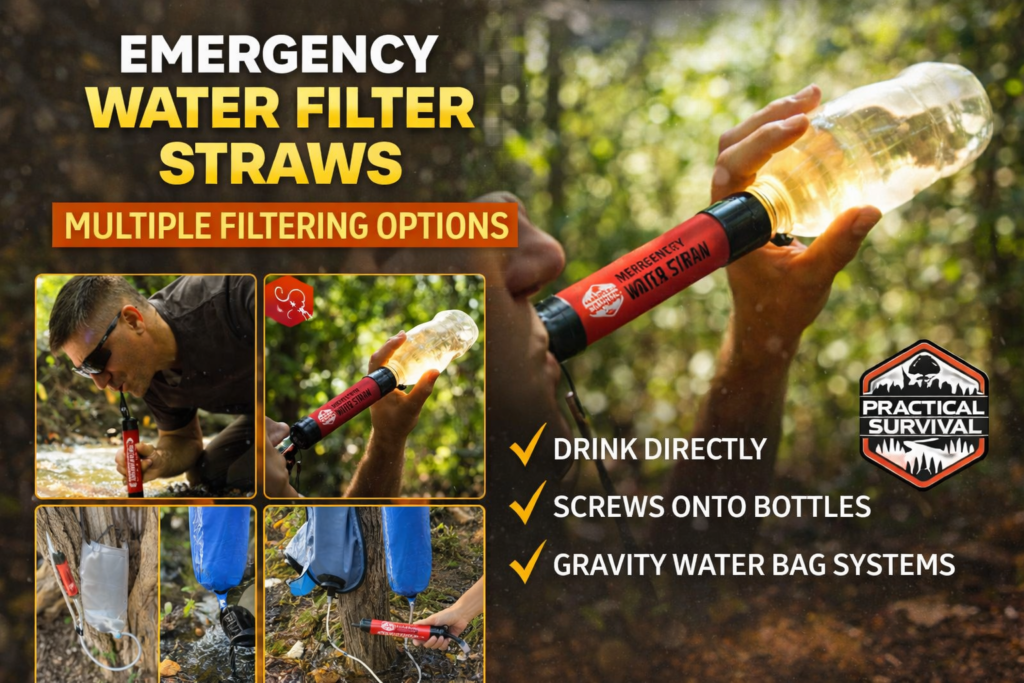
We’ve already built a complete emergency water preparedness guide covering storage, filtration, purification, backup sources, and long-term water security.
If you haven’t worked through your water situation yet, I’d put that high on the list.
A house full of survival equipment doesn’t mean much if nobody has safe water.
I Want Stored Water Before I Need a Filter
A filter is excellent.
But I’d rather start an outage with clean water already stored.
That’s easier.
If I have warning that a serious storm is approaching, I can increase my water reserves before anything happens.
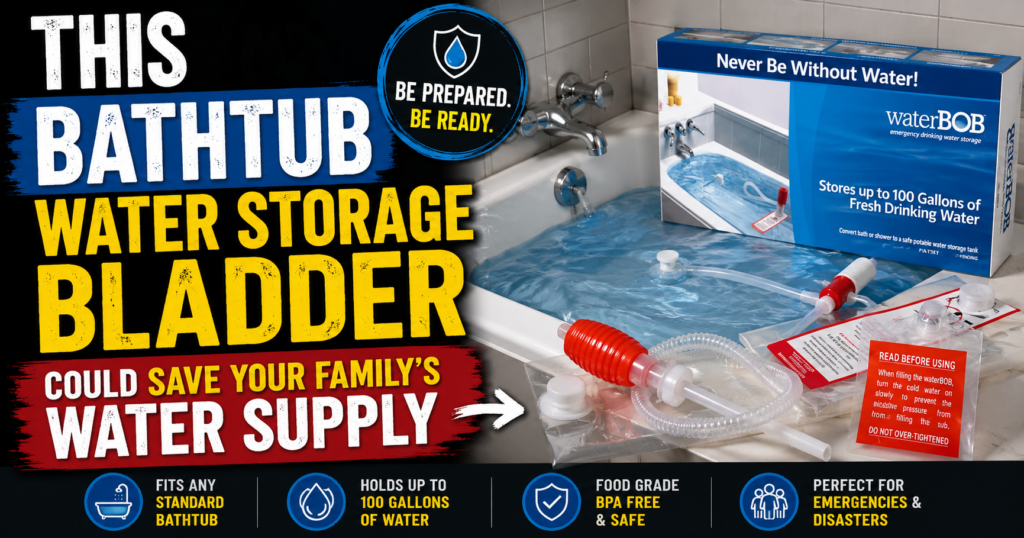
For families without room for huge permanent water tanks, this bathtub emergency water storage bladder is an interesting solution because it lets you temporarily turn unused bathtub space into substantial water storage.
For longer emergencies, I also like having portable filtration available.
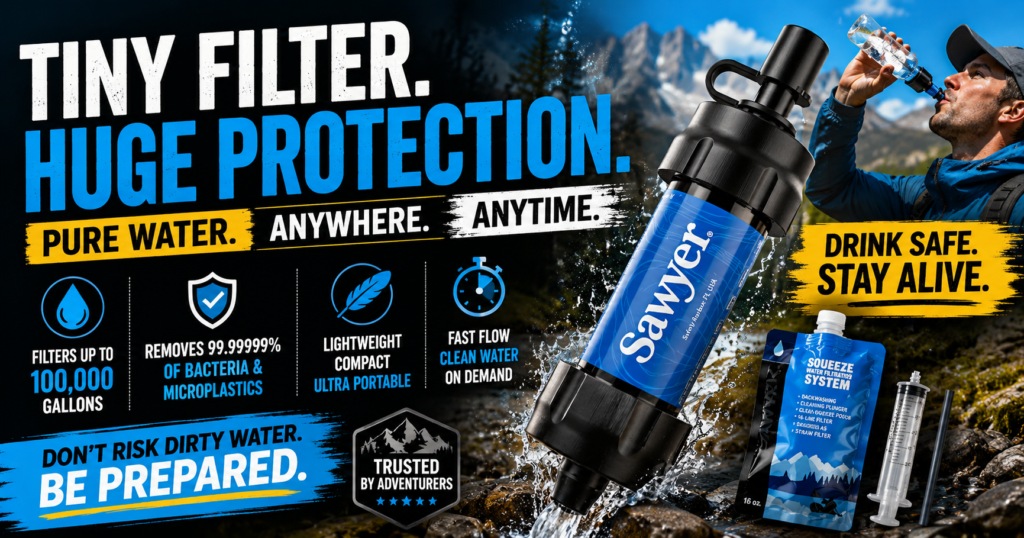
I’ve covered the tiny water filter I’d keep as a backup emergency option.
Again, layers.
Stored water first.
Filtration behind it.
Alternative sources behind that.
Backup Power Needs to Match What You’re Actually Trying to Run
This is where people can waste a lot of money.
They buy a generator because the box has a big wattage number on it.
That’s backwards.
I start by asking:
What do I actually need to keep running?
My priority list might include:
- Refrigerator or freezer
- Medical equipment
- Communications
- Selected lights
- Well pump, if applicable
- Limited heating equipment where safely supported
- Small electronics
Then I figure out what kind of backup power can realistically support those loads.
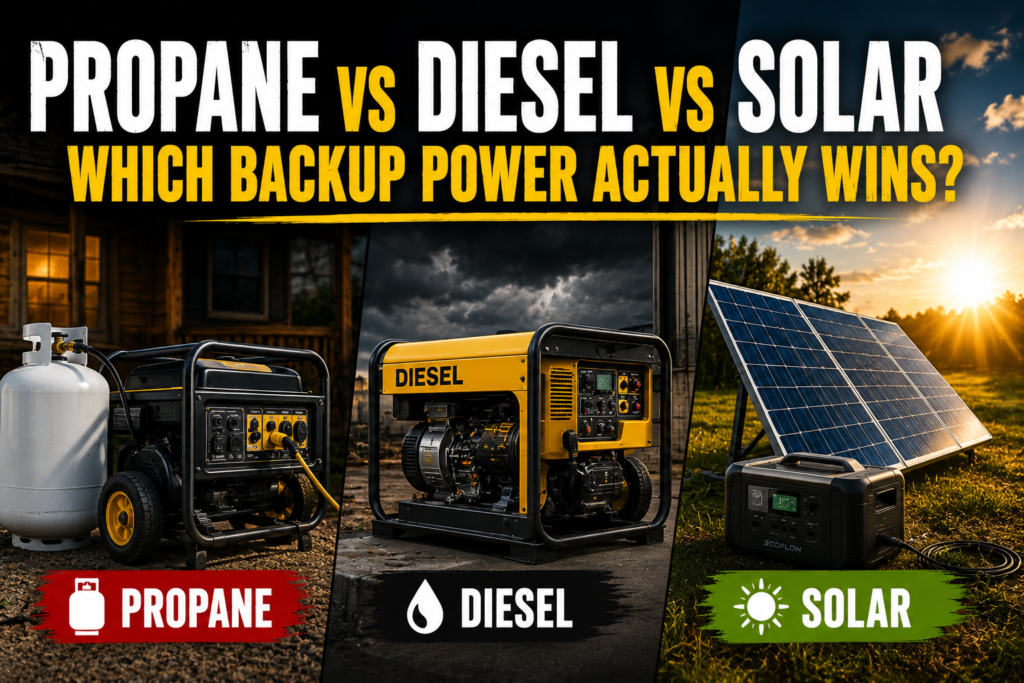
We’ve already compared propane, diesel, and solar backup power because each option solves a slightly different problem.
There isn’t one perfect answer for everybody.
A Portable Generator Can Change the Entire Situation
A generator can turn a miserable outage into a manageable one.
It may keep refrigerators cold, charge electronics, power lights, and support other essential equipment.
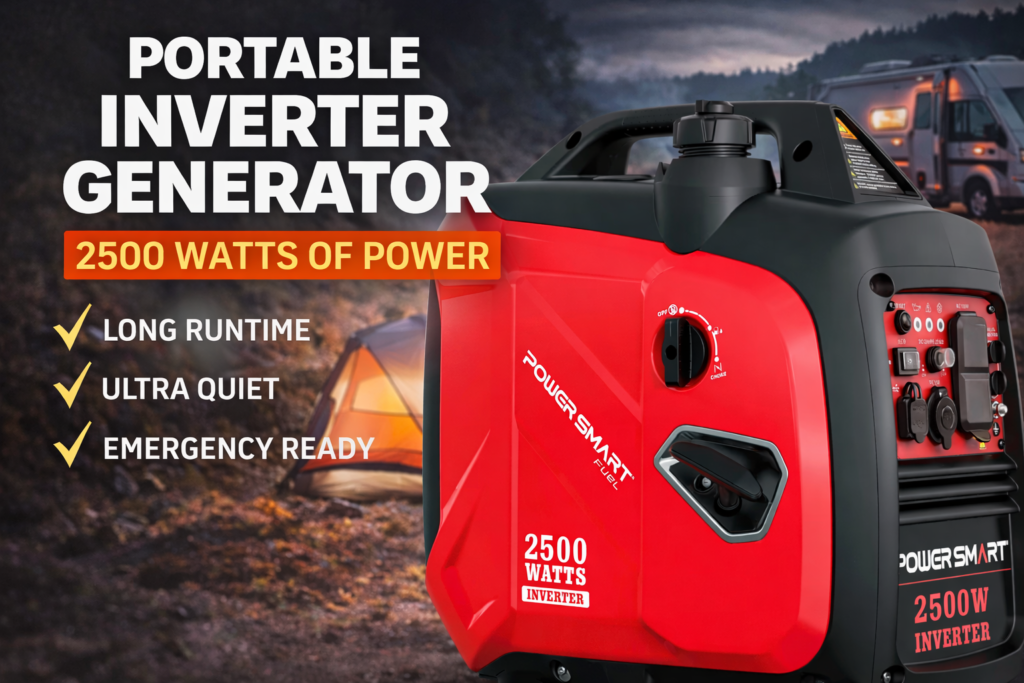
We’ve reviewed a portable generator built for outages and emergency backup power.
For someone building their first backup-power setup, I think that’s worth looking at before blindly buying the largest generator they can afford.
But owning a generator isn’t enough.
You need fuel.
You need extension cords or a properly installed transfer setup.
You need to understand electrical loads.
And above everything else, you need to understand carbon monoxide safety.
I Never Run a Generator Inside
Not in the house.
Not in the basement.
Not in an attached garage.
Not next to an open window.
Portable generators produce carbon monoxide, which can kill without giving you the kind of warning people expect.
I treat generator placement as seriously as the generator itself.
I also keep working carbon monoxide alarms in the house.
Backup electricity isn’t worth risking someone’s life.
Winter Power Outages Require a Different Plan
A summer blackout and a January blackout are not the same emergency.
When temperatures fall below freezing, heat becomes a survival issue.

We’ve already covered how I prepare for winter weather power outages as well as the must-have items I want available for winter outage survival.
For winter outages, I think in terms of retaining heat before trying to create more of it.
I close unused rooms.
I block drafts.
I layer clothing.
I use sleeping bags and blankets.
I concentrate the family into a smaller living area when necessary.
That makes whatever heat I do have much more effective.
Portable Heat Requires Respect
A portable heater can be incredibly useful.
It can also be dangerous when used incorrectly.
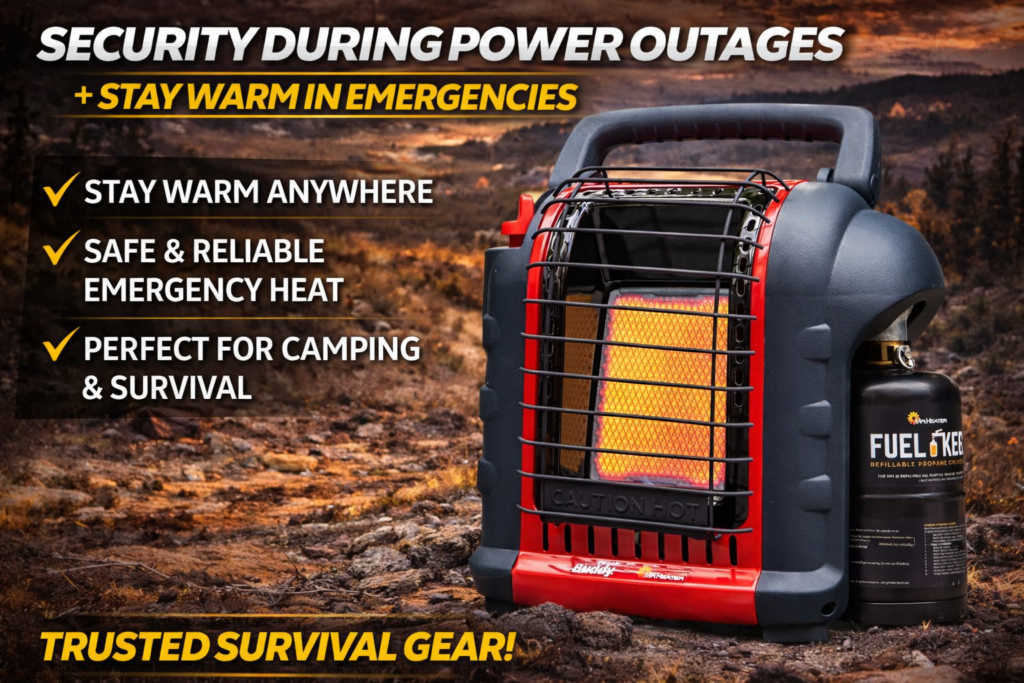
We’ve reviewed a portable heater designed for situations where staying warm really matters.
But I never treat combustion heaters casually.
Ventilation requirements, clearances, manufacturer instructions, carbon monoxide concerns, and fuel safety all matter.
If I don’t know whether a heater is approved for the environment I’m using it in, I don’t guess.
Summer Blackouts Have Their Own Risks
People tend to associate outages with freezing temperatures, but extreme heat can be just as serious.
Without air conditioning, indoor temperatures can rise quickly.
My summer outage strategy includes:
- Keeping blinds and curtains closed during the hottest part of the day
- Ventilating when outdoor conditions improve
- Staying hydrated
- Avoiding unnecessary physical work during peak heat
- Moving to a cooling center if indoor conditions become unsafe
Preparedness also means knowing when staying home is no longer the smart choice.
I Don’t Assume I Can Cook Normally
If your kitchen depends on electricity, a blackout can remove most of your normal cooking options instantly.
That’s why I want at least one safe backup method.
Outdoor cooking equipment can be extremely useful when used correctly.
Your setup might include a camp stove, grill, or another emergency cooking method designed for outdoor use.
The important part is practicing before the emergency.
The first time you use unfamiliar equipment shouldn’t be in the dark while everyone is hungry.
Keep Some Meals Simple
Not every emergency meal needs to be cooked.
That’s something I’ve learned to appreciate.
Sometimes the smartest meal during an outage is the one that requires no fuel, no cleanup, and almost no water.
Save fuel for when it actually matters.
Save water too.
Those resources become more valuable the longer an outage lasts.
First Aid Gets More Important When Normal Services Are Disrupted
A blackout doesn’t magically stop people from getting hurt.
Actually, unusual conditions can increase the risk.
People trip in dark rooms.
They cut themselves while working with unfamiliar equipment.
Storm cleanup creates injuries.
Generators, grills, heaters, and tools introduce additional hazards.
That’s why I keep a legitimate first aid kit available instead of a tiny box containing twelve adhesive bandages and a couple alcohol wipes.
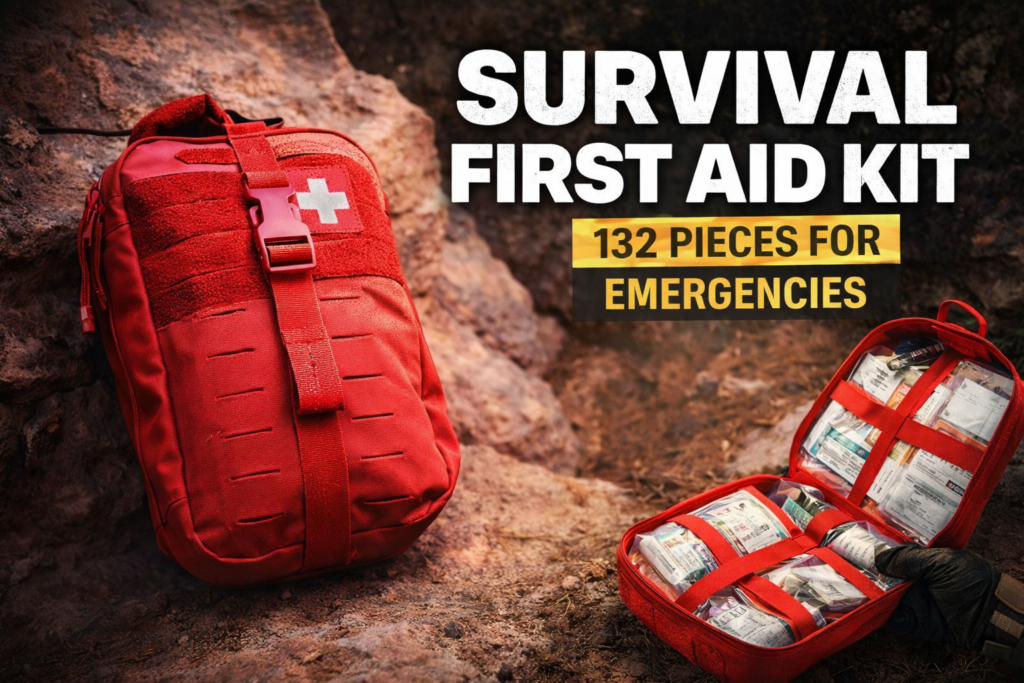
We’ve reviewed a first aid kit built to handle more serious emergencies.
I want supplies available before somebody needs them.
Know Where Everything Is Before Darkness Falls
Organization is underrated preparedness.
I don’t want emergency supplies scattered across six closets.
Everyone in the household should know where the basics are.
That includes:
- Flashlights
- Batteries
- First aid kit
- Emergency radio
- Water
- Food
- Power banks
- Generator equipment
- Fire extinguisher
- Important medications
If I’m the only person who knows where everything is, the household isn’t actually prepared.
Decide What You Will and Won’t Power
One mistake people make with generators is trying to recreate normal life.
That’s not my goal.
I’m not worried about powering every television and every appliance.
I prioritize.
Food preservation.
Communication.
Medical needs.
Lighting.
Water systems.
Necessary heating or cooling.
Everything else is secondary.
The less electricity I need, the longer my available fuel and stored energy last.
Fuel Is Part of the Generator
A generator without fuel is a very heavy piece of emergency decor.
If I depend on a fuel-powered generator, fuel planning is part of my preparedness plan.
That means thinking about:
- Safe fuel storage
- Fuel rotation
- Expected runtime
- Generator consumption
- Availability during widespread outages
I’ve also spent time looking at why diesel generators can outperform gasoline models in certain situations and why some people choose diesel for reliable backup power.
Different fuels have different tradeoffs.
I want to understand those tradeoffs before buying equipment.
Don’t Forget Cash
A prolonged power outage can affect payment systems.
Credit card terminals may not work.
ATMs may be unavailable.
Internet connections can fail.
I keep some emergency cash in small denominations for exactly this reason.
It’s not exciting survival gear.
It’s useful survival gear.
There’s a difference.
Think About Gas Stations Too
People often assume they can simply buy more gasoline after an outage starts.
Maybe.
Maybe not.
Gas stations need electricity to operate pumps and payment systems.
A widespread outage can create fuel shortages surprisingly quickly.
That’s another reason I don’t build a backup-power plan around unlimited access to fuel.
Prepare Your Vehicle Before the Storm
If severe weather is coming, I don’t wait until afterward to think about transportation.
I like having:
- Fuel in the vehicle
- Phone charging capability
- Basic emergency supplies
- Water
- Flashlight
- First aid supplies
A vehicle can become an important backup resource during a blackout.
But I don’t run a vehicle in a closed garage to charge devices or warm up.
Carbon monoxide remains a serious danger there too.
Decide When You Would Leave
Good preparedness isn’t stubbornness.
There are situations where leaving is safer than staying.
I think about evacuation triggers ahead of time.
Examples might include:
- Dangerous indoor temperatures
- Medical equipment losing power
- Running out of safe water
- Structural storm damage
- Flooding
- Unsafe heating conditions
I don’t want to make that decision for the first time while everyone is stressed.
What I Keep Ready for a Typical Multi-Day Blackout
If I were starting from scratch today, my basic setup would include:
- Several days of drinking water
- Shelf-stable food
- Manual can opener
- Flashlights
- Lanterns
- Spare batteries
- Power banks
- Emergency radio
- First aid kit
- Essential medications
- Backup cooking method
- Carbon monoxide alarms
- Fire extinguisher
- Blankets and sleeping bags
- Generator or another appropriate backup-power source
- Safe fuel supply where applicable
- Basic hygiene supplies
- Emergency cash
- Printed emergency contacts
- A written family plan
If I’m preparing for something much larger than a normal outage, I move beyond that basic list and into the strategy covered in my grid-down survival guide for families who actually want to be ready.
Practice Before You Need Any of This
This may be the most overlooked part of preparedness.
Gear isn’t enough.
I want to know:
Can I start the generator?
Can everyone find a flashlight?
Does the radio work?
Are the power banks charged?
Can I prepare food without the electric stove?
Do I know how much fuel I actually have?
Does my family know what to do?
I would rather discover a weakness on a normal Saturday afternoon than at 11:30 at night during an ice storm.
My Rule Is Simple: Make the House Work Without the Grid
That’s ultimately what power-outage preparedness means to me.
I’m not trying to recreate every convenience of normal life.
I’m trying to maintain the essentials.
Safe water.
Food.
Warmth or cooling.
Communication.
Lighting.
Medical needs.
Sanitation.
Security.
If I can keep those things functioning, a blackout becomes much easier to manage.
And once those basics are covered, I can start improving the system one layer at a time.
Build the Plan Before the Lights Go Out
The worst time to figure out your emergency power plan is after your house goes dark.
I would much rather spend an ordinary weekend charging batteries, checking supplies, testing equipment, and fixing weak spots than spend the first night of a blackout wondering what I forgot.
You don’t need to buy everything at once.
Start with water.
Then lighting.
Then communication.
Then food.
Prepared Before the Switch Ever Flips
The way I look at blackout preparedness is pretty simple: I don’t need my house to operate normally when the grid goes down. I need the important parts of life to keep working.
I want safe drinking water. I want to protect the food I’ve already paid for. I want dependable light after dark, a way to receive emergency information, enough battery power to communicate, safe ways to handle heating or cooling, and a realistic backup-power plan.
That’s a much better goal than buying random emergency gear and hoping it all comes together when the lights go out.
I also don’t try to build everything at once. I improve one weak point at a time. If water is the weakness, I fix water. If I can’t keep phones charged, I fix charging. If I own a generator but haven’t thought through fuel, cords, loads, carbon monoxide, and safe operation, then I don’t consider the generator problem solved yet.
The real test isn’t how much survival gear I own.
It’s whether my family can still safely function when the electrical grid isn’t doing the work for us.
That’s the standard I use when I prepare, and it’s the standard I’ll keep using throughout this power-outage series.
About the Author
Caleb Mercer writes about blackout preparedness, backup power, emergency communications, and practical household resilience for Survive Essentials. His approach focuses on breaking emergencies into real problems families can prepare for ahead of time, rather than collecting gear without a plan. Read more practical preparedness guides in the Survive Essentials Power Outages and Backup Power section.