When the power goes out, my phone immediately becomes more important than it was five minutes earlier.
I’m using it to check the outage map, watch the weather, receive emergency alerts, communicate with family, and find out whether power is expected back tonight or three days from now.
That’s exactly when I don’t want to waste the battery.
I’ve found that keeping a phone alive during a blackout really comes down to two things: use less power and have more than one way to recharge it.
I don’t wait until the battery hits 8% to start figuring that out.
The First Thing I Do Is Stop Wasting Battery
My first move costs nothing.
I change how I use the phone.
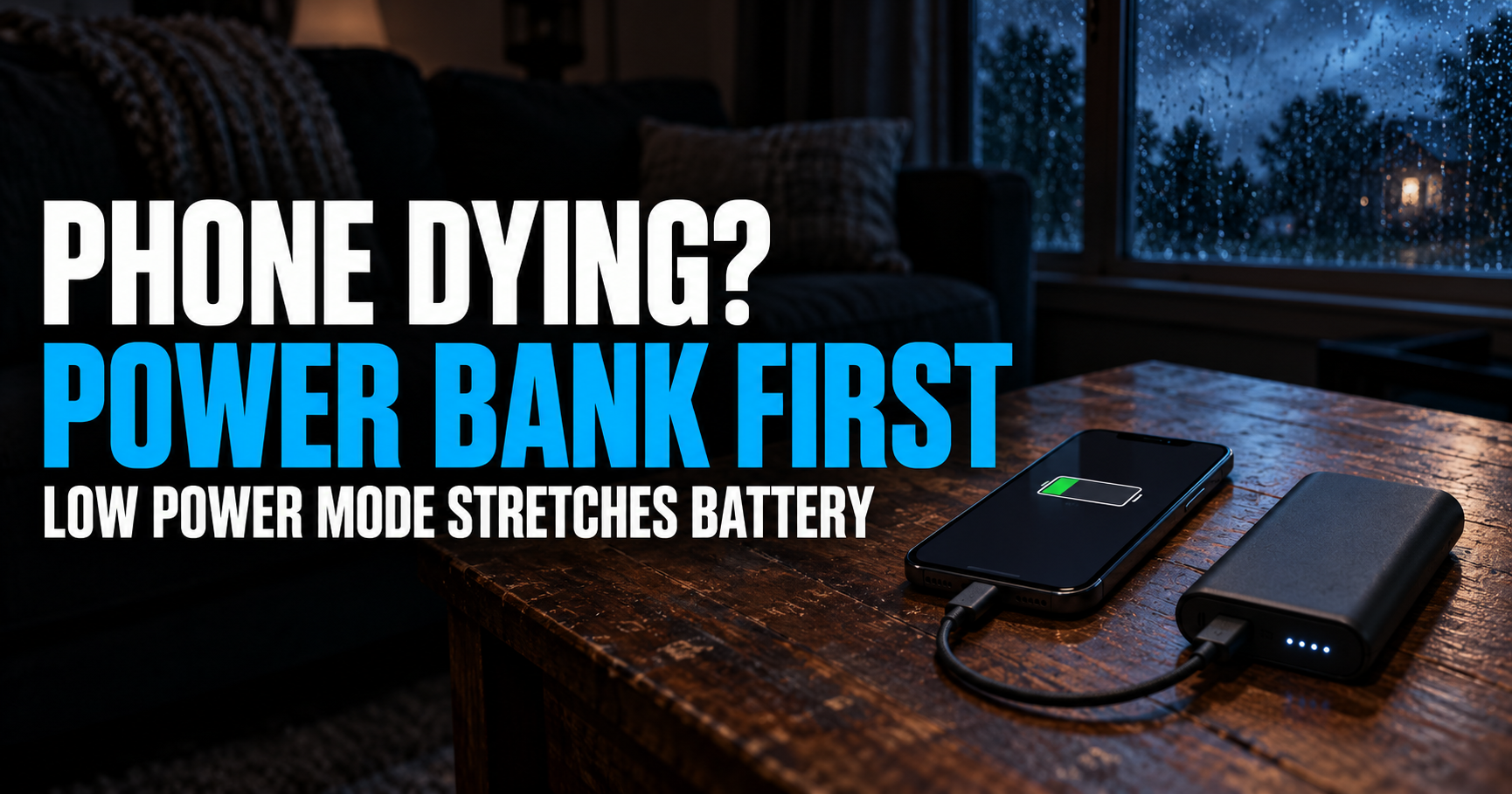
I turn on low-power or battery-saving mode.
I lower the screen brightness.
I shorten the screen timeout.
I stop watching videos.
I close anything I don’t need.
If cellular reception is terrible and the phone is constantly searching for a signal, I’ll pay attention to that too because poor service can chew through battery surprisingly fast.
The goal changes during an outage.
My phone isn’t entertainment anymore.
It’s emergency equipment.

I Don’t Keep Checking the Outage Map Every Two Minutes
I’ve caught myself doing this.
Power goes out.
Check outage map.
Five minutes later, check again.
Then check the weather.
Then social media.
Then the utility page again.
Before long, I’ve burned a noticeable chunk of battery and learned almost nothing new.
Once I know what’s happening, I back off.
If the utility says crews are assessing the outage, staring at the page isn’t going to make them work faster.
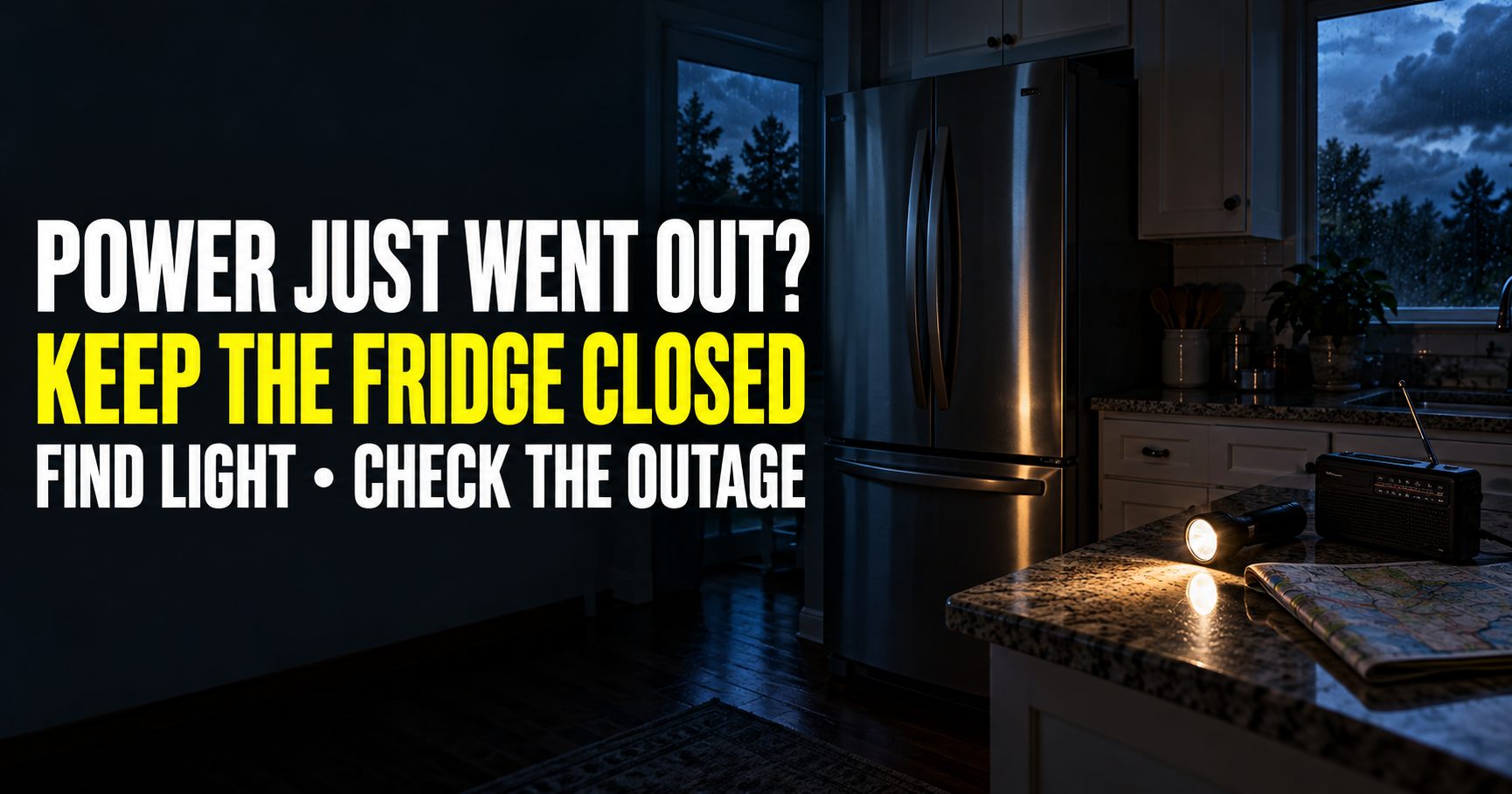
This is one of the habits I follow in my first-hour routine after the power goes out.
Texting Usually Makes More Sense Than Long Phone Calls
If I’m simply telling family that we’re okay, I don’t need a 25-minute phone conversation.
A short text gets the job done.
Something as simple as:
“Power is out here. We’re okay. I’ll update you if anything changes.”
Now everybody knows what they need to know.
I save longer calls for situations where they’re actually necessary.
A Charged Power Bank Is My Easiest Backup
If I could pick one simple phone-charging backup for an ordinary household, I’d start with a power bank.
There’s no engine to start.
No fuel.
No extension cord.
No noise.
I plug the phone in and charge it.
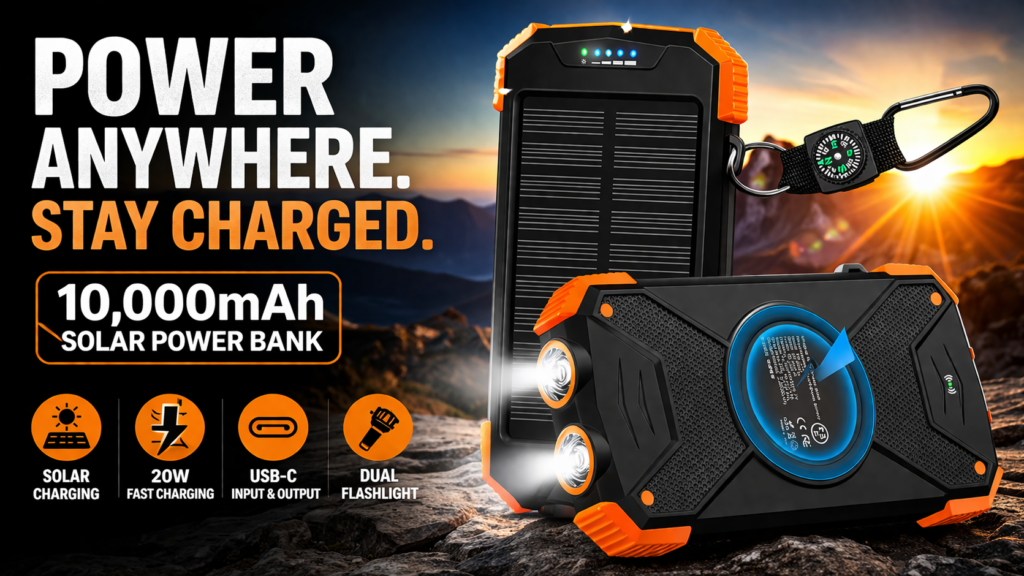
That’s why I’ve already covered the portable solar power bank I keep in mind for emergency phone charging.
It’s a 10,000mAh portable battery with USB-C charging, wireless charging capability, solar backup charging, and built-in lights.
For me, the battery itself is the main attraction.
The solar feature is a backup.
I would rather begin an outage with the power bank already fully charged than depend on a small built-in solar panel to refill an empty battery quickly.
Want a Simple Charging Backup Before the Next Blackout?
I like having a power bank ready because it solves the most immediate problem without starting a generator or vehicle.
Check the solar power bank I recommend for emergency phone charging
I keep this kind of gear charged before bad weather instead of discovering it’s empty after the lights go out.

I Charge Everything Before the Storm, Not During It
If severe weather is forecast, I treat electricity like something I may not have tomorrow.
I charge:
- Phones
- Power banks
- Rechargeable flashlights
- Tablets I may use
- Emergency radios with rechargeable batteries
- Other important rechargeable equipment
It’s free preparation while the grid is still working.
Waiting until the storm is overhead wastes the easiest charging opportunity I’m going to get.
I Keep an Emergency Radio Separate From My Phone
This is important because I don’t want my smartphone doing every job.
If I’m using my phone for weather alerts, news, radio, communication, lighting, maps, and entertainment, I’m burning through the same battery for everything.
I’d rather move some of those jobs to dedicated equipment.
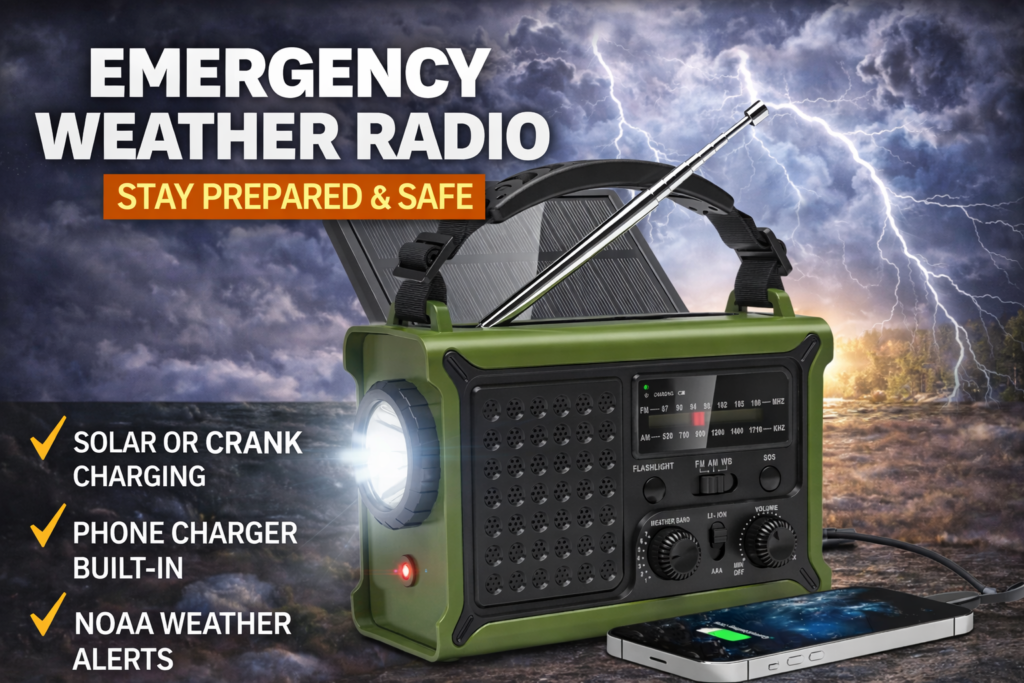
That’s one reason I like this emergency radio for outages and severe weather.
The emergency radio we’ve covered has its own rechargeable battery, weather-radio capability, flashlight, SOS function, solar charging, and hand-crank charging.
That gives me another communication tool without constantly draining my phone.


My Car Is Another Charging Option
If the power bank starts getting low, a vehicle can provide another way to charge a phone.
But I use some common sense here.
If the vehicle needs to run while charging, I move it outdoors.
I never sit in a closed garage with an engine running just because I need 40% more battery on my phone.
Carbon monoxide is invisible and odorless.
Phone charging isn’t worth that risk.
I also don’t want to waste half a tank of gasoline casually charging phones during a widespread outage.
Fuel may become much harder to replace than electricity.
I Treat My Vehicle’s Fuel Like Another Battery
This is the way I think about it.
During a widespread blackout, gasoline isn’t just transportation fuel anymore.
It may be:
- Transportation
- Emergency evacuation range
- Phone charging
- A source of heat or cooling in certain emergency situations
- Access to supplies
So I don’t idle a vehicle unnecessarily.
If I already need to drive somewhere, that’s an excellent opportunity to charge phones and power banks.
That’s much more efficient than starting the vehicle solely to charge one phone whenever possible.


A Generator Works, but I Don’t Start One Just for a Phone
Could I charge my phone from a generator?
Absolutely.
Would I start a gasoline generator solely because my iPhone dropped to 63%?
No.
If I’m already running backup power for the refrigerator, freezer, well pump, or other important loads, I’ll take advantage of it and recharge small electronics too.

We’ve covered the portable generator I use as an example for emergency backup power.
I like grouping charging tasks together while the generator is running.
Phones.
Power banks.
Rechargeable flashlights.
Emergency radio.
Then I can shut the generator back down when the larger loads no longer need it.
That stretches fuel much further.
I Never Run the Generator Indoors
This rule doesn’t change because I’m only charging electronics.
Portable generators stay outside.
Not in my basement.
Not in an attached garage.
Not on an enclosed porch.
Not right beside an open window.
Carbon monoxide can turn a manageable blackout into a deadly emergency.
I also want working carbon monoxide alarms with battery backup inside the home whenever I’m using fuel-burning equipment around the property.
I Use Airplane Mode When I Really Need to Stretch the Battery
Airplane mode can make a big difference when I’m trying to preserve the last part of a charge.
Obviously, I can’t receive normal cellular calls and messages while it’s enabled.

So I use it strategically.
If everyone important knows we’re okay and I’m trying to make 20% battery survive overnight, I may put the phone into airplane mode for stretches of time.
Then I’ll reconnect periodically to check:
- Emergency information
- Weather
- Utility updates
- Important messages
I don’t need the phone searching for cellular service continuously while I’m asleep.
Weak Cell Service Changes My Strategy
This is something people don’t always consider.
Major storms can damage communications infrastructure too.
If my phone is sitting on one weak bar and constantly struggling to maintain a connection, battery usage can increase.
At that point, repeatedly refreshing apps becomes even more wasteful.
I check what I need, communicate what matters, and conserve.
This is another reason I don’t rely entirely on a smartphone for emergency information.
I Download Useful Information Before the Power Goes Out
A fully charged phone isn’t as useful if everything I need requires an internet connection that no longer works.
Before severe weather, I like having important information available offline where possible.
That might include:
- Important phone numbers
- Family contact information
- Screenshots of useful information
- Local maps
- Insurance information
- Medical information
- Emergency plans
I also keep important phone numbers written down somewhere.
If my phone gets damaged, knowing somebody’s number only because it’s saved under “Mom” doesn’t help much.
I Don’t Use My Phone as a Flashlight All Night
The flashlight on a smartphone is convenient.
It’s also using the same battery I need for communication.
For walking across the room once, fine.
For lighting the house for hours?
I’d rather use an actual flashlight or lantern.
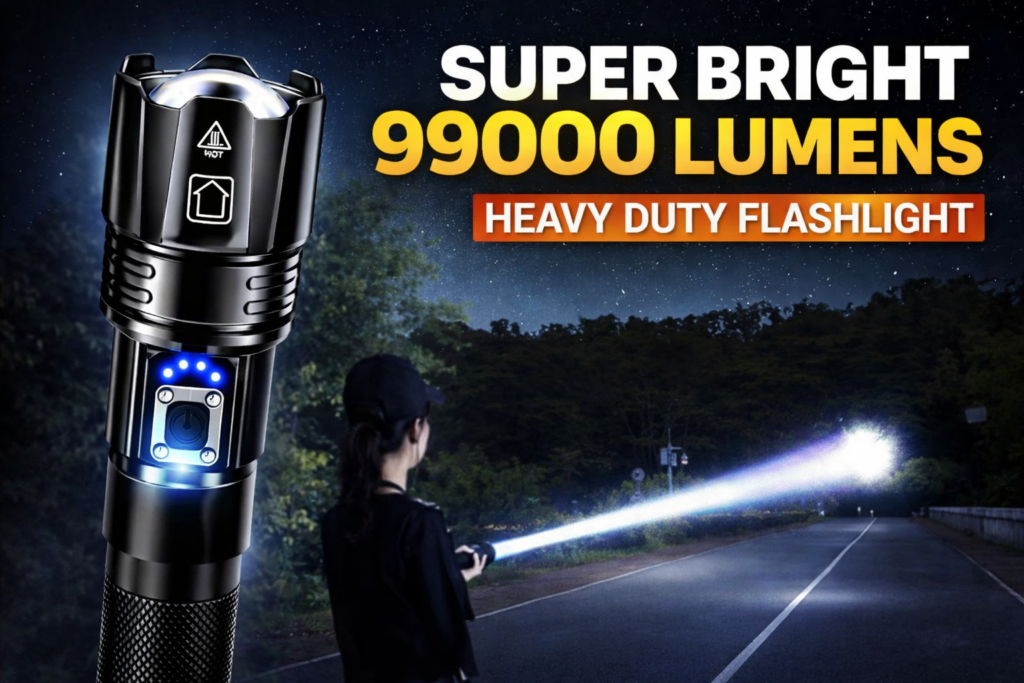
We’ve already reviewed the rechargeable flashlight I like for emergency use.
Dedicated lighting lets my phone stay a phone.
That separation becomes more valuable the longer the outage lasts.
I Change the Charging Strategy as the Outage Gets Longer
A two-hour outage doesn’t require the same setup as a three-day blackout.
For a Short Outage
I mostly conserve the phone’s existing battery.
There’s often no reason to charge it immediately.
For an Overnight Outage
I start using the power bank as needed.
I make sure I still have enough battery for the morning.
For a Multi-Day Outage
Now I’m thinking about an actual charging cycle.
I may use:
- Power banks
- Vehicle charging
- Generator power while it’s already running
- Solar charging where practical
I don’t want to drain every backup source on day one.
I Rotate Power Instead of Draining Everything
If I have two power banks, I don’t necessarily run both down simultaneously.
I like knowing one still has power.
Same idea with phones.
If two adults are in the house, both phones don’t necessarily need to sit at 100% continuously.
One may become the primary device for checking updates while the other remains mostly unused and charged.
That gives us redundancy.
If one phone gets damaged, lost, or drained, communication isn’t gone.
I Think About the Kids’ Devices Differently
During a long outage, a tablet can actually be useful for keeping children occupied.
But entertainment devices come after communication equipment.
I don’t drain the last power bank charging a tablet while both adults’ phones are nearly dead.
If I know bad weather is coming, I’ll download movies, games, books, or other offline entertainment and charge the tablet beforehand.
Then it’s available without needing Wi-Fi.
Again, preparation before the outage saves power during it.
Home Internet May Go Down Even If the Router Has Power
This surprises people.
Putting the router on backup power doesn’t guarantee the internet will continue working indefinitely.
Your home equipment is only one piece of the network.
Provider equipment outside your home can also lose power or service.
So I don’t build my emergency communication plan around having Wi-Fi.
If it works, great.
If it doesn’t, I still have cellular communication and an emergency radio.
Medical Devices Come Before Convenience Charging
This is where priorities become serious.
If someone in my household depends on electrically powered medical equipment, that equipment gets its own backup plan.
I don’t assume a little phone power bank is going to solve a medical-power problem.
I want to know:
- How much power the device requires
- How long backup batteries last
- What backup-power equipment is compatible
- Where we can go if power cannot be maintained
- Who needs to be contacted before an emergency
Phone charging matters.
Medical power can be life-critical.
Those aren’t the same priority.
I Keep Charging Gear Together
There’s nothing worse than having a fully charged power bank and not being able to find the right cable.
So I keep the basics together.
My phone charging kit includes things like:
- Power bank
- USB-C cable
- Any phone-specific cable we need
- Vehicle charger
- Wall charger for when generator or utility power becomes available
- Necessary adapters
It doesn’t need to be complicated.
It needs to be complete.
I Check My Power Banks Regularly
A power bank sitting untouched in a drawer isn’t something I blindly trust forever.
I periodically check it.
I make sure it still charges.
I inspect it for damage.
If a lithium battery is swelling, cracked, leaking, getting abnormally hot, or otherwise damaged, I don’t continue using it like nothing happened.
Emergency gear needs occasional attention just like everything else.
Solar Charging Is Useful, but I Keep My Expectations Realistic
I like solar because sunlight doesn’t require gasoline.
But I also don’t pretend every tiny solar panel is a magic unlimited electricity source.
A small panel attached to a portable power bank can provide useful backup charging, but sunlight, panel size, orientation, weather, and charging efficiency all matter.
That’s why I want the power bank charged before the outage.
Solar is another layer.
It’s not my excuse for starting with an empty battery.
My Simple Phone Power Plan
I don’t make this complicated.
Before bad weather:
- Charge every phone.
- Charge every power bank.
- Charge the emergency radio.
- Charge rechargeable flashlights.
- Put the vehicle charger where I can find it.
- Download anything useful for offline access.
After the power goes out:
- Turn on battery saver.
- Reduce screen brightness.
- Stop unnecessary scrolling.
- Text instead of making long calls when appropriate.
- Use dedicated flashlights instead of the phone light.
- Use a power bank before wasting generator fuel.
- Charge from the vehicle when it makes sense and only with the vehicle safely outdoors if it must run.
- Recharge everything when the generator is already running.
- Keep at least one backup charging source in reserve.
That’s enough to make a phone last dramatically longer than someone using it normally.
The Goal Is Communication, Not a Full Battery Icon
I don’t need my phone sitting at 100% throughout an outage.
I need it working when I need it.
That’s an important difference.
I’d rather have a phone at 42% and two charged backup options than a phone at 100% and nothing left behind it.
That’s how I approach the rest of my long-blackout preparedness plan too.
I don’t depend on one solution.
I build layers.
Keep the Phone Alive Before You Need It Most
A dead phone during a normal afternoon is annoying.
A dead phone during a severe storm and widespread blackout can cut me off from weather alerts, utility updates, family, and emergency communication at exactly the wrong time.
That’s why I treat charging equipment as preparedness gear.
I don’t need an elaborate setup to get started.
A charged phone, a dependable power bank, an emergency radio, a vehicle charger, and smart battery use already give me several layers of protection.
The important part is having them ready before the lights go out.
About the Author
Caleb Mercer writes about blackout preparedness, backup power, emergency communications, and keeping everyday households functioning when utilities fail. His work for the Survive Essentials Power Outages and Backup Power sectionfocuses on practical systems families can actually use during storms and extended outages rather than equipment that sits forgotten until an emergency.