When my power goes out during freezing weather, a propane heater can look like the perfect solution.
It doesn’t need grid electricity.
Propane stores well.
A relatively small heater can put out a surprising amount of heat.
But I don’t bring just any propane heater into my house and fire it up.
That’s the distinction I think gets lost when people ask whether propane heaters are safe indoors.
Some propane heaters are specifically designed and listed by their manufacturers for certain indoor uses. Others are not.
I start there.
I look at the exact heater I own, read its instructions, check where I’m legally allowed to use it, provide the ventilation it requires, keep combustible materials away from it, and make sure I have working carbon monoxide alarms.
If I can’t do those things, I find another way to stay warm.
I Never Assume “Propane Heater” Means “Indoor Heater”
This is my first rule.
There are all kinds of propane-burning equipment.
Construction heaters.
Patio heaters.
Tank-top heaters.
Camp stoves.
Grills.
Portable radiant heaters.
They aren’t interchangeable.
Something burning propane does not automatically become safe inside my living room because the furnace stopped working.
I specifically look for a heater whose manufacturer says it is intended for the environment where I plan to use it.
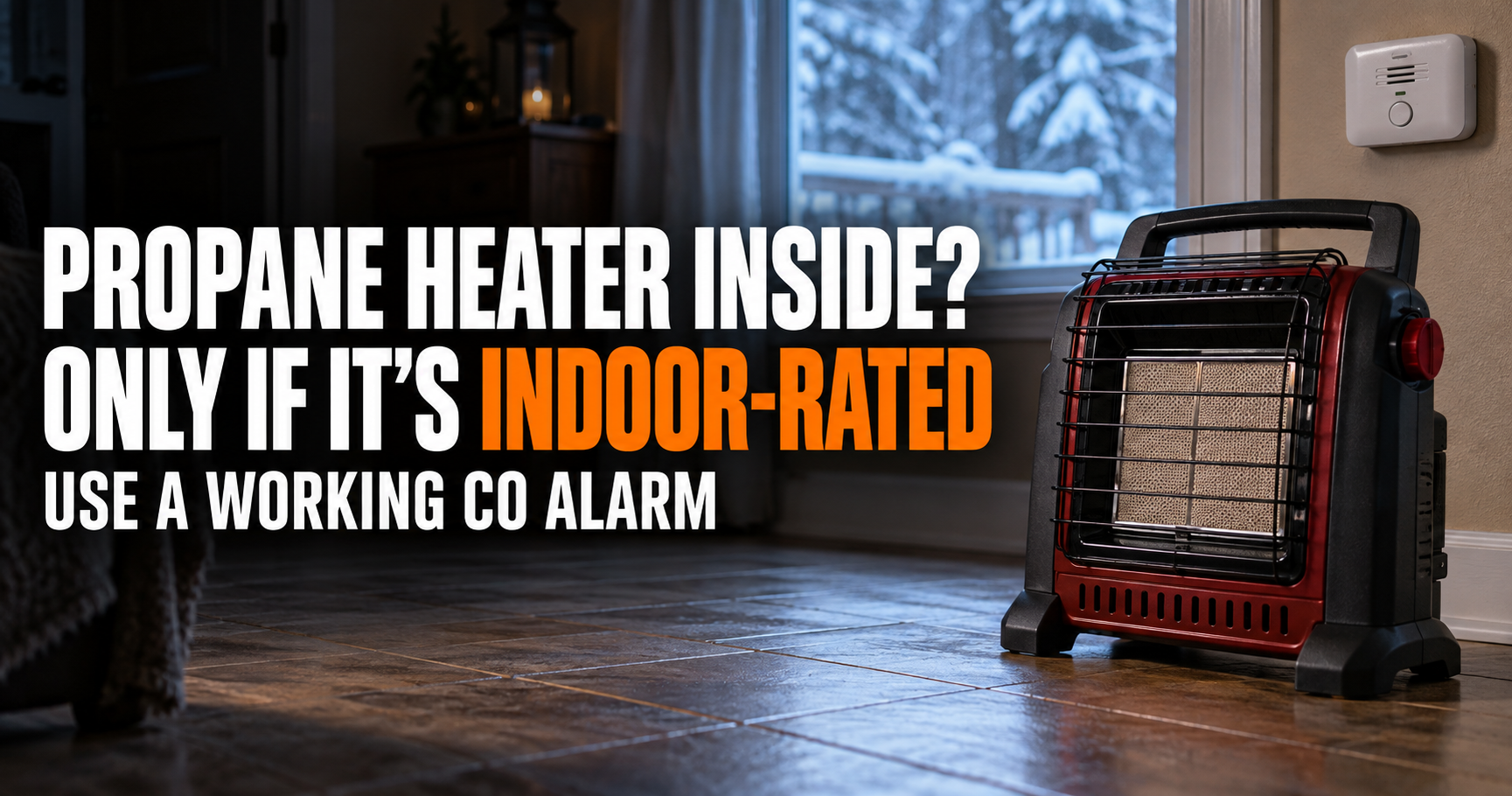
That’s one reason the Portable Buddy heater we’ve featured on Survive Essentials interests me.
The manufacturer lists the U.S. Portable Buddy MH9BX as an indoor-safe radiant propane heater, subject to its operating instructions and restrictions.
That’s very different from dragging an outdoor propane heater inside.
The Portable Buddy Is the Type of Heater I’m Talking About
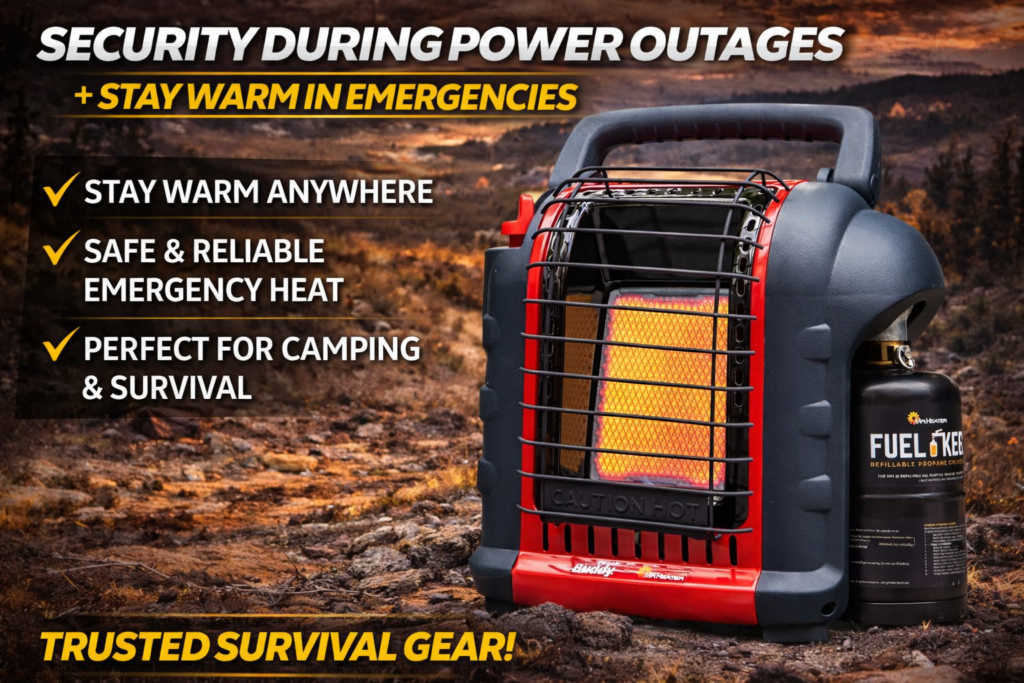
The portable heater we’ve already covered for emergency warmth is a 9,000 BTU Portable Buddy radiant propane heater.
The U.S. version has two heat settings:
- 4,000 BTU
- 9,000 BTU
It’s designed to heat a relatively small area rather than an entire large house.
That’s exactly how I approach emergency heat anyway.
I don’t need every room at normal thermostat temperature.
I need a manageable space where my family can stay warm.
The Propane Heater I’d Consider for a Winter Blackout
If I wanted a portable backup heater specifically for emergency use, this is the model we’ve been using throughout our winter-preparedness setup.
Check the 9,000 BTU Portable Buddy Heater on Amazon
Before using one indoors, I would still read the current manual for the exact model I received. I never treat a product link as a substitute for the manufacturer’s safety instructions.
Why I Like a Smaller Warm Room
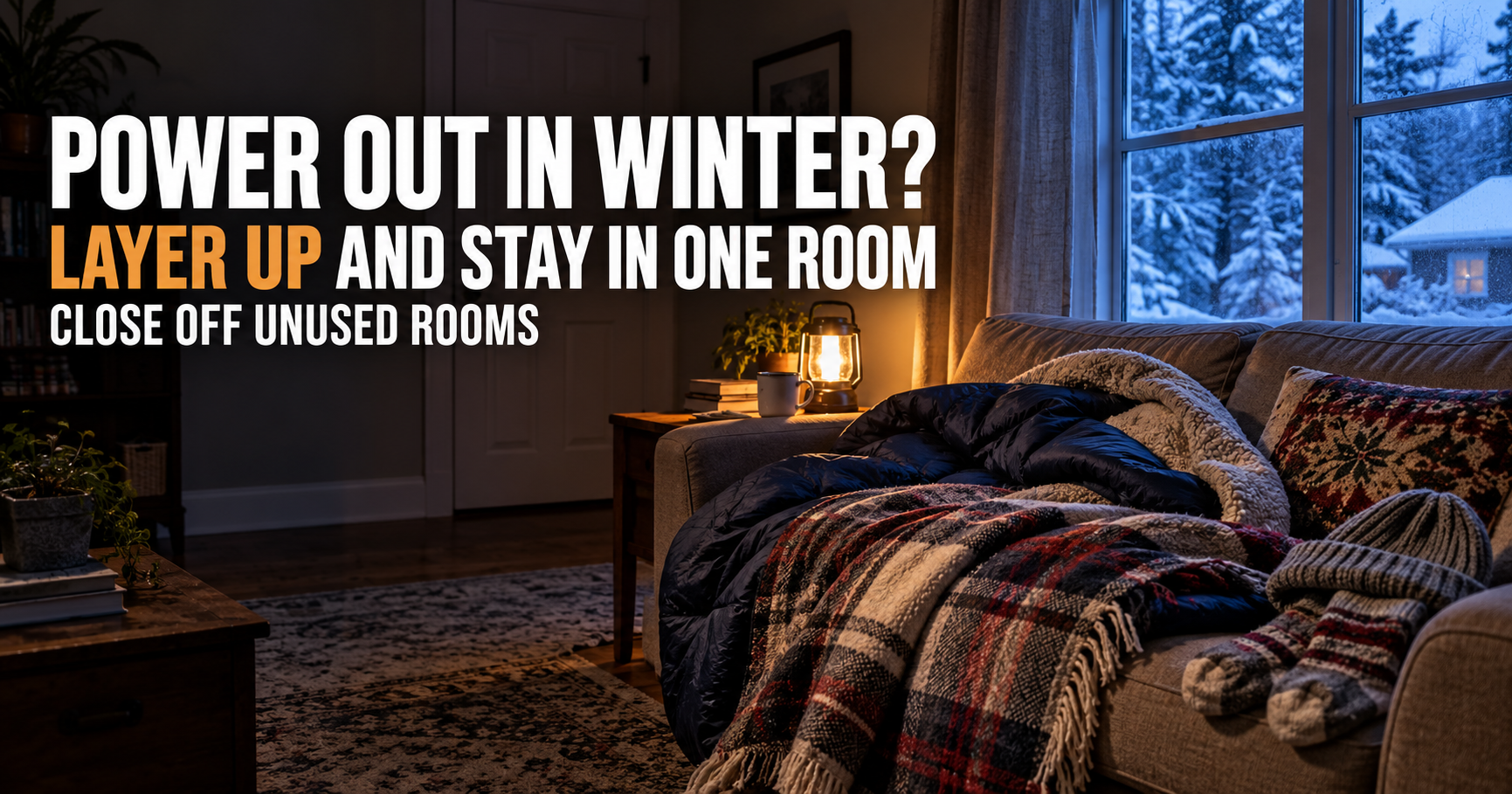
This connects directly with how I stay warm when the power goes out in winter.
My first strategy isn’t producing enormous amounts of heat.
It’s reducing how much space I need to keep comfortable.
I close unnecessary rooms.
Everyone gathers in one practical living area.
We put on warm layers.
We use blankets and sleeping bags.
We reduce drafts.
Then a portable heater doesn’t have to fight the heat loss from the entire house.
I’m asking it to help maintain one occupied area.
That’s a much more realistic job.
Indoor-Rated Does Not Mean I Ignore Ventilation
This is probably the most important point in this entire article.
A heater being listed for indoor use doesn’t mean I seal the room completely and forget about fresh air.
Combustion uses oxygen.
The manufacturer’s instructions for my exact heater determine the ventilation requirements I follow.
The Portable Buddy includes an Oxygen Depletion Sensor, commonly called an ODS, which is designed to shut the heater down if oxygen becomes too low.
That’s a useful safety feature.
I don’t treat it as permission to ignore ventilation.
Safety systems are backups.
They aren’t replacements for using the heater correctly.


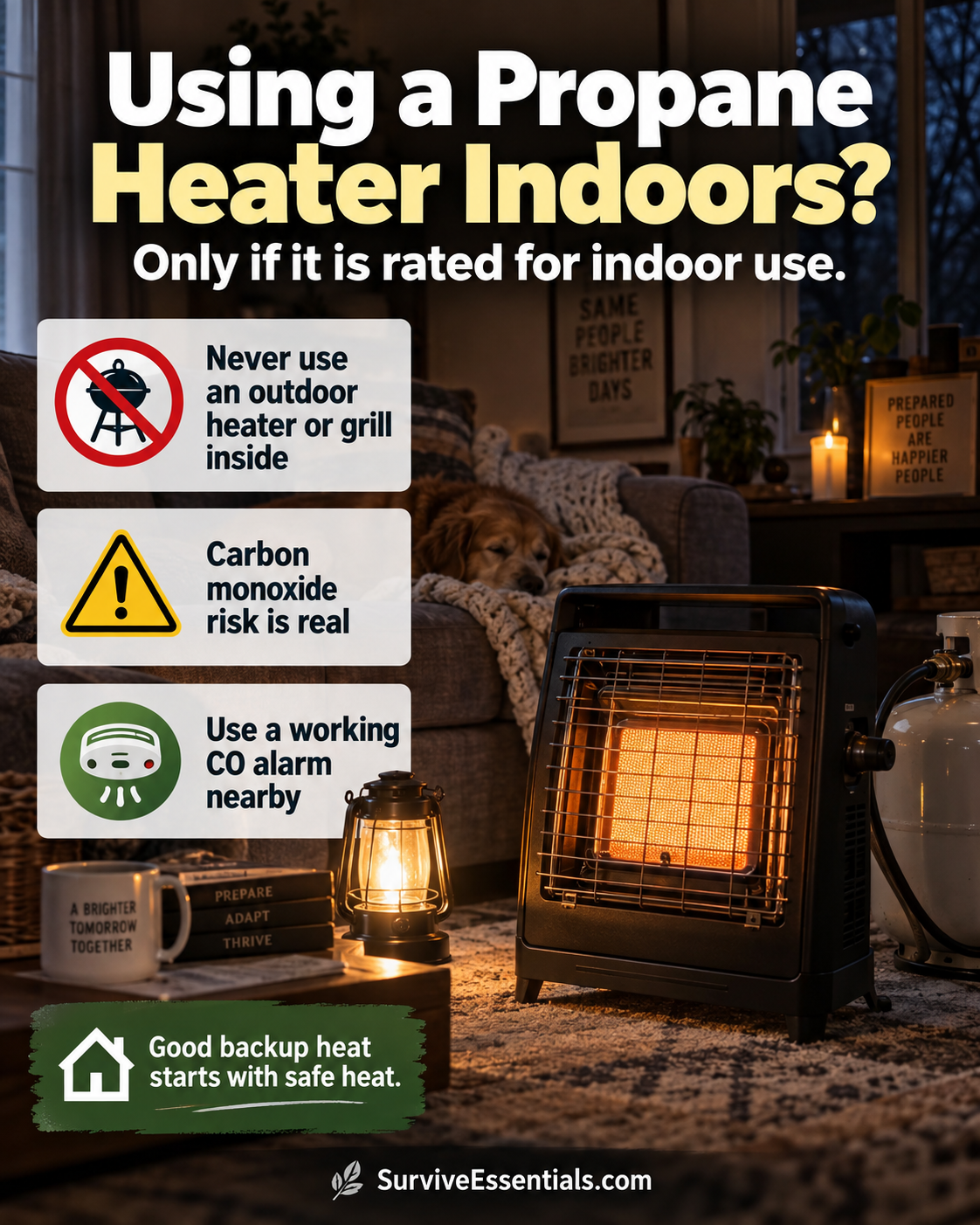
I Still Use a Carbon Monoxide Alarm
I would not operate a fuel-burning emergency heater in my house without working carbon monoxide detection.
Carbon monoxide is especially dangerous because I can’t rely on smell or sight to detect it.
Symptoms can include things like headache, dizziness, weakness, nausea, vomiting, chest pain, and confusion.
Those symptoms can also be easy to dismiss during a stressful winter emergency.
Maybe I’m tired.
Maybe I haven’t eaten.
Maybe I’ve been clearing snow.
That’s exactly why I don’t rely on how I feel.
I rely on proper heater use and working alarms.
I Want the CO Alarm Working When the Grid Isn’t
This sounds obvious, but we’re talking about using the heater specifically because the electricity is off.
So my carbon monoxide protection can’t depend entirely on utility power.
I want battery-powered CO alarms or alarms with functioning battery backup.
I test them before winter.
Not after the furnace quits.
I Don’t Put the Heater Right Beside the Couch
Radiant heaters get hot.
That’s the point.
So I create space around mine.
I don’t surround it with:
- Blankets
- Sleeping bags
- Clothing
- Curtains
- Paper
- Furniture
- Kids’ toys
- Other combustible materials
The exact clearance requirements come from the heater manufacturer, and I follow those.
I don’t eyeball it and decide something “looks far enough away.”
I Keep It Out of the Main Walking Path
This matters more during a blackout than during normal conditions.
The house may be dim.
Kids may be moving around.
People are carrying flashlights and blankets.
Pets don’t understand why there’s suddenly a hot appliance sitting in the room.
So I position the heater somewhere stable where people aren’t constantly walking past it.
The Portable Buddy includes a tip-over shutoff.
Again, that’s a useful backup.
My first defense is putting the heater somewhere it isn’t likely to get knocked over.

I Never Leave It Unattended
If the heater is burning, I know it’s burning.
I don’t turn it on and leave the house.
I don’t set it up in one room and forget about it for half the day.
I periodically check the heater, fuel connection, surrounding area, room conditions, and alarms.
Portable emergency heat deserves attention.
I Don’t Sleep With the Portable Buddy Running
This is one of the biggest practical rules I’d establish before a winter emergency.
The Portable Buddy owner’s guidance warns against operating the heater while sleeping.
So I don’t build my overnight survival plan around leaving it burning beside everyone for eight hours while we’re unconscious.
Instead, my sleeping strategy relies heavily on retaining heat.
Warm clothing.
Sleeping bags.
Blankets.
Insulation underneath us.
A smaller occupied space.
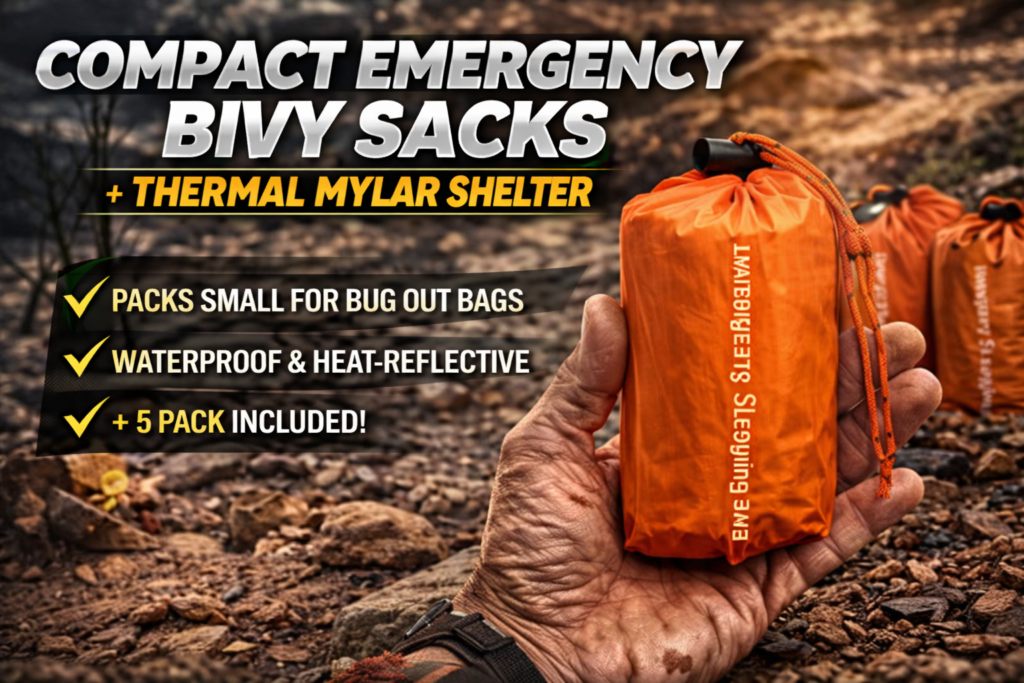
That’s why I consider emergency sleeping bags another layer of the winter plan rather than assuming a heater solves everything.
I Don’t Use the Heater for Cooking
This is another shortcut I avoid.
A Buddy heater is a heater.
I don’t add some random third-party cooking attachment and turn it into a stove.
I don’t put pans on it.
I don’t warm food on it.
I don’t improvise accessories that weren’t approved for the heater.
Emergency equipment works best when I use it for the job it was designed to do.
We’ll deal with cooking during a blackout separately in this cluster.
I Keep Propane Connections Simple
The Portable Buddy can operate from a small propane cylinder, and compatible setups may allow connection to larger propane supplies using the appropriate equipment.
I don’t improvise fuel fittings.
I use the components approved for the heater and configuration.
If a hose, regulator, or filter is required for a particular setup, I use the correct one.
A blackout isn’t when I start experimenting with propane plumbing.
I Check for the Smell of Propane
Propane has an odorant added so leaks can be detected.
If I smell gas, I don’t shrug and keep trying to light the heater.
I stop.
I don’t create sparks or ignition sources.
I follow the manufacturer’s leak and emergency procedures.
A heater that’s giving me reason to suspect a fuel leak is no longer my source of emergency heat.
It’s a problem I need to deal with safely.
I Don’t Store a Pile of Propane Cylinders Beside the Heater
Having backup fuel is smart.
Keeping unnecessary fuel containers beside a hot operating appliance isn’t how I store it.
I follow the cylinder manufacturer’s storage instructions and local requirements.
My emergency heating plan includes fuel storage before the outage starts.
I don’t wait until I’m cold to start figuring out where propane should go.
I Calculate How Much Fuel I Actually Have
This is where preparedness becomes real.
Owning a heater isn’t enough.
I need fuel.
If I’m planning for a multi-day winter outage, I want some idea of how quickly my heater consumes propane at the settings I expect to use.
That lets me estimate whether I have:
A few hours of backup heat.
One day.
Several days.
There’s a huge difference.
I don’t want a three-day winter preparedness plan built around six hours worth of propane.
I Use the Lower Setting When It Does the Job
More heat isn’t automatically better.
If the lower setting keeps our occupied area comfortable, I don’t necessarily need maximum output.
Lower fuel consumption can extend my emergency supply.
That’s another advantage of concentrating everyone in a smaller warm room and reducing drafts first.
The less heat I lose, the less propane I need to burn replacing it.
I Don’t Try to Heat the Whole House With One Portable Heater
That’s not the job I’m giving it.
My goal is maintaining a safe occupied area.
If I’m trying to force one small portable heater to warm several thousand square feet during freezing weather, I’m setting myself up for disappointment.
Instead, I use layers:
- Close unused rooms
- Reduce drafts
- Dress warmly
- Use sleeping bags and blankets
- Concentrate everyone in a smaller area
- Add safe supplemental heat
The heater supports the plan.
It isn’t the entire plan.
I Keep a Fire Extinguisher Accessible
Any time I’m adding a fuel-burning heat source to an emergency situation, I want basic fire protection nearby.
Not buried behind Christmas decorations in the garage.
Accessible.
I also want working smoke alarms.
A winter blackout already gives me enough problems.
I don’t want to add a house fire.
I Don’t Use an Outdoor Patio Heater Indoors
This deserves its own section because the equipment can look similar enough to confuse people.
An outdoor propane heater stays outdoors.
A propane grill stays outdoors.
A camp stove designed for outdoor cooking stays outdoors.
I don’t decide that opening a window converts outdoor equipment into an indoor heater.
I follow the product’s intended use.
I Don’t Use My Gas Oven to Heat the House Either
This is another tempting shortcut.
If the gas stove works, people may think:
“Why not just leave the oven open?”
Because that’s not what it’s designed to do.
I use cooking appliances for cooking.
I use properly designed heating equipment for heating.
Simple rules become especially valuable during emergencies.
I Treat Generator Heat Differently
If I have enough generator capacity, electricity may allow me to operate certain heating equipment or parts of my normal heating system.
But electric resistance heat can require substantial power.
I don’t plug a giant electric heater into a small generator without doing the math.
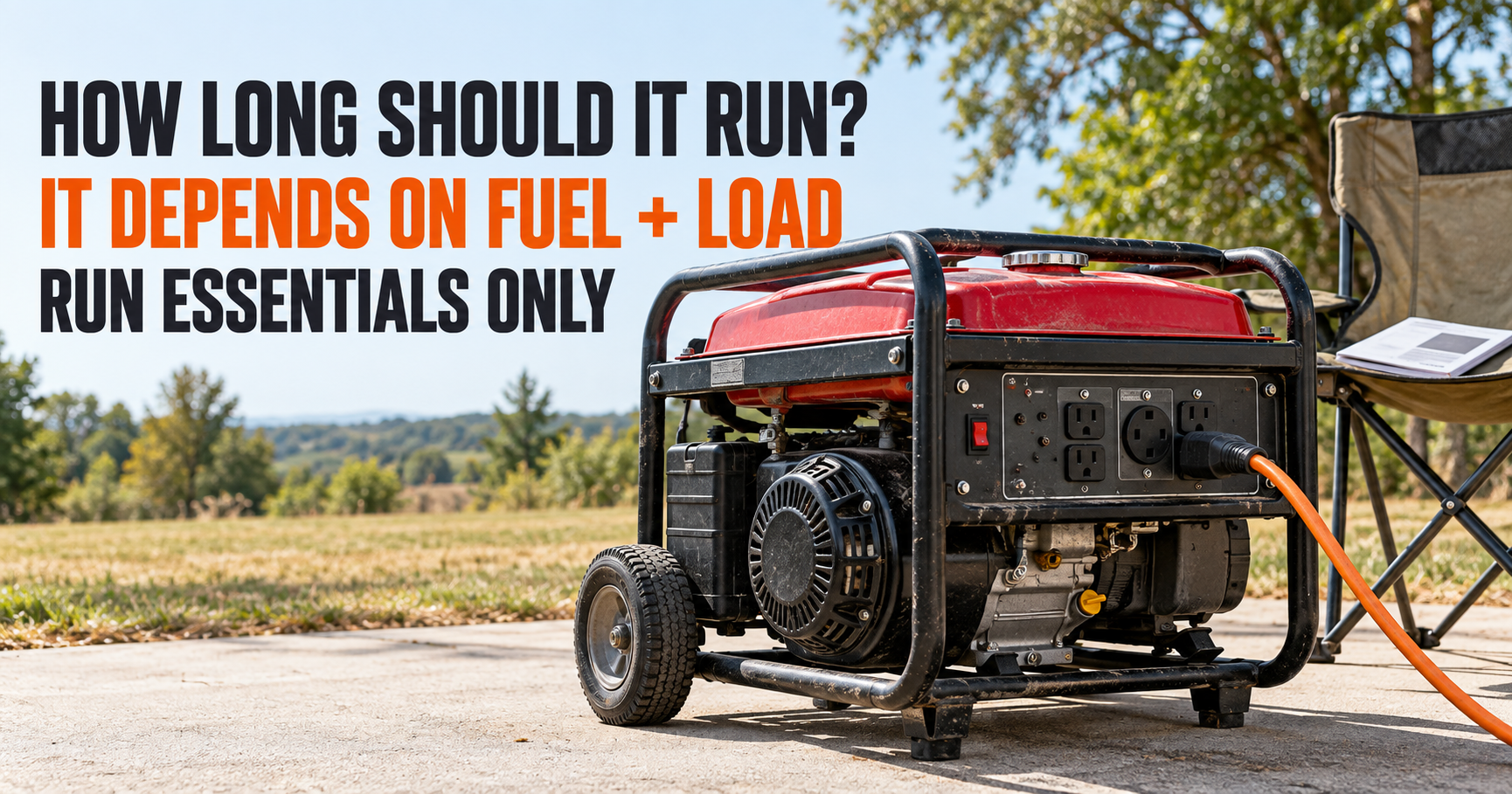
I’ve already covered how I manage generator runtime during a blackout and how far I keep a portable generator from my house.
The generator remains outside even when it’s bitterly cold.
I don’t solve one carbon monoxide problem by creating another.
I Pay Attention to Local Restrictions
This is another reason I don’t make blanket statements that every Portable Buddy can be used everywhere.
Rules can vary.
The manufacturer specifically notes restrictions for certain locations.
So I check the instructions and rules applicable where I live.
That’s a step people often skip when they see the words “indoor safe” on a product listing.
I Have a Backup Plan if the Heater Stops
This matters.
The heater might fail.
The propane could run out.
The ODS could shut the heater down.
Conditions could make continued use impractical.
That’s why I don’t allow everyone to depend entirely on it.
I still have:
Warm clothes.
Blankets.
Sleeping bags.
A warm-room strategy.
Emergency communication.
A vehicle ready if appropriate.
A destination where we can go if the house becomes unsafe.
Preparedness means having another move.
I Don’t Defeat the Safety Shutoffs
If a heater keeps shutting down, I don’t start modifying safety equipment to force it to keep running.
A shutdown is information.
Something may be wrong.
Maybe there’s an oxygen issue.
Maybe the unit tipped.
Maybe the heater needs service.
Whatever the reason, defeating a safety system isn’t my solution.
When I Stop Trying to Heat the House
There is a point where I leave.
If I can’t maintain a safe indoor temperature, my backup heat isn’t working, fuel is running out, someone is becoming dangerously cold, or I have another safety concern, I stop treating staying home as the goal.
The goal is keeping people safe.
Sometimes that means relocating to:
- Family
- Friends
- A warming center
- A hotel
- Another safe heated location
Survival isn’t winning a contest to see who can remain in the coldest house longest.
The Heater Is Most Valuable Before I’m Desperate
That’s why I want one before the storm.
I can read the manual.
Test the heater.
Learn how to connect the fuel.
Test my CO alarms.
Decide where the heater will sit.
Determine ventilation requirements.
Figure out how much propane I want available.
That’s a completely different experience from opening a brand-new heater box by flashlight while the house is already 45°F.
Build the Heat Plan Before Winter Tests It
If a portable propane heater fits your blackout plan, I like having one ready before temperatures become dangerous.
The Portable Buddy we’ve been discussing provides up to 9,000 BTU of radiant heat and includes an oxygen-depletion shutoff and tip-over safety shutoff.
See the Portable Buddy heater we’re using in this winter preparedness setup
I still use it only according to the instructions for the exact model and location.
Safe Heat Beats More Heat
That’s the principle I come back to.
During a freezing blackout, it’s easy to become focused on one thing:
Get warm.
I understand that.
But I don’t solve cold by creating a carbon monoxide, propane, burn, or fire emergency.
I reduce heat loss first.
I concentrate everyone into a manageable space.
I dress for the conditions.
I use sleeping equipment.
Then, if I’m using supplemental propane heat, I use equipment specifically intended for that purpose and follow its instructions.
A portable propane heater can be an incredibly useful part of a winter blackout plan.
I just don’t let the word “emergency” become an excuse to ignore the safety rules that make it useful in the first place.
About the Author
Caleb Mercer writes about winter blackout preparedness, backup heat, generators, emergency communications, and practical ways to keep a household functioning when utilities fail. His work for the Survive Essentials Power Outages and Backup Power section focuses on building backup systems families can understand and safely use before severe weather turns them into necessities.