A sump pump is one of the last things I want to discover my generator can’t start.
The timing couldn’t be worse.
Heavy rain fills the sump pit. The same storm knocks out the electricity. I roll out the generator, connect the pump, and then the generator overloads the instant the sump motor tries to start.
That’s why I don’t size a generator for a sump pump using horsepower alone.
And I definitely don’t look at an 800-watt running load and assume an 1,000-watt generator has me covered.
The number that can make or break the whole setup is starting power.
The Short Answer
For many residential sump pumps, I’m generally looking somewhere in the 2,000 to 4,000-watt generator range when the sump pump is the main load.
But that’s a planning range, not a universal answer.
Current sizing references put many common 1/3 HP pumps around 600 to 900 running watts with substantially higher startup demand, while many 1/2 HP pumps land around 800 to 1,050 running watts with startup requirements that can reach roughly 2,200 to 3,000 watts. Actual pumps vary enough that the pump nameplate and manufacturer data should control the decision.
That’s why my real answer is:
Check the actual pump first, then size the generator.

I Don’t Size It by Horsepower Alone
Horsepower is useful for understanding roughly what class of pump I own.
It doesn’t tell me everything about its electrical demand.
Here’s a great real-world example.
Zoeller publishes specifications for one 1/3 HP model showing 6.8 amps at 115 volts with 9 amps of inrush current. Its 1/2 HP model in the same document is rated at 8.8 amps with 17.9 amps of inrush current.
That tells me something important.
Going from 1/3 HP to 1/2 HP doesn’t simply mean adding 50% more generator.
The motor’s starting behavior can change considerably.
I Look for Four Numbers on My Pump
Before buying anything, I try to find:
- Voltage
- Running amperage
- Starting or inrush amperage
- Horsepower
If the manufacturer publishes running and starting wattage directly, even better.
Sometimes it doesn’t.
That’s where people start multiplying volts by amps and calling the result watts.
For basic generator planning, that can provide a useful upper electrical-demand estimate, but with an AC motor it is more technically accurate to treat volts × amps as volt-amperes, not automatically exact real watts. Current pump data illustrates why generic watt estimates can vary so much.
For me, the bigger point is simpler:
I want enough generator to start the motor comfortably.
Let’s Use a Real Pump Instead of an Imaginary One
Consider Zoeller’s M53.
The manufacturer lists it at:
0.30 HP
115 volts
9.7 amps.
Multiplying 115 × 9.7 gives roughly 1,116 VA as an upper running-demand figure based on nameplate amperage.
That alone tells me I wouldn’t want a tiny 1,000-watt generator protecting this basement.
But starting is the bigger question.
Published third-party technical comparisons using M53 data put its momentary startup demand around 3,000 VA.
Now my generator decision looks completely different.
That’s exactly why I don’t size from running power alone.


Starting Surge Is the Number That Gets People
A sump pump sits idle most of the time.
Then the float rises.
The motor starts.
For a brief moment, the generator gets hit with the motor’s startup demand.
Once the motor is turning, the electrical demand settles down.
So I need a generator that can do two things:
Handle the short startup surge
and
supply the normal running load afterward.
A generator that passes the second test but fails the first one isn’t useful for my sump pump.
Why Generic Sump-Pump Charts Don’t Always Agree
If you’ve searched this already, you’ve probably noticed wildly different numbers.
One site says a 1/3 HP sump pump needs 1,300 starting watts.
Another says 1,800.
Another says 2,500.
Another pump may approach 3,000.
That doesn’t necessarily mean everybody is lying.
Actual motor designs differ.
For example, one recent comparison found 1/3 HP pumps with rated current ranging from about 3.65 amps to 9.5 ampsdepending on the model.
That’s an enormous difference for two pumps carrying the same basic horsepower label.
So I use generic charts for rough planning.
I use my actual pump for the final decision.
What Generator Would I Consider for a 1/3 HP Pump?
If my particular 1/3 HP pump has relatively modest startup demand and I’m powering only the sump pump, a 2,000-watt-class generator may sometimes be enough.
But I wouldn’t buy one solely because the pump says 1/3 HP.
I’d verify the starting requirement first.
Current sizing references generally put 1/3 HP pumps somewhere around 600 to 900 watts running and roughly 1,800 to 2,500 watts starting, while actual models can fall outside that range.
If the pump is approaching the upper end of that startup range, I want more generator.
Headroom matters.
What About a 1/2 HP Sump Pump?
This is where I’d generally start looking higher.
Many 1/2 HP pumps fall around 800 to 1,050 watts while running, with startup demands that can approach 2,200 to 3,000 watts in common planning estimates.
Zoeller’s own specifications show how meaningful that surge can be. Its 1/2 HP model 1096 is rated at 8.8 amps normally and 17.9 amps inrush at 115 volts.
That’s why a 3,000 to 4,000-watt generator starts making much more sense to me for many 1/2 HP setups, especially if I’m not dedicating the generator exclusively to the pump.



A 3/4 HP Pump Pushes Me Higher Again
A larger pump usually means I’m dealing with either more water, greater pumping requirements, or both.
Current sizing references put many 3/4 HP sump pumps around 1,000 to 1,400 running watts, with startup demand potentially around 3,000 to 4,000 watts.
Again, actual pump data wins.
But if I have a 3/4 HP sump pump, I’m not shopping for the smallest possible inverter generator and hoping it works.
Then I Add Everything Else I Want to Run
This is where generator sizing becomes much more realistic.
During an actual storm outage, I probably don’t want electricity only in the basement.
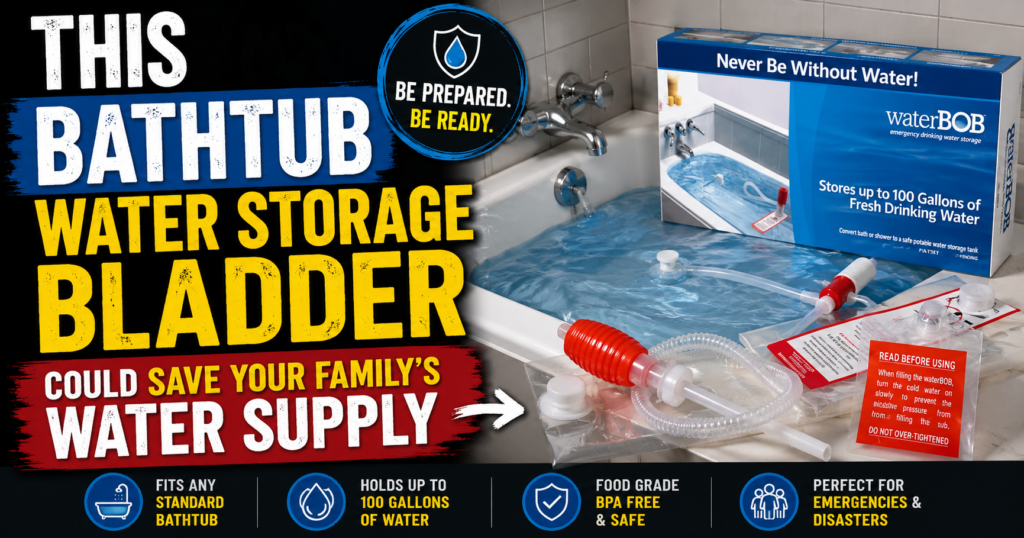
I may also want:
- Refrigerator
- Freezer
- Furnace blower
- Emergency lights
- Phone charging
- Well pump
- Other essential equipment
Now I have to account for the combined running load and motor starting surges.
That’s why a generator that is plenty large enough for the sump pump alone can become undersized once the rest of the house gets involved.

I Don’t Add Every Startup Number Together
This is an important distinction.
I don’t automatically assume every motor in the house will start at the exact same millisecond.
A useful planning approach is to add the running loads I expect simultaneously, then account for the largest additional startup surge likely to occur.
For example, one current sizing scenario uses:
Sump pump: 800 running watts
Refrigerator: 200 running watts
Furnace blower: 600 running watts
Lighting and charging: 250 watts
That’s about 1,850 watts of running load before considering the additional motor-starting demand. The modeled peak reaches roughly 3,450 watts when the largest surge is added.
Now a 2,000-watt generator clearly isn’t the same solution it was when the sump pump was the only load.
I Can Also Stagger Loads
I don’t necessarily need everything operating simultaneously.
This is one of the easiest ways to make a modest generator more useful.
If my sump pump is cycling heavily during a storm, it gets priority.
I may temporarily avoid running another large motor load.
Once the pit is under control, I can cool the refrigerator or handle another task.
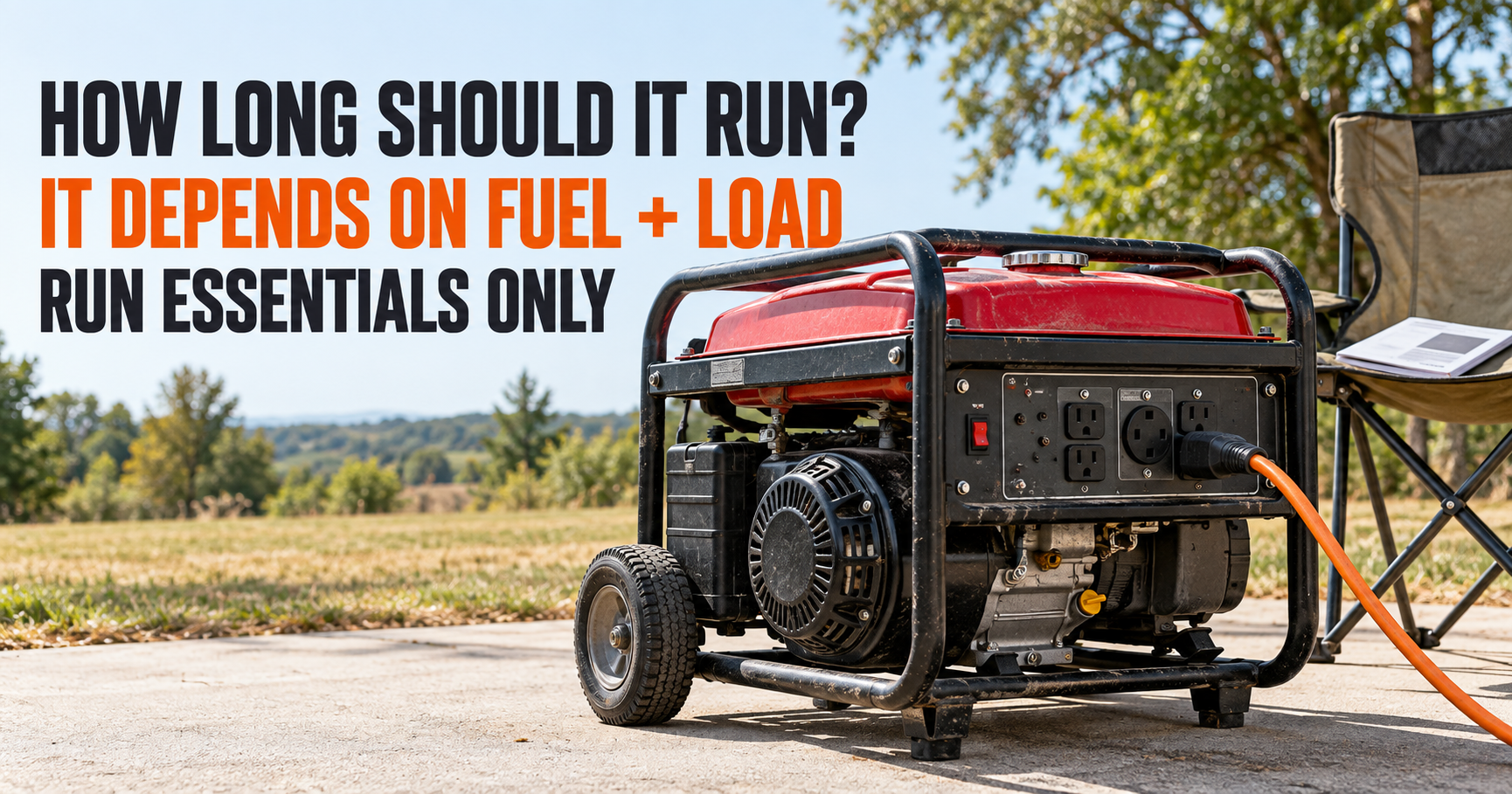
I’ve already covered this broader strategy in how long I run a generator during a power outage.
Generator management matters almost as much as generator size.
What About Our 2,500-Watt PowerSmart Generator?
This is where I want to be especially careful.
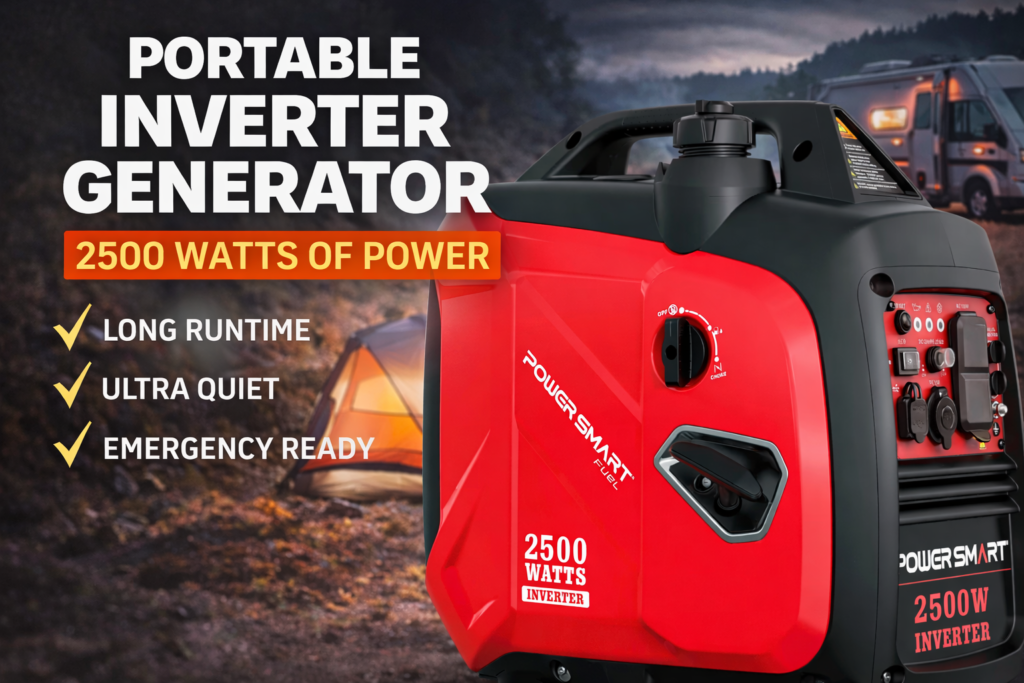
We’ve been using the PowerSmart portable inverter generator throughout this power-outage cluster.
Could a 2,500-watt-class generator run a sump pump?
Yes, some sump pumps.
Would I promise that it will run every 1/3 HP or 1/2 HP sump pump?
Absolutely not.
The actual pump startup demand determines that.
For a pump with a modest surge and few other connected loads, it may be a great fit.
For a pump approaching a 3,000-watt starting demand, it’s clearly not where I’d want to be.
The 2,500-Watt Generator We’ve Been Using
If your pump’s actual starting and running requirements fit within its specifications with comfortable headroom, this is the portable inverter generator we’ve been using throughout our outage planning.
Check the PowerSmart 2500-watt inverter generator on Amazon
I would check the pump first and buy the generator second.
I Leave More Generator Headroom Than the Math Says I Need
Once I’ve calculated the sump pump and the other equipment I expect to run, I don’t buy a generator that lands exactly on that number.
If my estimated peak load is 3,400 watts, a generator with exactly 3,400 watts of peak capability isn’t what I’d choose.
I want breathing room.
That helps account for real-world variables such as motor startup, additional small loads, equipment differences, and something getting plugged in that I hadn’t planned for.
It also means I’m not asking the generator to live at its limit every time the sump pump starts.
Running Watts and Starting Watts on the Generator Matter Too
Generator specifications usually give me at least two important numbers.
Starting or peak watts are the higher output the generator can provide briefly.
Running or rated watts are what it can supply continuously.
I need both numbers to work with my plan.
A generator might advertise 4,000 watts prominently on the box, but if that’s its peak output and its continuous rating is considerably lower, I need to know that.
I compare:
Pump running demand → generator rated output
and
Pump startup demand → generator surge capability
Then I account for everything else connected.
I Don’t Forget That the Sump Pump May Start at the Worst Possible Time
This is why headroom matters so much.
Maybe the generator is already running the refrigerator.
The furnace blower is on.
Several batteries are charging.
Then the sump float rises.
The pump motor tries to start.
That’s when the generator experiences the extra demand.
If I’ve sized everything right to the edge, that’s exactly when I could trip an overload and lose the one appliance I’m most worried about during the storm.
If Water Is Rising Fast, the Sump Pump Gets Priority
During a heavy rain outage, I don’t treat every appliance equally.
If the freezer is safely cold but the sump pit is filling every few minutes, I know which one gets generator capacity.
The sump pump.
A refrigerator can usually tolerate periods without electricity when I keep the door closed.
Groundwater doesn’t pause because I want to run something else.
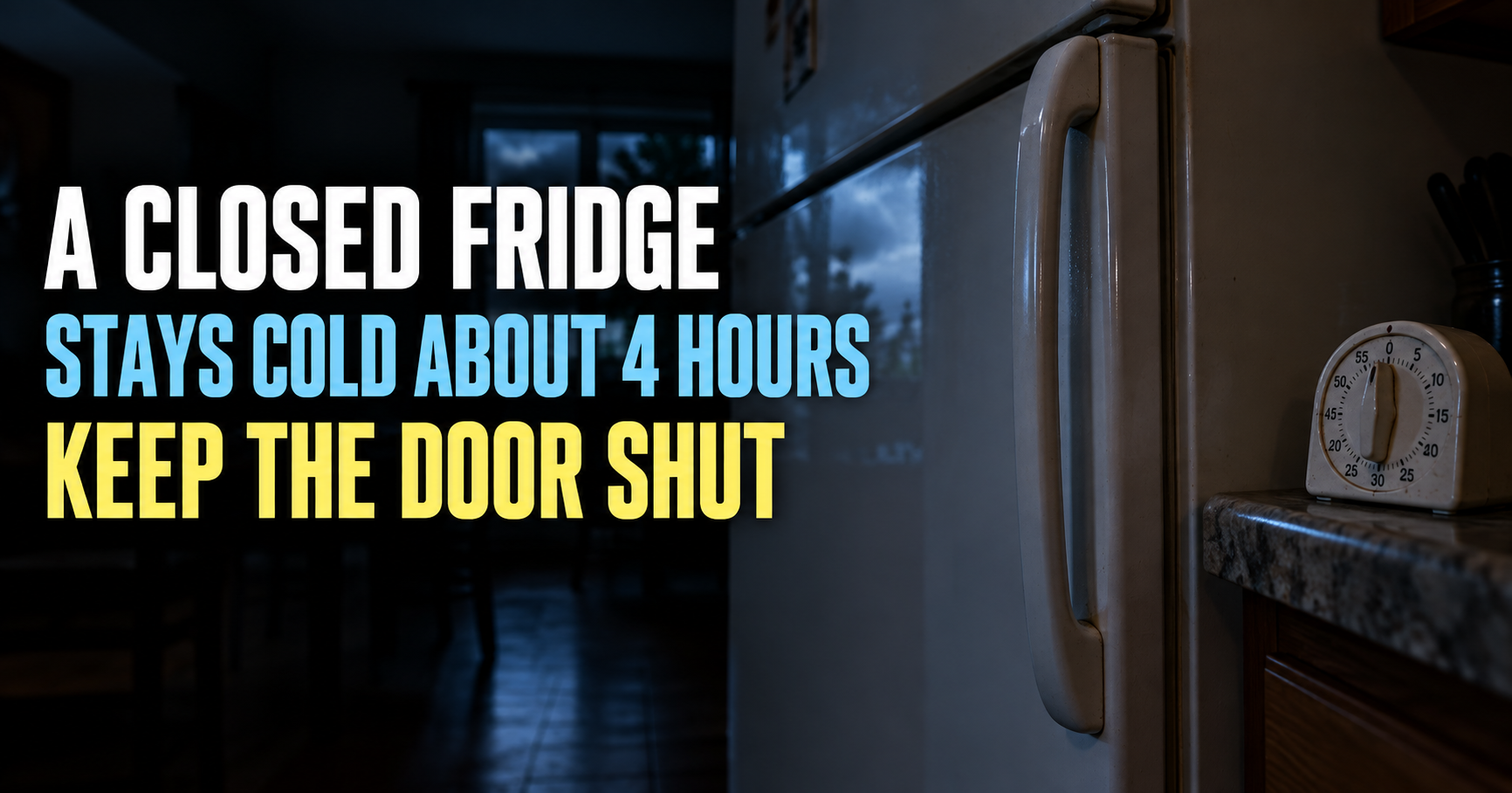
This is why knowing how long my refrigerator stays cold without power helps with generator management too.
I can make informed tradeoffs instead of trying to power everything continuously.
A Larger Generator Isn’t Automatically Better
There’s an understandable temptation to solve all of this by buying the biggest portable generator I can afford.
I don’t automatically do that.
A larger generator can give me more capacity and make simultaneous loads easier to manage.
But I also consider:

- Fuel consumption
- Purchase price
- Weight
- Portability
- Noise
- Storage
- What I actually need to power
If my real emergency load is a sump pump, refrigerator, some lights, and charging equipment, I don’t necessarily need to size a generator for every electric appliance in the house.
I want enough power with reasonable reserve.
Not necessarily the biggest machine on the property.
Fuel Consumption Matters During a Multi-Day Storm
This becomes especially important when the outage lasts longer than expected.
A generator can only protect the basement while I can keep it running.
If I burn through my stored fuel on the first day, having an oversized generator doesn’t help much on day three.
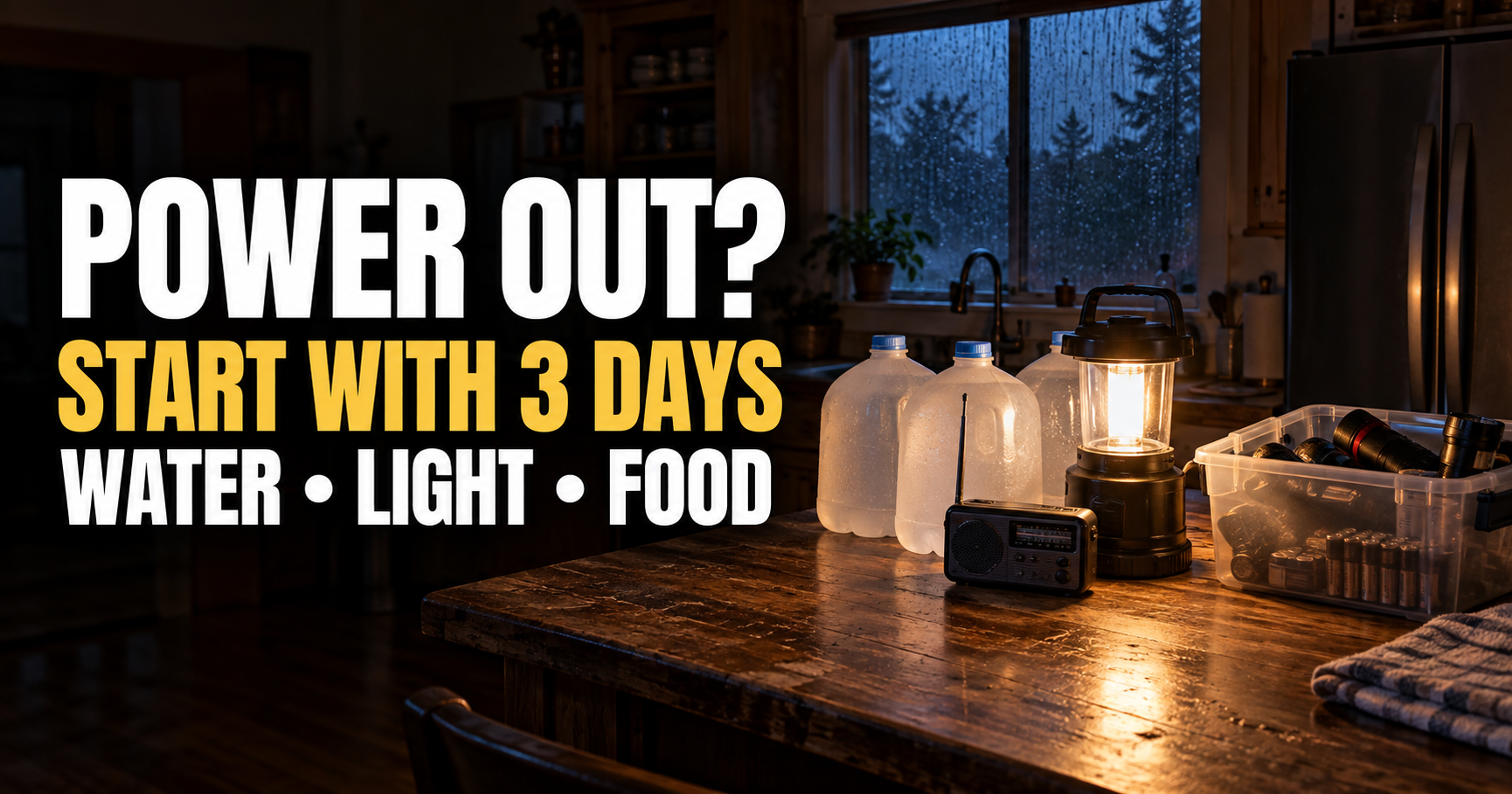
That’s why I already treat fuel as part of my long-term power outage plan.
For sump-pump duty, fuel planning becomes even more important because I may not have the option of simply shutting the generator off for six hours while heavy rain continues.
I Test the Actual Generator With the Actual Pump
This is the step I wouldn’t skip even if every calculation looks perfect.
On a normal dry day, I safely set up the generator where I intend to operate it.
I connect the pump using the proper setup.
Then I add enough water to the sump pit to trigger the float.
I want the pump to start under generator power.
Not once.
Several times.
I’m listening to the generator.
Does it stumble badly when the pump starts?
Does an overload indicator appear?
Does the pump sound normal?
Does it move water at its normal rate?
Does the setup remain stable through repeated cycles?
A successful real-world test gives me far more confidence than a spreadsheet calculation alone.
Then I Test It With My Other Planned Loads
If I expect to run the refrigerator at the same time, I test that combination.
If I expect to run furnace controls, I account for that setup too.
I don’t need every motor to conveniently start at the same instant during the test.
What I’m looking for is whether my overall plan gives the generator comfortable capacity.
If it feels like I’m constantly juggling equipment to prevent overload, I may have sized the generator too closely.
The Extension Cord Can Still Ruin a Good Generator Setup
A properly sized generator doesn’t help if I connect the sump pump through an inappropriate extension cord.
The generator stays outside.
The sump pump is usually in the basement.
So I need a heavy-duty, outdoor-rated cord properly sized for the electrical load and distance.
I don’t use a lightweight household cord because it’s the one I happen to own.
Longer cords can increase voltage drop, especially when they’re undersized for the load.
Motor equipment isn’t where I want marginal voltage.
I Buy the Cord for the Safe Generator Location
I don’t move the generator toward the basement window because my extension cord is too short.
I buy the right cord.
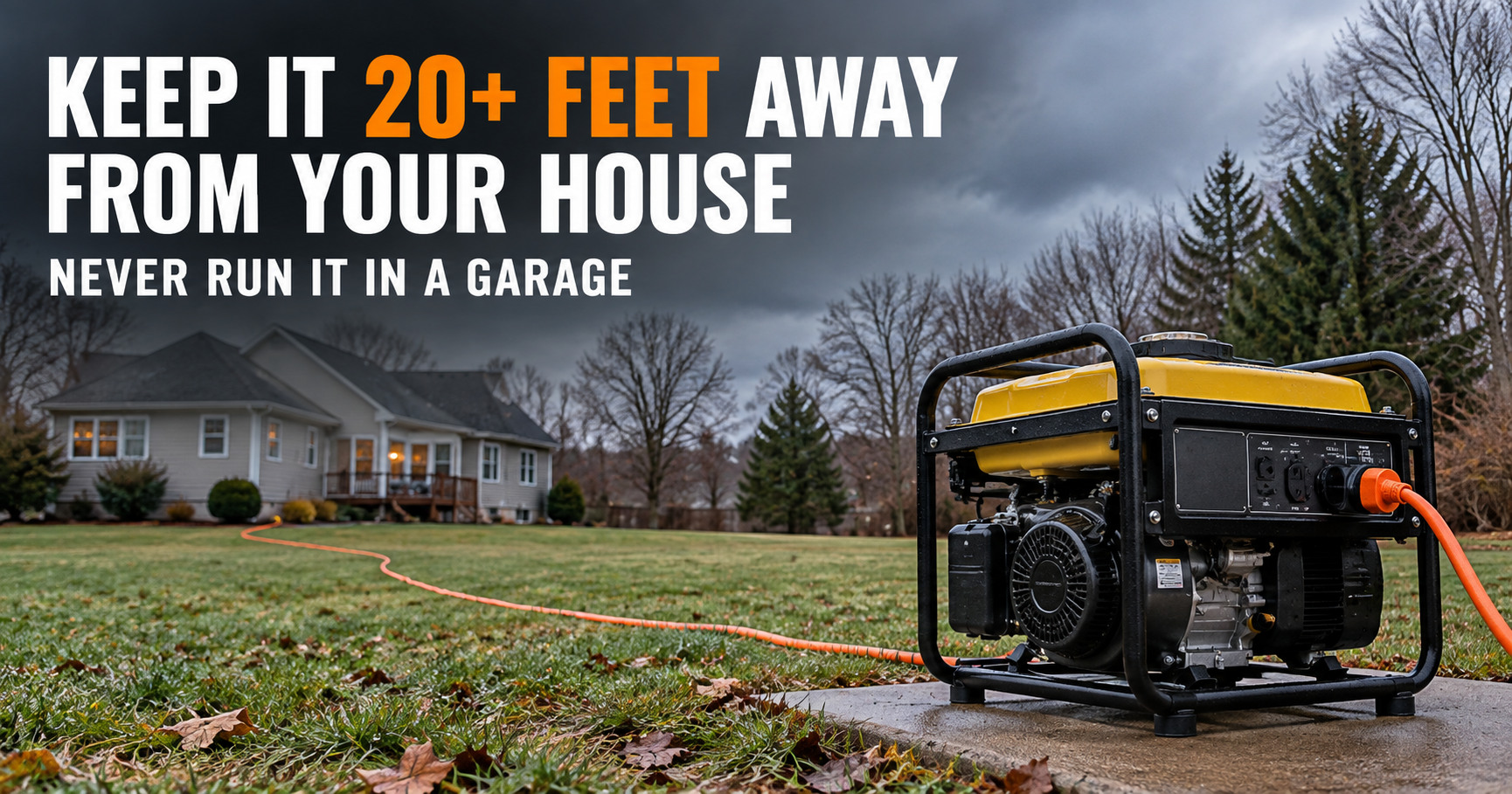
We’ve already covered how far I keep a generator from the house.
That safety plan comes first.
The generator stays outside and well away from doors, windows, and other openings.
Then I figure out how to safely get electricity from there to the sump pump.
I Keep Every Electrical Connection Dry
This matters even more with a sump pump because the reason I’m using the generator is usually heavy rain.
I don’t leave plug connections sitting in puddles.
I don’t put electrical equipment directly beside the sump pit where an overflow could reach it.
And if water has already flooded the basement and reached electrical equipment, I don’t walk into standing water and start handling energized cords.
At that point, I may have an electrical hazard in addition to a flooding problem.
The Generator Never Comes Into the Basement
Not even temporarily.
Not because it’s raining.
Not because I can hear the sump alarm.
Not because the cord won’t reach.
A portable generator produces carbon monoxide.
The sump pump being downstairs doesn’t mean the generator belongs downstairs.
The same goes for an attached garage.
I keep the generator outdoors in the safe location I planned before the storm.
A Transfer Switch Can Make a Permanent Setup Easier
If sump-pump backup is something I expect to use regularly, I may prefer a properly installed generator connection rather than running temporary cords through the house every time severe weather arrives.
That’s where appropriate transfer equipment and a qualified electrician come into the picture.
I don’t backfeed the house through a wall outlet.
I want a setup specifically designed to safely connect generator power to the circuits I intend to support.
That can make a real outage much easier to manage.
Generator Backup Still Isn’t Automatic
This is the biggest limitation.
A portable generator can provide tremendous endurance.
But somebody usually has to start it.
If the power fails at 2 a.m., the sump pump may stop immediately while I’m still asleep.
If I’m away from home, the generator sitting in storage doesn’t help at all.
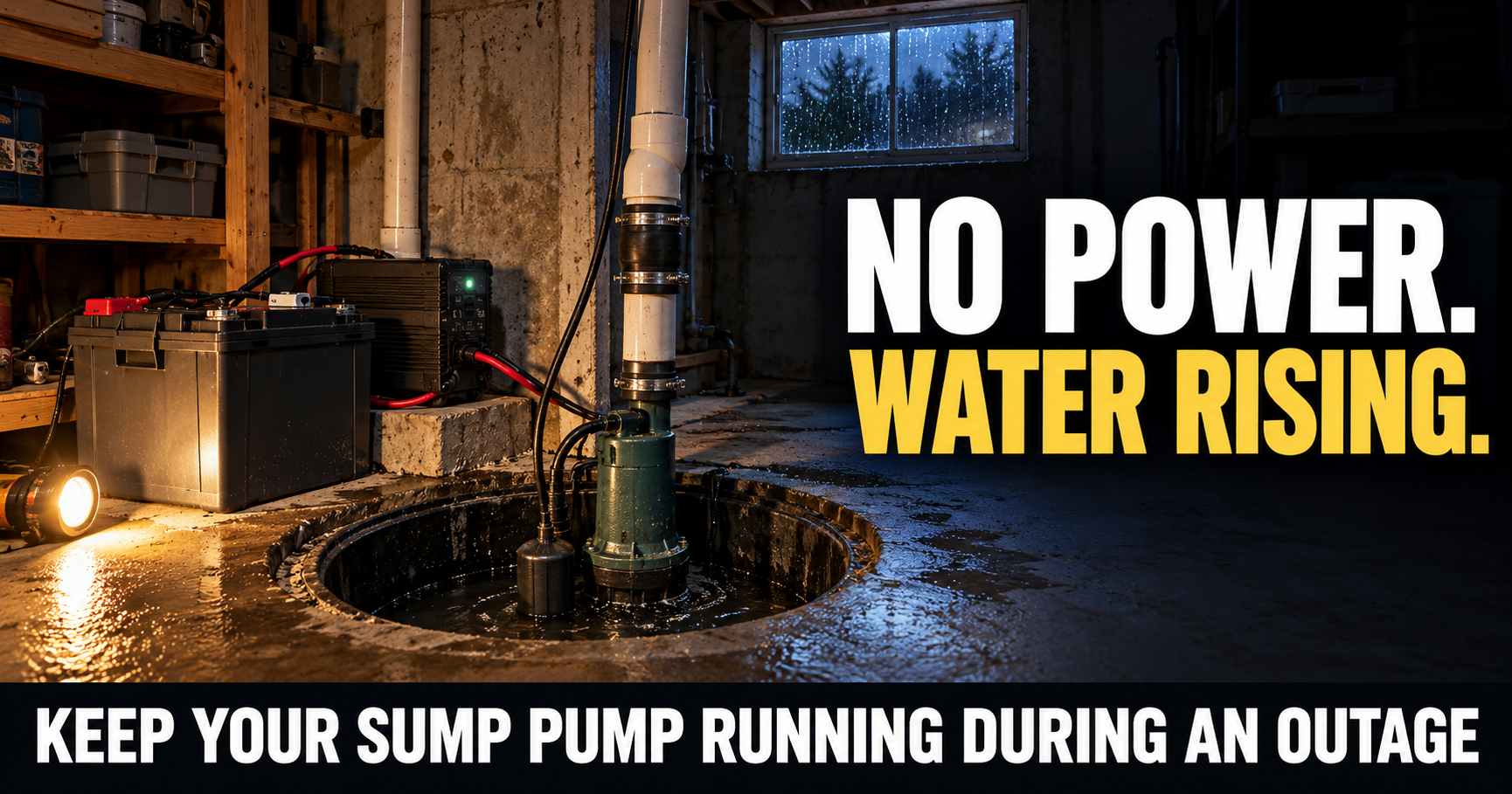
That’s why I still like the layered approach from how I keep my sump pump running during a power outage.
An automatic battery backup handles the immediate failure.
The generator handles the longer outage.
A Power Station Can Fill the Gap Too
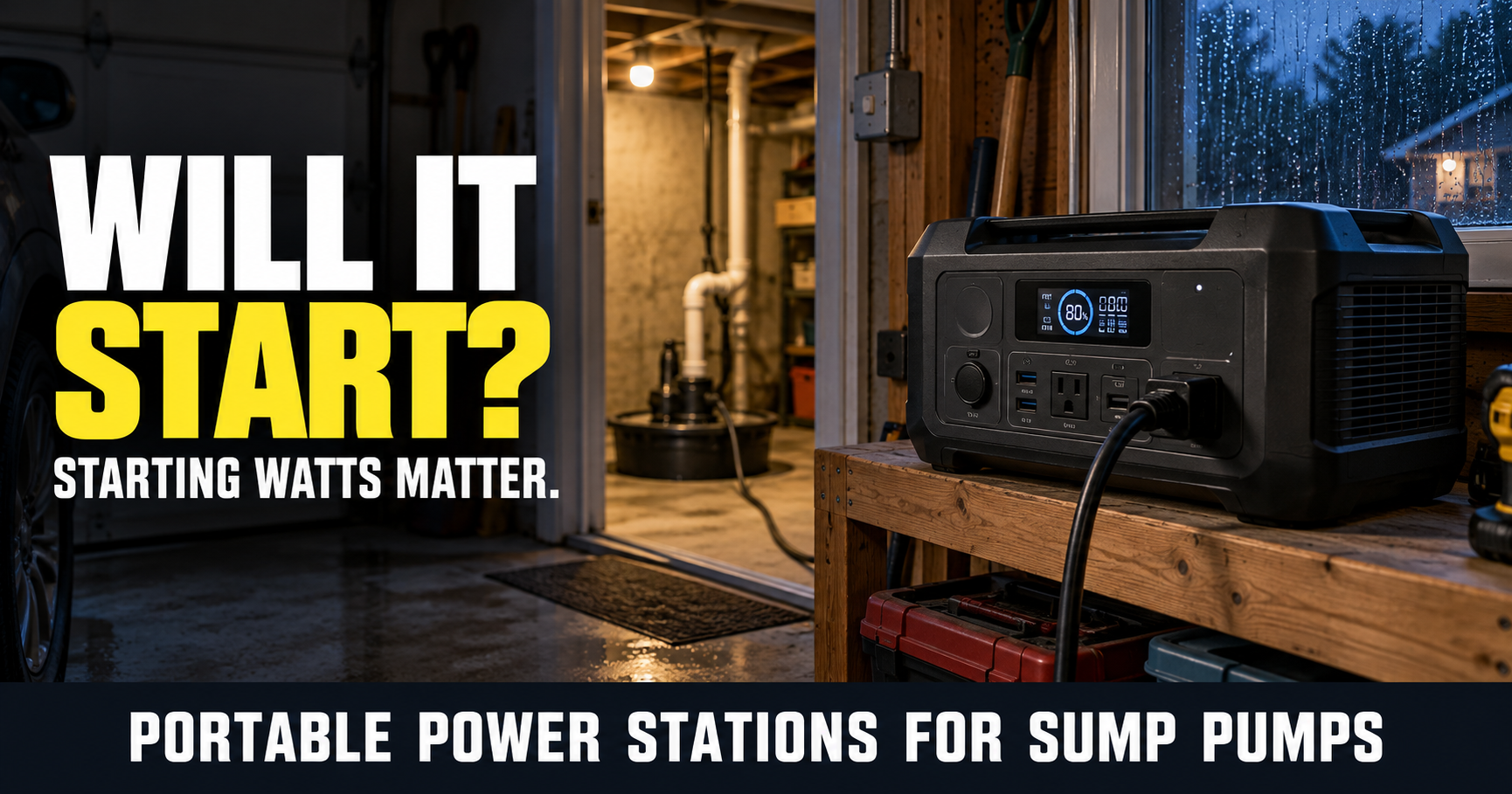
We’ve also covered whether a portable power station can run a sump pump.
A properly sized power station can be useful because it doesn’t require gasoline, doesn’t produce generator exhaust, and may offer automatic transfer depending on the model and setup.
But the same startup issue applies.
The inverter still has to start the pump.
And the battery still has finite energy.
That’s why I don’t see generator, battery backup, and portable power as interchangeable solutions.
Each has strengths the others don’t.
My Preferred Setup If Basement Flooding Would Be Expensive
If I had a finished basement that could suffer serious damage from one failed sump pump, I wouldn’t want the portable generator to be my only backup.
I’d prefer something like this:
Primary AC sump pump
for normal operation.
Automatic battery-backup sump pump
for immediate outages and another layer against primary-pump failure.
Properly sized generator
for longer outages.
High-water alarm
to tell me when the system isn’t keeping up.
That gives me several chances to stop the water before it reaches the floor.
So What Size Generator Would I Buy?
I wouldn’t answer that until I looked at the pump.
But my rough thought process would be:
Smaller 1/3 HP Pump
If the actual startup requirement is comfortably below the generator’s surge rating and the sump pump is basically the only large load, a 2,000 to 3,000-watt-class generator may be enough.
Typical 1/2 HP Pump
I’d commonly be looking more toward the 3,000 to 4,000-watt class, especially if I want useful headroom or another appliance running.
Larger 3/4 HP Pump
I’d start looking around 4,000 watts and above, then size from the actual pump and the other loads rather than horsepower alone.
These are planning ranges.
They’re not promises.
The pump specifications always get the final say.
If I Want to Run Several Household Essentials, I Size the Whole System
This is the point where the question stops being:
“What generator runs my sump pump?”
and becomes:
“What generator runs my emergency household?”
Now I list the equipment I actually care about during an outage.
Sump pump.
Refrigerator.
Freezer.
Furnace.
Well pump.
Medical equipment.
Lighting.
Charging.
Then I calculate the running loads and account for motor startup demands.
That gives me a generator that fits my actual emergency plan rather than one appliance.
I Still Don’t Try to Power Normal Life
This is where I save a lot of generator capacity.
During a storm outage, I don’t care about powering everything.
I’m protecting the house and keeping the important systems functioning.
If the sump pump is preventing a basement flood, that’s an essential load.
If the refrigerator is protecting hundreds of dollars worth of food, that’s useful.
If the phone needs charging, that’s useful.
The electric clothes dryer can wait.
The Best Generator Is the One I’ve Already Tested
That’s ultimately what matters to me.
Not the generator with the biggest number on the box.
Not the one somebody online says will “run any sump pump.”
I want the generator I’ve already connected to my actual pump on a dry afternoon.
I’ve watched the motor start.
I’ve watched the generator handle the surge.
I’ve tested the cord.
I’ve tested the other loads I plan to use.
I’ve made sure the generator can sit safely outside.
I’ve stored enough fuel to make the setup useful.
Then when the storm knocks out power, I’m not experimenting.
I’m using a system I already know works.
Don’t Buy the Generator Until You Check the Pump
If there’s one thing I’d do before spending money, it’s this.
Walk downstairs.
Find the sump pump model number.
Take a picture of the electrical label.
Look up the manufacturer’s specifications.
Find the running current and starting or inrush requirement if available.
Then figure out what else you actually want to run during the outage.
That’s when generator sizing becomes much easier.
A sump pump doesn’t need the biggest generator money can buy.
It needs a generator that can reliably start that pump, carry the running load, handle the other equipment I consider essential, and still leave enough breathing room that the whole setup isn’t constantly operating on the edge.
That’s the generator I’d trust when the rain is pouring down and the power lines are already dark.
About the Author
Caleb Mercer writes about blackout preparedness, generators, sump-pump backup, portable battery power, and the household systems that become critical when electricity fails. His work for the Survive Essentials Power Outages and Backup Power section focuses on matching real equipment requirements with practical backup systems homeowners can test before severe weather arrives.