I’ve had cuts that looked pretty nasty at first but cleaned up fine with basic first aid.
I’ve also learned that the amount of blood isn’t always what tells me whether a cut needs professional treatment.
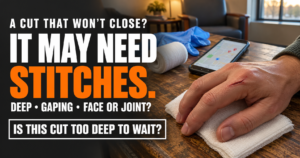
A relatively small cut can be deep enough to damage a tendon, nerve, or blood vessel. A wound on the face may deserve professional attention even when it isn’t huge. And if the edges of a cut are pulling apart and won’t stay together, that’s a completely different situation from a shallow scrape.
So when I’m trying to decide whether a cut may need stitches, I look at more than one thing.
How deep is it?
Are the edges gaping apart?
Where is it?
Can I get the bleeding under control?
Can the injured person move and feel everything normally?
How dirty is the wound?
And just as importantly:
How long ago did it happen?
If several of those answers concern me, I don’t try to prove how good my home first aid kit is. I get the wound professionally evaluated.

Bleeding Comes Before the Stitches Question
If blood is flowing continuously, spurting, or otherwise appears life-threatening, I’m not standing there trying to decide whether the wound will need six stitches or twelve.
Bleeding control comes first.
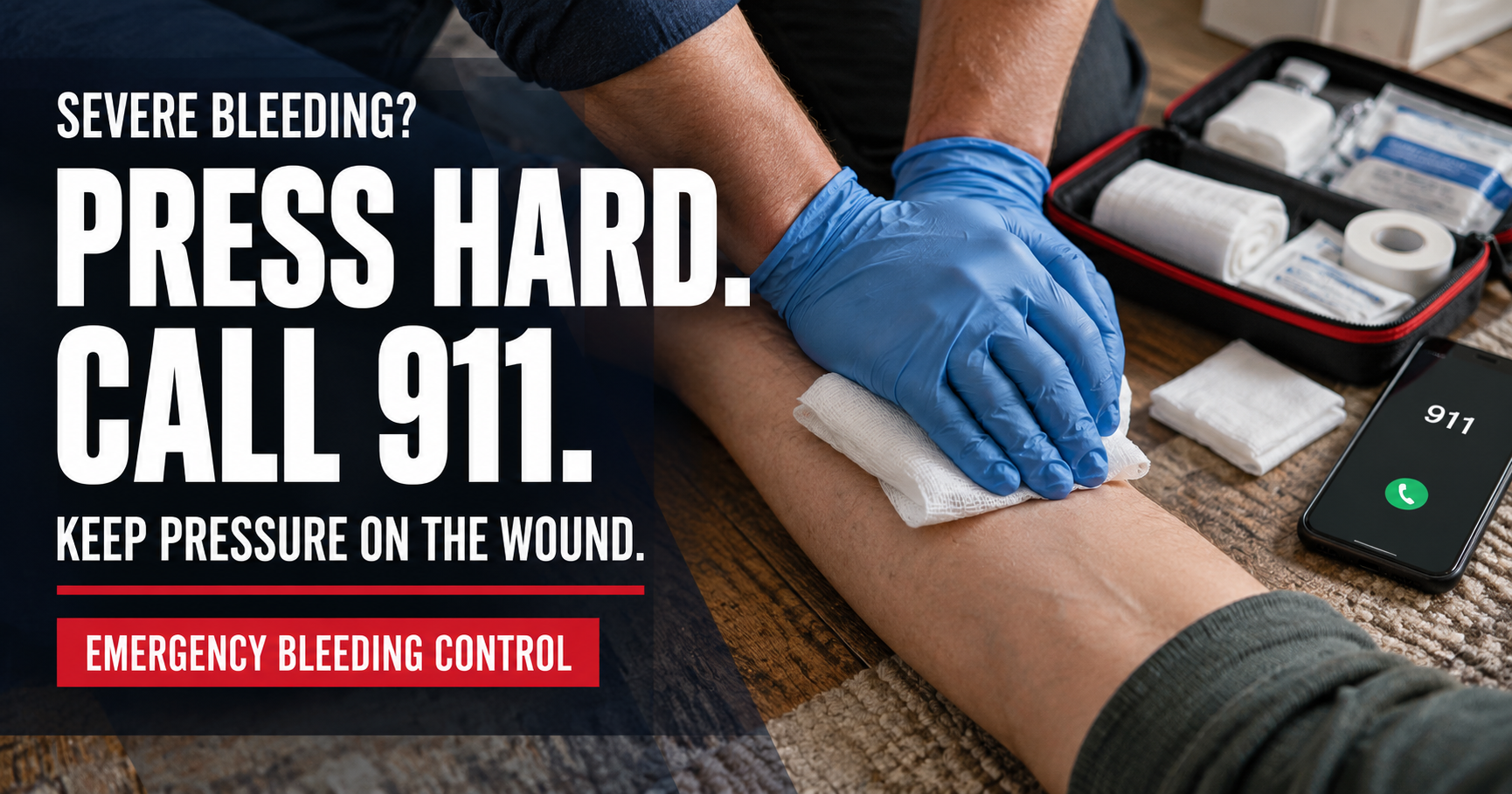
We’ve already covered how I handle heavy bleeding during an emergency.
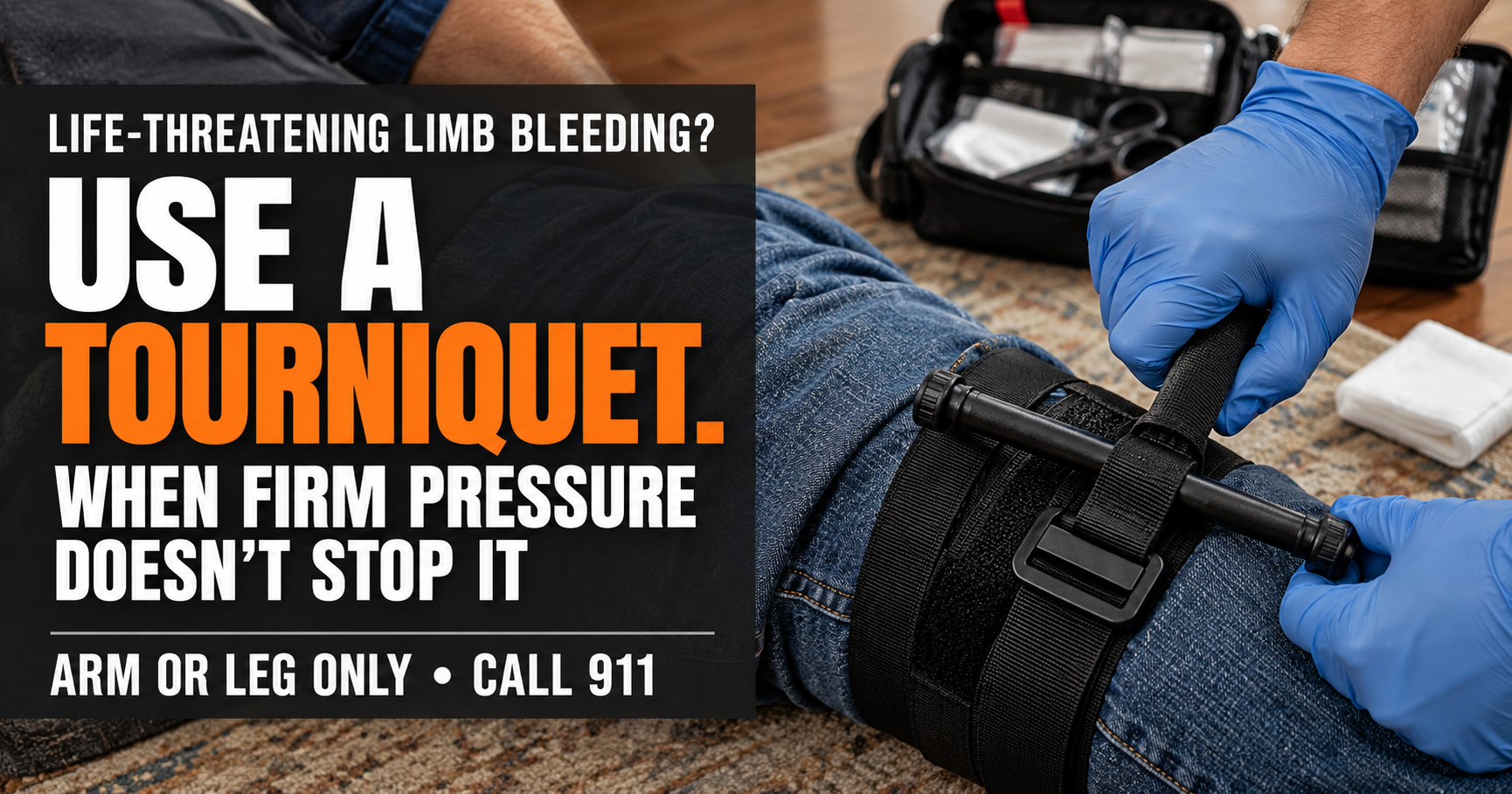
For life-threatening bleeding from an arm or leg, we’ve also covered when a tourniquet may be appropriate.
Once immediate bleeding is controlled and the person is stable, then the wound itself can be properly evaluated.


A Cut That Won’t Stop Bleeding Gets My Attention
For an ordinary cut, direct pressure should usually help control bleeding.
A wound that continues bleeding despite firm, steady pressure is different.
Mayo Clinic recommends emergency help for severe bleeding and medical evaluation when bleeding won’t stop after direct pressure. (mayoclinic.org)
I don’t keep adding bandages indefinitely while hoping something changes.
Persistent bleeding can mean the wound is deeper or more significant than it initially looked.

Gaping Edges Are One of the Biggest Clues I Look For
This is probably the easiest visual clue.
When the skin edges naturally sit close together, that’s one thing.
When the wound is pulling open and the edges remain separated, I become much more suspicious that professional closure may be needed.
A deep or gaping wound may require stitches or another closure method to bring the edges together appropriately.
I don’t force a questionable wound shut at home simply because I own butterfly strips.
The depth, contamination, location, and underlying injury still matter.
I Look at What I Can See Inside the Cut
If I can see deeper tissue beneath the skin, I don’t treat it like a little surface cut.
Visible fatty tissue, muscle, tendon, bone, or other deeper structures are all reasons for professional evaluation.
I also don’t poke around inside the wound trying to figure out what I’m looking at.
That’s not my job.
The more obviously deep the injury is, the less interested I am in experimenting with home closure.

Length Matters, but There Isn’t One Magic Number
People often want a rule like:
“Anything longer than half an inch needs stitches.”
Real life isn’t that simple.
A long shallow scrape may not need closure.
A shorter but deep and gaping wound on the hand might.
That’s why I don’t use length alone.
Depth, location, wound edges, contamination, bleeding, and possible damage underneath the skin matter too.
Cuts Over Joints Make Me More Cautious
A wound over a knuckle, knee, elbow, or another joint moves every time the joint moves.
That can pull wound edges apart repeatedly.
There may also be deeper structures underneath that I don’t want to miss.
If a wound is deep, gaping, or directly over a joint, I’d rather have it professionally evaluated than repeatedly tape it shut and hope for the best.
Hand Cuts Deserve More Respect Than Their Size Suggests
Hands are complicated.
Tendons, nerves, blood vessels, joints, and other structures are packed into a relatively small area.
A cut doesn’t need to be enormous to cause a meaningful problem.
If someone can’t normally bend or straighten a finger after a cut, has numbness, tingling, weakness, or unusual loss of sensation, I want medical evaluation.
That’s no longer simply a skin wound.
I Test Normal Movement Without Forcing Anything
If it’s appropriate and safe, I pay attention to whether the injured person can normally move the affected fingers, hand, foot, or other area.
I’m not aggressively bending an injured body part to “test it.”
I’m simply noticing whether normal function is still there.
If someone says:
“I can’t move my finger anymore.”
That’s important.
If they say:
“Part of my hand is numb.”
That’s important too.
Those symptoms can suggest deeper injury and aren’t something I solve by closing the skin.


Numbness Around a Cut Isn’t Something I Ignore
A wound can damage nerves.
If there’s new numbness or loss of normal sensation beyond the immediate wound area, I want professional evaluation.
The skin closing nicely doesn’t fix a damaged nerve underneath it.
This is one of the reasons I’m careful about treating stitches as merely a cosmetic decision.
Sometimes the bigger concern is what’s under the cut.
Facial Cuts Are Different
I’m more likely to have a significant facial wound evaluated promptly.
There are several reasons.
The face contains important structures.
Wound alignment can matter cosmetically.
Certain areas around the eyes, lips, nose, and ears deserve particular care.
A cut that I might be comfortable managing on another part of the body may deserve professional treatment when it’s on the face.
Especially with children, I wouldn’t casually decide that a deep facial cut can wait until tomorrow.

Cuts Around the Eye Need Extra Caution
Anything involving the eye itself or the structures immediately around it gets my attention.
I don’t start applying random wound-closure products around an eye.
If there’s eye injury, vision change, significant trauma, or a deep wound in that area, I want appropriate medical care.
That’s well beyond ordinary home wound cleaning.
Lip Cuts Can Be Tricky Too
A wound crossing the border of the lip can require careful alignment.
That’s one of those situations where a relatively small cut may benefit from professional closure because matching the edges correctly matters.
Again, wound length isn’t everything.
Location changes the answer.
A Dirty Wound Isn’t Automatically Something I Want Closed
This is an important point.
Closing skin traps whatever is inside.
If a wound is heavily contaminated, contains debris, resulted from a bite, or is otherwise high risk for infection, I don’t assume the goal should be sealing it shut as quickly as possible.
A healthcare professional may need to clean and evaluate it before deciding whether and how it should be closed.
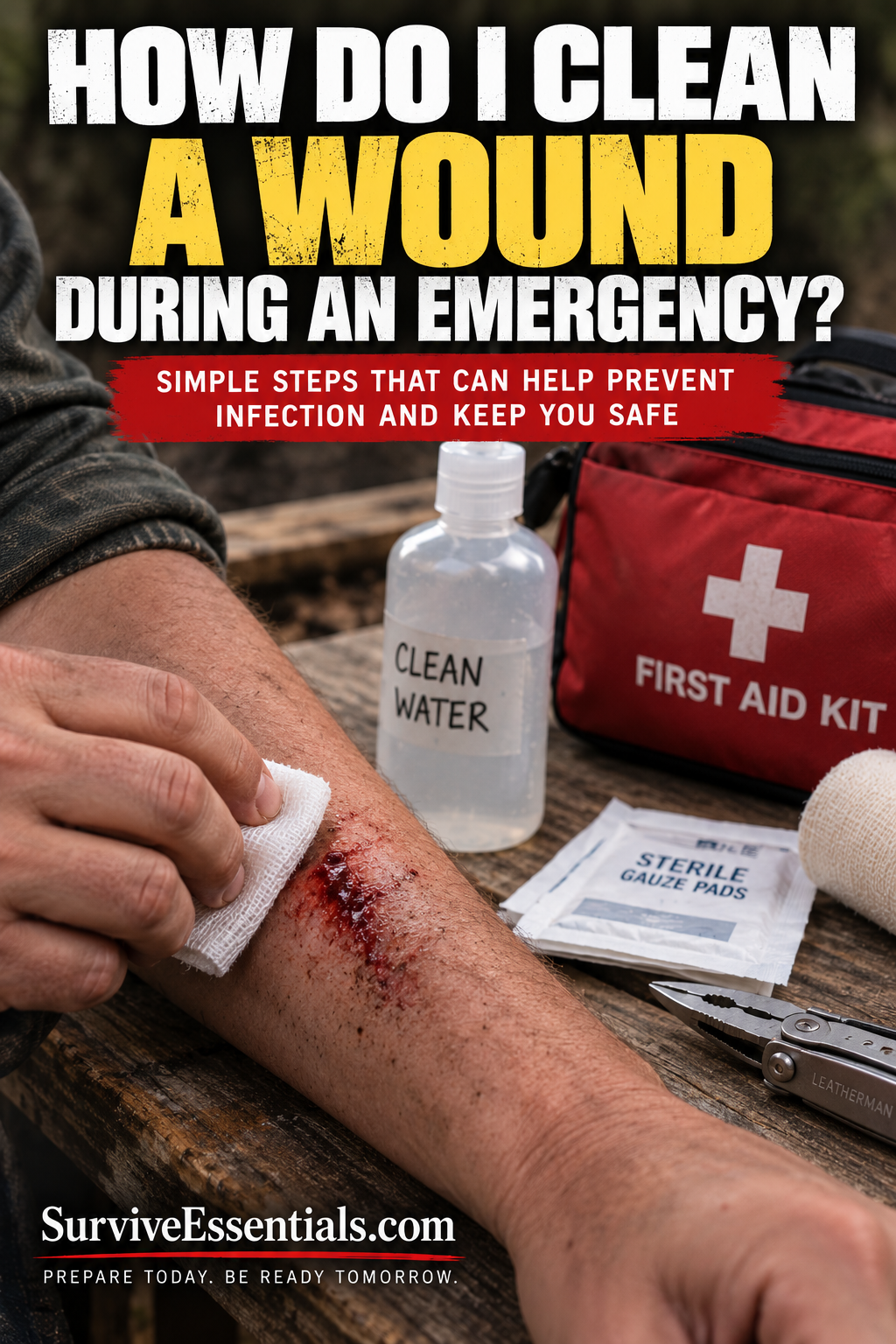
That’s why our previous article on how I clean a wound during an emergency comes before this one.
Cleaning and closure aren’t the same decision.
Puncture Wounds Are Different From Open Cuts
A nail puncture may leave a tiny opening.
That doesn’t mean it’s minor.
The concern may be contamination deep inside the tissue rather than whether the skin edges need stitches.
Mayo Clinic recommends medical attention for certain deep or dirty puncture wounds, wounds caused by metal objects, bites, and wounds involving joints or other higher-risk circumstances. (mayoclinic.org)
I don’t judge a puncture by how small the hole looks.
Bites Aren’t Normal Cuts Either
Human and animal bites deserve medical attention for reasons beyond whether the wound could technically be stitched.
Saliva introduces bacteria.
Animal bites may also raise questions about rabies exposure depending on the animal and circumstances.
Current AHA and Red Cross first-aid guidance recommends medical evaluation as soon as possible for wounds caused by animal or human bites or contaminated with saliva. (cpr.heart.org)
That’s not something I try to solve with a butterfly bandage.
Rust Isn’t the Main Tetanus Question
If a cut came from dirty metal, storm debris, a nail, farm equipment, soil-contaminated material, or another dirty source, I also think about tetanus protection.
As we covered in the wound-cleaning article, CDC guidance considers punctures and wounds contaminated with soil, dirt, feces, or saliva among higher-risk wound types for tetanus. (cdc.gov)
Knowing when the last tetanus vaccination was given is useful information to provide when seeking care.
How the Cut Happened Matters
A clean kitchen-knife cut is one thing.
A wound from:
Broken glass.
A chainsaw.
Farm machinery.
A dirty nail.
A jagged piece of metal.
A crushing injury.
An animal bite.
Storm debris.
Those mechanisms can tell me something about what may have happened beneath the skin and how contaminated the wound could be.
I don’t evaluate only the surface.
Broken Glass Makes Me Wonder What’s Still Inside
If a cut was caused by broken glass, I don’t assume every piece came back out.
Deep retained debris isn’t something I go digging for at home.
If there’s reason to think glass or another foreign object remains in the wound, I want professional evaluation.
Closing skin over retained debris isn’t my goal.
I Don’t Pull Out a Deeply Embedded Object
If something substantial is still embedded in a wound, I leave it in place and get emergency medical help.
Pulling it out can make bleeding significantly worse.
This connects back to our heavy-bleeding article.
The goal isn’t making the wound look cleaner.
The goal is keeping the person safe.
How Long Ago the Cut Happened Matters
This is another reason I don’t wait around unnecessarily with a wound that obviously may need professional closure.
There’s no single universal “stitch deadline” that applies to every wound.
The appropriate timing depends on the wound, location, contamination, infection risk, and the clinician’s judgment.
Mayo Clinic advises prompt medical evaluation for serious cuts rather than waiting to see how they look much later. (mayoclinic.org)
If I already suspect a wound needs closure, I’d rather have it evaluated sooner than deliberately wait until the next day.
I Don’t Try to Beat an Imaginary Clock at the Expense of Bleeding Control
Timing matters.
But immediate threats matter more.
If someone is bleeding severely, I’m controlling the bleeding and getting emergency help.
I’m not saying:
“We need to hurry because the stitches clock is ticking.”
Life-threatening bleeding comes first.
Proper medical evaluation follows.
Butterfly Closures Don’t Turn Me Into a Doctor
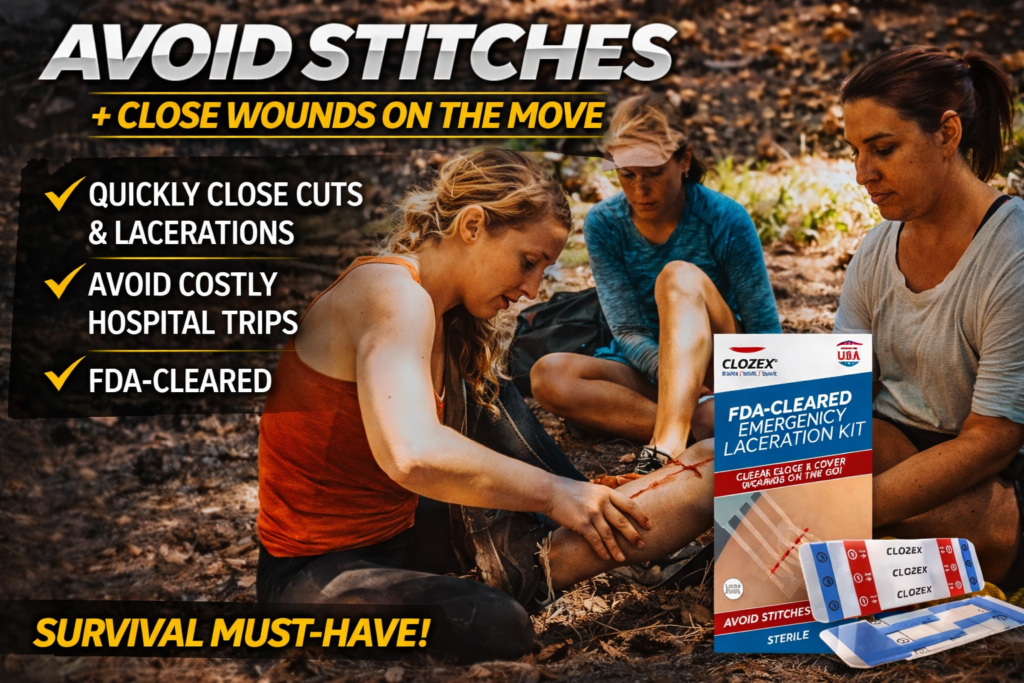
Adhesive wound-closure strips can be useful for appropriate minor wounds.
But owning them doesn’t mean every gaping wound should be pulled shut at home.
If the wound is deep, contaminated, under significant tension, located in a concerning area, continues bleeding, or may involve deeper structures, I don’t use closure strips as a way to avoid medical evaluation.
They’re a tool for appropriate wounds.
Not a replacement for stitches when stitches or other professional treatment are needed.
Super Glue Isn’t My Default Answer Either
People often hear that medical skin adhesives exist and assume ordinary household super glue is basically the same thing.
That’s not how I approach wound care.
Healthcare professionals use products intended for medical skin closure and choose them for appropriate wounds.
I don’t pour household adhesive into a deep cut because I saw someone do it online.
If the wound is serious enough that I’m considering gluing it shut, that’s a good sign I should first ask whether it needs professional evaluation.
Not Every Wound That Gets Professional Care Gets Stitches
This is another useful distinction.
“Does this need stitches?” is really shorthand for:
“Does this wound need professional evaluation and possibly closure?”
A clinician may decide on sutures.
Or staples.
Or medical adhesive.
Or wound-closure strips.
Or another approach.
Some contaminated wounds may intentionally not be closed immediately.
My job isn’t choosing the closure method.
My job is recognizing when basic cleaning and a bandage may not be enough.
My Home First Aid Kit Helps Me Get to Care, Not Avoid It
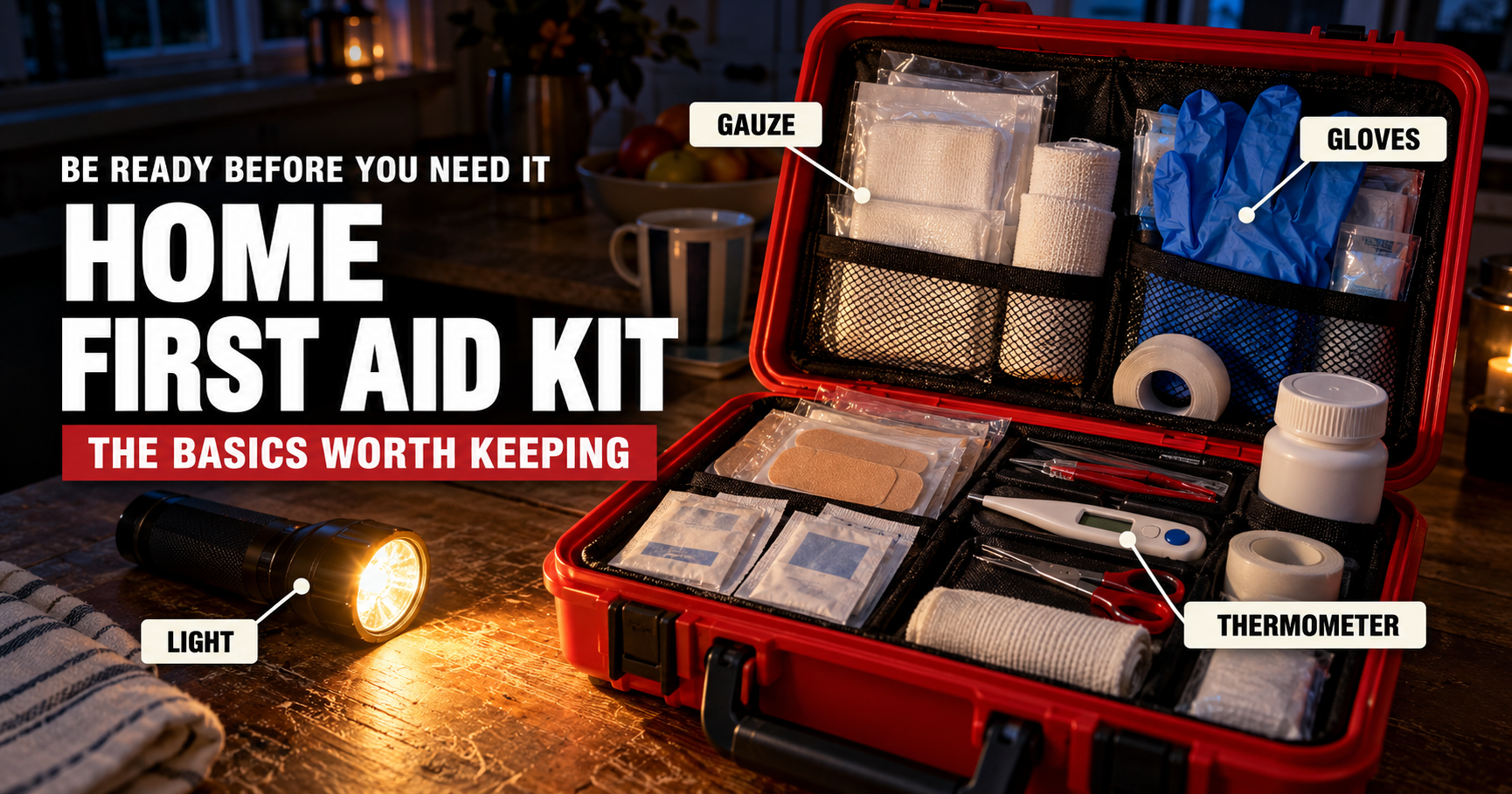
That’s the mindset behind the home emergency first aid kit we’ve built.
The supplies give me options.
Clean water helps with appropriate irrigation.
Gauze helps protect the wound.
Dressings help keep it covered.
Gloves help protect the person providing care.
Bleeding-control supplies help with more serious injuries.
But none of those things mean every wound belongs at home.
Sometimes being prepared means recognizing when it’s time to leave for urgent care or the emergency department.
When I Would Stop Debating and Get the Cut Checked
There are some wounds where I don’t spend much time wondering whether home care will be enough.
If a cut is obviously deep, stays wide open, exposes deeper tissue, won’t stop bleeding, or has affected normal movement or sensation, I want it evaluated.
The same goes for significant wounds involving the face, eye area, lips, hands, joints, bites, deep punctures, or wounds with embedded material.
I’d rather have a clinician tell me a wound doesn’t need stitches than wait too long with one that did.
A Cut That Keeps Pulling Open Concerns Me
Location and movement can make an otherwise manageable-looking cut difficult to keep closed.
A wound across a knuckle is a good example.
Every time the finger bends, the skin moves.
The same problem can happen around knees, elbows, and other joints.
If the edges repeatedly separate with normal movement, I don’t keep adding tape and hoping they’ll eventually stay together.
That deserves evaluation.
I Pay Attention to Whether the Wound Is Under Tension
Some cuts naturally sit together when the injured area is relaxed.
Others immediately pull apart.
That tension matters because even a relatively short wound can be difficult to keep closed when the surrounding skin is constantly pulling in opposite directions.
This is another reason I don’t use wound length as my only test.
A clinician can consider the location, depth, tension, contamination, and underlying structures together.
If Fatty Tissue Is Visible, I’m Not Treating It Like a Scrape
A deeper cut can expose yellowish fatty tissue beneath the skin.
Once I’m clearly looking below the superficial skin layers, my threshold for professional evaluation gets much lower.
If muscle, tendon, bone, or another deeper structure appears visible, there’s even less debate.
I protect the wound appropriately, control bleeding, and seek care.
I don’t probe it to figure out exactly how deep it goes.
Loss of Movement Can Matter More Than the Cut Itself
Suppose someone cuts a finger.
The bleeding stops.
The wound isn’t enormous.
But now they can’t bend that finger normally.
That’s the part that concerns me.
A tendon or another deeper structure may have been injured.
Closing the skin at home doesn’t repair what’s underneath it.
The same applies to new weakness or an inability to move the injured area normally.
Numbness Is Another Reason I Wouldn’t Wait
New numbness, tingling, or loss of normal sensation after a deep cut can suggest nerve involvement.
Again, the wound may not look dramatic.
That’s why I don’t judge everything by blood.
If normal feeling or function changed after the injury, I want professional evaluation.
I Take Circulation Changes Seriously
If an injured hand, finger, foot, or toe becomes unusually pale, bluish, cold, or otherwise appears to have impaired circulation, that’s not something I watch overnight.
A significant wound can damage blood vessels as well as skin.
That’s a more urgent problem than whether the cut itself eventually forms a scar.
Facial Wounds Make Me Lean Toward Earlier Evaluation
With a significant facial cut, alignment can matter.
This is especially true around structures such as the lips, eyelids, nose, and ears.
A wound crossing the edge of the lip, for example, can require careful alignment.
I don’t try to save an urgent-care visit by guessing at that myself.
If professional closure may improve healing or alignment, I’d rather get the wound looked at promptly.
I Take Children’s Facial Cuts Seriously Too
Kids fall.
They hit tables.
They split chins.
They cut foreheads.
Not every childhood cut needs stitches.
But a deep or gaping facial wound is one where I’d rather have a professional make the call.
Children can also make wound care harder simply because they’re scared, moving, and understandably unhappy about someone examining an injury.
Sometimes professional care is the safest and easiest path for everyone.
A Scalp Cut Can Bleed More Than I Expect
Scalp wounds can produce an impressive amount of blood.
That can make them look terrifying.
I still control the bleeding and evaluate the injury rather than assuming the amount of blood automatically means stitches.
But there’s another concern with a head injury.
Why did the scalp get cut?
If someone fell hard enough to split their scalp, I also think about possible head injury.
Confusion, loss of consciousness, repeated vomiting, worsening headache, seizure, unusual behavior, or other concerning neurological symptoms aren’t simply wound-care issues.
Those deserve urgent medical evaluation.
I Don’t Forget About What Caused the Injury
This is one of the most useful questions I ask.
A clean cut from a kitchen knife and a jagged wound from storm-damaged sheet metal may look similar after the bleeding stops.
The contamination and underlying injury risk may be very different.
If the injury involved a crush, high-force impact, power tool, machinery, broken glass, animal bite, dirty puncture, or another significant mechanism, I have a lower threshold for getting it checked.
The skin only shows me part of what happened.
If the Cut Is Full of Dirt I Can’t Remove, I Don’t Close It
This connects directly to how I clean a wound during an emergency.
For an appropriate minor wound, thorough irrigation can remove a lot of contamination.
But if debris remains deeply embedded or I can’t adequately clean the wound, I don’t pull the edges together and trap everything inside.
That’s another reason for professional care.
Sometimes proper wound cleaning is just as important as the closure itself.
Bites Go Into a Different Category for Me
Human and animal bites aren’t simply jagged cuts.
They can introduce bacteria from saliva into tissue.
Depending on the animal and circumstances, rabies may also need to be considered.
That’s why I don’t make the decision solely based on whether the wound appears stitchable.
A bite that breaks the skin deserves appropriate medical guidance.
I Don’t Ignore a Deep Puncture Because It Can’t Be Stitched
This is another common trap.
A nail puncture may leave almost nothing to close.
That doesn’t make it harmless.
A deep puncture can carry contamination well below the surface, and tetanus protection may need to be considered.
So the better question isn’t always:
Does this need stitches?
Sometimes it’s:
Does this injury need medical care even though it doesn’t need stitches?
That’s a much better way to think about wounds.
Tetanus Status Is Useful Information to Know
If the wound is dirty, deep, punctured, contaminated with soil, caused by a bite, or otherwise concerning, I want to know roughly when the injured person’s last tetanus vaccination was.
I don’t make the vaccination decision myself.
I give that information to the healthcare professional evaluating the wound.
That’s another reason keeping basic medical information available in the household can be useful.
What If the Cut Happened During a Disaster?
This is where the decision gets harder.
Maybe roads are blocked.
Maybe we’re in the middle of a blizzard.
Maybe a tornado has damaged the area.
Maybe emergency services are overwhelmed.
Maybe the power is out and the nearest urgent care isn’t operating normally.
That’s exactly why I keep a capable first aid kit.
But delayed access to care doesn’t make a wound less serious.
If something appears to need professional evaluation, my goal becomes safely bridging the gap until I can get there.
I Clean and Protect the Wound While Arranging Care
If the wound is appropriate to irrigate and immediate life-threatening bleeding has been controlled, I follow the basic wound-care principles we’ve already covered.
Clean hands.
Gloves when appropriate.
Thorough irrigation with suitable clean water or saline.
Appropriate dressing.
Protection from further contamination.
Then I arrange professional evaluation as soon as reasonably possible.
I don’t turn a temporary delay into a decision to permanently manage a serious wound at home.
I Don’t Try to Sew a Cut Shut Myself
This is where survival advice can get ridiculous.
Having a sewing needle doesn’t mean I should stitch my own wound.
Proper wound closure involves more than pulling two pieces of skin together.
The wound has to be evaluated.
Cleaned appropriately.
Checked for deeper damage.
Assessed for contamination and infection risk.
And then the correct closure method has to be chosen.
I don’t perform DIY suturing because professional care is inconvenient.
A “Suture Kit” Doesn’t Make Me Qualified to Use It
The same applies to medical-looking equipment sold online.
Owning something doesn’t create training.
That’s a theme throughout this entire first-aid cluster.
A tourniquet is useful when someone knows when and how to use it.
Bleeding-control supplies are useful when someone understands bleeding control.
Wound-closure equipment isn’t an invitation to perform procedures beyond my training.
My home emergency first aid kit is there to make me more capable, not overconfident.
I Don’t Use Household Super Glue to Avoid Medical Care
Medical tissue adhesives exist.
That doesn’t mean the tube of household super glue in the junk drawer is automatically my emergency-room replacement.
If a wound is deep enough, gaping enough, or concerning enough that I’m thinking about gluing it closed, I stop and ask the more important question:
Should somebody qualified evaluate this first?
Usually that’s the decision I care about.
Closure Strips Have Limits Too
Adhesive wound-closure strips can be useful for certain minor wounds where the edges come together easily.
But I don’t use them to force a deep, dirty, high-tension, or concerning wound shut.
If the strips keep pulling loose because the wound wants to gape open, that’s information.
I don’t keep adding more strips until the skin finally gives up.
What If the Cut Looks Fine the Next Day?
I still watch it.
Even a professionally closed wound can become infected.
A wound managed at home deserves monitoring too.
Increasing pain, redness, warmth, swelling, concerning drainage, foul odor, fever, or other worsening symptoms make me want medical advice.
Cleaning and closure aren’t the end of wound care.
Healing is a process.
A Cut Can Need Care Even After the “Stitch Window”
This is another reason I don’t want people thinking:
“It’s too late for stitches, so there’s no point going.”
Even if a clinician decides not to close an older wound, the injury may still need cleaning, evaluation for deeper damage, infection management, tetanus assessment, or other treatment.
Missing an ideal closure time doesn’t magically make medical care useless.
If the wound concerns me, I still seek care.
I Take Infection More Seriously When Help Has Been Delayed
If circumstances forced us to manage a wound longer than I’d normally prefer, I become especially watchful.
Maybe the wound was exposed to dirty stormwater.
Maybe clean dressings were limited.
Maybe professional evaluation was delayed for a day.
Those details matter.
When care becomes available, I tell the clinician what happened rather than simply saying:
“It’s a cut.”
The history of the wound can be important.
I Keep Enough Supplies for More Than One Dressing
This is why I don’t like first aid kits that contain 150 tiny adhesive bandages and three useful pieces of gauze.
A meaningful wound may require repeated dressing changes.
That’s one reason our first-aid cluster started by building the household kit properly.
If a cut needs monitoring for several days, I want enough gauze, tape, gloves, and appropriate dressings to keep caring for it while it heals or while we’re waiting for professional care.
My Quick “Does This Need Stitches?” Check
When the immediate bleeding is controlled, I mentally run through a few questions.
Is it deep?
Are the edges gaping apart?
Can I see deeper tissue?
Does it keep bleeding despite appropriate pressure?
Is it on the face, hand, over a joint, or another concerning location?
Is there numbness or loss of normal movement?
Was it caused by a bite, puncture, dirty object, glass, machinery, or significant trauma?
Could something still be embedded inside?
Is the wound heavily contaminated?
Am I already thinking this looks beyond normal home first aid?
The more yes answers I get, the less interested I am in trying to manage it myself.
Sometimes the Best Preparedness Decision Is Going In
I like being self-reliant.
That’s the entire point of Survive Essentials.
But self-reliance doesn’t mean refusing professional help when it’s available and appropriate.
It means being capable enough to handle the first minutes and hours correctly.
Control the bleeding.
Clean an appropriate wound.
Protect it.
Recognize warning signs.
Know when the first aid kit has reached the limit of what it can reasonably accomplish.
That’s real preparedness too.
I Would Rather Be Told It Doesn’t Need Stitches
If I’m genuinely unsure about a deep or gaping wound, I’d rather have it evaluated.
Worst case, the clinician tells me:
“This doesn’t need stitches. Keep it clean and covered.”
That’s a pretty good outcome.
The alternative is deciding at home that a wound is fine, only to discover later that it involved a tendon, nerve, retained glass, significant contamination, or another problem I couldn’t see.
I know which mistake I’d rather make.
About the Author
Grant Holloway writes about practical first aid, wound care, bleeding control, emergency medical preparedness, and recognizing when home care has reached its limits. His work for Survive Essentials focuses on helping families handle the first critical steps of an injury confidently while understanding when professional medical treatment is the safer next move.