A useful rule from the Red Cross is that it can be difficult for a regular person to distinguish a sprain, strain, dislocation, and fracture in the field. Their guidance is essentially to treat muscle, bone, and joint injuries as potential fractures when you’re unsure rather than repeatedly moving the injured area trying to diagnose it yourself.
A bad fall during an emergency can leave me staring at a swollen ankle wondering the same thing most people would:
Is this just a sprain, or did something break?
Sometimes the answer is obvious.
A bone is sticking through the skin. The arm is badly deformed. Someone can’t move the injured area at all.
Other times, it isn’t obvious.
There’s pain, swelling, bruising, and difficulty putting weight on it. That can happen with a sprain, strain, dislocation, or fracture.
That’s why I don’t make proving exactly what happened my first priority.
If I’m unsure, I protect the injury from further movement and treat it seriously until someone qualified can evaluate it.
I Don’t Keep Moving It to See If It’s Broken
This is probably the first mistake I’d avoid.
Someone hurts an ankle and everybody immediately wants them to:
“Try walking on it.”
“Move it around.”
“See if you can bend it.”
That isn’t how I want to evaluate a significant injury.
The Red Cross advises treating muscle, bone, and joint injuries as potential fractures and having the person rest without moving or straightening the injured body part.
If movement causes significant pain, that’s useful information already.
I don’t need to keep repeating the test.
Some Signs Make Me More Suspicious of a Fracture
Pain and swelling can happen with several injuries, so I look at the whole situation.
Things that concern me include:
- An obviously bent, crooked, or deformed limb
- A bone protruding through the skin
- Inability or unwillingness to move the injured area
- A popping or snapping sensation when the injury happened
- Numbness or tingling below the injury
- A finger or toe becoming cold or discolored
- Severe pain with even gentle movement
- A major fall, crushing injury, vehicle accident, or other significant trauma
The Red Cross lists many of these as signs that an injury may need immediate emergency medical treatment.

If a Bone Is Sticking Out, I Don’t Push It Back In
An open fracture is an emergency.
I don’t try to straighten the limb.
I don’t push the exposed bone back underneath the skin.
Mayo Clinic specifically advises against realigning a broken bone or pushing a protruding bone back into place.
If there’s bleeding, I deal with that appropriately while getting emergency medical help.
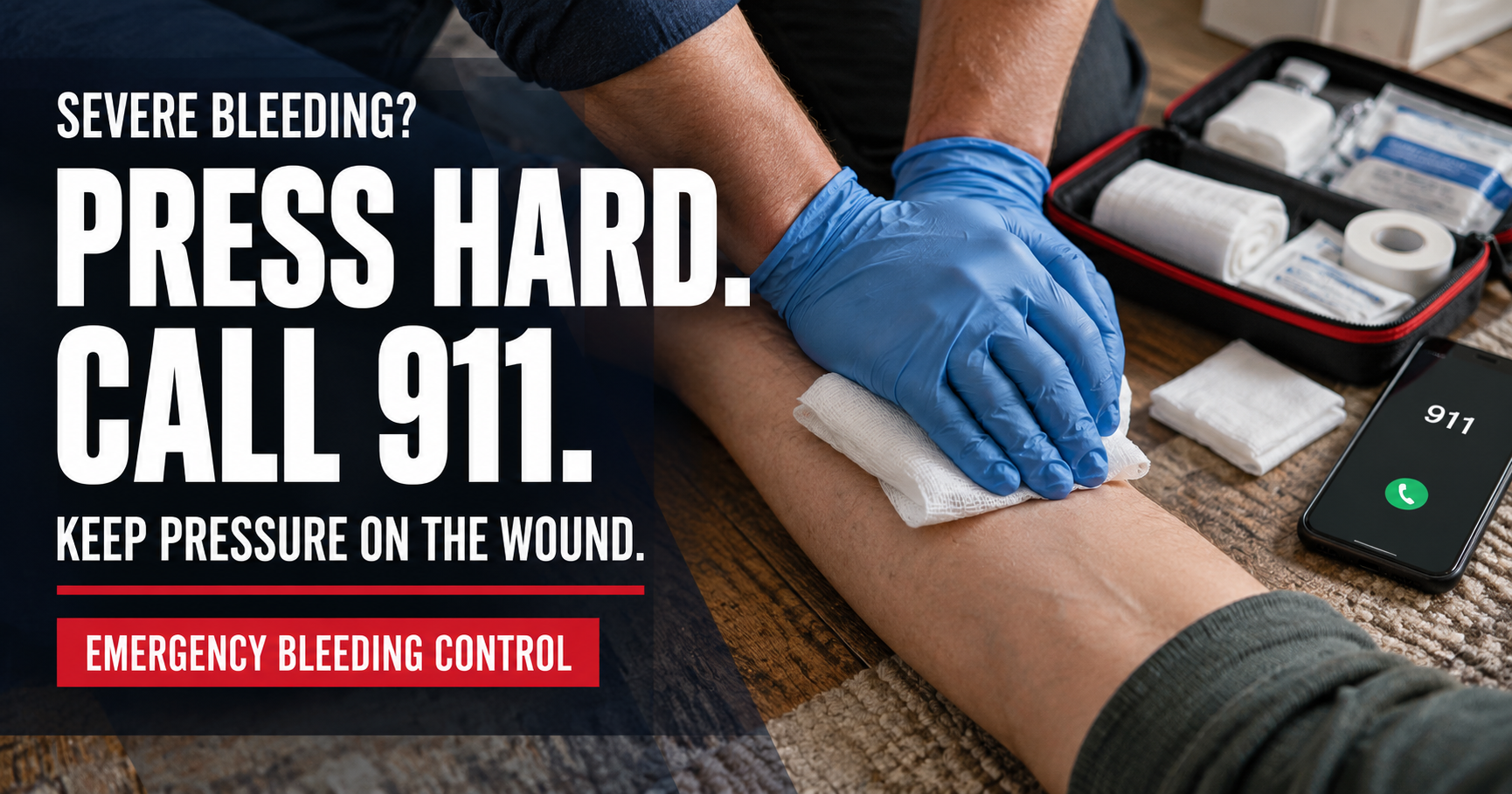
This is exactly why the heavy-bleeding guide belongs in the same first-aid cluster.
Heavy Bleeding Changes the Priority
If the injury involves serious bleeding, controlling that bleeding comes before worrying about whether the bone is fractured.
I get emergency help coming and use the bleeding-control methods appropriate to the injury and my level of training.
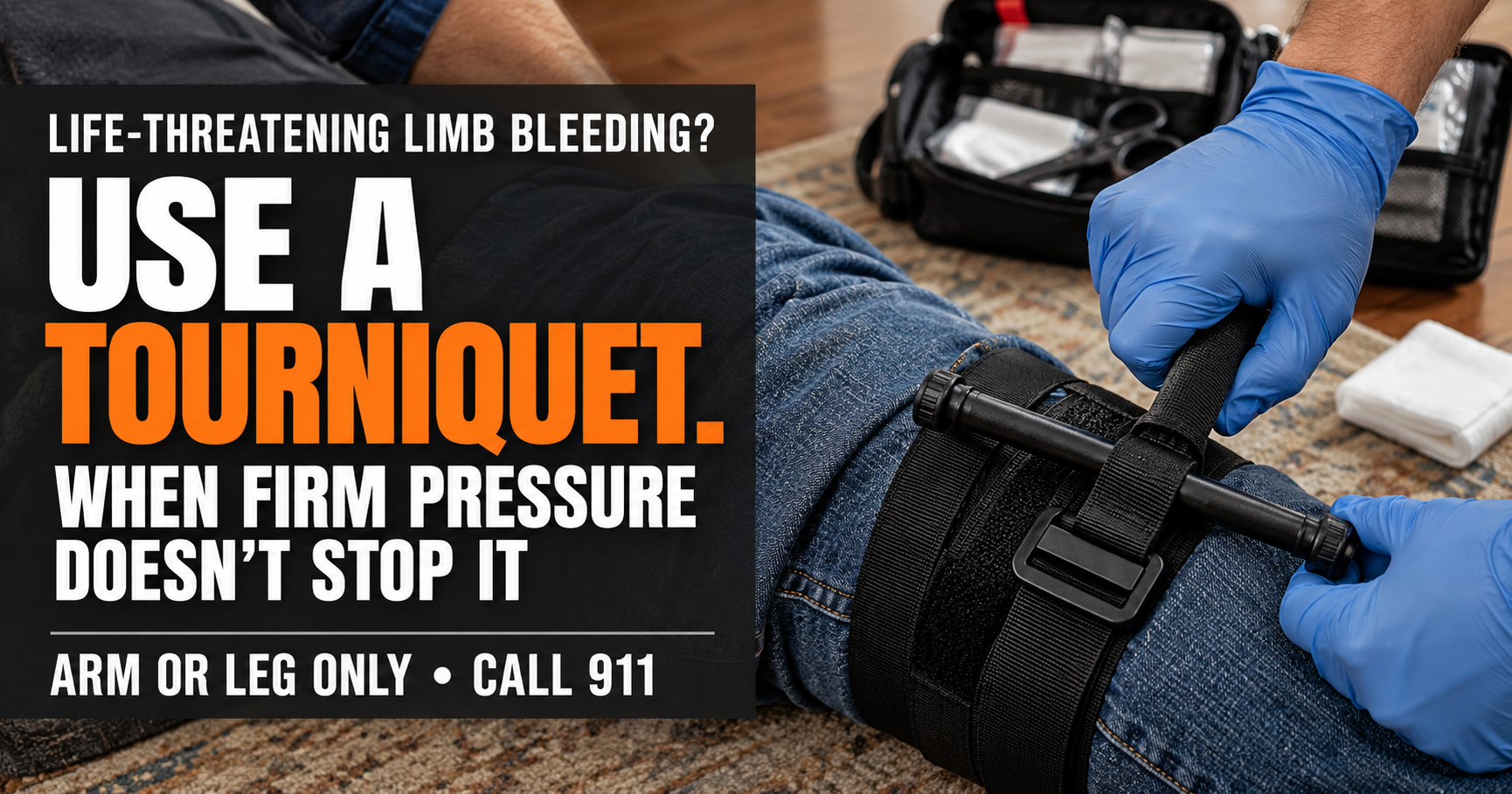
For life-threatening bleeding from an arm or leg, we’ve also covered when a tourniquet may be appropriate.
A broken bone is serious.
Life-threatening blood loss is more immediate.
I Don’t Straighten a Deformed Limb Myself
If an arm or leg is sitting at an obviously abnormal angle, I’m not trying to make it look normal.
Realigning displaced fractures is a medical procedure. Mayo Clinic notes that healthcare professionals may need to perform a reduction to move displaced bone fragments back into proper position, sometimes with pain control, sedation, or anesthesia.
That’s enough for me to know it isn’t something I casually attempt in the living room.
My goal is preventing unnecessary movement until appropriate medical care is available.
Numb or Discolored Fingers and Toes Concern Me
This is an important warning sign.
Mayo Clinic recommends emergency help when the finger or toe beyond a suspected fracture becomes numb or discolored.
The Red Cross similarly flags coldness, numbness, and tingling at or below an injured area as concerning findings.
If circulation or nerve function appears compromised, I don’t wait around hoping the swelling improves tomorrow.
A Possible Neck, Back, or Head Injury Is Different
If someone fell from a ladder, was struck by something heavy, crashed a vehicle, or experienced another major trauma and I suspect a neck or back injury, I don’t casually move them.
Mayo Clinic advises keeping someone with a suspected spinal injury still and avoiding movement of the head and neck unless movement is necessary for safety or lifesaving care.
That’s a 911 situation.
It’s not the time for a homemade splint and a ride across town in the back seat if emergency services can respond.
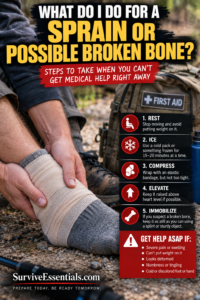
For a Closed Injury, Cold Can Help
If the skin isn’t open and we’re dealing with a suspected sprain, strain, or fracture, a cold pack can help with pain and swelling.
The Red Cross recommends wrapping the cold pack in a thin, dry towel rather than placing it directly against the skin, using it for no more than about 20 minutes at a time, and allowing a break before applying it again.
That’s one reason an instant cold pack belongs in the home emergency first aid kit.
During a blackout, I may not have a freezer full of ice available.
I Don’t Put Ice Directly on the Skin
More cold isn’t automatically better.
A cold pack gets wrapped in cloth or another appropriate barrier.
Mayo Clinic gives the same basic advice for suspected fractures: use an ice pack to limit swelling and relieve pain, but don’t place ice directly against the skin.
The goal is helping the injury, not adding a cold injury.
What About the Old RICE Method?
A lot of us grew up hearing:
Rest, Ice, Compression, Elevation.
I still value rest and appropriate cold for many acute injuries, but I don’t automatically wrap every questionable injury tightly.
The Red Cross says a compression wrap may be considered during recovery from an ankle sprain or strain when the person is trained in its use. The evidence supporting compression is limited.
That’s a much more sensible way for me to look at it.
Compression can be useful in the right situation.
It isn’t something I crank down around every swollen limb that might actually be fractured.
If I Use a Wrap, I Watch Circulation
A wrap shouldn’t make the fingers or toes numb, cold, pale, blue, or increasingly painful.
Those are signs that make me reassess immediately.
Again, I don’t need to “tough it out” because a first-aid technique is supposed to help.
If the injured area is getting worse after I wrap it, something isn’t right.
Splinting Can Help, but I Want Training
If professional medical help isn’t readily available and I’ve been trained to splint an injury, immobilizing the area can reduce unnecessary movement.
Mayo Clinic recommends splinting the area above and below a suspected fracture when someone is trained and medical help isn’t immediately available. Padding the splint can also improve comfort.
The important words there are:
If I’ve been trained.
I’m not trying to build an elaborate wilderness orthopedic device because I watched a survival video three years ago.
The Goal of a Splint Is to Keep Things From Moving
I’m not using the splint to straighten the limb.
I’m not forcing an injured joint into the position I think looks correct.
I’m trying to support the injured area in the position found and reduce movement while professional care is delayed.
That’s a much simpler goal.
I Check Before and After Splinting
If I’m trained and splinting becomes necessary, I pay attention to circulation and sensation beyond the injury.
What did the fingers or toes look and feel like before?
What do they look and feel like afterward?
If something becomes cold, numb, discolored, or significantly worse, that matters.
The splint is supposed to protect the injury.
It shouldn’t create another problem.
A Pillow Can Sometimes Be More Useful Than a Fancy Splint
Not every injury requires sticks and straps.
Sometimes supporting an injured arm with pillows or folded blankets and keeping the person still is more practical while waiting for help.
The Red Cross even recommends a pillow or folded blanket for someone to hold against a suspected rib fracture while arranging evaluation.
Simple can be good.
I Don’t Wrap Broken Ribs Tightly
A painful rib injury can make someone want to bind their chest tightly.
I don’t do that.
Breathing is more important than making the ribs feel immobilized.
The Red Cross recommends allowing someone with suspected broken ribs to rest in a position that makes breathing easier and getting them medically evaluated. Trouble breathing, shock, or inability to safely move them warrants emergency help.
If breathing is becoming difficult, that’s no longer simply a sore-rib problem.
An Ankle Injury Can Be Hard to Judge at Home
This is probably one of the most common situations.
Someone steps wrong.
The ankle rolls.
It hurts immediately and starts swelling.
Is it sprained?
Fractured?
Without an examination and sometimes imaging, I may not know.
So I don’t feel obligated to diagnose it myself.
If the injury is significant, the person can’t safely bear weight, the joint looks abnormal, pain is severe, or there are circulation or sensation changes, professional evaluation makes sense.
“I Can Walk on It” Doesn’t Prove Nothing Is Broken
This is another assumption I avoid.
Being able to limp on an injured foot or ankle doesn’t automatically rule out a fracture.
Likewise, being unable to walk doesn’t automatically prove there’s a broken bone.
I use function as one clue, not the entire diagnosis.
Kids Can Have Fractures That Don’t Look Like Adult Fractures
Children’s bones are different.
Mayo Clinic notes that greenstick and buckle fractures are particularly common in children because their bones are more flexible.
That means I don’t wait for a child’s arm to look dramatically broken before taking significant pain, swelling, or loss of function seriously.
If a child won’t use an arm or leg normally after an injury, I want it evaluated.
Older Adults Get My Attention After a Fall Too
A fall that a younger person walks away from can have very different consequences for an older adult.
If there’s significant hip, pelvis, leg, back, or other pain after a fall, I don’t encourage them to “walk it off.”
The Red Cross identifies injuries involving the pelvis or upper leg among those requiring immediate emergency medical treatment.
Again, unnecessary movement can make a serious injury worse.
I Don’t Force Someone Into the Car If Moving Them Isn’t Safe
There are injuries where calling 911 is much safer than trying to load someone into a vehicle.
Obvious deformity.
Possible neck or spinal injury.
Severe pain with movement.
Major trauma.
Heavy bleeding.
Signs of shock.
A bone through the skin.
Numb or discolored fingers or toes.
Those are situations where professional transport may be important.
What If Help Is Delayed?
This is where our preparedness angle matters.
Maybe a winter storm has blocked the road.
Maybe a tornado has overwhelmed local responders.
Maybe we’re camping far from immediate help.
The basic priorities don’t suddenly change.
Protect the person.
Control serious bleeding.
Avoid unnecessary movement.
Support the injured area.
Use appropriate cold for a closed injury.
Keep them comfortable and protected from extreme temperatures.
Monitor breathing and responsiveness.
Keep working toward professional medical evaluation.
Preparedness bridges the delay.
It doesn’t make a broken bone heal correctly without medical care.
I Watch for Shock After a Serious Injury
A fracture caused by significant trauma can come with other injuries and blood loss.
If someone becomes pale, clammy, weak, dizzy, confused, restless, or less responsive, or develops rapid shallow breathing, I take that seriously.
Shock is a life-threatening condition involving inadequate blood flow to the body’s organs.
That’s actually the next major first-aid question this cluster needs.
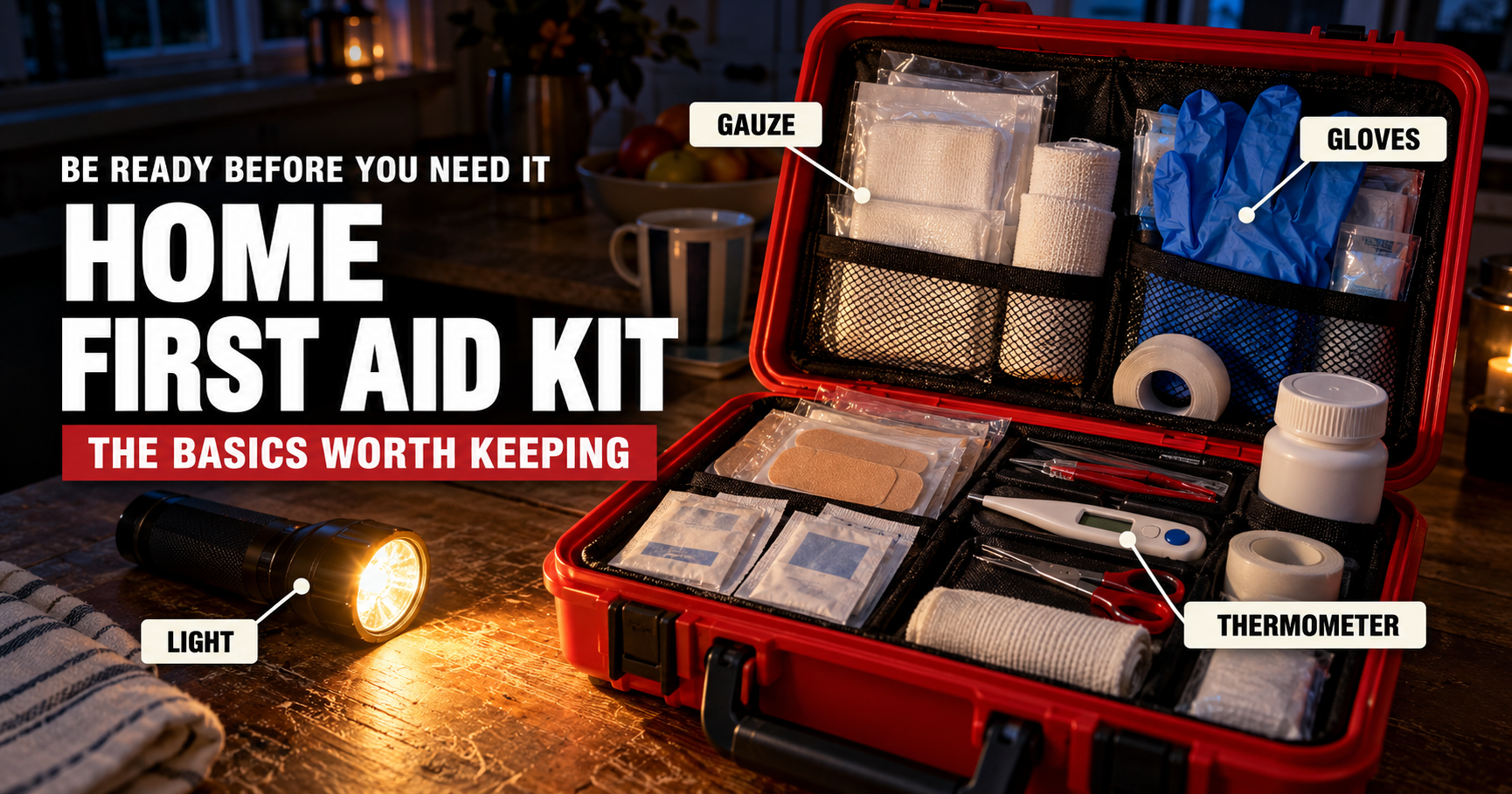
The First Aid Kit Helps Me Protect the Injury
This is another reason I don’t fill the kit exclusively with bandages.
Useful supplies for these injuries can include:
- Gloves
- Cold packs
- Gauze and dressings for associated wounds
- Triangular bandages
- Appropriate materials for support
- Emergency blanket
- First-aid reference material
The kit doesn’t diagnose the fracture.
It gives me tools to care for the person while help is arranged.
I Want to Prevent These Injuries During Disaster Cleanup Too
Just like burns and cuts, a lot of sprains and fractures happen after the main emergency.
Someone climbs a wet ladder.
Steps into debris in the dark.
Slips on ice.
Falls while carrying generator fuel.
Trips over an extension cord.
That’s why good lighting, decent footwear, gloves, and slowing down matter during storm cleanup.
A first aid kit is useful.
Not getting hurt is better.
My Simple Rule When I Can’t Tell Sprain From Fracture
This is what I want to remember:
If I’m not sure, I treat the injury like it could be a fracture.
I don’t repeatedly move it to test it.
I don’t force a crooked limb straight.
I don’t push exposed bone back inside.
I control any serious bleeding.
I use an appropriately wrapped cold pack for a closed injury.
I support the injured area and limit unnecessary movement.
And when the injury is significant, I get professional medical evaluation.
That’s a much safer approach than trying to prove it’s “only a sprain” because going to urgent care would be inconvenient.
About the Author
Grant Holloway writes about practical first aid, injuries, bleeding control, wound care, burns, and emergency medical preparedness for ordinary households. His work for Survive Essentials focuses on useful first-aid decisions people can make before professional help arrives, while recognizing when an injury needs proper medical evaluation rather than more home treatment.