When disaster strikes and clean drinking water becomes difficult to find, people start asking the same question.
Where can I get safe water?
It’s a fair question.
After all, you can survive without many things during an emergency, but water isn’t one of them.
Whether you’re dealing with a severe storm, prolonged power outage, water main break, winter weather emergency, hurricane, flood, or another disaster, having access to safe drinking water quickly becomes one of your most important concerns.
The problem is that many people assume any water source is better than no water source.
Unfortunately, that’s not always true.
Some emergency water sources are far safer than others. Understanding the differences before an emergency happens can help you make better decisions when it matters most.
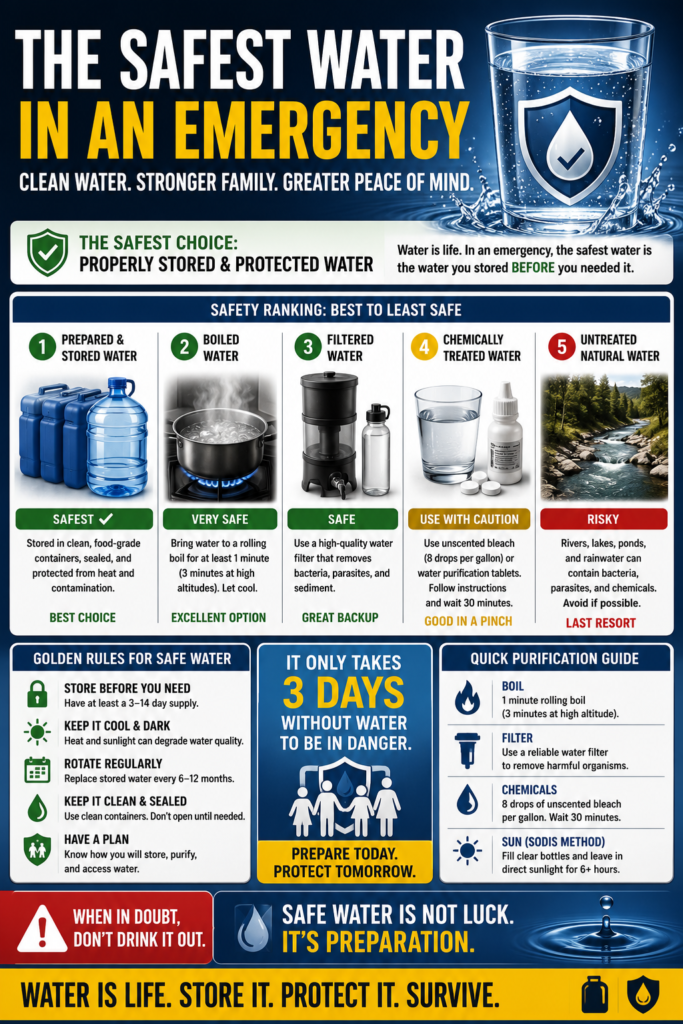
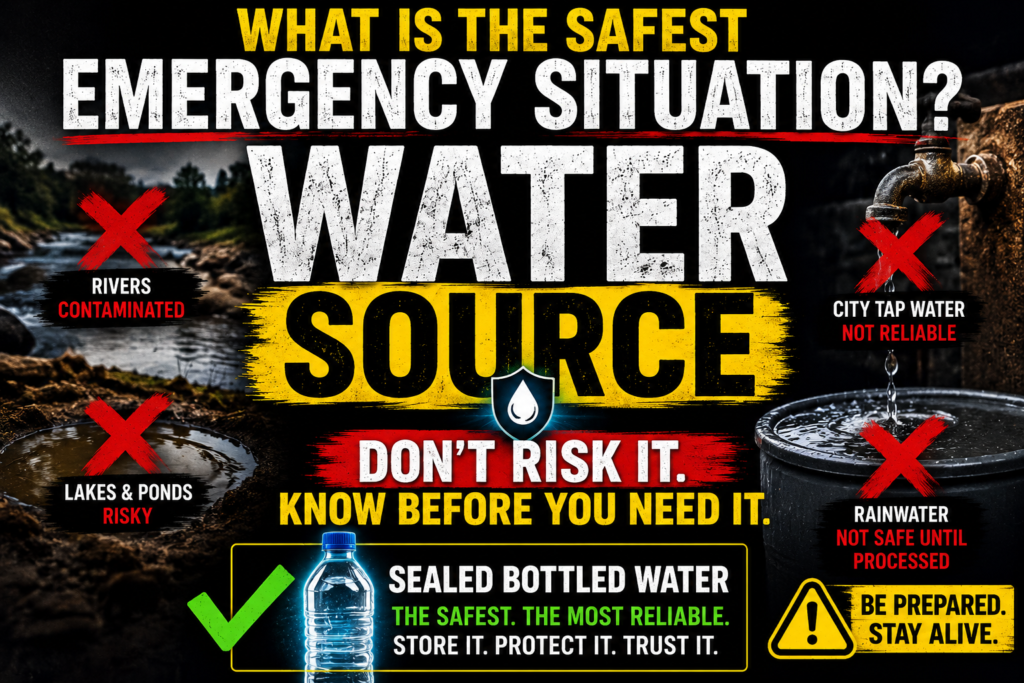
The Safest Water Source Is the One You Stored Before the Emergency
This may not be the most exciting answer, but it’s the most accurate.
Water that was safely stored before the emergency is usually your best option.
Stored water offers several advantages:
- You know where it came from
- You know how it was stored
- It requires no collection
- It requires no filtration
- It is immediately available
That’s why preparedness experts consistently recommend storing water before disaster strikes.
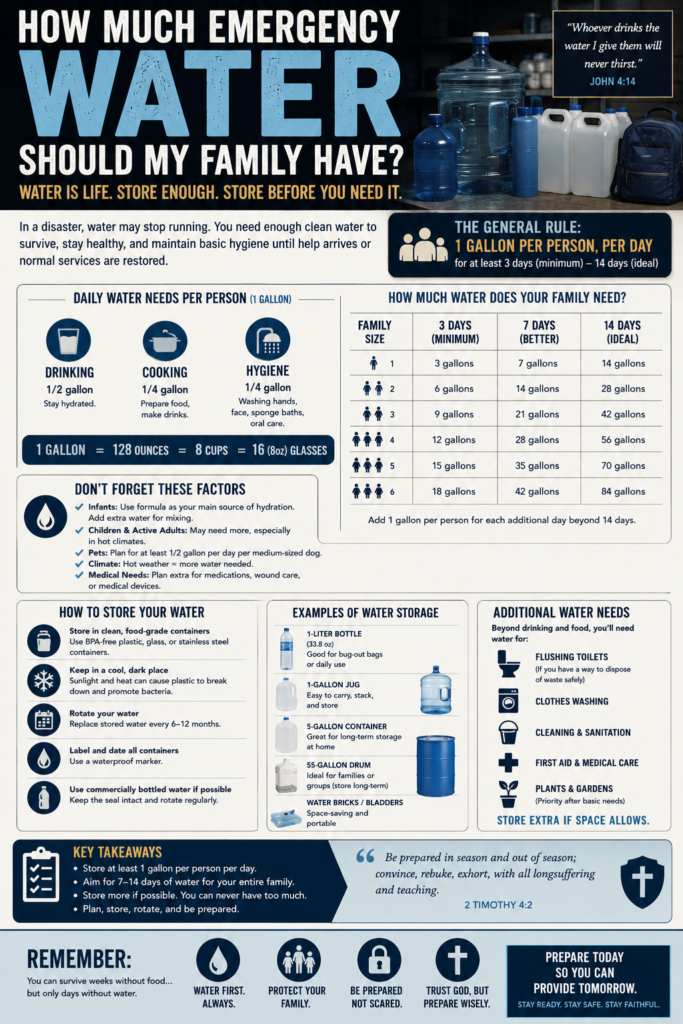
Our guide on how much emergency water a family should store explains why most households underestimate how much water they actually need.
The families who already have water available rarely find themselves scrambling when store shelves empty.
Bottled Water Remains One of the Best Emergency Options
For most families, bottled water is the easiest place to start.
It’s affordable.
Widely available.
Easy to rotate.
Easy to store.
And immediately ready to use.
Many people worry about expiration dates, but properly stored bottled water often lasts much longer than expected.
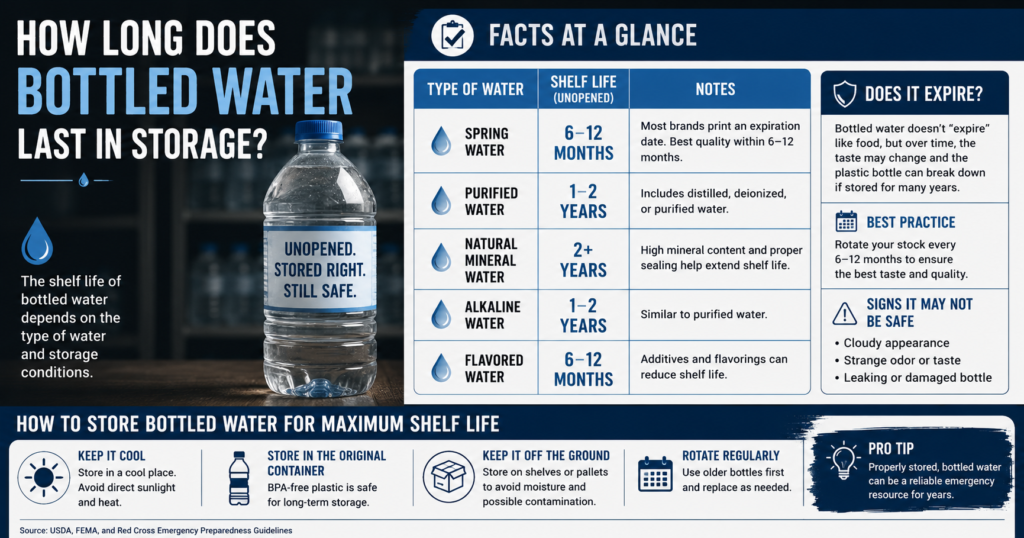
If you’ve ever found an old case of bottled water in a closet and wondered if it was still good, check out how long bottled water lasts in storage.
Temporary Water Storage Can Be a Game Changer
One challenge many families face is finding room to store enough water.
That’s especially true for renters, apartment residents, and people living in smaller homes.
A solution many people overlook is temporary emergency storage.
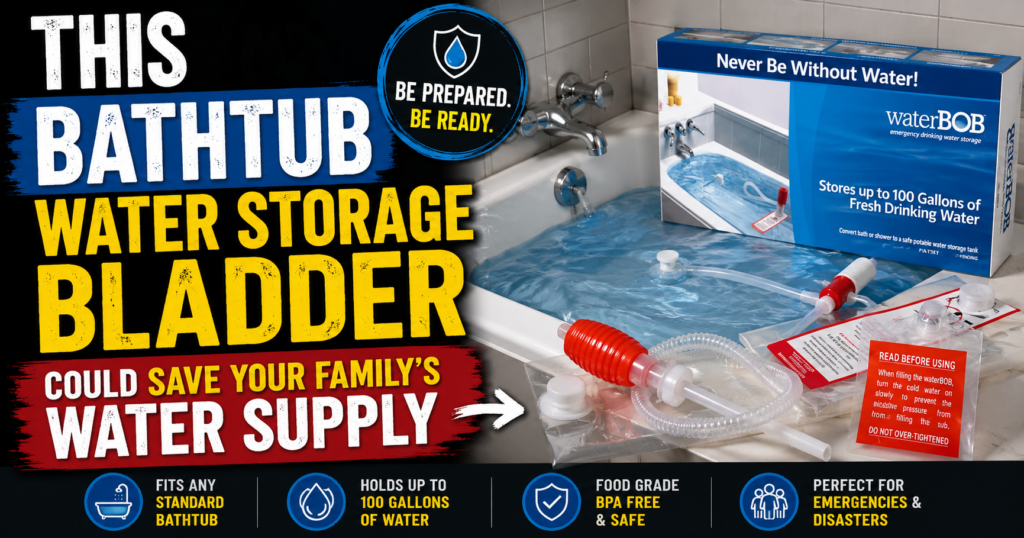
For example, we recently reviewed this bathtub water storage bladder that could save your family’s water supply.
Instead of storing dozens of bulky containers year-round, it allows you to quickly fill a food-grade liner with up to 100 gallons of water when severe weather or other emergencies are approaching.
For families worried about hurricanes, winter storms, or extended outages, it can dramatically increase available water storage with very little effort.
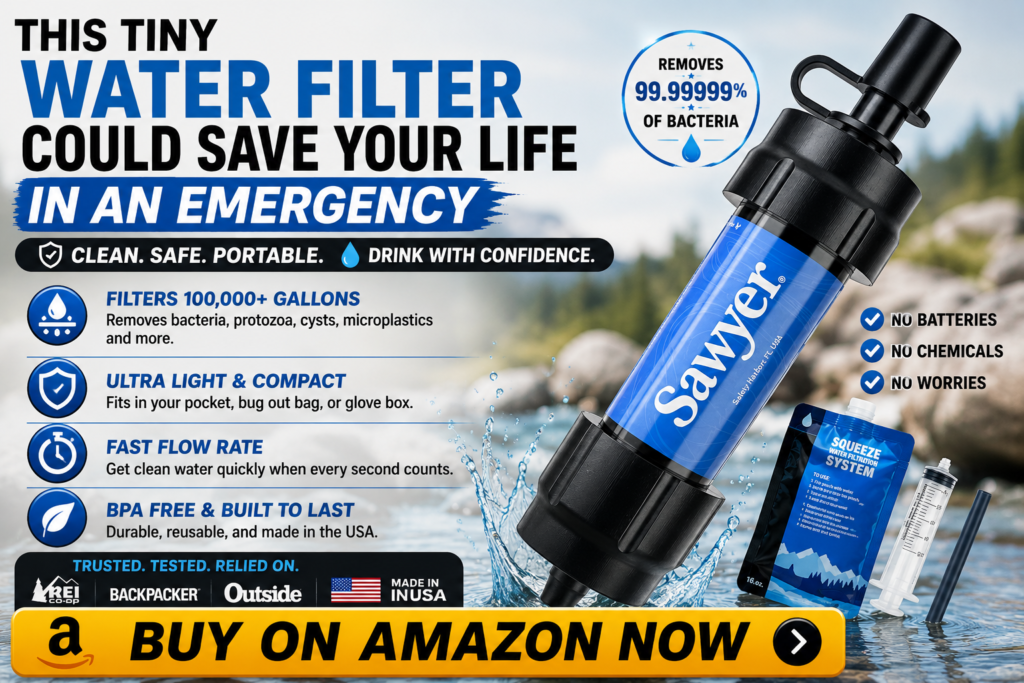
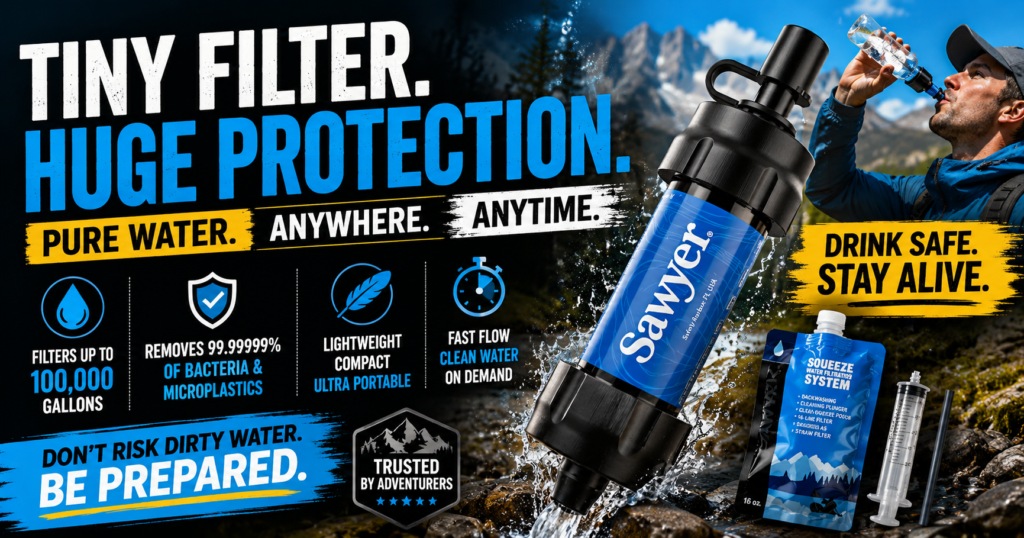
👉 This portable water filter is awesome!: https://amzn.to/3Ss7eAA
Rainwater Can Be Safer Than Many People Think
Rainwater often surprises people.
Many assume it is automatically unsafe.
Others assume it is automatically safe.
Neither assumption is completely correct.
Fresh rainwater is often cleaner than many natural water sources, but collection methods matter.
Rainwater can become contaminated by:
- Roofing materials
- Bird droppings
- Dirt and debris
- Storage containers
That doesn’t mean rainwater should be ignored.
In many situations it may be one of your best backup options.
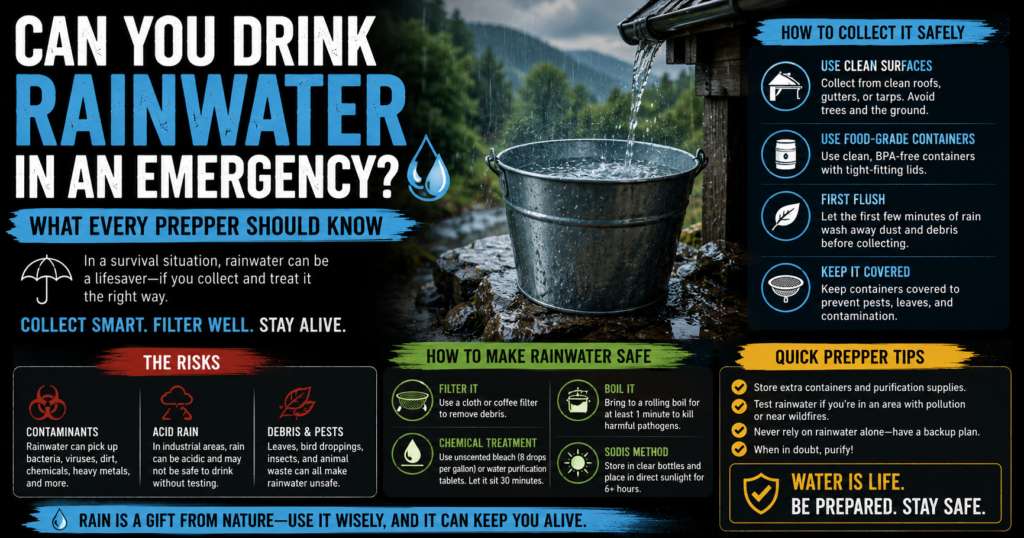
Our article Can You Drink Rainwater in an Emergency? covers the risks and best practices in much greater detail.
Flowing Streams Often Rank Higher Than Stagnant Water
If you’re forced to obtain water from nature, moving water is generally preferable to standing water.
Flowing streams and creeks are often less likely to contain concentrated contamination than stagnant ponds.
However, that does not mean they’re safe.
Even crystal-clear mountain streams can contain:
- Parasites
- Bacteria
- Animal waste
- Agricultural runoff
- Other contaminants
Nature does not guarantee safe drinking water.
Treatment is still recommended whenever possible.
Ponds and Stagnant Water Should Be Lower on Your List
Standing water tends to collect contaminants.
The longer water sits, the more opportunities exist for bacteria, algae, insects, and waste to accumulate.
If stagnant water becomes your only option, filtration and purification become even more important.
Many survival situations have forced people to rely on ponds, but it should rarely be your first choice.
Never Judge Water by Appearance
This is one of the most dangerous mistakes people make.
Clear water is not necessarily safe water.
Many harmful organisms are invisible to the human eye.
Water can appear perfectly clean while containing contaminants capable of causing serious illness.
That’s why visual inspection alone is never enough.
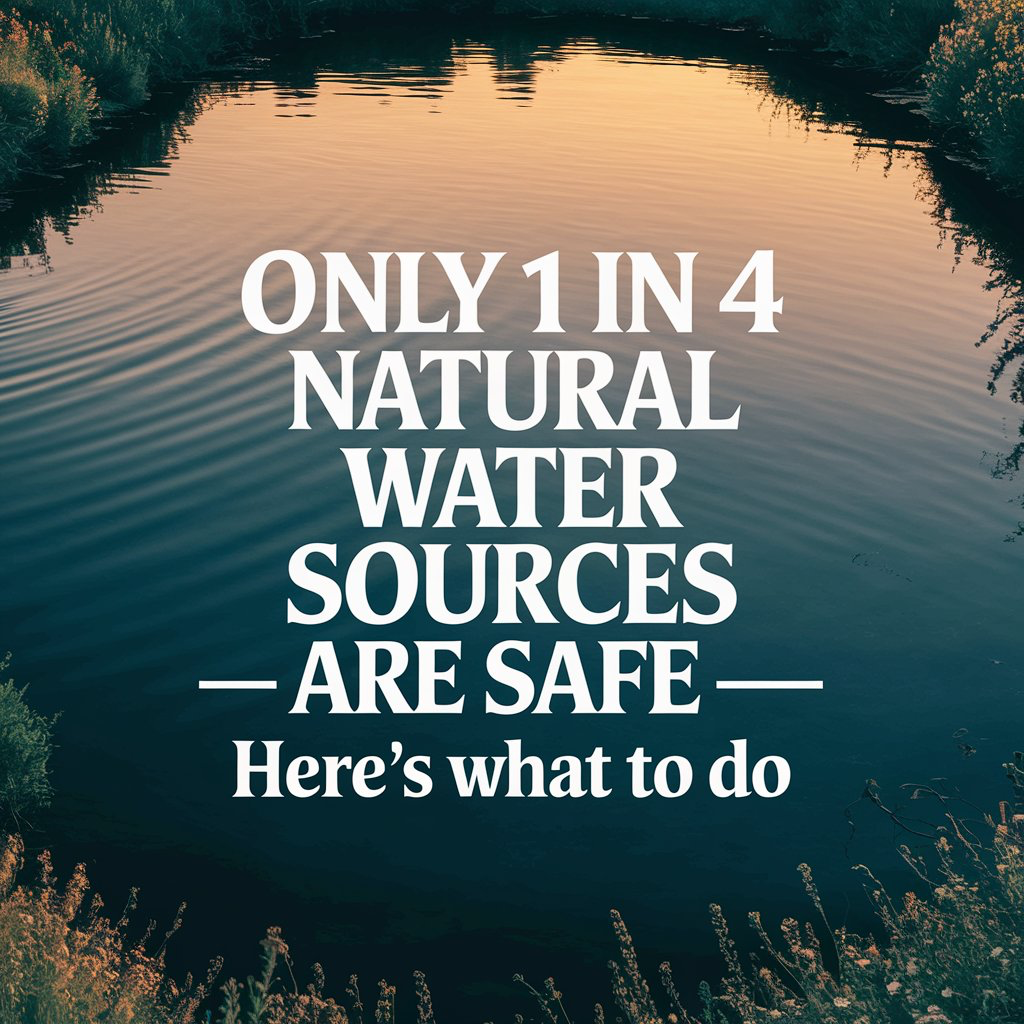
If you haven’t already, read why clear-looking water can still be dangerous before assuming a water source is safe.
Why Every Family Needs a Water Filtration Plan
No matter how much water you store, every supply eventually runs out.
That’s where filtration becomes critical.
A good filter expands your options dramatically.
Instead of depending entirely on stored water, filtration allows you to safely use additional sources if an emergency lasts longer than expected.
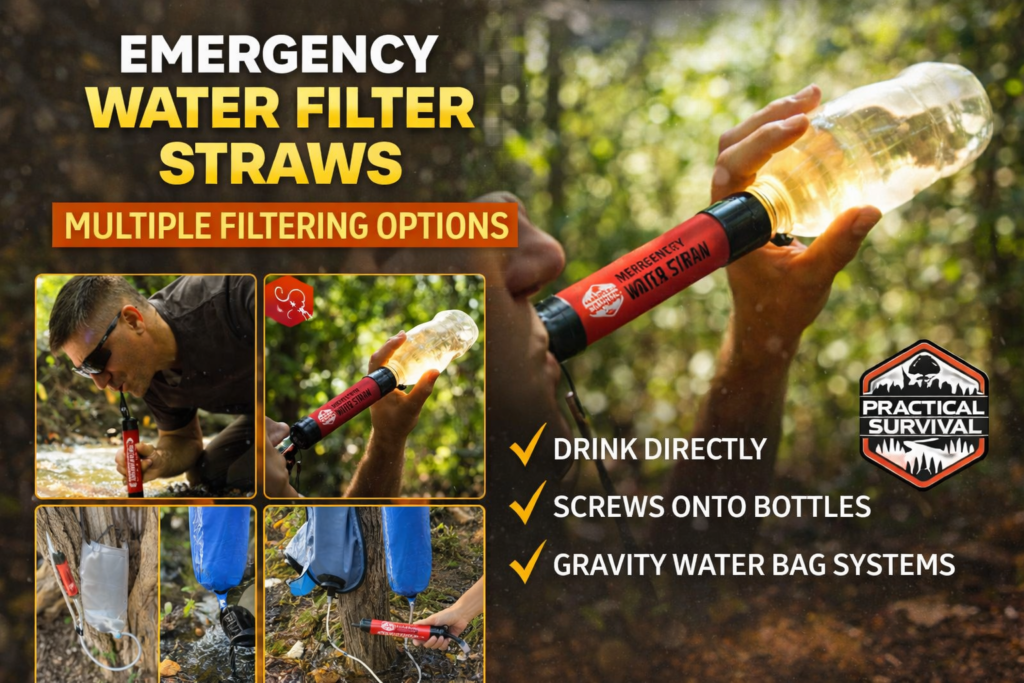
One of the simplest options we’ve reviewed is these emergency water straws that could save your life.
They’re compact, affordable, and capable of filtering thousands of gallons while taking up almost no space in an emergency kit.

For larger preparedness plans, you may also want to read our guide to survival water purification systems.
What About Snow and Ice?
Snow can absolutely become an emergency water source.
However, it should be melted before drinking.
Eating snow directly may lower body temperature and increase the risk of hypothermia during winter emergencies.
Fresh snow is generally preferable to older snow that has been sitting on the ground collecting dirt and debris.
Like other water sources, treatment is still recommended whenever possible.
Water Sources That Deserve Extra Caution
Certain water sources carry significantly greater risks.
Examples include:
- Flood water
- Roadside puddles
- Industrial runoff
- Water near chemical spills
- Water with unusual colors
- Water with strong odors
Even advanced filtration may not remove every hazard present in these environments.
When possible, choose a safer source.
Why Layered Water Preparedness Works Best
The most prepared families don’t rely on one water source.
They build multiple layers of protection.
A strong water preparedness plan may include:
- Bottled water
- Long-term water storage
- Bathtub emergency storage
- Rainwater collection
- Portable filtration
- Water purification methods
- Knowledge of local water sources
Each layer provides additional security.
If one option becomes unavailable, another remains.
Most Water Emergencies Start Long Before You Notice Them
One interesting thing about preparedness is that many water emergencies provide warning signs.
Storm forecasts.
Freeze warnings.
Hurricane watches.
Infrastructure alerts.
Boil water advisories.
The families who respond early usually have the best options available.
Those who wait often find empty shelves and limited choices.
That’s one reason we recommend building a water plan before disaster strikes rather than after.
The Goal Isn’t Finding Water. It’s Finding Safe Water.
Almost everyone can find water.
Finding water isn’t usually the challenge.
Finding water that won’t make you sick is what matters.
That’s why preparation, storage, filtration, and education all work together.
The safest emergency water source is usually the one you planned for ahead of time.
Every additional layer you add today increases your chances of having safe water available when you need it most.
Building Water Security Before the Next Emergency
A few cases of bottled water.
A backup filtration system.
A temporary bathtub storage solution.
Knowledge of local water sources.
Those simple steps put you far ahead of the average household.
And when the next emergency arrives, you’ll spend less time searching for water and more time focusing on the things that matter most.
Related Water Preparedness Articles
Building a reliable emergency water plan takes more than simply storing a few bottles of water. Explore these helpful guides to strengthen your family’s preparedness:
- Emergency Water Preparedness Guide: Everything You Should Know
- How to Build a 30-Day Emergency Water Supply for Your Family
- Emergency Water Checklist: What Every Family Should Have
- How to Purify Water Without Electricity During an Emergency
- What Is the Safest Water Source During an Emergency?