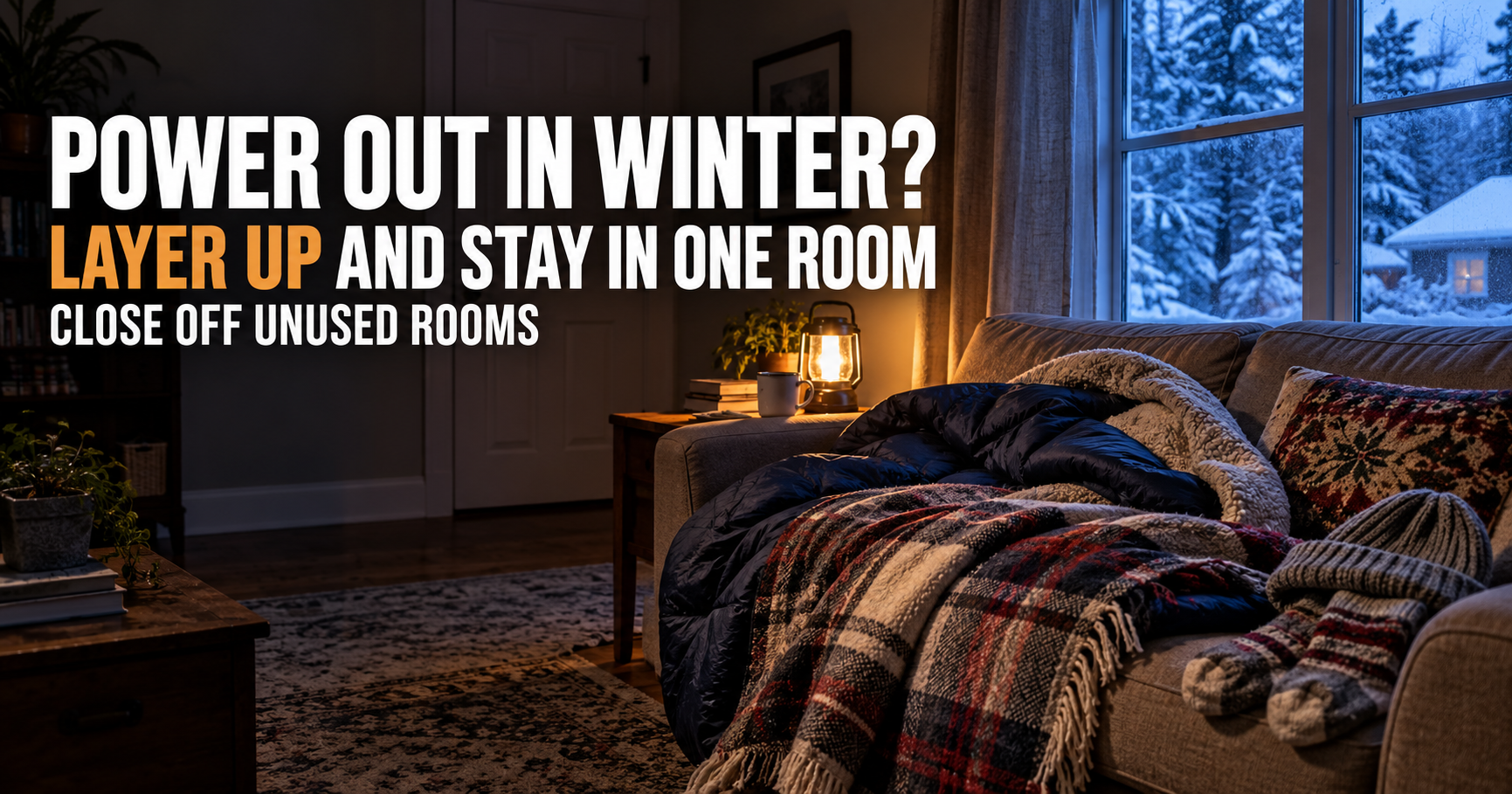
When my power goes out in the middle of winter, I don’t wait until the house feels freezing before I start doing something about it.
I start conserving heat almost immediately.
That’s the biggest thing I’ve learned about staying warm during a winter blackout. Creating new heat can be difficult without electricity, but keeping the heat that’s already inside the house is something I can start doing right away.
My goal isn’t to keep every bedroom, hallway, bathroom, and unused room at 72°F.
My goal is much simpler.
I want to keep the people in the house warm, protect the plumbing as long as I reasonably can, and have a clear point where I stop trying to tough it out and go somewhere safer.
Here’s how I handle it.
The First Thing I Do Is Figure Out How Serious the Outage Looks
A 45-minute winter outage is annoying.
A 48-hour outage when it’s 5°F outside is a completely different problem.
I check the utility outage information and weather forecast early.
I’m looking for three things:
- How cold is it going to get?
- How long might the outage last?
- Is the weather getting better or worse?
If there’s major storm damage and no restoration estimate, I start conserving heat right away.
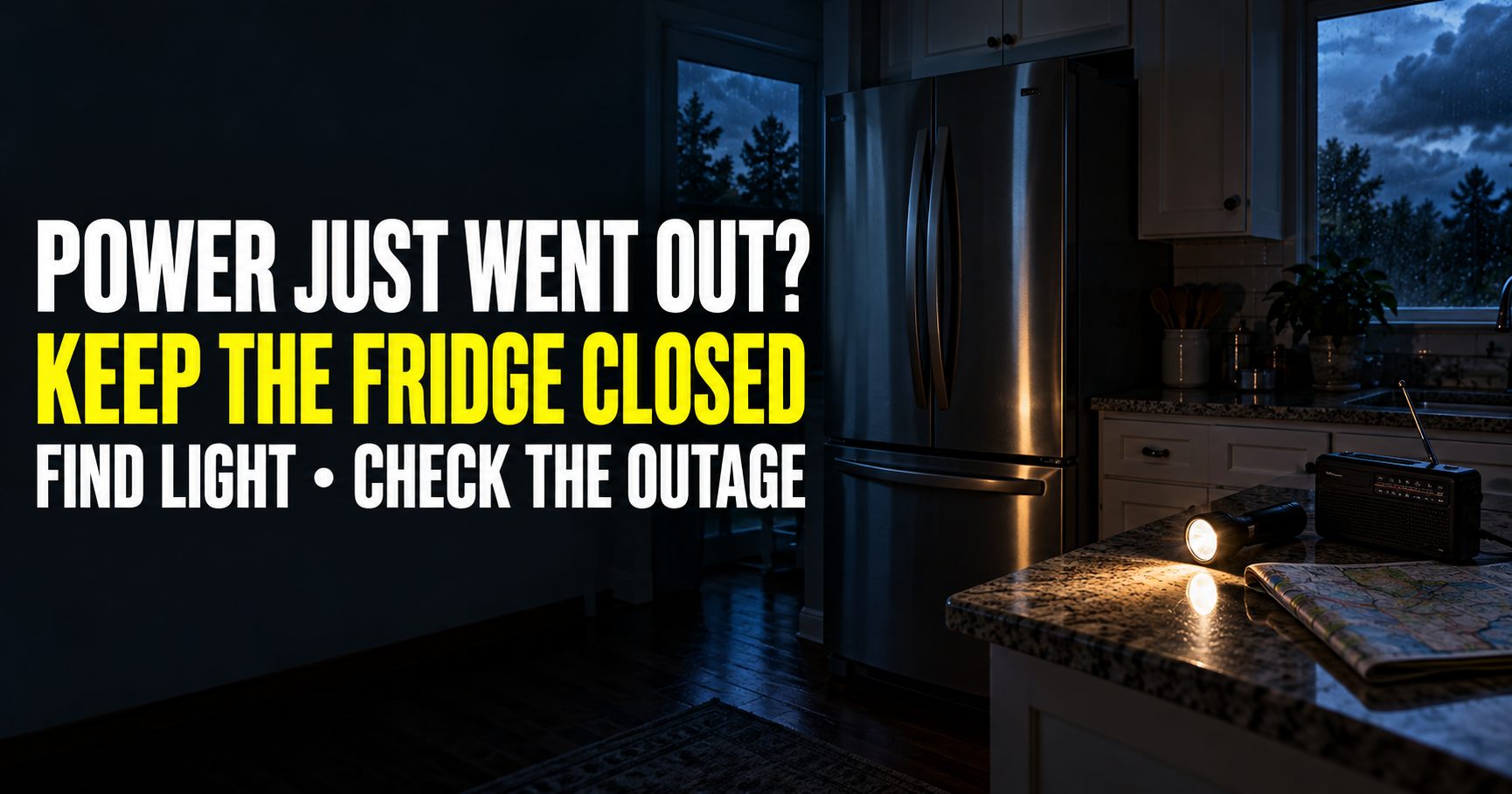
My first-hour power outage routine covers the other things I’m checking at the same time.
I Pick One Part of the House to Keep Comfortable
This is probably the biggest practical change I make during a winter outage.
I stop thinking about heating the entire house.
Instead, I think about where everyone is actually going to spend their time.
Usually, I want a smaller interior room or living area that can comfortably hold the family.
Then I concentrate our efforts there.
Everyone doesn’t need to be sitting alone in separate bedrooms while we’re trying to conserve heat.
We gather together.
That makes blankets, body heat, emergency lighting, and whatever safe backup heat I have much more useful.

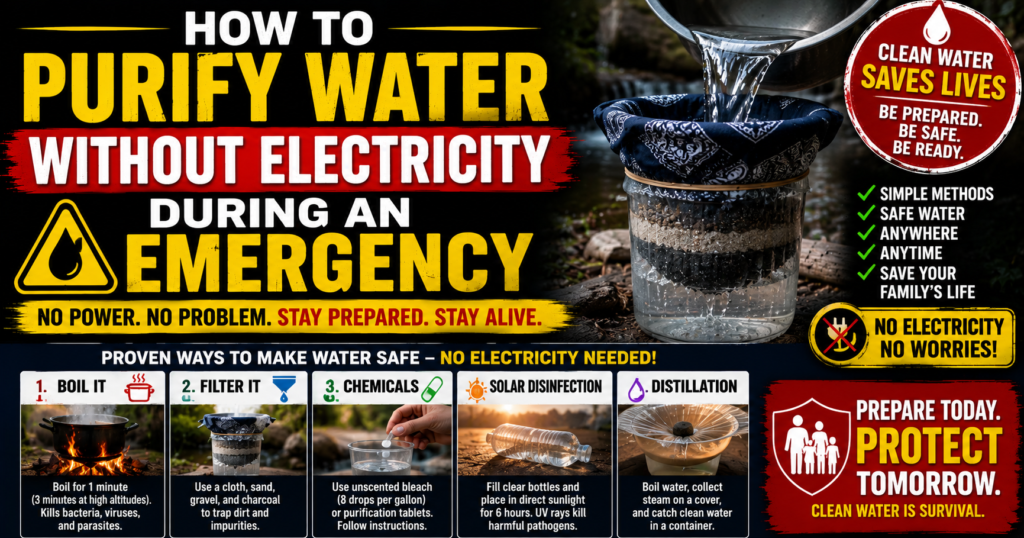
I Close Off Rooms We Don’t Need
If nobody needs to be in a room, I close the door.
Bedrooms we’re not using.
Spare rooms.
Offices.
Other unnecessary areas.
I’m not trying to maintain normal life during a serious winter blackout.
I’m trying to reduce the amount of space we’re actively occupying.
There’s no reason for me to worry about keeping an unused guest bedroom comfortable while everyone is sitting in the living room.
But I Don’t Forget About Plumbing in Those Cold Rooms
This is where blindly shutting everything off can create another problem.
If plumbing runs through an area I’m allowing to get extremely cold, I pay attention.
A room doesn’t have to be comfortable for people, but I don’t want pipes freezing inside walls because I completely forgot that part of the house existed.
If temperatures are falling dangerously low, protecting plumbing becomes part of the larger decision about whether I can realistically keep the house safe.

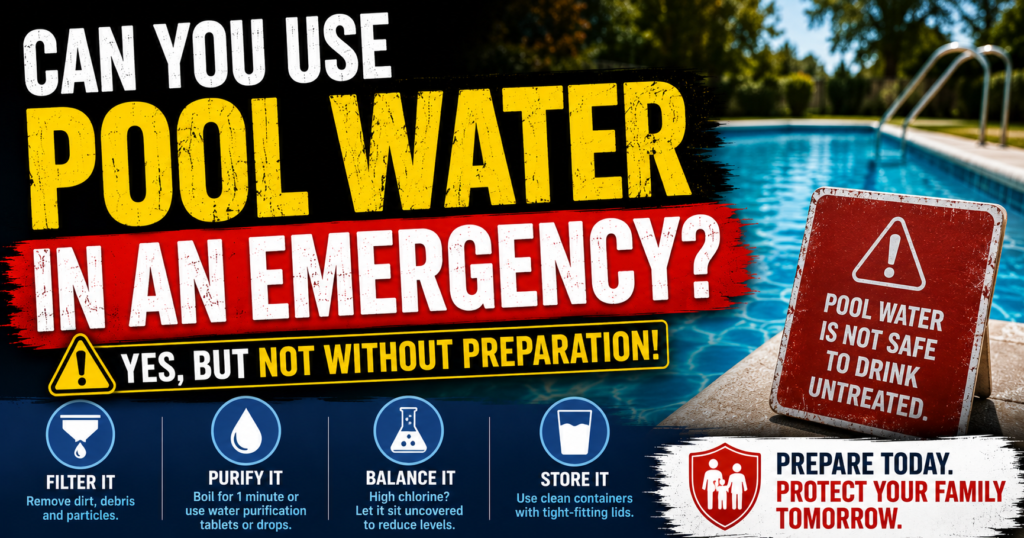

I Stop Drafts Early
A tiny cold draft doesn’t feel like much when the house is still warm.
Several hours later, it matters.
I check the obvious places where cold air enters:
- Exterior doors
- Older windows
- Door thresholds
- Poorly sealed window frames
- Other noticeable draft points
I’m not remodeling the house during a blackout.
I’m doing simple things.
Rolled towels at drafty doors.
Curtains closed.
Blinds down.
Temporary coverings where appropriate.
Anything reasonable that slows the loss of warm indoor air helps.
I Use the Sun When It’s Actually Helping Me
During daylight, south-facing windows can sometimes provide useful solar heat.
If sunlight is pouring through a window and warming the room, I’ll take advantage of it.
Then as the sun goes down, I close curtains and coverings again to help reduce heat loss.
It’s a small thing.
But winter blackout preparedness is mostly a collection of small things working together.


I Dress Like I’m Outside Before I Feel Like I’m Outside
I don’t sit around in a T-shirt until the house gets cold enough that I’m miserable.
I layer early.
That means things like:
- Base layer
- Warm shirt or sweater
- Insulating outer layer
- Warm pants
- Dry socks
- Hat
- Appropriate footwear
A warm hat makes a noticeable difference in comfort.
So do dry socks.
If I’m going to be sitting rather than working, I need more insulation than I might expect because I’m not generating as much body heat.
I Don’t Overdress Until I’m Sweating
This matters too.
Sweat makes clothing damp.
Damp clothing is exactly what I don’t want when I’m trying to stay warm.
If I’m doing physical work, carrying firewood, clearing snow, or setting up equipment, I’ll remove a layer before I start sweating heavily.
Then I add it back when I stop moving.
Staying dry matters.

Blankets Are Good, but Sleeping Bags Are Better Than Many People Realize
Blankets are useful because almost everyone already owns them.
But a good sleeping bag is designed specifically to trap body heat around a person.
That’s why I like having real emergency sleeping gear available instead of assuming the comforter from the bed solves everything.
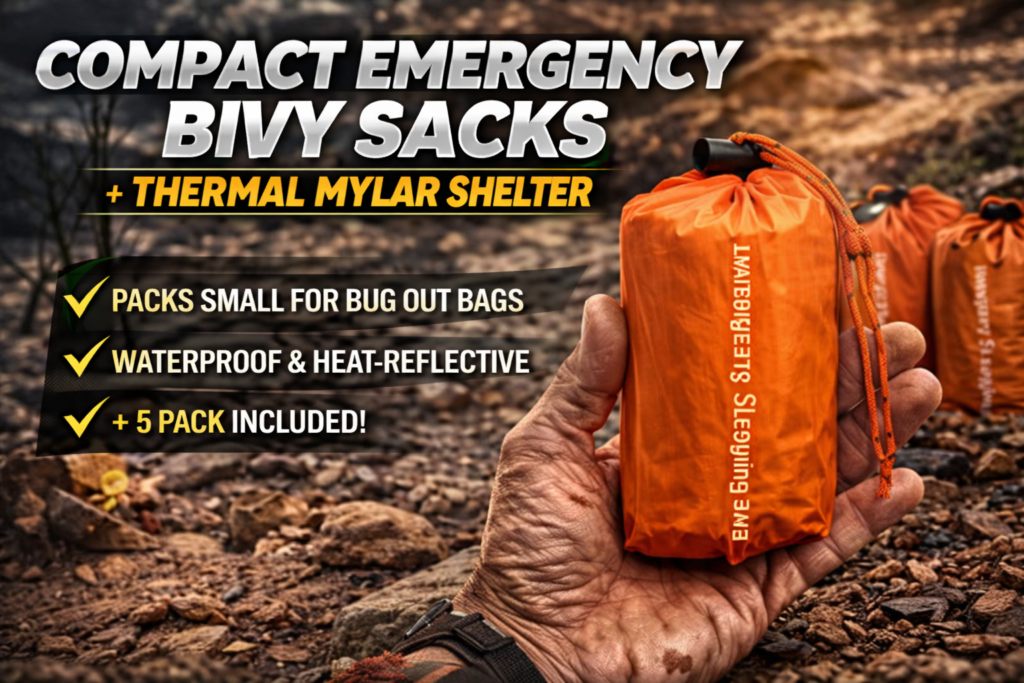
We’ve already covered the emergency sleeping bags I keep in mind for cold-weather survival.
During a freezing outage, sleeping equipment isn’t just for nighttime.
Someone sitting on the couch can use a sleeping bag too.
I Insulate Myself From the Floor
Cold floors can pull heat away surprisingly fast.
This is especially noticeable on concrete, tile, and poorly insulated floors.
If we’re setting up a sleeping area, I don’t put sleeping bags directly on a freezing floor if I can avoid it.
I’ll use available insulation underneath.
Blankets.
Sleeping pads.
Mattresses.
Other appropriate materials.
Insulation below me can matter almost as much as what’s covering me.

I Eat and Drink Normally
Cold weather doesn’t make hydration stop mattering.
People often think about water constantly during summer emergencies and forget about it in winter.
I don’t.
I keep drinking water.
I also make sure everyone is eating enough.
The body needs energy to produce heat.
A winter blackout is not when I’m trying to see how little food and water I can consume.
I Already Have Water Stored Before Winter
Power and water can be connected more closely than people realize.
If my house uses an electric well pump, losing electricity can affect my water supply too.
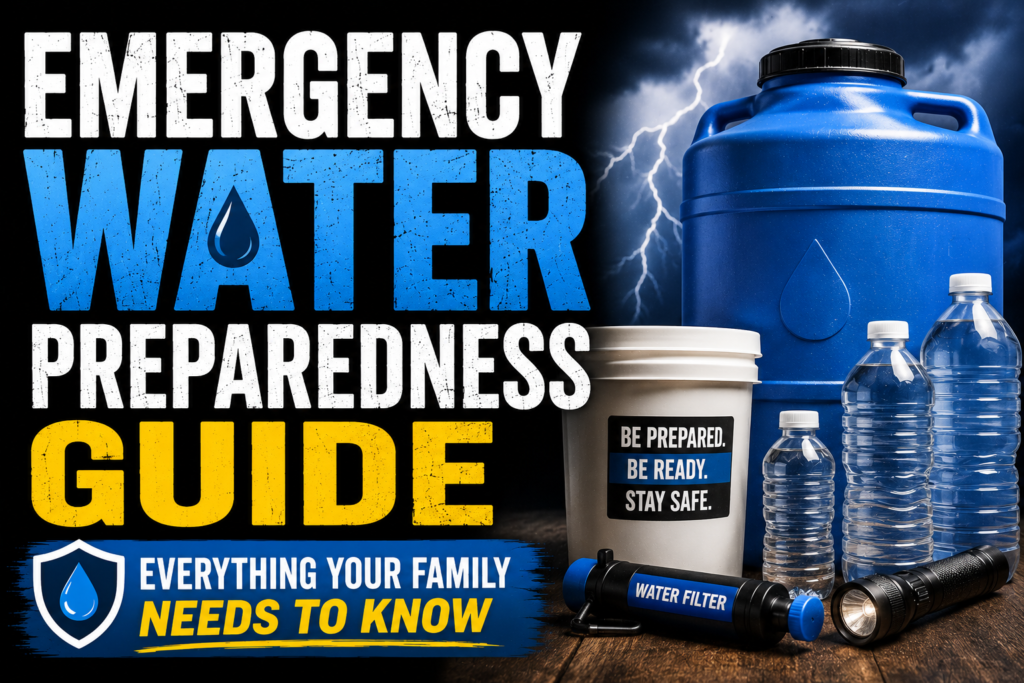
That’s why my winter blackout plan connects directly with our emergency water preparedness guide.
I don’t want to be dealing with a freezing house and suddenly realize I don’t have enough water either.
One problem is enough.
If I Have a Safe Backup Heater, I Use It Strategically
This is where backup heat can make a huge difference.
I don’t necessarily need a heater capable of making the entire house feel normal.
If I can safely heat the smaller area where everyone is gathered, that’s far more useful.
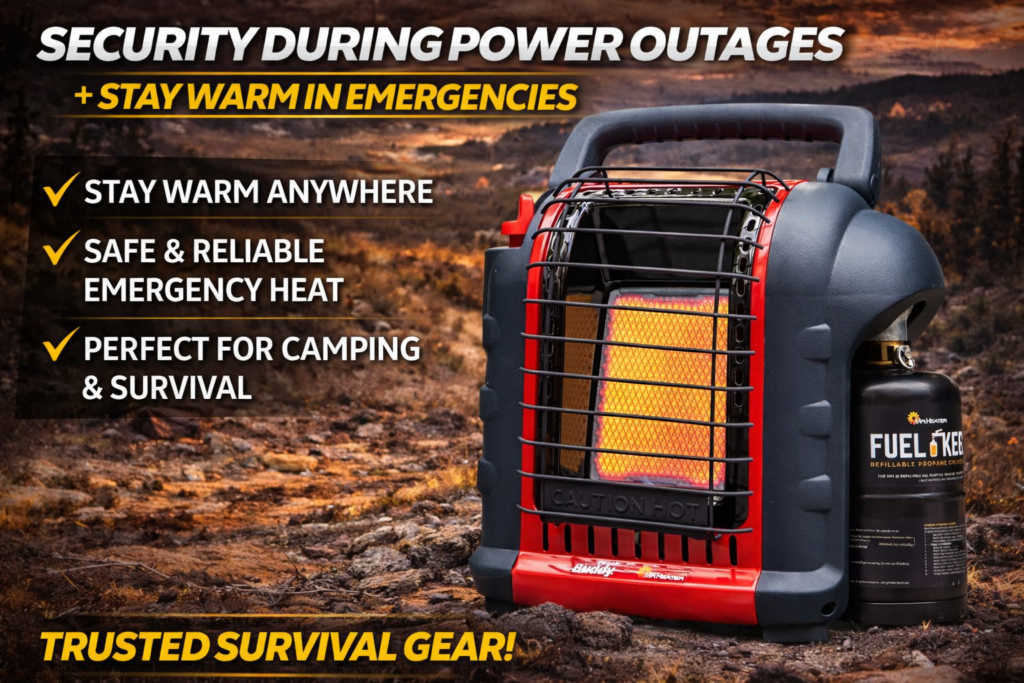
One product we’ve already covered is the portable heater I’d consider when staying warm really matters.
The model in our guide is a 9,000 BTU Portable Buddy radiant propane heater.
That type of heater can be extremely useful in an emergency, but I don’t treat fuel-burning equipment casually.
Need a Backup Heat Option Before the Next Winter Outage?
If you’re building a cold-weather blackout kit, this is the portable propane heater we’ve been using in our preparedness setup.
Check the 9,000 BTU Portable Buddy Heater on Amazon
I would read the manufacturer’s instructions for the exact model before relying on any propane heater indoors.
“Indoor Safe” Doesn’t Mean “Ignore Every Safety Rule”
This is something I want to make very clear.
A heater being designed or approved for certain indoor applications does not mean I can use it however I want.
I still care about:
- Ventilation requirements
- Clearance around the heater
- Combustible materials
- Fuel connections
- Manufacturer instructions
- Carbon monoxide alarms
- Oxygen and air-quality concerns
- Whether the exact heater is approved for my intended use
I don’t guess with combustion appliances.
The next article in this cluster will go much deeper into whether and how I use a propane heater indoors during a blackout, because that question deserves its own page.
I Keep Carbon Monoxide Alarms Working
During a winter outage, people start looking for creative ways to stay warm.
That’s exactly when carbon monoxide becomes a serious concern.
I want working CO alarms with battery backup or independent battery power.
The electrical grid being down doesn’t make carbon monoxide less dangerous.
If anything, outages increase the chances that people will use unfamiliar fuel-burning equipment.
I Never Heat the House With My Oven
I don’t use a gas oven as a space heater.
I don’t leave burners running to warm the kitchen.
Cooking appliances are for cooking.
They aren’t my emergency furnace.
The same goes for grills.
A charcoal grill doesn’t come inside because it’s cold outside.
A propane grill doesn’t come into the living room.
I would rather put on another layer and get into a sleeping bag than create a carbon monoxide or fire hazard trying to make the house feel normal.
My Generator Can Help, but I Don’t Assume It Solves Heat
Generators are incredibly useful during winter outages.
But electric heating can require a lot of power.
I don’t assume my portable generator can run every electric heater in the house just because it can keep my refrigerator running.
I calculate the actual electrical load.
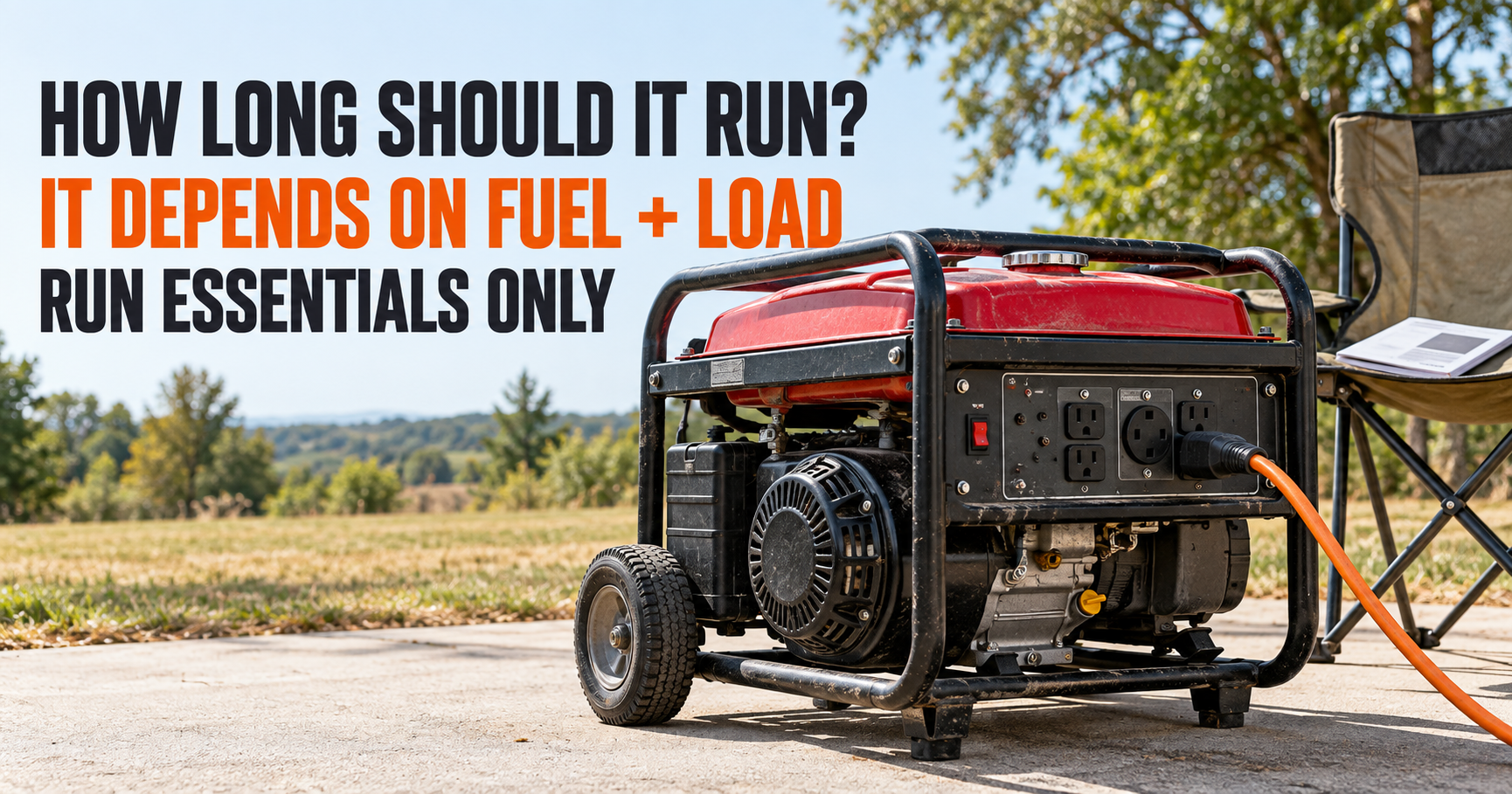
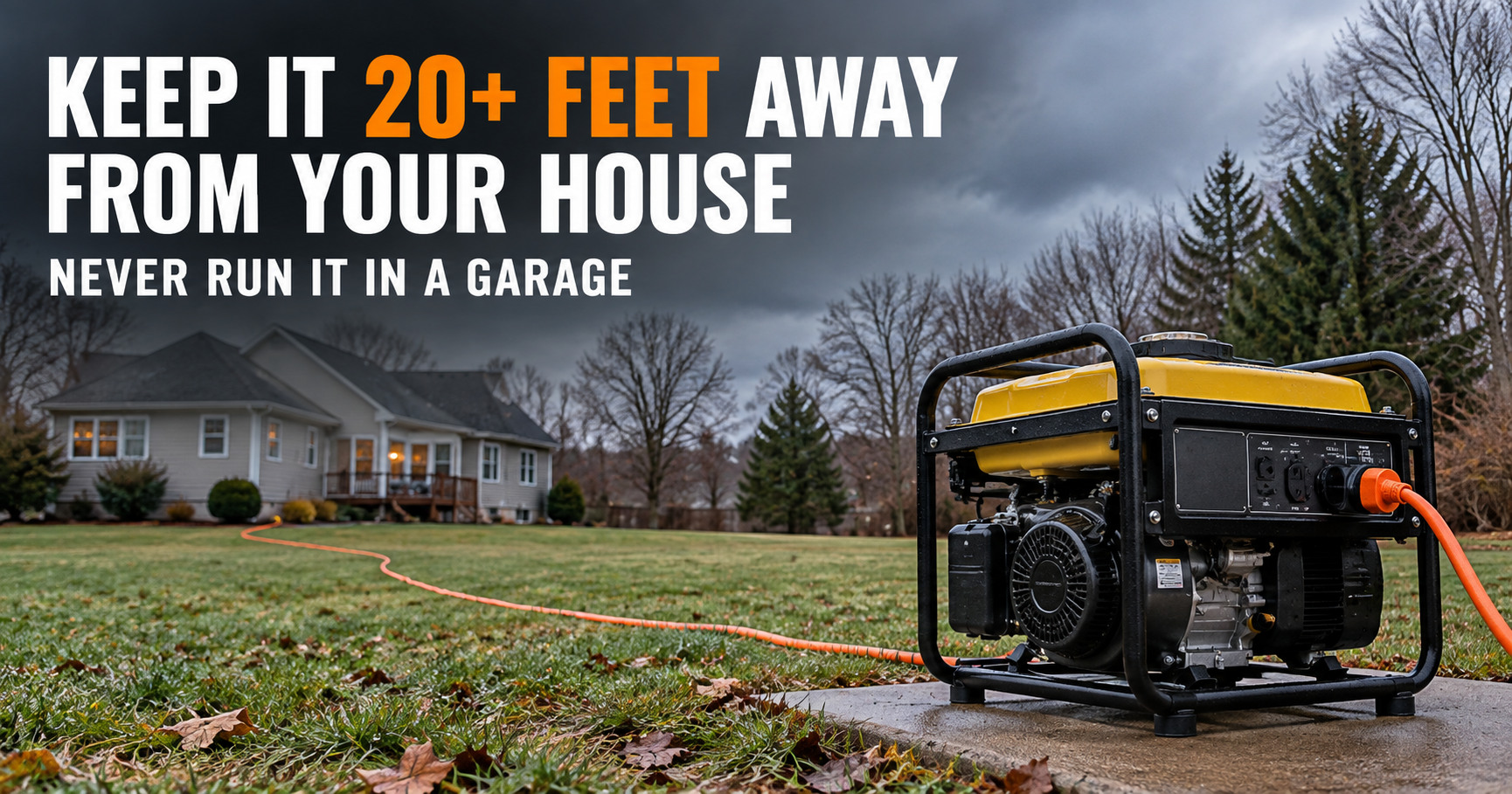
We’ve already gone through how I manage generator runtime during a power outage and where I safely position a portable generator outside the house.
Those safety rules don’t change because it’s freezing outside.
The generator stays outside.
I Don’t Move the Generator Into the Garage Because I’m Cold
This deserves repeating.
Winter weather makes unsafe generator placement tempting.
Snow.
Wind.
Freezing rain.
Nobody wants to walk outside to check the generator.
I still don’t move a running generator into an attached garage.
Carbon monoxide can enter the house.
Cold weather doesn’t change that.
I build weather protection and safe placement into my generator plan beforehand.
I Watch the Indoor Temperature
I like having simple thermometers in the house.
During a normal day, they’re mildly interesting.
During a winter blackout, they become useful information.
I want to know:
- How quickly the temperature is dropping
- Which rooms are staying warmer
- Whether my heat-conservation efforts are working
- Whether conditions are approaching a point where staying home stops making sense
Guessing based on how cold my hands feel isn’t nearly as useful.
I Think About Pipes Before They Freeze
Frozen plumbing can turn a temporary power outage into thousands of dollars worth of damage.
If the house temperature keeps falling, I start thinking seriously about the plumbing.
I want to know where vulnerable pipes are.
Exterior walls.
Crawlspaces.
Unheated areas.
Cabinets beneath sinks on outside walls.
The exact freeze-prevention steps depend on the plumbing system and conditions, but the important thing is that I don’t forget the pipes while everyone is focused on staying warm.
I Open Sink Cabinets When It Makes Sense
If plumbing runs beneath sinks along exterior walls, opening cabinet doors can help warmer room air reach those pipes.
That’s a simple step.
But again, I’m watching the overall house temperature.
If the entire house is approaching freezing, opening a cabinet isn’t going to magically solve the problem.
At some point I need a larger plan.
I Know Where the Main Water Shutoff Is
This is something I want figured out long before winter.
If a pipe freezes and bursts, I need to be able to stop the water quickly.
I don’t want to search the basement with a flashlight while water is spraying everywhere.
Everyone capable in the household should know where the main shutoff is and how it works.
That’s basic preparedness that matters far beyond power outages.
I Don’t Assume Running Water Means Everything Is Fine
If I’m on city water, the taps may continue working normally during an electrical outage.
If I’m on a private well, things can be completely different.
That’s why one of the next articles in this cluster will cover whether a well works when the power goes out.
For now, my rule is simple.
If severe winter weather is coming and I have reason to worry about losing both electricity and water, I increase my clean water reserves while everything still works.
Nighttime Is When I Get More Conservative
Temperatures usually fall overnight.
That’s also when everybody is sleeping and less likely to notice conditions changing.
Before bed during a serious winter outage, I reassess.
How cold is the house?
How cold will it get outside?
Do I have safe heat?
How much fuel remains?
Are the CO alarms working?
Are the kids warm?
Are vulnerable pipes becoming a concern?
Do I still have a safe way to leave if necessary?
I don’t just crawl into bed and hope the power comes back.
Children Need More Attention Than Adults Who Can Speak Up
An adult can say, “I’m getting really cold.”
Young children may not recognize or communicate what’s happening as clearly.
I check them.
Same with older family members and anyone with medical conditions that make temperature regulation more difficult.
Preparedness plans need to account for the actual people living in the house.
Pets Need a Warm Plan Too
I don’t forget animals.
Indoor pets usually benefit from being in the same warm area as everyone else.
Outdoor animals may require completely different preparations depending on species, shelter, weather, and conditions.
Again, I’m planning before the storm rather than improvising once everything freezes.
I Don’t Try to Be Tough Just to Prove I Can Stay Home
This may be the most important part of my winter outage plan.
Preparedness doesn’t mean refusing to leave.
If the house is becoming dangerously cold and I don’t have a reliable way to maintain safe conditions, leaving may be the smartest thing I can do.
Possible destinations might include:
- Family or friends with power
- A warming center
- A hotel outside the affected area
- Another safe heated location
I’d rather leave early under controlled conditions than wait until the house is dangerously cold and the roads are worse.
I Decide My Leaving Point Before I Reach It
This is something I think more families should do.
Instead of saying:
“We’ll leave if it gets really bad.”
I want a more specific plan.
What indoor conditions are unacceptable?
What happens if my backup heater fails?
What happens if fuel gets low?
What happens if the roads are getting worse?
What happens if someone begins showing signs of cold stress?
Having those conversations beforehand prevents arguments during the emergency.
Warning Signs I Take Seriously
Cold exposure can become dangerous.
I don’t brush off persistent shivering, confusion, unusual drowsiness, poor coordination, slurred speech, or other concerning changes.
If I suspect hypothermia or another medical emergency, I treat it like an emergency.
Preparedness gear doesn’t replace medical care.
I Keep the Emergency Radio Close
Winter outages often happen during ongoing weather events.
I want to know what’s coming next.
More snow?
Ice?
Falling temperatures?
Warming temperatures tomorrow?
Road closures?
Warming centers opening?
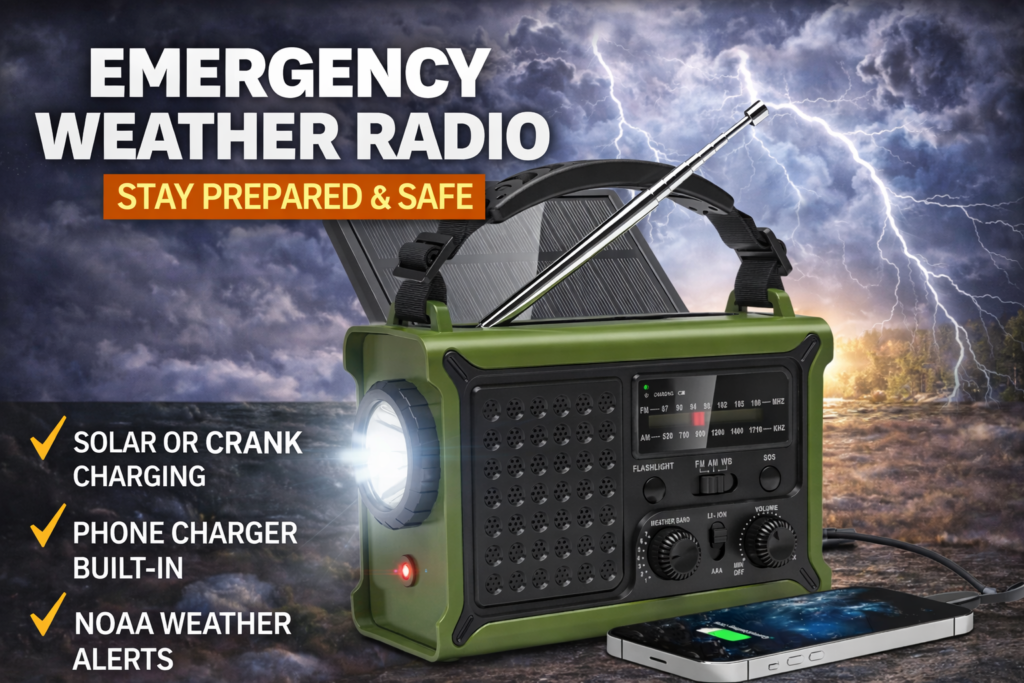
That’s why my emergency weather radio becomes part of the warm room setup.
I don’t want everyone wandering through a dark house trying to find it later.
I Keep Phones Charged Too
The phone remains one of my most useful emergency tools.
That’s why I’ve already covered how I keep my phone charged during a power outage.
During a winter emergency, I become even more conservative with battery power.
If conditions deteriorate and I need help or need to leave, communication becomes extremely important.
Food Is Easier Than Heat During a Winter Outage
This is one small advantage cold weather sometimes gives me.
I’m generally less worried about food becoming warm immediately than I would be during a summer outage.
But I still follow safe food-storage practices.
I don’t automatically put everything outside in the snow and assume it’s safe.
Animals, sunlight, changing temperatures, contamination, and freezing can all create problems.
I follow actual temperatures rather than improvising based on the weather.
My Warm-Room Setup Is Simple
If I know the outage is going long, I gather what we need into the area we’re using.
That includes:
- Warm clothing
- Blankets
- Sleeping bags
- Emergency lighting
- Water
- Easy food
- Phone chargers
- Emergency radio
- First aid kit
- Necessary medications
Now we’re not constantly opening doors and walking through cold areas looking for things.
Everything important is close.
I Still Prepare for Fire
When people lose normal heat, fire risk can increase because they’re using:
- Portable heaters
- Candles
- Fireplaces
- Wood stoves
- Alternative cooking equipment
- Generators
I want working smoke alarms.
I want a fire extinguisher accessible.
And I don’t pile blankets, clothing, or other combustible materials around a heater just because we’re trying to stay warm.
What I Do in the First Hour
If my winter power goes out right now, my rough order is:
- Determine how widespread the outage is.
- Check the forecast and expected low temperature.
- Keep refrigerator and freezer doors closed.
- Get phones, flashlights, and the emergency radio organized.
- Close off unnecessary rooms.
- Stop obvious drafts.
- Put on warm layers before the house gets cold.
- Gather blankets and sleeping bags.
- Check water availability.
- Prepare safe backup heat if needed.
- Verify smoke and carbon monoxide alarms.
- Start thinking about plumbing.
- Decide what conditions would make me leave.
That puts me ahead of the temperature drop instead of chasing it.
The Biggest Advantage Is Starting While the House Is Still Warm
Once the walls, floors, furniture, and everything else inside the house become cold, getting comfortable again becomes much harder.
That’s why I don’t wait.
I close rooms while they’re still warm.
I stop drafts while they’re still warm.
I layer clothing while I’m still comfortable.
I prepare the warm room before anyone desperately needs it.
I get the sleeping bags out before bedtime.
I check my backup heat before the indoor temperature becomes a problem.
The earlier I start conserving heat, the less heat I have to replace later.
That’s probably the simplest lesson I’ve learned about winter blackout preparedness.
What I Would Want Ready Before the Next Winter Blackout
If I were starting from scratch, I wouldn’t immediately spend thousands of dollars trying to create the perfect off-grid heating system.
I’d start with the things that solve the most likely problems.
I would want:
- Warm clothing for everyone in the house
- Several good blankets
- Cold-weather sleeping bags
- A safe backup heat source
- Fuel for that heat source
- Working smoke alarms
- Working carbon monoxide alarms
- Flashlights and lanterns
- Charged power banks
- An emergency weather radio
- Stored drinking water
- Shelf-stable food
- A first aid kit
- A fire extinguisher
- A thermometer for the room we’re occupying
- A plan for protecting vulnerable plumbing
- A place we can go if staying home becomes unsafe
None of that is particularly exotic.
That’s exactly why I like it.
A winter outage doesn’t necessarily require a mountain of survival gear. It requires having the right basic things available before the furnace stops.
I Don’t Depend on One Source of Heat
This is a rule I use throughout preparedness.
I don’t like single points of failure.
If my entire winter plan depends on one portable heater and that heater fails, I’m suddenly in trouble.
I’d rather have layers.
Normal heating system.
Generator where appropriate.
Safe portable backup heat.
Warm clothing.
Sleeping bags.
Blankets.
Heat conservation.
A safe place to relocate if everything else fails.
The layers don’t all have to produce heat.
Some simply reduce how much heat I need.
That’s just as valuable.
I Keep Fuel With the Heater Plan
A propane heater without propane isn’t backup heat.
It’s garage decoration.
Whatever backup heating equipment I choose, I think about the fuel at the same time.
How much do I have?
How long could it realistically last?
Where is it stored safely?
How quickly would I burn through it?
Could I get more during a widespread winter emergency?
I don’t want to discover on night two that my “three-day heating plan” actually contained six hours worth of fuel.
I Don’t Burn Through Fuel Trying to Heat Empty Rooms
This goes back to the warm-room strategy.
If I have limited fuel, I want useful heat.
Trying to make every corner of the house comfortable can burn through that fuel quickly.
If conditions allow it, I’d rather concentrate the family in a smaller area and make that space comfortable.
That stretches the same resources much further.
It also makes it easier for me to monitor everyone.
I Think About Sleeping Before Everyone Is Exhausted
Sleeping is often when a winter blackout becomes miserable.
During the day, people move around.
At night, everyone stops generating as much body heat and outdoor temperatures may fall further.
So I prepare sleeping arrangements before we’re tired.
I want insulation beneath us.
Warm sleeping bags or blankets.
Dry clothes.
Hats nearby if needed.
Flashlights within reach.
Phones charged.
Water accessible.
If we’re using backup heat, I already know exactly how that equipment is supposed to be operated safely.
I don’t want to make those decisions at midnight.
I Keep a Flashlight Beside Everyone
A winter blackout is dark for a long time.
If someone wakes up needing the bathroom, I don’t want them stumbling through a freezing dark house looking for a flashlight.
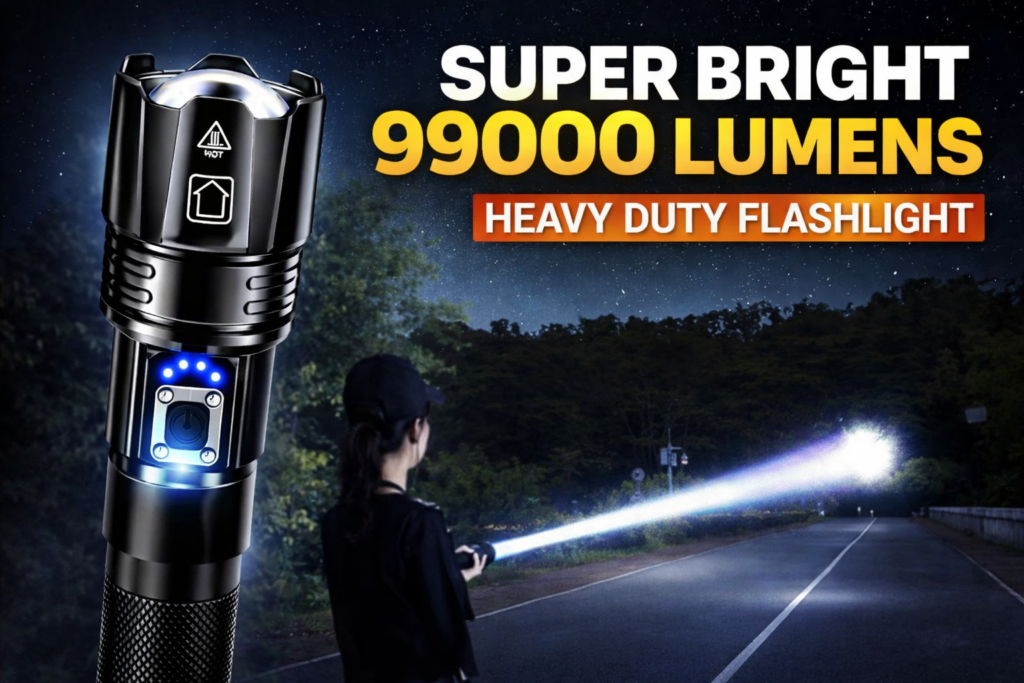
We’ve already covered the rechargeable flashlight I like for emergency use.
I still want more than one light.
Everyone capable of safely using one should know where a flashlight or lantern is.
That’s such a small preparation, but it makes the whole house easier to manage.
I Use the Generator for Jobs That Actually Matter
If I’m running a generator during a winter outage, I want every gallon of fuel accomplishing something useful.
That might mean supporting:
- Necessary heating equipment
- Refrigerator or freezer
- Well pump
- Medical equipment
- Phone and battery charging
- Emergency lighting
I’ve already explained how I decide how long to run my generator during an outage.
I don’t automatically run it nonstop.
I run it based on what the house actually needs.
Winter may change those needs considerably.
I Never Trade Carbon Monoxide Safety for Warmth
This is the line I don’t cross.
I don’t run a generator inside.
I don’t bring a charcoal grill into the house.
I don’t use an oven as a furnace.
I don’t start using fuel-burning equipment in ways the manufacturer never intended.
And I don’t disable a carbon monoxide alarm because it’s making noise.
Cold makes people desperate.
Desperation makes shortcuts look reasonable.
That’s exactly why I decide my rules before I’m cold.
My First Backup Isn’t Always More Heat
Sometimes my best move is reducing heat loss.
That’s an important distinction.
Before burning more propane or gasoline, I ask:
Can I close another unused room?
Can I stop a noticeable draft?
Can everyone move into a smaller area?
Can I add another clothing layer?
Can I improve insulation beneath our sleeping area?
Can I close curtains after sunset?
Can I reduce unnecessary trips in and out of the house?
The heat I don’t lose is heat I don’t have to replace.
I Keep Checking Conditions Instead of Assuming the Plan Is Working
Preparedness isn’t “set it and forget it.”
I monitor the house.
Is the temperature still falling?
How quickly?
Is my backup heater actually keeping up?
How much fuel remains?
Are pipes becoming a concern?
Is the weather forecast getting worse?
How are the people in the house doing?
Do I still have a safe route out?
Those questions matter much more than whether I technically have enough survival gear.
There Is a Point Where I Leave
This deserves its own section because I think too many survival discussions turn staying home into some kind of contest.
I don’t see it that way.
If I can’t keep my family safe inside the house, the house has stopped being the best shelter.
That’s when I leave, assuming travel itself can be done safely.
I would strongly consider relocating if:
- Indoor temperatures are becoming dangerously low
- I can’t safely maintain backup heat
- Fuel is running out
- Someone is showing signs of cold stress
- A medical condition makes the temperature unsafe
- Plumbing or structural problems are becoming serious
- Carbon monoxide becomes a concern
- The outage is expected to continue much longer
- I have a clearly safer heated place available
Leaving before conditions become desperate gives me more options.
Waiting until everyone is freezing and the roads are worse doesn’t.
The Car Isn’t My Long-Term Heating Plan Either
A vehicle can provide temporary warmth and charging in certain situations, but I don’t treat it like an indoor heater.
I never run a vehicle inside an attached garage to warm people or charge phones.
If I’m using a vehicle, it’s outdoors in a safe location.
And I keep fuel conservation in mind.
That tank of gas may become important if we need to leave.
I Keep Some Emergency Cash Available
This doesn’t directly make the house warmer, but it can make leaving easier.
During a widespread outage, electronic payment systems may be affected.
If I need fuel, food, a hotel room, or another basic necessity, having some cash available gives me another option.
Preparedness is often about removing small obstacles before they become big ones.
What I Would Do If the Power Stayed Out for Three Days
By day three, I’m no longer dealing with a normal little blackout.
My priorities become much broader.
I’m watching:
- Heating fuel
- Generator fuel
- Water
- Food
- Plumbing
- Battery power
- Weather
- Road conditions
- Everyone’s physical condition
- Whether remaining home still makes sense
At that point, I’m using the larger strategy from my power outage preparedness plan for a long blackout.
The warm-room setup is still useful.
But the longer the outage lasts, the more the entire household system matters.
Staying Warm Starts Long Before the Furnace Stops
The best winter blackout preparation I’ve found isn’t one magic heater.
It’s having several small advantages already in place.
Warm clothing that fits everyone.
Sleeping bags I can find.
Stored water.
Charged batteries.
A radio.
Safe backup heat.
Fuel.
Carbon monoxide alarms.
A generator plan.
Knowledge of where my pipes are vulnerable.
And a place to go if the house stops being safe.
None of those things feels dramatic when the electricity is working.
That’s the point.
I want winter blackout preparation to feel boring.
Because when the furnace shuts off on the coldest night of the year, boring preparation suddenly becomes incredibly valuable.
About the Author
Caleb Mercer writes about winter blackout preparedness, generators, backup heat, emergency communications, and practical ways to keep a household functioning when utilities fail. His work for the Survive Essentials Power Outages and Backup Power section focuses on realistic steps families can put in place before severe weather arrives, with an emphasis on staying warm without creating new fire, electrical, or carbon monoxide hazards.