Coming home after a power outage and finding the clocks blinking is one thing.
Opening a freezer packed with meat and realizing I have no idea how long the electricity was off is a much bigger problem.
Maybe the power was out for 30 minutes.
Maybe it was out all night.
Maybe everything thawed and then froze solid again before I got home.
That’s the situation I want to prepare for, because simply looking at a freezer that’s cold again doesn’t tell me what happened while I was gone.
I look for several clues before deciding what stays, what gets refrozen, and what I’m not willing to risk eating.
The Best Clue Is a Freezer Thermometer
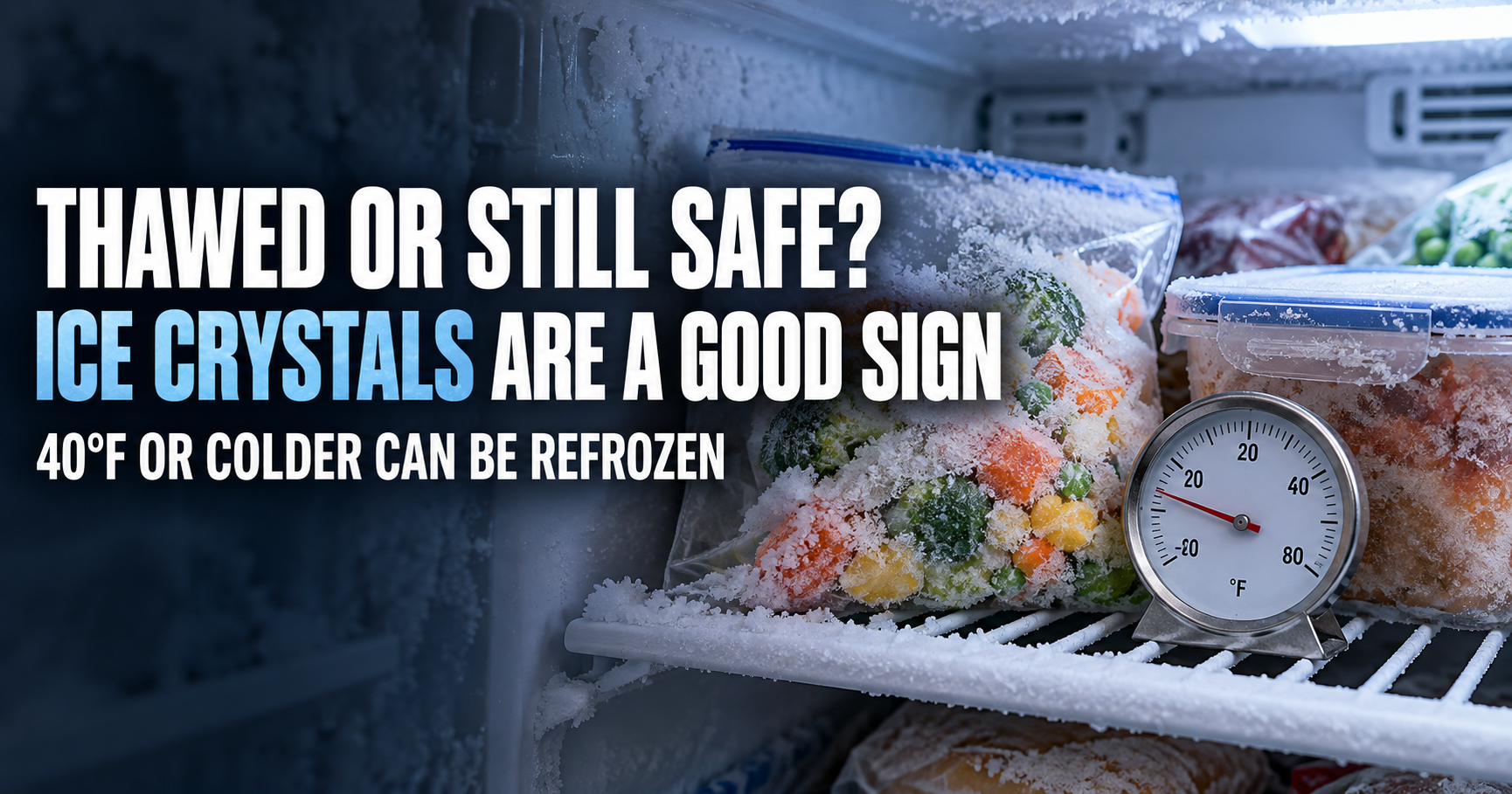
If I could add one cheap item to every freezer I own, it would be an appliance thermometer.
That’s far more useful to me than guessing.
Under normal conditions, I want my freezer at 0°F or below.
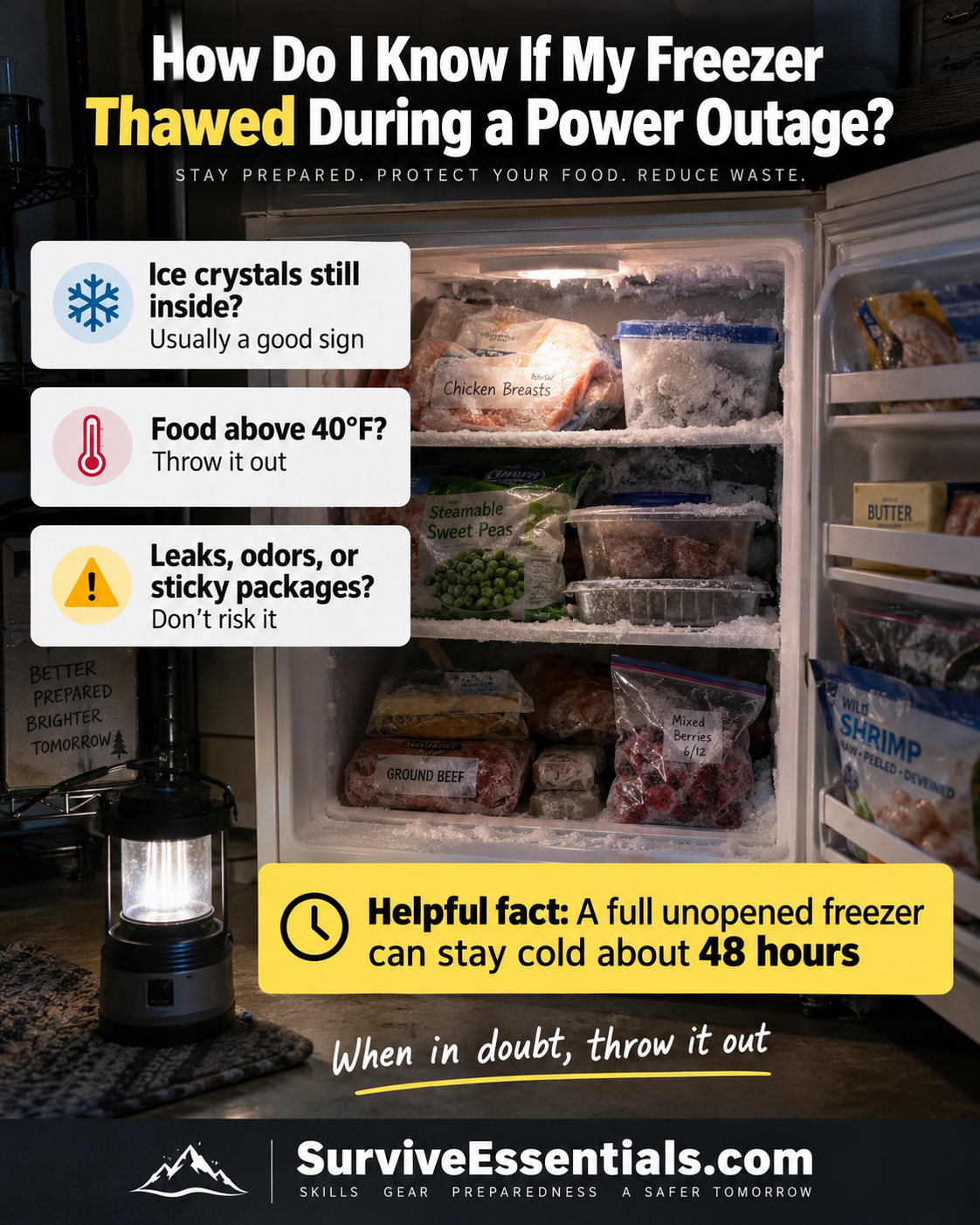
After an outage, what really matters for food safety is whether the food stayed cold enough.
If the freezer or food is still 40°F or below, that’s very different from food that spent hours warming well above that temperature.
That’s why I like having actual temperature information.
“Still feels pretty cold” isn’t a measurement.
I Check for Ice Crystals in the Food
This is another really useful clue.
If frozen food still contains ice crystals, that tells me it hasn’t completely warmed up.
USDA guidance says food that still contains ice crystals or is at 40°F or below can generally be safely refrozen.
The texture or overall quality may not be quite as good afterward.
That’s different from saying the food is unsafe.
If I pull out a package of meat and it’s still partially frozen with obvious ice crystals throughout it, I’m in a much better position than if the package is completely warm and soft.


A Completely Frozen Package Doesn’t Always Tell Me the Whole Story
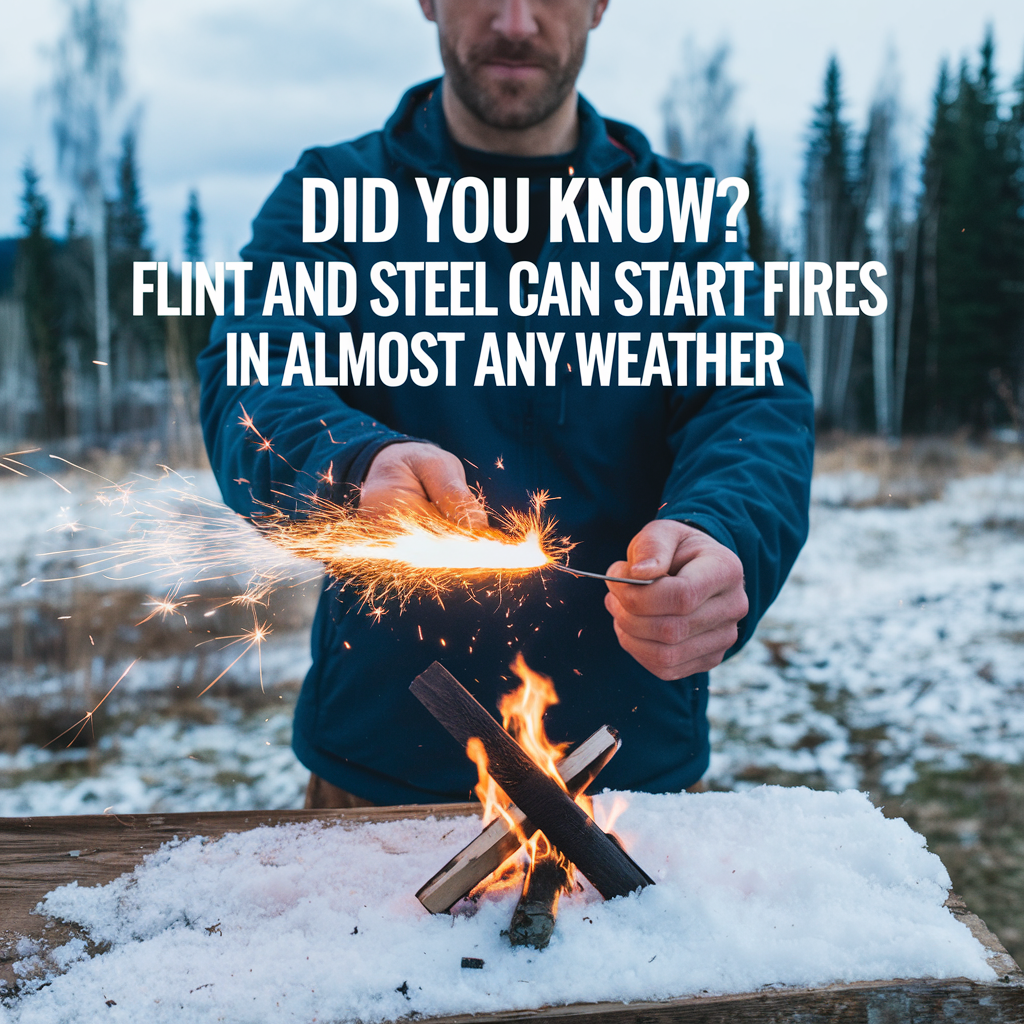
Here’s where things get tricky.
Suppose the power went out while I was gone.
The freezer warmed.
Some food thawed.
Then electricity returned six hours before I got home.
The freezer could be cold again.
The food could even be frozen again.
That’s why I don’t assume:
“It’s frozen now, so it must have stayed frozen.”
I’m trying to figure out what happened during the outage, not just what the freezer looks like after power has been restored.
This Is Where the One-Cup Freezer Trick Helps
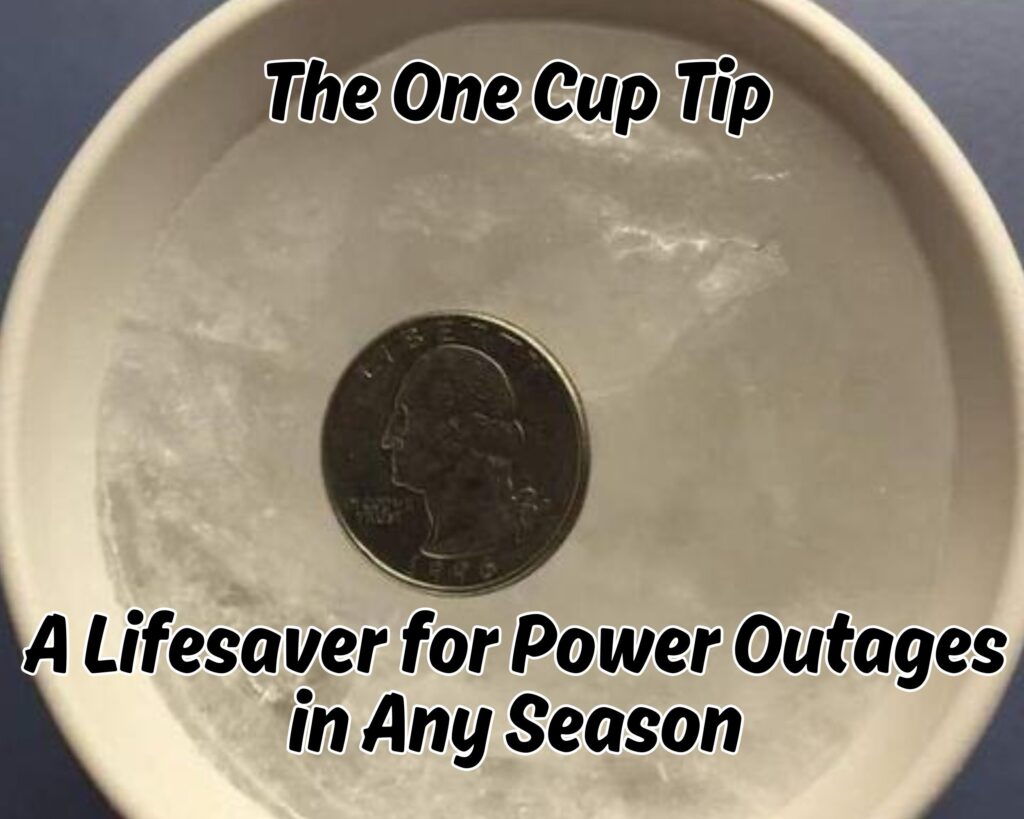
We’ve already covered the simple one-cup trick I use as a clue after a power outage.
The idea is simple.
I freeze a cup of water solid.
Then I place a coin on top of the ice and return the cup to the freezer.
If I come home after a suspected outage and the coin is still sitting near the top, the cup probably remained mostly frozen.
If the coin has dropped significantly into the cup or ended up at the bottom, that tells me the ice melted substantially before refreezing.
That’s useful information.
But I don’t treat the coin trick as a laboratory food-safety test.
It’s a clue.
Temperature and the condition of the actual food still matter.


I Don’t Use Smell as My Main Safety Test
This is one of the biggest mistakes I avoid.
Food can smell normal and still be unsafe.
So I don’t open a package of thawed chicken, smell it, and decide everything must be okay.
Smell can tell me when food is obviously spoiled.
It cannot reliably prove food is safe.
That’s an important difference.
I Definitely Don’t Taste It to Find Out
I never taste questionable food to test whether it’s safe.
If I’m already wondering whether something spent too long at an unsafe temperature, taking a bite isn’t how I solve that mystery.
During a blackout, the last thing I want to add to the household is food poisoning.
I’d rather throw away questionable food than turn an electrical emergency into a medical one.


A Full Freezer Gives Me More Time
How full the freezer was before the outage matters.
A full freezer can hold its temperature for roughly 48 hours if I leave the door closed.
A half-full freezer is closer to 24 hours.
That doesn’t mean I automatically keep everything after exactly 47 hours and throw everything away at hour 49.
Those numbers tell me roughly how long a closed freezer can maintain cold.
I still evaluate the actual food and temperature.
But they give me a useful starting point.
I Ask Whether Anyone Opened the Freezer
This matters more than people think.
A freezer that stayed closed during a six-hour outage is very different from a freezer that somebody opened twelve times.
Every opening lets cold air escape.
If I was home during the outage, I know whether the door stayed closed.
If other family members were home, I ask.
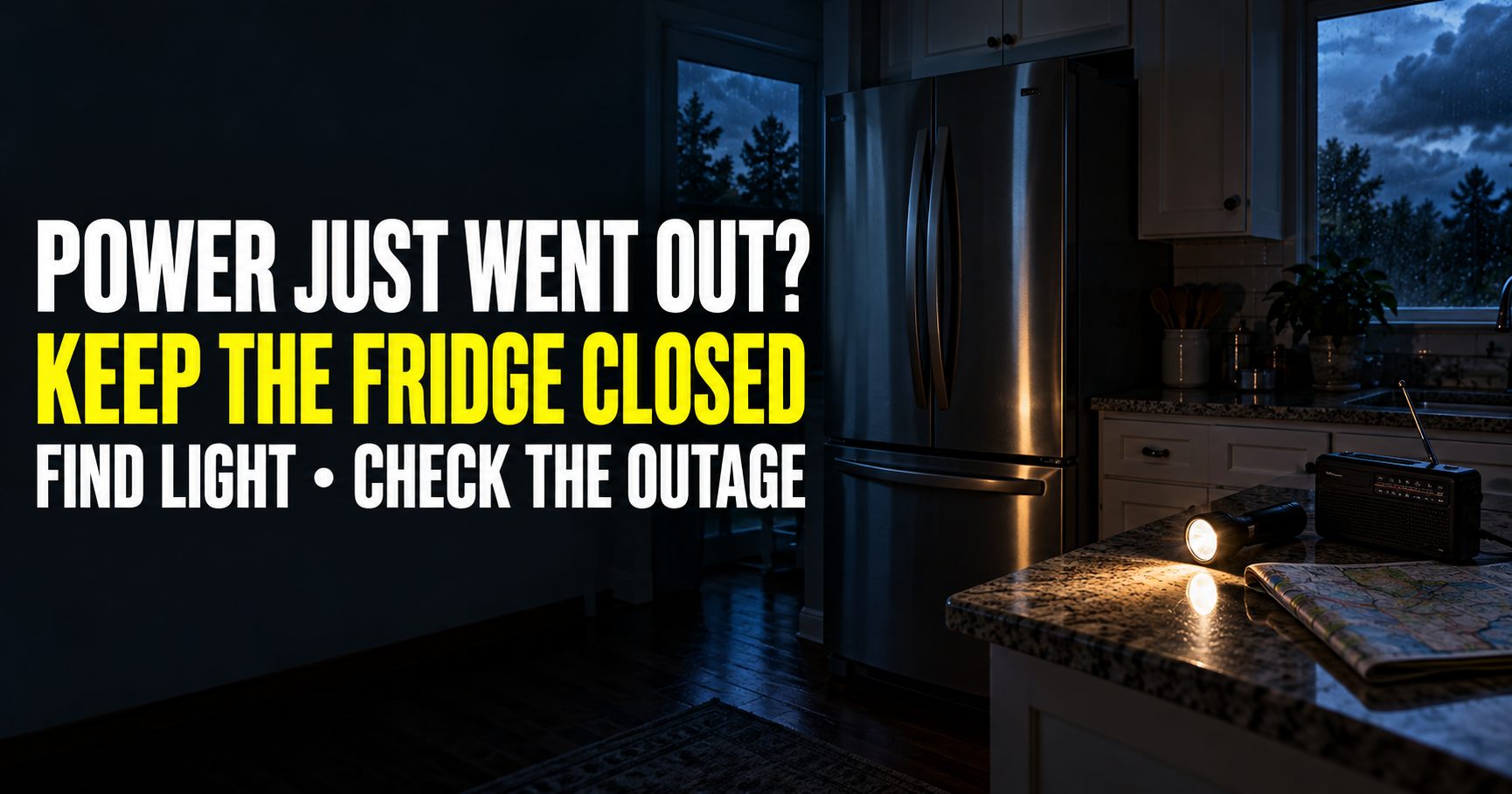
This is also why one of my first rules after the power suddenly goes out is to leave the refrigerator and freezer alone.
Cold air already inside is a resource.
I don’t waste it.

I Look at the Food Individually
I don’t necessarily treat every item in the freezer exactly the same.
A large frozen roast may remain cold much longer than a small package.
A container near the center of a tightly packed freezer may behave differently from something sitting near the door.
Ice cream may show thawing differently from a solid package of meat.
So if the situation is questionable, I evaluate individual foods rather than making one sweeping decision based on how one package feels.
Meat Gets My Attention First
I’m especially careful with things like:
- Beef
- Pork
- Poultry
- Fish
- Seafood
- Prepared meals containing meat
- Other highly perishable frozen foods
If those foods completely thawed and spent too long above safe refrigeration temperatures, I’m not gambling with them.
The fact that they later froze again doesn’t erase what happened while they were warm.

Ice Cream Is Different
This is one of those foods where quality and safety considerations get messy quickly.
If ice cream has obviously melted, I’m generally not trying to rescue and refreeze it.
Even aside from food-safety considerations, melted and refrozen ice cream can become an unpleasant mess.
Not everything in the freezer is worth saving at all costs.
Sometimes the sensible decision is throwing something away.
I Pay Attention to Raw Meat Juices
If packages thawed enough that raw meat juices leaked onto other food, I become much more cautious.
Cross-contamination creates another problem on top of the temperature issue.
Food that might otherwise have been fine can become contaminated by leaking raw meat.
That’s one reason I like storing meat in ways that contain leaks even during normal freezer use.
Preparedness often comes down to ordinary good habits paying off during unusual situations.
I Check the Freezer Before Rearranging Everything
When I first discover the outage, I don’t immediately pull every item out and spread it across the kitchen counter.
That destroys the cold I’m trying to evaluate.
I gather what I need first.
Thermometer.
Cooler if necessary.
Ice.
Then I work efficiently.
I don’t turn a questionable freezer into a definitely warm freezer while deciding what to do.
If Food Still Has Ice Crystals, I’m Much More Comfortable
This is probably the easiest visual clue I use.
Still icy?
Still partially frozen?
Still at 40°F or below?
Those are good signs.
Food can generally be refrozen under those conditions, though I expect some foods to lose quality.
Texture can change.
Moisture can be lost.
But that’s a quality problem, not automatically a safety problem.
If It’s Completely Thawed, I Want Temperature Information
This is where a food thermometer becomes useful.
If the food is completely thawed but still refrigerator-cold, I have better information.
If it’s warm and I have no idea how long it has been warm, my confidence drops quickly.
This is why I don’t like relying solely on elapsed outage time.
Temperature tells me what actually happened to the food.
What If I Don’t Know How Long the Power Was Out?
This is the situation that makes the freezer thermometer and coin trick valuable.
Maybe I was at work.
Maybe I was gone for the weekend.
Maybe the utility restored power before I returned.
If I don’t know the outage duration, I gather every clue I can:
- Utility outage history if available
- Appliance thermometer
- Food temperature
- Ice crystals
- Coin-in-a-cup indicator
- Whether frozen packages changed shape
- Evidence of leakage
- Whether ice cubes melted together
No single clue necessarily tells the entire story.
Together, they can give me a much clearer picture.
Melted Ice Cubes Can Tell Me Something Too
If the ice bin used to contain individual cubes and now I have one solid frozen block, I know some melting occurred.
That doesn’t tell me exactly how warm the freezer became or how long it stayed warm.
But it’s another clue that temperatures rose enough for ice to melt and refreeze.
Again, I use clues together rather than treating one trick as absolute proof.
Frozen Food Changing Shape Is Another Clue
Some packages tell their own story.
If something was originally frozen flat and is now frozen into a completely different shape, it may have softened or thawed enough to move before freezing again.
Frozen berries may become one solid mass.
Foods may settle differently inside packaging.
These clues tell me thawing probably occurred.
They still don’t tell me exactly how warm the food became.
That’s why temperature remains so valuable.
I Don’t Assume a Freezer Alarm Solves Everything
Some newer freezers have temperature alarms.
Those are useful.
But I still want to understand what the alarm is telling me.
Did it record the highest temperature?
Does it only sound while the freezer is warm?
Will I know an alarm occurred after electricity returns?
Different equipment behaves differently.
I learn how mine works before I depend on it.
A Cheap Thermometer Can Protect Hundreds of Dollars of Food
This is why I think freezer thermometers are underrated preparedness gear.
People will spend hundreds or thousands of dollars on a generator and never put a simple thermometer in a freezer containing $500 worth of meat.
I’d rather have both.
The generator gives me backup power.
The thermometer tells me whether I actually need it and whether the food remained safe.
If I’m Home, I Start Protecting the Freezer Early
When I know the power is out, I have an advantage.
I know exactly when the outage began.
I keep the freezer closed.
I monitor the situation.
And if the outage starts going long, I can use backup power before food temperatures become a problem.
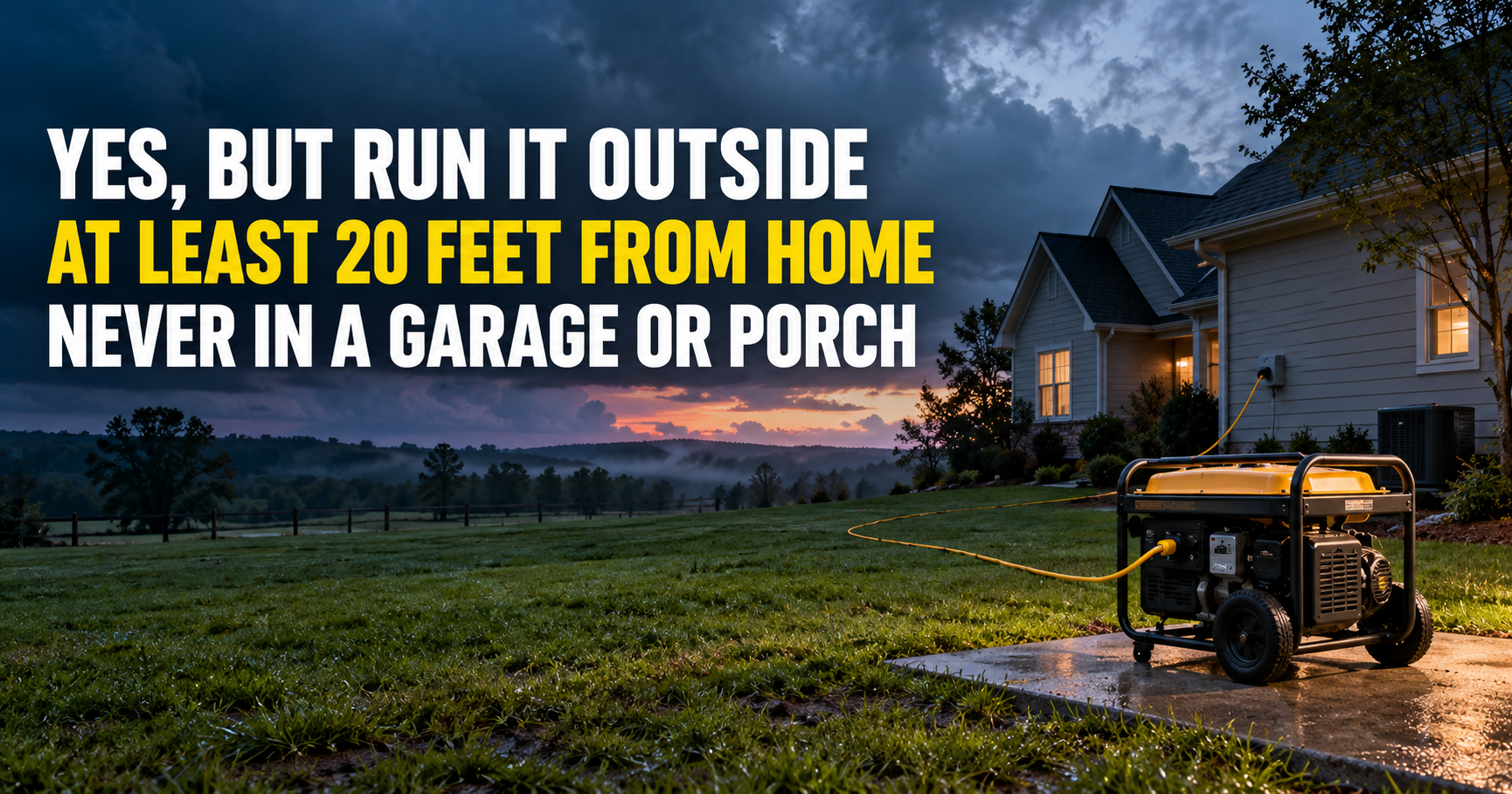
We’ve already covered running my refrigerator from a generator during an outage, and the same basic planning applies to a freezer.
I check the appliance load.
I make sure the generator can handle it.
Then I use backup power strategically.
I Don’t Necessarily Run the Generator Nonstop
This is where temperature information can save fuel.
If the freezer is safely cold, I may not need an engine running every minute.
When I do start the generator, I make that runtime useful.
Cool the freezer.
Cool the refrigerator.
Charge phones.
Recharge power banks.
Charge flashlights.
Recharge the emergency radio.
Then I reassess.
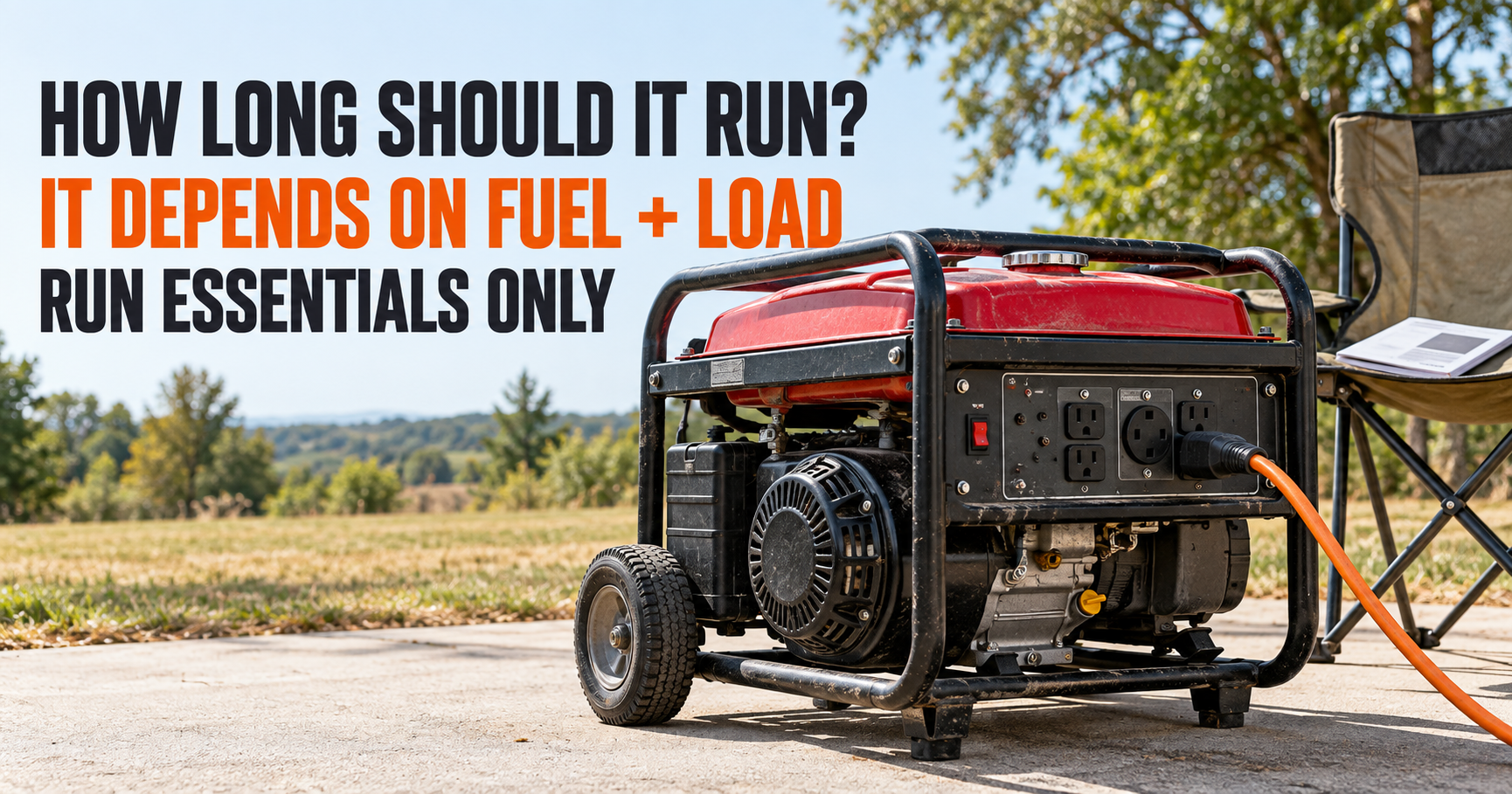
That’s the approach I use in how I manage generator runtime during a power outage.
Fuel is another stored emergency resource.
I don’t waste it.
I Freeze Water Before Major Storms
This is one of the easiest preparedness tricks I use.
If severe weather is approaching and there’s extra freezer space, I freeze containers of water.
That gives me additional frozen mass inside the freezer.
It can help keep things cold longer.
Later, as the ice melts, I also have additional water.
I don’t pack a freezer so tightly that air can’t circulate during normal operation, but I like having it reasonably full before an outage.
I Group Frozen Food Together
During an outage, keeping frozen packages together helps them retain cold.
A tightly grouped mass of frozen food warms more slowly than individual items spread around with lots of empty space.
That’s another free advantage.
No special survival gear required.
I Use Coolers Only When They Actually Help
A cooler isn’t automatically colder than my freezer.
If the freezer is still safely frozen, moving everything into a cooler makes no sense.
But if I have plenty of ice or dry ice and the freezer is warming beyond what I can manage, a properly prepared cooler can become useful.
I make that decision based on temperature, outage duration, and what cooling resources I actually have.
Dry Ice Can Buy More Time, but I Treat It Differently
Dry ice can help maintain freezer temperatures during extended outages.
But it isn’t ordinary ice.
I use gloves or other appropriate protection when handling it.
I don’t put it in an airtight container where gas pressure can build.
And I pay attention to ventilation because dry ice releases carbon dioxide as it sublimates.
If I don’t understand how to use it safely, I don’t experiment during an emergency.
If I Have to Throw Food Away, I Document It First
This is a practical tip people don’t always think about.
If I’ve lost a significant amount of food after a major outage, I may photograph what I’m discarding and keep receipts or other documentation when available.
Whether that matters for insurance or disaster assistance depends on the situation and coverage.
But once the food is in the trash, reconstructing what was lost becomes much harder.
A few quick photos cost me nothing.
I Don’t Let the Cost of Food Pressure Me Into a Bad Decision
Throwing away expensive meat hurts.
I understand the temptation.
Maybe that’s $200 worth of beef.
Maybe I raised the animal myself.
Maybe the freezer was completely full.
That doesn’t change food safety.
The money is already lost if the food became unsafe.
Eating questionable food doesn’t recover the money.
It just adds the possibility of getting sick.
The Best Time to Figure This Out Is Before the Outage
I don’t want to be standing in front of a questionable freezer searching the internet for the first time.
Before the next storm, I can:
- Put an appliance thermometer in the freezer.
- Freeze a cup of water and add the coin indicator.
- Keep the freezer reasonably full.
- Freeze extra water when severe weather approaches.
- Know how long the freezer can generally retain cold.
- Have a cooler available.
- Know whether my generator can run the freezer.
- Keep generator fuel available.
- Know where I can get ice if stores are operating.
That’s a much stronger plan than hoping for the best.
My Quick Decision Process After an Unknown Outage
If I come home and suspect the freezer lost power, here’s the order I use.
First, I check whether utility power is currently restored.
Then I look at the freezer thermometer.
I check the coin cup if I have one.
I look for ice crystals in the food.
I check whether ice cubes melted together.
I look for packages that changed shape or leaked.
If necessary, I check individual food temperatures.
Then I decide what can safely remain, what can be refrozen, and what I’m not willing to risk.
I never taste questionable food to make the decision.
Frozen Again Doesn’t Automatically Mean Safe
That’s probably the biggest takeaway.
A freezer can hide the evidence of an outage once it gets cold again.
Everything may look normal at first glance.
That’s why I want evidence that tells me what happened while I wasn’t there.
Temperature.
Ice crystals.
Melt indicators.
Package condition.
Outage history.
Those things give me a much better answer than opening the freezer the next morning and saying, “Well, everything’s frozen now.”
Give Yourself Evidence Before the Next Blackout
I can’t stop the power from going out.
What I can do is make sure the freezer gives me useful information afterward.
An appliance thermometer costs very little.
The frozen-cup trick costs practically nothing.
Keeping the freezer closed costs nothing.
Knowing the basic food-safety rules costs nothing.
Those simple preparations can help me make a much more confident decision about hundreds of dollars worth of food.
And that’s exactly the kind of preparedness I like most.
Simple things I can do today that prevent me from guessing during an emergency tomorrow.
About the Author
Caleb Mercer writes about blackout preparedness, food preservation, generators, backup power, and practical ways to keep a household functioning when utilities fail. His work for the Survive Essentials Power Outages and Backup Power section focuses on making emergency decisions from useful information rather than guesswork, especially when food, fuel, water, and household systems are on the line.