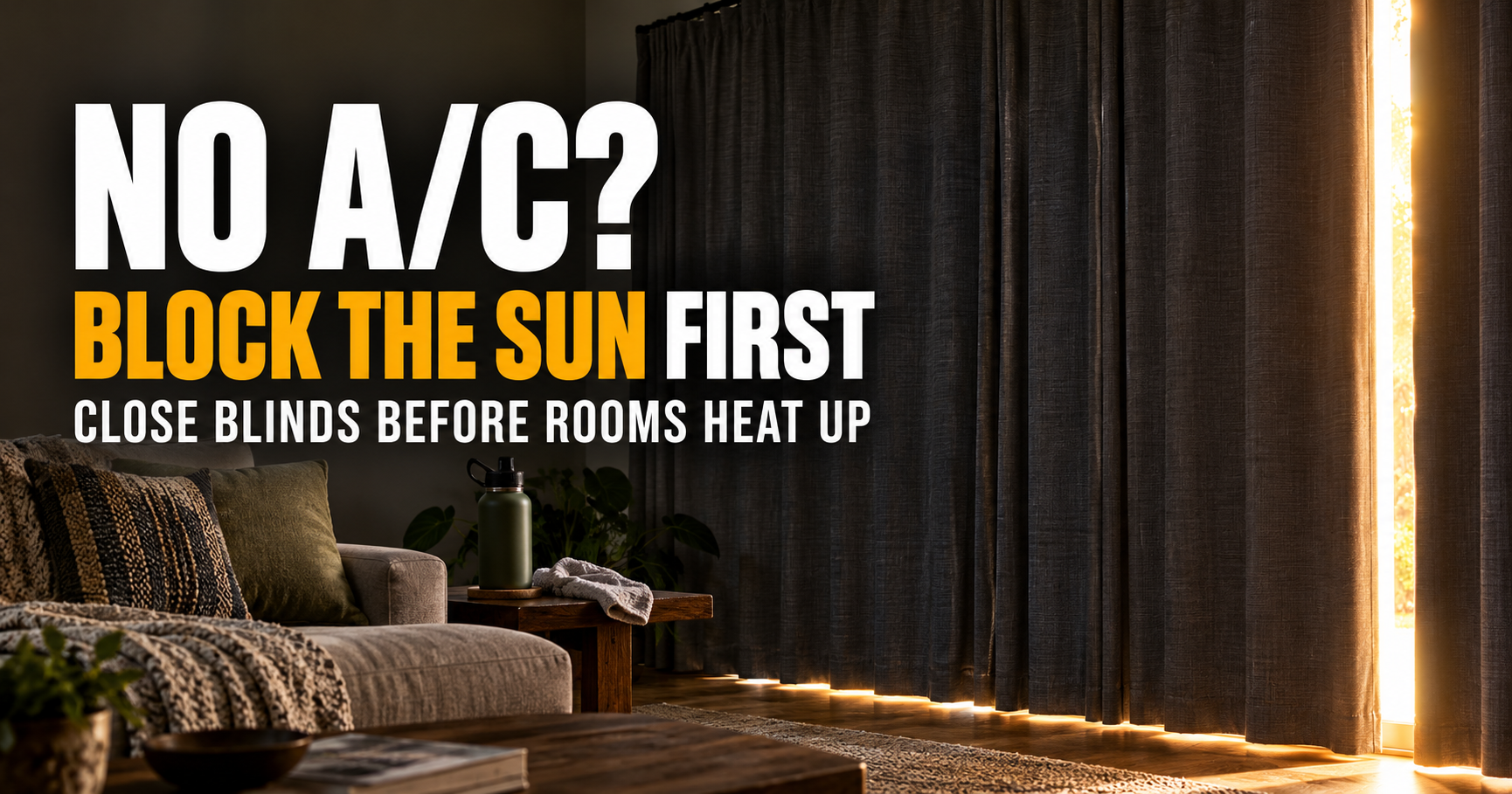
When my power goes out on a hot summer day, I don’t wait until the house feels unbearable before I start trying to cool it down.
I treat the cool air already inside the house like a limited resource.
That’s really the summer version of what I do during a winter blackout. In winter, I’m trying to keep heat inside. In summer, I’m trying to keep heat outside for as long as possible.
The first few hours matter.
I close things up when the outdoor air is hotter than the house, block direct sunlight, stop creating unnecessary heat indoors, move everyone toward the coolest part of the house, and start thinking ahead about what I’ll do if the outage lasts into the hottest part of the day.
Most importantly, I don’t turn staying home into some kind of survival challenge.
If the house becomes dangerously hot and I have access to a cooler place, I leave.
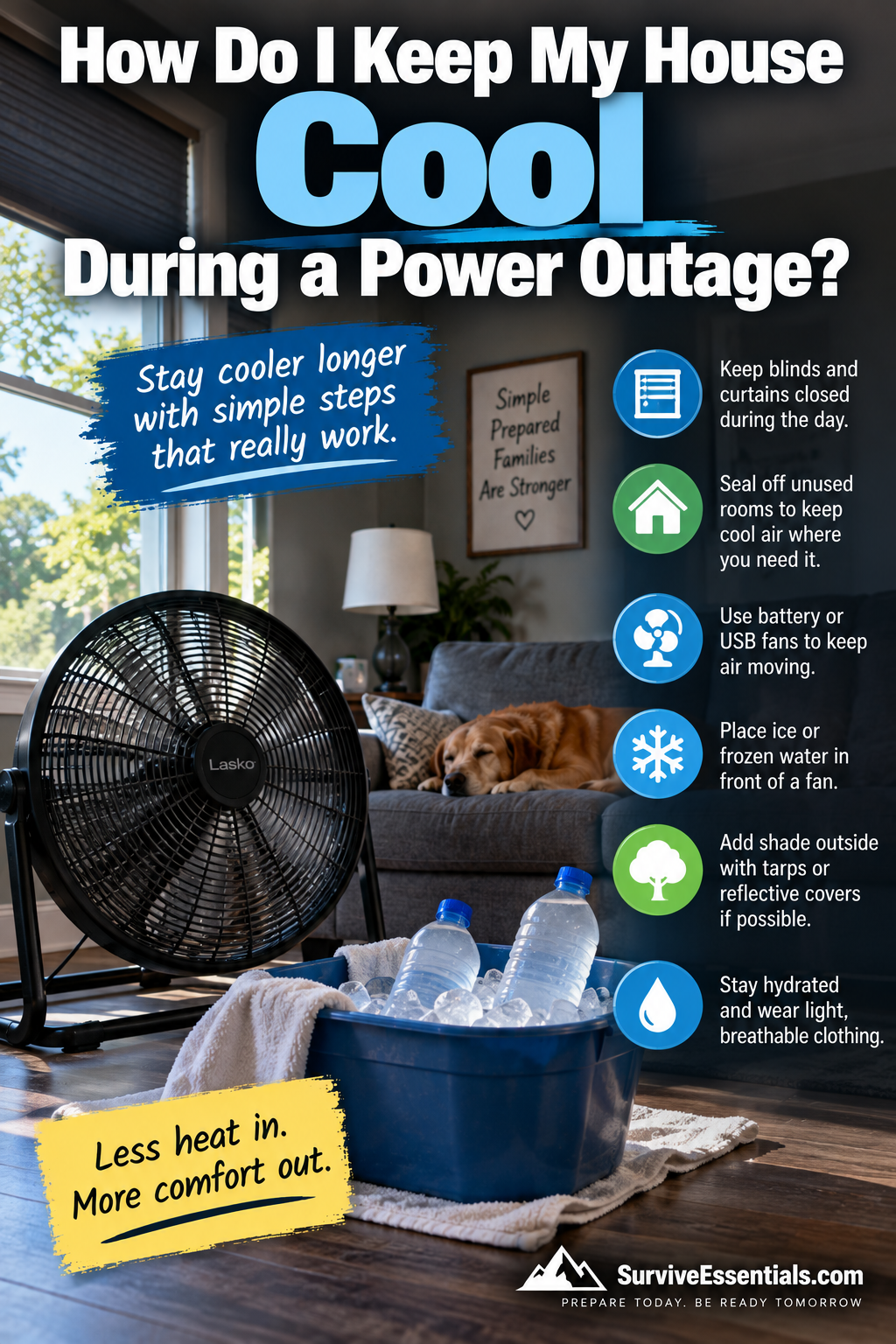
First, I Check How Hot It’s Actually Going to Get
A power outage at 8 p.m. when the overnight low is 67°F is one problem.
A power outage at 10 a.m. with a forecast high of 101°F is completely different.
So I check:
- Current outdoor temperature
- Forecast high
- Overnight low
- Humidity
- Expected outage duration
- Severe weather still approaching
If the utility expects power back within an hour, I may barely notice the indoor temperature change.
If there’s widespread storm damage and no restoration estimate during an extreme heat warning, I start managing the house immediately.
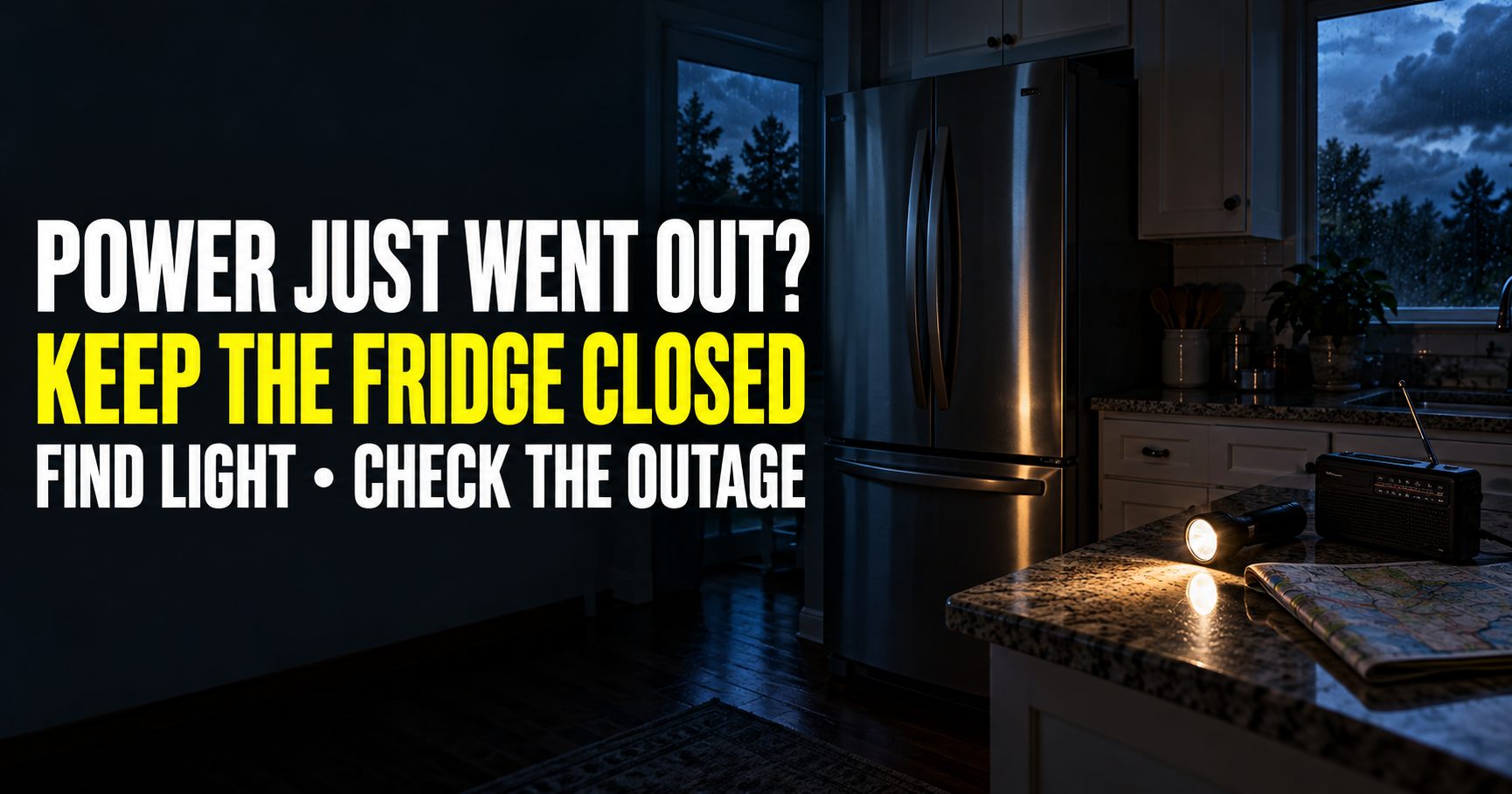
My first-hour power outage routine handles everything else I’m checking at the same time.
I Don’t Automatically Open Every Window
This is one of the first mistakes I avoid.
If it’s 96°F outside and 76°F inside, opening every window can throw away the cooler indoor environment I’m trying to preserve.
Instead, I compare conditions.
If the outside air is hotter than the house, I usually keep the hot air out.
Later, when outdoor temperatures fall below the indoor temperature, opening windows may become much more useful.
I don’t follow one window rule all day.
I use the cooler side of the temperature difference to my advantage.

I Block Direct Sunlight Early
Sunlight coming through glass can add a surprising amount of heat.
So I don’t wait until the room feels like an oven.
I close blinds and curtains on windows receiving strong direct sun.
If I already have exterior shades, awnings, shutters, or another safe way of stopping sunlight before it enters the glass, even better.
The goal is simple.
Don’t let solar heat into the house if I can prevent it.
I Pay Special Attention to West-Facing Windows
Morning sun matters.
Afternoon sun can be brutal.
West-facing windows can receive intense sunlight during the hottest part of the day, right when the house is already struggling to stay cool.
Those are some of the first windows I want shaded.
I don’t need expensive blackout equipment to get some benefit.
Good curtains, blinds, shades, and purpose-made window reflectors can all help reduce incoming heat.



I Don’t Cook a Big Meal Inside
If my AC isn’t running, I don’t turn the kitchen into another heat source.
The oven stays off.
I’m cautious about stovetop cooking too.
This is one reason I like having an emergency cooking plan that doesn’t depend on the indoor kitchen.
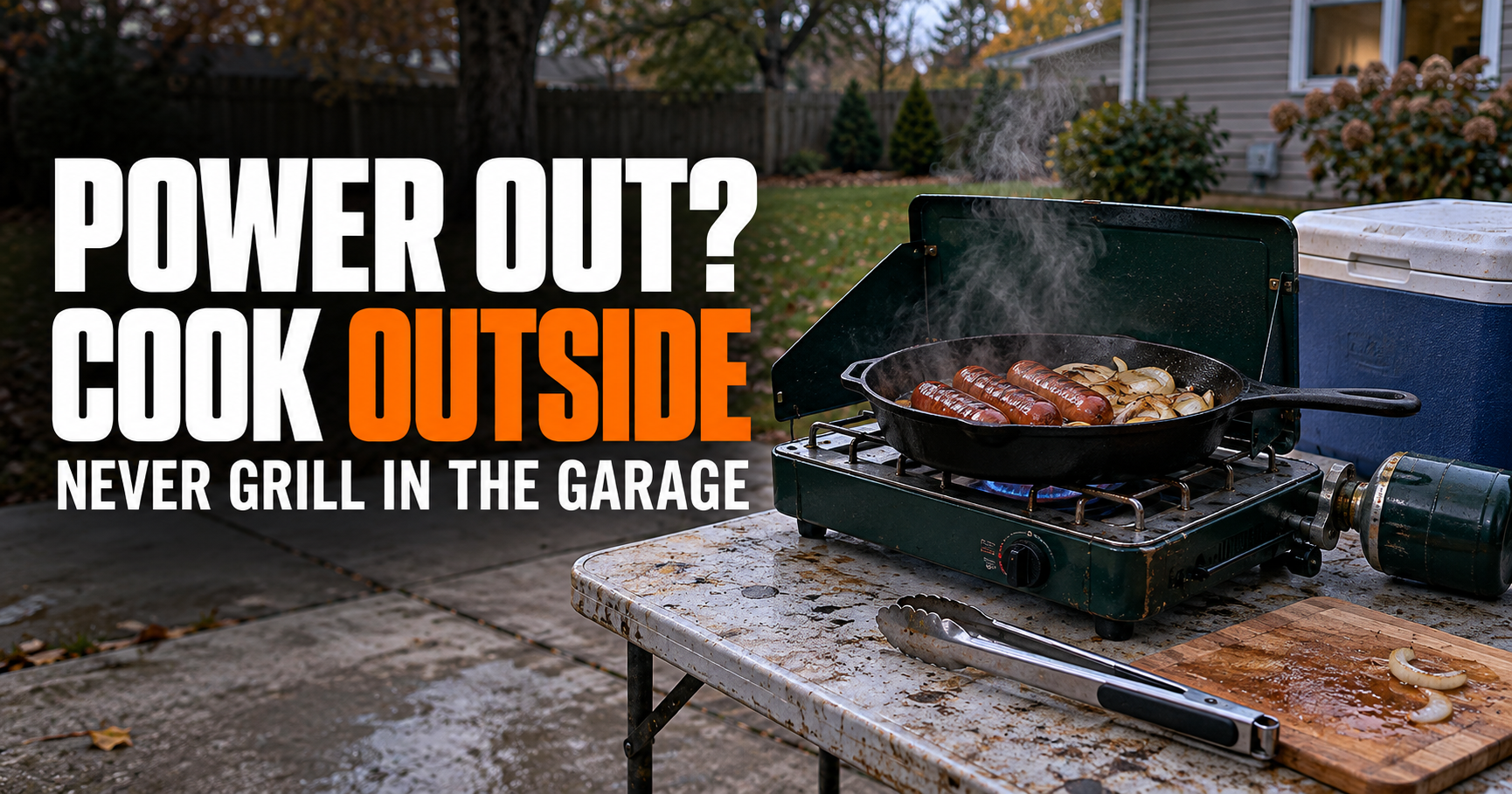
I’ve already covered how I cook food when the power is out.
During a hot-weather blackout, outdoor cooking becomes even more attractive because the cooking heat stays outside.
I Eat Food That Doesn’t Need Cooking First
Not every meal needs to become a survival cooking project.
If it’s dangerously hot, sometimes my best meal is something that requires no cooking at all.
Shelf-stable food.
Sandwiches while refrigerated ingredients are still safe.
Fruit.
Other foods I already have available.
Every meal I can prepare without creating indoor heat makes the house a little easier to manage.

I Move Downstairs
Heat rises.
That means upstairs bedrooms can become miserable while lower levels remain noticeably cooler.
If my house has multiple floors, I check the temperatures instead of assuming every room is the same.
I may temporarily move normal activities downstairs.
If I have a safe, dry basement that’s suitable for occupancy, it may remain considerably cooler than the upper floors.
I’m willing to change where we live inside the house for a day or two.
Normal routines can wait.
I Find the Coolest Room Instead of Cooling Every Room
Just like my winter warm-room strategy, I like concentrating everyone where conditions are best.
Maybe that’s:
- A basement room
- A shaded north-side room
- A downstairs living room
- A room with fewer windows
- A room that stays naturally cooler
I put the thermometer there.
I move drinking water there.
I move charging equipment there.
I keep everyone from spreading across five hotter rooms just because that’s where they normally sit.
I Use Thermometers Instead of Guessing
I want to know what’s happening.
A simple indoor thermometer lets me compare:
Upstairs.
Downstairs.
Basement.
Different sides of the house.
I may discover one room is several degrees cooler than another.
That’s useful information.
It also tells me whether the house is continuing to heat up and how quickly conditions are deteriorating.
Fans Help, but I Don’t Treat Them Like Air Conditioning
Battery-powered and rechargeable fans can make a blackout much more comfortable.
Moving air helps sweat evaporate and can make me feel cooler.
But a fan does not actually lower the room’s temperature.
And in extreme indoor heat, I don’t assume a fan will protect me from heat illness.
If the house becomes very hot, especially around or above 90°F indoors, I start thinking seriously about actual cooling rather than simply moving hotter air across my skin.
That’s an important distinction.


I Save Battery Fans for People, Not Empty Rooms
This sounds obvious, but battery power is limited.
I don’t run a portable fan in an empty bedroom all afternoon.
I put airflow where people are actually sitting or sleeping.
That stretches battery runtime.
The same principle applies to almost everything I do during a blackout.
Use limited resources where they solve an actual problem.
I Charge Fans When the Generator Is Already Running
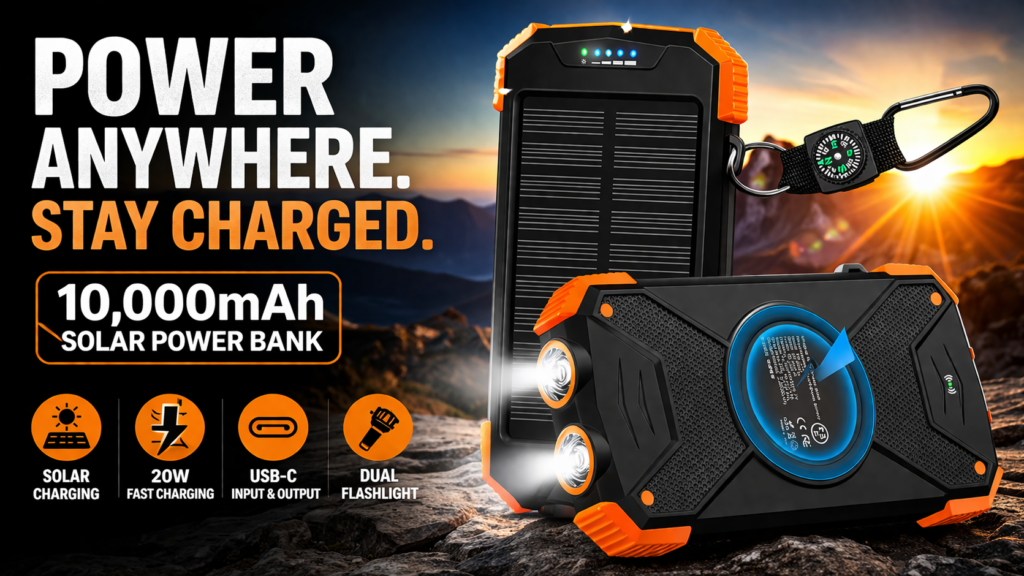
If I own rechargeable fans, they become part of my generator charging cycle.
When I’m running backup power for the refrigerator or another important load, I’ll also recharge:
- Phones
- Power banks
- Flashlights
- Emergency radio
- Rechargeable fans
Then I can shut the generator down and continue using those smaller devices from their batteries.
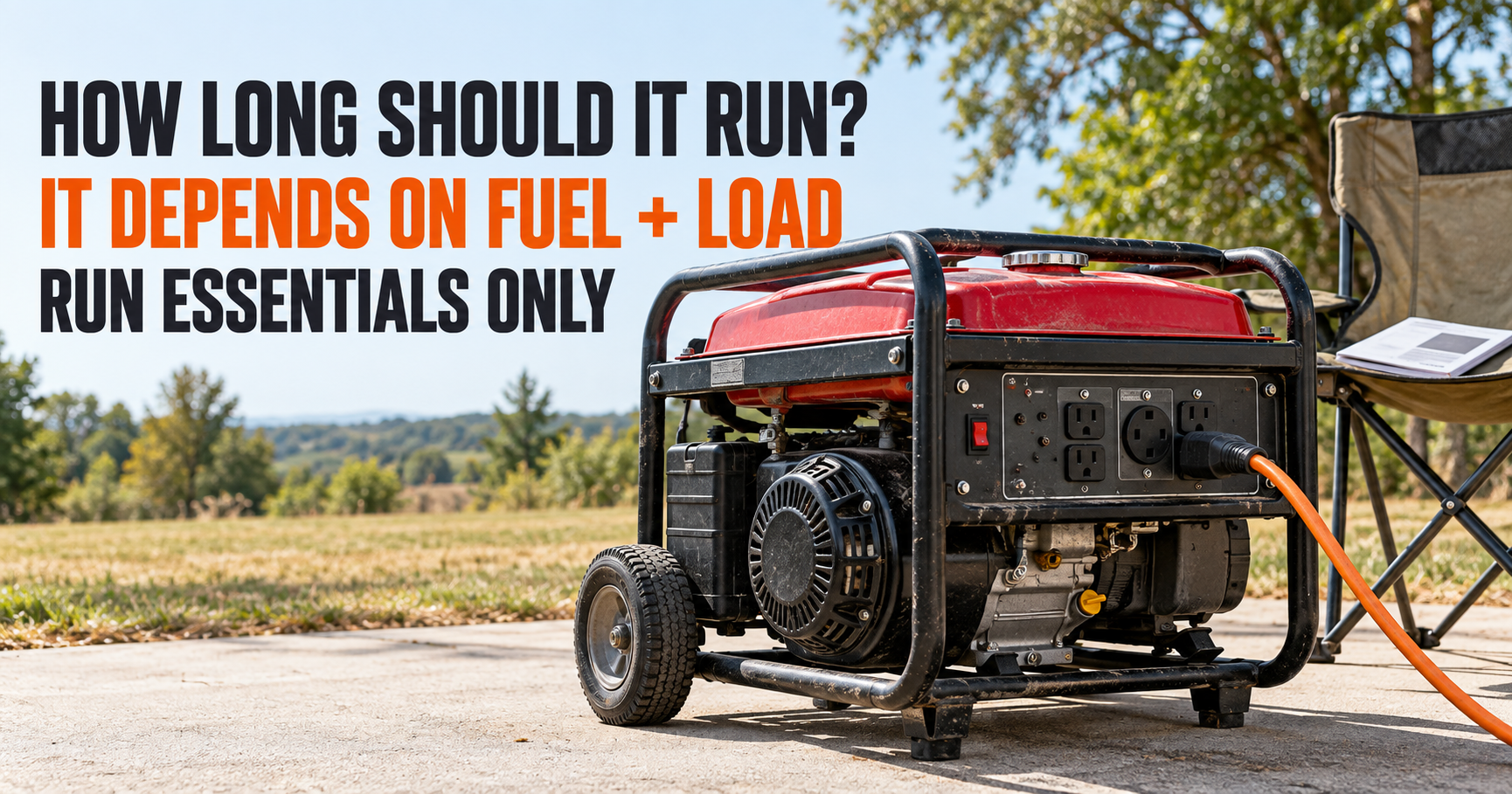
That’s the same strategy I use in how I manage generator runtime during an outage.
I want every gallon of gasoline doing several useful jobs.
I Don’t Run the Generator Beside an Open Window
Summer creates a generator problem people need to think about.
I may want windows open for ventilation later in the day.
My generator still needs to remain safely outside and away from those openings.
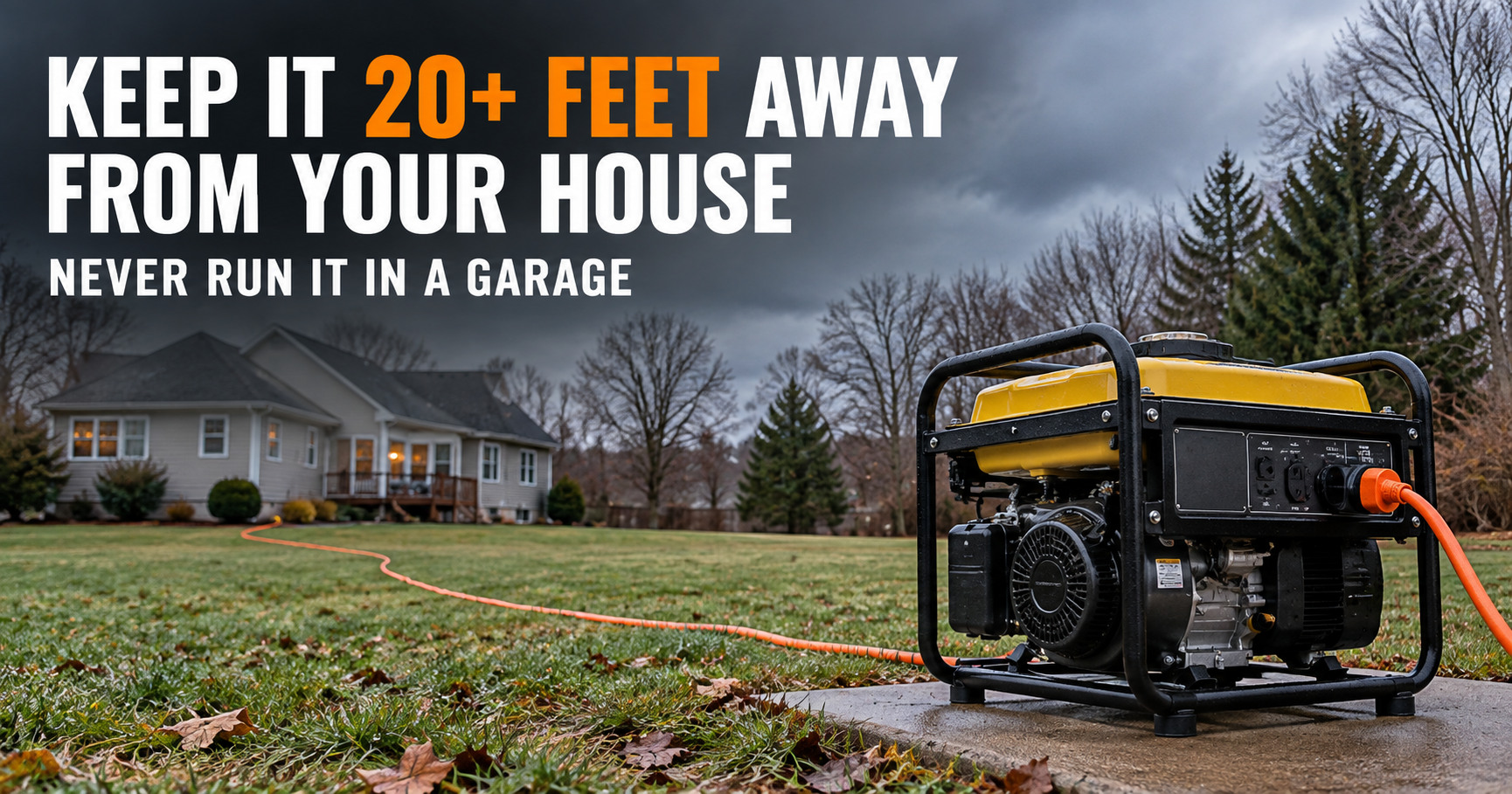
I’ve already covered how far I keep my portable generator from the house.
Opening windows because I’m hot doesn’t change the carbon monoxide rules.
If anything, it gives me another reason to be careful about where exhaust is going.
I Drink Water Before I Feel Terrible
Hydration becomes one of my priorities during a summer blackout.
I don’t wait until I’m extremely thirsty.
I keep water accessible and drink regularly.
This becomes even more important if I’m outside clearing storm debris, moving equipment, checking animals, or doing other physical work.
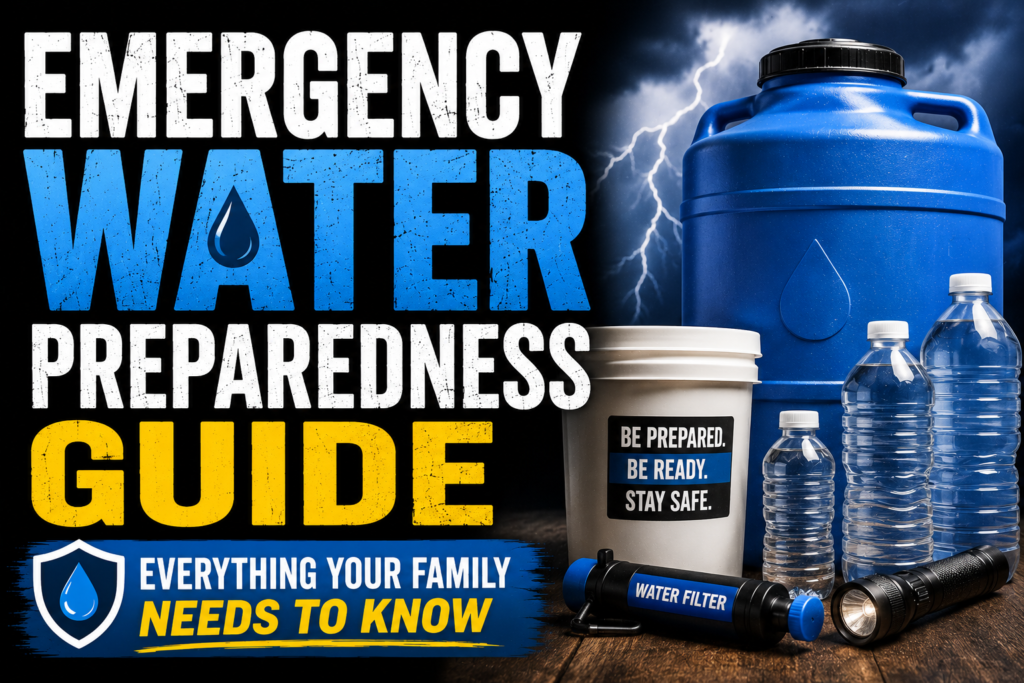
Our emergency water preparedness guide is directly relevant here.
Summer heat is exactly when I don’t want to discover my emergency water supply is inadequate.
I Avoid Alcohol When Heat Is Becoming a Problem
A blackout isn’t the time I’m relying on beer as hydration.
If I’m trying to manage heat stress, I want water and appropriate fluids.
I also don’t overdo caffeine while ignoring actual hydration.
My goal is keeping my body able to regulate temperature.
I Use Cool Water on My Body
If safe water is available, I don’t only think about drinking it.
Cool showers or baths can help lower body temperature.
A cool wet cloth can help too.
I can apply cool wet cloths to areas like my neck and skin when I’m getting hot.
This is one reason preserving access to water matters beyond drinking.
I Don’t Take a Hot Shower Just Because the Water Heater Still Works
That should be obvious, but habits are powerful.
During a summer outage, I’m trying to remove heat from my body and the house.

A cool or lukewarm shower makes much more sense.
If my home is on a private well and the pump isn’t working, then water conservation may matter more than showering at all.
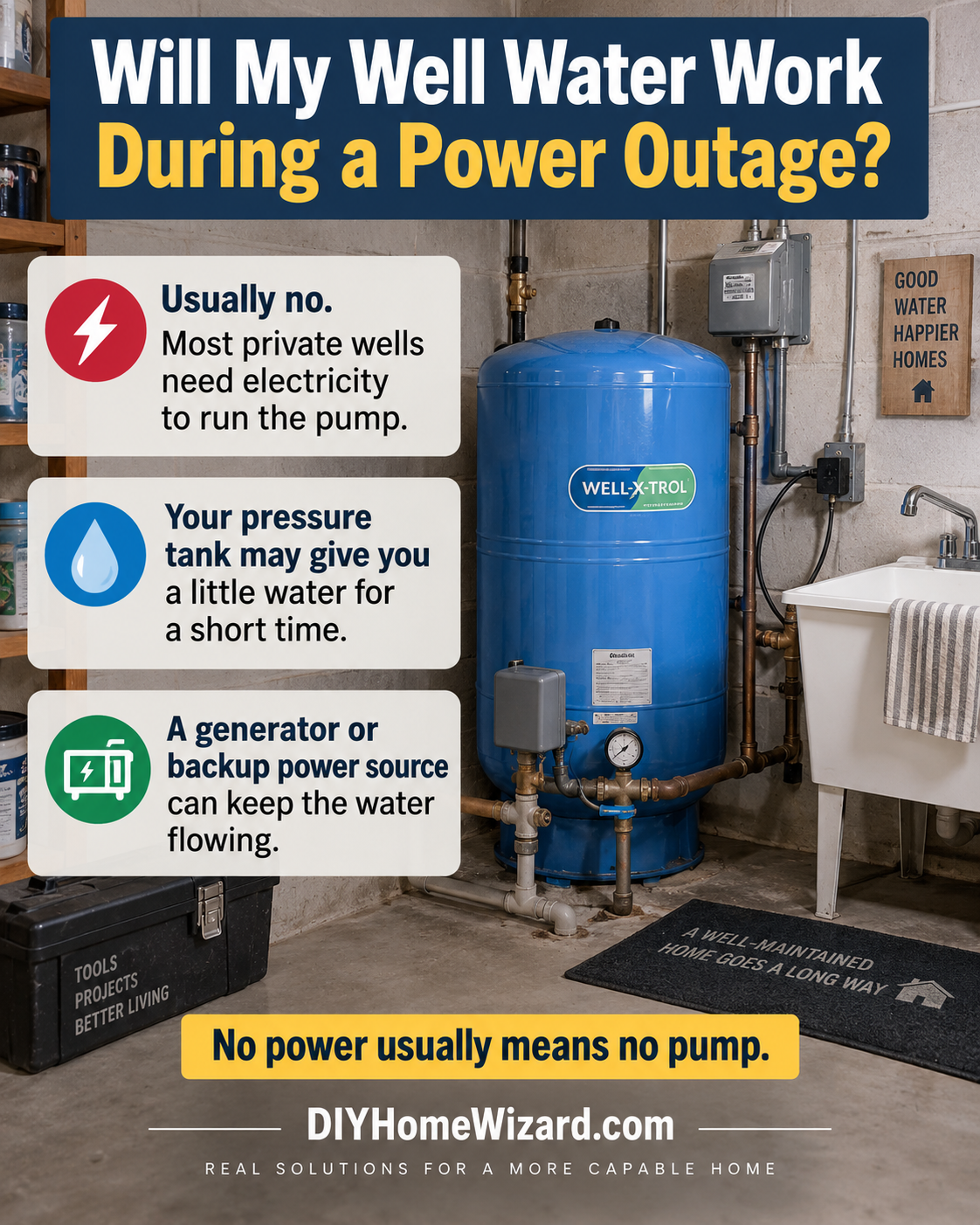
That’s where what happens to my well water during a power outage becomes important.
I Wear Less, but I Still Think About Sun
Inside, I prefer loose, lightweight clothing.
Outside, I still protect myself from direct sunlight.
Light-colored, breathable clothing and shade can be much better than exposing skin to intense sun for hours.
The goal isn’t simply wearing as little as possible.
The goal is helping my body manage heat.
I Move Physical Work to Cooler Hours
If a storm knocked branches down all over the yard, I understand the urge to start cleaning immediately.
But if it’s 98°F at 2 p.m., the branches can wait unless they create an immediate safety problem.
I’ll do heavier work earlier in the morning or later in the evening when possible.
Heat exhaustion doesn’t care how badly I want the yard cleaned up.
I Watch Kids More Closely
Children may not recognize heat stress early enough to make good decisions for themselves.
They may also continue playing when they should be slowing down.
During a hot blackout, I pay attention to:
- How much they’re drinking
- Their activity level
- How they’re acting
- Whether they’re unusually tired
- Whether they’re complaining of headache or dizziness
- Whether they’re becoming nauseated
I don’t assume they’ll tell me exactly when they’re overheating.
Older Adults Need Extra Attention Too
Older adults can be more vulnerable to extreme heat.
So can people with certain medical conditions.
If someone in my household falls into a higher-risk group, my threshold for leaving the hot house becomes lower.
I don’t build the plan around what the healthiest adult in the house can tolerate.
I build it around the person who needs the most protection.
I Check on Neighbors
A summer blackout can be dangerous for someone living alone.
Especially an older neighbor who may not have transportation, backup power, or family nearby.
If it’s safe for me to do so, I check.
Sometimes preparedness is simply noticing that somebody else needs help before the situation becomes an emergency.
Pets Need Cooling Too
Dogs, cats, and other animals are dealing with the same indoor temperature I am.
They need:
- Plenty of water
- Shade
- Ventilation
- Access to the coolest available areas
- Monitoring for heat stress
I never leave a pet sitting in a closed vehicle during hot weather.
The vehicle isn’t an emergency cooling room.
I Don’t Depend on My Car for Hours of Air Conditioning
A vehicle can provide temporary air conditioning and charging in certain situations.
But I don’t want my entire heat plan built around sitting in an idling car all afternoon.
Fuel is limited.
I may need that fuel to evacuate.
And I never run the vehicle in an attached garage or another enclosed area.
If I’m using the vehicle, it’s outside.
I Keep the Car Fueled Before Extreme Weather
This becomes important if the house gets too hot to remain safely.
I don’t want to decide to leave and discover the vehicle is almost empty.
Before predicted severe weather or extreme heat, I like having a healthy amount of fuel in the vehicle.
That gives me options.
Preparedness is mostly about options.
I Open the House When Outside Finally Becomes Cooler
This is where my strategy can reverse.
During the hottest part of the day, I’m often trying to keep outdoor heat out.
Later in the evening, the outdoor temperature may drop below the indoor temperature.
Now ventilation can help.
If weather and security conditions allow, I can open appropriate windows and create cross ventilation.
A fan positioned strategically can help move cooler outdoor air through the house.
I’m using the temperature difference in my favor again.
I Close It Back Up Before the Next Hot Day
If the outage continues overnight, I try to take advantage of cooler nighttime temperatures.
Then, before the next day’s heat builds, I close windows and shades again to trap as much of that cooler air as possible.
That creates a simple daily cycle:
Cool the house naturally when outdoor conditions are favorable.
Seal out heat when outdoor conditions become worse.
It’s not air conditioning.
But it can make a meaningful difference.
I Think About Humidity Too
Temperature isn’t the only thing that affects how heat feels.
High humidity makes it harder for sweat to evaporate.
That means 88°F in one environment can feel very different from 88°F somewhere dry.
So I don’t use temperature as the only measure of how everyone is doing.
I pay attention to actual physical symptoms.
I Know the Difference Between Uncomfortable and Dangerous
A hot house is miserable.
Heat illness is something else.
Signs that concern me include:
- Heavy sweating
- Weakness
- Dizziness
- Headache
- Nausea
- Muscle cramps
- Fainting
- Confusion
If somebody becomes confused, loses consciousness, or appears to have heat stroke, I’m dealing with a medical emergency.
That’s not the time for another fan and a glass of water.
I Leave Before Heat Becomes a Medical Emergency
This is the most important part of my summer blackout plan.
There is a point where staying home stops being smart.
If the indoor temperature keeps climbing and I can’t maintain safe conditions, I go somewhere cooler if I safely can.
Possible options include:
- A cooling center
- Family or friends with power
- A library
- A shopping center
- A community building
- A hotel outside the outage area
- Another air-conditioned safe location
I would rather leave under controlled conditions than wait until someone is sick.
I Find Cooling Locations Before I Need Them
If extreme heat is forecast, I’ll pay attention to local announcements before the power fails.
Where are the cooling centers?
What hours are they open?
Can pets come?
How far away are they?
What transportation do I have?
Knowing that beforehand makes leaving much easier.
My Refrigerator Is Fighting the Same Heat
A summer blackout also makes food preservation harder.
The hotter the house becomes, the more challenging it is to keep refrigerated food cold.
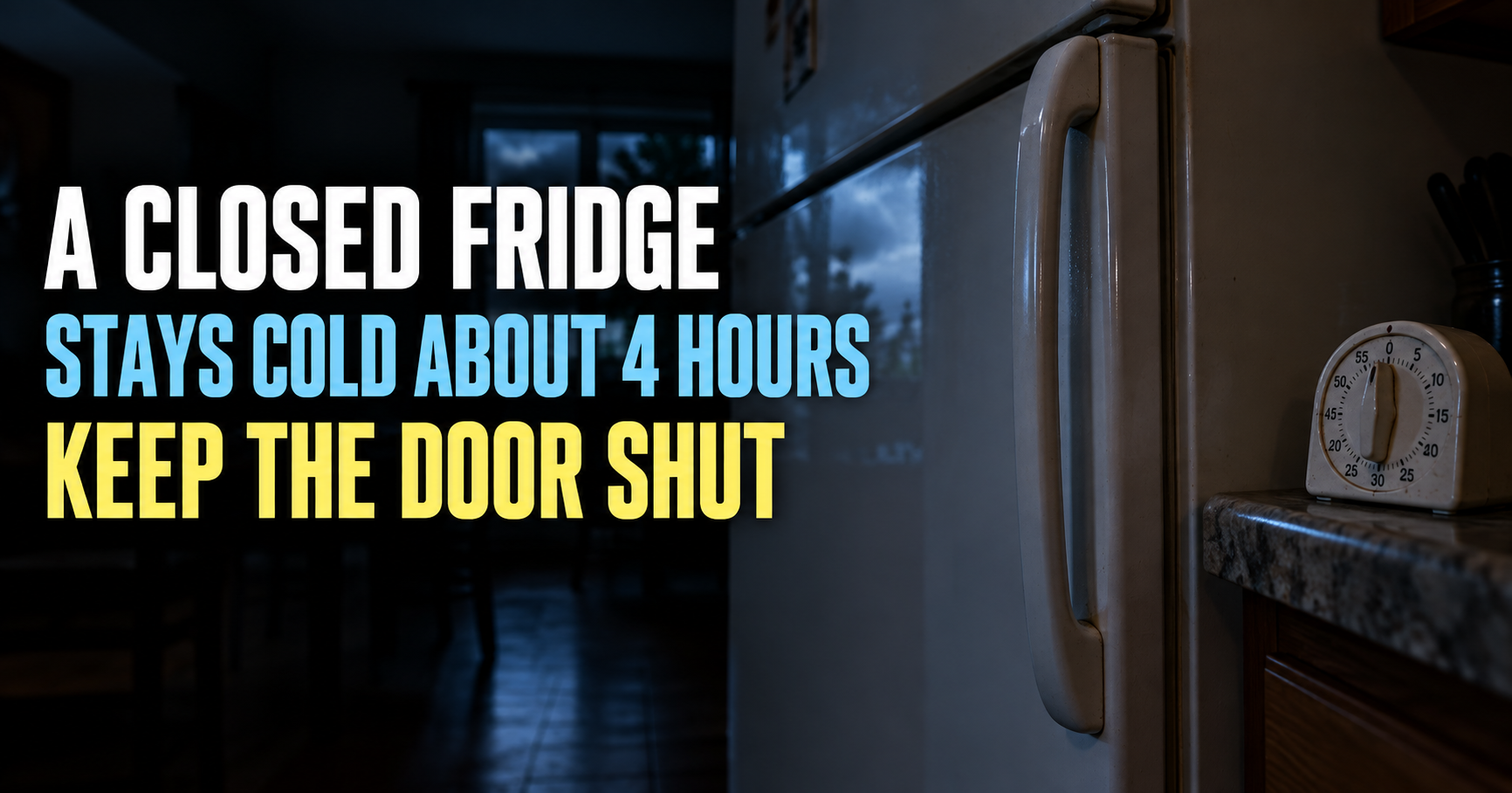
That’s why how long my refrigerator stays cold without power matters even more during hot weather.
I keep the doors shut.
I monitor temperatures.
And if the outage goes long enough, refrigeration becomes one of the first jobs I give backup power.
My Freezer Gets the Same Attention
If I’m away when the outage happens, I don’t simply assume everything is fine because the freezer is cold when I return.
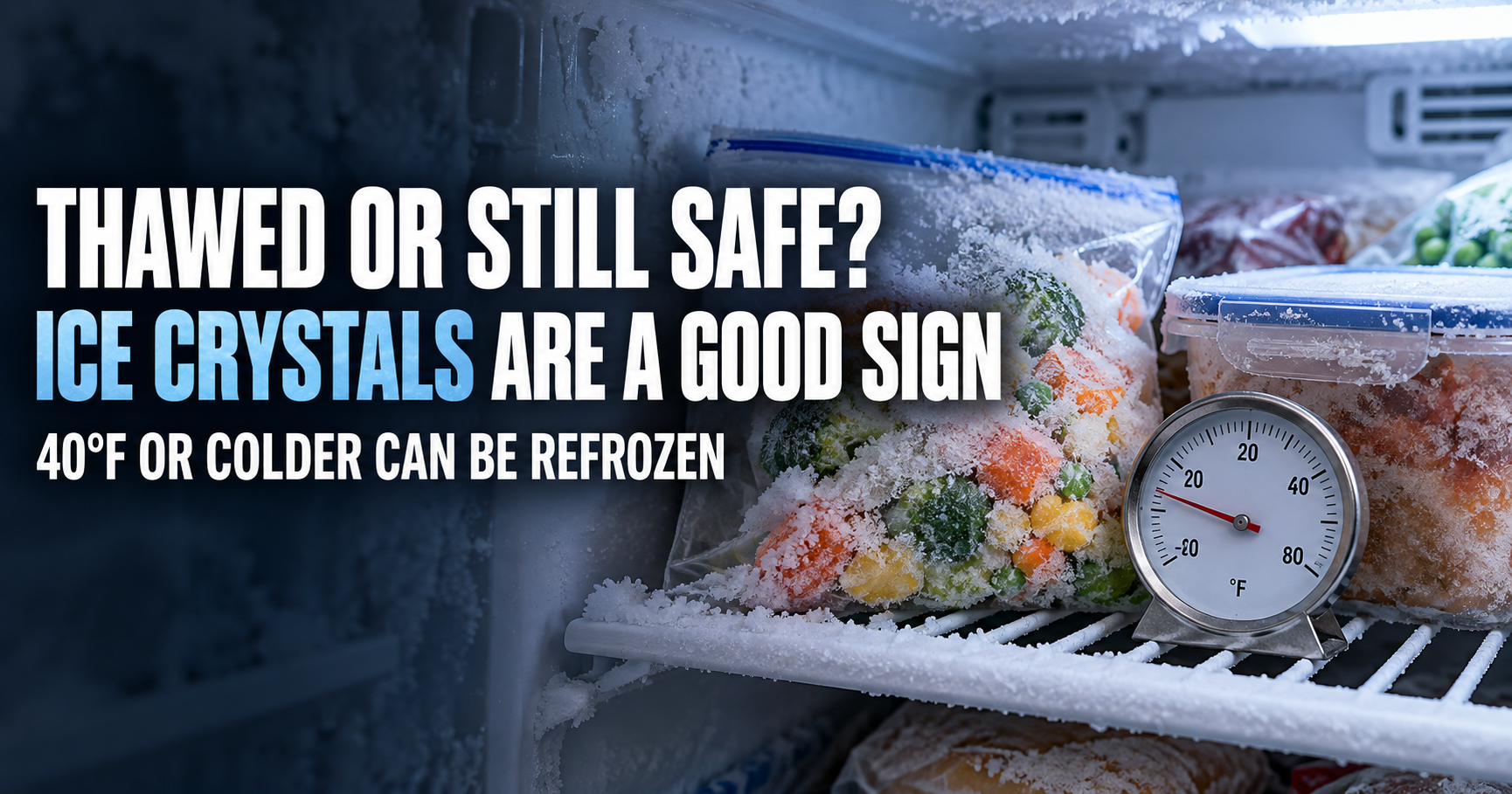
I’ve already covered how I tell whether my freezer may have thawed during a power outage.
Summer heat gives me even less reason to guess.
I Keep My Phone Alive Without Running the Generator Constantly
Weather alerts, outage maps, family communication, and cooling-center information may all come through my phone.
So battery conservation matters.
I’ve already laid out how I keep my phone charged during a power outage.
I use power banks and smaller charging options before running an engine solely for one phone.
When the generator is already running, I recharge everything.
I Keep the Emergency Radio Nearby
Severe summer outages often happen alongside thunderstorms, tornadoes, hurricanes, or other dangerous weather.
I want another source of information besides my phone.
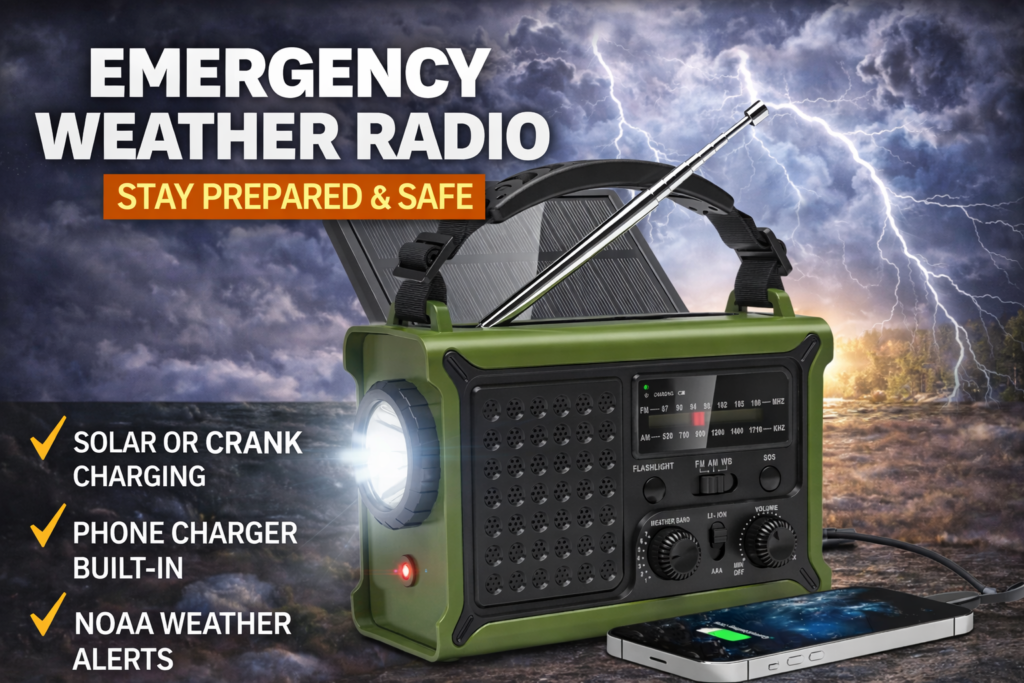
That’s why my emergency weather radio stays part of the blackout setup.
If cellular service becomes unreliable, I still want weather information.
I Don’t Turn Emergency Cooking Into More Indoor Heat
This is another reason the cooking article matters.
If I can safely prepare food outdoors using appropriate equipment, I keep that heat outside.
I never bring grills, charcoal, camp stoves intended for outdoor use, or generators indoors.
Carbon monoxide remains a danger even when every window in the house feels like it should be open.
I Build My Summer Outage Kit Differently From My Winter Kit
Some supplies overlap.
Some don’t.
For summer, I especially like having:
- Plenty of stored water
- Rechargeable or battery fans
- Power banks
- Emergency radio
- Flashlights
- Window shades or coverings
- Lightweight clothing
- Cool towels
- Electrolyte options when appropriate
- Refrigerator and freezer thermometers
- Backup power
- Vehicle fuel
- A known cooling destination
That’s a very different emphasis from sleeping bags and propane heat.
What I Do During the First Hour of a Hot-Weather Outage
My rough routine is simple.
First, I find out how long the outage may last.
Then I:
- Close refrigerator and freezer doors.
- Check the weather forecast.
- Block direct sunlight.
- Keep hotter outdoor air outside.
- Put phones into battery-saving mode.
- Get fans and power banks ready.
- Move everyone toward the coolest part of the house.
- Start drinking water regularly.
- Stop unnecessary cooking