Burns are one of the injuries I think become more likely when normal life gets disrupted.
The electricity goes out and suddenly we’re cooking differently.
A portable heater is running.
The generator is hot.
Someone is handling boiling water by flashlight.
We’re burning wood, clearing storm debris, or using equipment we don’t normally use.
A burn can happen fast.
Fortunately, the first thing to do for many thermal burns is surprisingly simple:
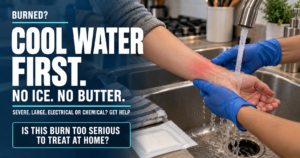
Get away from the heat source and start cooling the burn with clean, cool running water.
I don’t start digging through the first aid kit for some miracle burn cream.
I want the heat out of the tissue first.
First, Stop Whatever Is Causing the Burn
Before treating anything, the burning has to stop.
That might mean moving away from a fire, getting away from hot equipment, removing the source of heat, or shutting something down when it can be done safely.
If electricity is involved, that’s different.
I don’t grab someone who is still in contact with an energized electrical source. The power source needs to be shut off before approaching them safely.
Chemical burns are different too.
So before treating “a burn,” I want to know what actually caused it.

For a Normal Heat Burn, I Get Cool Running Water on It
For a thermal burn from something like a hot pan, boiling liquid, steam, or another heat source, clean running water is my first choice.
Current American Heart Association and American Red Cross first-aid guidance recommends cooling thermal burns immediately, preferably with clean running water. Cooling for roughly 5 to 20 minutes is considered reasonable.
The American Red Cross similarly advises putting the burn under clean, cool running water for 5 to 20 minutes.
That’s easy to remember.
Cool water. Keep it running. Give it time.
I Don’t Use Ice as My First Choice
A burn feels hot, so grabbing ice seems logical.
That’s not what I normally want.
The Red Cross warns against applying ice directly because it can cause additional tissue damage.
Cool running water gives me controlled cooling without adding a freezing injury on top of the burn.
If normal running water isn’t available, current first-aid guidance provides alternatives, but when I’ve got safe running water available, that’s where I’m starting.
Remove Rings and Tight Items Before Swelling Gets Worse
This is an easy detail to overlook.
If someone burns a hand or arm, I look for rings, watches, bracelets, or other tight items near the injury.
Burned tissue can swell.
Something that slides off easily right now may become very difficult to remove later.
The Red Cross recommends removing jewelry and clothing from the burn area when they aren’t stuck to the burned skin.


But I Don’t Rip Clothing Off Burned Skin
If clothing is stuck to the burn, I leave the stuck material alone.
Pulling it away can cause additional tissue damage.
I can remove loose clothing around the area when appropriate, but anything adhered to burned skin stays where it is for professional medical care.
That’s another example of first aid sometimes meaning don’t mess with it.
I Don’t Put Butter on a Burn
This is one of those old home remedies that refuses to disappear.
Butter isn’t burn treatment.
Neither is mayonnaise.
Neither is another greasy kitchen product just because someone remembers a grandparent using it.
The Red Cross specifically advises against greasy substances such as butter and petroleum jelly during the initial cooling stage because they can trap heat and worsen the burn.
My first move is still water.

Toothpaste Doesn’t Belong on It Either
This is another internet remedy I wouldn’t use.
I’m not trying to make the burn feel minty.
I’m trying to cool damaged tissue appropriately and protect it.
Simple first aid is often better than turning the kitchen or bathroom cabinet into a pharmacy.
Then I Decide How Serious the Burn Actually Is
Not every burn needs an ambulance.
Touching a hot baking sheet for a split second is very different from clothing catching fire.
Once the burn has been cooled, I look at:
How large is it?
How deep does it appear?
Where is it?
Is there blistering?
Is the skin white, charred, brown, or black?
Can deeper tissue be seen?
Was electricity or a chemical involved?
Is the person very young, older, or dealing with other significant injuries?
Those answers change what happens next.
Location Can Make a Smaller Burn More Serious
Current AHA and Red Cross guidance recommends prompt professional evaluation for full-thickness burns and for partial-thickness burns larger than the person’s palm or involving the face, hands, feet, or genitals.
The Red Cross also identifies burns involving major joints and other critical areas as potentially requiring emergency treatment.
That’s why I don’t judge a burn solely by square inches.
A smaller burn in the wrong place can matter a lot.
A Burn Larger Than the Person’s Palm Gets My Attention
The person’s palm gives me a quick reference.
If a partial-thickness burn is larger than their palm, current guidelines recommend prompt healthcare evaluation.
That’s a much easier rule to remember during an emergency than trying to calculate percentages of body surface area.
Deep Burns May Not Hurt as Much as I’d Expect
This is one of the dangerous things about judging a burn by pain.
A very serious burn can damage nerve endings.
So “it doesn’t hurt that bad” doesn’t automatically mean the burn is minor.
The Red Cross lists extreme pain or almost no pain among possible signs seen with serious burns.
I look at the injury, not just the pain score.
Electrical Burns Get Medical Attention
An electrical burn can look small on the outside while causing more significant injury internally.
The Red Cross recommends healthcare evaluation even for small electrical burns because electricity can cause internal injuries and affect the heart and breathing.
That’s not something I treat with burn cream and forget.
And before approaching someone involved in an electrical incident, I make sure the power source has been shut off.
Chemical Burns Are Their Own Emergency
If a chemical caused the burn, I don’t automatically treat it exactly like touching a hot pan.
The chemical needs to be removed from contact with the skin safely.
The Red Cross recommends appropriate PPE, removing contaminated clothing when trained to do so, brushing away dry chemicals before flushing, and flushing liquid chemical exposure with water.
For an eye exposure, flushing continues while emergency care is arranged.
This is one situation where knowing what substance caused the injury can be very important.
I Don’t Pop Burn Blisters
If blisters form, I leave them alone.
They’re protecting injured skin underneath.
Popping them intentionally creates another opening where contamination can enter.
If a blister breaks on its own, that becomes a wound-care issue, and I want to keep the area appropriately clean and protected.
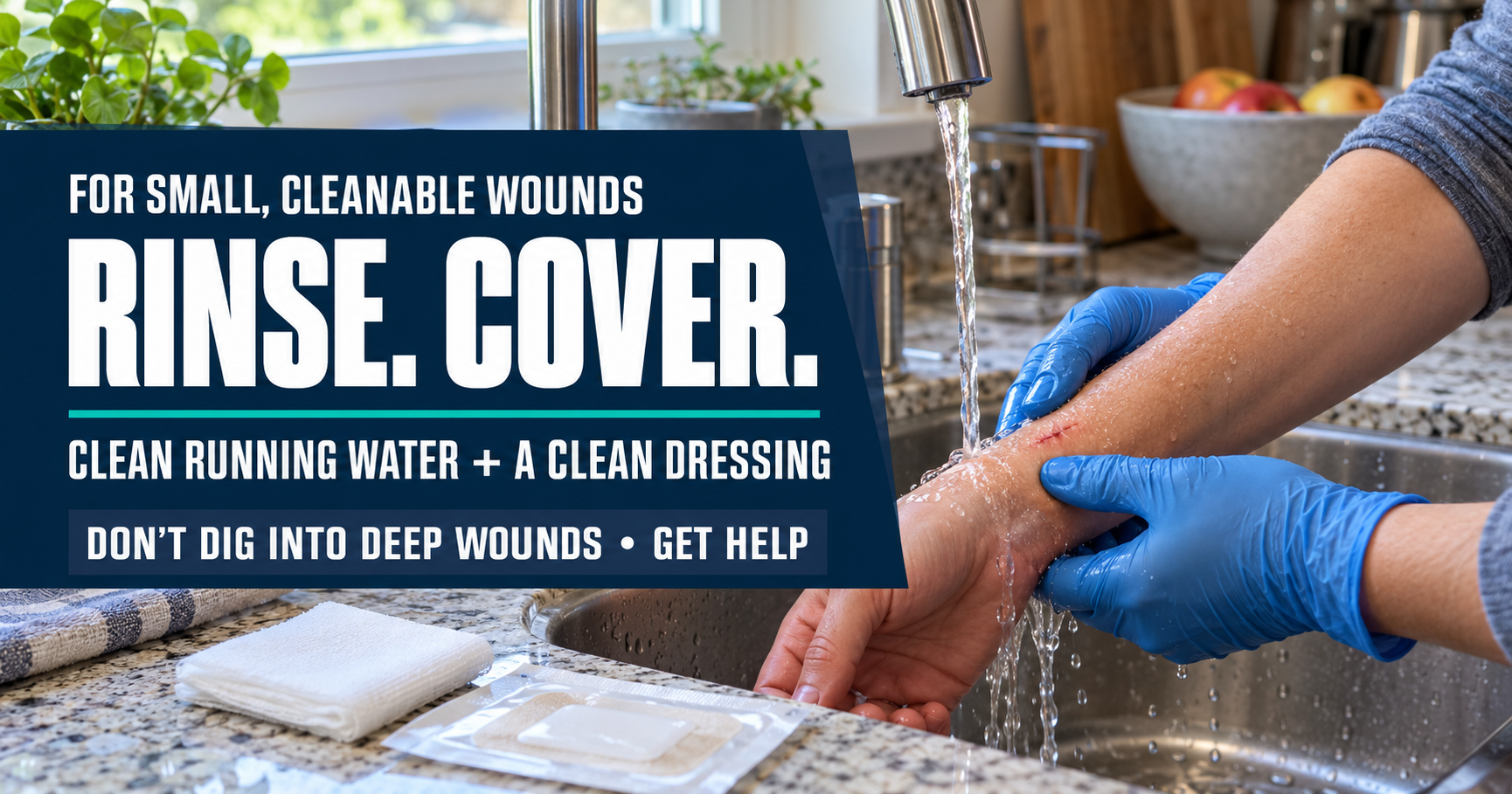
That connects naturally with how I clean a wound during an emergency.
After Cooling, I Protect the Burn
For an appropriate minor burn, the goal after cooling is protecting the damaged skin.
The Red Cross recommends loosely covering burns with intact skin or blisters using a clean cloth or non-adherent dressing while awaiting professional evaluation when needed.
I don’t tightly wrap burned skin.
And I definitely don’t use an adhesive bandage directly over the burn where it can stick to damaged tissue.
The First Aid Kit Needs Burn-Friendly Dressings
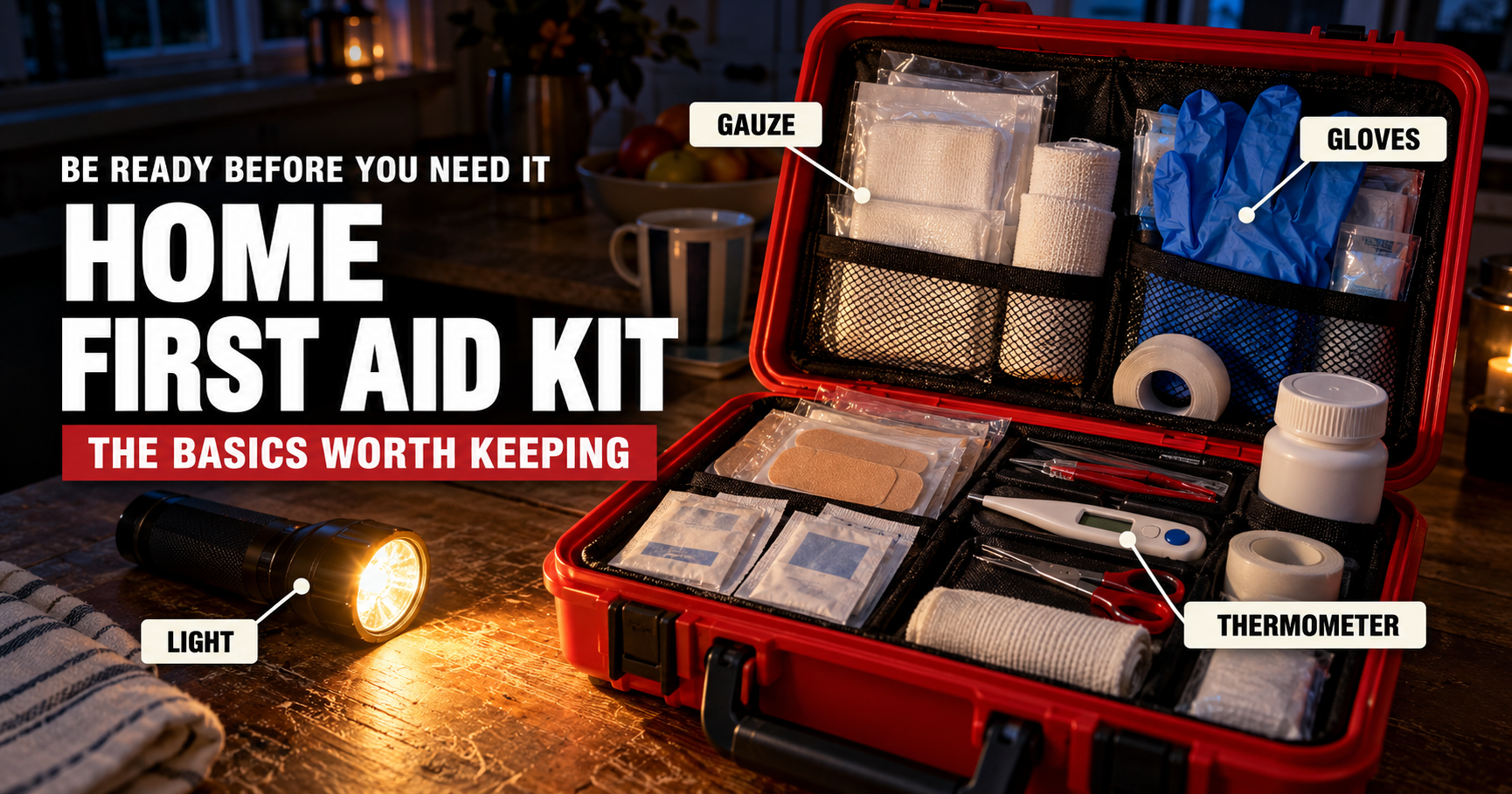
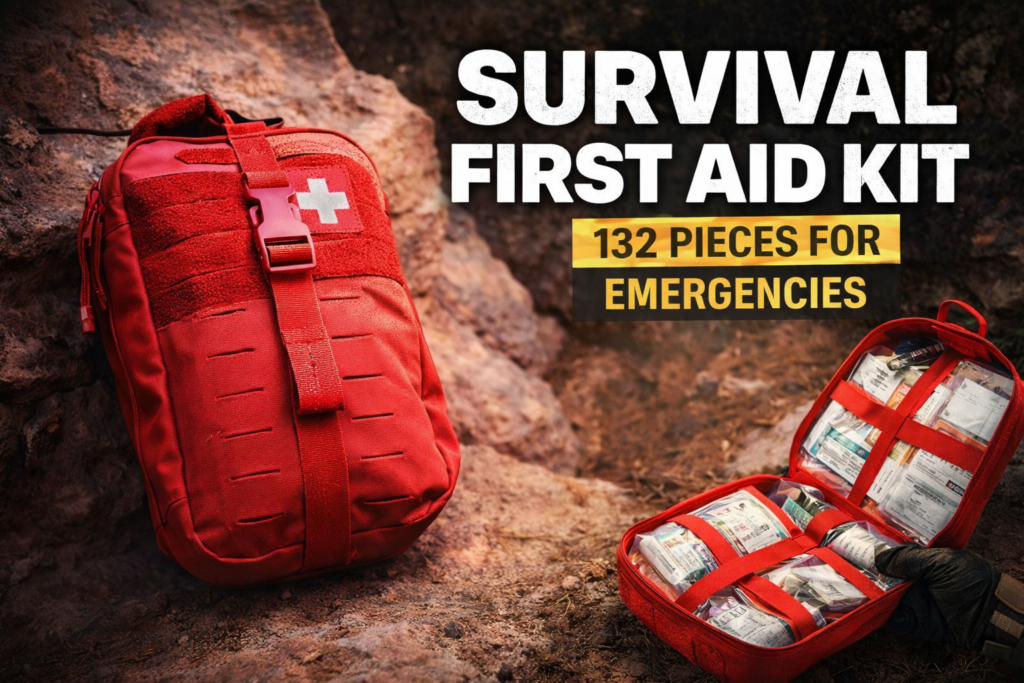
This is exactly why our home emergency first aid kit contains more than ordinary adhesive bandages.
Clean gauze and non-adherent dressings give me much better options for protecting an appropriate burn.
The kit doesn’t need to contain 50 different burn products.
It needs useful supplies I understand.
Power Outages Are One Reason I Take Burns Seriously
This is where this article fits the rest of Survive Essentials particularly well.
During a blackout, people improvise.
They’re cooking on equipment they don’t normally use.
Handling fuel.
Lighting candles.
Operating generators.
Using portable heaters.
Heating water manually.
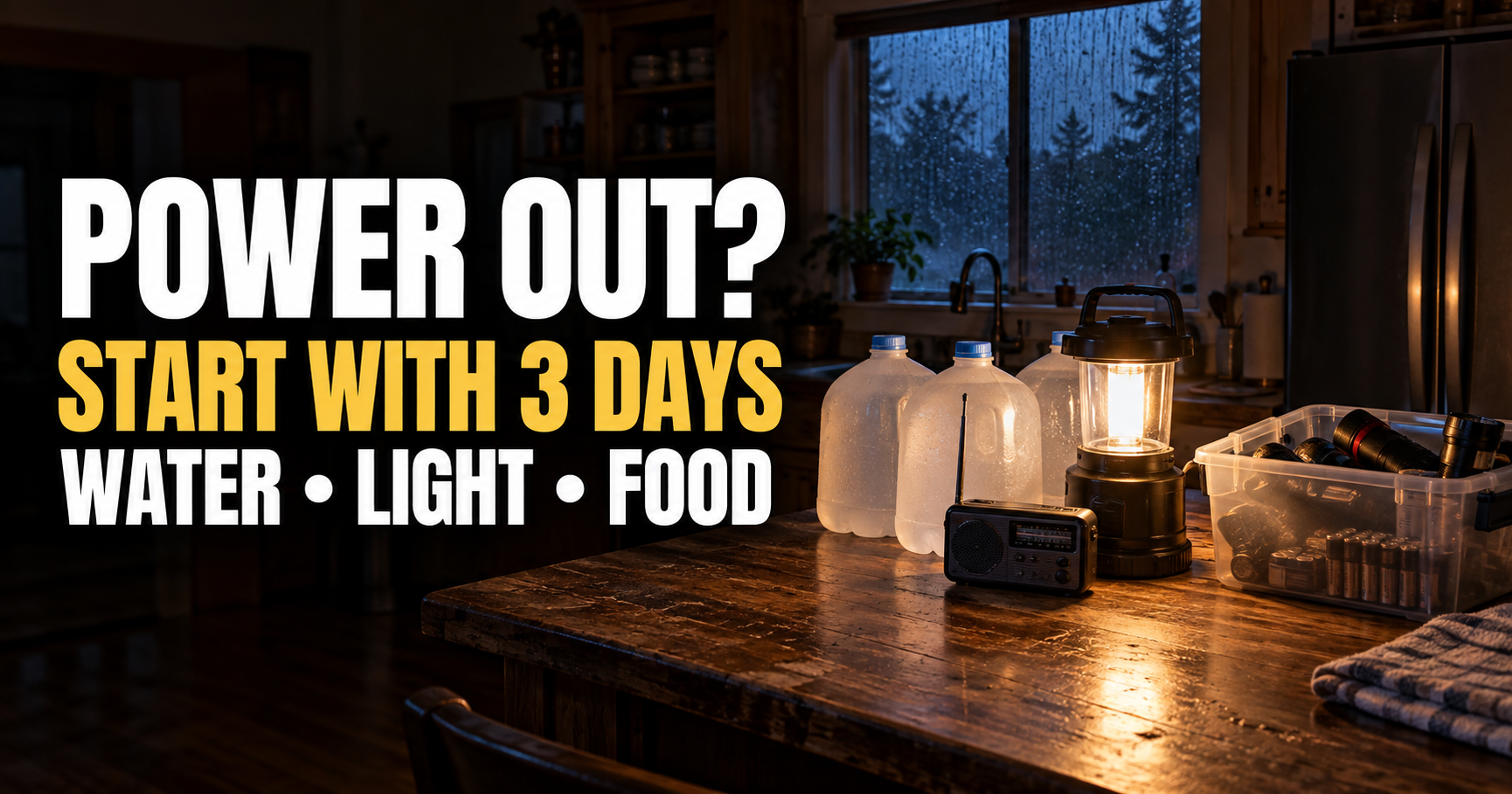
That’s why the power-outage preparedness plan and first-aid cluster belong together.
Preparedness equipment can solve problems.
Used incorrectly, it can also create injuries.
Portable Heaters Need Respect
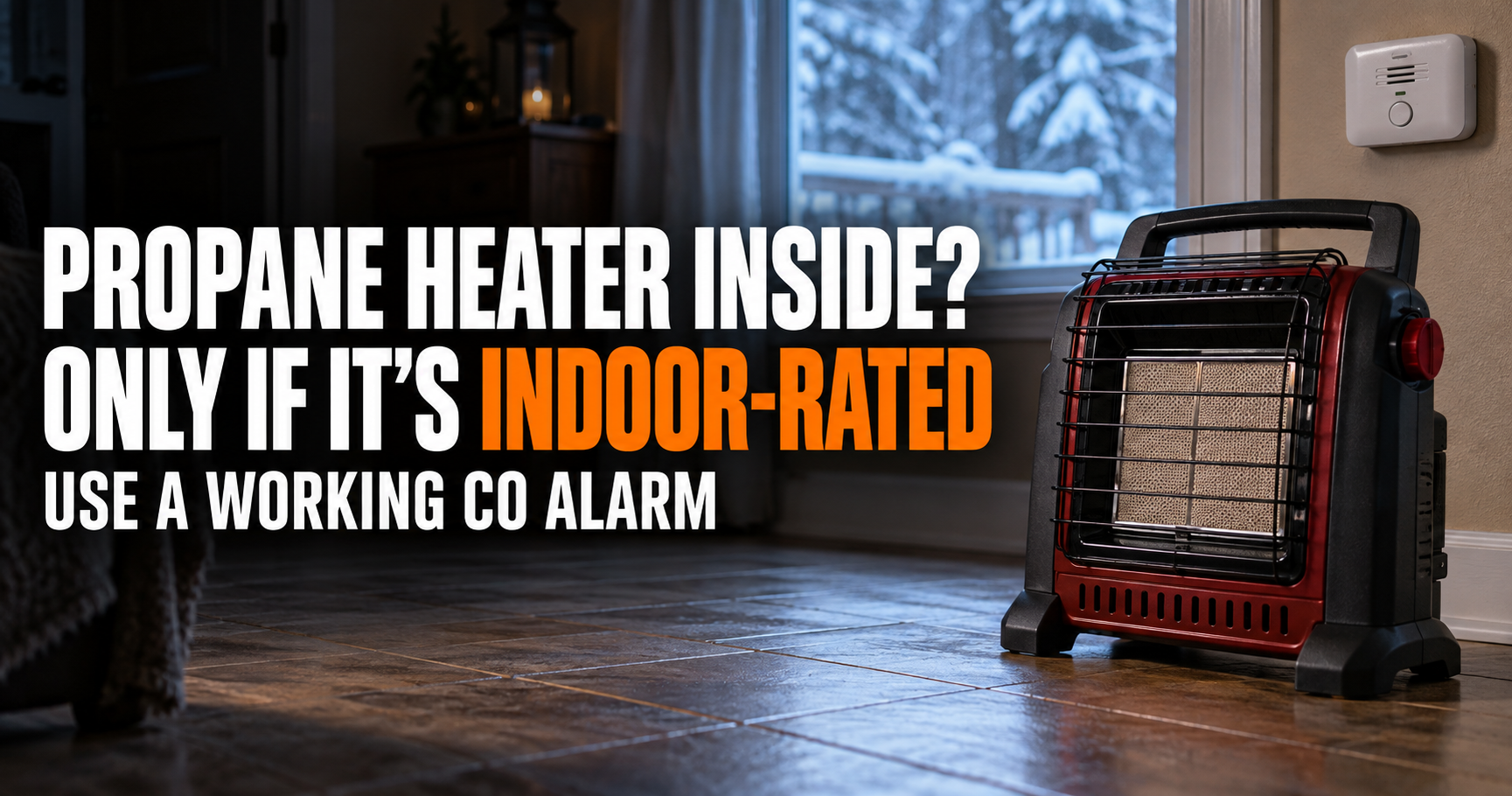
We’ve already covered using an indoor-rated propane heater during a power outage.
Burn prevention is another reason I care about placement.
Children.
Pets.
Blankets.
Sleeping bags.
Clothing.
A crowded room.
A hot heater.
That’s a combination I manage carefully.
The best burn treatment is still preventing the burn in the first place.
Generators Stay Hot After They’re Shut Off
This is another easy one to forget.
A generator doesn’t instantly become cool when I turn it off.

Engine and exhaust components can remain extremely hot.
I don’t let children around it.
I don’t start handling hot components casually.
And I don’t rush refueling procedures.
Generator safety isn’t only about carbon monoxide.
Heat and fuel matter too.
Cooking During an Outage Changes the Risk
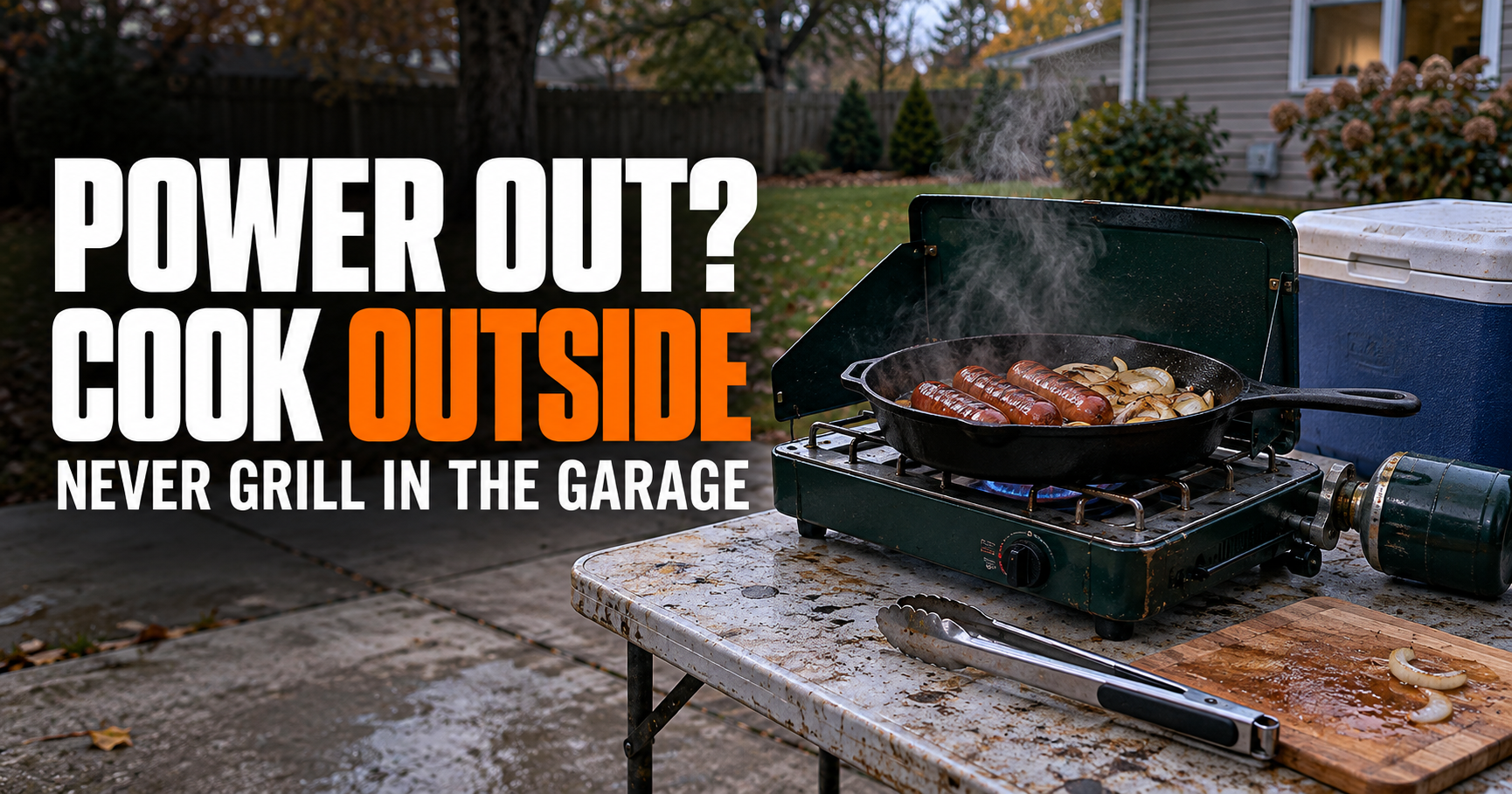
We’ve already covered how I cook when the power is out.
Whenever cooking routines change, I slow down.
Darkness, unfamiliar equipment, open flames, boiling water, and stressed people are exactly how simple mistakes happen.
A flashlight and a little patience can prevent an injury that no first aid kit completely fixes.
This One Doesn’t Need to Become a 5,000-Word Burn Manual
For an ordinary thermal burn, the part I most want remembered is simple:
Stop the burning.
Cool it promptly with clean, cool running water.
Remove nearby tight items before swelling when they aren’t stuck.
Don’t rip off stuck clothing.
Don’t put butter or other random household remedies on it.
Protect the burn appropriately after cooling.
Get professional medical care when the size, depth, location, cause, or person’s condition makes the burn concerning.
Burns on Children Make Me More Cautious
A burn that looks fairly small on an adult can represent a larger percentage of a child’s body.
Children also may not be able to explain exactly what they’re feeling or how the injury happened.
So with a significant burn on a child, my threshold for getting professional medical advice is lower.
I don’t try to prove that something can be handled at home just because the burned area doesn’t look enormous.
Older Adults Can Need Extra Attention Too
Age, medical conditions, medications, circulation problems, and the person’s overall health can affect how well someone handles an injury.
That’s another reason I don’t make every burn decision based solely on appearance.
The person matters just as much as the burn.
I Watch Minor Burns Over the Next Few Days
Even when a burn seems appropriate for home care, I don’t completely forget about it once it’s covered.
I’m looking for improvement.
Increasing pain, worsening redness, swelling, drainage, fever, or other signs that the area may be developing an infection are reasons to seek medical care.
A blister that breaks also deserves appropriate wound care because the protective skin has been disrupted.
I Keep the Burn Clean Without Scrubbing It
Once the immediate cooling is finished, I’m not aggressively scrubbing damaged skin.
If the burn needs routine cleaning as it heals, I’m gentle with it and follow appropriate medical guidance.
The goal is keeping the area clean without creating additional damage.
If a blister has opened or the skin is broken, the basic wound-care principles from our emergency wound-cleaning guidebecome especially relevant.
I Don’t Peel Away Blistered or Damaged Skin
Loose or damaged skin can be tempting to pick at.
I leave it alone rather than cutting or peeling tissue away myself.
If the burn needs debridement or other treatment beyond basic first aid, that’s something I want handled by someone qualified.
The fact that I own scissors and gauze doesn’t mean every medical procedure belongs at home.
A Burn That Goes All the Way Around a Limb Concerns Me
A significant burn completely encircling an arm, leg, finger, or other body part is different from a small isolated burn.
Swelling can create additional problems.
That’s not something I’d casually monitor at home after applying a dressing.
I want prompt professional evaluation.
Burns to the Airway Can Be Much More Serious Than Burned Skin
If someone was trapped around fire or heavy smoke, I don’t focus only on what their skin looks like.
Breathing problems can become a much bigger emergency.
The Red Cross recommends emergency help when a person with a burn has trouble breathing or when an airway burn is suspected.
Signs that concern me after a fire include difficulty breathing, significant coughing, changes in voice, soot around the mouth or nose, or other evidence that hot gases or smoke may have affected the airway.
That’s a 911 situation.
Smoke Inhalation Changes the Whole Situation
Someone can escape a fire without a huge skin burn and still be seriously injured from smoke.
So after a house fire, vehicle fire, enclosed-space fire, or another significant smoke exposure, I don’t use the condition of the skin as my only measure of how badly someone was hurt.
Breathing always matters more than the burn dressing.
Electrical Burns Can Hide Damage
This deserves repeating because the outside injury can be misleading.
A small electrical contact mark doesn’t tell me how much damage may have occurred internally.
Electrical injuries can affect muscles, nerves, the heart, and other tissues.
That’s why I want professional evaluation for an electrical burn rather than deciding it’s minor because the visible mark is small.
And I never approach someone who’s still in contact with an electrical source until that source has been safely disconnected.
Chemical Burns Need the Chemical Removed
With chemical exposure, the first problem is stopping continued contact.
If it’s a dry chemical, brushing away the dry material before flushing may be appropriate while protecting myself from exposure.
For many liquid chemical exposures, copious water irrigation is used.
But chemicals differ.
If I know the substance involved, I keep that information available for emergency responders or poison-control professionals.
I don’t start neutralizing one chemical with another household chemical because I remember something from science class.
That reaction could create heat or another hazardous substance and make the injury worse.
Eye Burns Are Not Something I Treat Casually
Chemical exposure to the eye gets immediate attention.
Flushing begins promptly while professional medical help is arranged.
I don’t put random drops or ointments into a chemically exposed eye unless directed to do so.
Vision is too important for experimentation.
Sunburn Isn’t the Same Emergency as a Thermal Burn
A painful sunburn is still a burn, but it’s usually a different first-aid situation from spilling boiling water over an arm or touching hot metal.
The bigger concern with severe sun exposure can also include heat illness and dehydration.
If someone has blistering over a large area, severe symptoms, confusion, fainting, vomiting, or signs of heat illness, I look beyond simply treating the skin.
Again, the whole person matters.
I Think About Pain, but I Don’t Let Pain Decide Severity
Minor burns can hurt terribly.
Some deeper burns may hurt surprisingly little because nerves have been damaged.
So pain isn’t my burn-depth meter.
I look at the cause, size, location, appearance, blistering, skin changes, and the person’s overall condition.
If something looks seriously wrong even though the person says it doesn’t hurt much, I don’t let that reassure me.
A Good First Aid Kit Helps Without Becoming a Burn Center
For burns, the supplies I value are pretty ordinary.
Clean water access.
Gloves.
Appropriate clean dressings.
Non-adherent dressings.
Gauze.
Basic first aid information.
That’s another reason I like the home emergency first aid kit we’re building.
It gives me useful options without pretending every medical emergency can be handled at home.
Clean Water Becomes Especially Valuable During a Disaster
This is another place where our clusters overlap naturally.
If normal water service has failed, cooling and cleaning appropriate injuries becomes harder.
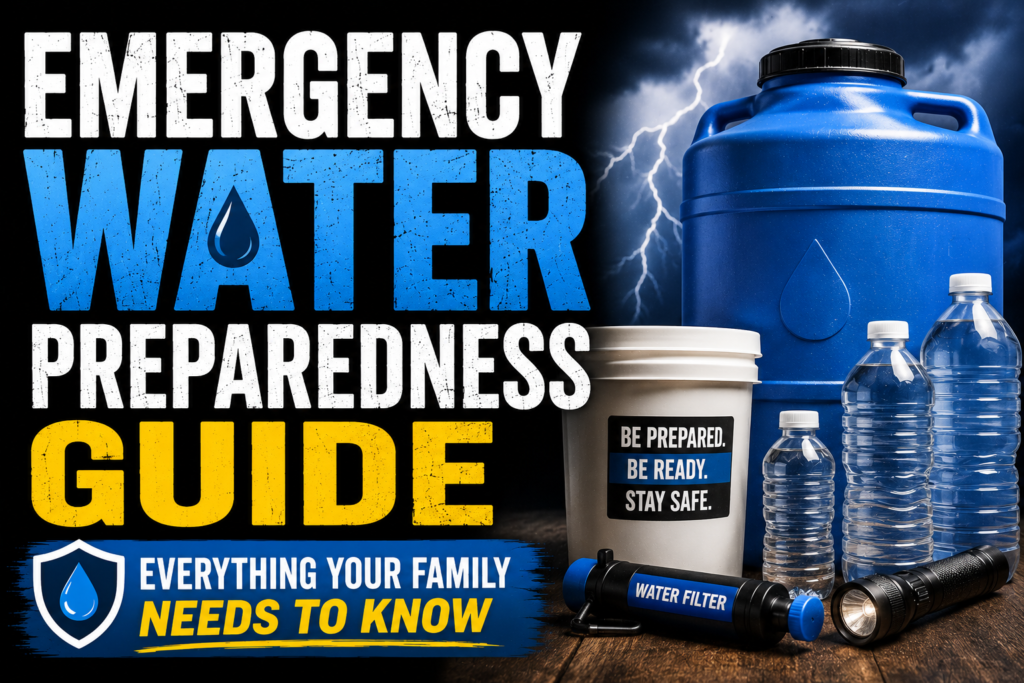
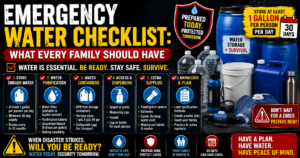
That’s one more reason the emergency water preparedness guide matters beyond drinking.
Water is one of those emergency resources that solves several different problems.
I Don’t Use Questionable Water on Damaged Skin
If the municipal supply has issued a contamination warning, floodwater is everywhere, or the only nearby water source is questionable, I don’t automatically use it on damaged tissue simply because it’s wet.
Floodwater can contain sewage, chemicals, and microorganisms.
I want an appropriate clean water source.
That’s another reason stored clean water belongs in a household emergency plan.
The Burn Can Change the Evacuation Decision
During a large disaster, there may already be reasons we’re considering leaving home.
A significant injury adds another.
If someone needs medical treatment and remaining at home is delaying necessary care, that changes the calculation.
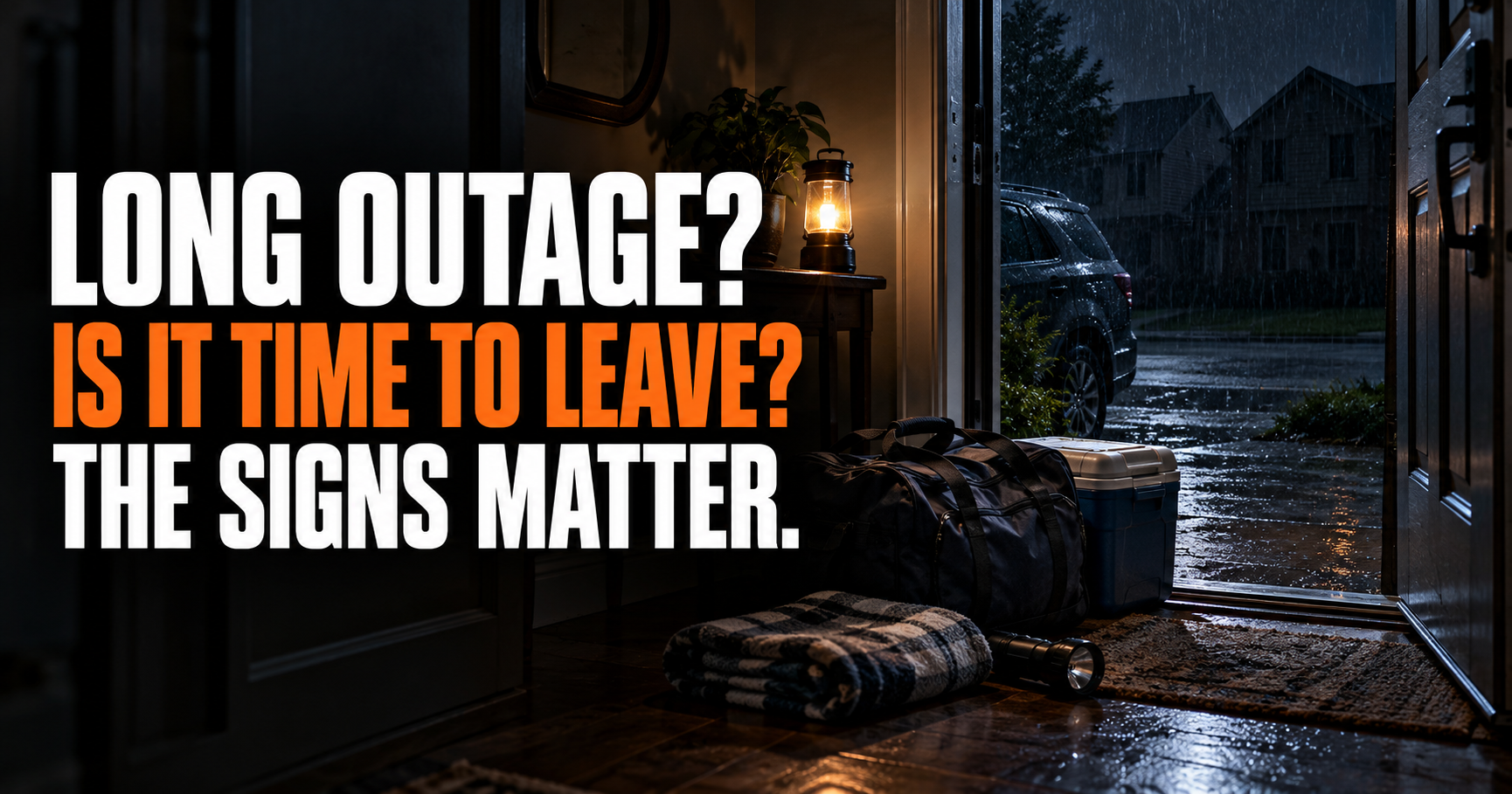
We’ve already talked about this mindset in when I leave home during a long power outage.
Staying home isn’t the goal.
Keeping everyone safe is.
What I Actually Want to Remember When Someone Gets Burned
I don’t want a giant medical checklist running through my head.
For a typical thermal burn, my basic thought process is:
- Stop the burning and make sure the scene is safe.
- Cool the burn promptly with clean, cool running water.
- Don’t apply ice directly.
- Remove rings, watches, or other tight items before swelling when they aren’t stuck.
- Don’t remove material stuck to burned skin.
- Don’t put butter, grease, toothpaste, or random home remedies on it.
- Don’t intentionally pop blisters.
- Protect an appropriate minor burn with a clean, non-adherent covering after cooling.
- Look at the burn’s size, depth, location, and cause.
- Get professional medical care when the burn is significant or involves a concerning location or mechanism.
That’s enough for me to make a useful first response without turning a stressful situation into something more complicated.
Most Burns Are Easier to Prevent Than Treat
This is where emergency preparedness comes full circle.
I can own a fantastic first aid kit.
I’d still rather never open the burn supplies.
So during outages and disasters, I slow things down.
I light the work area before cooking.
I keep children and pets away from portable heaters.
I don’t leave open flames unattended.
I let generator components cool.
I handle boiling water carefully.
I don’t use outdoor cooking equipment inside the house.
I don’t improvise heating equipment.
Those aren’t exciting survival tricks.
They’re the things that keep a manageable emergency from becoming a medical one.
About the Author
Grant Holloway writes about practical first aid, burns, wound care, bleeding control, and emergency medical preparedness for ordinary households. His work for Survive Essentials focuses on useful first-aid skills, preventing common disaster-related injuries, and recognizing when basic home care has reached its limit and professional medical treatment is needed.