If you’ve stumbled across the term “bug out bag” and aren’t quite sure what it means or whether you actually need one, you’re not alone. Most people outside the preparedness community hear the phrase and picture some extreme survivalist living off the grid. The reality is a lot more practical than that — and a lot more relevant to everyday families than most people expect.
This is the plain-language explanation of what a bug out bag is, where the concept came from, and how to honestly assess whether your family needs one.
The Simple Definition
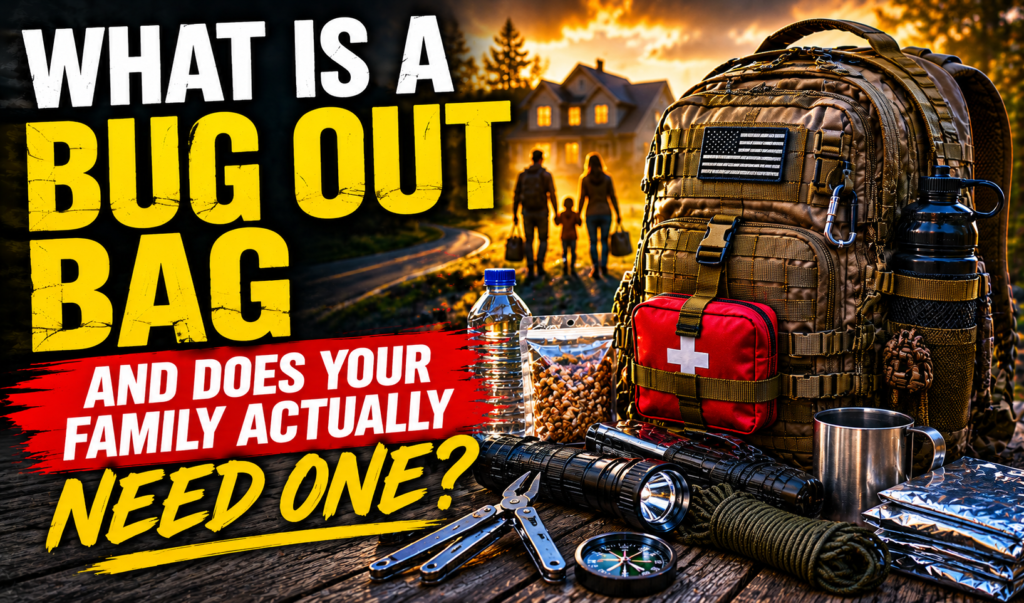
A bug out bag is a pre-packed bag containing everything you need to survive for at least 72 hours if you’re forced to leave your home quickly and without warning.
That’s it. No extreme ideology required. No assumption that civilization is ending. Just a practical acknowledgment that emergencies happen — fires, floods, chemical spills, power grid failures, natural disasters — and that the families who have a bag ready walk out the door calmly while everyone else scrambles.
The 72-hour window comes from FEMA’s own emergency preparedness guidelines, which assume that organized relief efforts will be operational within three days of a major event. Whether that assumption holds depends entirely on the scale and nature of the emergency — but 72 hours is the widely accepted baseline for personal emergency preparedness.
Where the Term Comes From
Bug out is military slang. In combat, “bugging out” means retreating from a position that’s no longer defensible — getting out fast before the situation deteriorates further. The term migrated into civilian emergency preparedness language in the decades after World War II as civil defense planning became part of American culture.
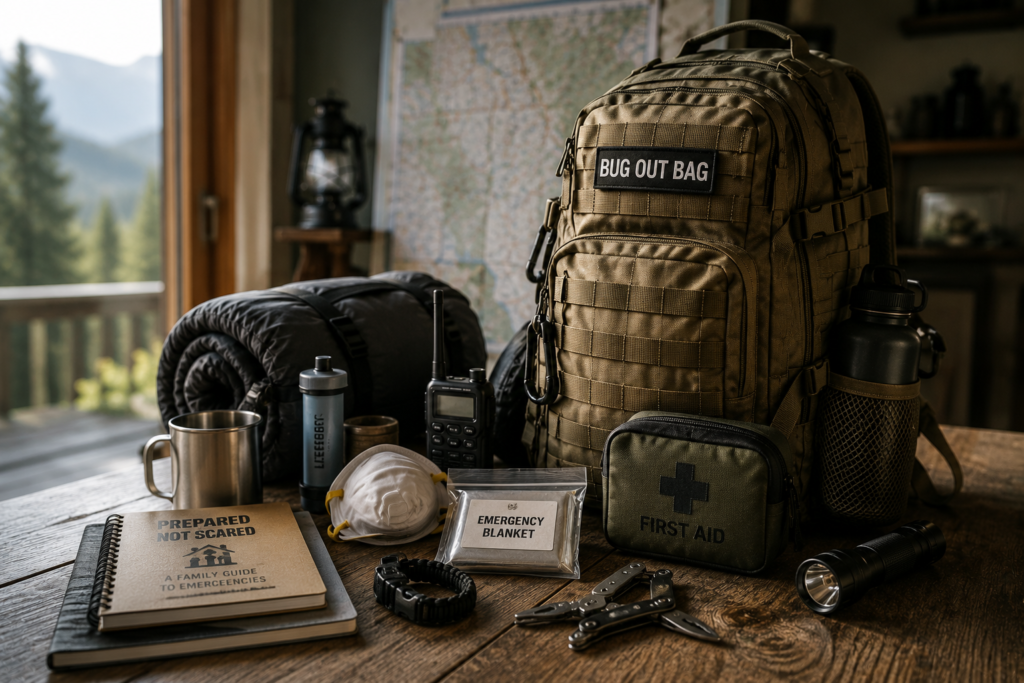
In modern usage, bugging out simply means leaving your home when staying puts you in danger. The bag is the kit that makes that departure possible without scrambling to remember what to grab in a crisis.
What Goes in One
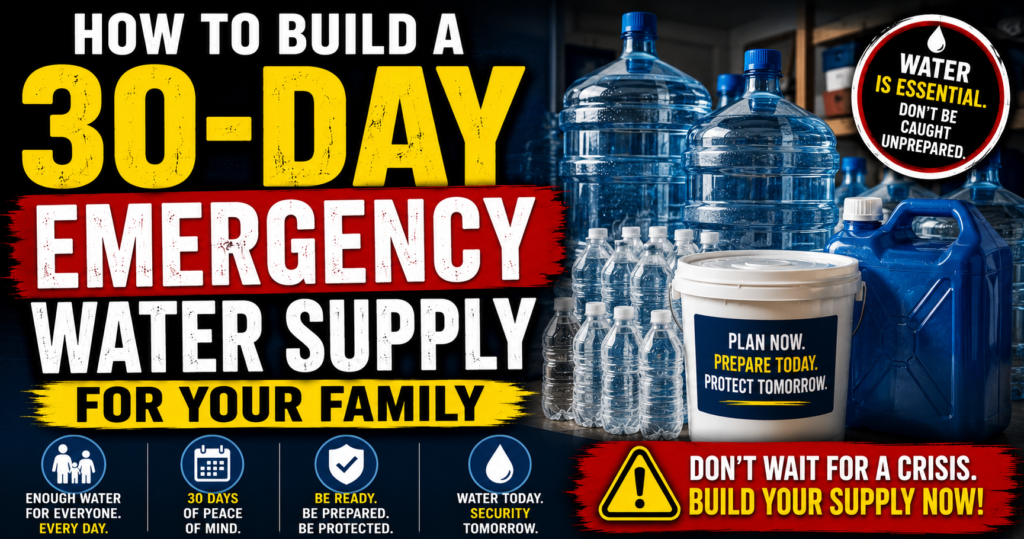
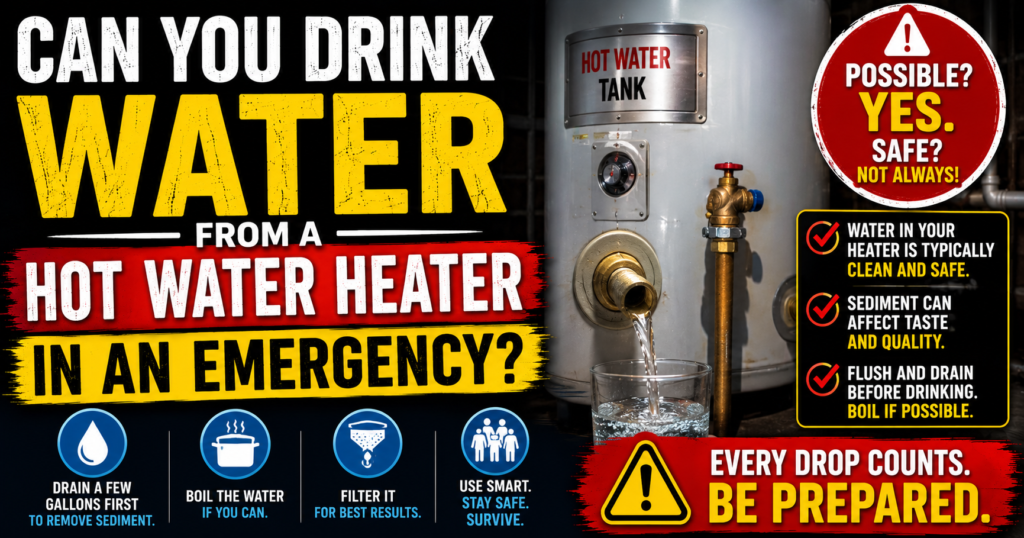
A properly built bug out bag covers every category your family needs to sustain life away from home for three days minimum. That means water and the means to find more of it, food that travels without refrigeration, shelter from weather, fire starting capability, first aid supplies, navigation tools, communication equipment, and light. For water planning that extends beyond a portable kit, see How to Build a 30-Day Water Supply for Your Family in case of emergency.
It also means having the right bag to carry all of it — one built for hard use, properly fitted to your body, and organized so you can find anything without unpacking everything.
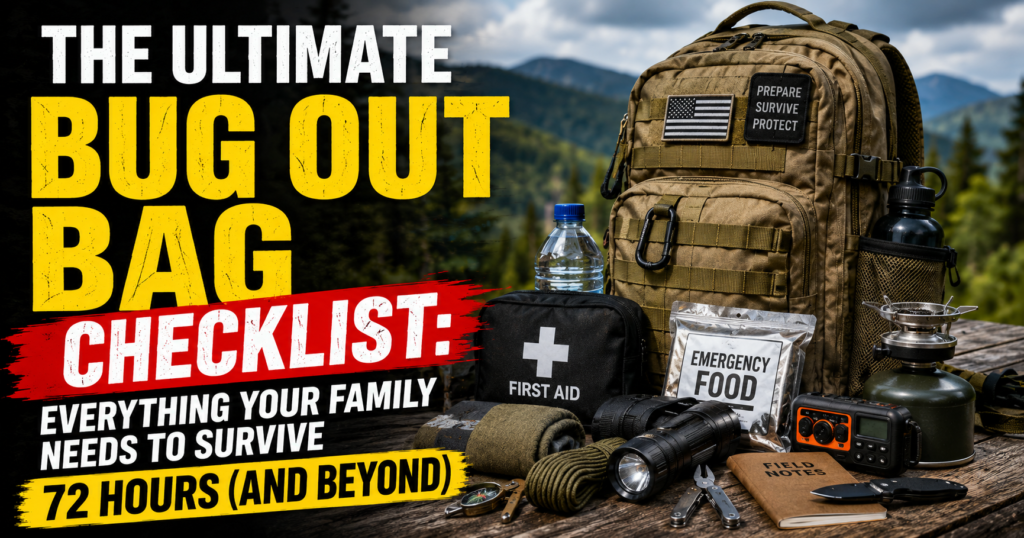
The complete breakdown of every item and category lives in the ultimate bug out bag checklist. That’s the resource to use when you’re ready to actually build yours. What we’re doing here is helping you decide if you should.
Does Your Family Actually Need One
Short answer: yes. Here’s the longer version.
Think about the emergencies that have required mass evacuations in your lifetime. Hurricanes along the Gulf and Atlantic coasts. Wildfires across the western United States. Flooding in river valleys and coastal plains. Ice storms that knocked out power for weeks across entire regions. Train derailments carrying hazardous materials that evacuated entire towns with two hours notice.
None of those events announced themselves in time for people to thoughtfully pack what they needed. The families who left with everything they needed had prepared in advance. The families who grabbed a grocery bag of whatever they could find in fifteen minutes spent the next three days figuring out how to get water, food, and medications in an overwhelmed emergency shelter system.
A bug out bag doesn’t require you to believe in doomsday. It requires you to acknowledge that bad things happen and that preparation is cheaper, calmer, and more effective than improvisation under stress.

Who It’s Really For
Bug out bags are often associated with hardcore preppers planning for grid collapse or societal breakdown. That association undersells how broadly useful they are.
They’re for the family in a flood plain who gets a mandatory evacuation order at 2 a.m. They’re for the household near a wildfire that has twenty minutes before the road closes. They’re for the family whose neighborhood loses power for ten days in a winter storm and decides staying isn’t safe anymore. They’re for the parents who want to know that no matter what happens, they can get their kids out and keep them safe for three days without depending on systems that might not be working.
That’s not extreme. That’s responsible.
Bug Out Bag vs Emergency Kit
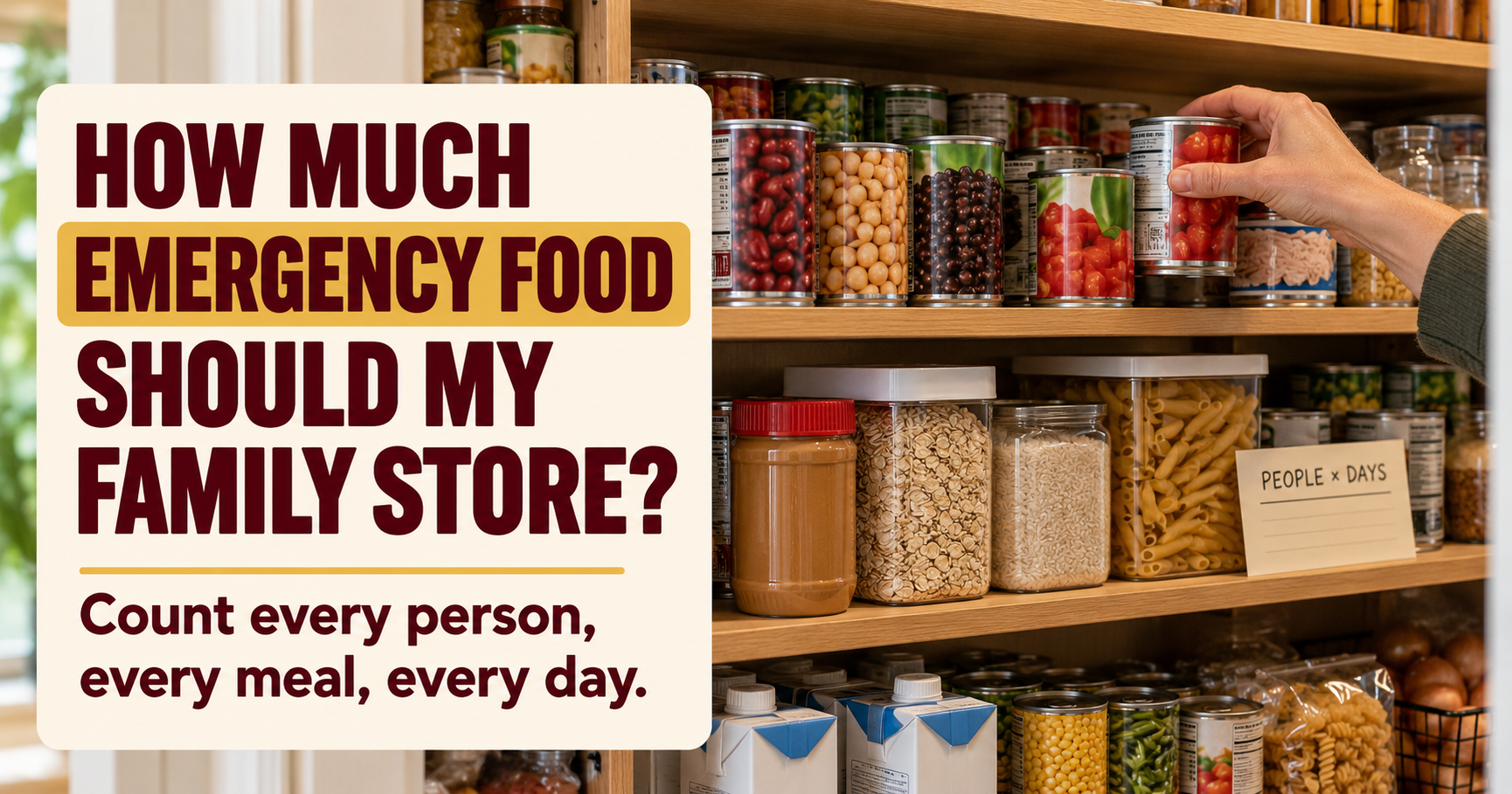
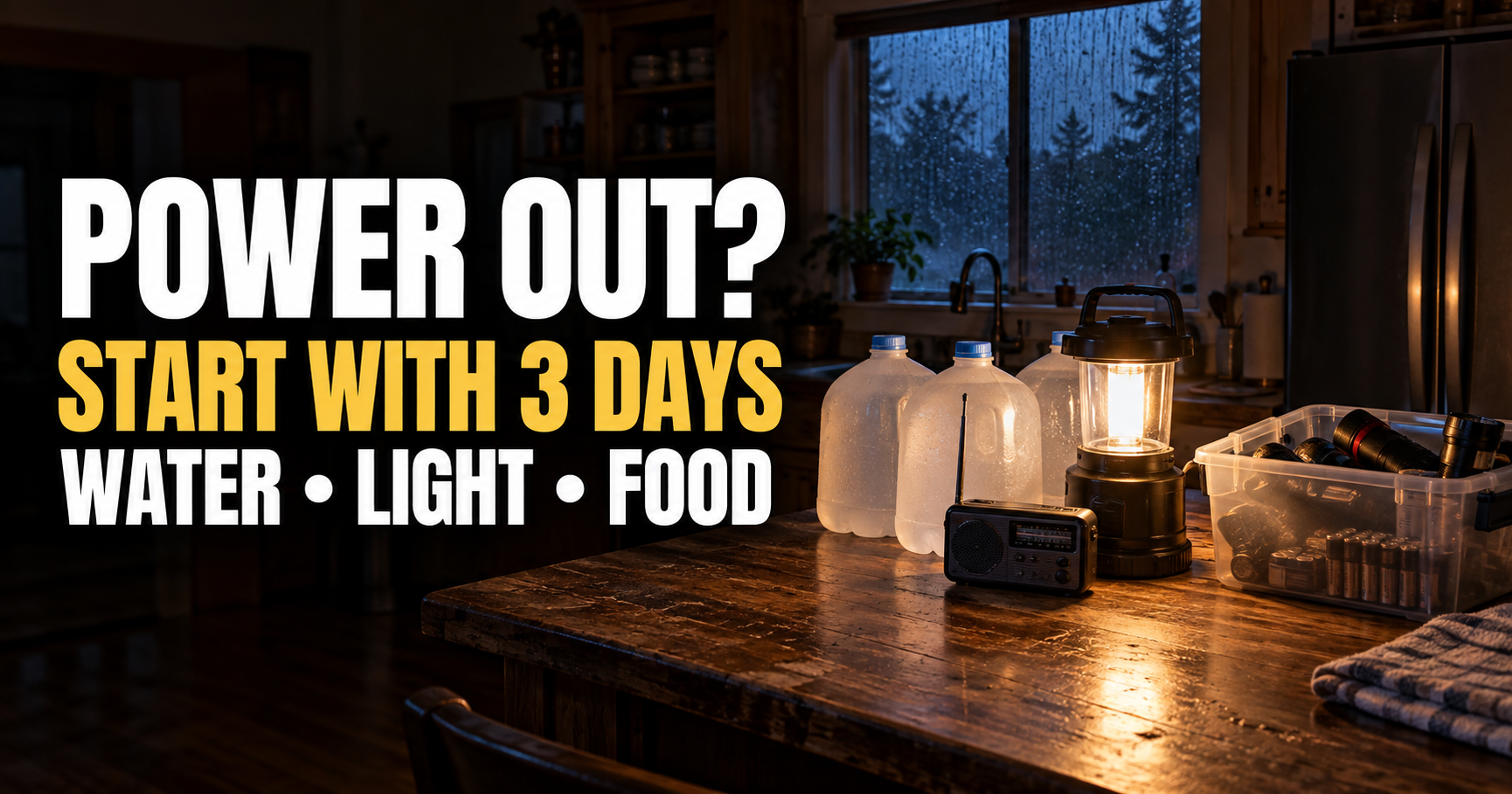
You may have heard of a home emergency kit — the FEMA recommendation to keep three days of water and food at home for emergencies. A bug out bag is different in one critical way: it’s mobile.
A home emergency kit assumes you’re staying put. A bug out bag assumes you’re leaving. Both have their place in a complete preparedness plan. Your home kit covers the scenarios where sheltering in place makes sense. Your bug out bag covers the scenarios where it doesn’t.
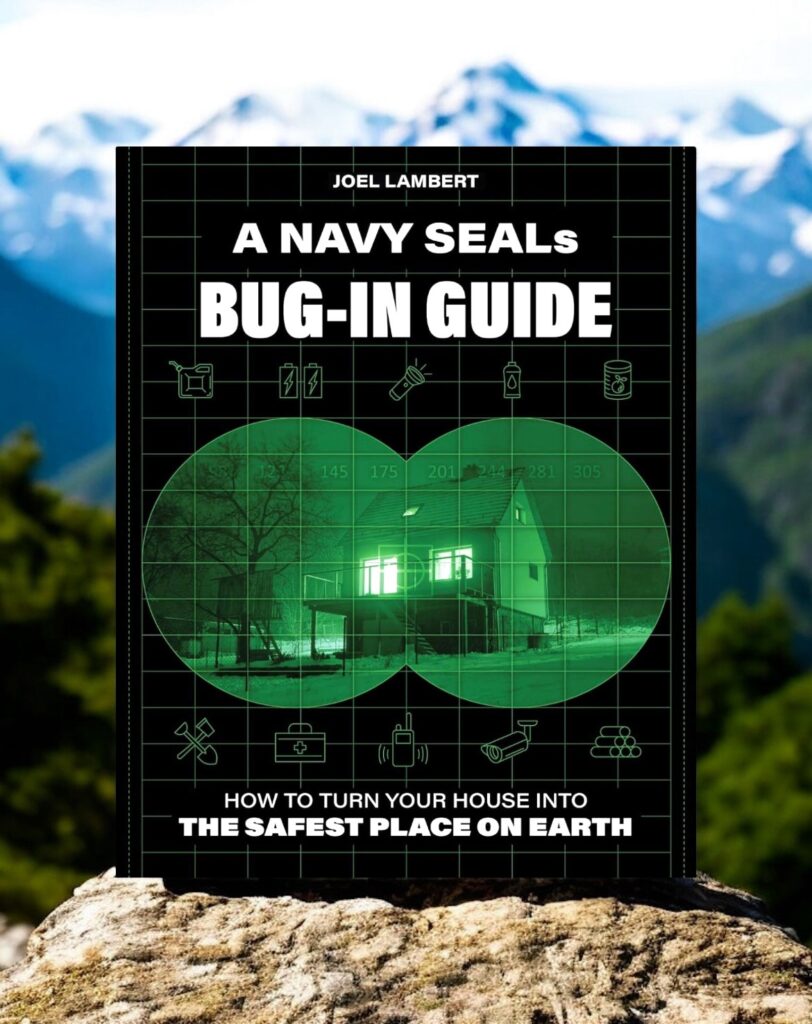
The Navy SEAL bug-in guide covers the decision framework for when to stay versus when to go — it’s worth reading before you settle on your family’s plan. Sometimes leaving is exactly the wrong call. Knowing the difference is part of being genuinely prepared.
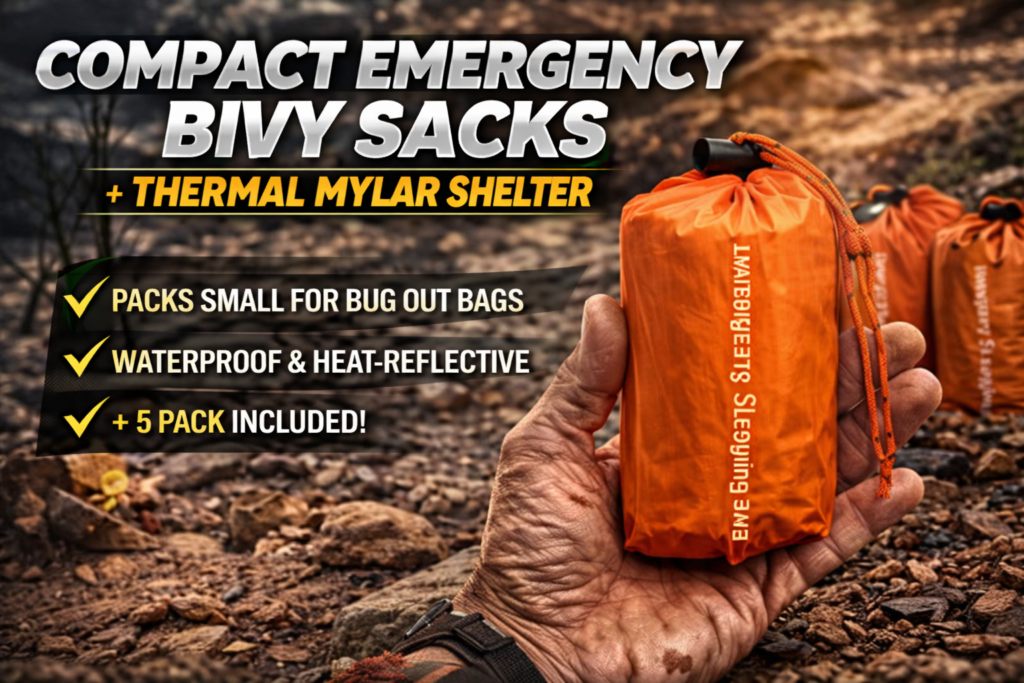
One Bag or One Per Person
One bag per capable person is the right approach for families. A single bag shared across a household creates a dangerous single point of failure — if the bag gets separated from the group, or the person carrying it can’t keep up, everyone loses their supplies at once.
Adults each carry their own full bug out bag. Children eight and older carry a smaller age-appropriate pack with their own snacks, a change of clothes, and comfort items. Younger children’s supplies distribute across the adult bags.
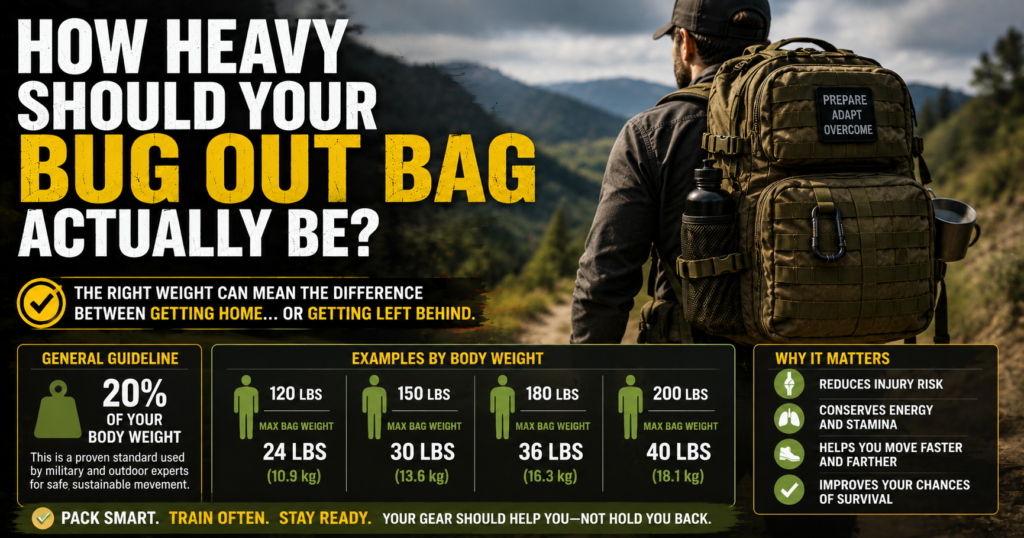
Distributing gear across multiple bags also solves the weight problem. As covered in the bug out bag weight guide, an overloaded single bag slows everyone down and creates injury risk. Four people each carrying a manageable load moves faster and lasts longer than one person staggering under sixty pounds.
How Long Does It Take to Build One
A functional basic bug out bag can be assembled over a weekend if you’re starting from scratch and ordering gear online. A fully optimized bag — fitted properly, tested on a loaded walk, adjusted based on real experience — takes a few weeks from first purchase to confidence.
The right sequence is bag first, then water, then food, then shelter, then fire, then first aid, then navigation and communication, then everything else. Don’t try to buy everything at once. Work through the categories in priority order and you’ll have a functional kit before you have a complete one.
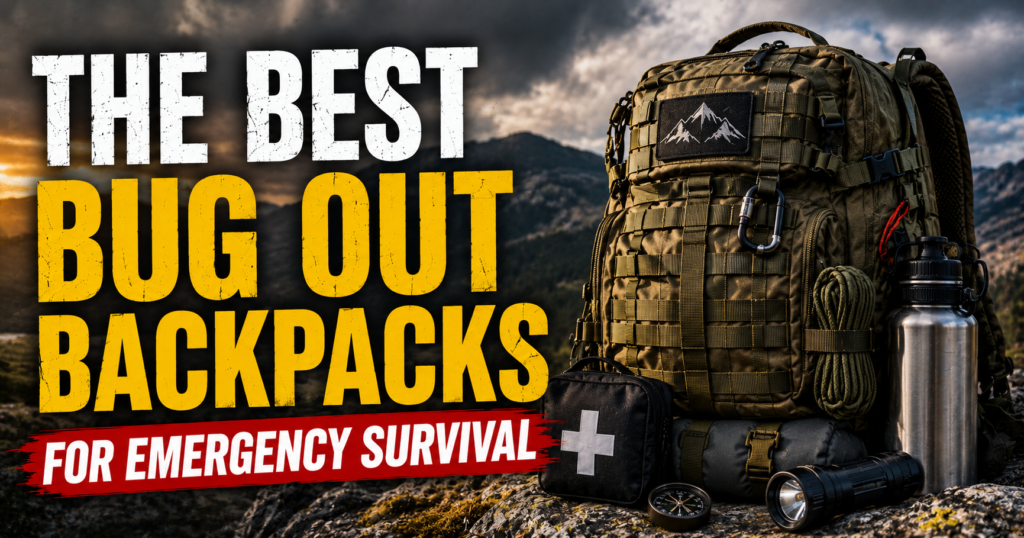
Start with choosing the right bag — it’s the foundation everything else builds on. Then work through the complete checklist category by category. The food strategy has its own dedicated guide at the bug out bag food list — the calorie math alone is worth reading before you buy a single food item.

The One Thing Most People Get Wrong
They build the bag and never open it again.
A bug out bag that hasn’t been checked in two years is not a survival asset. Batteries die. Food expires. Medications lose potency. Water purification tablets have shelf lives. The bag that felt complete when you packed it may have three dead flashlight batteries and expired first aid supplies sitting inside it right now.
Set a reminder every three months. Open the bag. Check every category. Replace what needs replacing. It takes less than an hour and it’s the difference between a bag that works and a bag that looks like it works.
If you’re ready to build yours, the complete bug out bag checklist is the place to start. Everything your family needs, organized by category, with the gear recommendations that hold up when it actually matters.
About the Author: Jake Mercer spent 11 years in emergency management before turning his focus to practical preparedness education. He lives with his wife and three kids in rural Tennessee, where the family bug out plan gets tested and updated every season. He writes for Survive Essentials covering gear, planning, and the mindset that separates people who are ready from people who think they are.