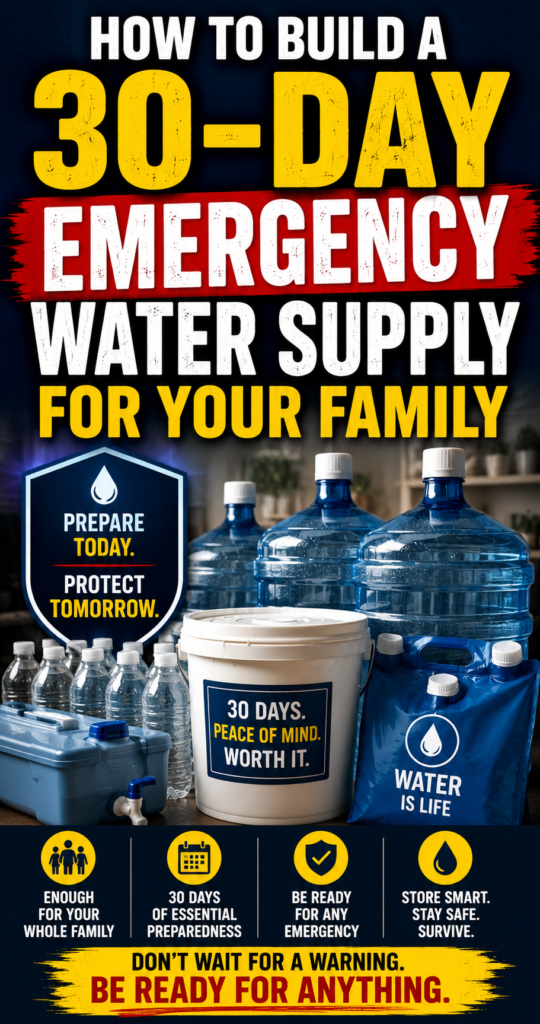
Most families are not prepared for a long-term water emergency.
They may have a few bottles in the pantry.
A case or two in a closet.
Maybe a handful of gallons stored in the garage.
But if a major disaster interrupted the water supply for weeks instead of days, those supplies would disappear much faster than most people expect.
That’s why many preparedness experts recommend building toward a 30-day emergency water supply.
A month of water storage may sound intimidating at first, but when broken into manageable steps, it’s much more achievable than many families realize.
Why Thirty Days?
Most emergency preparedness advice focuses on three days.
Three days is a good start.
The problem is that many real-world emergencies last longer.
Major hurricanes.
Flooding.
Ice storms.
Infrastructure failures.
Water treatment problems.
Extended power outages.
All have the potential to create disruptions that stretch well beyond a weekend.
A 30-day supply provides a much larger safety margin and significantly reduces the stress that comes with uncertainty.

Step One: Calculate Your Family’s Water Needs
The first step is understanding how much water your household actually uses.
Many preparedness organizations recommend at least one gallon per person per day.
That’s generally considered the minimum.
A family of four would need approximately:
- 4 gallons per day
- 28 gallons per week
- 120 gallons or more for a month
Many households prefer storing additional water for cooking, sanitation, pets, and unexpected needs.
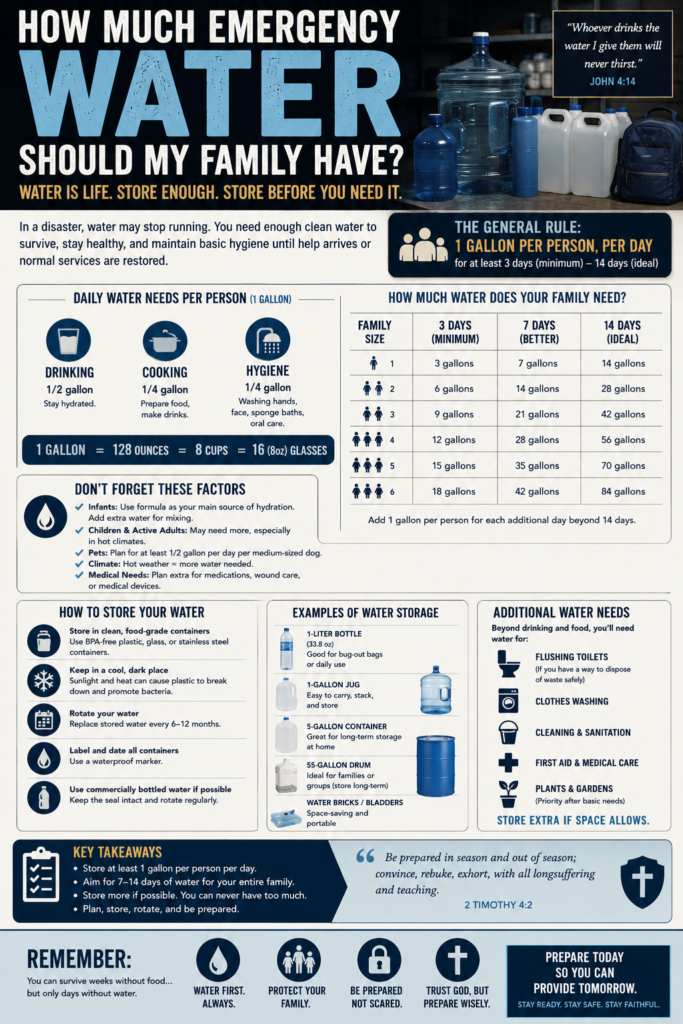
If you’re still trying to determine realistic amounts, start with how much emergency water a family should store.
Step Two: Start With Bottled Water
The easiest place to begin is bottled water.
It’s affordable.
Readily available.
Easy to rotate.
And immediately usable.
Many families build their first several weeks of emergency water storage simply by purchasing a few extra cases during regular shopping trips.
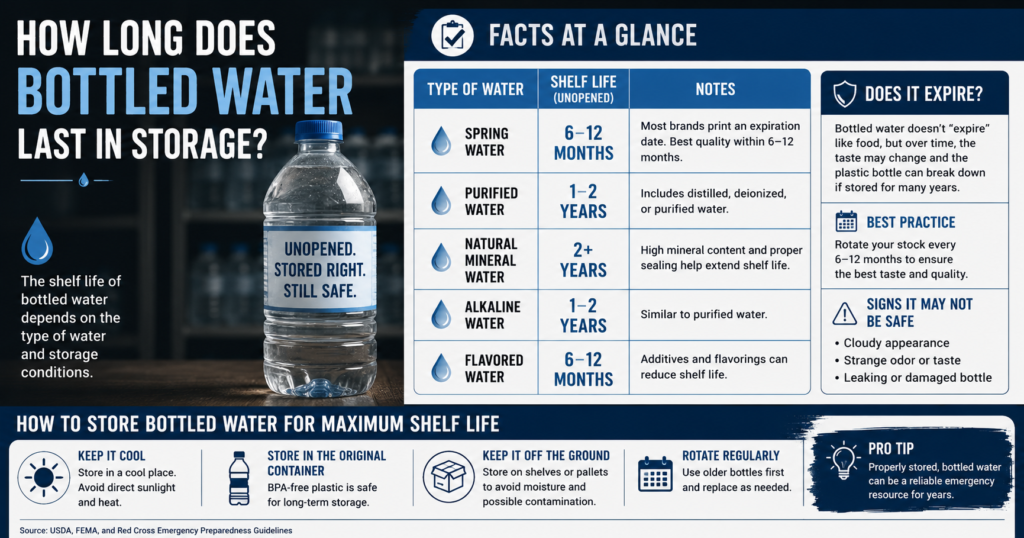
If you’re concerned about long-term storage, read how long bottled water lasts in storage to better understand shelf life and storage conditions.
Step Three: Find Space You Didn’t Realize You Had
One reason many families never build a large water supply is because they assume they don’t have room.
In reality, most homes contain far more storage space than people realize.
Examples include:
- Under beds
- Interior closets
- Spare bedrooms
- Utility rooms
- Basement shelving
- Behind furniture
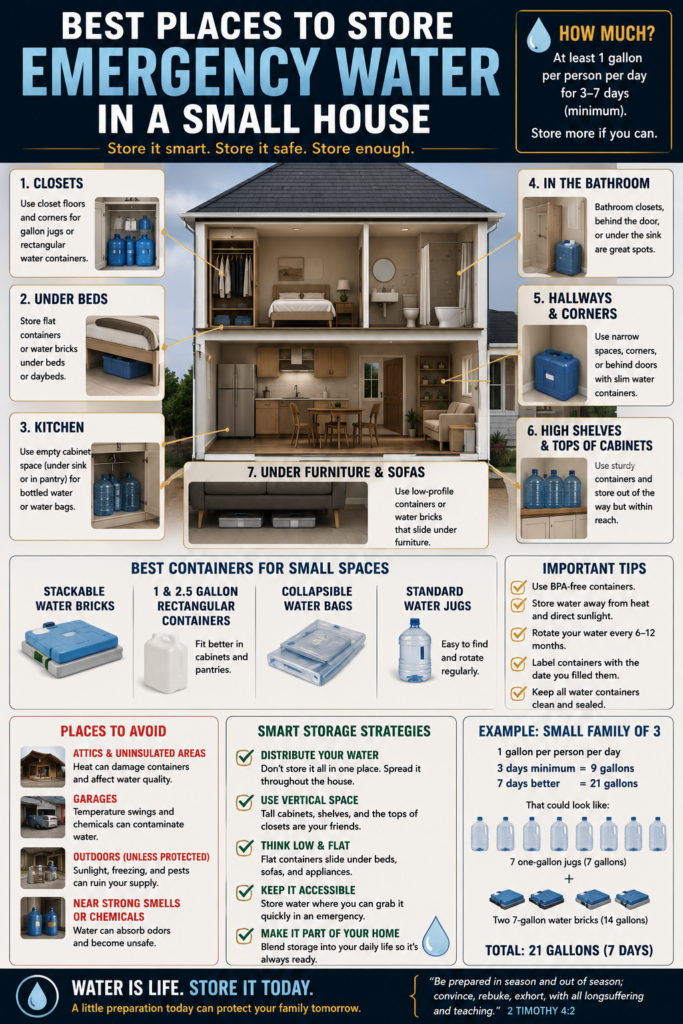
Our guide on the best places to store emergency water in a small house covers several practical ideas that work in real homes.
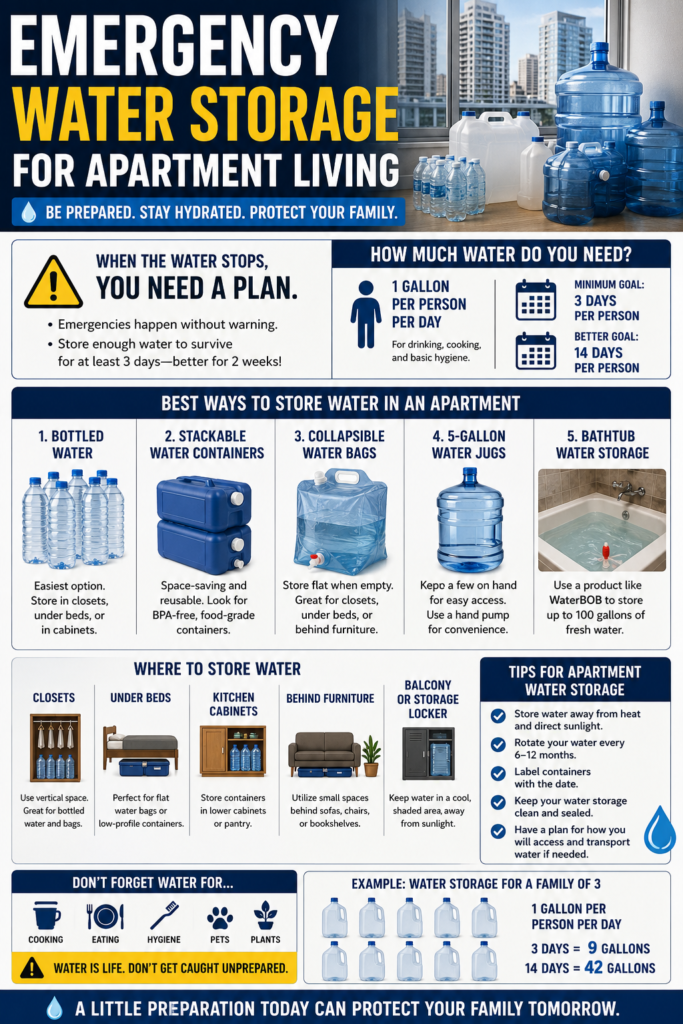
Apartment residents should also read emergency water storage for apartment living because many of the same principles apply even when space is limited.
Step Four: Use Temporary Storage Before Major Storms
Permanent storage is important.
Temporary storage can dramatically expand your capacity.
One of the smartest examples is a bathtub water storage bladder.
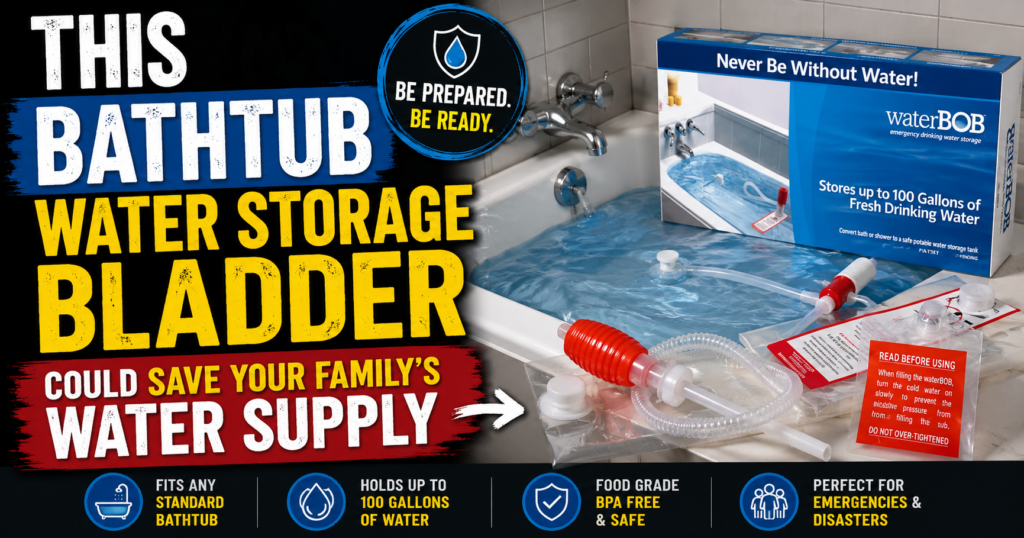
We recently reviewed this bathtub water storage bladder that could save your family’s water supply because it allows families to quickly store up to 100 gallons of clean water before a hurricane, winter storm, or other emergency.
For many households, that’s one of the fastest ways to add a significant water reserve without dedicating permanent storage space year-round.
Step Five: Build Backup Water Sources
Even a 30-day supply eventually runs out.
That’s why experienced preppers rarely rely on stored water alone.
Instead, they create multiple layers.
Rainwater collection is one option.
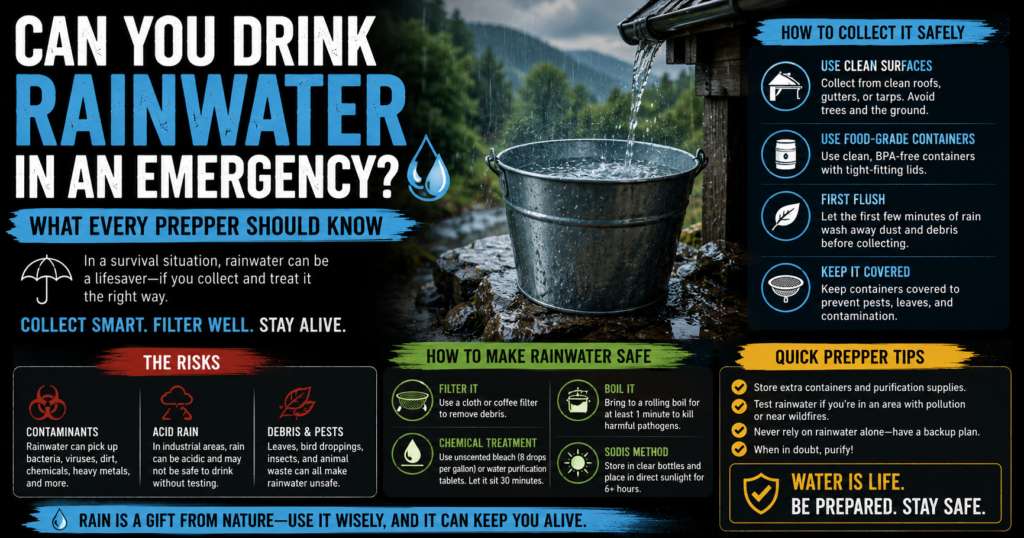
If you’ve ever wondered whether that’s a realistic backup plan, read Can You Drink Rainwater in an Emergency?.
Knowing how to obtain additional water can be just as important as the water you’ve already stored.


Step Six: Add Water Filtration to Your Plan
Not every water source is safe.
Unfortunately, many contaminants cannot be seen.
That’s why filtration becomes so important during extended emergencies.
A compact filter can dramatically expand your options if stored water supplies become limited.
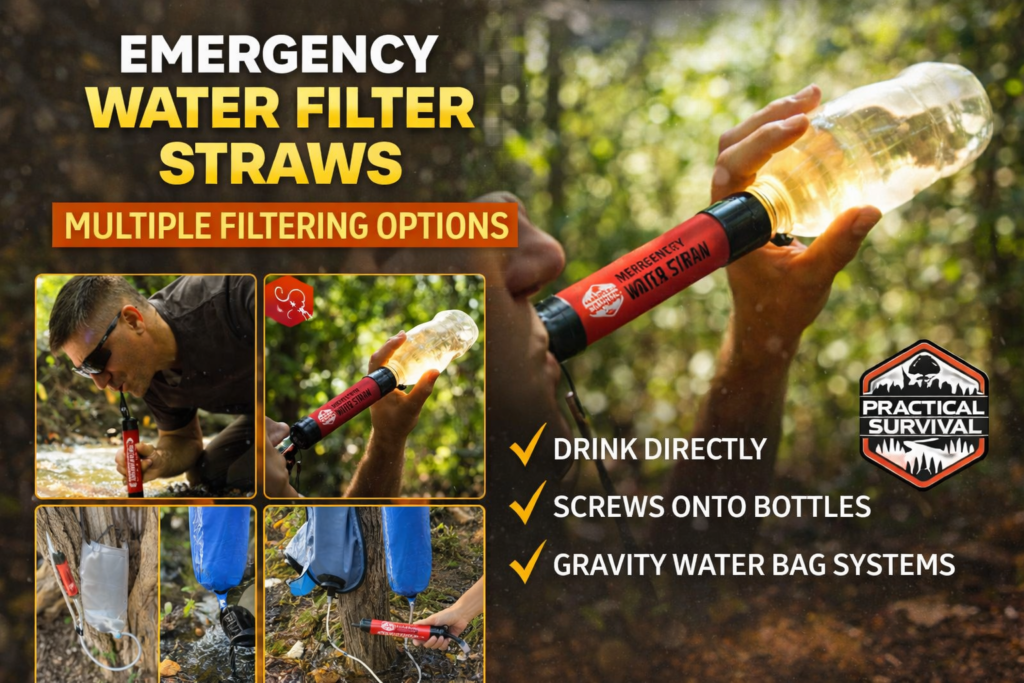
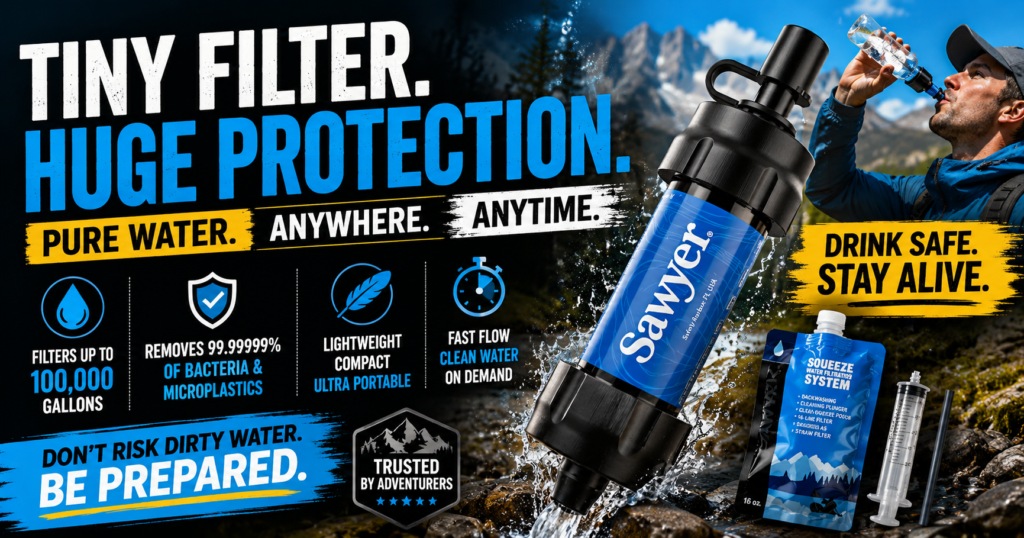
That’s one reason we recommend keeping these emergency water straws that could save your life available as part of a broader preparedness plan.
They’re inexpensive, easy to store, and capable of filtering thousands of gallons.

You may also want to read our guide to survival water purification systems for additional treatment options.
Step Seven: Avoid the Mistakes That Leave Families Unprepared
Building a water supply isn’t difficult.
Building one incorrectly is surprisingly common.
Many families:
- Store too little
- Ignore rotation
- Store water in extreme heat
- Have no backup filtration
- Depend entirely on city water
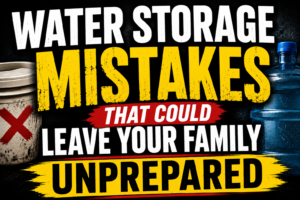
Before expanding your storage, take a few minutes to review water storage mistakes that could leave your family unprepared.
Avoiding common mistakes is often easier than fixing them later.
What If City Water Stops Working?
This is exactly the scenario many families are preparing for.
Water main breaks, treatment failures, storms, and infrastructure problems can all interrupt service.
If you’ve never considered how quickly daily life changes without running water, read what happens if city water stops working.
It may change how you think about preparedness.
Thirty Days of Water Is More Realistic Than You Think
Most families don’t build a month of water storage overnight.
They build it gradually.
A few gallons this week.
A few more next month.
Additional storage space when opportunities arise.
Backup filtration when the budget allows.
The goal isn’t perfection.
The goal is steady progress.
Every gallon stored today is one less gallon you’ll be searching for when everyone else is standing in front of empty store shelves.
Building Water Confidence Before You Need It
Water is one of the most important preparedness priorities because almost every emergency depends on it.
The families who handle disruptions best usually aren’t the ones who rushed to the store after the warning was issued.
They’re the ones who started preparing long before the forecast appeared.
A month of water storage may seem like a big goal today.
But by taking one step at a time, it’s a goal that almost any family can achieve.
Related Water Preparedness Articles
Building a reliable emergency water plan takes more than simply storing a few bottles of water. Explore these helpful guides to strengthen your family’s preparedness:
- Emergency Water Preparedness Guide: Everything You Should Know
- How to Build a 30-Day Emergency Water Supply for Your Family
- Emergency Water Checklist: What Every Family Should Have
- How to Purify Water Without Electricity During an Emergency
- What Is the Safest Water Source During an Emergency?