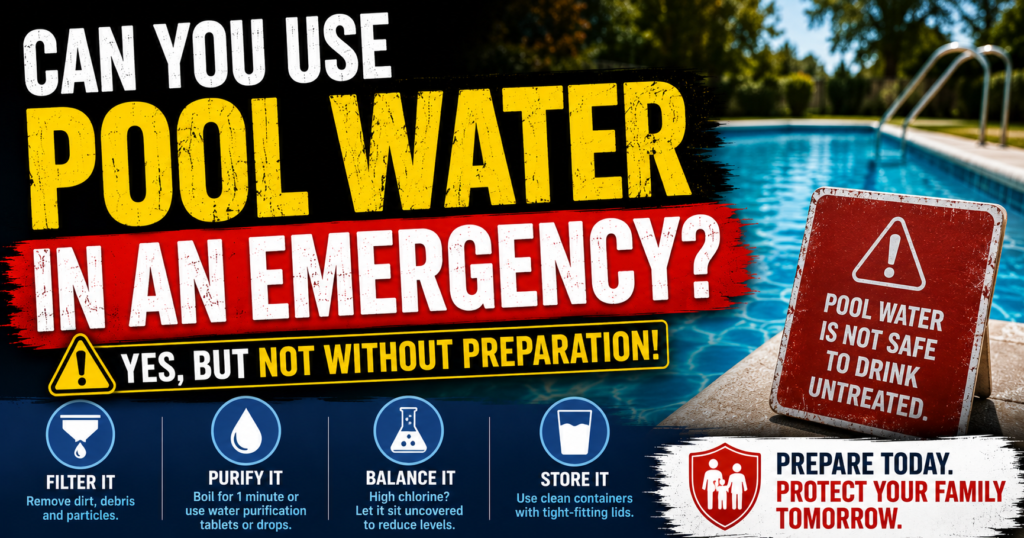
When water service stops unexpectedly, many homeowners suddenly realize they’re sitting next to thousands of gallons of water.
The swimming pool.
Whether it’s an above-ground pool or a large in-ground pool, it’s natural to wonder whether that water could help your family during an emergency.
The answer is yes.
But there are important limitations.
Pool water can become an extremely valuable emergency resource, but it should not automatically be treated as safe drinking water. Understanding what pool water can and cannot be used for may help you stretch your emergency supplies much longer than expected.
For many families, a swimming pool can provide enough non-drinking water to handle sanitation needs for weeks or even months.
How Much Water Is Actually in a Swimming Pool?
Most people underestimate just how much water a pool contains.
Even a relatively small backyard pool may hold thousands of gallons.
Many residential pools contain:
- 5,000 gallons
- 10,000 gallons
- 15,000 gallons
- 20,000 gallons or more
To put that into perspective, a family following the one-gallon-per-person-per-day guideline could theoretically have access to years of water for sanitation purposes.
Of course, drinking water is a different conversation.
Can You Drink Pool Water?
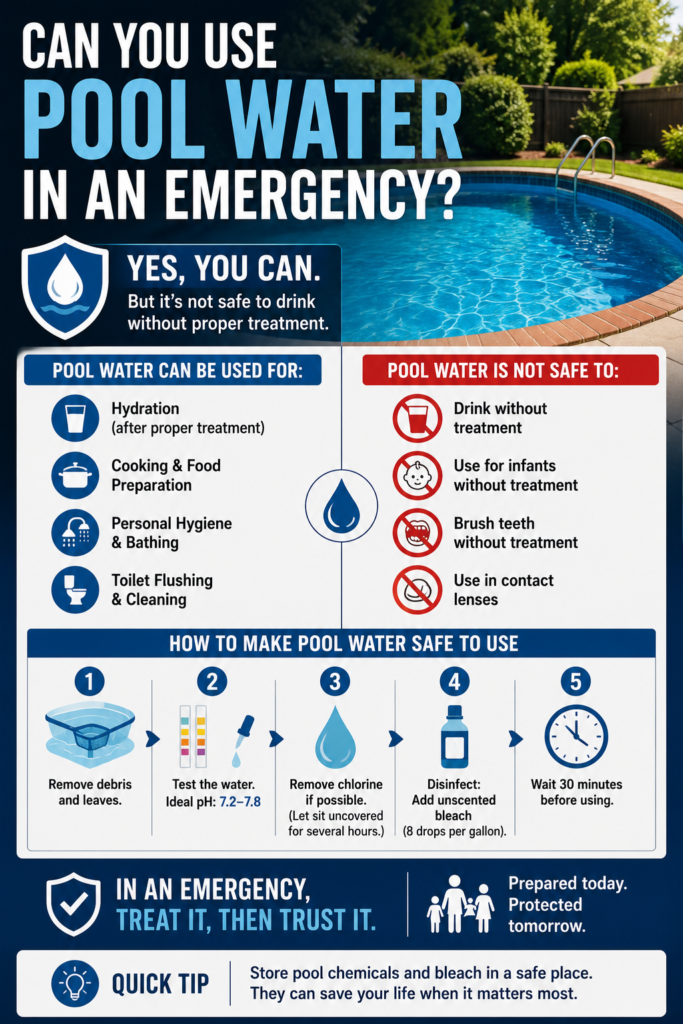
Not directly.
Pool water contains chemicals specifically designed to kill bacteria and control algae growth.
Common pool chemicals include:
- Chlorine
- Bromine
- Algaecides
- Stabilizers
- Other treatment chemicals
These chemicals make pool water unsuitable for routine drinking.
Many people incorrectly assume that because chlorine is used in municipal water systems, pool water must also be safe to drink.
The concentration levels and treatment methods are very different.
Pool water should not be considered a primary drinking water source.
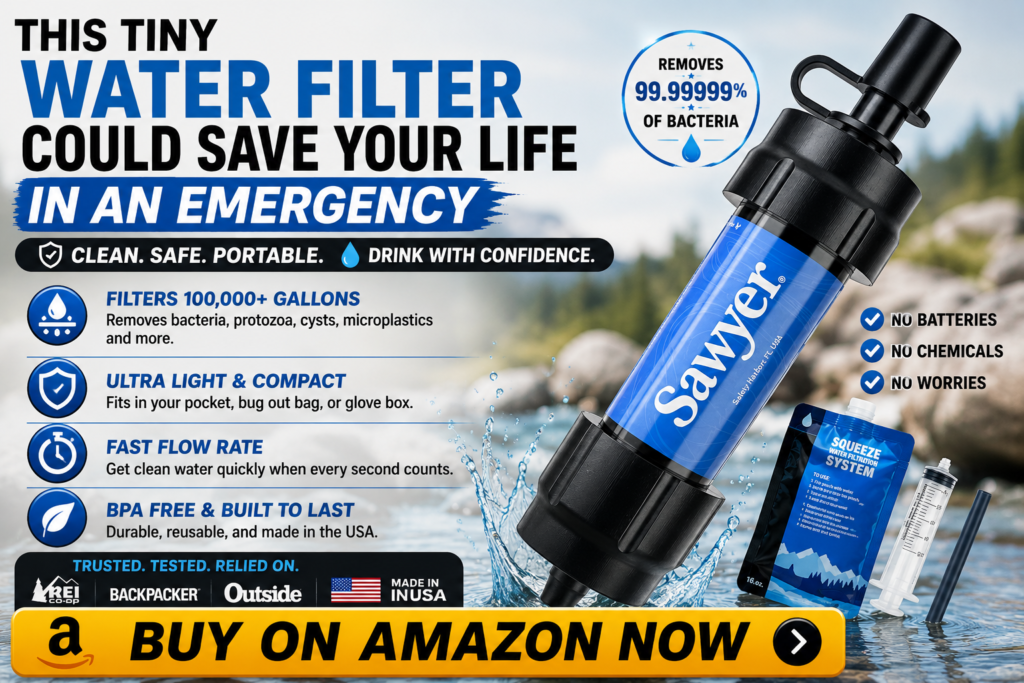
👉 This portable water filter is awesome!: https://amzn.to/3Ss7eAA


What Can Pool Water Be Used For?
This is where a pool becomes incredibly valuable during an emergency.
Pool water may be useful for:
- Flushing toilets
- Washing clothing
- Cleaning surfaces
- Basic sanitation
- Fire suppression
- Irrigation
- Non-food cleaning tasks
When families lose water service, sanitation often becomes one of the biggest challenges.
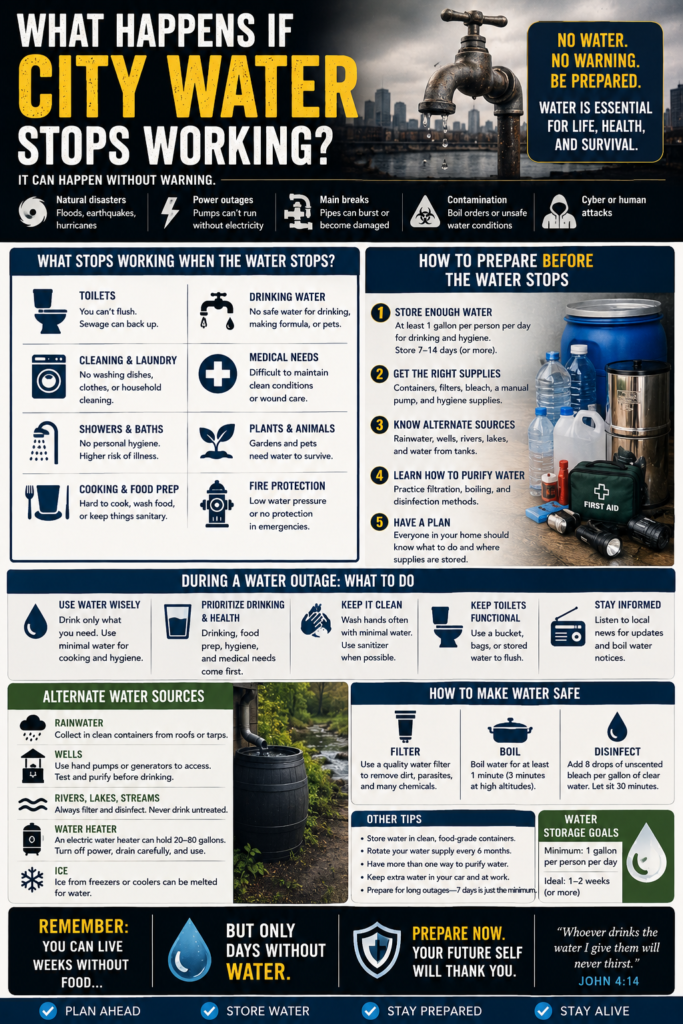
Our article on what happens if city water stops working explains how quickly everyday routines become difficult when water disappears.
A swimming pool can help solve many of those problems.
Pool Water Can Keep Toilets Working
One of the most practical uses for pool water is flushing toilets.
You don’t need clean drinking water to flush a toilet.
You simply need water.
A bucket filled from the pool can often provide enough water to manually flush a toilet when city water service is unavailable.
This simple trick can dramatically improve comfort during extended outages.
What About Saltwater Pools?
Saltwater pools create additional confusion.
Many people assume a saltwater pool contains only salt and water.
In reality, most saltwater pools still generate chlorine through the salt-chlorine conversion process.
Because of this, saltwater pool water should generally be treated similarly to traditional chlorinated pool water.
It is not automatically safe to drink.
Is Pool Water Better Than No Water?
For sanitation purposes, absolutely.
For drinking purposes, not necessarily.
When it comes to drinking water, properly stored water should always come first.
That’s why we encourage families to build dedicated emergency reserves before disaster strikes.
If you’re still building your preparedness plan, start with how much emergency water a family should store and work toward a realistic goal.
Why Stored Water Is Still King
Many preparedness newcomers become excited about alternative water sources.
The problem is that alternative sources often require treatment, filtration, or additional work.
Stored water is different.
It’s ready immediately.
No guesswork.
No treatment.
No collection.
No uncertainty.
That’s why bottled water remains one of the safest emergency water sources available.
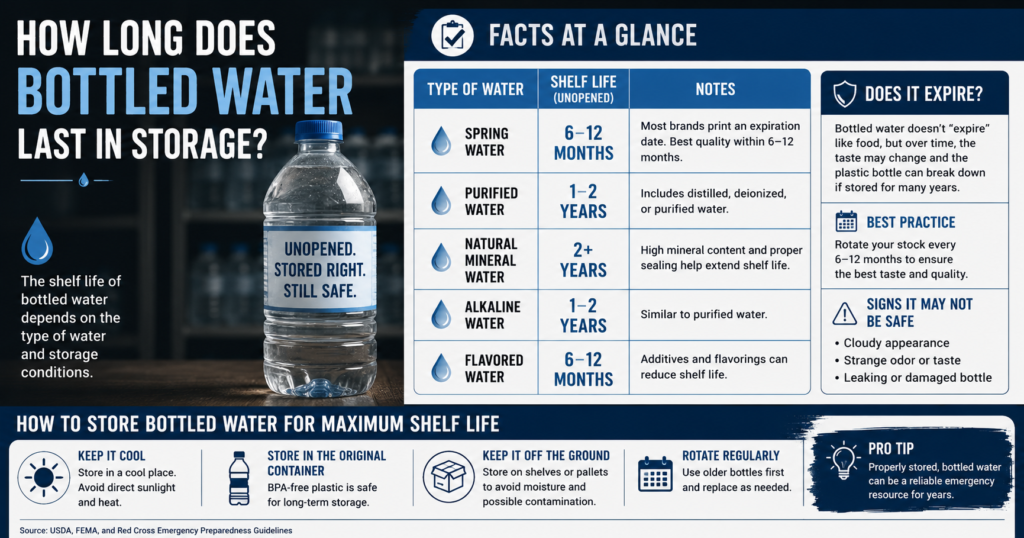
If you’ve been storing bottled water for a while, you may also want to read how long bottled water lasts in storage.
Could Pool Water Ever Be Made Drinkable?
Potentially.
But it depends on the situation.
The specific treatment method.
The chemicals present.
And the equipment available.
This is not an area where guessing is wise.
Many survival situations require water treatment decisions that depend on the exact circumstances.
That’s why having filtration equipment before an emergency occurs is so valuable.
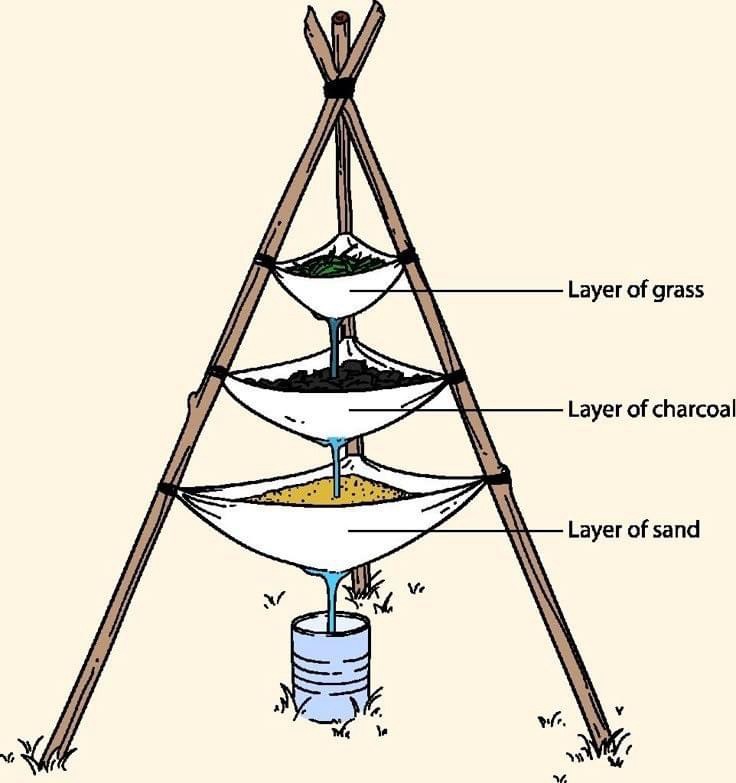
Our guide on survival water purification systems covers several approaches to making questionable water safer.
Every Family Should Have a Water Filter
A water filter dramatically expands your options during a crisis.
Instead of depending entirely on stored water, filtration gives you access to additional water sources when supplies begin running low.
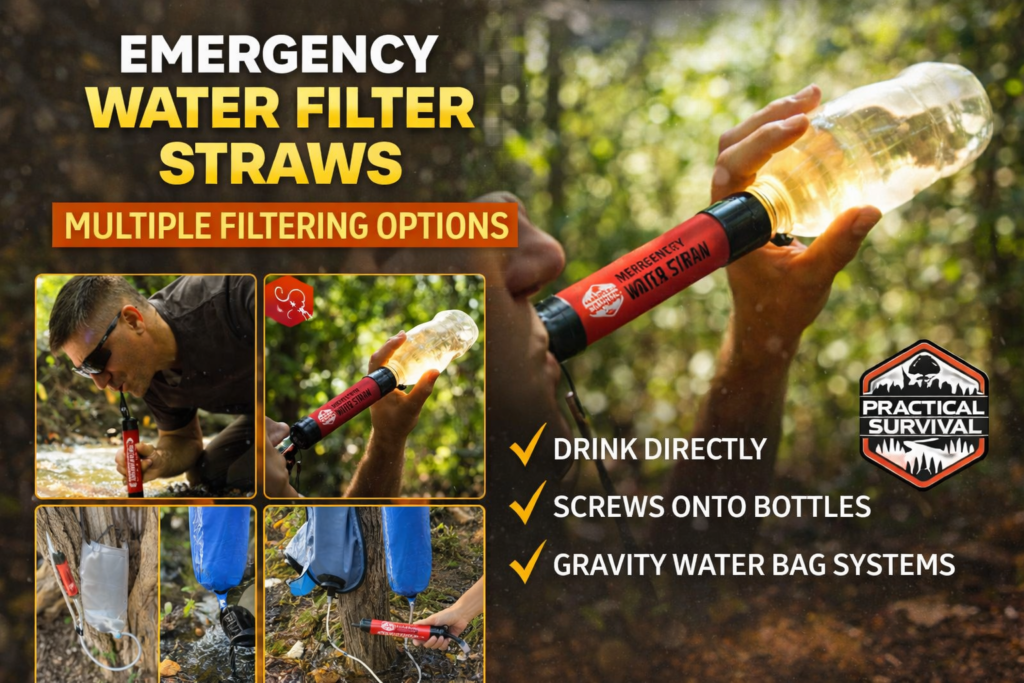
One of the simplest options we’ve reviewed is these emergency water straws that could save your life.
They take up very little space while providing access to thousands of gallons of filtered water.
Many families keep them as a backup layer within a larger preparedness plan.
Pool Owners Have a Major Preparedness Advantage
One thing that often gets overlooked is that pool owners already possess a significant emergency resource.
Thousands of gallons of accessible water.
Most homeowners never think about it until disaster strikes.
The key is understanding how to use it safely.
A pool should not replace a dedicated emergency water supply.
It should supplement it.
What If You Don’t Own a Pool?
Don’t worry.
Most people don’t.
There are still plenty of ways to build emergency water reserves.
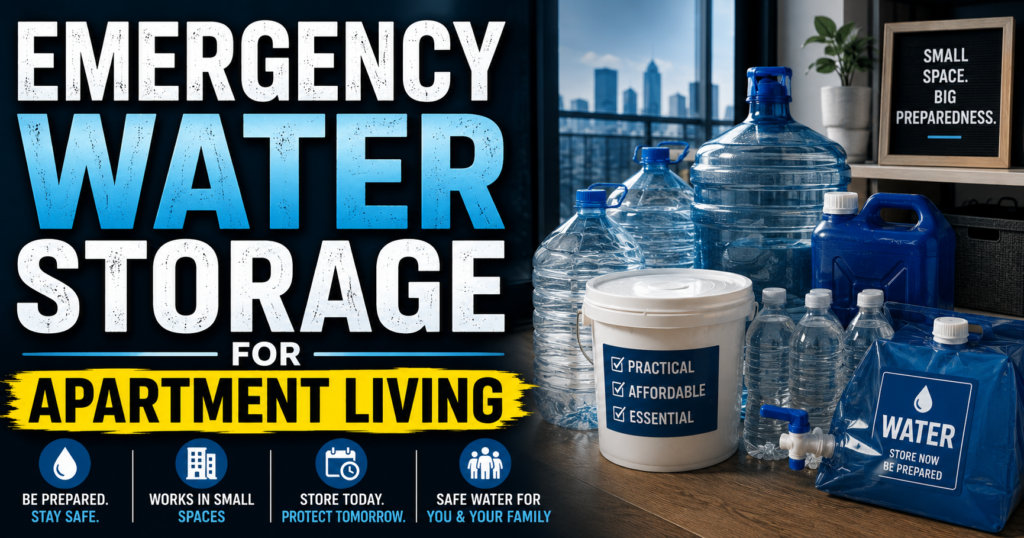
For example, apartment residents can benefit from emergency water storage solutions for apartment living.
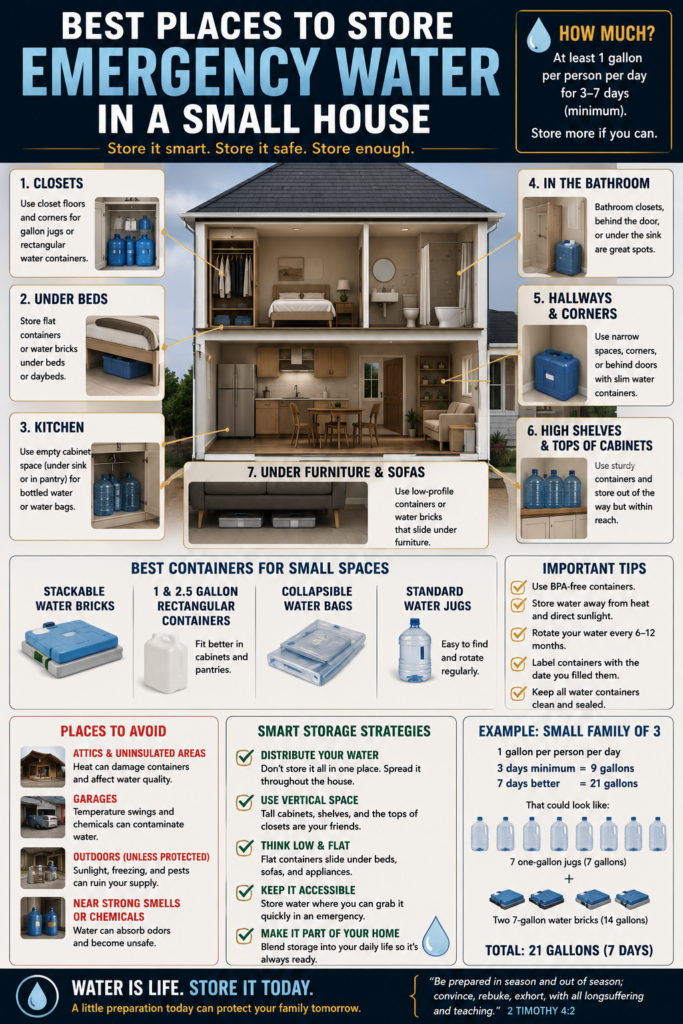
Homeowners with limited space should also read the best places to store emergency water in a small house.
Preparedness is more about planning than property size.
One Water Storage Tool More Families Should Know About
If severe weather is approaching and you still have running water, a temporary storage solution can dramatically increase your available supply.
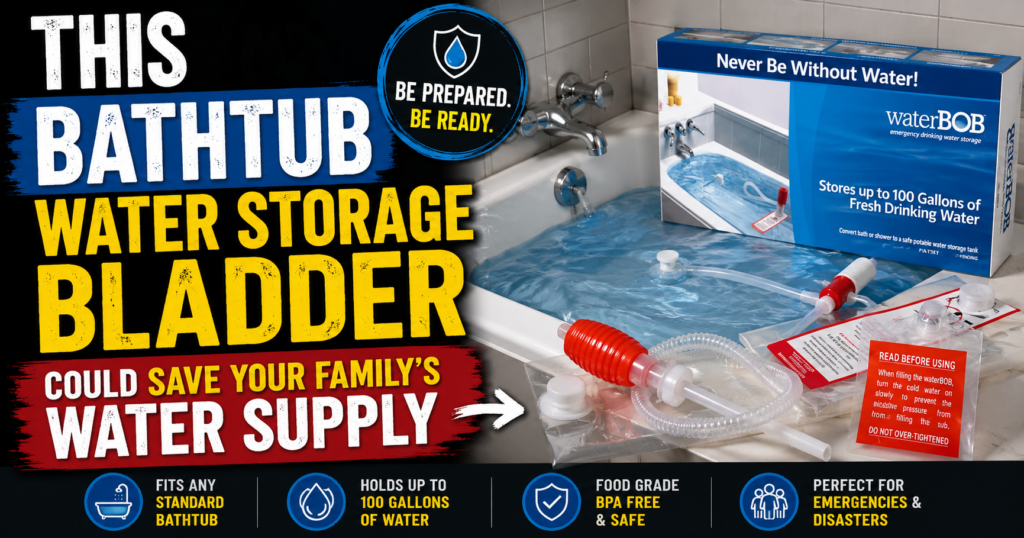
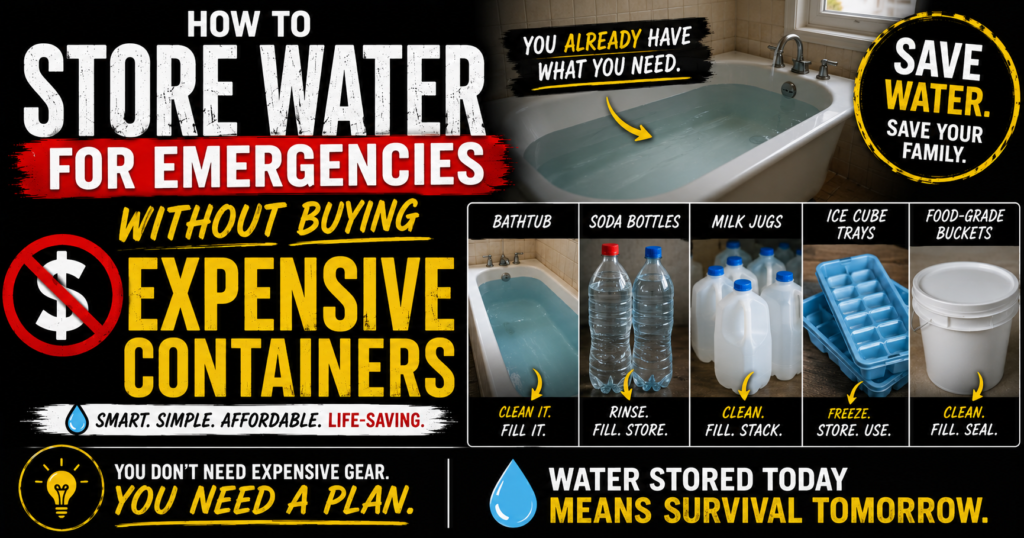
That’s one reason we recommend reading this bathtub water storage bladder review.
Being able to quickly store up to 100 gallons of clean tap water before an outage begins can make a huge difference.
Many families focus on collecting water after an emergency starts.
The smarter move is storing it beforehand whenever possible.
Water Security Is About Layers
The strongest emergency plans don’t rely on one source.
They rely on multiple sources.
Examples include:
- Bottled water
- Long-term storage
- Temporary bathtub storage
- Rainwater collection
- Water filtration
- Water purification
- Alternative sources like pools
Each layer increases resilience.
If one option fails, another remains available.
The Pool in Your Backyard Is More Valuable Than You Think
Most swimming pools will never be used for emergency purposes.
And hopefully they never need to be.
But if a disaster interrupts your water supply, that pool may become one of the most valuable resources on your property.
Not because it’s a perfect source of drinking water.
But because it can provide thousands of gallons of water for sanitation, cleaning, flushing toilets, and countless other tasks while preserving your stored drinking water for what matters most.
That’s the kind of preparation that turns a major emergency into a manageable inconvenience.
Related Water Preparedness Articles
Building a reliable emergency water plan takes more than simply storing a few bottles of water. Explore these helpful guides to strengthen your family’s preparedness:
- Emergency Water Preparedness Guide: Everything You Should Know
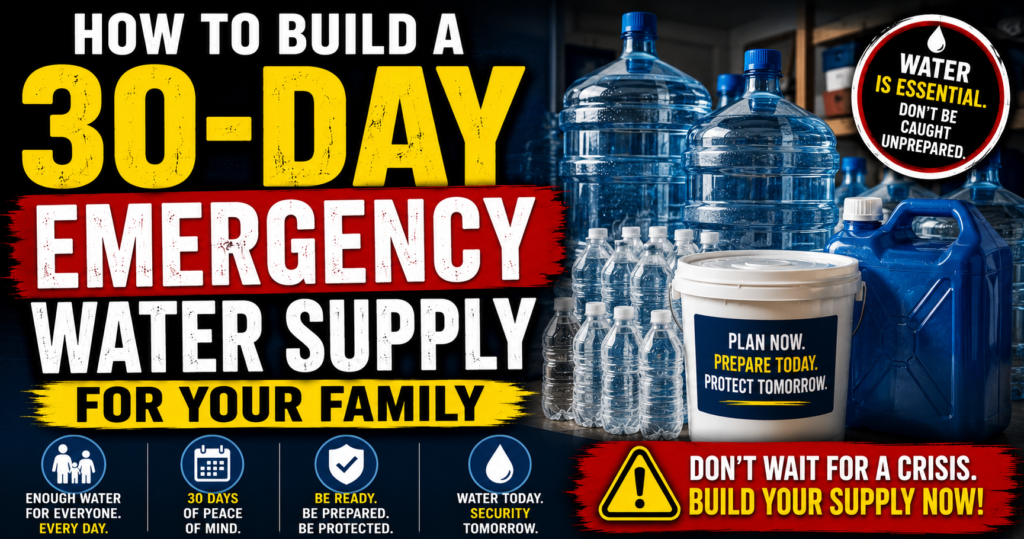
- How to Build a 30-Day Emergency Water Supply for Your Family
- Emergency Water Checklist: What Every Family Should Have
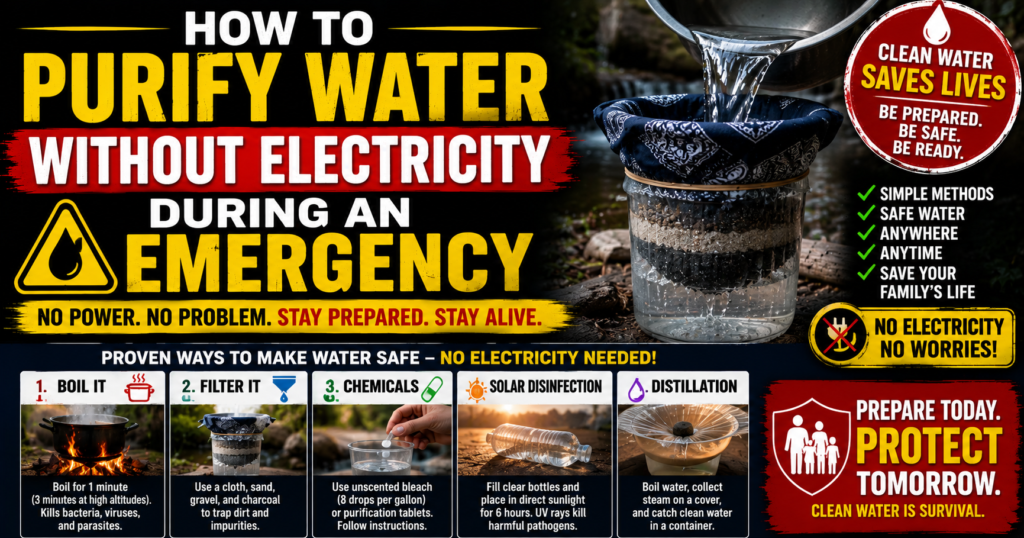
- How to Purify Water Without Electricity During an Emergency
- What Is the Safest Water Source During an Emergency?