When most people think about clean drinking water, they assume the power is still on.
The water treatment plant is running.
The pumps are working.
The taps are flowing.
But major disasters don’t always work that way.
Power outages often happen at the exact same time water becomes difficult to find.
Ice storms.
Hurricanes.
Floods.
Tornadoes.
Wildfires.
Grid failures.
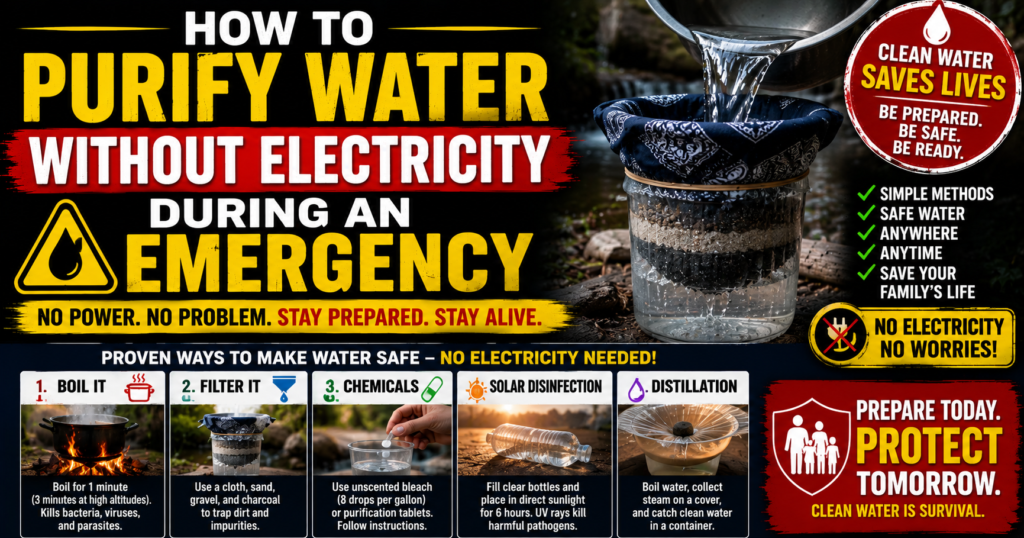
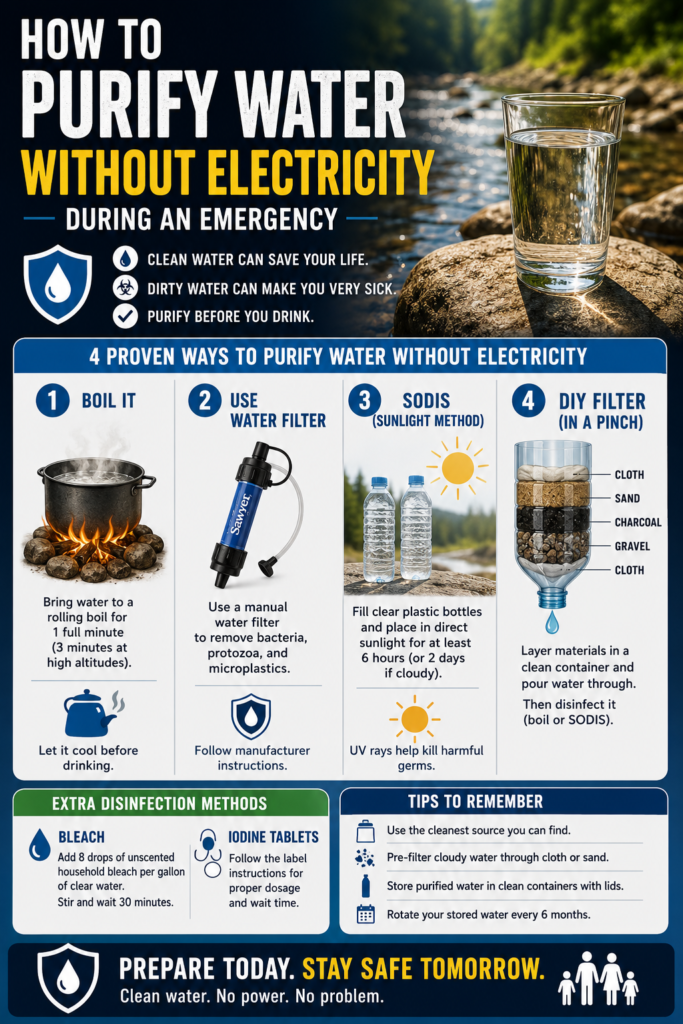
When the lights go out, knowing how to purify water without electricity becomes one of the most important preparedness skills you can have.
The good news is that you don’t need expensive equipment or a power outlet to make water safer to drink.
In fact, some of the most effective water purification methods have been used for generations. Compare traditional options and their strengths in Why Water Purification Is Critical for Survival Success.
Why Water Purification Matters
One of the biggest mistakes people make during emergencies is assuming any water is better than no water.
Unfortunately, unsafe water can create serious health problems at the worst possible time.
Many contaminants cannot be seen.
Water may appear perfectly clear while containing:
- Bacteria
- Parasites
- Harmful microorganisms
- Animal waste
- Other contaminants
That’s why we strongly recommend reading why clear-looking water can still be dangerous before relying on any unfamiliar water source.
Finding water is only half the battle.
Making it safer is the other half.
Start With the Safest Water Source Available
Before worrying about purification, ask yourself whether treatment is even necessary.
Stored water should always be your first choice.
Bottled water.
Emergency water reserves.
Water stored before the emergency.
These options are usually safer than trying to treat questionable water from unknown sources.
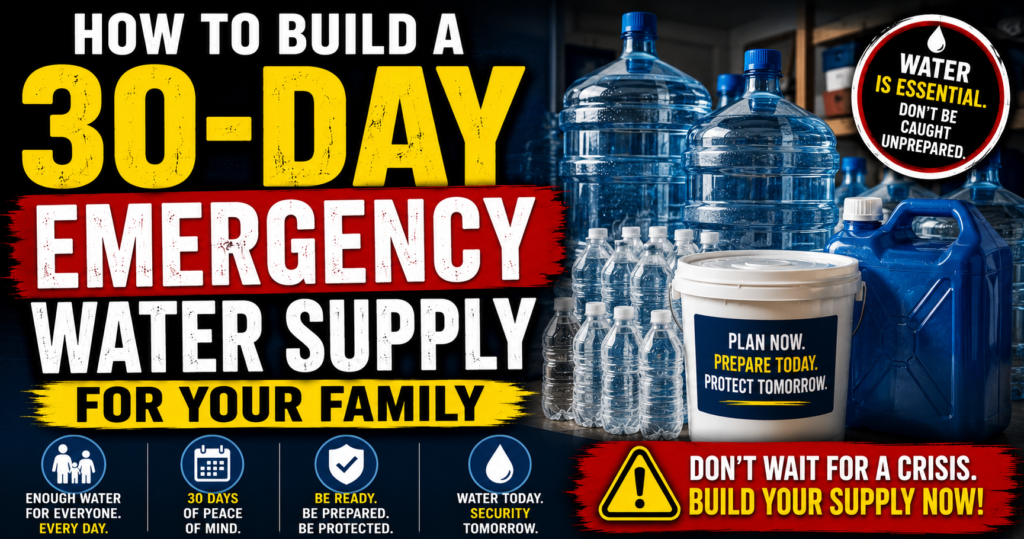
If you’re still building your emergency supply, start with how to build a 30-day emergency water supply for your family.
The more water you store ahead of time, the less purification you’ll need later.
Boiling Water Without Electricity
Many people forget that electricity isn’t required for boiling.
A propane stove.
Camp stove.
Rocket stove.
Fire pit.
Wood stove.
Charcoal grill.
All can potentially be used to heat water during an emergency.
Boiling remains one of the oldest and most trusted water treatment methods available.
This is one reason fire-starting remains such an important survival skill.
If you lose power for an extended period, being able to safely create fire may become just as important as finding water itself.
Water Filtration Is One of the Best Long-Term Solutions
Stored water eventually runs out.
That’s why experienced preppers rarely rely on storage alone.
Instead, they combine storage with filtration.
A quality water filter can dramatically expand your options during an emergency.
Streams.
Creeks.
Collected rainwater.
Other questionable water sources may become far more useful when filtration is available.
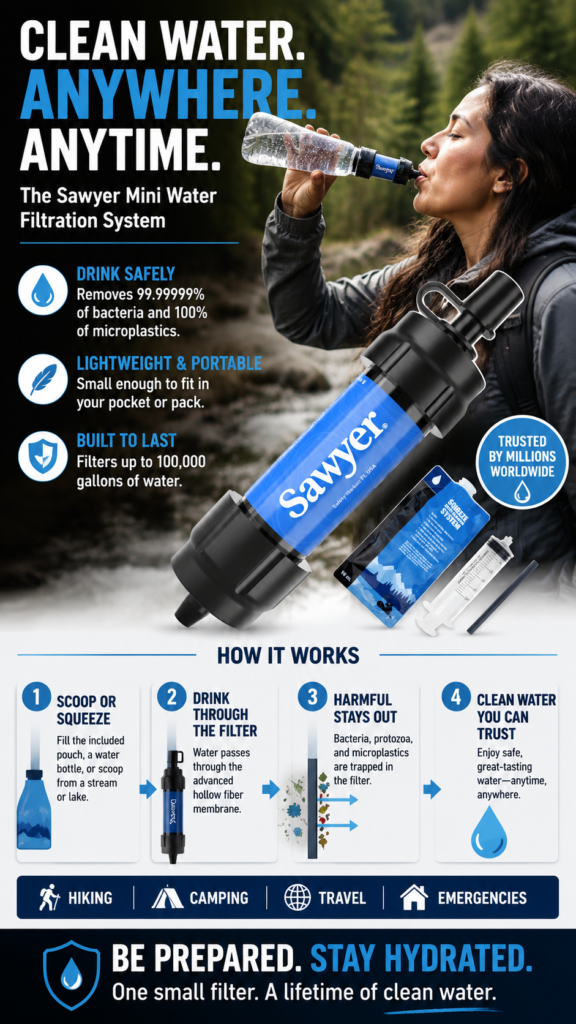
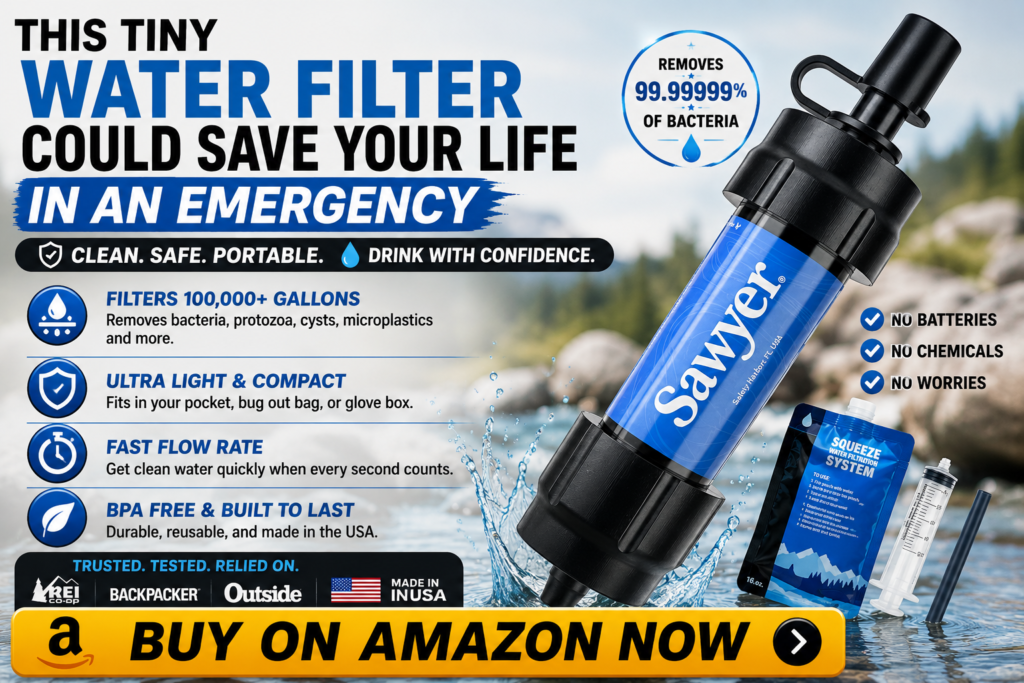
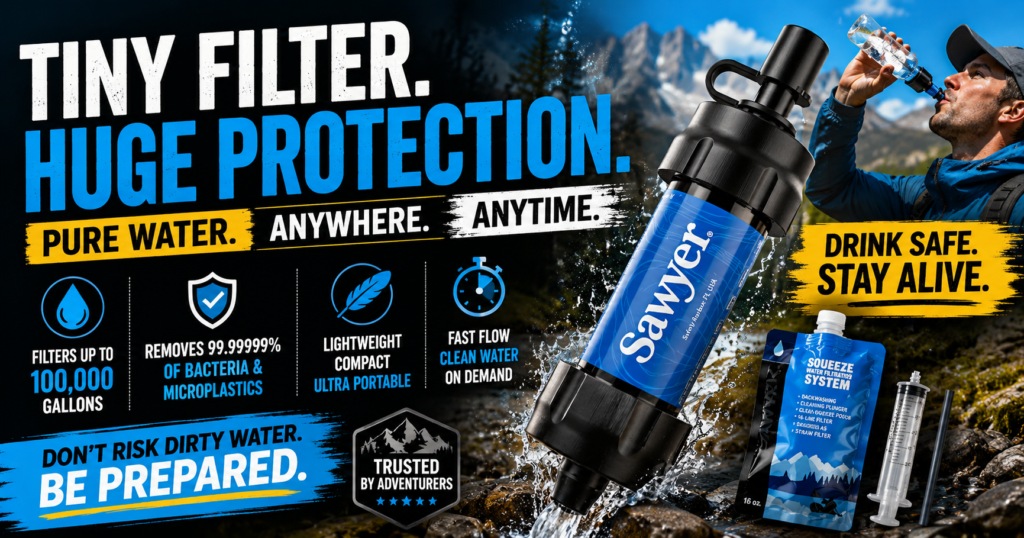
One of our favorite preparedness tools is this tiny water filter that could save your life in an emergency.
The Sawyer Mini has become one of the most trusted portable water filters available because it’s:
- Lightweight
- Affordable
- Compact
- Easy to store
- Capable of filtering enormous amounts of water
You can also check current pricing here:
For many families, this small filter provides one of the easiest ways to add a serious layer of water preparedness.
Rainwater Collection and Filtration
Rainwater is often cleaner than many people assume.
However, that doesn’t automatically make it safe.
Collection methods matter.
Storage matters.
Treatment matters.
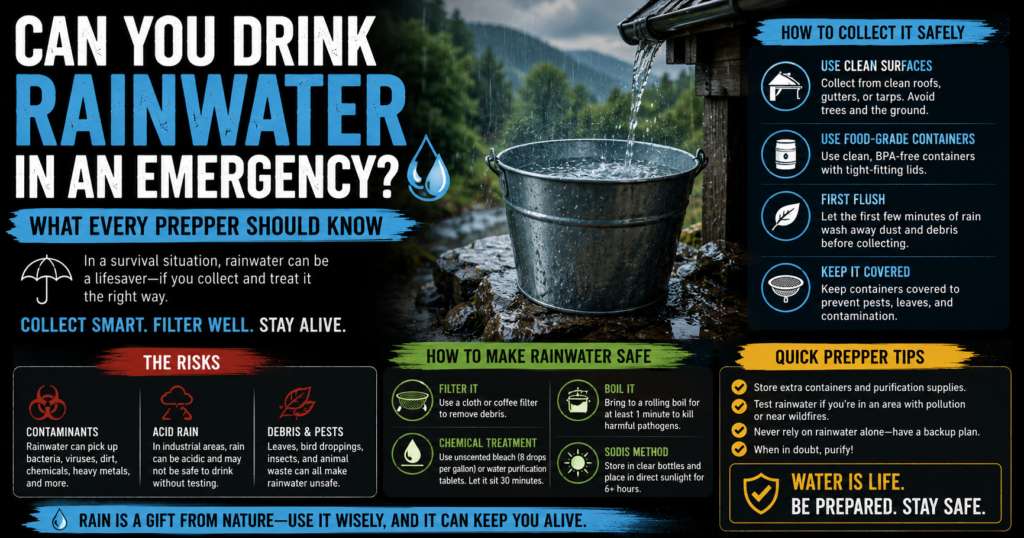
If you’ve ever wondered whether rainwater could become part of your emergency water plan, read Can You Drink Rainwater in an Emergency?.
A portable filter paired with rainwater collection can become a powerful combination during extended emergencies.
Purification Tablets
Water purification tablets are another option that requires no electricity.
They’re lightweight.
Affordable.
Easy to store.
And capable of treating water when filtration equipment isn’t available.
Many experienced preppers keep purification tablets as a backup to their primary filtration systems.
Redundancy is a good thing when it comes to water.


What About Pool Water?
Pool water creates a lot of confusion.
Many homeowners assume their swimming pool solves all water problems.
Not exactly.
Pool water can be incredibly valuable during an emergency, but drinking it requires additional considerations.
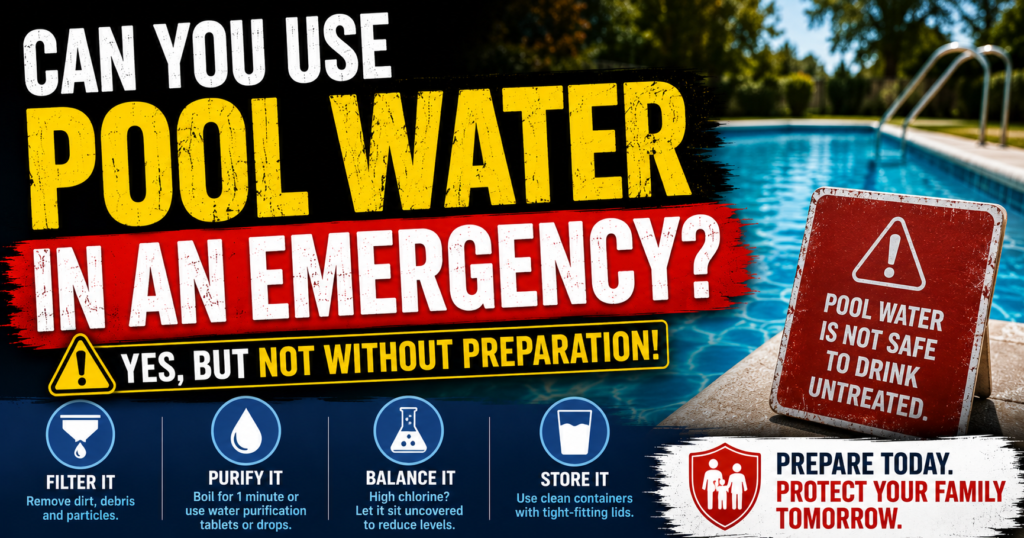
If you own a pool, read Can You Use Pool Water in an Emergency? before relying on it as a water source.
Understanding the limitations ahead of time is far better than making assumptions during a crisis.
Don’t Forget About Your Water Heater
Many families already have dozens of gallons of water sitting inside their home.
They just don’t realize it.
A standard residential water heater may contain 30 to 80 gallons of water.
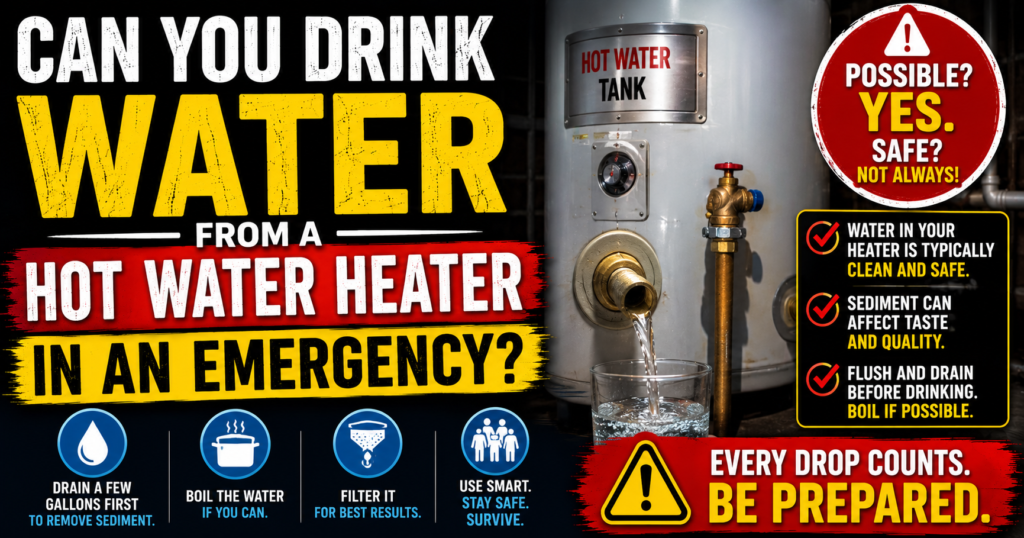
That’s one reason we published Can You Drink Water From a Hot Water Heater in an Emergency?.
For some households, the water heater may become one of the most important backup water sources available.


Temporary Storage Can Reduce Purification Needs
The easiest water to purify is the water you never have to purify.
When severe weather is approaching, storing additional clean water can dramatically reduce your dependence on treatment methods later.
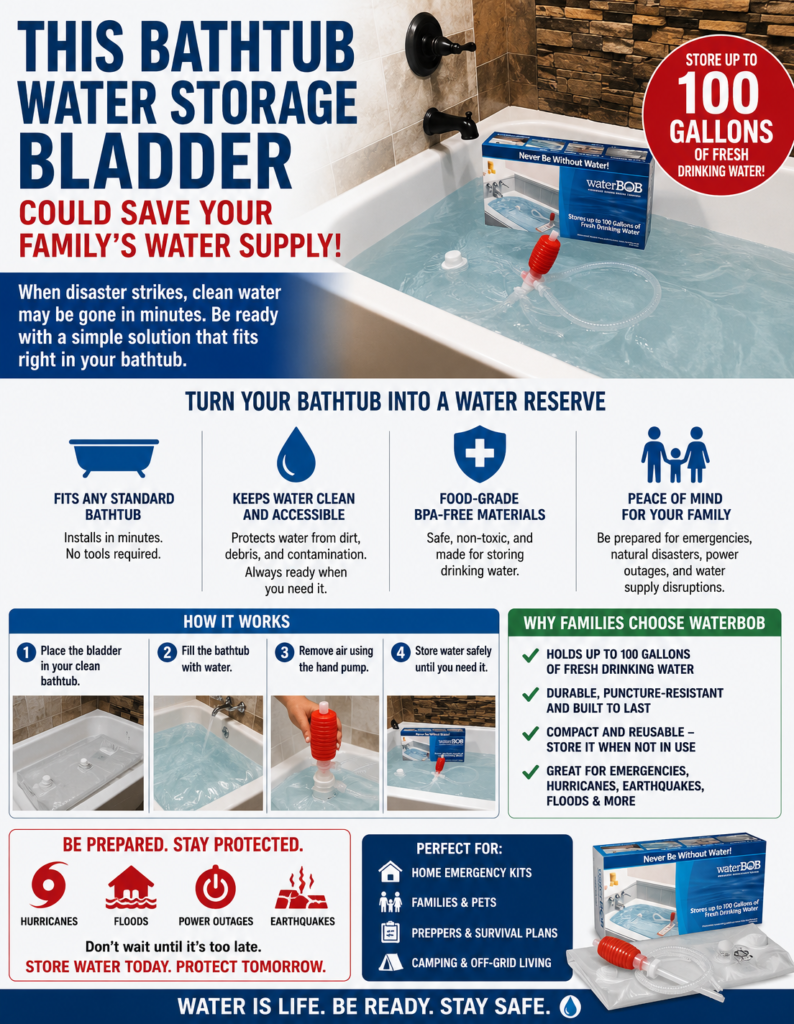
That’s why we recommend this bathtub water storage bladder that could save your family’s water supply.
Instead of searching for questionable water after the emergency begins, you can store up to 100 gallons of clean tap water beforehand.
For many families, that’s one of the smartest preparedness investments available.
Layering Your Water Plan
The strongest preparedness plans don’t depend on a single solution.
They use multiple layers.
Examples include:
- Bottled water
- Long-term water storage
- Bathtub emergency storage
- Water heaters
- Rainwater collection
- Portable filtration
- Water purification tablets
- Boiling methods
Each layer increases flexibility.
Each layer reduces risk.
Each layer makes your family more resilient.
The Biggest Mistake Most People Make
The biggest mistake isn’t choosing the wrong filter.
It isn’t choosing the wrong purification method.
It’s waiting until the emergency begins.
Once stores are empty and supplies are gone, your options become limited.
Preparedness works best when it’s done ahead of time.
A few cases of bottled water.
A portable water filter.
A backup treatment method.
A temporary storage solution.
Those simple steps put you far ahead of the average household.
Clean Water Without Power Is Absolutely Possible
Many people assume losing electricity means losing access to safe drinking water.
That’s simply not true.
With proper planning, filtration, storage, and backup treatment methods, you can continue producing safe drinking water long after the power goes out.
The key is building those capabilities before you need them.
When the next storm, outage, or disaster arrives, you’ll spend less time worrying about water and more time focusing on everything else that matters.
Related Water Preparedness Articles
Building a reliable emergency water plan takes more than simply storing a few bottles of water. Explore these helpful guides to strengthen your family’s preparedness:
- Emergency Water Preparedness Guide: Everything You Should Know
- How to Build a 30-Day Emergency Water Supply for Your Family
- Emergency Water Checklist: What Every Family Should Have
- How to Purify Water Without Electricity During an Emergency
- What Is the Safest Water Source During an Emergency?