When I first started thinking seriously about emergency food, the hardest part wasn’t deciding what to buy.
It was figuring out how much food was actually enough.
Three days?
Two weeks?
Thirty days?
A year’s worth?
Preparedness advice can go from a few cans in a pantry to an entire basement stacked with buckets pretty quickly.
I don’t think most families need to start with a year’s worth of survival food.
I think a much better goal is to build emergency food in stages.
For my family, I’d think about it like this:
First goal: 3 days.
Better goal: 2 weeks.
Strong household reserve: 30 days.
After that, I can decide whether longer-term storage makes sense for us.
The important part is that the food is something we’ll actually eat, can safely store, and can prepare even if normal utilities aren’t working.
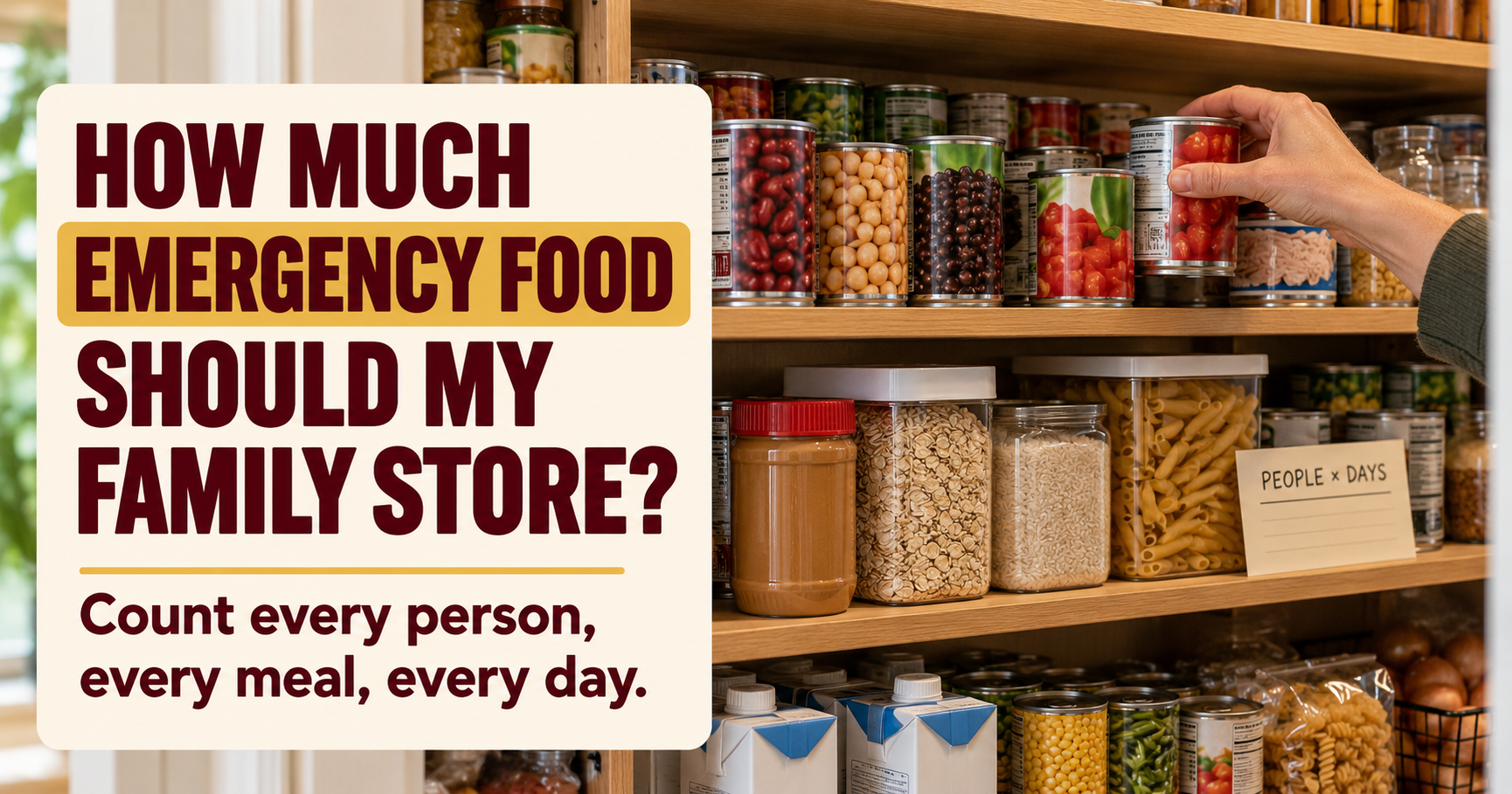
How Much Emergency Food Should I Store?
If I were starting from nothing, I would build toward at least several days of shelf-stable food first, then gradually work toward a two-week supply.
For a family that wants a stronger preparedness setup, I really like having around 30 days of food available.
That doesn’t mean 30 days of expensive freeze-dried meals.
It can be a mixture of normal pantry food, canned food, dry staples, shelf-stable meals, and some long-term emergency food.
That’s usually much cheaper and more practical.
Start With 3 Days Instead of Trying to Build Everything at Once
The fastest way to make food storage feel impossible is trying to buy a month’s worth in one shopping trip.
I wouldn’t do that.
I’d start with three days.
Three breakfasts.
Three lunches.
Three dinners.
Snacks.
Drinks or drink mixes if we normally use them.
Food for anyone with special dietary needs.
Pet food if applicable.
Once I have that covered, I work toward a week.
Then two weeks.
Then a month.
That approach spreads out the cost and gives me time to learn what we’re actually using.
Why I Like Two Weeks as the First Serious Goal
Three days is a good starting point.
Two weeks feels much more useful to me.
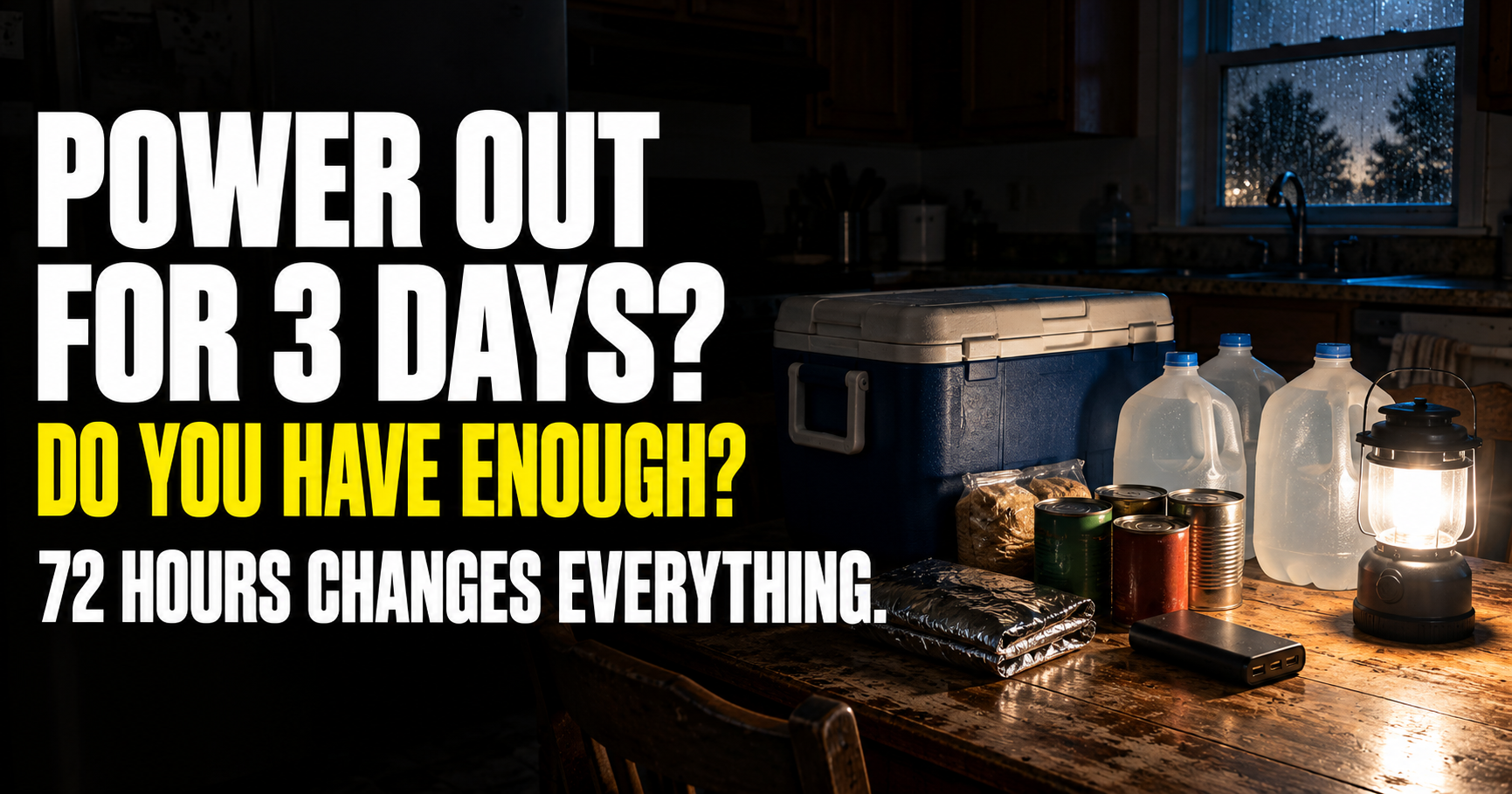
A two-week supply gives us breathing room during situations such as:
Long power outages.
Severe winter storms.
Flooding.
Supply disruptions.
Job loss.
Illness.
Road closures.
Major local disasters.
A temporary inability to get to a grocery store.
It doesn’t require believing society is about to collapse.
It’s simply having enough food that missing several grocery trips doesn’t immediately become a crisis.
A Month Is Where I Start Feeling Much More Comfortable
Once the two-week supply is built, a month is the next goal I’d work toward.
Thirty days gives me more flexibility.
If something affects income, transportation, stores, electricity, or supply chains for longer than expected, I have time to make decisions without immediately worrying about feeding everyone tomorrow.
That’s a big part of preparedness for me.
I want time.
Time gives me options.

Don’t Measure Emergency Food Only by “Servings”
This is one thing I pay attention to with emergency food packages.
A bucket might advertise hundreds of servings.
That sounds impressive.
But I want to know what a serving actually means.
Is it a full meal?
A side dish?
A small portion?
How many calories are in it?
How many people is the package realistically feeding?
I don’t want to see “120 servings” and automatically assume that means 120 complete meals.
The serving count is useful, but it isn’t the whole picture.
Calories Matter More Than the Number of Packages
If I’m trying to calculate how much emergency food we actually need, calories give me a much better starting point.
Different people have different needs based on:
Age.
Body size.
Activity level.
Health.
Pregnancy.
Temperature.
Stress.
Other factors.
I don’t try to invent one perfect calorie number for every member of the household.
Instead, I look at what we normally eat and make sure the emergency food supply isn’t dramatically below that.
That’s especially important if the emergency involves physical work.
Clearing storm damage burns more energy than sitting at a desk.
I Would Calculate Food by Person and by Day
Here’s the easiest way I think about it.
Count the people.
Choose the number of days.
Then make sure I have enough food to cover normal meals for that period.
For a family of four planning for two weeks:
4 people × 14 days = 56 person-days of food.
For 30 days:
4 people × 30 days = 120 person-days of food.
That makes the scale easier to understand.
Instead of asking:
“Do I have enough cans?”
I’m asking:
“Could I realistically feed four people for 14 days with what’s here?”
That’s a much better question.
I Actually Build a Sample Day
This is probably my favorite method.
I imagine the grocery stores are closed tomorrow.
What would everybody eat?
Maybe breakfast is:
Oatmeal.
Peanut butter.
Shelf-stable milk.
Fruit.
Lunch might be:
Canned chicken.
Crackers.
Canned fruit.
Dinner:
Rice.
Beans.
Canned meat.
Canned vegetables.
Then some snacks.
Now I know roughly what one day’s worth of emergency food looks like.
Multiply that.
Suddenly emergency food storage stops feeling mysterious.
I Don’t Want 14 Days of Identical Meals
Technically, I could probably survive eating the same beans and rice every day.
That’s not how I want to plan for my family.
Stress is already going to be high during an emergency.
Food is one area where some normalcy helps.
I want variety.
Different breakfasts.
Different proteins.
Different canned foods.
Different snacks.
Different starches.
Some comfort foods.
A little variety makes the food supply much more realistic.
My Emergency Pantry Would Look Surprisingly Normal
A lot of it would just be grocery-store food.
Things like:
Rice.
Pasta.
Oats.
Peanut butter.
Crackers.
Canned chicken.
Canned tuna.
Canned vegetables.
Canned beans.
Canned fruit.
Soup.
Pasta sauce.
Shelf-stable milk.
Dry cereal.
Granola bars.
Nuts.
Dried fruit.
Instant potatoes.
Drink mixes.
Foods like these aren’t exotic survival products.
They’re just useful pantry foods that don’t depend heavily on refrigeration.


I Want Food We Already Eat
This is one of my biggest rules.
An emergency isn’t when I want to introduce everyone to a completely new diet.
If nobody in the house eats lentils, I don’t need 100 pounds of lentils because somebody online said they’re good prepper food.
If we eat rice constantly, storing rice makes sense.
If we eat oatmeal, canned chicken, pasta, peanut butter, and soup, those make sense.
The easiest emergency food to rotate is food that’s already part of normal life.
This Also Prevents Waste
Food storage gets expensive when I buy things, forget about them, and eventually throw them away.
I would rather rotate.
Use the oldest food.
Replace it.
Keep the pantry moving.
That way our emergency supply is constantly being refreshed instead of becoming a museum of expired cans.
Long-Term Food Has a Place Too
I don’t think everything needs to come from a normal grocery-store pantry.
Long-term emergency food can be useful because it gives me something designed to sit for years without constant rotation.
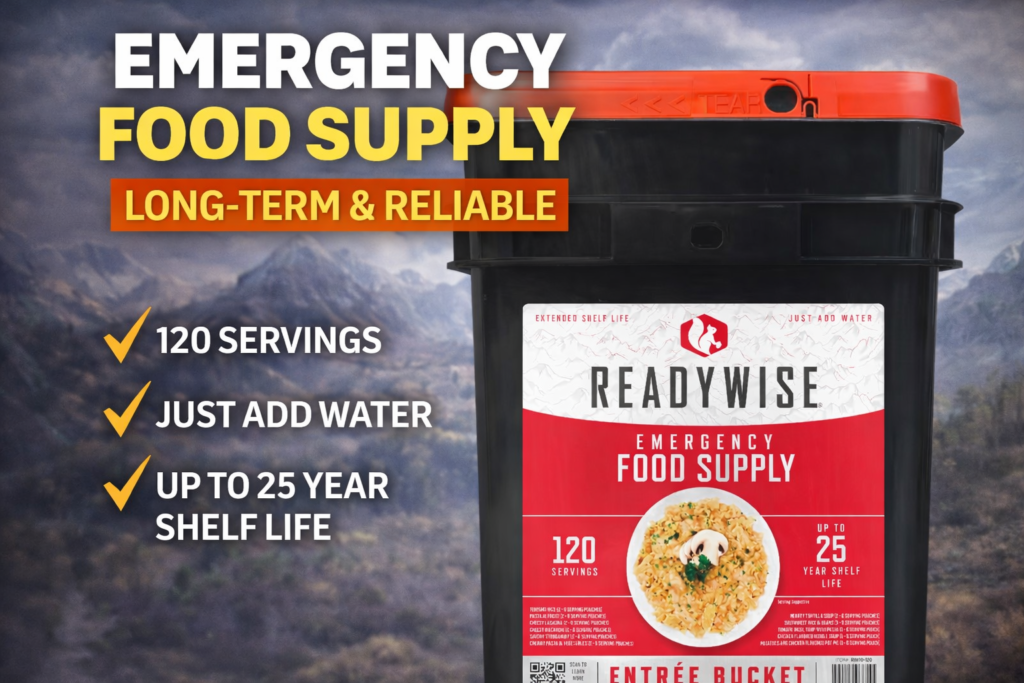
For example, the Sheet already has the ReadyWise 120-Serving Emergency Food Supply.
I like something like that as an additional layer.
Not the entire plan.
The same goes for the larger ReadyWise 30-Day Emergency Food Supply.
A long-term bucket can sit behind the normal pantry food and give me extra depth.
I Wouldn’t Build the Entire Food Plan Around Freeze-Dried Buckets
They’re convenient.
They’re compact.
They’re easy to store.
But I still like normal food.
One reason is cost.
Another is variety.
Another is familiarity.
And many freeze-dried meals require water.
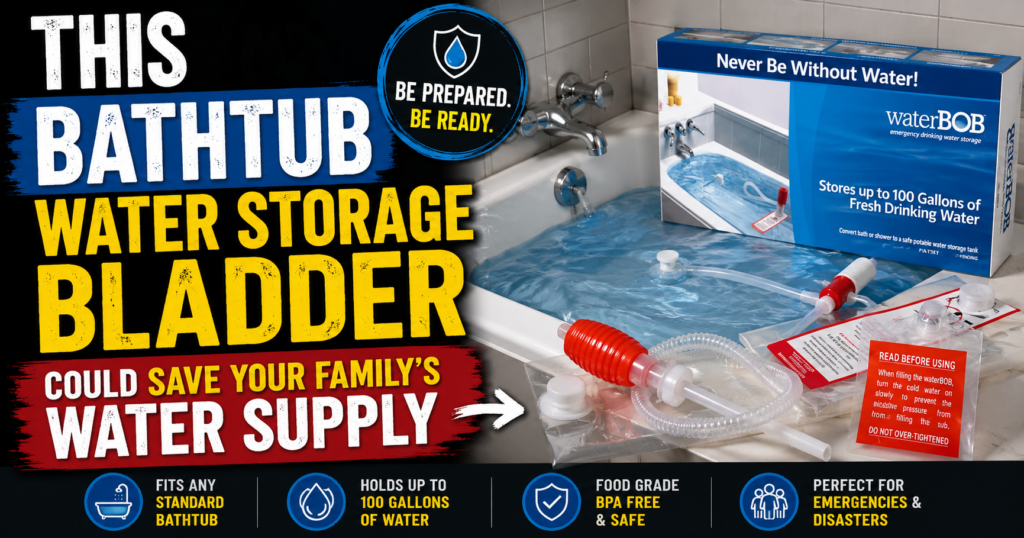
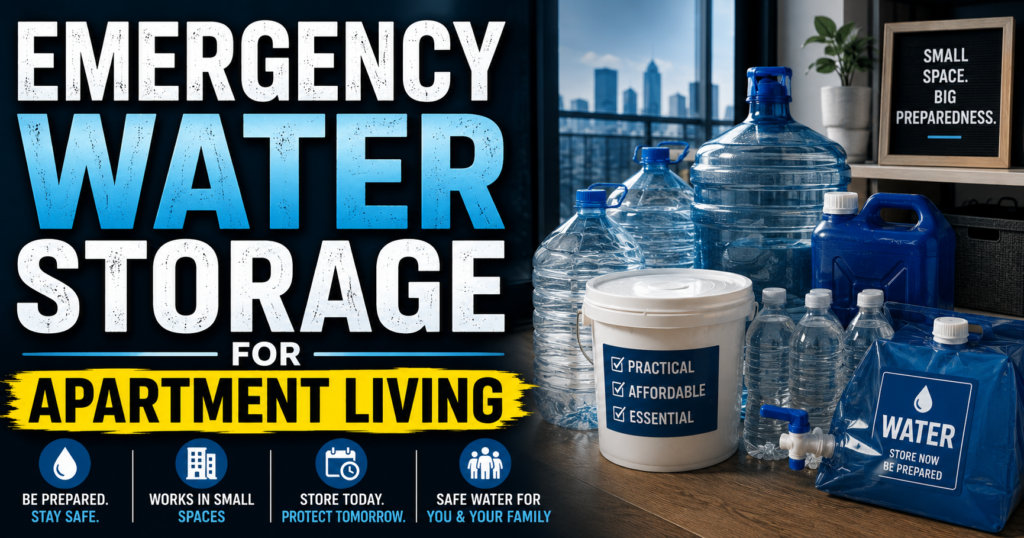
If I’m already dealing with limited water, every meal that needs water creates another demand on the supply. A bathtub emergency water storage option can help households build a substantial reserve before an outage begins.
So my ideal emergency food setup is mixed.
Normal pantry foods.
No-cook foods.
Dry staples.
Canned food.
Some long-term emergency meals.
That gives me choices.
Some Emergency Food Should Require No Cooking
This matters more than people realize.
If electricity and gas are both unavailable, I don’t want every single food item requiring boiling water.
I want things I can eat immediately.
Peanut butter.
Crackers.
Tuna.
Canned chicken.
Canned fruit.
Granola bars.
Nuts.
Shelf-stable ready-to-eat foods.
That gives us something to eat during the first hours of an outage before I worry about setting up alternative cooking.
Then I Want Food That Uses Very Little Fuel
Rice and dry beans are excellent foods.
But they can require significant cooking time.
That matters if I’m using propane, camp fuel, or another limited resource.
Instant potatoes, oatmeal, couscous, canned beans, and other quick-cooking foods can reduce fuel use.
The food plan and cooking plan need to work together.
Water and Food Storage Are Connected
This is something I can’t separate.
A huge supply of dry food isn’t nearly as useful if I don’t have enough water.
Rice needs water.
Beans need water.
Freeze-dried meals need water.
Oatmeal needs water.
And we need drinking water before any of that.
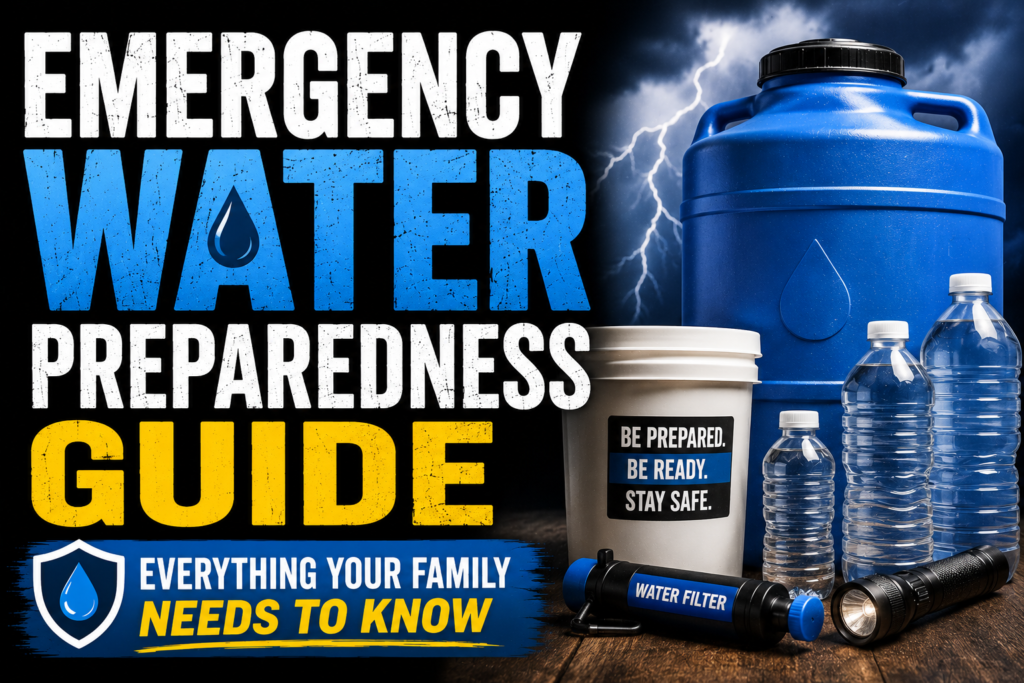
That’s why I would build food storage alongside our emergency water preparedness plan.
Food lasts much longer than a human can comfortably go without water.
Water remains the priority.
I Also Think About What Happens During a Power Outage
The first food I use may not be the emergency pantry food.
If the power goes out, I already have food in:
The refrigerator.
The freezer.
The pantry.
I’d use those strategically before breaking deeply into long-term storage.
But food safety matters.
Refrigerated food doesn’t stay safe indefinitely after the power goes out.
That’s why I don’t build the emergency plan around the assumption that everything in the refrigerator will last for days.
The Freezer Is a Temporary Food Reserve
A full freezer can buy me valuable time during an outage.
But it isn’t long-term emergency food storage.
Eventually the temperature rises.
That’s when shelf-stable food becomes increasingly important.
We’ve already built a large power-outage cluster on Survive Essentials, so food storage fits naturally into that system.
The clusters support each other.
I Wouldn’t Count Food That Requires Electricity to Prepare
This is an easy mistake.
Suppose I have frozen pizzas, frozen meat, refrigerated ingredients, and microwave meals.
Technically, the house is full of food.
But if the electricity is out for a week, those foods aren’t necessarily reliable.
When calculating my emergency food reserve, I focus on food that can survive without refrigeration and can be eaten or cooked using realistic backup methods.
Don’t Forget a Manual Can Opener
This is the classic emergency-food mistake.
Closet full of canned food.
Electric can opener.
Power out.
Oops.
A simple manual can opener belongs with the emergency food.
Honestly, I’d have more than one.
They’re cheap.
I Would Store Food in More Than One Form
I don’t want every calorie stored as one thing.
If all of my food is rice, that’s a problem.
If all of it is canned food, that’s heavy and bulky.
If all of it is freeze-dried, I need lots of water.
A mixed system is stronger.
Some canned.
Some dry.
Some ready-to-eat.
Some long-term packaged food.
Different strengths.
Different weaknesses.
Protein Needs Attention
It’s easy to build emergency storage around cheap carbohydrates.
Rice.
Pasta.
Oats.
Crackers.
Those are great.
But I still want protein.
That could include:
Canned chicken.
Tuna.
Peanut butter.
Beans.
Nuts.
Shelf-stable meat products.
Freeze-dried meals containing protein.
Emergency food needs to feel like food, not just calories.
Don’t Forget Fats
Fats are calorie-dense.
That can be extremely useful during an emergency.
Peanut butter.
Nuts.
Shelf-stable oils where appropriate.
Other foods containing fat.
The catch is that fats often don’t store as long as dry grains.
That’s another reason rotation matters.
Not everything in my pantry needs a 25-year shelf life.
Our Existing Rice Article Fits This Cluster Perfectly
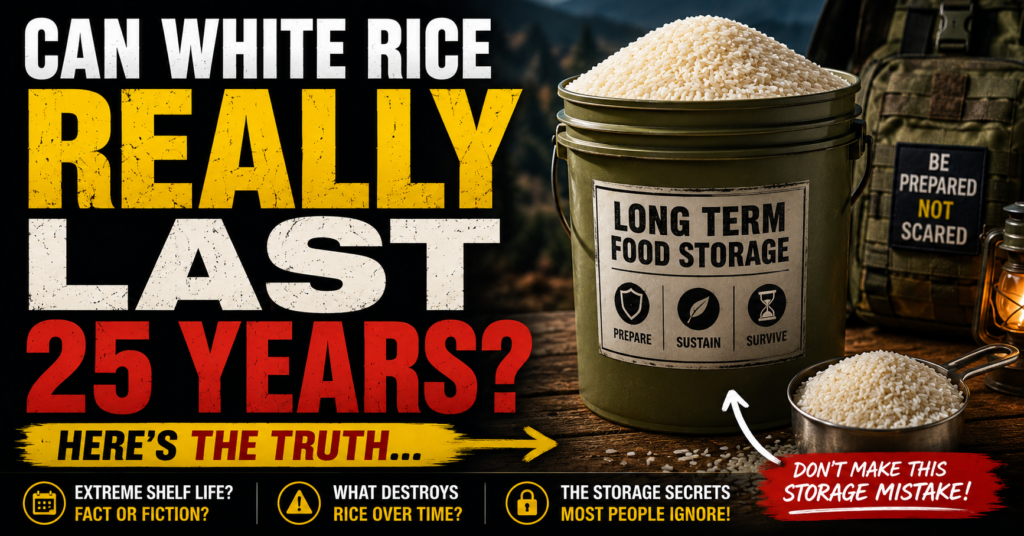
We already have a useful piece answering whether white rice can really last 25 years.
That’s exactly the type of supporting article I want underneath this larger food-storage cluster.
This page answers:
How much food should I store?
The rice article answers:
How long can one specific staple actually last?
Those are separate search intents that support each other instead of competing.
I Would Include Foods for the Kids
Children complicate emergency food storage in an important way.
They may be less willing to eat unfamiliar food.
That means I want familiar options.
Favorite crackers.
Peanut butter if appropriate.
Cereal.
Fruit.
Shelf-stable snacks.
Other foods they’ll realistically eat.
A theoretically perfect survival meal isn’t useful if the child refuses it for three days.
Babies Need Their Own Plan
If there’s an infant in the household, normal emergency-food lists aren’t enough.
Formula, baby food, feeding supplies, clean water requirements, and other needs can be completely different.
I wouldn’t assume the adult food supply covers everyone.
Special Diets Need to Be Built In
The same applies to allergies or medical dietary requirements.
Gluten-free.
Diabetes-related needs.
Food allergies.
Other restrictions.
An emergency doesn’t make those disappear.
I want suitable foods already stored rather than hoping I can find them during a shortage.
Pet Food Counts Too
Pets still eat when the power is out.
Their food needs to be included in the storage plan.
If I have a 30-day human food reserve but two days of dog food, I don’t actually have a 30-day household reserve.
I’d store pet food alongside the broader emergency supplies and rotate it normally.
Storage Space Determines How Far I Can Go
Not everybody has a basement.
A family in a small apartment may need a completely different system from someone with a large pantry.
That’s okay.
I’d use:
Closet shelves.
Under-bed storage.
Unused cabinet space.
A cool interior storage area.
Other suitable locations.
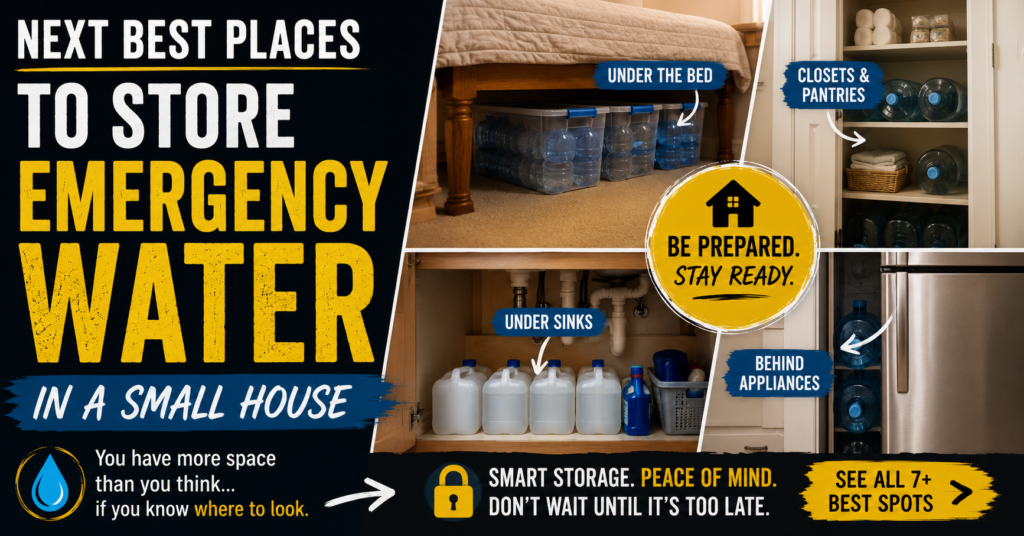
We’re going to cover where to store emergency food in a small house separately because that’s a real problem deserving its own article.
Temperature Matters
Food generally stores better in a cool, dry environment than somewhere experiencing extreme heat.
That’s why I’m cautious about garages and attics.
A garage may be convenient, but depending on climate it can become brutally hot in summer and freezing in winter.
We’ll give garage storage its own article because there are situations where it can work and others where I’d avoid it.
I Protect Food From Mice
Nothing ruins emergency food storage like discovering rodents found it first.
Paper bags and cardboard boxes don’t provide much protection.
For foods vulnerable to pests, I want durable sealed storage.
That doesn’t mean every can needs to go into a five-gallon bucket.
I just think about what a mouse could chew through.
We’ll build a separate article around protecting emergency food from rodents because that’s another very practical search intent.
I Keep an Inventory
It doesn’t need to be fancy.
A sheet of paper works.
I want to know:
What do we have?
How much?
When does it need to be rotated?
What are we running low on?
That prevents me from buying 50 cans of corn while somehow owning no protein.
I Wouldn’t Count Food I Know Nobody Will Eat
This sounds obvious, but it’s easy to do.
Preparedness sales make huge assortments look appealing.
Before buying a large food bucket, I look at what’s actually inside.
Meals.
Servings.
Ingredients.
Preparation requirements.
If half the household hates half the meals, the advertised amount becomes less useful.
My 3-Day Food Supply Would Be Mostly Normal Food
At three days, I don’t need complicated long-term storage.
I can easily cover three days with shelf-stable grocery food.
That’s the fastest win.
My 2-Week Supply Becomes More Deliberate
At two weeks, I’d start balancing:
Breakfast.
Lunch.
Dinner.
Protein.
Carbohydrates.
Fats.
Snacks.
No-cook foods.
Quick-cooking foods.
Water requirements.
Fuel requirements.
Now we’re actually building a system.
My 30-Day Supply Would Use Layers
This is where I’d combine things.
Regular pantry rotation.
Canned food.
Dry staples.
Ready-to-eat options.
Some long-term emergency food.
Maybe the ReadyWise 30-Day Emergency Food Supply as one portion of the system rather than the whole thing.
That gives me both convenience and flexibility.
What About 3 Months or a Year?
There’s nothing wrong with storing more.
Some households may have good reasons to.
But I wouldn’t tell a beginner to jump straight there.
A three-month or one-year food supply creates bigger questions:
Storage space.
Rotation.
Pest protection.
Temperature.
Nutrition.
Cost.
Water.
Cooking fuel.
Long-term packaging.
That’s advanced storage.
I’d rather see someone with a well-managed 30-day supply than a chaotic year’s worth of food they don’t understand.
How Much Emergency Food Would I Store?
If I had nothing today:
I’d build three days immediately.
Then work toward two weeks.
Then build to around 30 days if budget and storage space allow.
After that, I’d decide whether deeper long-term food storage fits my family’s actual preparedness goals.
There’s no magic number that makes a household officially prepared.
But every additional day of food gives me more breathing room.
The Goal Isn’t to Never Visit a Grocery Store Again
I think this is where emergency food storage can become weird.
I’m not trying to recreate a supermarket in my basement.
I’m trying to make sure my family doesn’t immediately depend on one being open.
That’s different.
If stores are closed for three days, we’re fine.
If roads are blocked for a week, we’re fine.
If we’re stuck at home for two weeks, we have options.
If something lasts longer, a month of food gives us time to adjust.
That’s the kind of resilience I want.
Start Small and Build Something You’ll Actually Maintain
I wouldn’t spend thousands of dollars tonight.
I’d look in the pantry first.
Count what we already have.
Build three days of complete meals.
Then add a little extra each grocery trip.
A few cans.
Another bag of rice.
Peanut butter.
Oats.
Pasta.
Shelf-stable protein.
Something everyone actually eats.
Before long, three days becomes a week.
A week becomes two.
Two weeks becomes a month.
That’s a much easier way to build emergency food than panic-buying a giant pile of survival meals.
And because we’re rotating food we actually use, the money isn’t simply sitting in a closet waiting for the apocalypse.
It’s food.
Food we would eventually buy anyway.
That’s why I think emergency food storage can be one of the most practical forms of preparedness a family builds.
About the Author
Evan Brooks writes about emergency food storage, gardening, foraging, seed storage, and practical household self-reliance for Survive Essentials. His work focuses on building realistic food reserves families can actually use, rotating ordinary pantry foods alongside long-term supplies, and creating preparedness systems that remain useful even when no emergency occurs.