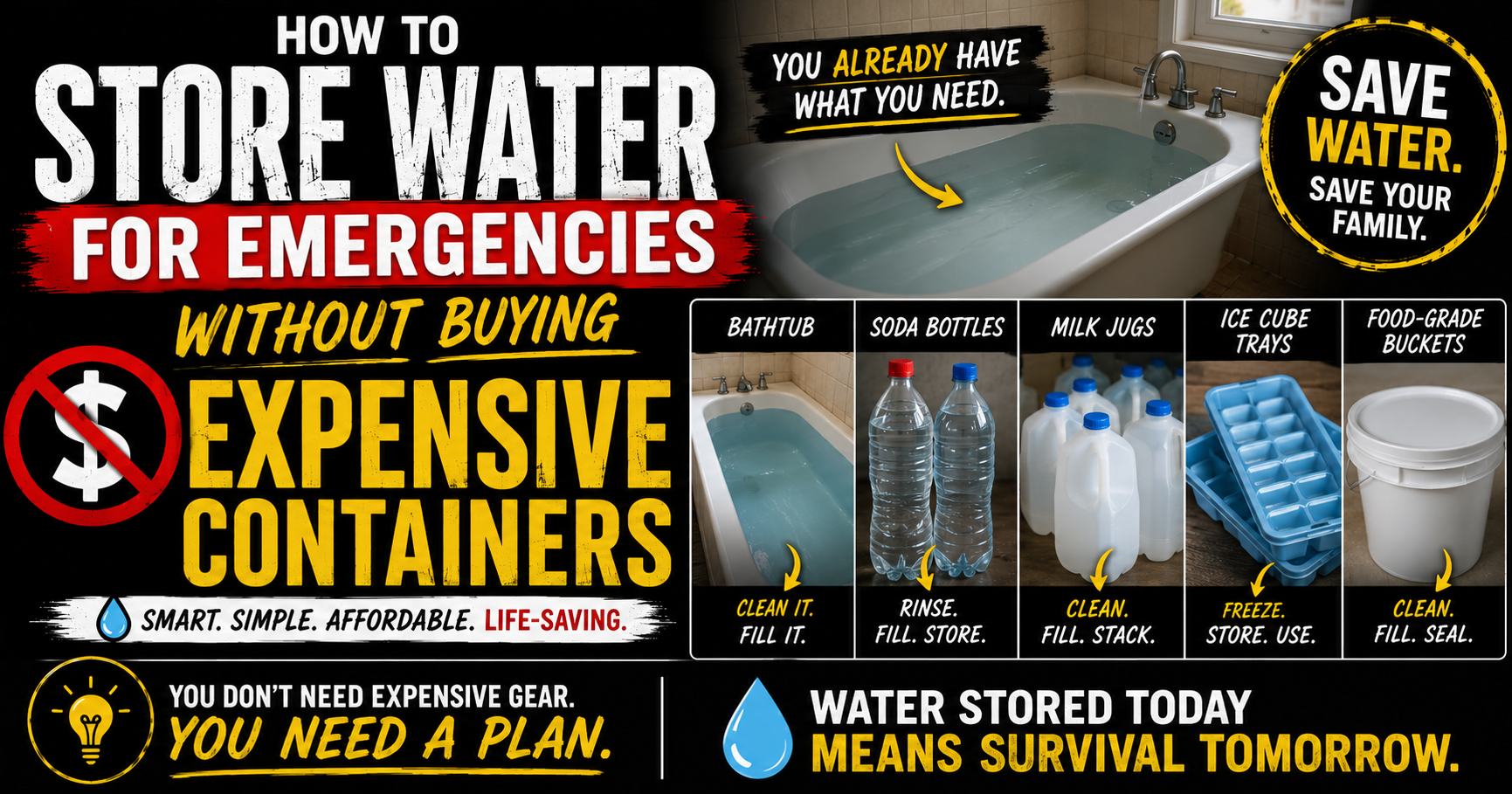
One of the biggest myths in preparedness is that storing emergency water has to be expensive.
People see large water barrels, specialized storage systems, and expensive preparedness products and assume they’re priced out of being prepared.
The truth is much simpler.
Most families can build a respectable emergency water supply without spending hundreds of dollars on storage containers.
In fact, many people already have enough space and enough affordable options to get started immediately.
The goal isn’t to build the perfect emergency water system overnight.
The goal is to make progress.
A family with an affordable water storage plan is far better prepared than a family with no plan at all.
Start With Bottled Water
The cheapest and easiest option is often the one people overlook.
Bottled water.
No special equipment.
No preparation.
No additional purchases.
Simply buy a few extra cases during regular shopping trips and store them properly.
Many families build their first week or two of emergency water storage entirely through bottled water.
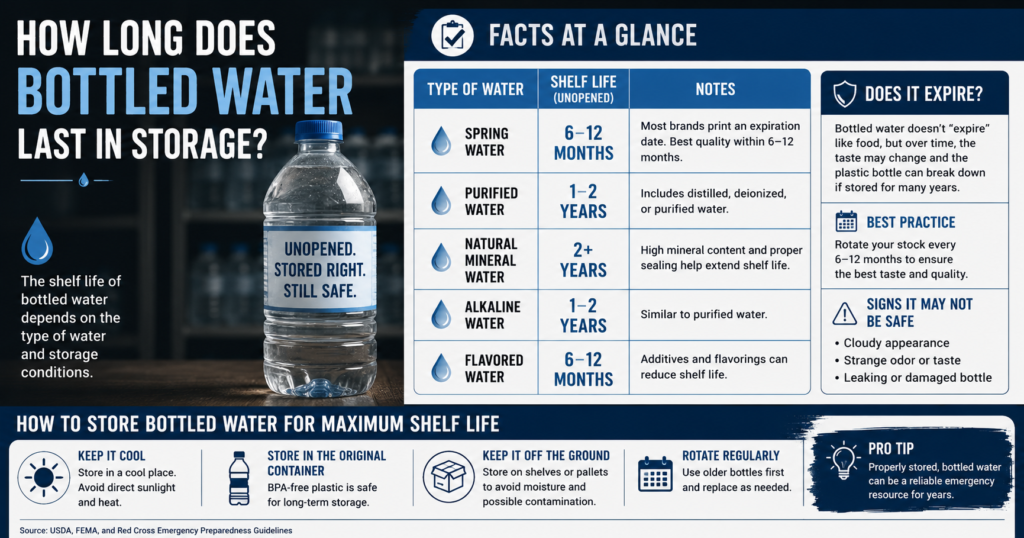
If you’re worried about long-term storage, read How Long Does Bottled Water Last in Storage?.
For most households, bottled water remains one of the simplest preparedness investments available.
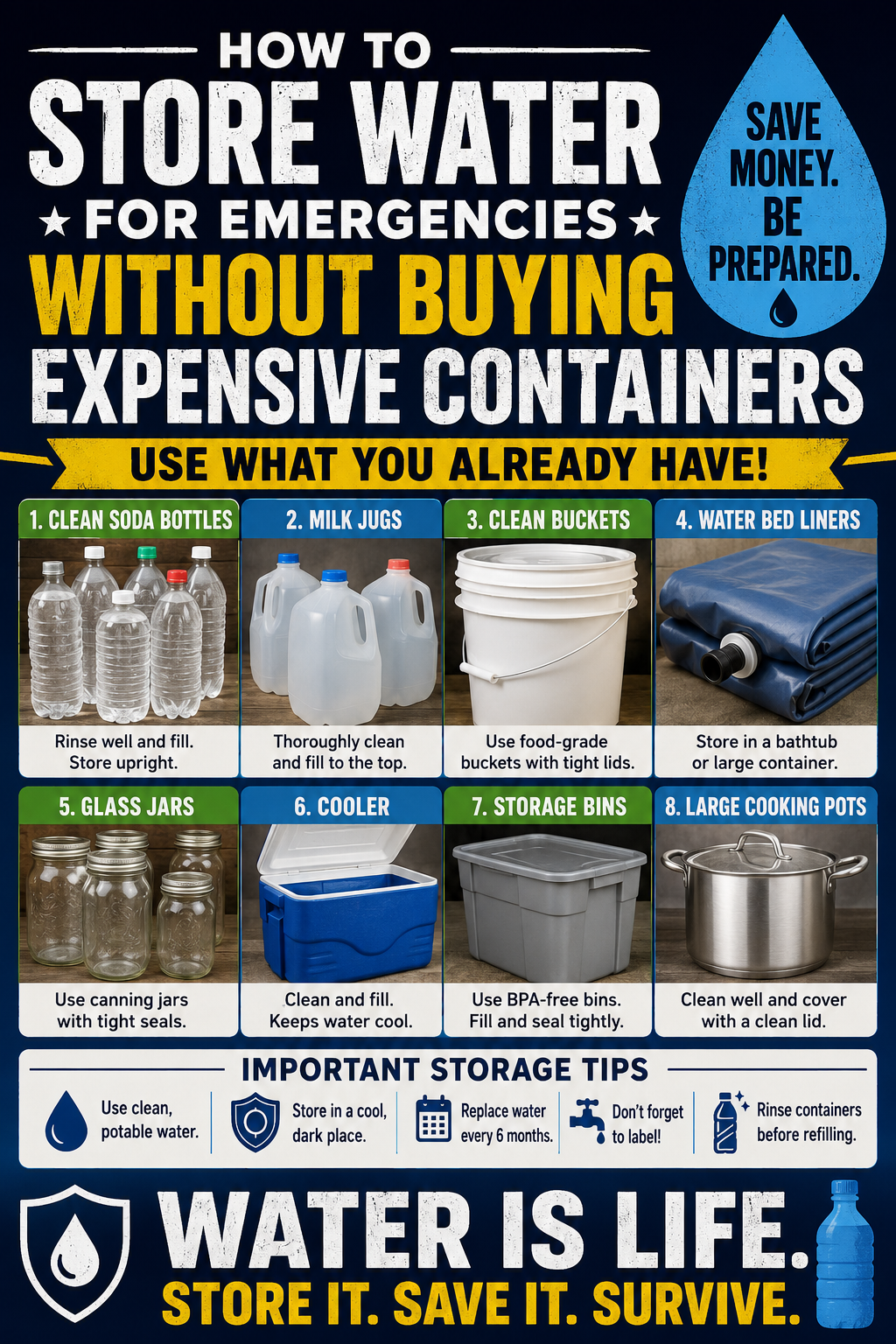
Reuse Food-Grade Containers You Already Own
Many families throw away perfectly usable containers every year.
Food-grade containers that previously held beverages may be useful for emergency water storage if properly cleaned and maintained.
Examples may include:
- Juice containers
- Certain beverage containers
- Food-grade water jugs
Not every container is suitable.
Avoid containers that previously held:
- Chemicals
- Cleaning products
- Automotive fluids
- Pesticides
When in doubt, choose containers specifically intended for drinking water.

Use the Space You Already Have
One reason people think water storage is expensive is because they focus on buying storage equipment before evaluating their available space.
Look around your home.
You may already have room available:
- Under beds
- In closets
- Behind furniture
- In utility rooms
- In spare bedrooms
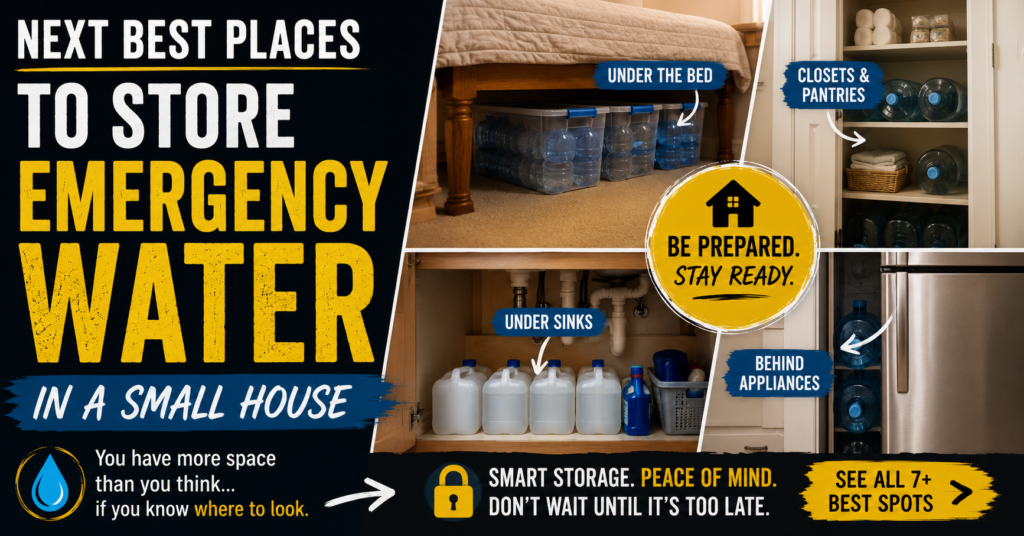
If you’re struggling to find storage space, our guide on Best Places to Store Emergency Water in a Small Houseprovides several practical ideas.
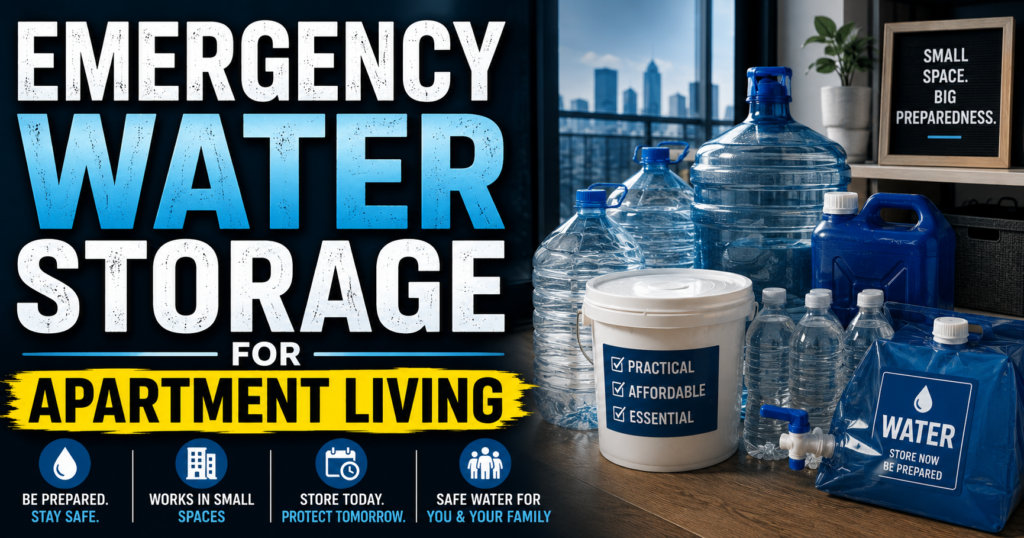
Apartment residents should also read Emergency Water Storage for Apartment Living.
The storage space often exists.
Most people simply haven’t noticed it yet.
Focus on Consistency Instead of Perfection
Many preparedness beginners become overwhelmed because they think they need a month’s worth of water immediately.
That’s rarely necessary.
Instead:
- Buy a little at a time
- Store a little at a time
- Improve your system gradually
A family that adds a few gallons each week will eventually build a substantial emergency reserve.
Preparedness is often more about consistency than spending power.
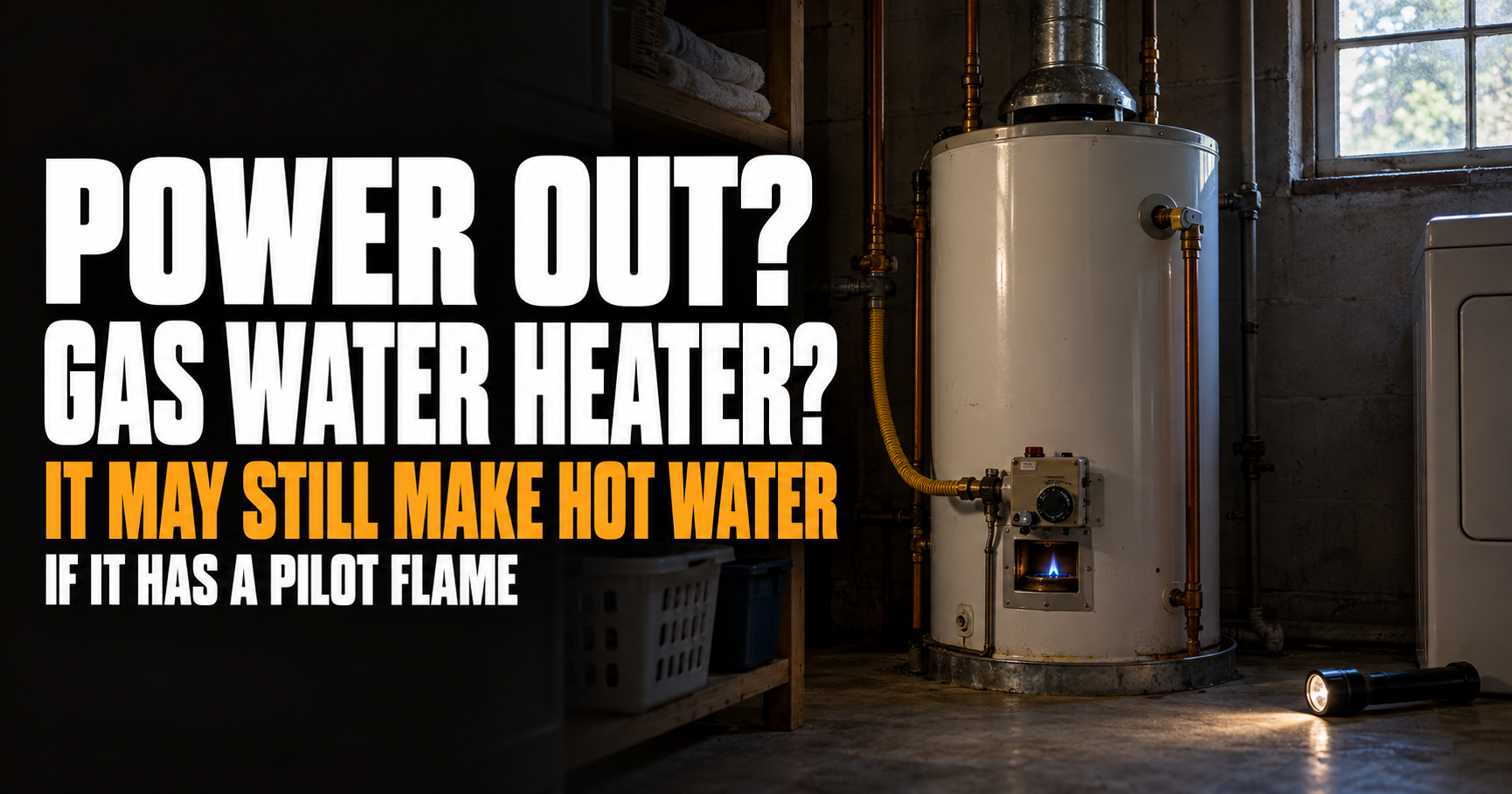
Your Water Heater Is Already a Water Container
One of the most overlooked water storage containers in America is already installed in millions of homes.
The water heater.
Depending on its size, it may contain dozens of gallons of water.
Many homeowners never consider it until an emergency occurs.
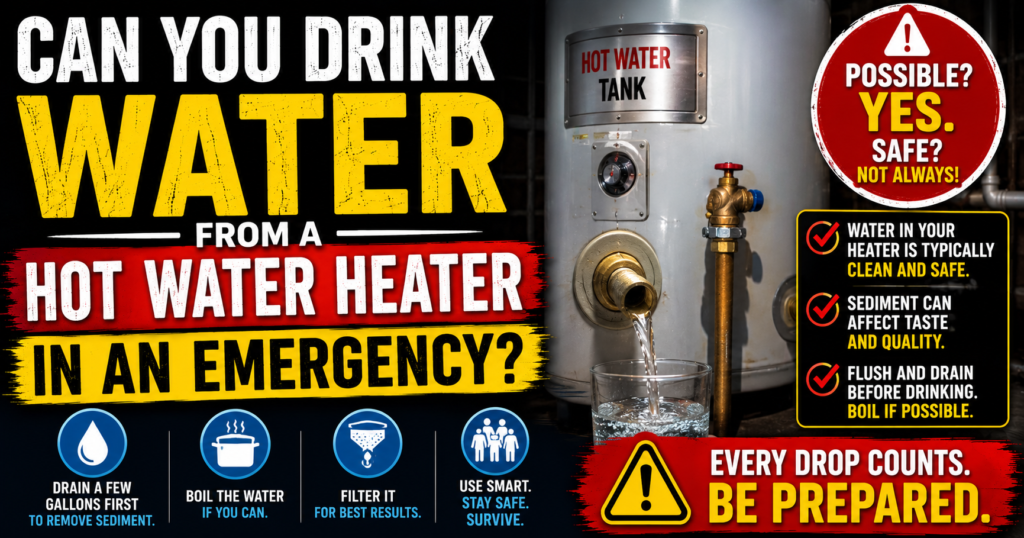
Learn more in Can You Drink Water From a Hot Water Heater in an Emergency?.
Understanding resources you already have is often more valuable than purchasing new equipment.
Temporary Storage Can Save Money
Many families spend money trying to permanently store large amounts of water when they may only need additional capacity during specific situations.
For example:
- Hurricanes
- Ice storms
- Winter weather
- Major storm systems
- Expected utility disruptions
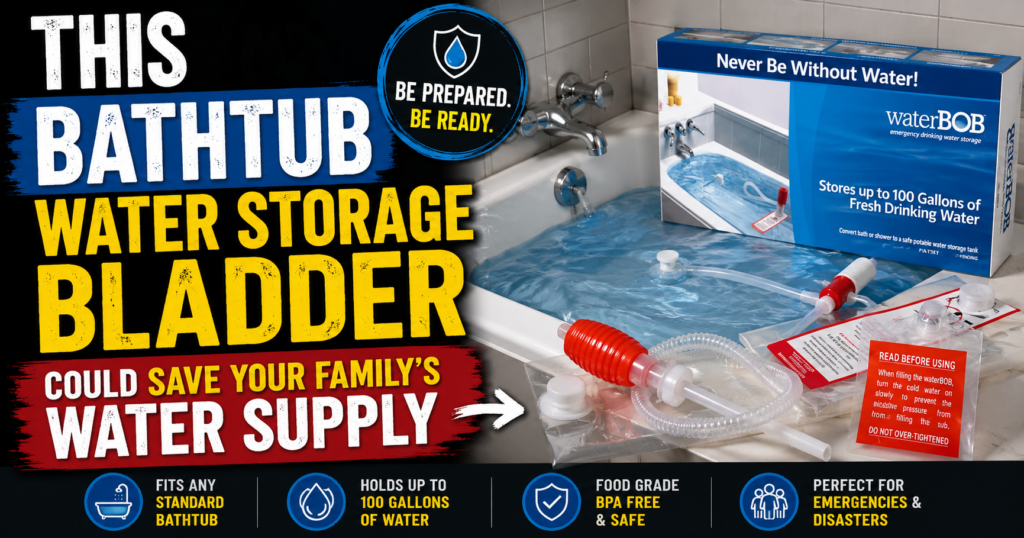
That’s why we recommend This Bathtub Water Storage Bladder Could Save Your Family’s Water Supply.
Instead of purchasing large permanent containers, you can quickly store a substantial amount of clean tap water when severe weather is approaching.
Some models hold up to 100 gallons while taking up almost no storage space when not in use.
You can see the bathtub storage system here:
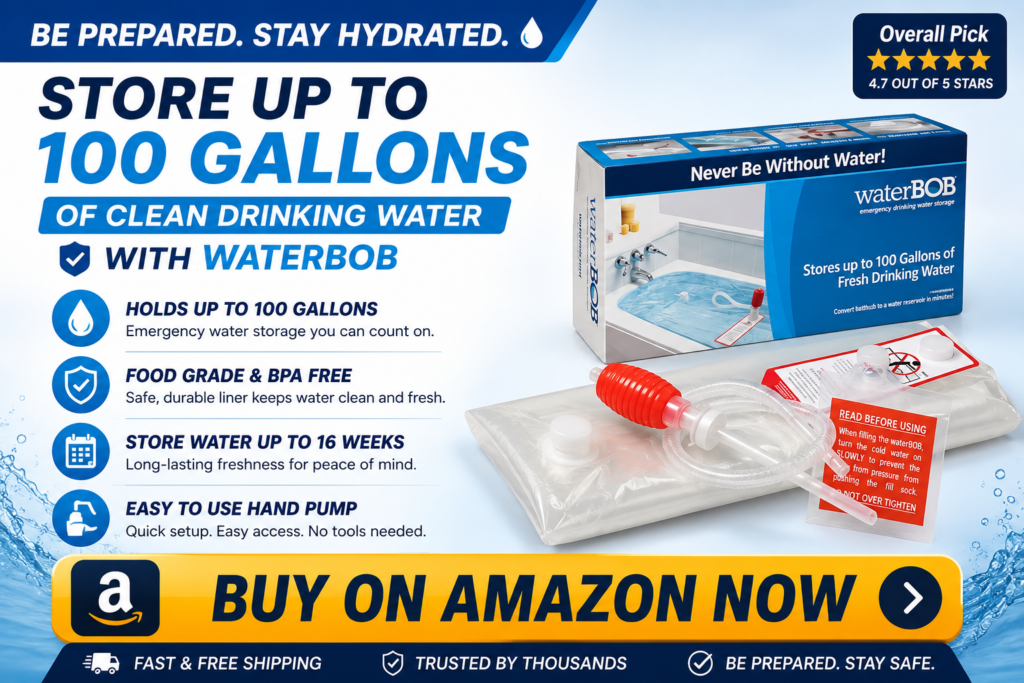
For many families, it’s one of the most cost-effective preparedness upgrades available.
Build Water Layers Instead of One Massive System
One common mistake is trying to solve water storage with a single solution.
Preparedness works better when you build layers.
Examples include:
- Bottled water
- Water heater reserves
- Temporary bathtub storage
- Rainwater collection
- Water filtration
Each layer provides additional flexibility.
If one option becomes unavailable, another remains.
Don’t Forget About Water Filtration
Water storage and water filtration should work together.
Stored water eventually runs out.
A filter helps extend your options.
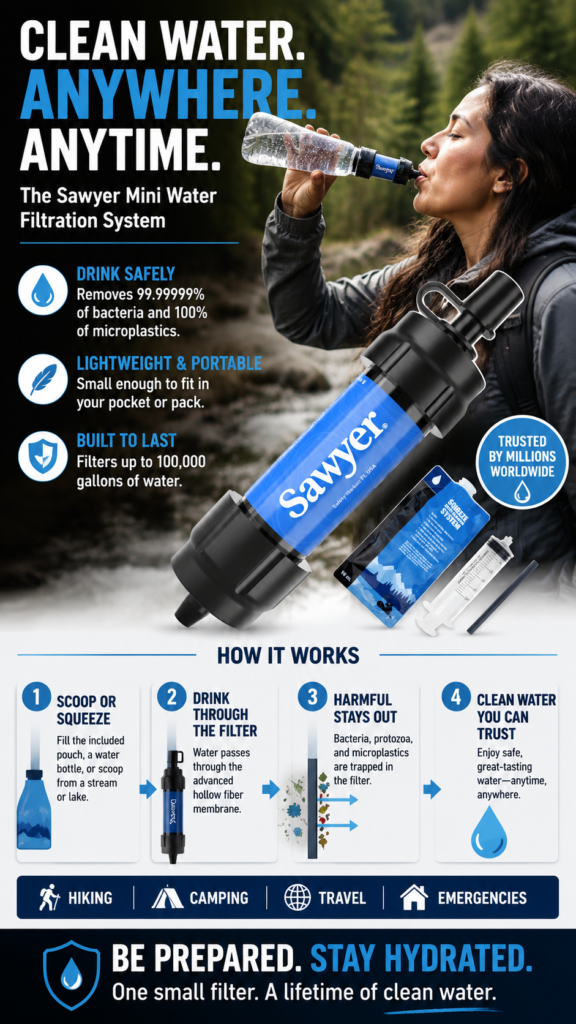
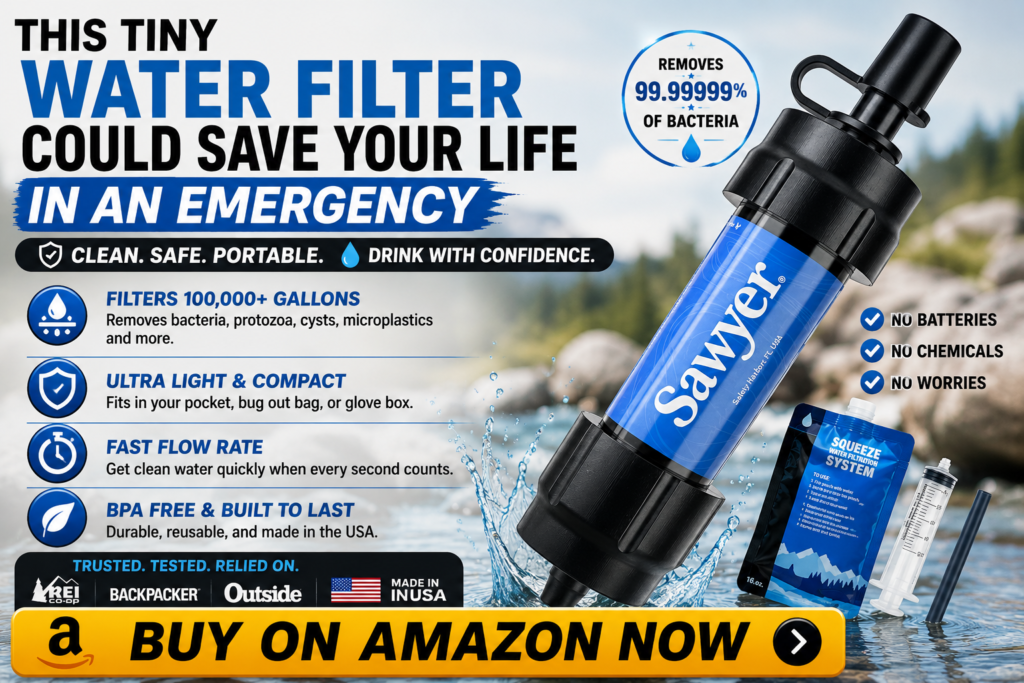
One of our favorite budget-friendly preparedness tools is This Tiny Water Filter Could Save Your Life in an Emergency.
The Sawyer Mini is affordable, compact, and capable of filtering an enormous amount of water.
You can view current pricing here:
For many households, adding a filter may provide more preparedness value than buying another expensive container.


Learn Alternative Water Sources
One way to reduce storage costs is understanding where additional water could come from during an emergency.
Examples include:
- Rainwater
- Water heaters
- Swimming pools
- Stored ice
- Other backup sources
Helpful resources include:
- Can You Drink Rainwater in an Emergency?
- Can You Use Pool Water in an Emergency?
- Emergency Water Sources Most People Overlook
The more sources you understand, the less pressure you place on stored water alone.
Avoid Common Budget Storage Mistakes
Trying to save money is smart.
Cutting corners isn’t.
Avoid:
- Non-food-grade containers
- Containers exposed to direct sunlight
- Damaged bottles
- Water stored near chemicals
- Ignoring maintenance and inspections
Many of these issues are discussed in Water Storage Mistakes That Could Leave Your Family Unprepared.
A cheap water storage system that fails isn’t actually cheap.
Preparedness Doesn’t Have to Be Expensive
The preparedness industry sometimes makes it sound like every solution requires a major purchase.
That’s simply not true.
Most families can make meaningful improvements using affordable supplies, available space, and a little planning.
A few extra cases of bottled water.
Knowledge of existing water sources.
A portable water filter.
A temporary storage solution for approaching storms.
Those simple steps can dramatically improve your family’s ability to handle a water emergency without spending a fortune.
Related Water Preparedness Articles
Building a reliable emergency water plan takes more than simply storing a few bottles of water. Explore these helpful guides to strengthen your family’s preparedness:
- Emergency Water Preparedness Guide: Everything You Should Know
- How to Build a 30-Day Emergency Water Supply for Your Family
- Emergency Water Checklist: What Every Family Should Have
- How to Purify Water Without Electricity During an Emergency
- What Is the Safest Water Source During an Emergency?
The Best Water Storage Plan Is the One You Actually Build
Many people spend years researching the perfect preparedness setup.
Meanwhile, they never store a single gallon of water.
Don’t fall into that trap.
Start where you are.
Use what you have.
Improve gradually.
The family with a simple affordable water plan today is far better prepared than the family still waiting to build the perfect system tomorrow.