Water is one of the few necessities that every emergency eventually comes back to.
You can survive without many modern conveniences.
You can survive without internet.
You can survive without television.
You can survive without a lot of things most people take for granted.
Water isn’t one of them.
Whether you’re preparing for storms, hurricanes, tornadoes, winter weather, power outages, infrastructure failures, or long-term disasters, having a reliable water plan may be one of the most important preparedness decisions you ever make.
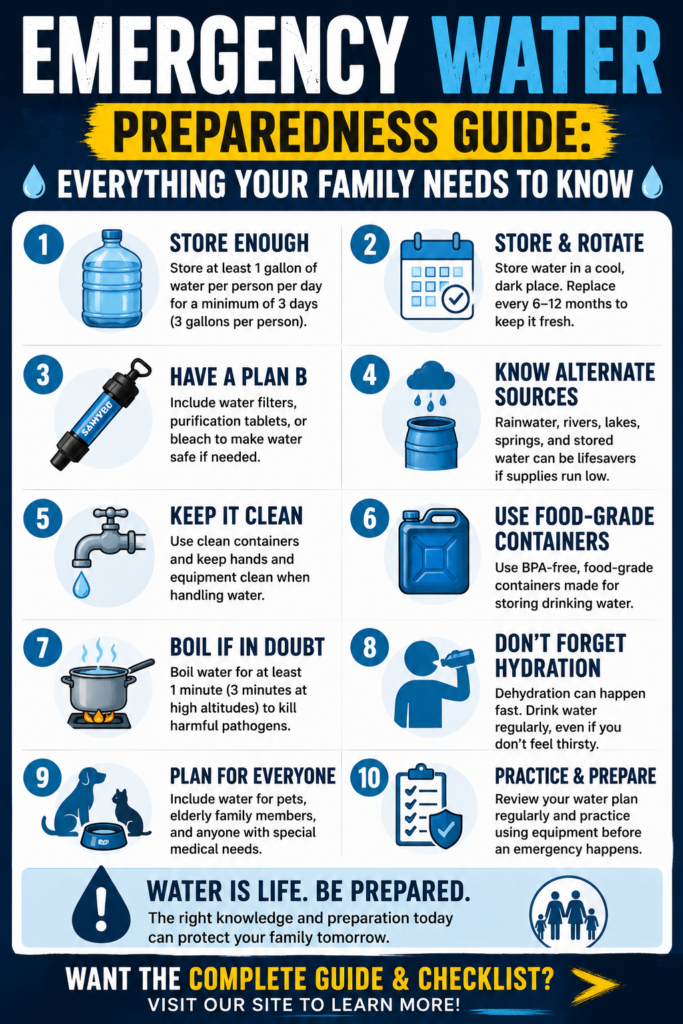
This guide brings together everything we’ve covered about emergency water preparedness so you can create a realistic plan for your family.
Why Water Should Be Your First Preparedness Priority
Most preparedness beginners immediately focus on food.
While food is important, water becomes critical much faster.
The average person can survive much longer without food than without water.
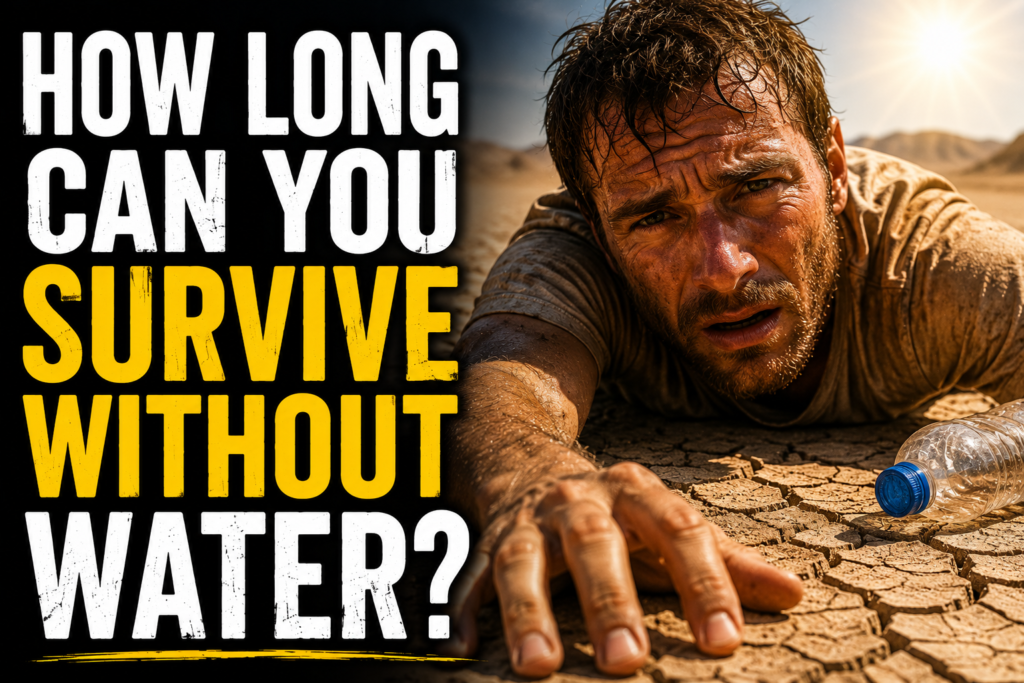
If you’ve ever wondered how serious dehydration can become, read How Long Can You Survive Without Water?.
Water affects:
- Drinking
- Cooking
- Hygiene
- Medications
- Sanitation
- Pets
- Cleaning
Almost every part of daily life depends on it.
That’s why preparedness experts consistently recommend starting with water.
How Much Water Should a Family Store?
This is usually the first question people ask.
The answer depends on:
- Family size
- Pets
- Climate
- Health needs
- Length of preparedness goals
Many families discover they need more water than they initially expected.
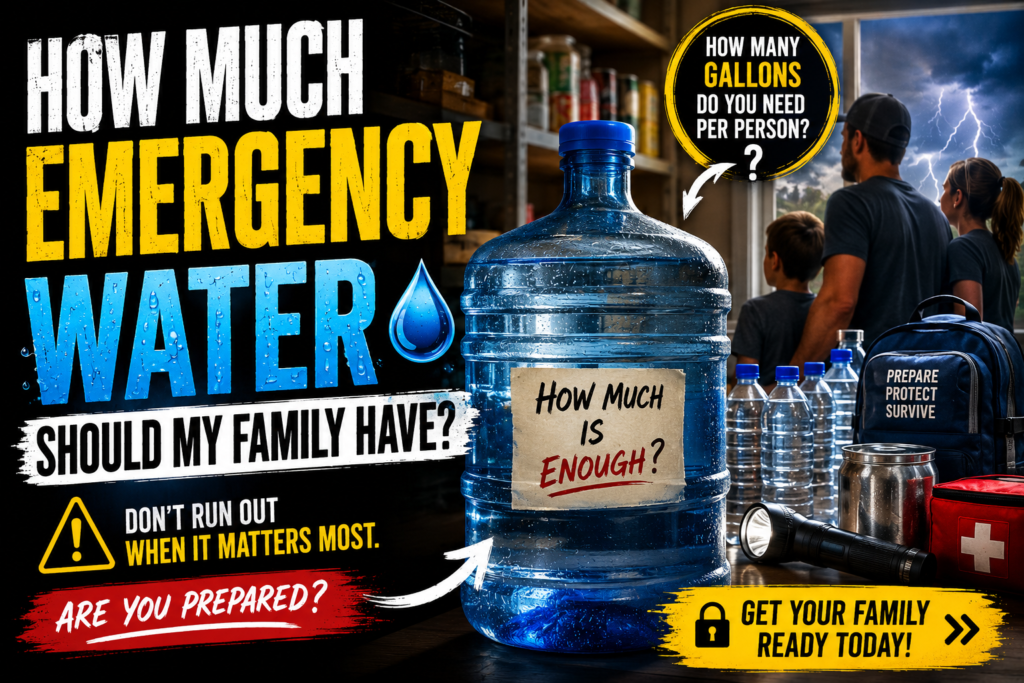
If you’re building your emergency plan, start with How Much Emergency Water Should a Family Store?.
Understanding your needs is the foundation of every other preparedness decision.
Building a Long-Term Water Supply
Once you understand how much water you need, the next step is building your supply.
The good news is that you don’t have to do everything at once.
Most prepared families build their water reserves gradually over time.
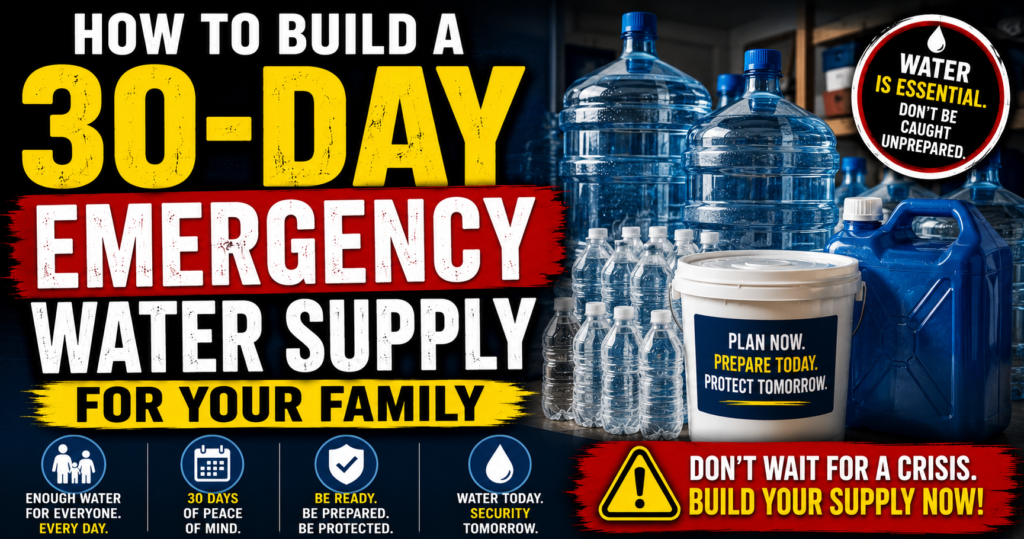
If you’re serious about long-term preparedness, read How to Build a 30-Day Emergency Water Supply for Your Family.
A month of water storage may sound overwhelming at first, but it’s far more achievable than most people realize.
Where Should You Store Emergency Water?
Storage becomes one of the biggest challenges for many families.
Especially those living in:
- Small homes
- Apartments
- Townhouses
- Rental properties
Fortunately, there are more options than most people realize.
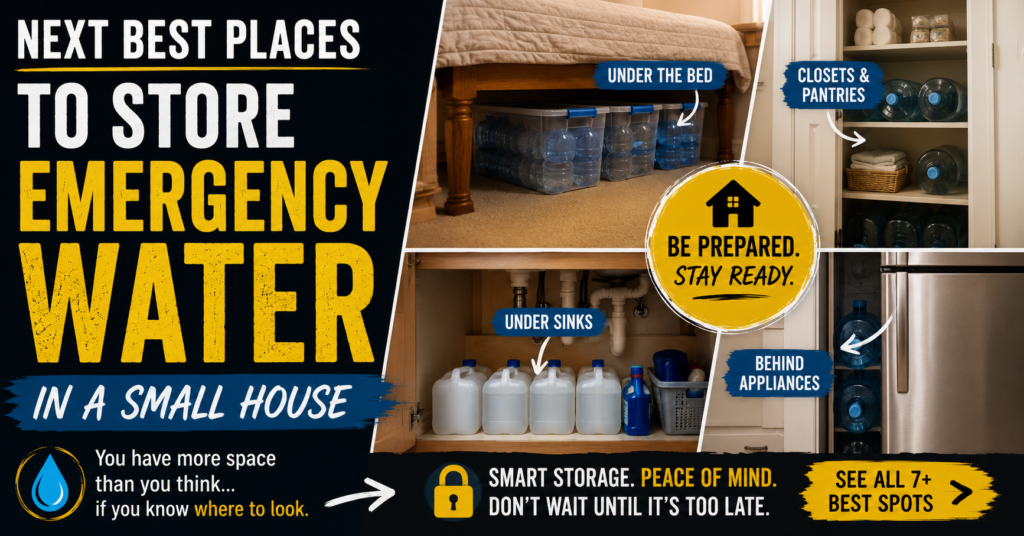
Homeowners should start with Best Places to Store Emergency Water in a Small House.
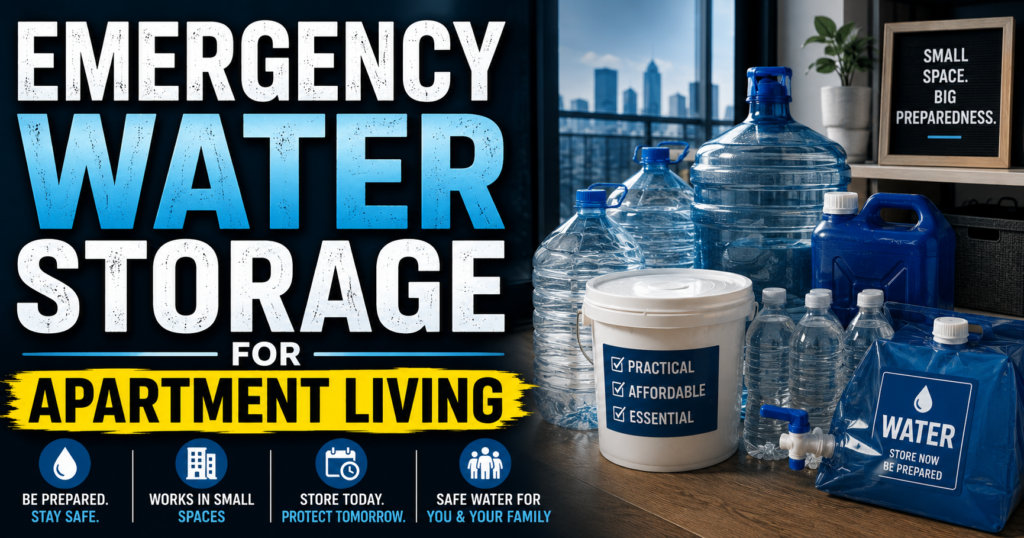
Renters should also read Emergency Water Storage for Apartment Living.
Both guides offer practical solutions that work in real homes.
Choosing the Right Water Storage Containers
The container you choose matters.
Some containers are excellent for long-term storage.
Others are not.
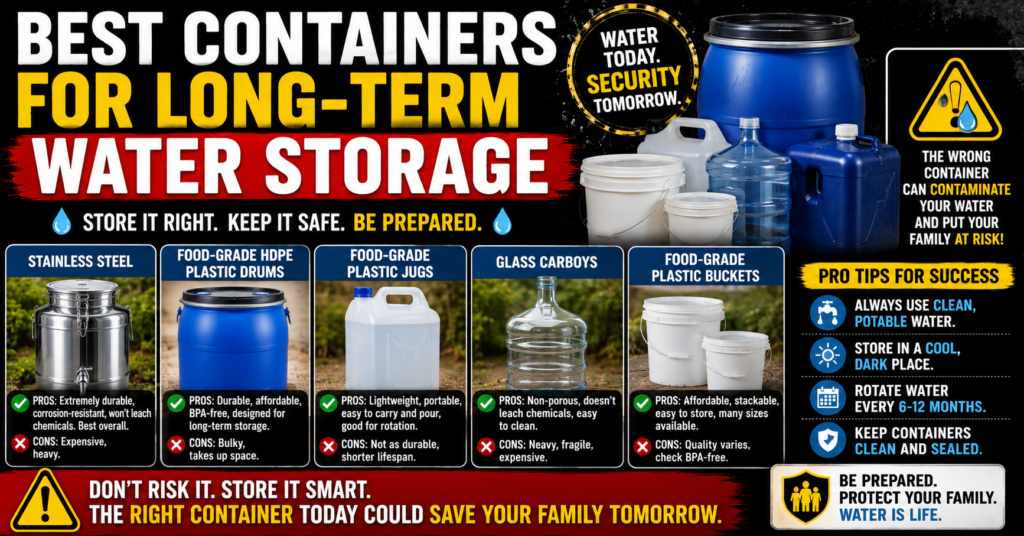
Before purchasing storage equipment, read Best Containers for Long-Term Water Storage.
The right container helps protect your investment while keeping water available when you need it.
Water Storage Doesn’t Have to Be Expensive
One misconception that prevents many people from preparing is the belief that water storage requires expensive equipment.
That’s simply not true.
Many families successfully prepare on a budget.
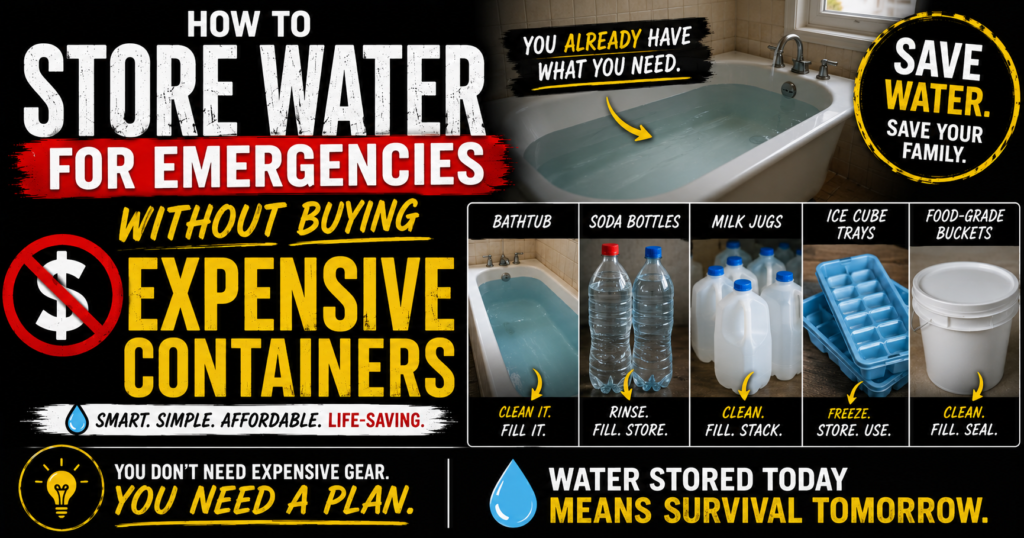
If cost has been holding you back, read How to Store Water for Emergencies Without Buying Expensive Containers.
Preparedness is more about planning than spending.
Temporary Emergency Water Storage
One of the smartest preparedness strategies is increasing your water supply before a disaster arrives.
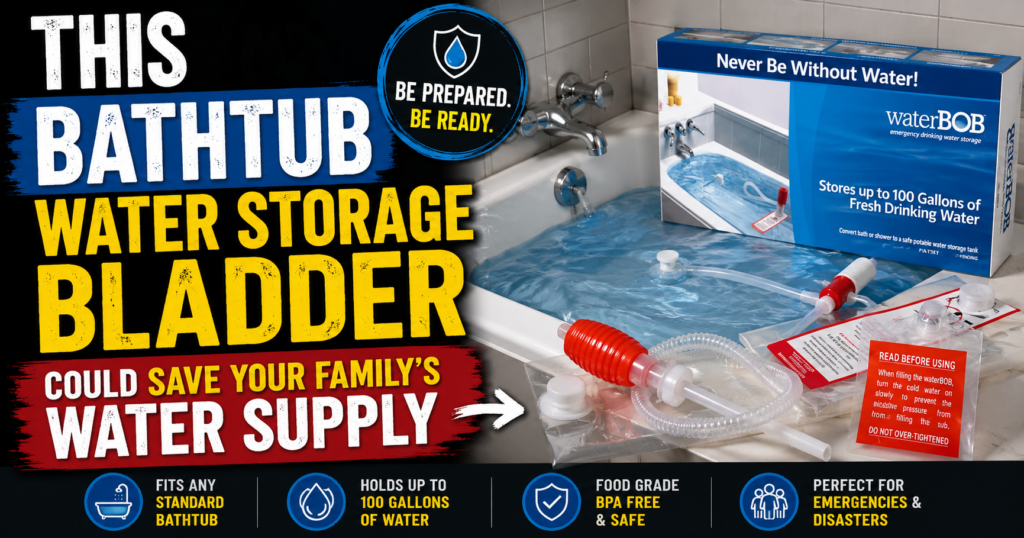
That’s why we strongly recommend reading This Bathtub Water Storage Bladder Could Save Your Family’s Water Supply.
This simple solution allows families to quickly store up to 100 gallons of clean tap water before hurricanes, winter storms, severe weather, or expected water outages.
You can view the bathtub storage system here:
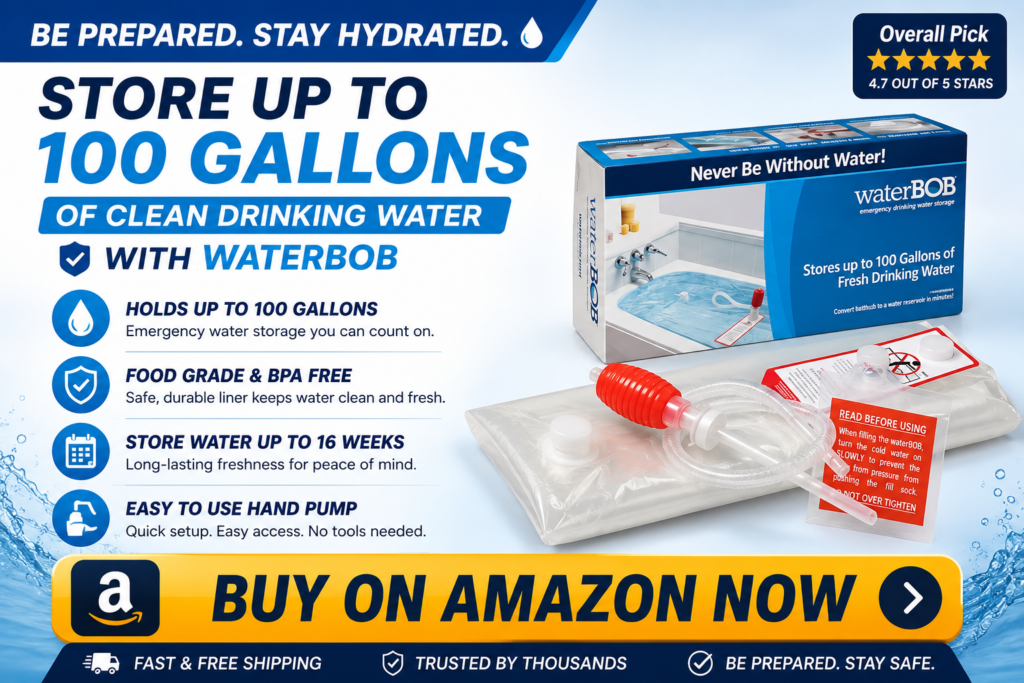
For many families, it’s one of the easiest preparedness upgrades available.
How Long Does Bottled Water Last?
Many people build their first emergency water supply using bottled water.
That’s a great place to start.
However, questions about expiration dates eventually appear.
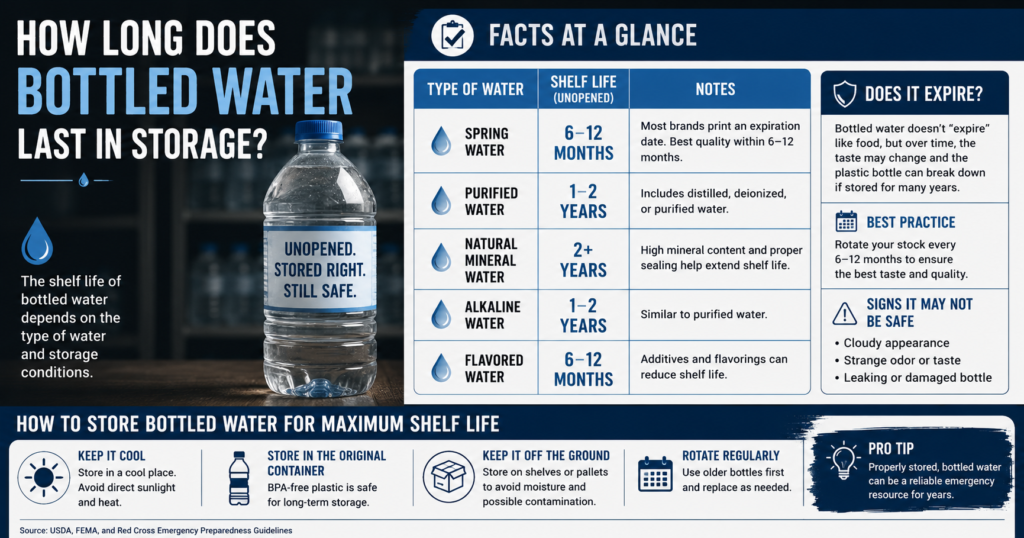
If you’ve been storing bottled water, be sure to read How Long Does Bottled Water Last in Storage?.
Proper storage conditions can make a significant difference.
What Happens If City Water Stops Working?
Many people never think about this scenario until it happens.
Unfortunately, water outages occur more often than most people realize.
Water service can be interrupted by:
- Storm damage
- Frozen pipes
- Infrastructure failures
- Water main breaks
- Power outages
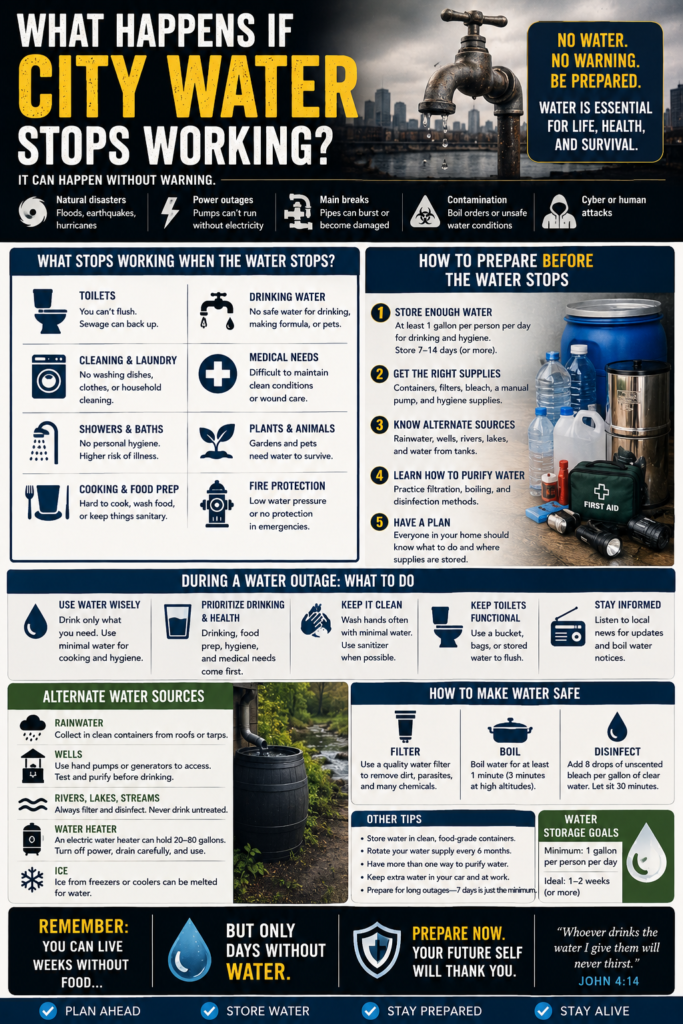
Our article What Happens If City Water Stops Working? explains how quickly daily life changes when water becomes unavailable.
Understanding Alternative Water Sources
One hallmark of a strong preparedness plan is having multiple water sources available.
Prepared families don’t depend entirely on one option.
They build layers.
Several alternative sources deserve consideration.
Rainwater
Rainwater can become a valuable emergency resource when properly understood.
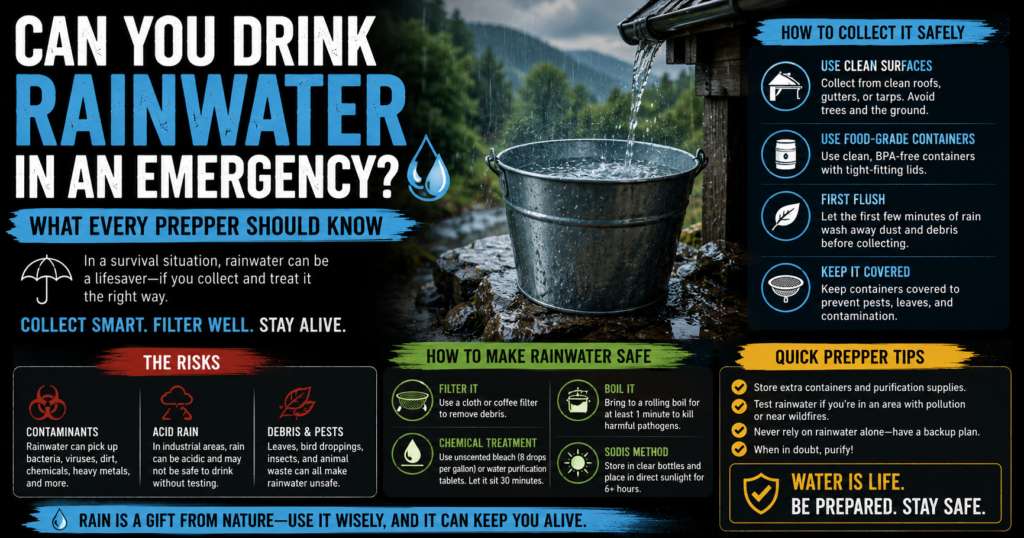
Start with Can You Drink Rainwater in an Emergency?.
Rain Barrels
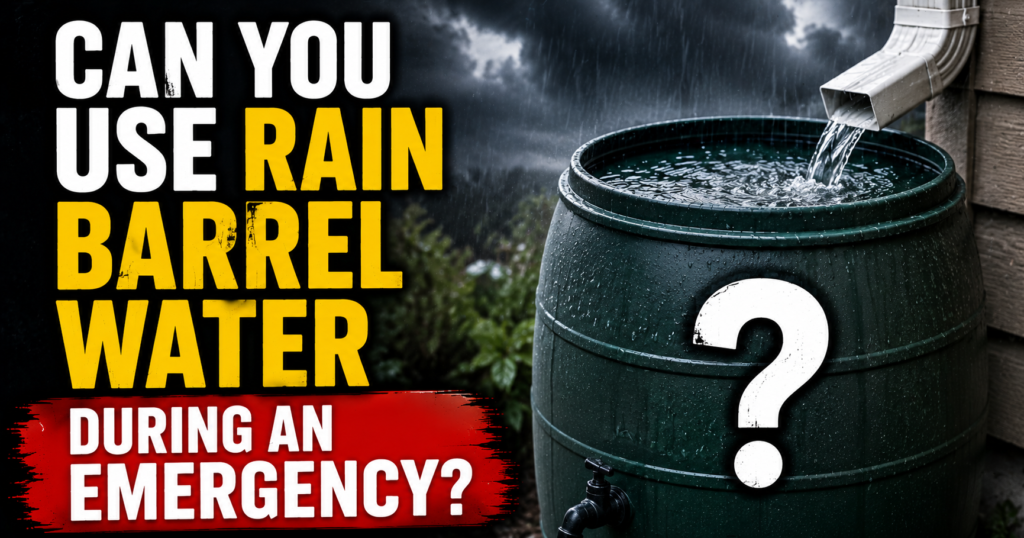
Homeowners using rain collection systems should read Can You Use Rain Barrel Water During an Emergency?.
Swimming Pools
Pool owners have access to thousands of gallons of water many never consider.
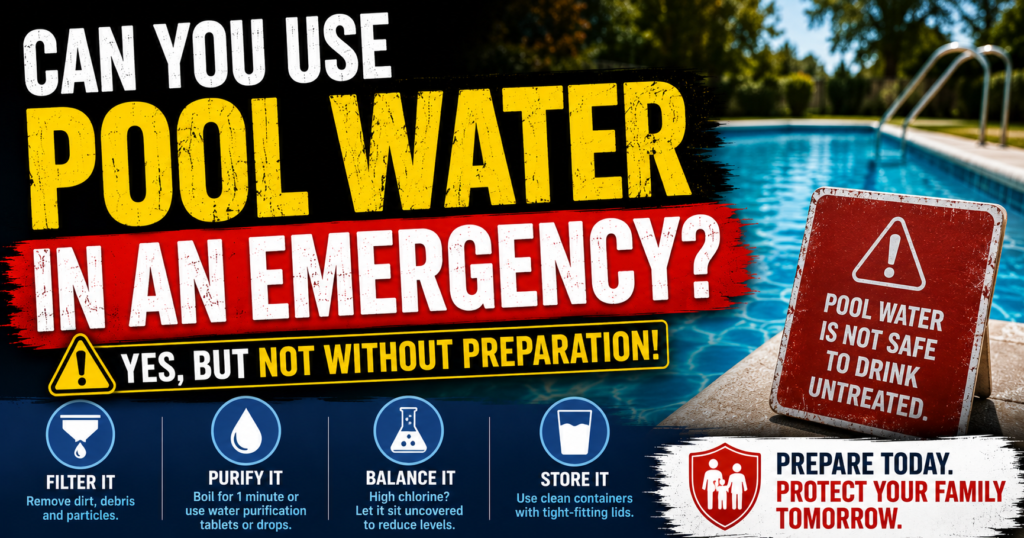
Learn more in Can You Use Pool Water in an Emergency?.
Water Heaters
Many homes already contain dozens of gallons of stored water.
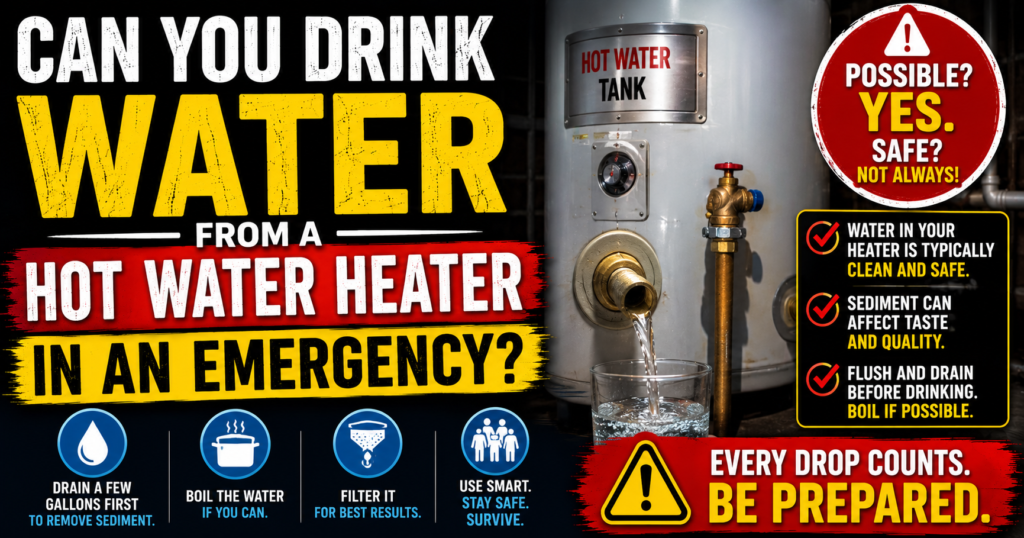
Our guide Can You Drink Water From a Hot Water Heater in an Emergency? explains why this overlooked resource matters.
Other Overlooked Sources
Several additional options may be available depending on your circumstances.
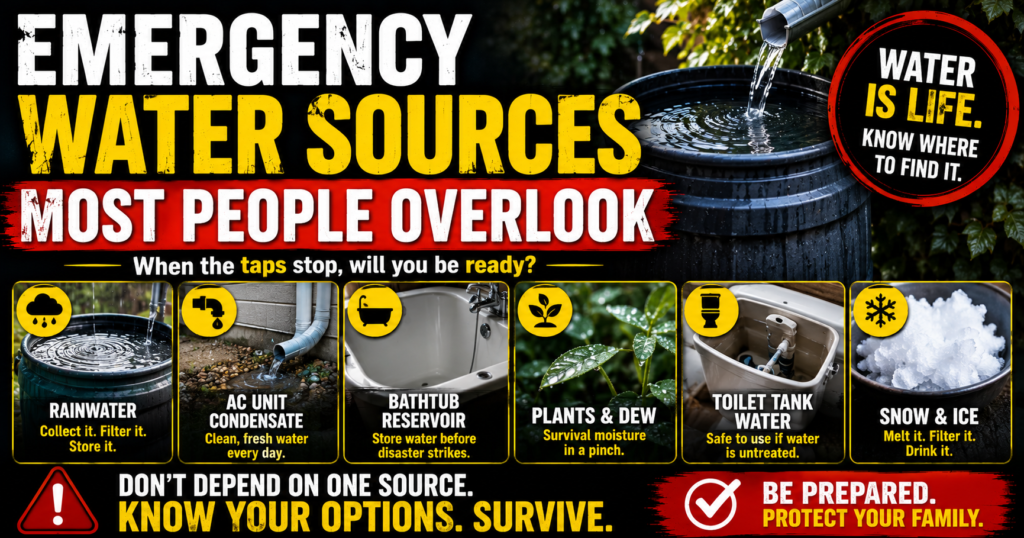
Read Emergency Water Sources Most People Overlook to expand your preparedness knowledge.
What Is the Safest Water Source?
Not all emergency water sources are equal.
Some are much safer than others.
If you’re trying to prioritize your preparedness efforts, start with What Is the Safest Water Source During an Emergency?.
Understanding source quality can help you make smarter decisions during stressful situations.
Why Water Filtration Is Essential
Eventually, every stored water supply runs low.
That’s why water filtration becomes one of the most important preparedness tools available.
Filtration expands your options.
Instead of depending solely on stored water, you gain the ability to use additional water sources when necessary.
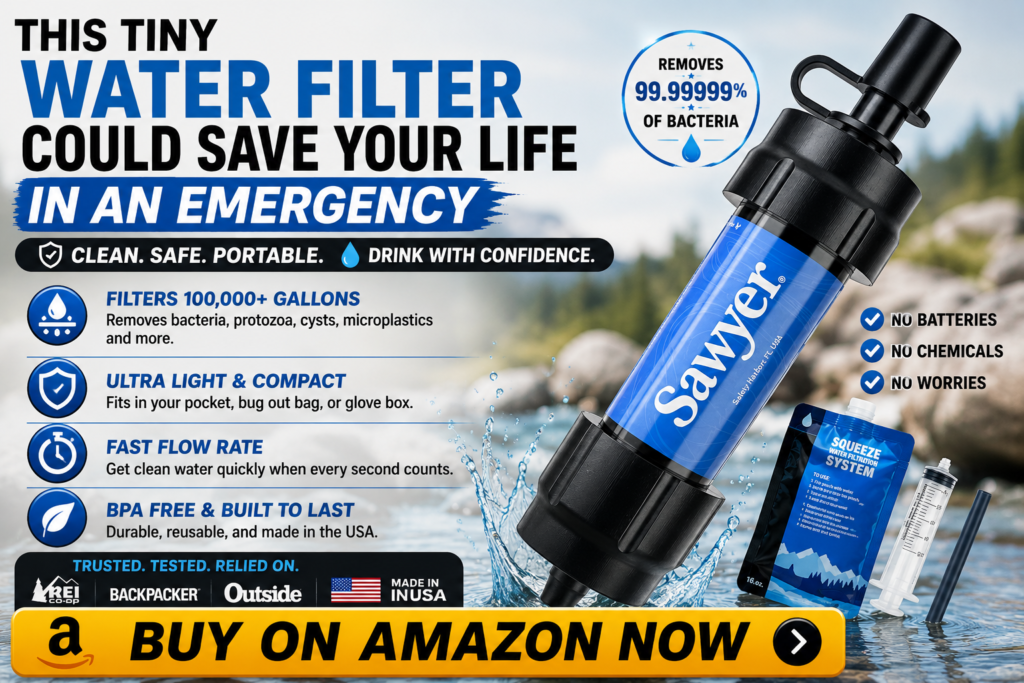
One of our favorite preparedness tools is This Tiny Water Filter Could Save Your Life in an Emergency.
The Sawyer Mini is trusted by preppers, campers, hikers, and emergency planners because it is compact, affordable, and capable of filtering enormous amounts of water.
You can check current pricing here:
How to Purify Water Without Electricity
Many disasters affect both water and power at the same time.
Knowing how to treat water without electricity is a valuable skill.
Our guide How to Purify Water Without Electricity During an Emergency covers practical purification methods every family should understand.
Common Water Storage Mistakes
Even good preparedness plans can be weakened by avoidable mistakes.
Common examples include:
- Storing too little water
- Poor storage locations
- No backup filtration
- Overlooking alternative sources
- Ignoring maintenance
To avoid these issues, read Water Storage Mistakes That Could Leave Your Family Unprepared.
Use a Water Preparedness Checklist
One of the easiest ways to identify weaknesses in your plan is by reviewing a checklist.
If you haven’t already, work through our Emergency Water Checklist: What Every Family Should Have.
You’ll quickly discover which areas are already covered and which still need attention.
The Most Prepared Families Build Layers
The biggest lesson from every emergency is simple.
The families who handle water disruptions best rarely rely on a single solution.
Instead, they create layers.
Those layers often include:
- Bottled water
- Long-term storage
- Temporary storage
- Alternative water sources
- Water filtration
- Water purification
- Emergency planning
Each layer strengthens the others.
If one source becomes unavailable, another remains.
Water Security Starts Before the Emergency
The best time to solve a water problem is before you have one.
A few extra cases of bottled water.
A portable water filter.
A temporary storage solution.
Knowledge of backup water sources.
Those simple preparations can dramatically reduce stress during a disaster.
Most people don’t think about water until they lose it.
Prepared families think about it beforehand.
And that’s often the difference between panic and confidence when the unexpected happens.
About the Author
Ethan Carter is an emergency preparedness researcher and survival writer focused on water security, disaster readiness, emergency planning, and practical preparedness strategies for everyday families. His work at Survive Essentials covers emergency water storage, filtration, alternative water sources, and self-reliance during disasters.